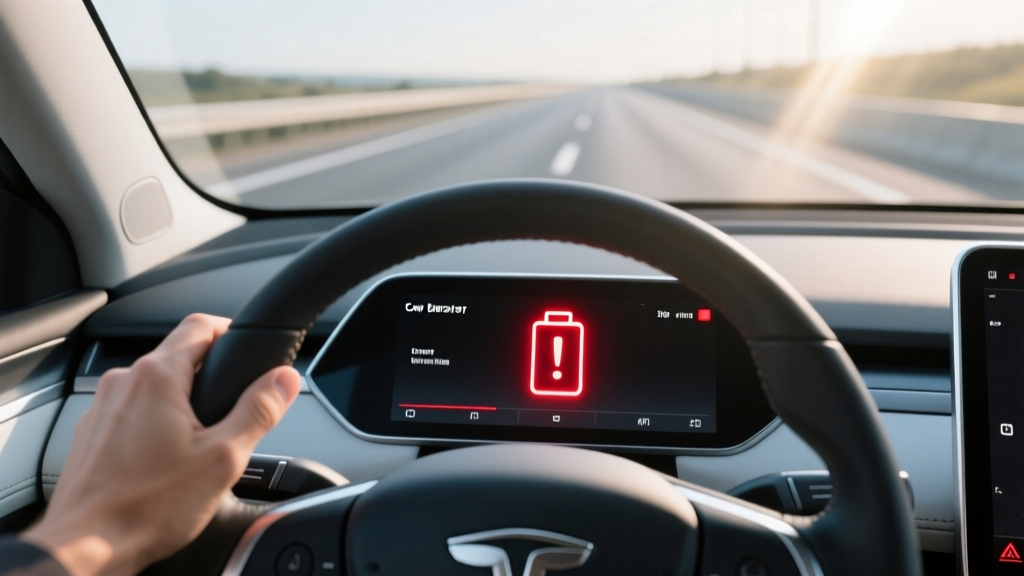
When a gas car's dashboard lights up with a low-fuel icon, the fix is simple: find a station and fill up. When an electric vehicle throws a car low battery indicator warning, the situation is more nuanced — and for many new EV owners, significantly more anxiety-inducing. Is it just telling you the state of charge is low? Or is the high-voltage traction battery itself degrading and signaling a problem?
Understanding the difference between a low charge warning and a low health warning is one of the most important things an EV owner or prospective buyer can learn. This guide breaks down exactly what your EV is trying to tell you, how long traction batteries actually last, what replacement costs look like in 2026, and how to keep your pack healthy for the long haul.
Low Charge vs. Low Health: What Your EV's Battery Indicator Actually Means
Modern EVs have two distinct battery systems, and their warning indicators mean very different things:
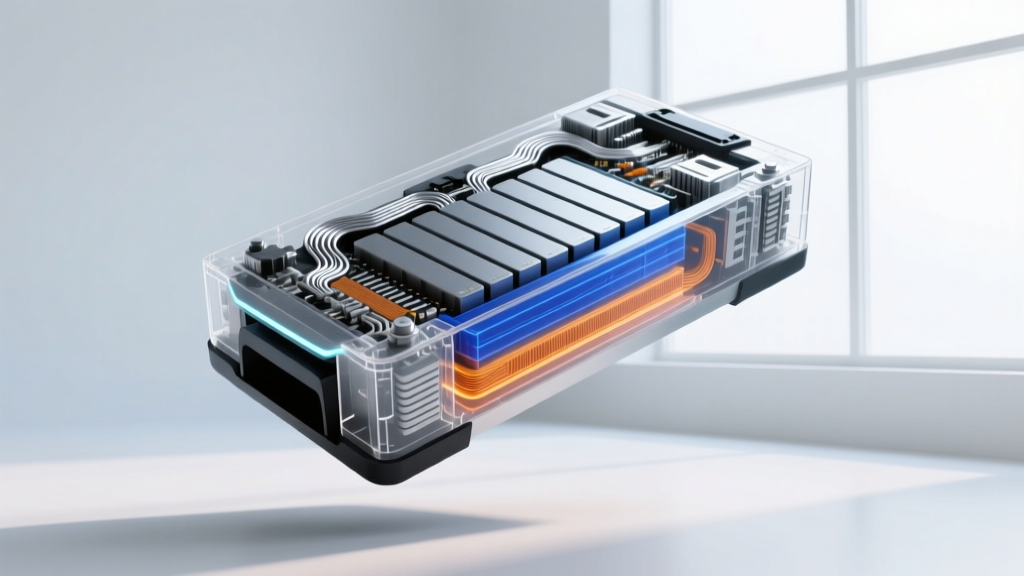
The main battery pack — typically 50 to 120+ kWh — that powers the electric motor(s) and determines your driving range. A "low battery" warning here means your state of charge (SoC) is critically low (usually below 5%), and you need to plug in soon or risk being stranded. This is the EV equivalent of a fuel gauge hitting "E."
A small conventional 12-volt battery that powers the car's computers, lights, door locks, and infotainment. If this battery dies, your EV won't even "turn on" — even if the traction battery is fully charged. A 12V warning is a separate indicator and is addressed by replacing the small auxiliary battery, not the main pack.
This guide focuses on the high-voltage traction battery — the expensive, central component that determines your EV's range, performance, and long-term value. When drivers search for "car low battery indicator," they are almost always concerned about the traction battery's longevity and the cost of eventual replacement.
Battery Chemistry Explained: LFP vs. NMC/NCA
The chemistry inside your EV's battery cells determines how much energy it stores, how fast it charges, how well it handles cold weather, and how long it lasts before meaningful degradation sets in. In 2026, two chemistries dominate the market: lithium iron phosphate (LFP) and nickel manganese cobalt / nickel cobalt aluminum (NMC/NCA).
| Attribute | LFP (Lithium Iron Phosphate) | NMC / NCA (Nickel-Based) |
|---|---|---|
| Energy Density | Lower (~160 Wh/kg cell-level). Heavier pack for same range. | Higher (~250-300 Wh/kg cell-level). More range per pound. |
| Cycle Life | 3,000–5,000+ cycles to 80% SoH. Significantly longer. | 1,000–2,000 cycles to 80% SoH. Shorter but still adequate for most ownership. |
| Cold Performance | Weaker in freezing temps; slower charging below 32°F without preconditioning. | Better low-temperature charge acceptance and range retention. |
| Cost | 15–25% cheaper per kWh. No cobalt or nickel. | More expensive due to cobalt/nickel commodity pricing. |
| Recommended SoC Range | Can charge to 100% regularly without accelerated degradation. | Best kept 20–80% for daily use; 100% only for road trips. |
| Notable 2026 Users | Tesla Model 3/Y RWD, Ford Mustang Mach-E Select, BYD models | Tesla Long Range/Performance, Hyundai Ioniq 5/6, Rivian, BMW iX |
Which is better? It depends on your priorities. If you want maximum range in a lighter package and don't mind managing your state of charge, NMC/NCA is the answer. If you prioritize longevity, lower cost, and the simplicity of charging to 100% daily, LFP wins — especially for commuters and city drivers who don't need 350+ miles of range.
How Long Do EV Batteries Actually Last?
The short answer: far longer than most buyers fear. Data from fleets, long-term owners, and manufacturer reports consistently show that modern EV traction batteries lose capacity slowly and predictably.
- Tesla 2023 Impact Report: Model 3/Y batteries retain approximately 85% capacity after 200,000 miles — meaning ~15% loss over the vehicle's likely lifespan.
- Geotab fleet study (2024 update): Across 10,000+ EVs of various brands, average annual degradation was 1.8% per year, with most vehicles retaining ~88% capacity at year 6.
- Nissan Leaf (early models, passive cooling): Higher degradation — some 2011-2015 Leafs lost 20-30% capacity within 5 years, largely due to lack of active thermal management. This is largely a historical lesson; modern packs are liquid-cooled.
- Hyundai/Kia E-GMP platform (Ioniq 5, EV6): Owner reports and testing show ~4-6% loss over the first 50,000 miles, with the curve flattening significantly afterward.
The degradation curve is not linear. Most packs experience a steeper drop in the first 1-2 years (roughly 3-5%), then settle into a very gradual decline of roughly 1-2% per year thereafter. For a vehicle with an EPA-rated 300-mile range, a 10% loss after 100,000 miles means you still have ~270 miles — still entirely practical for daily driving and road trips.
Battery Warranty Terms: What's Actually Covered
Federal law mandates that EV battery warranties cover at minimum 8 years or 100,000 miles (whichever comes first). In California Air Resources Board (CARB) states, the requirement extends to 10 years or 150,000 miles. Most manufacturers meet or exceed these minimums.
| Manufacturer | Warranty Period | Capacity Threshold | Notes |
|---|---|---|---|
| Tesla | 8 yr / 120,000 mi (Model 3/Y LR) | 70% retention | RWD: 8 yr / 100,000 mi |
| Hyundai / Kia | 10 yr / 100,000 mi | 70% retention | Among the longest coverage |
| Ford | 8 yr / 100,000 mi | 70% retention | Mach-E, F-150 Lightning |
| BMW | 8 yr / 100,000 mi | 70% retention | iX, i4, i7 |
| Rivian | 8 yr / 175,000 mi | 70% retention | Highest mileage threshold |
Key detail: The warranty triggers only if capacity drops below the stated threshold (usually 70%). A battery at 72% capacity after 8 years and 95,000 miles has degraded significantly, but the manufacturer owes you nothing under warranty. This is why monitoring your State of Health matters.
EV Battery Replacement Cost: The Numbers
This is the question that keeps prospective EV buyers up at night — and the one most prone to fear-mongering headlines. Here's what replacement actually costs in 2026, and when (or if) you'll need one.
| Vehicle / Pack Size | Estimated Replacement Cost (2026) | Typical Need Timeline |
|---|---|---|
| Tesla Model 3 RWD (~60 kWh LFP) | $8,000 – $12,000 | Rarely before 200,000+ mi |
| Tesla Model Y Long Range (~82 kWh NMC) | $12,000 – $16,000 | Rarely before 200,000+ mi |
| Hyundai Ioniq 5 (~77.4 kWh NMC) | $10,000 – $15,000 | Rarely before 150,000+ mi |
| Ford F-150 Lightning Extended (~131 kWh NMC) | $18,000 – $28,000 | Rarely before 150,000+ mi |
| Chevrolet Bolt EV (~65 kWh NMC) | $9,000 – $14,000 | Rarely before 150,000+ mi |
Critical context: The vast majority of EV batteries never need a full replacement during the original owner's tenure. Data from Geotab's fleet analysis shows that even after 6+ years, most packs retain 85-90% capacity. Outright failure (as opposed to gradual degradation) is rare and almost always covered under warranty. Battery cell prices have also continued to decline — from roughly $140/kWh in 2023 to approximately $100/kWh at the pack level in 2026 — meaning replacement costs trend downward over time.
What Affects Battery Life — and What You Can Control
Battery degradation is inevitable but highly variable. How you charge, drive, and store your EV has a measurable impact on long-term State of Health.
- Daily charging limit: Set to 80% for NMC/NCA packs. LFP owners can charge to 100% daily without penalty.
- Avoid frequent DC fast charging: Occasional road-trip fast charging is fine. Daily reliance on 150+ kW DCFC accelerates degradation, especially in hot climates.
- Don't store at extremes: Avoid leaving the car parked for weeks at 100% SoC or below 10% SoC. For long storage, aim for ~50%.
- Use preconditioning: When navigating to a DC fast charger, the car warms the battery to optimal temperature (~95°F). This reduces stress and improves charge speed. Always use navigation-based preconditioning when available.
- Moderate extreme-heat exposure: Liquid-cooled packs handle heat well, but repeated fast charging in 100°F+ ambient temperatures without adequate cool-down periods still accelerates wear.
- Don't baby it excessively: Modern battery management systems (BMS) are sophisticated. The top and bottom buffers (typically ~5% each) protect the cells. Normal driving and charging within the 20-80% window is sufficient.
Monitoring Battery Health: How to Check Your SoH
Your EV's State of Health (SoH) is the percentage of original capacity remaining. A new battery is at 100% SoH; one that has degraded to hold only 85% of its original kWh is at 85% SoH. Here's how to check it:
1. In-car displays: Some manufacturers show SoH directly. Tesla does not natively display SoH percentage, but you can estimate it by charging to 100% and comparing the displayed range to the original EPA figure. Hyundai/Kia models often show a battery health indicator in the settings menu.
2. Third-party apps: Tools like Tessie (Tesla), ABRP (A Better Route Planner), and Recurrent connect to your vehicle's telematics and estimate SoH based on charge/discharge cycles and energy throughput. Recurrent provides a free battery health report that compares your pack to a database of identical vehicles.
3. OBD-II diagnostics: Apps like Leaf Spy (Nissan Leaf) and Car Scanner can read battery cell voltage data and estimate SoH directly from the BMS. This is the most granular method but requires a compatible OBD-II dongle (~$30-$50).
4. Dealer service check: During routine service, a dealership can run a full battery health diagnostic. Request this if you're approaching a warranty threshold and want documentation.
When Your Car Low Battery Indicator Signals a Real Problem
A low-charge warning (SoC below 5%) is normal and fixable — plug in and charge. But certain warning patterns suggest a deeper battery health issue:
- Range dropping faster than expected: If your 300-mile EPA vehicle suddenly shows only 220 miles at 100% charge, that's roughly a 27% loss — potentially a warranty claim if you're within the coverage window.
- Sudden SoC drops: If the charge indicator jumps from 30% to 5% without proportional driving, a cell group may be failing. This is a service issue, not normal degradation.
- Charging speed severely limited: If your car refuses to accept more than 20-30 kW at a DC fast charger it previously charged at 150+ kW on, the BMS may be protecting degraded cells.
- Persistent warning lights: A dedicated battery fault icon (distinct from the low-charge turtle mode) indicates the BMS has detected an anomaly. Schedule service promptly.
In all these cases, the car's low battery indicator is functioning as designed — protecting the pack from damage by limiting power or alerting you to seek service. Ignoring these warnings risks further degradation or, in rare cases, a safety concern.
Looking Ahead: Solid-State and Silicon-Anode Batteries
Forward-looking context — these technologies are not yet in production vehicles available for purchase in 2026.
Solid-state batteries replace the liquid electrolyte with a solid material, promising higher energy density (~400-500 Wh/kg), faster charging, and improved safety (no flammable electrolyte). Toyota has announced solid-state production for limited models by 2027-2028, with broader availability expected by 2030. Samsung SDI and QuantumScape are also advancing prototypes, but cost and manufacturing scale remain significant hurdles.
Silicon-anode batteries (from companies like Sila Nanotechnologies and Group14) replace graphite anodes with silicon, boosting energy density by 20-40%. These are closer to market — Mercedes-Benz's next-gen EQ models and select startups are expected to adopt silicon-dominant anodes by 2027-2028. These packs will offer more range in the same physical space, though cycle-life data at scale is still being validated.
For buyers today, these technologies are worth tracking but should not delay a purchase. Current NMC and LFP packs are mature, reliable, and backed by strong warranties.
Frequently Asked Questions
How long do EV batteries last in years and miles?
Modern liquid-cooled EV batteries typically last 15-20 years or 200,000+ miles before reaching 70-80% of original capacity. Fleet data from Geotab shows average degradation of ~1.8% per year across thousands of vehicles. Most batteries outlast the vehicle's other mechanical components and the original owner's tenure.
How much does an EV battery cost to replace in 2026?
Replacement costs range from roughly $8,000 for smaller packs (60 kWh, like the Tesla Model 3 RWD) to $28,000 for very large packs (130+ kWh, like the F-150 Lightning Extended Range). However, full replacements are rare — most packs retain 80%+ capacity well past 150,000 miles. Cell-level pricing has dropped to approximately $100/kWh at the pack level, and costs continue to decline.
What does the EV battery warranty cover?
Federal law requires a minimum of 8 years/100,000 miles of battery warranty coverage (10 years/150,000 miles in CARB states). The warranty covers capacity loss below a specified threshold (typically 70% of original capacity) and defects. It does not cover damage from accidents, flooding, or aftermarket modifications. Check your specific manufacturer's terms — some, like Rivian, offer 8 years/175,000 miles.
How do I check and maximize my EV battery health?
Monitor State of Health (SoH) through in-car displays, third-party apps (Tessie, Recurrent, Leaf Spy), or dealer diagnostics. To maximize longevity: charge NMC packs to 80% daily (LFP can go to 100%), avoid daily DC fast charging, don't store the vehicle at extreme SoC levels for extended periods, and use preconditioning before fast charging. Per the U.S. Department of Energy, moderate temperatures and moderate charge rates are the single best things you can do for battery longevity.
LFP vs. NMC — which battery chemistry should I choose?
Choose LFP if you want the longest cycle life, lower cost, and the convenience of daily 100% charging — ideal for commuters and city drivers who don't need 350+ miles of range. Choose NMC/NCA if you need maximum range, better cold-weather performance, and faster DC charging speeds — ideal for road-trippers and those in cold climates. Both chemistries are proven and will outlast typical ownership periods.
Can a "car low battery indicator" mean the 12V battery is dying?
Yes. EVs have a separate 12V auxiliary battery that powers electronics, door locks, and the computers that connect the high-voltage pack. If the 12V battery fails, the car may not start even with a full traction battery. A 12V warning is a distinct indicator from a low-charge warning on the traction battery. Replace the 12V battery (typically $150-$300) if you see this warning — it's a routine maintenance item, not a major repair.