The Two Chemistries Powering Modern EVs
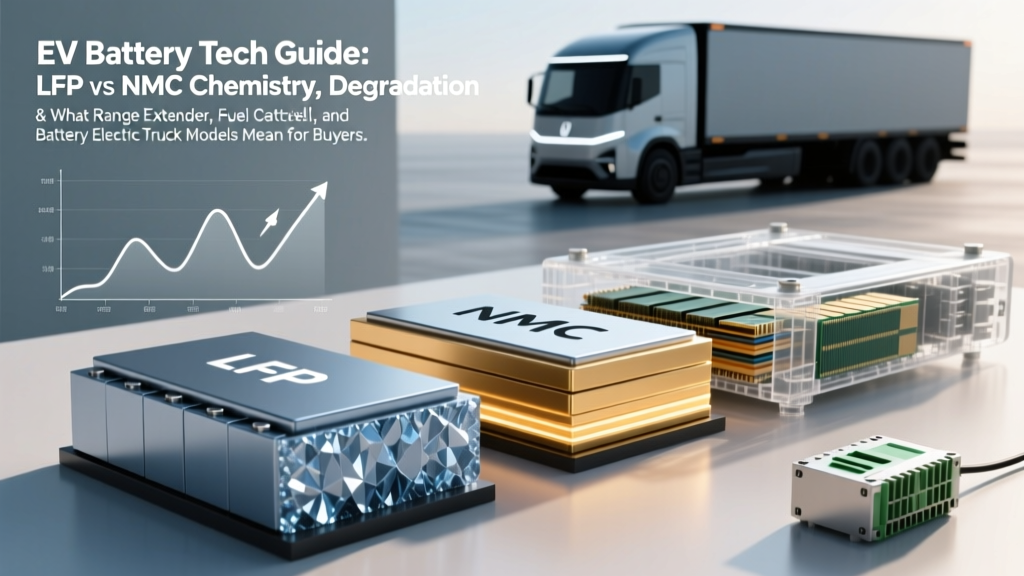
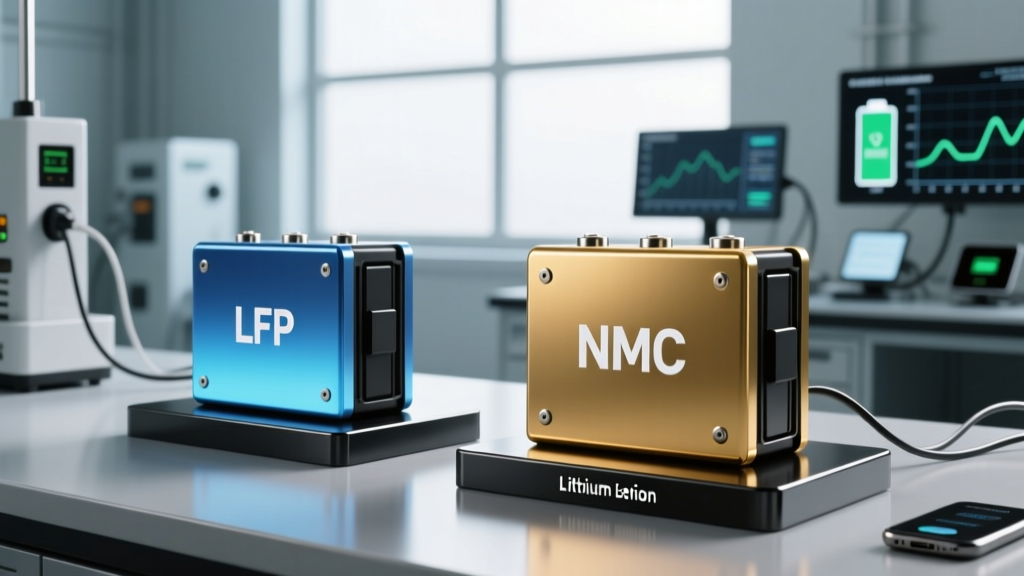
Every battery-electric and plug-in hybrid on the road relies on lithium-ion cells, but not all EV lithium batteries are built the same. The cathode chemistry — the positive electrode material — determines how far you can drive on a charge, how fast the pack degrades, how well it performs in freezing weather, and ultimately how much the vehicle costs. In 2026, two chemistries dominate the market: NMC (nickel-manganese-cobalt, sometimes NCA with aluminum) and LFP (lithium iron phosphate).
NMC packs deliver higher energy density, meaning more kilowatt-hours (kWh) of stored energy per kilogram of battery weight. That translates to longer EPA range in a lighter package, which is why NMC remains the default for long-range sedans and large SUVs — the Hyundai Ioniq 6 Long Range (77.4 kWh NMC), the Ford F-150 Lightning Extended Range (131 kWh NMC), and the BMW iX xDrive50 (111.5 kWh NMC) all rely on it.
LFP sacrifices some energy density for dramatically longer cycle life, lower raw-material cost (no cobalt or nickel), greater thermal stability, and the ability to charge routinely to 100% state of charge (SoC) without accelerating degradation. Tesla's Model 3 Standard Range, Model Y Standard Range, and the base Rivian R2 (announced for late 2026) all use LFP packs. BYD's Blade cell, widely adopted across its global lineup, is also LFP.
| Attribute | LFP (Lithium Iron Phosphate) | NMC / NCA |
|---|---|---|
| Energy Density (cell-level) | ~160–180 Wh/kg | ~220–300 Wh/kg |
| Typical Cycle Life | 3,000–6,000+ cycles to 80% SoH | 1,000–2,500 cycles to 80% SoH |
| Calendar Aging (10 yrs, moderate climate) | ~8–12% capacity loss | ~12–18% capacity loss |
| Cold-Weather Performance (below 32°F) | Moderate — slower charge acceptance, ~15–25% range loss | Better — ~10–20% range loss with heat pump |
| Recommended Daily Charge Limit | 100% SoC (periodic full charges calibrate BMS) | 80–90% SoC for daily; 100% only for trips |
| Thermal Runaway Risk | Very low | Low but higher than LFP |
| Raw Material Cost | Lower (iron, phosphate — abundant) | Higher (nickel, cobalt — volatile supply) |
| Best Suited For | Daily commuters, standard-range models, fleet/ride-share | Long-range, performance, towing, cold-climate drivers |
Which is better? It depends on your use case. If you drive 30–50 miles daily, have home Level 2 charging, and want a pack that will likely outlast the car's body, LFP is the more economical and durable choice. If you regularly drive 200+ miles between charges, tow, or live where winters are harsh, NMC's superior energy density and cold-weather charge acceptance make it the practical pick. Neither chemistry is universally "better" — the right choice matches your driving pattern.
How Long Do EV Lithium Batteries Actually Last?
The short answer: far longer than most buyers assume. Data aggregated from fleet studies and owner-reported telemetry shows that the average liquid-cooled EV lithium battery loses roughly 5–8% of its original capacity in the first 2 years, then settles into a slow, nearly linear decline of about 1–2% per year thereafter. By year 8, a typical NMC pack retains approximately 85–90% of its original capacity. LFP packs often retain 90–95% over the same period.
Real-world data points from large-scale studies support this:
- Geotab fleet study (2024 update, 10,000+ EVs): Average annual degradation across all chemistries was 1.8% per year. At that rate, a pack retains ~82% after 10 years — well above the 70% warranty threshold most automakers guarantee.
- Tesla 2025 Impact Report: Model 3/Y vehicles showed an average of ~12% capacity loss at 150,000 miles, with LFP-equipped Standard Range models showing roughly half that loss at equivalent mileage.
- Recurrent Auto dataset (2025, ~15,000 vehicles): Chevrolet Bolt EV (NMC, 65 kWh) packs averaged 93% State of Health (SoH) at 5 years / 60,000 miles. Hyundai Ioniq 5 (NMC, 77.4 kWh) averaged 91% SoH at 3 years / 45,000 miles.
The critical takeaway is that complete battery failure is rare. Catastrophic pack replacement due to total failure occurs in well under 1% of vehicles, according to warranty claim data from major OEMs. Most EV batteries will still hold 80%+ capacity at 200,000 miles — a milestone many gas vehicles never reach without a transmission or engine rebuild.
What the Battery Warranty Actually Covers
Federal law mandates that EV traction batteries carry a minimum warranty of 8 years / 100,000 miles (10 years / 150,000 miles in California Air Resources Board states). Most automakers exceed this baseline. The warranty guarantees that the battery will retain a specified percentage of its original capacity — typically 70% — over the warranty period. If measured State of Health (SoH) falls below that threshold, the manufacturer must repair or replace the pack at no cost.
| Vehicle | Chemistry | Battery (kWh) | Warranty Term | Capacity Threshold |
|---|---|---|---|---|
| Tesla Model 3 Standard Range | LFP | 60 | 8 yr / 100,000 mi | 70% |
| Tesla Model Y Long Range | NMC | 82 | 8 yr / 120,000 mi | 70% |
| Hyundai Ioniq 5 | NMC | 77.4 | 10 yr / 100,000 mi | 70% |
| Ford F-150 Lightning Ext. Range | NMC | 131 | 8 yr / 100,000 mi | 70% |
| Chevrolet Equinox EV | NMC | 85 | 8 yr / 100,000 mi | 70% (60% for eMTA fleet) |
| BMW iX xDrive50 | NMC | 111.5 | 8 yr / 80,000 mi | 70% |
| Rivian R1S Dual-Motor | NMC | 128.9 | 8 yr / 175,000 mi | 70% |
A few nuances matter when evaluating warranty coverage. First, the warranty covers capacity degradation below the threshold — not range loss due to cold weather, tire pressure, or driving habits. Second, some manufacturers require you to follow their charging guidelines (e.g., not leaving the vehicle at 100% SoC for extended periods on NMC packs) to keep the warranty valid. Third, the warranty covers the high-voltage traction battery, not the 12V auxiliary battery that powers accessories and boot-up systems — that smaller battery typically carries a separate 3-year / 36,000-mile warranty, same as in a gas car.
EV Battery Replacement Cost: What You'd Actually Pay
This is the question that generates the most anxiety, so let's ground it in real numbers. Out-of-warranty battery replacement costs depend on pack size, chemistry, and labor, but the range is narrower than alarmist headlines suggest.
| Vehicle | Battery Size | Chemistry | Part Cost (est.) | Labor (est.) | Total Range |
|---|---|---|---|---|---|
| Tesla Model 3 Standard Range | 60 kWh | LFP | $7,000–$9,000 | $1,500–$2,500 | $8,500–$11,500 |
| Hyundai Ioniq 5 | 77.4 kWh | NMC | $10,000–$14,000 | $2,000–$3,000 | $12,000–$17,000 |
| Ford F-150 Lightning Ext. Range | 131 kWh | NMC | $18,000–$25,000 | $3,000–$4,500 | $21,000–$29,500 |
| Chevrolet Bolt EV (used market) | 65 kWh | NMC | $9,000–$12,000 | $1,500–$2,500 | $10,500–$14,500 |
| BMW iX xDrive50 | 111.5 kWh | NMC | $16,000–$22,000 | $3,000–$4,000 | $19,000–$26,000 |
Context matters enormously here. Most EV owners never pay these costs. Battery replacements under warranty are free. Beyond the warranty period, cell-level repair is increasingly common — a technician can replace individual degraded modules within the pack rather than swapping the entire assembly, cutting costs by 50–70%. Additionally, battery costs per kWh have dropped from roughly $1,200/kWh in 2010 to approximately $110–$130/kWh at the cell level in 2026, according to BloombergNEF's annual battery price survey. That downward trend continues as LFP adoption grows and manufacturing scales.
When is replacement actually needed? Typically only when SoH drops below 60–65% — a point at which range is noticeably reduced but the vehicle is still drivable. Based on current degradation curves, reaching that point takes 15–20 years or 250,000+ miles for most liquid-cooled packs. By that time, the vehicle's residual value is near zero regardless of battery condition, making it an end-of-life decision rather than a mid-life crisis.
What Degrades an EV Battery — and What Doesn't
Lithium-ion degradation is driven by a handful of well-understood mechanisms. Understanding them lets you make informed choices without obsessing over every charging session.
Factors That Accelerate Degradation
- High state of charge sustained for long periods: Storing an NMC pack at 100% SoC for days or weeks stresses the cathode. For daily use, set your charge limit to 80% (NMC) or 100% (LFP — LFP benefits from periodic full charges for BMS calibration).
- Frequent DC fast charging at high power: Exclusive reliance on 150+ kW DC fast charging generates sustained heat. Data from Recurrent Auto shows that vehicles fast-charging more than 3 times per week exhibit ~1–2% additional degradation over 4 years compared to primarily Level 2 charging. The effect is real but modest.
- Extreme heat exposure: Parking in sustained 100°F+ ambient temperatures with a high SoC accelerates calendar aging. Liquid-cooled packs (standard on nearly all 2026 EVs) mitigate this substantially, but garage parking in hot climates still helps.
- Deep discharge cycles: Regularly draining the pack below 10% SoC and leaving it there stresses the anode. Plug in when you can rather than running the battery to near-empty routinely.
- Cold-weather fast charging without preconditioning: Charging a cold LFP or NMC pack at high power can cause lithium plating on the anode. Always use your vehicle's battery preconditioning feature (navigate to a charger via the car's nav system) to warm the pack before DC fast charging in cold weather.
Factors That Are Less Harmful Than You Think
- Occasional DC fast charging: A few road-trip fast charges per month will not meaningfully degrade your pack. The concern is exclusive, daily reliance on high-power DC charging.
- Driving in cold weather: Range loss in winter (10–30% depending on temperature and use of cabin heat) is temporary — it's a function of reduced electrochemical efficiency and increased energy demand, not permanent degradation. Capacity returns in warm weather.
- Regenerative braking: Regen sends energy back into the battery on deceleration. The charge rates involved are well within the pack's designed C-rate limits and do not cause measurable additional wear.
How to Check and Monitor Battery Health
State of Health (SoH) is the metric that tells you how much of your battery's original capacity remains. A new pack is at 100% SoH; a pack that held 77.4 kWh when new and now holds 70 kWh is at roughly 90.4% SoH.
Several methods exist to check this:
- In-vehicle diagnostics: Some manufacturers (Hyundai/Kia, BMW, Mercedes) display a battery health indicator in the infotainment system or driver display. Tesla does not natively show SoH percentage, but the vehicle's rated range at 100% SoC compared to its original EPA figure provides a rough proxy.
- OBD-II diagnostic tools: Devices like the OBDLink SX paired with apps such as EV Health or LeafSpy (for Nissan Leaf) can read the battery management system's (BMS) internal SoH estimate. This is the most accessible method for most owners.
- Third-party telematics services: Companies like Recurrent offer free battery health reports by connecting to your vehicle's telematics data (with your permission). They compare your pack's degradation curve against a fleet of identical vehicles.
- Dealer diagnostic check: A service center can run a full pack diagnostic that reads individual cell voltages, module balance, and the BMS's calibrated SoH figure. Request this when buying a used EV.
For used-EV buyers, SoH is the single most important data point. A 5-year-old EV with 92% SoH is a better buy than a 3-year-old example at 84% SoH — the second vehicle has likely seen heavy fast-charging use or prolonged high-SoC storage. Always ask for a battery health report before purchasing.
What's Next: Solid-State and Silicon-Anode Batteries
Two technologies are frequently cited as the next leap in EV lithium batteries. Here's where they actually stand as of 2026:
Solid-state batteries replace the liquid electrolyte with a solid material (ceramic, sulfide, or polymer), promising higher energy density (~400+ Wh/kg at the cell level), faster charging, and near-zero fire risk. Toyota has announced a solid-state pack targeting 2027–2028 production in limited volumes, initially in hybrid applications. Samsung SDI and QuantumScape are in pilot production, but no mass-market EV currently sold uses a solid-state pack. Realistic broad availability for consumer EVs is 2029–2032 at the earliest, with initial applications likely in premium vehicles due to high manufacturing costs.
Silicon-anode batteries replace the graphite anode with silicon, which can store roughly 10× more lithium ions per gram. This boosts energy density by 20–40% without changing the cathode chemistry. Sila Nanotechnologies and Group14 are supplying silicon-composite anodes to manufacturers including Mercedes-Benz (for the upcoming G-Class EV) and Panasonic. Expect silicon-anode cells to appear in production EVs starting in 2027–2028, initially in performance and luxury segments, trickling down to mainstream models by the early 2030s.
Both technologies are real and progressing, but neither changes the buying decision you face today. Current LFP and NMC packs are mature, well-understood, and backed by warranties that protect you through the vehicle's useful life.
Frequently Asked Questions
How long do EV lithium batteries last in years and miles?
Based on fleet data from Geotab, Tesla, and Recurrent Auto, most liquid-cooled EV lithium batteries retain 80–90% of their original capacity at 10 years / 150,000 miles. Complete failure requiring full replacement is rare (under 1% of vehicles). LFP packs tend to outlast NMC packs by a modest margin. Most EV batteries will outlive the vehicle's body and suspension components.
How much does it cost to replace an EV battery out of warranty?
Out-of-warranty replacement costs range from approximately $8,500 for a 60 kWh LFP pack (e.g., Tesla Model 3 Standard Range) to $29,500 for a 131 kWh NMC pack (e.g., Ford F-150 Lightning Extended Range), including parts and labor. However, most owners never pay this: warranty coverage handles early failures, module-level repairs cost 50–70% less than full-pack swaps, and per-kWh cell prices continue declining. By the time a pack actually needs replacement at 15–20 years, the vehicle's residual value is typically negligible.
What does the EV battery warranty cover?
The federal minimum is 8 years / 100,000 miles (10 years / 150,000 miles in CARB states). The warranty guarantees the high-voltage traction battery will retain at least 70% of its original capacity. If a diagnostic test shows SoH below that threshold, the manufacturer repairs or replaces the pack at no cost. The warranty does not cover the 12V auxiliary battery, range loss from cold weather or driving habits, or damage from accidents or modifications. Always review your specific manufacturer's warranty document for exclusions.
How do I check my EV battery's State of Health?
Use an OBD-II adapter with an EV-compatible app (EV Health, LeafSpy, or Car Scanner) to read the BMS-reported SoH percentage. Some vehicles display battery health natively in the infotainment system. Services like Recurrent Auto offer free health reports via telematics. For a used-EV purchase, request a dealer diagnostic that includes individual module voltage readings alongside the overall SoH figure.
Is LFP or NMC better for my EV?
Choose LFP if you commute under 60 miles daily, charge at home most nights, want maximum cycle life, and prefer the simplicity of charging to 100% without worrying about degradation. Choose NMC if you need 300+ miles of EPA range, regularly road-trip or tow, live in a cold climate where NMC's better low-temperature charge acceptance matters, or prioritize maximum performance. Both chemistries are proven and reliable — the right choice matches your driving pattern, not a universal ranking.
Does fast charging damage my EV battery?
Exclusive reliance on DC fast charging (3+ sessions per week with no Level 2 charging) is associated with roughly 1–2% additional capacity loss over 4 years compared to primarily Level 2 charging, according to Recurrent Auto data. Occasional fast charging on road trips has negligible impact. Always precondition the battery before DC fast charging in cold weather to prevent lithium plating, and avoid fast charging above 80% SoC unless you need the range — the charge curve tapers significantly above 80%, making the last 20% slow and thermally stressful.
For official warranty and efficiency data, consult fueleconomy.gov and your vehicle manufacturer's specifications. For current federal tax credit rules that may offset EV purchase costs, review the IRS §30D Clean Vehicle Credit guidelines, noting that eligibility depends on MSRP caps, buyer income limits, and battery-component sourcing requirements that change periodically.