When EV owners search for "jumping battery," they're usually facing one of two very different problems: a dead 12-volt auxiliary battery that won't let the car start, or long-term degradation anxiety about the high-voltage traction battery that actually powers the vehicle. Conflating the two leads to bad decisions — you can't jump-start a degraded traction pack, and you don't need a $15,000 replacement for a $200 12V issue. This guide separates the systems, then focuses on what actually matters for long-term EV ownership: traction battery chemistry, degradation, warranties, and care.
The Two Batteries in Your EV: Traction vs 12V
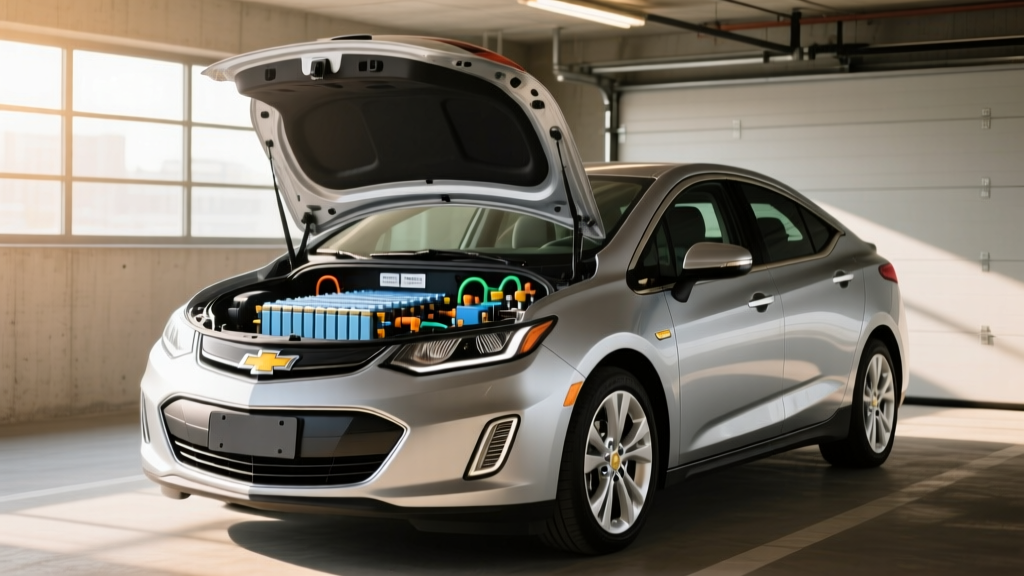
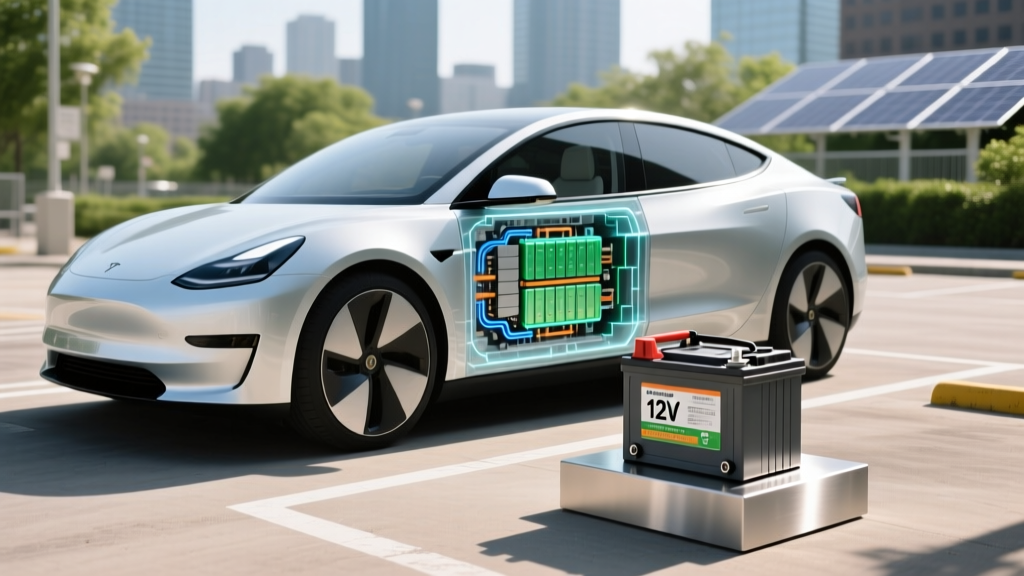
Every modern EV has two distinct battery systems. The high-voltage traction battery (typically 400V or 800V architecture) stores the energy that moves the car — measured in kilowatt-hours (kWh), ranging from ~50 kWh in compact models to 130+ kWh in large trucks. The 12V auxiliary battery is a conventional lead-acid or lithium-ion unit that powers the vehicle's computers, lights, door locks, and infotainment, and critically, closes the high-voltage contactors that allow the traction battery to energize the drivetrain.
"Jumping battery" confusion happens here: if your 12V is dead, the car appears completely bricked — no dash lights, no start, no charging. This isn't a traction battery failure. A simple 12V jump (or replacement) restores the car. The traction battery itself cannot be jump-started; if it fails or degrades below functional thresholds, it requires professional service or replacement. Understanding this distinction prevents panic and unnecessary expense.
LFP vs NMC/NCA: Chemistry Trade-Offs That Matter
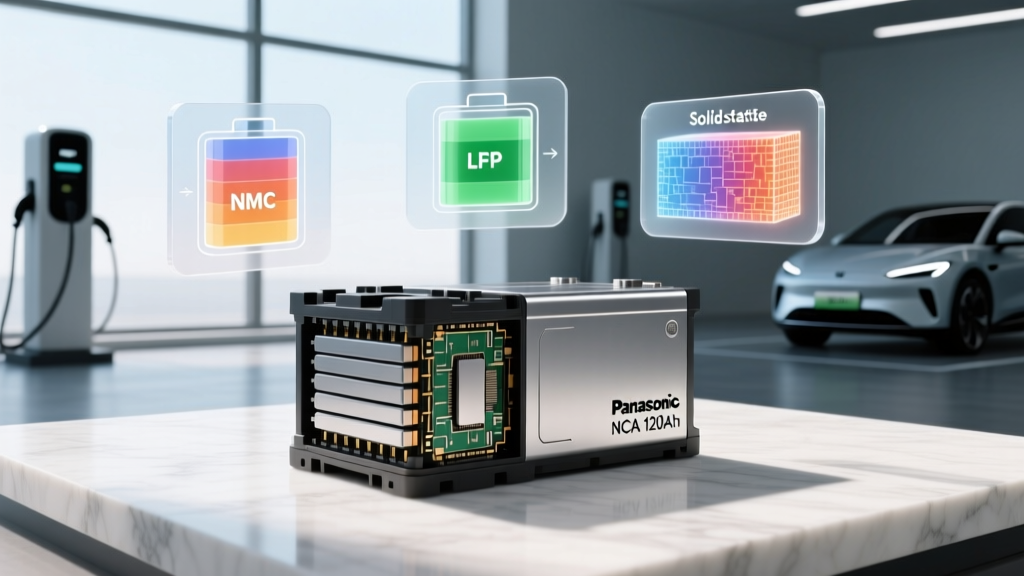
The two dominant lithium-ion chemistries in 2026 EVs are LFP (lithium iron phosphate) and NMC/NCA (nickel manganese cobalt / nickel cobalt aluminum). The choice affects range, longevity, charging behavior, cold-weather performance, and price.
| Attribute | LFP (Lithium Iron Phosphate) | NMC/NCA (Nickel-based) |
|---|---|---|
| Energy Density | Lower (~160-180 Wh/kg cell-level) | Higher (~220-260 Wh/kg cell-level) |
| Cycle Life | 3,000-5,000+ cycles to 80% SoH | 1,000-2,000 cycles to 80% SoH |
| Recommended Daily SoC | 100% (no degradation penalty) | 80% (daily), 100% only for trips |
| Cold Performance | Weaker — slower charge, more range loss below 32°F | Better — preconditioning mitigates most loss |
| Cost (per kWh pack-level) | ~$100-120/kWh | ~$130-160/kWh |
| Thermal Stability | Superior — lower thermal runaway risk | Good — requires active management |
| Typical 2026 Applications | Tesla Model 3/Y RWD, Ford Mustang Mach-E Select, Rivian Standard | Tesla Long Range, Hyundai Ioniq 5/6, BMW iX, GM Ultium LR |
| SoC Estimation | Flat voltage curve — gauge can be less precise | Steeper curve — more accurate % readout |
Which is better? It depends on your use case. LFP excels for daily commuters who charge at home, want maximum cycle life, and don't regularly face sub-freezing temperatures. NMC/NCA is preferable for drivers who need maximum range per charge, frequently fast-charge in cold weather, or tow heavy loads. Neither is universally superior — the right choice matches your driving pattern.
How Long Do EV Batteries Actually Last?
The short answer: longer than most buyers assume. Real-world fleet data from fueleconomy.gov, Recurrent Auto, and manufacturer telemetry consistently shows modern liquid-cooled traction batteries retaining 85-92% of original capacity at 100,000 miles, and 78-88% at 150,000 miles.
- Year 1 / 15,000 mi: ~2-4% loss (initial "break-in" degradation)
- Year 3 / 45,000 mi: ~5-8% total loss
- Year 5 / 75,000 mi: ~8-12% total loss
- Year 8 / 120,000 mi: ~12-18% total loss
- Year 10 / 150,000 mi: ~15-22% total loss
Source: Aggregated fleet data from Recurrent Auto and OEM warranty claims. LFP packs typically show 2-4% less degradation at equivalent mileage.
Key insight: degradation is non-linear. The steepest loss occurs in the first year, then plateaus. Most EVs will retain sufficient range for daily use well past 200,000 miles. Battery replacement is rarely needed during typical ownership — the car's body, suspension, or electronics often fail first.
What the Battery Warranty Actually Covers
Federal law mandates a minimum 8-year/100,000-mile warranty on EV traction batteries (10 years/150,000 miles in CARB states like California, New York, and Massachusetts). This covers defects and excessive capacity loss — typically defined as falling below 70% of original capacity.
| Manufacturer / Model | Warranty Term | Capacity Retention Threshold | Transferable? |
|---|---|---|---|
| Tesla Model 3/Y (LFP) | 8 yr / 100,000 mi | 70% | Yes |
| Tesla Model 3/Y LR (NMC) | 8 yr / 120,000 mi | 70% | Yes |
| Hyundai Ioniq 5/6 | 10 yr / 100,000 mi | 70% | Yes (original owner 10yr; subsequent 5yr/60k for powertrain) |
| Ford Mustang Mach-E | 8 yr / 100,000 mi | 70% | Yes |
| GM Ultium (Cadillac Lyriq, Blazer EV) | 8 yr / 100,000 mi | 70% | Yes |
| Rivian R1T/R1S | 8 yr / 175,000 mi | 70% | Yes |
| BMW i4/iX | 8 yr / 80,000 mi | 70% | Yes |
Critical nuance: The warranty covers the battery falling below the threshold due to normal use or defects. It does not cover damage from accidents, flooding, improper charging equipment, or modifications. If your 85 kWh pack drops to 58 kWh (below 70%) at 90,000 miles, the manufacturer must repair or replace it — typically with a refurbished unit that meets the threshold, not necessarily a brand-new pack.
EV Battery Replacement Cost: When and How Much
Out-of-warranty traction battery replacement is expensive, but rarely needed. Most replacements occur due to physical damage (collision, flood) rather than degradation. When degradation does necessitate replacement, it's typically at 200,000+ miles — well beyond average ownership duration.
| Vehicle / Pack Size | Battery Cost (Parts) | Labor | Total Estimated |
|---|---|---|---|
| Tesla Model 3 RWD (60 kWh LFP) | $8,000 - $11,000 | $1,500 - $2,500 | $9,500 - $13,500 |
| Hyundai Ioniq 5 (77.4 kWh NMC) | $12,000 - $16,000 | $2,000 - $3,000 | $14,000 - $19,000 |
| Ford F-150 Lightning Extended (131 kWh) | $20,000 - $28,000 | $3,000 - $4,500 | $23,000 - $32,500 |
| Chevrolet Bolt EV (65 kWh) | $9,000 - $13,000 | $1,500 - $2,500 | $10,500 - $15,500 |
| BMW iX xDrive50 (111.5 kWh) | $18,000 - $25,000 | $3,000 - $4,000 | $21,000 - $29,000 |
Prices have declined ~40% since 2020 and continue falling as pack-level costs approach $100/kWh. Third-party refurbishers and module-level repairs (replacing individual bad cells rather than the entire pack) are increasingly available for $3,000-$8,000, depending on the failure mode. For context, the average EV owner keeps their vehicle 8-10 years; most will never face this expense.
Factors That Accelerate (or Preserve) Battery Life
Battery degradation is influenced by temperature, charging habits, and depth of discharge. Modern thermal management systems mitigate most extremes, but owner behavior still matters.
- Avoid chronic DC fast charging: Occasional road-trip fast charging is fine. Daily reliance on 150+ kW DCFC accelerates degradation by ~1-2% over 5 years vs. Level 2 home charging.
- NMC/NCA: Charge to 80% daily, 100% only for trips. Sustained 100% SoC stresses nickel-based cathodes. LFP packs can and should be charged to 100% regularly for cell balancing.
- Don't store at extreme SoC: Leaving any EV at 100% or below 10% for weeks accelerates calendar aging. For storage, target 50-60% SoC.
- Precondition before fast charging: Use the vehicle's nav-routed preconditioning (Tesla, Hyundai, Ford, GM all offer this) to warm the battery to optimal temperature before DCFC. This reduces lithium plating risk and improves charge speed.
- Extreme heat is worse than extreme cold: Sustained ambient temperatures above 95°F with high SoC accelerate degradation more than freezing temps. Garage parking in hot climates helps.
- Drive it: Regular use with moderate cycling (20-80% SoC) is healthier than long-term static storage.
Monitoring Battery Health: State of Health (SoH) Explained
State of Health (SoH) is the percentage of original capacity your battery currently holds. A new 75 kWh pack at 95% SoH delivers ~71.25 kWh usable. Most 2026 EVs expose SoH through the vehicle's infotainment or mobile app, though the granularity varies.
How to check SoH:
- Tesla: No native SoH display. Use third-party apps like TeslaFi or Tessie that calculate SoH from energy consumed vs. miles driven over multiple charge cycles.
- Hyundai/Kia: SoH percentage visible in the EV settings menu or via the Kia Connect / Hyundai Bluelink app.
- GM Ultium: Available through the myChevrolet/myCadillac app under "Battery Health."
- Ford: FordPass app shows battery health status (Good/Fair/Poor) but not exact SoH percentage.
- Nissan Leaf: The "bars" display (12 bars = 100%) is a crude SoH proxy. Third-party tools like LeafSpy provide precise SoH via OBD-II.
- Universal method: An OBD-II dongle paired with apps like OBDeleven or manufacturer-specific tools can read BMS (Battery Management System) data for precise SoH, cell voltage variance, and cycle count.
Track SoH quarterly, not daily. Normal variance of 1-2% between readings is expected due to temperature and measurement methodology. A sudden drop of 5%+ warrants a dealer diagnostic.
What's Next: Solid-State and Silicon Anode Batteries
Emerging battery technologies promise step-change improvements, but realistic timelines matter. As of 2026:
- Solid-state batteries: Toyota has announced limited production in select 2027-2028 models (likely Lexus), targeting 450+ mile range and 10-minute 10-80% charging. Nissan and Honda target 2028-2030. QuantumScape's cells are in Volkswagen validation testing. Solid-state offers higher energy density (~400 Wh/kg cell-level), faster charging, and improved safety, but manufacturing scale and cost remain unsolved. Expect premium-vehicle debut first, mass-market availability 2030+.
- Silicon anode: Already in limited use (GM Ultium, Porsche Taycat) as a silicon-graphite blend (~5-10% silicon). Pure silicon anodes promise 20-30% energy density gains but suffer from expansion/contraction stress during cycling. Companies like Sila Nanotechnologies and Group14 are scaling production; expect broader adoption 2027-2029.
- Sodium-ion: CATL and BYD are producing sodium-ion packs for low-cost, short-range EVs in China. Energy density (~140 Wh/kg) limits use to city cars and LFP alternatives where cost and cold performance matter more than range. US-market availability unlikely before 2028.
These are forward-looking developments. Current LFP and NMC chemistries will dominate through at least 2030, and their longevity is well-proven.
FAQ: EV Battery Questions Answered
Can I jump-start my EV's traction battery?
No. The high-voltage traction battery cannot be jump-started. If your EV won't start, the issue is almost certainly the 12V auxiliary battery, which can be jumped like a conventional car using a portable lithium jump-starter or jumper cables from another vehicle's 12V system. Once the 12V is energized, the car's DC-DC converter recharges it from the traction pack.
How long do EV batteries last in years and miles?
Modern liquid-cooled EV batteries typically last 15-20 years or 200,000+ miles before degrading below 70% capacity. Real-world data shows most retaining 85-90% at 100,000 miles. The vehicle's body and drivetrain components often fail before the battery does.
How much does an EV battery cost to replace?
Out-of-warranty replacement costs range from $9,500 for a Tesla Model 3 RWD (60 kWh) to $32,500 for a Ford F-150 Lightning Extended Range (131 kWh), including labor. However, most owners never face this expense — batteries rarely fail from degradation alone during typical ownership.
What does the battery warranty cover?
Federal law requires 8 years/100,000 miles minimum (10/150k in CARB states). Coverage includes defects and capacity loss below 70% of original. It does not cover accident damage, flooding, or improper charging. Warranty is transferable to subsequent owners.
How do I maximize my EV battery's lifespan?
Charge NMC/NCA to 80% daily (100% for LFP), avoid daily DC fast charging, precondition before fast charging, avoid storing at 100% or below 10% SoC, and garage the vehicle in extreme heat. Regular moderate use is healthier than long-term storage.
LFP vs NMC — which chemistry is better for me?
Choose LFP if you charge at home daily, want maximum cycle life (3,000-5,000 cycles), and don't face extreme cold regularly. Choose NMC/NCA if you need maximum range per charge, frequently fast-charge in cold weather, or tow. Neither is universally superior — match chemistry to your driving pattern.
Is battery degradation covered under warranty?
Yes, if capacity falls below the manufacturer's threshold (typically 70%) within the warranty period (8yr/100k mi minimum). Normal gradual degradation above the threshold is expected and not covered. Document SoH readings periodically to establish a baseline.