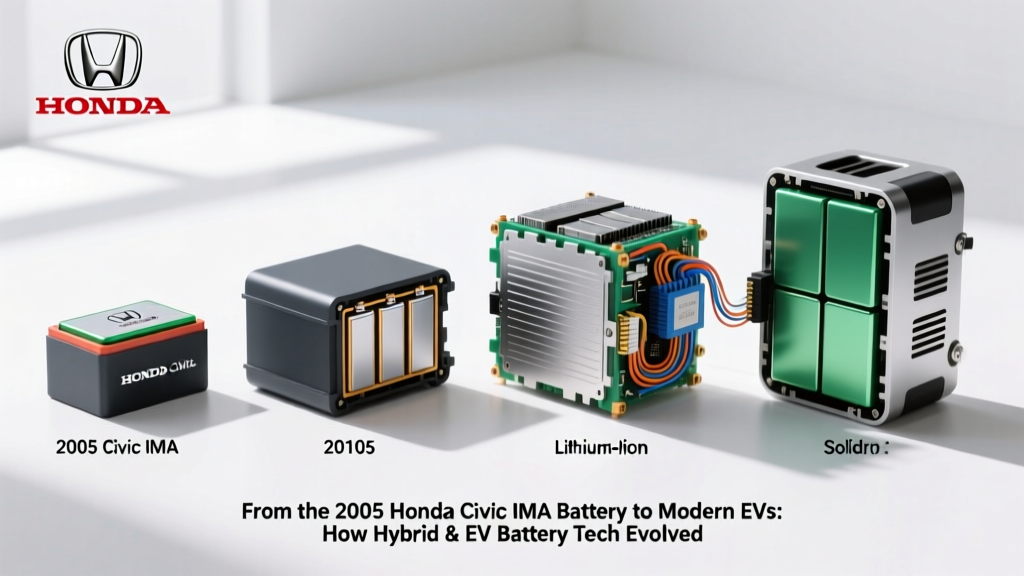
The high-voltage traction battery is the single most expensive component in any electrified vehicle — whether it's a 100 kWh pack in a long-range BEV or a compact 1.6 kWh module in a conventional hybrid. Understanding what's inside that pack, how it ages, and what happens if it fails separates informed buyers from anxious ones. This guide covers the chemistry, degradation data, warranty realities, and replacement economics you need before signing a purchase agreement.
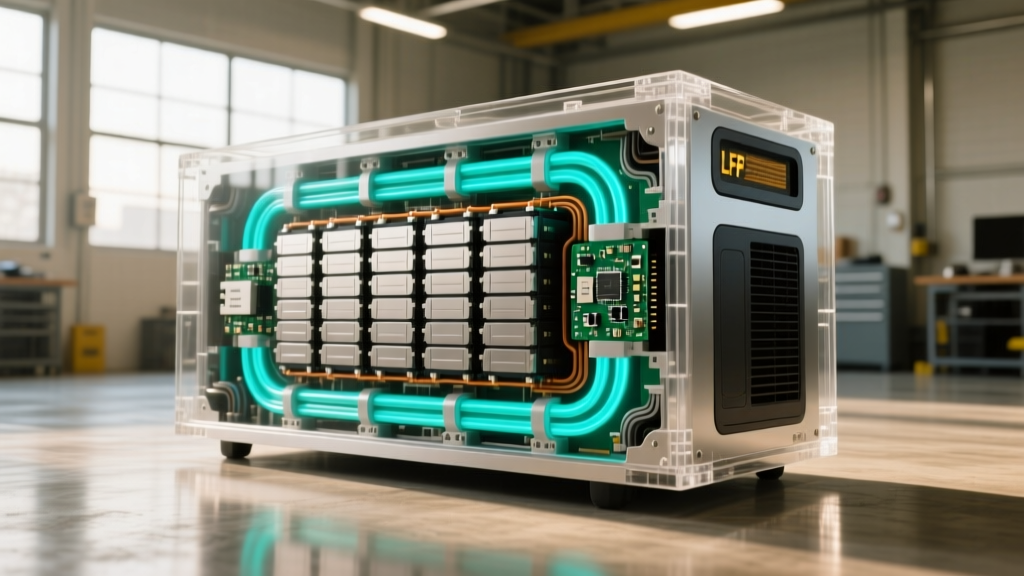
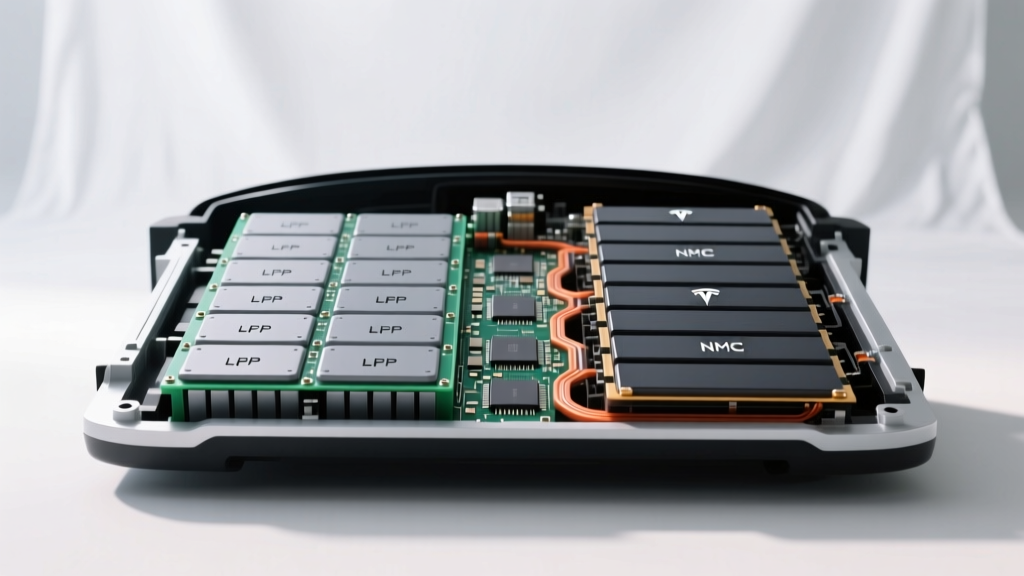
LFP vs NMC: The Two Chemistries Powering Today's EVs
Most 2026 EV and battery hybrid vehicles use one of two lithium-ion chemistries: lithium iron phosphate (LFP) or nickel manganese cobalt (NMC). A small number of performance models use NCA (nickel cobalt aluminum), but LFP and NMC dominate the market. The chemistry choice affects your range, charging habits, longevity, and even where you can park overnight in cold weather.
| Attribute | LFP (Lithium Iron Phosphate) | NMC / NCA (Nickel-based) |
|---|---|---|
| Energy Density | Lower (~160–180 Wh/kg cell-level) | Higher (~220–280 Wh/kg cell-level) |
| Typical Range Impact | Shorter range for same pack weight; heavier vehicles | More miles per kWh of battery capacity |
| Cycle Life | 3,000–5,000+ full cycles before 80% capacity | 1,000–2,000 full cycles before 80% capacity |
| Cold-Weather Performance | Poor below 32°F; significant range loss and slower charging | Better low-temperature discharge; still loses ~20–30% range at 20°F |
| Recommended Daily SoC | 100% daily charging is fine (and recommended for BMS calibration) | 80% daily; 100% only for trips |
| Cost per kWh | Lower — no cobalt or nickel | Higher — commodity-sensitive pricing |
| Common Applications (2026) | Tesla Model 3/Y RWD, Ford Mustang Mach-E Select, BYD models | Long-range AWD variants, Hyundai Ioniq 5/6, Rivian, GM Ultium vehicles |
| Thermal Stability | Excellent — inherently resistant to thermal runaway | Good with active thermal management; requires more robust cooling |
How Long Do EV and Hybrid Batteries Actually Last?
The short answer: most EV and battery hybrid traction packs outlast the vehicle they're installed in. The long answer requires looking at real degradation data rather than manufacturer marketing.
Battery degradation is the gradual loss of total capacity over time and use. A new 80 kWh pack might hold only 72 kWh after several years — that's 10% degradation, translating to roughly 10% less range. Degradation follows a curve: steeper in the first year or two, then a long, slow plateau.
Here's what the data shows across major platforms, compiled from fleet reports, owner tracking databases, and manufacturer disclosures:
| Vehicle / Platform | Chemistry | Time / Mileage | Avg. Capacity Retained | Source |
|---|---|---|---|---|
| Tesla Model 3/Y (all variants) | LFP / NMC | 200,000 miles | ~85–88% | Tesla Impact Report |
| Nissan Leaf (2018+, 40/62 kWh) | NMC (passive air cooling) | 100,000 miles / 5 years | ~80–85% (climate-dependent) | Owner fleet data, Recurrent Auto |
| Chevrolet Bolt EV/EUV (65 kWh) | NMC (active liquid cooling) | 100,000 miles | ~90–93% | Recurrent Auto fleet reports |
| Hyundai Ioniq 5 (77.4 kWh) | NMC | 60,000 miles / 3 years | ~92–95% | Owner-reported, Hyundai forums |
| Toyota Prius (hybrid, ~1.3 kWh NiMH / 13.6 kWh Li-ion PHEV) | NiMH / NMC | 200,000+ miles / 10+ years | ~85–90% (smaller buffer utilization) | fueleconomy.gov, taxi fleet data |
| Ford F-150 Lightning (131 kWh ext. range) | NMC | 50,000 miles | ~94–96% | Ford engineering disclosures, fleet data |
The pattern is clear: liquid-cooled packs (most modern EVs) degrade far more slowly than passively cooled ones. A typical 2026 EV battery should retain 85–90% of its original capacity after 150,000 miles and 8–10 years of normal use. For battery hybrid vehicles like the Prius or RAV4 Hybrid, the smaller pack sees shallower cycling (the system rarely uses the full capacity), which dramatically extends its useful life — many first-generation Prius packs are still functional past 250,000 miles.
- Frequent DC fast charging: Occasional road-trip fast charging is fine. Daily 150+ kW sessions generate sustained heat that wears cells faster. Mix in Level 2 home charging whenever possible.
- Sustained high State of Charge: Storing an NMC pack at 100% for days or weeks (e.g., leaving it plugged in at full while on vacation) stresses cathode chemistry. LFP is more tolerant of 100% storage.
- Deep discharges to near 0%: Regularly running the pack below 10% stresses the anode. Most EVs have a bottom buffer (~2–5% hidden capacity), but avoid habitually draining to empty.
- Extreme temperature exposure: Repeatedly fast-charging in 100°F+ heat without preconditioning, or charging in sub-zero cold without battery warming, causes physical stress. Park in shade or a garage when possible.
- High-performance driving in heat: Sustained track use or aggressive driving in hot climates generates internal cell temperatures that accelerate calendar aging.
What the Battery Warranty Actually Covers
Federal law mandates a minimum warranty of 8 years / 100,000 miles on EV and hybrid traction batteries for emissions-related components, and California Air Resources Board (CARB) states extend this to 10 years / 150,000 miles. Most automakers exceed these minimums voluntarily. Here's what the warranty actually guarantees — and what it doesn't.
| Manufacturer | Warranty Period | Capacity Retention Threshold | What Triggers a Claim |
|---|---|---|---|
| Tesla (Model 3/Y RWD, LFP) | 8 yr / 120,000 mi | 70% | SoH drops below 70% during warranty period |
| Tesla (Model 3/Y LR/Perf, S/X) | 8 yr / 120,000–150,000 mi | 70% | Same threshold |
| Hyundai / Kia | 10 yr / 100,000 mi | 70% | Verified capacity below 70% via dealer diagnostic |
| GM (Ultium vehicles) | 8 yr / 100,000 mi | 70% | Same; module-level replacement where possible |
| Ford (F-150 Lightning, Mach-E) | 8 yr / 100,000 mi | 70% | Same threshold |
| Toyota (Hybrid / PHEV) | 10 yr / 150,000 mi | Varies by model; functional failure | Hybrid system malfunction or significant capacity loss |
| Rivian | 8 yr / 120,000–175,000 mi (varies by pack) | 70% | Same threshold |
Critical nuance: The warranty threshold is typically 70% of original capacity — meaning your 300-mile EPA range vehicle might only deliver 210 miles before a warranty claim is valid. That's a significant loss. In practice, very few packs drop below 70% within the warranty period under normal use. The warranty protects against premature failure, not gradual aging.
Warranties cover defects and abnormal degradation. They do not cover damage from collisions, flooding, improper modifications, or use outside manufacturer guidelines. Some manufacturers may deny claims if the vehicle shows evidence of aftermarket charging equipment damage or unauthorized software modifications.
EV and Hybrid Battery Replacement Costs: The Real Numbers
This is the question that generates the most anxiety — and the most misinformation. Let's separate replacement scenarios by severity.
| Vehicle Category | Example Models | Pack Size | Full Pack Replacement (Parts + Labor) | Module-Level Repair |
|---|---|---|---|---|
| Conventional Hybrid (HEV) | Toyota Prius, Honda Accord Hybrid | 1.0–1.6 kWh (NiMH/Li-ion) | $2,500–$4,500 | Rarely modular; full swap typical |
| PHEV | Toyota RAV4 Prime, Jeep Wrangler 4xe | 13–18 kWh | $6,000–$10,000 | Some module repair available |
| Compact BEV | Chevrolet Bolt EV, Nissan Leaf | 40–65 kWh | $8,000–$14,000 | Limited module availability |
| Mid-size / Crossover BEV | Tesla Model 3/Y, Hyundai Ioniq 5, Ford Mach-E | 60–84 kWh | $12,000–$18,000 | Tesla and GM offer module-level service |
| Large / Truck BEV | Ford F-150 Lightning, GMC Hummer EV, Rivian R1T | 100–215 kWh | $18,000–$30,000+ | Module repair emerging; pack swap more common |
When is replacement actually needed? Almost never during the warranty period for liquid-cooled packs. Out-of-warranty replacements typically occur at 150,000–250,000+ miles — a mileage at which many vehicles have already been retired for other reasons (body damage, motor failure, economic obsolescence). According to data from Recurrent Auto, fewer than 5% of EVs in their tracked fleet of 15,000+ vehicles required a battery replacement through 2025.
For conventional battery hybrid vehicles, the calculus is different. A Prius hybrid battery at $3,000–$4,000 is a manageable repair on a vehicle that routinely reaches 250,000+ miles. Many independent hybrid shops offer refurbished pack replacements for $1,500–$2,500, extending the vehicle's life at a fraction of OEM cost.
Monitoring Your Battery's State of Health
State of Health (SoH) is the percentage of original capacity your battery can still hold. A new pack is 100% SoH; a pack that held 80 kWh but now holds 72 kWh is at 90% SoH. Monitoring this metric helps you track degradation, plan for warranty claims, and assess resale value.
Here's how to check SoH on popular 2026 platforms:
- Tesla: The in-car service menu (hold the model name on the About screen for 3 seconds, enter "service") provides a battery health test. Third-party apps like Tessie or TeslaFi log SoH from the vehicle's CAN bus over time.
- Hyundai / Kia: The dealer diagnostic tool provides a formal SoH readout. Request this at every service visit. Some owners use OBD-II dongles with apps like Car Scanner to pull SoH data.
- GM (Ultium): The myChevrolet/myCadillac app shows estimated battery capacity. Dealer diagnostics provide a precise SoH percentage.
- Ford: FordPass provides battery state information. Dealers can run a full SoH diagnostic via IDS/FDRS tools.
- Toyota Hybrid: The hybrid battery health is monitored by the ECU. Dealers can read battery block voltages and internal resistance during service — ask specifically for a hybrid battery health report.
- OBD-II universal approach: An OBD-II Bluetooth adapter ($30–$60) paired with apps like Car Scanner, ABRP, or EVNotify can read battery SoH on most EVs. This is the most consistent cross-brand method.
For resale purposes, a documented SoH reading from a dealer or a logged history from a third-party app adds credibility. Buyers of used EVs increasingly ask for SoH data the way they once asked for Carfax reports.
Maximizing Battery Longevity: A Practical Care Guide
You can't stop degradation, but you can slow it meaningfully. The following practices are drawn from cell-level testing data and fleet-level observations:
- Set your daily charge limit to 80% (for NMC/NCA packs). Use the vehicle's built-in charge limiter. Reserve 100% for road trips. LFP owners: charge to 100% at least once weekly for BMS calibration.
- Precondition before DC fast charging. Most EVs do this automatically when you navigate to a charger. Preconditioning warms the cells to the optimal temperature (~95–104°F) for fast charging, reducing internal resistance and lithium plating risk.
- Use Level 2 home charging as your primary method. A 7–11 kW Level 2 charger adds 25–44 miles per hour and generates far less heat than a 150+ kW DC fast charger. Your cells will thank you over 100,000 miles.
- Avoid parking at 0% or 100% SoC for extended periods. If storing the vehicle for more than a week, set the charge limit to 50–60% (NMC) or 50–70% (LFP) and leave it plugged in so the thermal management system can operate.
- In extreme cold, plug in whenever parked. Grid power keeps the battery warming system active without draining the pack. An unplugged EV in -10°F weather loses range to self-heating and may not accept a charge until it warms itself — slowly and inefficiently.
- Don't obsess over avoiding fast charging entirely. Modern battery management systems are sophisticated. Occasional DC fast charging (2–4 times per month) on a well-cooled pack shows negligible additional degradation in fleet data. Daily fast charging is a different story.
What's Coming Next: Solid-State and Beyond
Several next-generation battery technologies are in development, but none are available in production vehicles as of 2026. Here's a realistic timeline assessment:
Solid-state batteries replace the liquid electrolyte with a solid material, promising higher energy density (potentially 400+ Wh/kg cell-level), faster charging, and improved safety. Toyota has announced a solid-state battery pilot for limited-production vehicles, targeting 2027–2028, but mass-market availability remains uncertain. Samsung SDI and QuantumScape are also pursuing solid-state, with prototype demonstrations but no confirmed high-volume production dates. Expect solid-state in premium, low-volume applications first — likely not in a sub-$50,000 vehicle before 2030.
Silicon-dominant anodes replace graphite with silicon, which can store roughly 10x more lithium ions per gram. Companies like Sila Nanotechnologies and Group14 are supplying silicon-anode materials to battery manufacturers. Mercedes-Benz has tested silicon-anode cells in prototype EQG vehicles. Expect incremental adoption starting 2026–2028 in performance and luxury models, with mainstream rollout by 2029–2031.
Sodium-ion batteries use abundant sodium instead of lithium, dramatically reducing material cost. CATL has begun shipping sodium-ion cells in Chinese-market vehicles. Energy density is lower (~120–160 Wh/kg), making sodium-ion best suited for urban EVs with shorter range requirements. US-market availability is not expected before 2028.
For buyers shopping today, these technologies are forward-looking context — not a reason to delay a purchase. Current LFP and NMC packs are mature, well-understood, and backed by extensive warranty coverage. Waiting for solid-state means waiting at minimum 3–4 years for limited availability, with uncertain pricing.
Frequently Asked Questions
How long do EV batteries last in years and miles?
Most liquid-cooled EV batteries retain 85–90% of original capacity at 150,000 miles and 8–10 years. Many packs reach 200,000+ miles before hitting the 70% warranty threshold. Battery hybrid vehicles (HEVs) often exceed 250,000 miles on the original pack because the smaller battery cycles through a narrow, shallow depth of discharge.
How much does an EV battery cost to replace?
Full pack replacement ranges from $2,500–$4,500 for a conventional hybrid to $12,000–$30,000+ for a large BEV, depending on pack size. Module-level repairs (replacing individual cell groups) are becoming available on Tesla, GM Ultium, and some Hyundai platforms, reducing costs to $3,000–$8,000 for partial failures. Most vehicles are retired for other reasons before needing a full pack replacement.
What does the battery warranty cover?
Manufacturer warranties guarantee the pack will retain at least 70% of original capacity (some vary) for 8 years/100,000 miles minimum, with CARB-state vehicles covered for 10 years/150,000 miles. Coverage includes defects and abnormal degradation but excludes collision damage, flooding, and unauthorized modifications. Check your specific owner's manual for exact terms.
How do I check my battery's State of Health?
Most EVs provide SoH data through the vehicle's service menu, manufacturer app, or dealer diagnostic tools. An OBD-II Bluetooth adapter with an EV-compatible app (Car Scanner, Tessie, TeslaFi) can read SoH on most platforms. Request a formal SoH printout at every dealer service visit for documentation.
LFP vs NMC — which is better for me?
Choose LFP if you charge at home, drive under 60 miles daily, want maximum cycle life, and don't need 300+ miles of range. Choose NMC if you need long range, tow, live in a cold climate, or frequently road-trip. Neither is universally "better" — they serve different use cases. LFP's tolerance for 100% daily charging simplifies ownership; NMC's energy density enables versatility.
Does fast charging ruin my battery?
Occasional DC fast charging (a few times per month) has minimal measurable impact on modern liquid-cooled packs. Daily fast charging without preconditioning, especially in extreme heat, does accelerate degradation. The key variable is cell temperature during charging — preconditioning and moderate ambient temperatures mitigate most fast-charging risk.
Can I replace just one battery module instead of the whole pack?
On some platforms, yes. Tesla and GM Ultium vehicles support module-level service, where a single defective cell group can be replaced for $3,000–$8,000 instead of a full $15,000+ pack swap. Other platforms still require full pack replacement. Ask your dealer about module-level service availability for your specific model.
For official federal warranty requirements and emissions-related battery coverage rules, refer to the EPA vehicle certification guidelines. For current tax credit eligibility on EV and battery hybrid purchases, consult the IRS §30D clean vehicle credit page — note that hybrid vehicles must meet specific battery capacity and sourcing requirements to qualify.