How Long Do EV Charging Batteries Actually Last?
The high-voltage traction battery is the single most expensive component in any electric vehicle, and its longevity dictates long-term ownership economics far more than tire rotations or brake pad intervals. Based on aggregated fleet data, owner surveys, and manufacturer disclosures through 2025, most modern EV batteries retain between 85% and 93% of their original capacity after 100,000 miles. That means a vehicle with an EPA-rated 310-mile range when new will still deliver roughly 265–290 miles at the decade mark — a drop most drivers absorb without noticing.
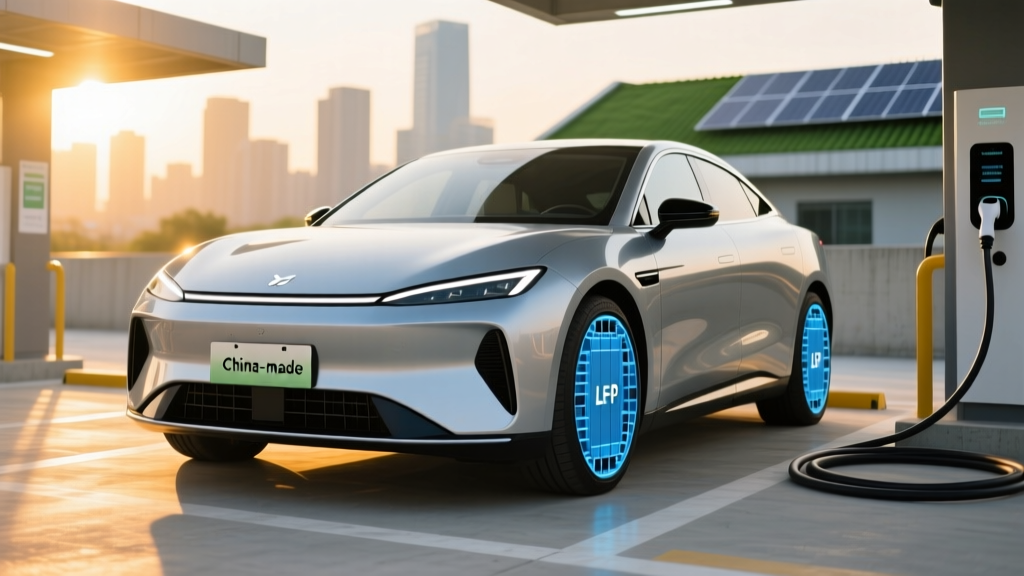
But "most" hides important nuance. A Tesla Model 3 fleet study published by the company showed median degradation of roughly 12% at 200,000 miles for vehicles with NMC (nickel manganese cobalt) packs. Meanwhile, early data from LFP (lithium iron phosphate) packs in the standard-range Model 3 and Model Y suggests even slower fade — often under 8% loss at 100,000 miles — thanks to the chemistry's inherently longer cycle life. Real-world outcomes depend heavily on how you charge, where you park, and which chemistry sits under your floor.
Typical Degradation Curve (NMC Packs, Fleet Median)
- Year 1 / 15,000 mi: ~3–5% loss (initial formation drop)
- Year 3 / 45,000 mi: ~7–9% total loss
- Year 5 / 75,000 mi: ~9–12% total loss
- Year 8 / 120,000 mi: ~12–15% total loss
- Year 10 / 150,000 mi: ~14–18% total loss
Sources: Tesla Impact Reports, Recurrent Auto battery data (2024–2025), Geotab fleet study. Individual results vary by climate, charging habits, and chemistry.
The critical takeaway: catastrophic battery failure is rare. Gradual capacity loss is the norm, and the vast majority of EV batteries outlast the vehicle's body, interior, and suspension components. The question is not whether your battery will die — it's whether you'll still own the car when it drops below a range you find acceptable.
LFP vs. NMC/NCA: Which Battery Chemistry Should You Choose?
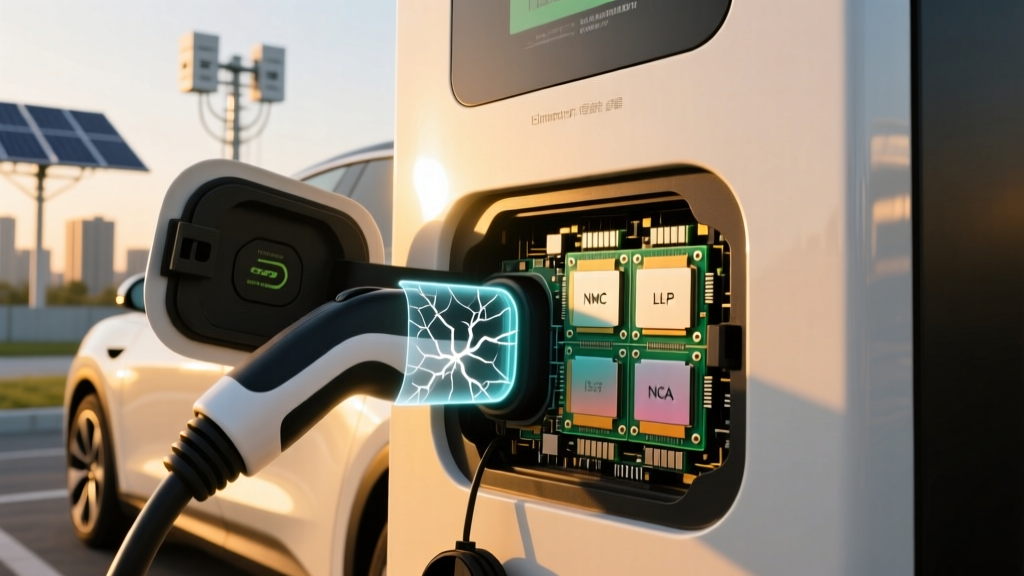
Not all EV batteries are built the same. The two dominant chemistries in 2026 passenger vehicles are LFP (lithium iron phosphate) and NMC/NCA (nickel manganese cobalt / nickel cobalt aluminum). Each carries distinct trade-offs in energy density, lifespan, cold-weather performance, and cost — and automakers are increasingly offering both within the same model lineup.
| Attribute | LFP (Lithium Iron Phosphate) | NMC / NCA (Nickel-Based) |
|---|---|---|
| Energy Density | Lower (~160–180 Wh/kg cell-level) | Higher (~220–300 Wh/kg cell-level) |
| Cycle Life | 3,000–5,000+ cycles to 80% SoH | 1,000–2,000 cycles to 80% SoH |
| Cold-Weather Performance | Reduced — greater range loss below 32°F | Better low-temp efficiency |
| DC Fast Charge Tolerance | Excellent — can charge to 100% regularly | Best kept 20–80% daily; 100% for trips only |
| Thermal Stability / Safety | Superior — higher thermal runaway threshold | Good, but more active thermal management needed |
| Cost (Cell-Level) | Lower — no cobalt or nickel | Higher — commodity-sensitive metals |
| SoC Estimation Accuracy | Tricky — flat voltage curve requires coulomb counting | More linear voltage curve, easier BMS estimation |
| Typical 2026 Applications | Tesla Model 3/Y RWD, Ford Mustang Mach-E Select, base Hyundai Ioniq 5 | Tesla Long Range/Performance, Hyundai Ioniq 5 Long Range, BMW iX, Rivian |
The practical decision: If your commute is under 150 miles round-trip, you have reliable home charging, and you live in a moderate climate, LFP is the smarter longevity play. You can charge to 100% nightly without guilt, and the pack will likely outlast the car. If you need maximum range, tow frequently, or regularly drive in sub-freezing conditions, NMC/NCA delivers the energy density and cold-weather resilience you need — just follow the 80% daily charge limit.
Tesla explicitly recommends charging LFP-equipped vehicles to 100% at least once per week to keep the battery management system (BMS) calibrated. For NMC vehicles, Tesla, Hyundai, and BMW all recommend an 80% daily charge limit with 100% reserved for imminent road trips. Ignoring this guidance accelerates calendar degradation in NMC packs.
What Does the EV Battery Warranty Actually Cover?
Federal law mandates that automakers warranty EV batteries for a minimum of 8 years or 100,000 miles, whichever comes first. In California Air Resources Board (CARB) states — which include California, Colorado, Connecticut, Maine, Maryland, Massachusetts, New Jersey, New York, Oregon, Rhode Island, Vermont, Virginia, and Washington — the requirement extends to 10 years or 150,000 miles for vehicles certified to CARB standards.
| Manufacturer | Warranty Period | Capacity Retention Threshold | Notes |
|---|---|---|---|
| Tesla (Model 3/Y LFP) | 8 yr / 120,000 mi | 70% | Higher mileage threshold for LFP trims |
| Tesla (Model 3/Y Long Range) | 8 yr / 120,000 mi | 70% | NMC pack |
| Hyundai / Kia | 10 yr / 100,000 mi | 70% | Among the longest coverage in the industry |
| Ford (Mach-E, F-150 Lightning) | 8 yr / 100,000 mi | 70% | Applies to both LFP and NMC trims |
| GM (Ultium-based) | 8 yr / 100,000 mi | 70% | Covers battery and propulsion components |
| BMW | 8 yr / 100,000 mi | 70% | Module-level replacement where possible |
| Rivian | 8 yr / 175,000 mi | 70% | Highest mileage threshold among startups |
The 70% capacity retention threshold is the industry standard trigger for a warranty claim. If your battery's measured usable capacity drops below 70% of its original kWh rating within the warranty window, the manufacturer must repair or replace the pack at no cost. In practice, most manufacturers replace individual modules rather than the entire pack when possible — a less expensive and less invasive procedure.
Important caveat: warranty coverage typically excludes damage from collisions, flooding, improper charging equipment, or unauthorized modifications. It also does not cover normal degradation above the 70% threshold. A battery at 72% capacity at year 9 is functioning "within spec" even though you've lost over a quarter of your original range.
How Much Does an EV Battery Replacement Cost?
Out-of-warranty battery replacement remains the specter that haunts prospective EV buyers. The reality is more measured: full pack replacement is uncommon before 150,000–200,000 miles, module-level repairs are increasingly feasible, and pack costs have declined steadily even as raw material prices fluctuate.
| Vehicle / Pack Size | Estimated Full-Pack Replacement | Module Repair (if available) |
|---|---|---|
| Tesla Model 3 Standard Range (~60 kWh LFP) | $12,000–$16,000 | $3,000–$5,000 per module group |
| Tesla Model Y Long Range (~82 kWh NMC) | $15,000–$20,000 | $4,000–$6,000 per module group |
| Hyundai Ioniq 5 (~77.4 kWh NMC) | $14,000–$18,000 | $3,500–$5,500 per module |
| Ford F-150 Lightning Extended Range (~131 kWh) | $22,000–$30,000 | $5,000–$8,000 per module group |
| Chevrolet Bolt EV (~65 kWh NMC) | $13,000–$16,000 | Limited module service availability |
| BMW iX xDrive50 (~111.5 kWh NMC) | $20,000–$28,000 | Module-level replacement supported |
These figures include the battery pack and labor but exclude taxes, diagnostic fees, and any ancillary cooling-system work that may be required. Prices vary by region, dealership vs. independent EV specialist, and whether the pack is new, remanufactured, or salvaged.
Context matters here. The average age of a scrapped vehicle in the US is roughly 12 years. If your EV battery retains 80%+ capacity at year 10 and 150,000 miles — which fleet data suggests is the median outcome for liquid-cooled packs — you may sell or retire the vehicle before replacement becomes necessary. For buyers planning to hold an EV beyond 200,000 miles, budgeting for a potential module replacement ($3,000–$6,000) is more realistic than planning for a full pack swap.
What Factors Accelerate Battery Degradation?
Battery wear is not linear or uniform. It's driven by electrochemical stress, and several owner-controllable factors meaningfully influence the rate of capacity loss.
Battery Care Best Practices for Maximum Longevity
- Limit DC fast charging frequency. Occasional road-trip fast charging is fine. Daily reliance on 150+ kW DC charging accelerates degradation by roughly 1–3% over the pack's lifetime compared to Level 2 home charging, per Geotab fleet data.
- Avoid sustained high State of Charge (SoC). For NMC packs, storing the vehicle at 100% SoC for days or weeks — especially in heat — stresses the cathode. Set your charge limit to 80% for daily use.
- Don't let the pack sit at very low SoC. Storing an EV below 10% SoC for extended periods risks cell imbalance and copper dissolution. If leaving the car for a week or more, aim for 40–60%.
- Use preconditioning before fast charging. Most modern EVs (Tesla, Hyundai, BMW, Ford) warm or cool the battery to the optimal temperature window (roughly 85–95°F / 30–35°C) before accepting a DC fast charge. This reduces lithium plating risk and improves charge speed. Always navigate to a charger using the car's built-in routing to trigger preconditioning.
- Park in shade or a garage during extreme heat. Calendar degradation roughly doubles for every 18°F (10°C) increase above 77°F (25°C). A garage in Phoenix is a battery investment, not a luxury.
- Embrace LFP if it fits your use case. LFP packs tolerate 100% daily charging, resist calendar aging better, and endure more charge cycles. If you don't need 300+ miles of range, the trade-off is worthwhile.
Cold weather doesn't permanently damage batteries, but it does temporarily reduce available capacity and regenerative braking capability. A vehicle rated for 300 miles may show 220–250 miles of range at 10°F — a reversible loss that recovers as the pack warms. Vehicles equipped with heat pumps (standard on most 2024+ EVs from Hyundai, Tesla, BMW, and Volkswagen) mitigate cabin-heating energy draw and preserve more range in cold conditions.
How to Monitor Your Battery's State of Health (SoH)
State of Health (SoH) is the percentage of your battery's original usable capacity that remains accessible. A new 82 kWh pack at 95% SoH delivers roughly 77.9 kWh of usable energy. Tracking this number lets you forecast range loss and identify anomalous degradation early.
Manufacturer tools: Tesla provides a battery health estimate in the service menu (Settings → Service → Battery Health Test on 2024+ software). Hyundai's Bluelink and Kia Connect apps display SoH percentage on supported models. BMW's iDrive system includes a battery health readout in the vehicle status menu. Ford's Pass app provides a battery health indicator for the Mach-E and F-150 Lightning.
OBD-II diagnostic tools: Devices like the OBDLink MX+ paired with apps such as EVbatMon or Scan My Tesla can read the BMS-reported SoH, cell voltage variance, and pack temperature in real time. This is the most granular data available short of a dealer diagnostic session.
Manual calculation method: Charge the pack to 100% (for LFP) or a known SoC percentage (for NMC), note the vehicle's displayed range or kWh estimate, and compare to the original EPA-rated capacity. This is less precise but requires no extra equipment. Repeating this quarterly builds a personal degradation trendline.
Third-party battery reports: Companies like Recurrent Auto offer free battery health reports that connect to your vehicle's telematics and provide SoH tracking, peer comparison (your pack vs. identical models), and warranty-risk alerts. Several used-EV marketplaces now include Recurrent battery certificates in listings.
What's Next: Solid-State, Silicon Anode, and Beyond
Next-generation battery chemistries promise transformative improvements — but timelines remain stubbornly optimistic in press releases and stubbornly slow in production reality.
Solid-state batteries replace the liquid electrolyte with a solid ceramic, polymer, or sulfide separator. The theoretical benefits are substantial: 30–50% higher energy density, faster charging (potentially 10–80% in under 10 minutes), and dramatically improved safety due to the elimination of flammable liquid electrolyte. Toyota has announced solid-state production for a limited model run in 2027–2028. Samsung SDI targets 2027 for automotive-grade samples. However, manufacturing yield, cost, and cycle-life challenges have repeatedly delayed commercialization. Expect solid-state to appear first in low-volume, premium applications — not in a $35,000 crossover — and to reach mainstream scale no earlier than 2030.
Silicon anode technology is closer to production. By replacing graphite anodes with silicon-dominant composites, cell makers can boost energy density by 20–40% without changing the cathode chemistry. Sila Nanotechnologies and Group14 Technologies are supplying silicon anode materials to battery manufacturers, with initial automotive cells expected in 2026–2027 model-year vehicles. This is an incremental evolution, not a revolution — but it meaningfully extends range within existing pack dimensions.
Sodium-ion batteries are emerging as a low-cost alternative for entry-level EVs and stationary storage. CATL has begun shipping sodium-ion packs in Chinese-market vehicles, with energy densities around 140–160 Wh/kg. These won't replace lithium-ion in long-range vehicles, but they could power affordable city EVs at pack costs well below LFP.
For buyers shopping today, these technologies are context, not decision factors. The LFP and NMC packs in 2026 vehicles represent mature, well-understood technology with extensive real-world track records. Buy on the merits of what's available now — the next breakthrough will be backward-compatible with none of today's charging infrastructure guarantees.
Frequently Asked Questions
How long do EV charging batteries last in real-world use?
Based on fleet data from Tesla, Geotab, and Recurrent Auto, the median EV battery retains 85–90% of its original capacity at 100,000 miles and 78–85% at 200,000 miles. In calendar years, most liquid-cooled packs deliver 12–18 years of usable service before dropping below 70% capacity. LFP chemistries trend toward the longer end of that range.
How much does it cost to replace an EV battery in 2026?
Full pack replacement ranges from approximately $12,000 for a 60 kWh LFP pack (Tesla Model 3 Standard Range) to $30,000 for a 131 kWh pack (Ford F-150 Lightning Extended Range). Module-level repairs, where supported, cost $3,000–$8,000. Most owners never face this expense because the battery outlasts the vehicle or remains within the 8-year/100,000-mile warranty window.
What does the EV battery warranty cover?
Federal law requires a minimum 8-year/100,000-mile warranty on EV batteries, with a 70% capacity retention threshold. CARB states extend this to 10 years/150,000 miles for qualifying vehicles. The warranty covers defects and premature degradation below the threshold. It does not cover collision damage, improper charging, or normal wear above 70% capacity.
How do I check my EV battery health?
Most 2024+ EVs display SoH in the vehicle's service menu or companion app. For more detailed data, an OBD-II adapter (such as OBDLink MX+) with an EV-specific app reads BMS-reported SoH, cell voltages, and temperatures. Third-party services like Recurrent Auto provide free telematics-based battery reports with peer comparisons.
LFP vs. NMC — which battery is better for daily charging?
For daily charging and long-term longevity, LFP is the stronger choice. It tolerates 100% daily charging, endures 3,000–5,000+ cycles, and resists calendar aging better than NMC. The trade-off is lower energy density (shorter range per kWh) and reduced cold-weather performance. If you need 300+ miles of range or regularly drive in freezing conditions, NMC is the better fit — just maintain an 80% daily charge limit.
Does frequent DC fast charging damage the battery?
Occasional DC fast charging (road trips, a few times per month) has minimal impact on modern liquid-cooled packs. Daily reliance on 150+ kW charging adds roughly 1–3% additional degradation over the pack's lifetime, per Geotab's fleet analysis. The bigger risk is fast-charging a cold pack without preconditioning, which can cause lithium plating. Always use the vehicle's built-in charger navigation to trigger thermal preconditioning.
Will solid-state batteries make today's EVs obsolete?
Not in the near term. Solid-state batteries remain in pre-production as of early 2026, with Toyota and Samsung SDI targeting limited production in 2027–2028. Mainstream adoption at competitive pricing is unlikely before 2030. Today's LFP and NMC packs offer proven reliability, and the charging infrastructure is built around them. Buy for your needs today rather than waiting for a technology that remains years from dealership floors.
Sources: U.S. Department of Energy / fueleconomy.gov, IRS §30D Clean Vehicle Credit guidelines, Tesla Impact Report 2024, Geotab EV Battery Degradation Study, Recurrent Auto battery data (2025).