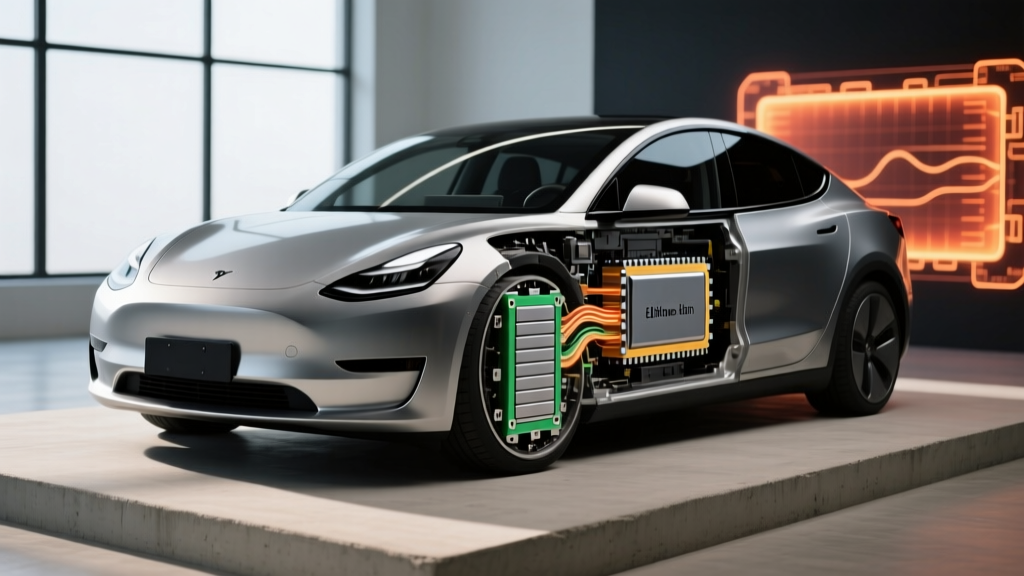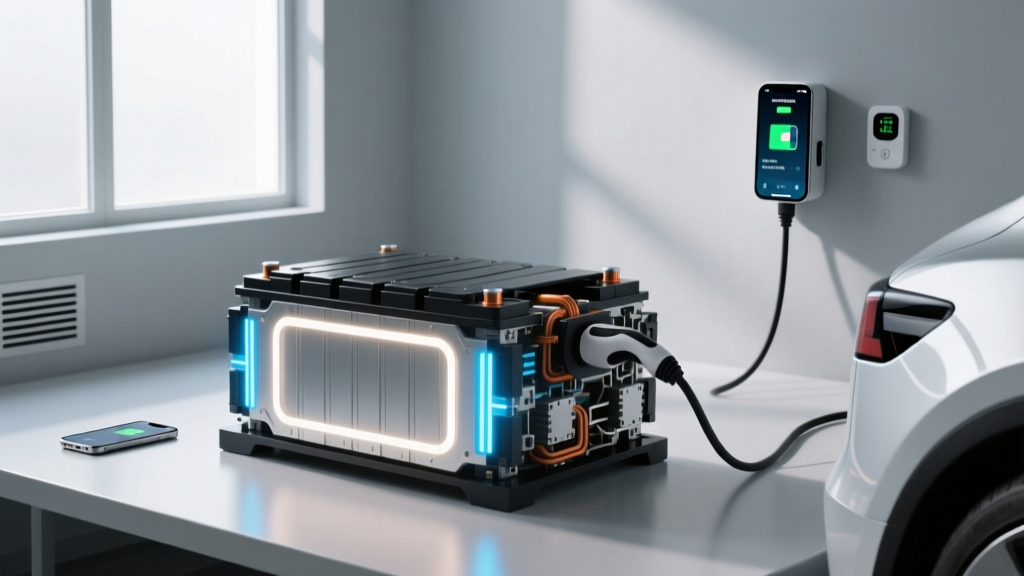
The single most expensive component in any electric vehicle is the high-voltage traction battery. It stores the energy that propels the car, powers the climate system, and runs every onboard computer. Yet most EV owners have only a vague understanding of what's happening inside that pack — or how their daily charging habits shape its long-term health.
If you're searching for how to charge battery systems for maximum longevity, you've found the right technical deep-dive. This guide covers the chemistry inside modern EV packs, real-world degradation data, warranty protections, replacement economics, and the specific habits that preserve — or destroy — battery capacity over a decade of ownership.
LFP vs NMC/NCA: The Chemistry Inside Your Pack
Not all EV batteries are built alike. The two dominant lithium-ion chemistries in 2026 passenger vehicles are LFP (lithium iron phosphate) and NMC/NCA (nickel manganese cobalt / nickel cobalt aluminum). The choice between them affects range, longevity, cold-weather performance, and price.
| Attribute | LFP (LiFePO₄) | NMC / NCA |
|---|---|---|
| Energy Density | ~160–180 Wh/kg (lower) | ~220–270 Wh/kg (higher) |
| Cycle Life | 3,000–5,000+ cycles | 1,000–2,500 cycles |
| Cold Performance | Weaker below 32°F; slower charging | Better low-temp conductivity |
| Cost per kWh | Lower (~$80–$100/kWh pack-level) | Higher (~$110–$140/kWh pack-level) |
| Optimal Daily SoC | 100% charging is fine | 80% daily recommended |
| Cobalt Content | None | Contains cobalt/nickel |
| Typical Applications | Tesla Model 3 RWD, Model Y RWD, base BYD, Rivian Standard | Long-range trims, performance models, most luxury EVs |
What this means practically: LFP batteries trade range-per-pound for dramatically longer cycle life and lower cost. If you commute 30 miles daily and charge at home, an LFP pack could theoretically outlast the vehicle's chassis. NMC packs deliver more range in a lighter package, making them the default for 300+ mile vehicles, but they degrade faster if routinely charged to 100% or exposed to extreme heat.
The trade-off is straightforward: need maximum range and cold-weather capability? NMC. Prioritize longevity and lower upfront cost? LFP.
How Long Do EV Batteries Actually Last?
The short answer: far longer than most buyers fear. According to data aggregated from fleet operators and long-term owners, the average EV battery loses roughly 5–8% of total capacity in the first 100,000 miles, with degradation slowing significantly after the initial break-in period.
Typical Degradation Curve (NMC Pack, Moderate Climate):
- Year 1 / 15,000 mi: ~2–3% loss (initial formation drop)
- Year 3 / 45,000 mi: ~5–6% cumulative loss
- Year 5 / 75,000 mi: ~7–8% cumulative loss
- Year 8 / 120,000 mi: ~10–12% cumulative loss
- Year 10+ / 150,000+ mi: ~12–15% cumulative loss (varies heavily by care)
Sources: Geotab fleet data, Recurrent Auto battery health reports. Individual results vary based on climate, charging habits, and thermal management system quality.
For context, a vehicle originally rated at 310 miles EPA range would still deliver roughly 270–280 miles after 120,000 miles with proper care. That's still more range than most daily commutes require.
LFP chemistries tend to show even less degradation — Tesla's Standard Range vehicles using CATL-sourced LFP cells have demonstrated under 5% loss over 100,000 miles in fleet data. The key variable isn't just chemistry; it's how you treat the pack.
What Does the Battery Warranty Actually Cover?
Federal law mandates a minimum EV battery warranty of 8 years / 100,000 miles (whichever comes first) for the high-voltage traction battery. California Air Resources Board (CARB) states require an extended 10 years / 150,000 miles. Most major automakers meet or exceed these thresholds.
| Manufacturer | Battery Warranty | Capacity Threshold |
|---|---|---|
| Tesla (Model 3/Y RWD, LFP) | 8 yr / 100,000 mi | 70% retention |
| Tesla (Model 3/Y LR/Perf, NMC) | 8 yr / 120,000 mi | 70% retention |
| Hyundai / Kia (E-GMP platform) | 10 yr / 100,000 mi | 70% retention |
| Ford (Mustang Mach-E, F-150 Lightning) | 8 yr / 100,000 mi | 70% retention |
| GM (Ultium platform) | 8 yr / 100,000 mi | 70% retention |
| Rivian | 8 yr / 175,000 mi | 70% retention |
| BMW / Mercedes-Benz | 8 yr / 100,000 mi | 70% retention |
Critical detail: These warranties cover capacity loss below the stated threshold — typically 70% of original capacity. If your 80 kWh pack drops below 56 kWh usable within the warranty period, the manufacturer must repair or replace it at no cost. Normal gradual degradation above that threshold is considered expected wear.
Warranties generally do not cover damage from accidents, flooding, aftermarket modifications, or improper charging equipment. They also exclude the 12V auxiliary battery, which is a separate, conventional lead-acid or lithium unit that powers accessories and computers — not the traction system.
EV Battery Replacement Cost: What Owners Should Budget For
Here's where honest context matters. The vast majority of EV batteries never need full replacement during typical ownership. Most packs outlast 150,000 miles with usable capacity above 80%. But if you're buying a high-mileage used EV, planning to keep a vehicle past 200,000 miles, or face an out-of-warranty failure, here's the current pricing landscape.
| Vehicle / Pack Size | Battery Capacity | Estimated Replacement Cost |
|---|---|---|
| Tesla Model 3 RWD (LFP) | ~60 kWh | $10,000 – $13,000 |
| Tesla Model Y Long Range | ~75 kWh | $13,000 – $16,000 |
| Hyundai Ioniq 5 / Kia EV6 | 77.4 kWh | $14,000 – $18,000 |
| Ford F-150 Lightning Ext. Range | ~131 kWh | $22,000 – $30,000 |
| GMC Hummer EV | ~212 kWh | $35,000 – $42,000 |
| Chevrolet Bolt EV (older NMC) | ~65 kWh | $14,000 – $16,000 |
Costs include battery pack and labor; sourced from manufacturer service estimates and independent EV repair shops. Prices declining ~5–8% annually as pack-level costs fall.
Two important notes: First, module-level repair is increasingly viable. Many packs allow technicians to replace individual modules (a fraction of the full pack) for $2,000–$6,000 rather than swapping the entire unit. Second, pack-level costs continue to decline as cell manufacturing scales — a replacement in 2030 will cost materially less than today's figures.
Factors That Accelerate Battery Degradation
Understanding what stresses lithium-ion cells helps you avoid costly mistakes. Here are the primary degradation accelerators, ranked by impact:
Habits That Preserve Battery Health:
- ✅ Keep daily SoC between 20–80% (NMC/NCA packs). Set your charge limit in the vehicle's app or infotainment system.
- ✅ LFP packs can charge to 100% daily — in fact, periodic 100% charges help the BMS recalibrate cell balancing.
- ✅ Use Level 2 (home AC charging) as your primary method. Slower charging generates less heat and stress on cells.
- ✅ Precondition the battery before DC fast charging in cold weather. Most EVs do this automatically when you navigate to a charger.
- ✅ Park in shade or garages during hot weather. Sustained pack temps above 95°F accelerate calendar degradation.
- ✅ Drive it regularly. Lithium-ion cells prefer use over long-term storage at extreme SoC levels.
Habits That Degrade Batteries Faster:
- ❌ Exclusive DC fast charging — daily 150–350 kW sessions increase thermal stress and lithium plating risk.
- ❌ Leaving NMC packs at 100% SoC for days — high voltage states stress the cathode.
- ❌ Repeated deep discharges to 0% — stay above 10% when possible.
- ❌ Storing the vehicle at 0% or 100% for weeks — aim for 50% SoC for long-term parking.
- ❌ Ignoring thermal preconditioning in sub-freezing weather — charging a cold pack forces the BMS to limit current, and repeated cold charging can cause anode damage.
The DC fast-charging nuance: Occasional road-trip fast charging is perfectly fine. The concern arises when DC fast charging is your only charging method — for example, apartment dwellers relying exclusively on 150+ kW public chargers daily. Studies from Idaho National Laboratory showed that packs charged exclusively via DC fast charging degraded roughly 5–8% more over 50,000 miles compared to Level 2-only charging. Significant, but not catastrophic.
How to Monitor Battery Health (State of Health)
State of Health (SoH) is the percentage of original capacity your pack can still hold. A new battery is 100% SoH; a degraded battery at 88% SoH holds 88% of its original kWh.
How to check SoH in 2026 vehicles:
- In-vehicle menus: Many modern EVs (Hyundai, Kia, BMW, Mercedes) display SoH directly in the infotainment or driver information screen under battery settings.
- Manufacturer apps: Tesla, Ford, Rivian, and GM provide battery health indicators in their companion apps, though granularity varies.
- OBD-II diagnostic tools: Devices like the OBDLink MX+ paired with apps such as EV BatMon or LeafSpy (Nissan) can read the BMS directly for precise SoH figures.
- Third-party testing: Companies like Recurrent Auto offer battery health reports based on telematics data — useful when evaluating a used EV purchase.
- Dealer diagnostics: Any authorized service center can pull a full battery health report showing individual module voltage variance, internal resistance, and SoH.
Pro tip for used-EV buyers: Request a battery health report before purchase. Compare the reported SoH against the odometer reading and warranty remaining. A 60,000-mile vehicle showing 94% SoH is tracking well; one at 87% SoH may indicate heavy fast-charging use or thermal stress and warrants further inspection.
Emerging Battery Tech: Solid-State and Silicon Anodes
Next-generation battery technologies promise step-change improvements — but realistic timelines matter more than press-release promises.
Solid-state batteries replace the liquid electrolyte with a solid ceramic or polymer, enabling lithium-metal anodes for dramatically higher energy density (potentially 400+ Wh/kg at the cell level). Toyota, Samsung SDI, and QuantumScape are leading development. As of 2026, solid-state cells remain in limited pilot production — Toyota has announced a solid-state-equipped vehicle for the Japanese market in 2027–2028, but widespread availability in US-market vehicles is not expected before 2030 at the earliest.
Silicon-dominant anodes are closer to market. Companies like Sila Nanotechnologies and Group14 are supplying silicon-carbon composite anode materials to cell manufacturers, offering 10–20% energy density improvement over conventional graphite anodes. These are appearing in limited production cells as of 2025–2026 and will likely scale into mainstream EV packs by 2027–2028.
What this means for today's buyers: Current LFP and NMC chemistries are mature, well-understood, and backed by real-world data spanning millions of miles. Waiting for solid-state is not a practical purchase strategy — the technology will debut in premium vehicles at premium prices and take years to reach mainstream affordability.
Practical Charging Strategy: How to Charge Battery Packs for Long Life
Based on everything above, here's the distilled charging protocol that maximizes pack longevity across both chemistries:
For NMC/NCA owners:
- Set your daily charge limit to 80% in the vehicle settings.
- Charge to 100% only when you need the full range for a trip — and try to time it so you depart shortly after reaching full charge.
- Rely on Level 2 home charging (7–11 kW) for daily use. Reserve DC fast charging for road trips.
- Enable scheduled charging so the pack reaches your target SoC just before departure, minimizing time spent at high voltage.
- Precondition before fast charging — your car likely does this automatically when navigating to a DC station.
For LFP owners:
- Charge to 100% at least once per week to support BMS cell-balancing calibration.
- Daily 100% charging is acceptable — LFP's cycle life handles it without meaningful degradation penalty.
- In cold weather, precondition before charging and expect slower charge rates — LFP is more temperature-sensitive than NMC.
- Same DC fast-charging guidance: fine for road trips, not ideal as a daily-only routine.
Both chemistries benefit from avoiding prolonged storage at extreme SoC. If you're leaving your EV for a vacation, set the charge level to roughly 50% and plug in with a scheduled maintenance charge if your vehicle supports it.
Frequently Asked Questions
How long do EV batteries last in years and miles?
Most modern EV batteries deliver 150,000–200,000+ miles before dropping below 80% of original capacity. In years, that's typically 12–15 years of average use (12,000–15,000 miles/year). LFP chemistries often exceed this, with cycle-life ratings supporting 3,000–5,000 full charge cycles — equivalent to 300,000+ miles in a 300-mile-range vehicle.
How much does an EV battery cost to replace?
Full pack replacement ranges from roughly $10,000 for a 60 kWh LFP pack to $35,000+ for a 200+ kWh pack in large trucks. However, most batteries never require replacement during normal ownership, and module-level repairs ($2,000–$6,000) are increasingly common as an alternative to full swaps. Pack prices are declining 5–8% annually.
What does the battery warranty cover?
Federal law requires a minimum 8-year/100,000-mile warranty on EV traction batteries (10 years/150,000 miles in CARB states). Coverage applies when capacity drops below a specified threshold — usually 70% of original capacity. Warranties exclude accident damage, improper charging, and the separate 12V auxiliary battery.
How do I check my EV battery health?
Check SoH through your vehicle's infotainment battery settings, the manufacturer's companion app, an OBD-II diagnostic tool with EV battery software, or by requesting a dealer diagnostic report. For used-EV purchases, third-party services like Recurrent Auto provide independent battery health assessments.
LFP vs NMC — which battery chemistry is better?
Neither is universally better; it depends on your priorities. LFP offers longer cycle life (3,000–5,000 cycles vs 1,000–2,500), lower cost, and the ability to charge daily to 100% — making it ideal for daily commuters who don't need maximum range. NMC delivers higher energy density (more range per pound) and better cold-weather performance — making it the right choice for long-range and performance trims. Check your specific vehicle's chemistry before setting charge limits.
Does fast charging damage my EV battery?
Occasional DC fast charging (road trips, a few times per month) has minimal impact on battery health. The concern arises with exclusive DC fast charging as your daily routine — research shows roughly 5–8% additional degradation over 50,000 miles compared to Level 2 charging. If you have home Level 2 access, use it as your primary method and save DC fast charging for when you need it.
Should I charge my EV to 100% every night?
If your vehicle has an NMC/NCA battery, no — set the limit to 80% for daily use and reserve 100% for trips. If your vehicle has an LFP battery, yes — charging to 100% regularly is recommended to keep the battery management system properly calibrated. Check your owner's manual or vehicle settings to confirm your battery chemistry.