Why EV Battery Weight Matters More Than You Think
When shoppers compare electric vehicles, range and price dominate the conversation. But the physical mass of the battery pack — often 700 to 1,300 pounds in a modern BEV — shapes nearly every aspect of how an EV drives, charges, and ages. EV battery weight isn't just a spec-sheet footnote; it's the engineering constraint that determines whether a vehicle uses a smaller, lighter NMC pack or a heavier, longer-lasting LFP pack, and it directly influences tire wear, braking distances, and real-world efficiency.
This guide breaks down the physics behind battery mass, compares the two dominant chemistries that determine it, and gives you the ownership data — degradation curves, warranty thresholds, replacement costs, and care protocols — you need to evaluate any EV on the market.
What Determines EV Battery Weight?
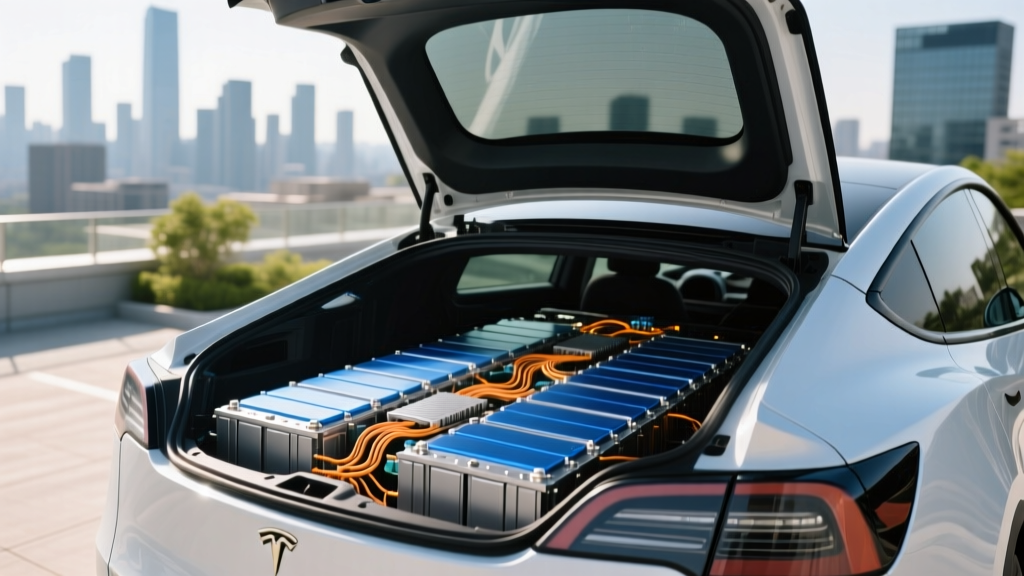
Every kilowatt-hour (kWh) of usable battery capacity requires a certain mass of cathode material, anode, electrolyte, separator, cooling hardware, and structural casing. The exact weight-per-kWh ratio depends on the cell chemistry and pack-level engineering:
- NMC (Nickel Manganese Cobalt) / NCA (Nickel Cobalt Aluminum): Higher energy density — roughly 250–300 Wh/kg at the cell level. A 75 kWh NMC pack typically weighs 800–950 lbs.
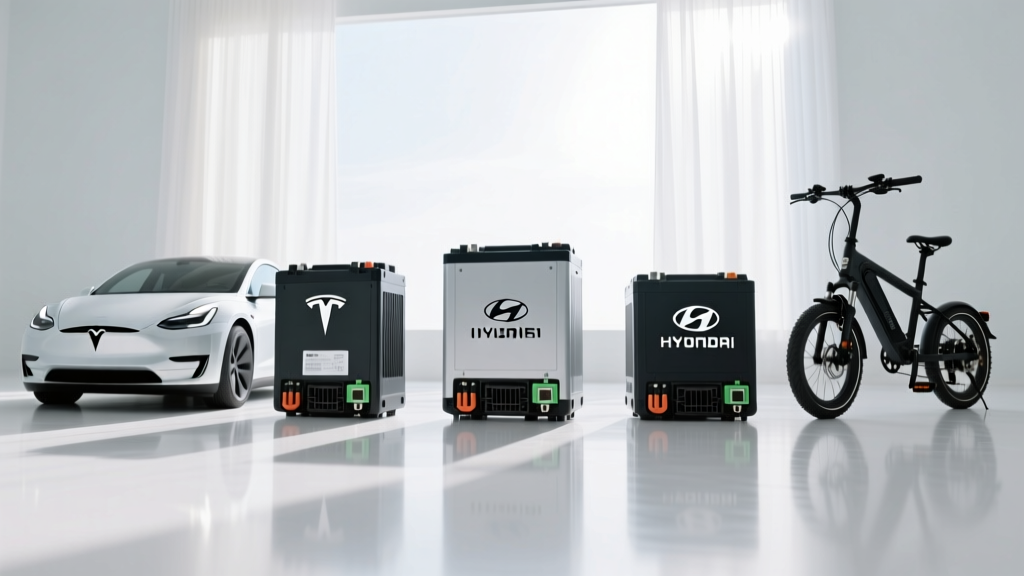
- LFP (Lithium Iron Phosphate): Lower energy density — roughly 160–200 Wh/kg at the cell level. A 60 kWh LFP pack can weigh 850–1,050 lbs, meaning a similarly sized LFP pack is 20–30% heavier than its NMC counterpart.
For context, here's how battery weight shows up in popular 2025–2026 models:
| Vehicle | Battery (kWh usable) | Chemistry | Approx. Pack Weight | Curb Weight |
|---|---|---|---|---|
| Tesla Model 3 RWD | 57.5 | LFP | ~900 lbs | 3,862 lbs |
| Tesla Model Y Long Range | 75 | NMC | ~950 lbs | 4,398 lbs |
| Hyundai Ioniq 5 (Std Range) | 58 | NMC | ~780 lbs | 4,431 lbs |
| Ford F-150 Lightning (Ext Range) | 131 | NMC | ~1,800 lbs | 6,589 lbs |
| Chevrolet Equinox EV 3LT | 85 | NMC | ~1,050 lbs | 5,130 lbs |
Notice the F-150 Lightning's extended-range pack: 131 kWh of NMC cells plus thermal management and armor adds roughly 1,800 lbs, pushing the truck's curb weight near 6,600 lbs. That mass demands stronger brakes, heavier-duty suspension components, and higher-energy tire compounds — costs that compound across the vehicle's design.
LFP vs NMC: The Chemistry That Decides Weight, Range, and Longevity
The choice between LFP and NMC isn't just about weight — it's a fundamental trade-off across energy density, cycle life, cold-weather performance, and cost. Here's a side-by-side comparison:
| Attribute | LFP (Lithium Iron Phosphate) | NMC / NCA (Nickel-based) |
|---|---|---|
| Cell energy density | 160–200 Wh/kg | 250–300 Wh/kg |
| Pack weight per 60 kWh | ~850–1,050 lbs | ~650–800 lbs |
| Cycle life (to 80% SoH) | 3,000–5,000+ cycles | 1,500–2,500 cycles |
| Cold-weather range loss (20°F) | ~30–40% | ~20–30% |
| Recommended daily SoC | 100% (benefits from full charge) | 80% (reduces degradation) |
| Cost per kWh (2025–2026) | ~$85–100 | ~$110–135 |
| Cobalt / nickel content | None | Yes (supply-chain + ethical concerns) |
| Common in | Tesla Model 3 RWD, standard-range BYD, some commercial vans | Most LR/AWD models, trucks, performance EVs |
What this means for buyers: If you prioritize maximum range in a lighter package and accept slightly faster degradation, NMC is the standard choice. If you plan to keep the vehicle 10+ years, charge to 100% daily without worry, and can accept 15–20 fewer EPA miles due to the heavier pack, LFP offers superior longevity and lower cost. The weight penalty of LFP is real but manageable in sedans and crossovers — it's less practical in trucks where every pound cuts payload capacity.
How Much Does Battery Weight Affect Real-World Range?
Heavier vehicles require more energy to accelerate, climb grades, and overcome rolling resistance. A useful rule of thumb from fueleconomy.gov data: every 100 lbs of added mass reduces efficiency by roughly 1–2%, depending on driving conditions. This means:
- A 4,500-lb EV with a 75 kWh NMC pack averaging 3.5 mi/kWh gets ~262 miles of range.
- That same vehicle with a 75 kWh LFP pack weighing 250 lbs more would average ~3.4 mi/kWh, yielding ~255 miles — a 7-mile loss from battery weight alone.
But the picture gets more nuanced. Heavier EVs also generate more regenerative braking energy on descents and in stop-and-go traffic, partially offsetting the mass penalty. In city driving with frequent regen opportunities, the efficiency gap between LFP and NMC narrows. On sustained highway runs at 70+ mph, the weight penalty is more pronounced because aerodynamic drag dominates and regen opportunities are scarce.
Tire wear also correlates with vehicle mass. Independent testing shows that a 5,000-lb EV can wear through a set of tires 15–25% faster than a 3,800-lb EV on the same tire compound, adding $150–300 to annual operating costs for heavier models like the Rivian R1T or GMC Hummer EV.
How Long Do EV Batteries Actually Last? Degradation Data
The most persistent EV myth is that batteries need replacing every few years, like a laptop. Real-world fleet data tells a different story. According to a 2025 analysis by Recurrent Auto covering over 15,000 vehicles, the average EV battery retains roughly:
- Year 1: ~97–98% State of Health (SoH) — a small initial drop as the solid electrolyte interphase (SEI) layer stabilizes.
- Year 3 (~45,000 mi): ~93–95% SoH
- Year 5 (~75,000 mi): ~89–92% SoH
- Year 8 (~120,000 mi): ~85–90% SoH
- Year 10 (~150,000 mi): ~80–87% SoH
Most modern packs are engineered to stay above 70% SoH for 15–20 years or 200,000+ miles under normal use. LFP packs tend to degrade more slowly — often retaining 90%+ SoH at 100,000 miles — which is why manufacturers like Tesla offer the same 8-year/100,000-mile warranty on LFP and NMC packs despite LFP's lower energy density.
Critical nuance: degradation is not linear. The steepest loss occurs in the first 12–18 months, after which the curve flattens considerably. A battery at 90% SoH at year 3 is very likely to still be at 82–85% SoH at year 8, not 70%.
What Does the Battery Warranty Actually Cover?
Federal law (EPA emissions-related warranty requirements) mandates that EV battery packs carry a minimum warranty of 8 years / 100,000 miles in most states, and 10 years / 150,000 miles in California and states that follow CARB standards. Here's what the major manufacturers commit to for 2025–2026 models:
| Manufacturer | Battery Warranty | Capacity Threshold | Notes |
|---|---|---|---|
| Tesla (Model 3/Y) | 8 yr / 100,000 mi (RWD), 8 yr / 120,000 mi (LR/Perf) | 70% retention | LFP packs covered same as NMC |
| Hyundai / Kia | 10 yr / 100,000 mi | 70% retention | Among the longest in the industry |
| Ford | 8 yr / 100,000 mi | 70% retention | Covers battery and hybrid components |
| GM (Chevy/Cadillac/GMC) | 8 yr / 100,000 mi | 70% retention | Ultium platform packs |
| BMW | 8 yr / 100,000 mi | 70% retention | Extends to 10 yr in CARB states |
| Rivian | 8 yr / 175,000 mi | 70% retention | Higher mileage cap reflects adventure-use positioning |
The 70% threshold is critical: if your 80 kWh pack drops to 54 kWh of usable capacity (below 70%) within the warranty period, the manufacturer must repair or replace it at no cost. In practice, very few packs fall below this threshold under normal use — most degradation claims that trigger warranty service involve defective modules or thermal management failures, not normal wear.
How Much Does an EV Battery Cost to Replace?
Out-of-warranty battery replacement is the scenario that generates the most anxiety. Here's the reality with 2025–2026 pricing data:
| Battery Size | Chemistry | Replacement Cost Range | Typical Vehicles |
|---|---|---|---|
| 50–60 kWh | LFP | $7,000–$11,000 | Tesla Model 3 RWD, BYD Dolphin |
| 60–75 kWh | NMC | $10,000–$16,000 | Tesla Model Y LR, Hyundai Ioniq 5, VW ID.4 |
| 80–100 kWh | NMC | $14,000–$22,000 | Tesla Model S/X, BMW iX, Mercedes EQS |
| 100–135 kWh | NMC | $18,000–$30,000+ | F-150 Lightning Ext, GMC Hummer EV, Rivian R1T |
These figures include the pack, labor, and coolant refill but not potential ancillary repairs (e.g., a failed onboard charger or contactor). Costs have fallen roughly 10–15% since 2022 as cell prices dropped and third-party refurbishers entered the market. Companies like Electrified Garages and dealer networks now offer refurbished packs at 30–40% below new-OEM pricing.
When is replacement actually needed? Almost never during normal ownership. A pack at 75% SoH still provides meaningful range — a 250-mile EPA vehicle at 75% SoH delivers ~187 miles, which covers 90% of daily driving needs. Full replacement typically becomes relevant only at 150,000–200,000+ miles, well beyond the ownership period for most buyers. More commonly, a single defective module ($1,500–$3,500 to replace) is the repair rather than a full pack swap.
How to Check and Maximize Battery Health
Monitoring your battery's State of Health (SoH) and adopting smart charging habits can add years of usable life. Here's what works:
Checking Battery Health
- In-car diagnostics: Most 2024+ EVs display SoH or "battery health" percentage in the settings menu (Tesla, Hyundai/Kia, BMW, Ford).
- OBD-II scanners: Tools like the OBDeleven or dedicated EV apps (e.g., Tessie for Tesla, LeafSpy for Nissan) pull detailed SoH and cell-balancing data from the BMS (Battery Management System).
- Dealer check: Any authorized service center can run a full pack diagnostic, usually for $0–$50 during routine service.
- Range-tracking method: Charge to 100% and note the displayed range. Compare to the EPA sticker when new. A consistent 10–15% drop over 2–3 years is normal; a sudden 5%+ drop in weeks signals a potential module issue.
Maximizing Battery Longevity
- Avoid chronic 100% charges on NMC packs. Set daily charge limit to 80%; reserve 100% for road trips. LFP packs, by contrast, benefit from periodic 100% charges for cell balancing.
- Minimize DC fast charging to road trips only. Frequent 150+ kW sessions accelerate electrolyte decomposition. Home Level 2 charging at 7–11 kW is gentler and cheaper.
- Precondition the battery before fast charging. Most EVs do this automatically when you navigate to a charger. A cold pack (below 50°F) that fast-charges without preconditioning can suffer lithium plating — permanent capacity loss.
- Don't store at extreme SoC. If leaving the vehicle unused for 2+ weeks, leave it at 50–60% SoC, not 100% or below 10%.
- Park in shade or a garage in summer heat. Sustained pack temperatures above 95°F accelerate degradation. The thermal management system works harder (and uses energy) to cool a sun-baked pack.
What's Next: Solid-State and Silicon-Anode Batteries
The next frontier in reducing EV battery weight while increasing energy density lies in two technologies:
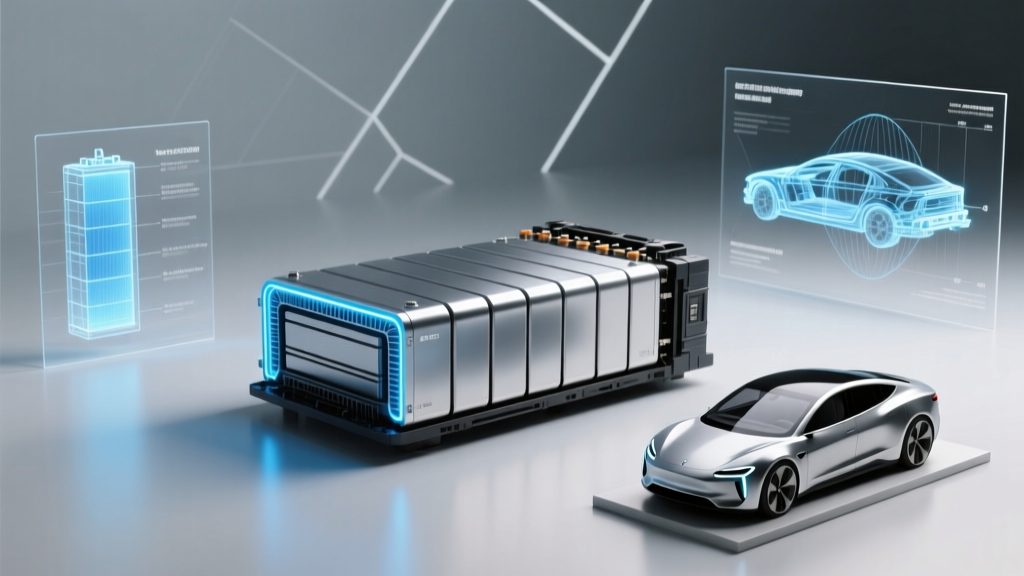
Solid-state batteries replace the liquid electrolyte with a solid ceramic or polymer, enabling lithium-metal anodes that could push cell energy density to 400–500 Wh/kg — roughly double today's NMC. That means a 100 kWh pack could weigh 500–600 lbs instead of 1,200+. Toyota has announced a solid-state-equipped EV for 2027–2028, and Samsung SDI is targeting 2027 mass production. These are announced timelines, not available products; manufacturing yield and cost remain unsolved challenges at scale.
Silicon-anode batteries (used in limited form in the Porsche Taycan and upcoming GM Ultium updates) blend silicon into the graphite anode to boost capacity by 10–20%. Silicon expands significantly during charging, which has limited its use to small percentages, but companies like Sila Nanotechnologies and Group14 are solving the expansion problem. Expect silicon-enhanced packs to appear in 2026–2028 production vehicles with modest weight reductions and 5–10% range gains.
Neither technology changes today's buying decision. Current NMC and LFP packs are mature, well-warrantied, and proven to outlast 150,000+ miles. But for buyers planning a 2028+ purchase, these advances will meaningfully reduce vehicle weight and improve range.
Frequently Asked Questions
How long do EV batteries last in years and miles?
Most modern EV batteries retain 80–87% of original capacity at 10 years / 150,000 miles. LFP chemistries often exceed 90% at the same mileage. Full pack failure before 200,000 miles is rare under normal use and thermal management.
How much does an EV battery cost to replace out of warranty?
Between $7,000 and $30,000 depending on pack size and chemistry. Most 60–75 kWh NMC packs (the most common size) cost $10,000–$16,000 installed. Refurbished packs can reduce this by 30–40%. However, full replacement is rarely needed — most packs outlast the vehicle's useful life.
What does the battery warranty cover?
Manufacturer warranties guarantee the pack will retain at least 70% of its original capacity for 8 years/100,000 miles (10 years/150,000 miles in CARB states). If capacity drops below that threshold due to normal degradation or defect, the manufacturer repairs or replaces the pack at no cost. Damage from accidents, flooding, or unauthorized modifications is excluded.
How do I check my EV's battery health?
Most 2024+ EVs show battery health or SoH in the vehicle settings menu. You can also use OBD-II apps (Tessie, LeafSpy, OBDeleven) or ask a dealer for a diagnostic report. Tracking your 100%-charge displayed range over time and comparing it to the original EPA figure is a reliable low-tech method.
LFP vs NMC — which battery chemistry is better?
Neither is universally better. NMC offers higher energy density (more range in a lighter pack), better cold-weather performance, and faster charging — ideal for long-range and performance models. LFP offers longer cycle life (3,000–5,000+ vs 1,500–2,500 cycles), lower cost, no cobalt, and the ability to charge to 100% daily without accelerated degradation — ideal for daily commuters and second-owner longevity. The weight trade-off is that LFP packs are 20–30% heavier for the same kWh capacity.
Does fast charging damage my battery?
Occasional DC fast charging (road trips, a few times per month) has minimal impact on modern packs with active thermal management. However, daily fast charging at 150+ kW can accelerate degradation by 1–3% per year compared to Level 2 home charging. The biggest risk is fast-charging a cold pack without preconditioning, which can cause lithium plating — a permanent form of capacity loss.
Will EV batteries get lighter in the future?
Yes. Solid-state batteries (announced for 2027–2028 production) could cut pack weight by 30–40% while doubling energy density. Silicon-anode enhancements arriving in 2026–2028 models offer more modest 5–10% weight savings. For today's buyers, current LFP and NMC packs are the practical reality.