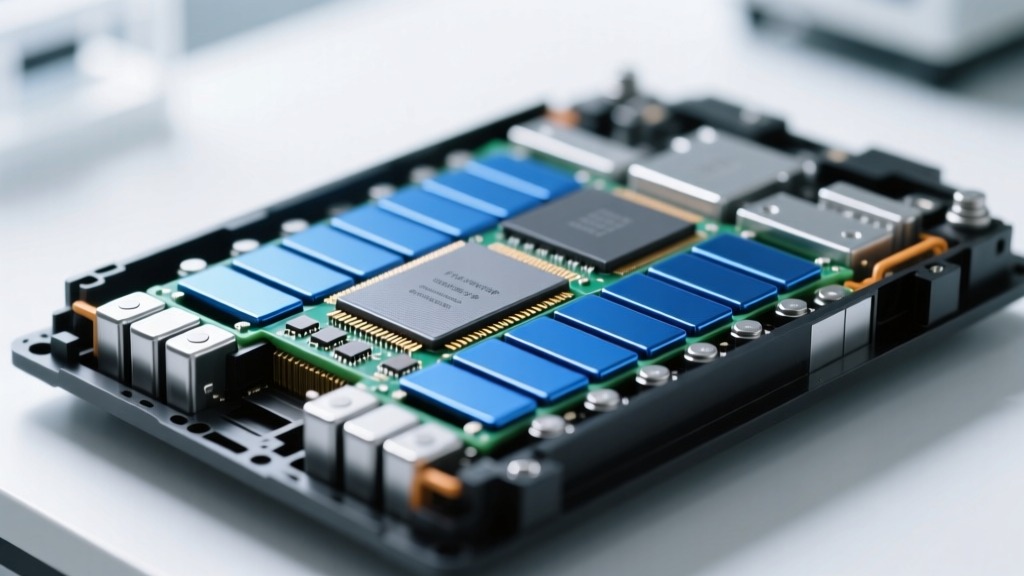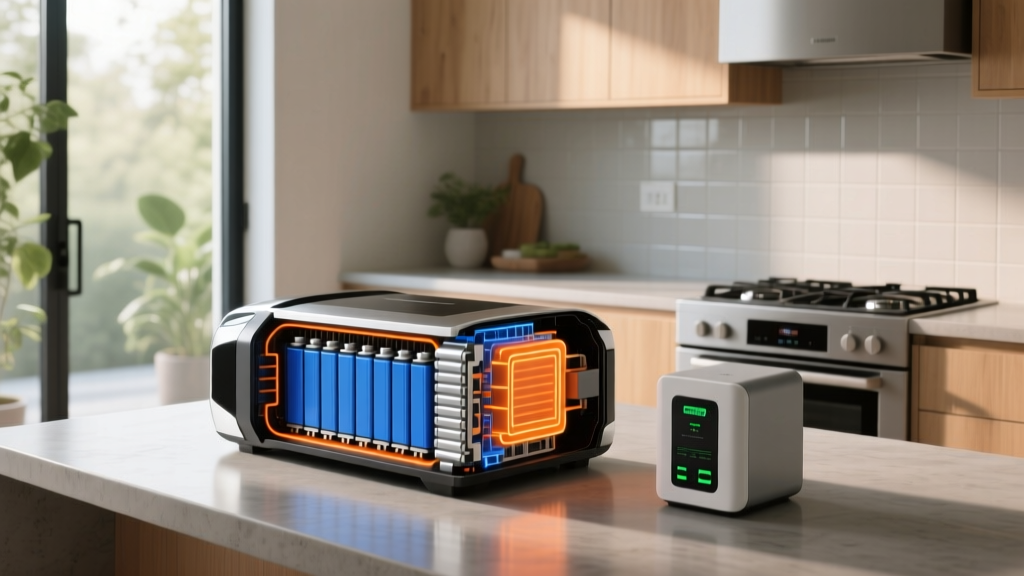
If you've searched for a "stove with battery" recently, you've likely encountered two very different product categories colliding in search results: electric cooking appliances paired with home battery backup systems (like a Tesla Powerwall running your induction range during an outage), and the far larger lithium-ion traction batteries powering modern electric vehicles. While both rely on similar underlying cell chemistry, the engineering priorities, degradation profiles, and cost structures diverge sharply. This guide uses that comparison as a lens to explain everything you need to know about EV battery technology in 2026 — from LFP versus NMC trade-offs to real-world degradation data, warranty coverage, and replacement economics.
Why "Stove with Battery" Searches Lead to EV Battery Questions
Home battery systems designed to run high-draw appliances — a stove with battery backup, for instance — typically use lithium iron phosphate (LFP) cells in a stationary 10–15 kWh enclosure. An EV traction battery uses many of the same cell formats but packs 60–130 kWh into a mobile, thermally managed skateboard platform. The overlap in chemistry means the same fundamental questions apply to both: How long will it last? What degrades it? What does warranty cover? The difference is scale, thermal management, and usage patterns. Let's break down each factor with real data.
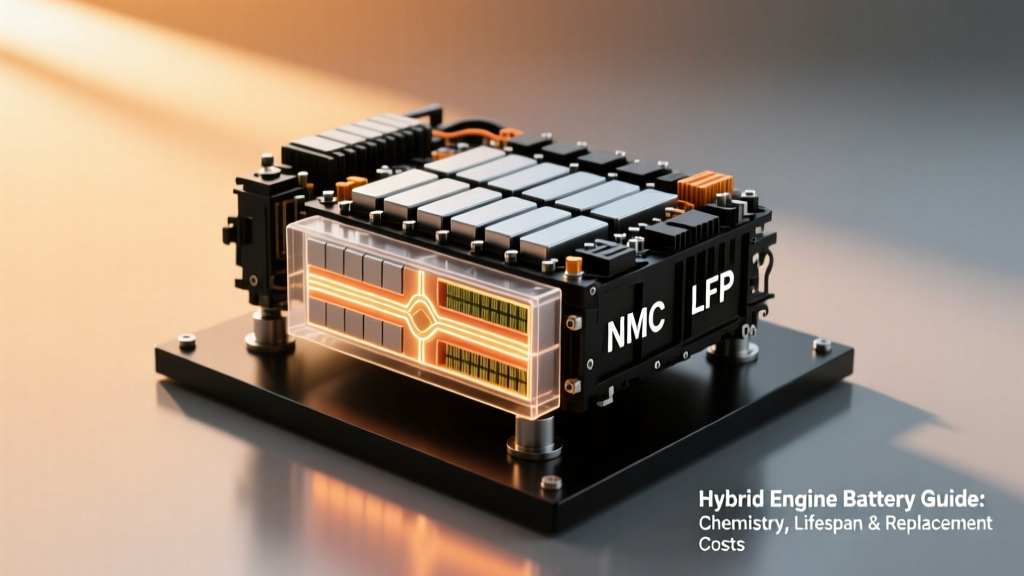
LFP vs NMC/NCA: The Chemistry Decision That Defines Your EV
Every EV sold in 2026 uses one of two dominant lithium-ion chemistries for its high-voltage traction battery. Understanding which one your vehicle uses is the single most important factor in predicting longevity, range behavior, and charging habits.
| Attribute | LFP (Lithium Iron Phosphate) | NMC / NCA (Nickel Manganese Cobalt / Nickel Cobalt Aluminum) |
|---|---|---|
| Energy Density | Lower (~160 Wh/kg cell-level) | Higher (~250–300 Wh/kg cell-level) |
| Typical EV Range | 220–280 mi EPA (heavier pack for same kWh) | 280–400+ mi EPA |
| Cycle Life | 3,000–5,000+ full cycles | 1,000–2,000 full cycles |
| Cold-Weather Performance | More range loss in freezing temps (~30–40% reduction) | Better cold performance (~20–30% reduction) |
| Charging to 100% Daily | Recommended — LFP needs full charges for BMS calibration | Not recommended — daily 80% limit extends lifespan |
| Thermal Stability | Excellent — less prone to thermal runaway | Good — requires more active thermal management |
| Cost per kWh | Lower ($100–120/kWh pack-level in 2026) | Higher ($130–160/kWh pack-level in 2026) |
| Cobalt Content | None | Some (declining with newer formulations) |
| Common In 2026 Models | Tesla Model 3 RWD, Model Y RWD, Ford Mustang Mach-E Select (LFP option), BYD vehicles | Tesla Long Range/Performance, Hyundai Ioniq 5/6, Kia EV6/EV9, Rivian, BMW iX, most AWD/Long Range trims |
The practical takeaway: LFP is the better choice for daily commuting, cost-conscious buyers, and owners who want to charge to 100% without worry. NMC/NCA delivers more range in a lighter package and performs better in cold climates — ideal for road-trippers and northern-state drivers. Neither chemistry is universally "better"; the right choice depends on your driving profile.
How Long Do EV Batteries Actually Last? Degradation Data
The fear of a dead EV battery is the single biggest barrier to electric vehicle adoption — and it's largely overblown. Modern traction batteries are engineered to outlast the useful life of the vehicle itself in most cases. Here's what real-world data shows.
Typical EV Battery Degradation Curve (2026 Fleet Data)
- Year 1 / 15,000 mi: ~2–4% capacity loss (initial formation loss)
- Year 3 / 45,000 mi: ~5–8% total capacity loss
- Year 5 / 75,000 mi: ~8–12% total capacity loss
- Year 8 / 120,000 mi: ~10–15% total capacity loss (within warranty threshold)
- Year 10 / 150,000 mi: ~12–18% total capacity loss (most packs still functional)
- Year 15 / 200,000+ mi: ~18–25% loss — pack may need replacement for acceptable range
Sources: Recurrent Auto fleet data, Tesla Impact Reports, Geotab fleet analysis. Actual degradation varies by chemistry, climate, and charging habits.
According to Recurrent's analysis of over 15,000 EVs, the median battery at 100,000 miles retains approximately 90% of its original capacity. That means a 300-mile EPA range vehicle would still deliver roughly 270 miles at that milestone — well within usable territory for most drivers.
Key insight: Degradation is not linear. The steepest loss occurs in the first 12–18 months (formation cycle loss), after which the curve flattens considerably. This is why an EV with 50,000 miles often retains nearly the same capacity as one with 30,000 miles.
What the Battery Warranty Actually Covers (and What It Doesn't)
Federal law mandates a minimum battery warranty of 8 years / 100,000 miles for EVs sold in the United States, but California Air Resources Board (CARB) states require 10 years / 150,000 miles. Most manufacturers meet or exceed these thresholds. Here's how the major brands stack up in 2026:
| Manufacturer | Warranty Period | Mileage Limit | Capacity Retention Threshold |
|---|---|---|---|
| Tesla (Model 3/Y RWD — LFP) | 8 years | 100,000 mi | 70% |
| Tesla (Model 3/Y LR/Perf — NMC) | 8 years | 120,000 mi | 70% |
| Hyundai / Kia (Ioniq 5, EV6, EV9) | 10 years | 100,000 mi | 70% |
| Ford (Mach-E, F-150 Lightning) | 8 years | 100,000 mi | 70% |
| GM (Ultium — Blazer EV, Equinox EV, Silverado EV) | 8 years | 100,000 mi | 70% (60% for fleet/commercial) |
| BMW (iX, i4, i7) | 8 years | 100,000 mi | 70% |
| Rivian (R1T, R1S) | 8 years | 175,000 mi | 70% |
| Volkswagen (ID.4) | 8 years | 100,000 mi | 70% |
What "70% capacity retention" means: If your 80 kWh battery drops below 56 kWh of usable capacity within the warranty period, the manufacturer is obligated to repair or replace it — typically by swapping in a refurbished pack that meets the threshold, not necessarily a brand-new unit. The warranty covers defects and abnormal degradation, not damage from accidents, flooding, or unauthorized modifications.
What it doesn't cover: Normal degradation above the 70% threshold is not warrantable. If your battery loses 25% capacity at year 9 or mile 105,000, you're responsible for replacement costs. This is why understanding the degradation curve above matters — most packs never reach 70% within the warranty window under normal use.
EV Battery Replacement Cost: What You'd Actually Pay
Out-of-warranty battery replacement is the scenario that generates the most anxiety. Here's the reality: it's expensive, but it's rarely needed within a vehicle's practical lifespan, and costs continue to decline.
| Vehicle / Battery Size | Battery Capacity | Replacement Cost (Parts + Labor) | When Typically Needed |
|---|---|---|---|
| Tesla Model 3 RWD (LFP) | ~60 kWh | $10,000–$14,000 | 200,000+ mi / 15+ years |
| Tesla Model Y Long Range (NMC) | ~75 kWh | $14,000–$18,000 | 200,000+ mi / 15+ years |
| Hyundai Ioniq 5 (NMC) | 77.4 kWh | $14,000–$19,000 | 200,000+ mi / 15+ years |
| Ford F-150 Lightning Extended Range | ~131 kWh | $22,000–$30,000 | 200,000+ mi / 15+ years |
| Chevrolet Silverado EV (Ultium) | ~200 kWh (max) | $30,000–$40,000 | 200,000+ mi / 15+ years |
| Rivian R1T (Large Pack) | ~129 kWh | $20,000–$28,000 | 200,000+ mi / 15+ years |
Context that matters: The average age of a vehicle on US roads is now 12.6 years, and most cars are scrapped for reasons unrelated to the powertrain — collision damage, rust, electrical gremlins, or simple economic obsolescence. According to data from the Insurance Information Institute, only a small fraction of EVs will ever need a traction battery replacement during their first-owner lifecycle. The battery is far more likely to be the longest-lasting major component in the vehicle.
Additionally, module-level repair is increasingly available. Many modern packs (Tesla's structural pack excluded) allow individual module replacement for $2,000–$5,000 rather than a full pack swap, addressing localized cell failures without replacing the entire battery.
Factors That Accelerate (or Preserve) Battery Life
Not all miles are created equal when it comes to battery degradation. The following factors have the most measurable impact on your pack's State of Health (SoH) over time:
Battery Longevity: Do's and Don'ts
- ✅ DO charge to 80% daily (NMC/NCA) — Sustained high SoC stresses nickel-based cathodes. Set your charge limit to 80% for daily use and 100% only for road trips.
- ✅ DO charge to 100% regularly (LFP) — LFP cells have a flat voltage curve; the Battery Management System (BMS) needs periodic full charges to accurately track cell balance and capacity.
- ✅ DO precondition before DC fast charging — Warming the battery to 25–35°C (via navigation to a charger or manual preconditioning) reduces lithium plating risk and improves charge speed.
- ✅ DO use Level 2 home charging as your primary method — Slow, steady 7–11 kW charging generates minimal heat and is gentler on cells than repeated DC fast charging.
- ✅ DO keep SoC between 20–80% for NMC storage — If parking for weeks, aim for ~50% SoC.
- ❌ DON'T rely exclusively on DC fast charging — Frequent 150+ kW sessions accelerate degradation by ~1–2% additional loss per year versus Level 2-only charging, per Geotab fleet data.
- ❌ DON'T let SoC sit at 0% or 100% for extended periods — Both extremes stress the electrolyte. A car sitting at 100% in a hot garage is the worst-case scenario.
- ❌ DON'T ignore extreme cold — Charging a frozen battery without preconditioning can cause lithium plating (permanent capacity loss). Always precondition in sub-freezing weather.
- ❌ DON'T tow at max capacity in hot weather repeatedly — Sustained high-current discharge in high ambient temps is the most thermally stressful driving condition.
How to Check Your EV Battery's State of Health (SoH)
State of Health (SoH) is the percentage of original capacity your battery currently retains. A new pack is 100% SoH; a pack that has degraded to 72 kWh from an original 80 kWh sits at 90% SoH. Here's how to monitor it:
- In-vehicle BMS display: Some vehicles (Tesla, Rivian, BMW iX) display estimated range at 100% SoC, which you can compare to the original EPA figure. A Tesla Model 3 Long Range originally rated at 341 miles that now shows 305 miles at 100% indicates roughly 89.5% SoH. Note: this method is approximate and can be affected by BMS calibration drift.
- OBD-II diagnostic tools: Devices like the OBDLink SX paired with apps such as Leaf Spy (Nissan Leaf) or Scan My Tesla can read detailed battery telemetry — individual cell voltages, pack impedance, and precise SoH percentage.
- Third-party battery health reports: Services like Recurrent and some dealerships can generate a certified battery health report, which is increasingly valuable for used-EV transactions.
- Manufacturer app telemetry: Tesla, Ford, Hyundai, and GM all transmit battery health data to their respective apps. While not all display a direct SoH percentage, trends in estimated range over time serve as a reliable proxy.
Pro tip for used-EV buyers: Request a battery health report before purchase. Compare the vehicle's current 100%-charge range estimate against its original EPA rating. A variance of more than 15% on a vehicle under 80,000 miles may indicate abnormal degradation worth investigating before committing.
What's Next: Solid-State and Silicon-Anode Batteries
The next generational leap in battery technology centers on two innovations, neither of which is widely available in production EVs as of 2026:
Solid-state batteries replace the liquid electrolyte with a solid ceramic, polymer, or sulfide conductor. The theoretical benefits are substantial: 40–50% higher energy density (enabling 500+ mile ranges in compact packs), faster charging (potential for 10–80% in under 10 minutes), and improved safety (no flammable liquid electrolyte). Toyota has announced solid-state prototypes and targets limited production in select models by 2027–2028, while QuantumScape continues pre-commercial validation with Volkswagen. However, manufacturing scalability, cost, and cycle-life durability remain unsolved challenges at mass-production scale. Realistic mass-market availability: 2029–2032.
Silicon-anode batteries replace graphite anodes with silicon, which can store roughly 10× more lithium ions per unit mass. Companies like Sila Nanotechnologies (partnered with Mercedes-Benz for the G-Class EV) and Group14 (partnered with Porsche) have begun limited production integration. Expect incremental silicon-anode adoption in premium vehicles through 2026–2028, with broader availability as costs decrease. Benefit: 10–20% energy density improvement over current NMC cells.
Stove with Battery vs EV Battery: The Bottom Line
Whether you're evaluating a home battery system to run your electric stove during outages or sizing up the traction battery in your next EV, the fundamentals are the same: LFP offers longevity and safety at the cost of energy density; NMC delivers range and cold-weather performance with a shorter cycle life. Both chemistries have proven durable enough that battery replacement is a rare event — not the financial catastrophe that headlines suggest.
For the EV buyer: prioritize the chemistry that matches your driving pattern, follow the charge-limit guidelines above, and let the 8–10 year warranty provide peace of mind. For the home-battery shopper: LFP is almost certainly the right call for stationary storage, where weight doesn't matter and 5,000+ cycles translate to 15+ years of daily use.
Frequently Asked Questions
How long do EV batteries last in years and miles?
Based on fleet data from Recurrent Auto and Geotab, modern EV batteries retain approximately 85–92% of original capacity at 100,000 miles and 8 years of age. Most packs remain functional (above 75% SoH) well past 150,000 miles and 12–15 years. Complete failure requiring replacement is rare and typically occurs beyond 200,000 miles.
How much does an EV battery cost to replace?
Full pack replacement costs range from approximately $10,000 for a smaller LFP pack (Tesla Model 3 RWD, ~60 kWh) to $30,000–$40,000 for the largest packs (Chevrolet Silverado EV, ~200 kWh). Module-level repair for localized cell failure can cost $2,000–$5,000. These costs have declined roughly 10–15% since 2023 and are expected to continue falling.
What does the EV battery warranty cover?
Federal minimum is 8 years / 100,000 miles; CARB states require 10 years / 150,000 miles. Coverage applies when capacity drops below 70% of original (the specific threshold varies slightly by manufacturer). The warranty covers defects and abnormal degradation but not accident damage, flooding, or unauthorized modifications. Replacement is typically with a refurbished pack meeting the retention threshold.
How do I check and maximize my EV battery health?
Monitor SoH by comparing your vehicle's current 100%-charge range estimate to its original EPA rating, or use an OBD-II diagnostic tool for precise readings. Maximize longevity by charging to 80% daily (NMC) or 100% (LFP), preconditioning before DC fast charging, avoiding sustained storage at 0% or 100% SoC, and relying primarily on Level 2 home charging rather than frequent DC fast charging.
LFP vs NMC — which battery chemistry is better for me?
Choose LFP if you commute daily, live in a mild climate, want lower cost, and prefer charging to 100% without worry. Choose NMC/NCA if you need maximum range, frequently drive in freezing temperatures, take regular road trips, or want the lightest possible pack. Neither is universally superior — the right choice depends on your driving profile and climate.
Will a home battery backup (like for a stove with battery system) use the same chemistry as my EV?
Likely yes — home battery systems like the Tesla Powerwall 3 and BYD Battery-Box use LFP chemistry, which is the same chemistry found in the Tesla Model 3 RWD, Model Y RWD, and other standard-range EVs. The difference is that home batteries are optimized for stationary use: no weight constraints, simpler thermal management, and a duty cycle of one partial cycle per day rather than the variable demands of driving.