Why Compare a Rad Power Bikes Battery to an EV Traction Battery?
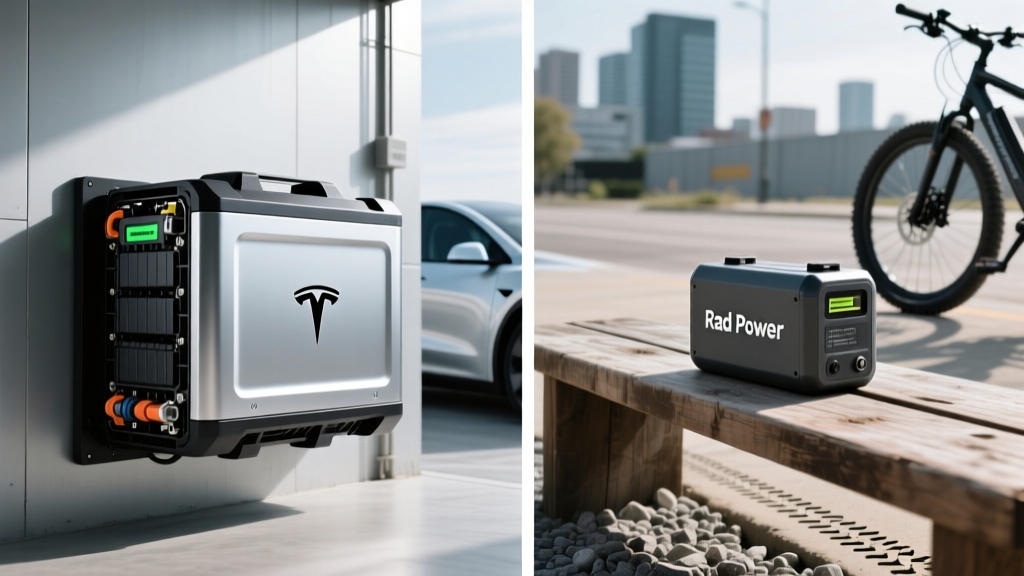
If you've searched for rad power bikes battery replacement info, you've likely seen the sticker shock: a new 48V, 14Ah lithium-ion pack from Rad Power Bikes costs around $599 and stores roughly 0.67 kWh of energy. That raises a natural question for anyone also researching electric cars — how do the massive 60-100+ kWh batteries in EVs from Tesla, Hyundai, or Ford compare in chemistry, lifespan, degradation, and replacement cost?
This guide answers that question with hard data. We'll break down the battery chemistries powering both e-bikes and EVs, examine real-world degradation curves, decode warranty fine print, and explain what you can do to maximize the life of whichever lithium-ion pack you own.
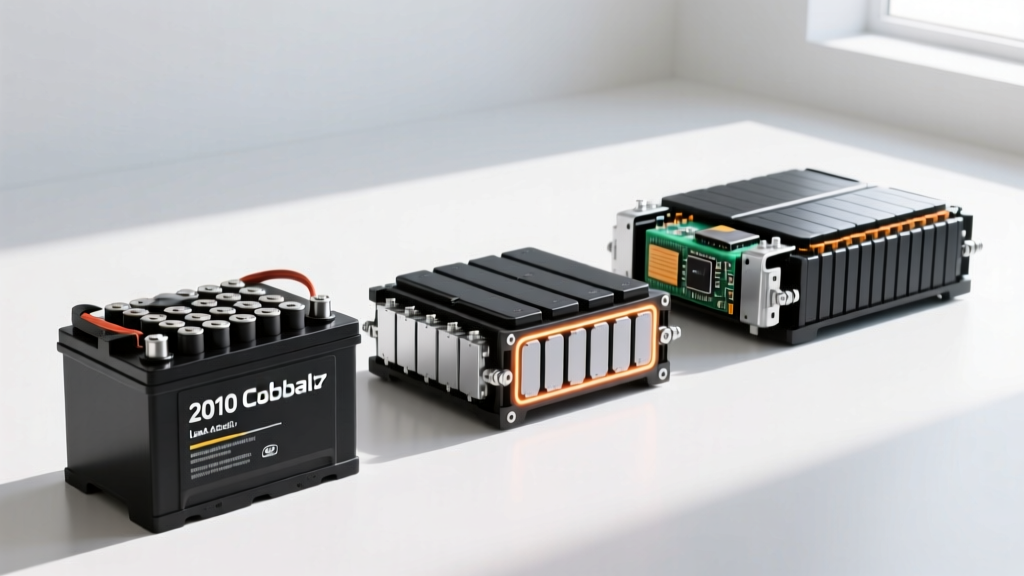
LFP vs. NMC: The Chemistry Behind Your Battery
Both Rad Power Bikes and most EVs use lithium-ion cells, but the specific cathode chemistry differs — and that difference shapes energy density, cycle life, safety, and cold-weather performance.
NMC (Nickel Manganese Cobalt) is the chemistry inside most Rad Power Bikes packs and many EVs from Hyundai (Ioniq 5/6), Ford (Mustang Mach-E, F-150 Lightning extended range), and Volkswagen (ID.4). NMC offers high energy density — more kWh per kilogram — which is why it dominates in applications where weight and space matter.
LFP (Lithium Iron Phosphate) has become the go-to chemistry for standard-range EVs. Tesla uses LFP in the Model 3 and Model Y rear-wheel-drive trims. The Ford Mustang Mach-E Select RWD switched to LFP for 2025. BYD uses LFP exclusively. LFP trades some energy density for dramatically longer cycle life, better thermal stability, and zero cobalt.
| Attribute | LFP (LiFePO4) | NMC / NCA |
|---|---|---|
| Energy Density | ~160-180 Wh/kg (cell) | ~220-300 Wh/kg (cell) |
| Typical Cycle Life | 3,000-5,000+ cycles to 80% SoH | 1,000-2,000 cycles to 80% SoH |
| Cold Performance (below 32°F) | Moderate — slower charge acceptance | Better — retains more range in cold |
| Thermal Stability | Excellent — higher runaway threshold | Good — requires more BMS management |
| Cost per kWh (2026) | ~$75-90/kWh (cell level) | ~$100-130/kWh (cell level) |
| State of Charge Recommendation | Can be held at 100% daily | Best kept 20-80% for daily use |
| Common EV Applications | Tesla Model 3/Y RWD, Ford Mach-E Select, BYD | Hyundai Ioniq 5, VW ID.4, F-150 Lightning ER |
Rad Power Bikes uses NMC cells (typically 18650 or 21700 format from suppliers like Samsung or LG) because e-bike frames have tight space and weight constraints. You need every Wh/kg you can get when the battery mounts to a bicycle frame.
How Long Do EV Batteries Actually Last?
The short answer: almost certainly longer than you'll own the car. But the data is more nuanced than marketing claims.
Real-World Degradation Data Points
According to fueleconomy.gov and long-term fleet studies, here's what degradation looks like in practice:
- Tesla Model 3/Y (LFP): Tesla's 2025 Impact Report states the fleet averages ~12% degradation at 200,000 miles. LFP packs degrade slower in the first 50,000 miles but show a more linear curve afterward.
- Hyundai Ioniq 5 (NMC, 77.4 kWh): Independent testing by Recurrent Auto (a battery analytics firm tracking 15,000+ EVs) shows ~8-10% capacity loss at 100,000 miles for liquid-cooled NMC packs from Hyundai/Kia.
- Nissan Leaf (passively cooled NMC/NCA): The older-generation Leaf without active thermal management showed 15-25% degradation at 80,000-100,000 miles, especially in hot climates. This is the cautionary tale that pushed the industry toward liquid cooling.
- Chevrolet Bolt EV (NMC, 65 kWh): Post-recall replacement packs have shown minimal degradation — under 5% at 50,000 miles — thanks to conservative buffer management and updated thermal software.
For comparison, a Rad Power Bikes battery (0.67 kWh, NMC) is rated for approximately 800-1,000 full charge cycles before reaching 80% of original capacity. If you charge daily and ride 20 miles per day, that's roughly 2.5-3 years of heavy use, or 5-7 years of moderate commuting. At $599 for a replacement, the cost-per-year is manageable — but it highlights how much harder e-bike batteries work relative to their size.
What Does the Battery Warranty Actually Cover?
Federal law (via EPA emissions warranty requirements and CARB rules adopted by multiple states) effectively mandates that EV batteries carry substantial warranties. Here's how the major automakers structure theirs in 2026:
| Manufacturer | Warranty Term | Capacity Threshold | Notes |
|---|---|---|---|
| Tesla (Model 3/Y LFP) | 8 years / 120,000 miles | 70% retention | Whichever comes first |
| Tesla (Model S/X) | 8 years / 150,000 miles | 70% retention | Longer mileage due to larger pack |
| Hyundai / Kia | 10 years / 100,000 miles | 70% retention | Among the best in the industry |
| Ford | 8 years / 100,000 miles | 70% retention | Covers battery and hybrid components |
| General Motors (Ultium) | 8 years / 100,000 miles | 70% retention | Applies to Blazer EV, Silverado EV, Equinox EV |
| Volkswagen | 8 years / 100,000 miles | 70% retention | ID.4, ID.Buzz |
Key fine print: these warranties cover capacity degradation below the threshold, not just catastrophic failure. If your Ioniq 5 drops to 68% capacity at year 7 and 85,000 miles, Hyundai is contractually obligated to repair or replace the pack. In practice, most warranty claims involve module-level replacements rather than full pack swaps.
Rad Power Bikes, by contrast, offers a 1-year warranty on its batteries — standard for the e-bike industry. After that, you're paying out of pocket for any replacement.
EV Battery Replacement Cost: The Numbers
This is the question that drives most battery anxiety. Let's put real numbers to it.
| Vehicle | Battery Size | Chemistry | Estimated Replacement Cost |
|---|---|---|---|
| Tesla Model 3 RWD | ~60 kWh (usable) | LFP | $8,000 - $12,000 |
| Tesla Model Y LR | ~75 kWh (usable) | NMC | $12,000 - $16,000 |
| Hyundai Ioniq 5 | 77.4 kWh | NMC | $10,000 - $15,000 |
| Ford F-150 Lightning ER | ~131 kWh | NMC | $18,000 - $25,000 |
| Chevrolet Bolt EV | 65 kWh | NMC | $9,000 - $14,000 (post-recall) |
| Rad Power Bikes (all models) | 0.67 kWh | NMC | $599 (retail direct) |
Context matters enormously here. Cell prices have fallen from over $1,000/kWh in 2010 to roughly $80-110/kWh at the cell level in 2026, according to BloombergNEF and industry tracking. The installed cost (pack-level with BMS, cooling, and labor) runs $150-250/kWh depending on the vehicle. And critically: the vast majority of EV owners never replace their battery. The car is typically sold, traded, or scrapped before the pack falls below usable capacity.
For e-bike owners, the calculus is different. A Rad Power Bikes battery at $599 represents ~40% of the cost of a new RadCity 5 Plus ($1,799 in 2026). That's a meaningful expense, but one that's far easier to absorb than a five-figure EV pack swap.
What Kills Batteries Faster — and How to Prevent It
Whether you're managing a 77 kWh Ioniq 5 pack or a 0.67 kWh Rad Power Bikes battery, the physics of lithium-ion degradation are the same. Here's what accelerates wear:
- Avoid sustained 100% SoC: For NMC chemistry, store and daily-drive between 20-80%. LFP packs tolerate 100% better — Tesla recommends charging LFP to 100% at least weekly for BMS calibration.
- Minimize DC fast charging: Occasional road-trip fast charging is fine. Daily reliance on 150+ kW DC charging accelerates degradation by an estimated 2-5% over the pack's life compared to Level 2 home charging.
- Precondition before fast charging: Cold batteries resist accepting high charge rates. Use your EV's navigation-to-charger preconditioning (Tesla, Hyundai, Ford all offer this) to warm the pack to optimal temperature (~95-105°F) before plugging into a DC fast charger.
- Avoid extreme heat storage: Parking an EV in 110°F+ ambient heat for weeks at high SoC accelerates calendar degradation. If storing, aim for ~50% SoC in a cool location.
- Don't deep-cycle to 0%: Running the pack to true zero (not just the displayed 0%, which includes a buffer) stresses cells. The ~3-5% buffer at the bottom protects against this.
- For e-bikes: Remove the battery if storing the bike in a hot garage or freezing shed for extended periods. Store at 40-60% charge.
The single biggest factor most owners overlook is calendar degradation — capacity loss that happens simply from time passing, regardless of mileage. A 2020 study from Geotab (tracking 6,300 EVs) found that average annual degradation was ~2.3% per year, with calendar aging accounting for a significant portion. This is why a 10-year-old EV with only 40,000 miles may show similar degradation to one with 100,000 miles.
How to Monitor Your Battery's State of Health (SoH)
State of Health (SoH) is the percentage of original capacity your battery can still hold. A brand-new pack is 100% SoH; a degraded pack at 80% SoH holds 80% of its original kWh.
For EV Owners:
- Tesla: The app and service menu don't directly display SoH percentage, but third-party tools like TeslaFi or Stats (iOS) can estimate it from charge logs. Some service centers will provide a battery health report on request.
- Hyundai/Kia: The infotainment system's EV diagnostics page shows battery state and estimated range at full charge, which you can compare to the original EPA figure.
- Recurrent Auto: This free service (used by 50,000+ EV owners) connects to your vehicle's telematics and provides a monthly SoH estimate with fleet comparison data.
- OBD-II scanners: Devices like the OBDeleven (VW/Audi) or Car Scanner app (with an ELM327 adapter) can read battery management system data including SoH, cell voltage variance, and pack temperature.
For Rad Power Bikes Owners:
Rad Power Bikes does not provide a built-in SoH readout. You can estimate health by charging to 100% and measuring actual range vs. the original rated range (25-45 miles depending on model). A noticeable drop — say, from 40 miles to 30 miles on the same route with similar assist levels — suggests ~75% SoH. Third-party battery diagnostic tools for e-bikes are limited; most riders rely on range observation.
What's Next: Solid-State and Silicon Anode Batteries
If you're planning an EV purchase and wondering whether to wait for next-generation batteries, here's the realistic 2026 landscape:
Solid-state batteries — which replace the liquid electrolyte with a solid material for higher energy density and faster charging — remain in limited production. Toyota has announced a solid-state battery for a 2027-2028 vehicle with a claimed 460-mile range and 10-minute 10-80% charge. Samsung SDI is targeting 2027 for mass production. These timelines have slipped before; treat them as preliminary.
Silicon anode technology is closer to market. Companies like Sila Nanotechnologies and Group14 are supplying silicon-dominant anode materials that boost energy density by 20-40% over conventional graphite anodes. The Mercedes-AMG G-Class electric (announced for 2025-2026) is among the first vehicles to use silicon anode cells from Group14. Expect this technology to trickle into mainstream EVs by 2028-2029.
Neither technology will affect e-bike batteries in the near term — the cost premium is too high for the price-sensitive e-bike market. Rad Power Bikes and competitors will continue with NMC 21700 cells for the foreseeable future.
Frequently Asked Questions
How long do EV batteries last in years and miles?
Modern liquid-cooled EV batteries with NMC chemistry typically retain 80-90% capacity at 100,000 miles (roughly 8-10 years of average driving). LFP packs from Tesla and BYD show even slower degradation, often exceeding 90% retention at 100,000 miles. Most EV batteries will function above 70% capacity for 150,000-200,000+ miles — effectively outlasting the vehicle's economic life.
How much does it cost to replace an EV battery?
Full pack replacement costs range from $8,000 for a Tesla Model 3 LFP to $25,000 for a Ford F-150 Lightning extended-range pack, including parts and labor. However, most owners never need a replacement — the battery outlasts the car. Module-level repairs (replacing individual cell groups) can cost $2,000-$5,000 and are increasingly common as an alternative to full pack swaps.
What does an EV battery warranty cover?
Federal and CARB-state regulations effectively require 8 years/100,000 miles minimum (Hyundai/Kia offer 10 years). The warranty guarantees the battery will retain at least 70% of original capacity. If degradation exceeds that threshold within the warranty period, the manufacturer must repair or replace the pack at no cost. Coverage includes defects, premature degradation, and thermal management failures — but not damage from accidents, flooding, or aftermarket modifications.
LFP vs. NMC — which battery chemistry is better?
Neither is universally better; it depends on your use case. Choose LFP if you want maximum cycle life, plan to keep the car 8+ years, charge at home daily to 100%, and don't need the absolute longest single-charge range. Choose NMC if you need maximum range per charge (road trips), frequently drive in very cold climates (NMC performs better below freezing), or need the lightest possible pack (relevant for performance vehicles). For a Rad Power Bikes battery, NMC is the only practical choice — the frame simply can't accommodate the larger, heavier pack that LFP's lower energy density would require.
How do I check my EV battery health at home?
Charge to 100% (or 80% for NMC daily use) and note the displayed estimated range. Compare it to the original EPA-rated range. A 300-mile EPA vehicle showing 270 miles at full charge suggests ~90% SoH — normal for 50,000-80,000 miles. For more precise data, use a telematics-connected service like Recurrent Auto (free) or an OBD-II adapter with an EV-compatible app to read BMS data directly.
Sources: fueleconomy.gov (EPA range and efficiency data), irs.gov (§30D tax credit battery sourcing requirements), manufacturer warranty documentation (Tesla, Hyundai, Ford, GM, VW — 2026 model year).