Why EV Buyers Are Comparing Traction Batteries to Portable Battery Power Stations
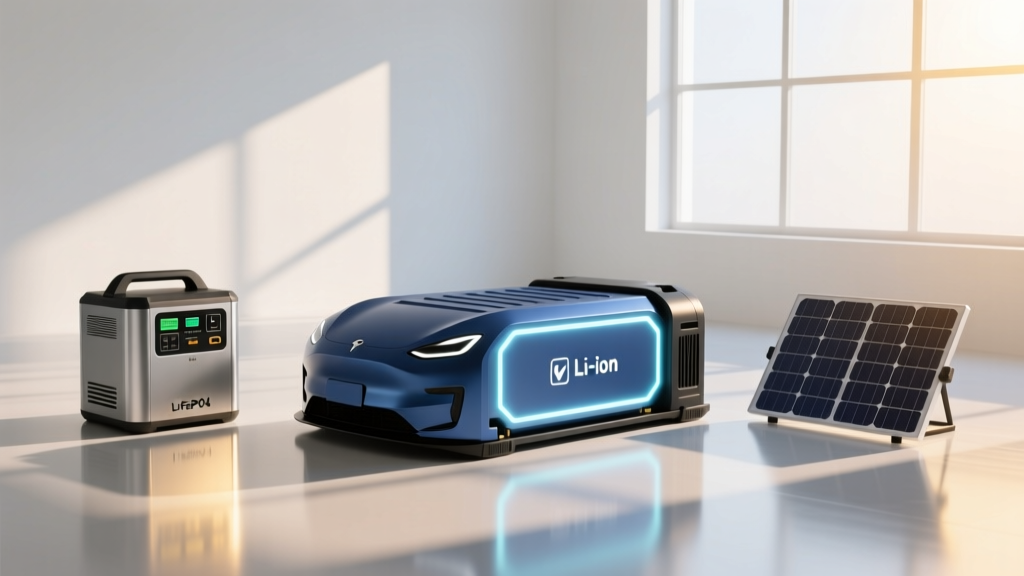
The explosion of portable battery power stations from brands like EcoFlow, Bluetti, and Jackery has introduced millions of consumers to lithium battery specs — kWh capacity, cycle life, charge rates in kW. If you've shopped for a portable power station for camping or backup, you've already encountered the same chemistry questions that EV buyers face: LFP or NMC? How fast does it degrade? What does the warranty actually cover?
The difference is scale. A high-end portable power station packs 2–5 kWh. An EV traction battery holds 60–130 kWh. But the underlying cell chemistry, degradation physics, and thermal management challenges are remarkably similar. Understanding one helps you understand the other.
This guide breaks down the battery technology inside modern EVs — with context on how it compares to the portable power stations you may already own — so you can evaluate longevity, replacement risk, and real-world ownership costs with hard data.
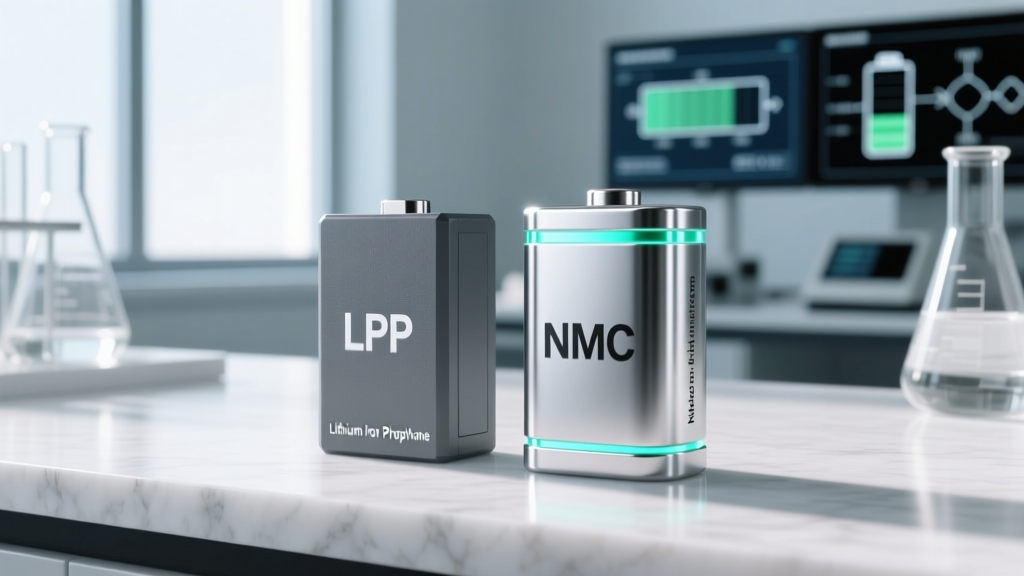
LFP vs NMC/NCA: The Chemistry Decision That Defines Your EV
Every EV sold in the US in 2026 uses one of two dominant lithium-ion chemistries for its high-voltage traction battery. The choice affects range, longevity, cold-weather performance, and price.
| Attribute | LFP (Lithium Iron Phosphate) | NMC/NCA (Nickel Manganese Cobalt / Nickel Cobalt Aluminum) |
|---|---|---|
| Energy Density | Lower (~160 Wh/kg cell-level) | Higher (~250–300 Wh/kg cell-level) |
| Cycle Life | 3,000–5,000+ cycles to 80% SoH | 1,000–2,000 cycles to 80% SoH |
| Cold Performance | Weaker — greater range loss below 32°F | Better — retains more capacity in freezing temps |
| Cost | Lower — no cobalt or nickel | Higher — commodity-priced metals |
| Thermal Stability | Excellent — less prone to thermal runaway | Good — requires robust BMS and cooling |
| Charge to 100% Daily? | Yes — LFP tolerates full SoC well | No — daily 80% limit recommended |
| Common EV Examples (2026) | Tesla Model 3 RWD, Model Y RWD, Ford Mustang Mach-E Select (LFP option) | Hyundai Ioniq 5, Kia EV6, Chevy Equinox EV, Tesla Long Range/Performance trims |
| Portable Power Station Use | Widely adopted (EcoFlow Delta Pro, Bluetti AC200) | Older/lighter models (Jackery Explorer 1000 v1) |
The practical takeaway: If you prioritize maximum range per charge and drive in cold climates, NMC/NCA is typically the better fit. If you want a battery that lasts longer in total cycle life, costs less, and you don't mind slightly lower range, LFP is increasingly the smart choice — especially for daily commuting. This same trade-off applies when choosing between portable battery power stations for home backup.
How Long Do EV Batteries Actually Last? Real Degradation Data
The most common fear among prospective EV buyers is catastrophic battery failure requiring a $20,000 replacement. The data tells a different story: most EV batteries outlast the vehicles they're installed in.
- Tesla Model 3/Y (NMC/NCA): ~5–8% capacity loss at 100,000 miles; ~10–12% at 200,000 miles (Tesla Impact Report 2024, fleet data)
- Tesla Model 3 RWD (LFP): ~3–5% loss at 100,000 miles in fleet averages; slower degradation curve
- Hyundai Ioniq 5 (NMC, 77.4 kWh): ~6–9% loss at 100,000 miles based on owner-reported State of Health data
- Nissan Leaf (early air-cooled NMC): 15–25% loss at 100,000 miles — a cautionary example of poor thermal management
- Chevy Bolt EV (NMC, liquid-cooled): ~8–10% at 100,000 miles; improved significantly post-2020 recall battery replacement
Sources: Tesla Impact Reports, fueleconomy.gov, Recurrent Auto fleet studies.
Most modern liquid-cooled EV batteries retain 85–92% of original capacity at 100,000 miles and 75–85% at 200,000 miles. For comparison, portable battery power stations using LFP cells (like the EcoFlow Delta Pro) are rated for 6,500 cycles to 50% capacity — roughly 10+ years of daily use — because they operate in milder conditions without the extreme discharge rates an EV demands.
The critical lesson: thermal management is everything. EVs with active liquid cooling (Tesla, Hyundai, GM Ultium, Ford) degrade far slower than older passively-cooled designs (early Nissan Leaf, early VW e-Golf).
What the Battery Warranty Actually Covers — and What It Doesn't
Federal law mandates a minimum 8-year/100,000-mile warranty on EV batteries for emissions-related components, and most manufacturers exceed this baseline. Here's how major 2026 warranties compare:
| Manufacturer | Warranty Period | Capacity Retention Threshold | Notes |
|---|---|---|---|
| Tesla (Model 3/Y) | 8 yr / 120,000 mi (Long Range) | 70% | RWD LFP: 8 yr / 100,000 mi |
| Hyundai / Kia | 10 yr / 100,000 mi | 70% | Among the longest coverage periods |
| GM (Ultium platform) | 8 yr / 100,000 mi | 70% | Covers Bolt, Equinox EV, Blazer EV, Silverado EV |
| Ford (Mach-E, F-150 Lightning) | 8 yr / 100,000 mi | 70% | Includes high-voltage components |
| Volkswagen (ID.4) | 8 yr / 100,000 mi | 70% | Covers battery and drive system |
| Rivian (R1T/R1S) | 8 yr / 120,000 mi | 70% | Max pack: 8 yr / 175,000 mi |
What's covered: Defects in materials/workmanship and capacity loss below the stated threshold (typically 70% of original kWh). If your 77.4 kWh Ioniq 5 battery drops below ~54 kWh usable within the warranty window, Hyundai replaces or repairs it.
What's NOT covered: Normal gradual degradation above the threshold, damage from accidents, modifications, or using non-approved charging equipment. Also note: the warranty covers the traction battery — not the 12V auxiliary battery that powers accessories, which is a separate, far cheaper component.
EV Battery Replacement Costs: What You'll Actually Pay
Out-of-warranty battery replacement is the nightmare scenario. Here's what it costs in 2026 — and why it's rarely needed:
| Vehicle | Battery Size | Replacement Cost (Parts + Labor) | Typical Replacement Trigger |
|---|---|---|---|
| Tesla Model 3 RWD (LFP) | ~60 kWh | $12,000–$15,000 | Rare before 250,000+ mi |
| Tesla Model Y Long Range | ~82 kWh | $14,000–$18,000 | Rare before 200,000+ mi |
| Hyundai Ioniq 5 | 77.4 kWh | $14,000–$20,000 | Extremely rare under 200,000 mi |
| Chevy Equinox EV | ~85 kWh (Ultium) | $15,000–$22,000 | Modular design may allow partial replacement |
| Ford F-150 Lightning Ext. Range | ~131 kWh | $20,000–$30,000 | Large pack; partial module swaps possible |
| Nissan Leaf (older, air-cooled) | 40–62 kWh | $8,000–$14,000 | More common due to thermal degradation |
For context, a federal §30D tax credit can offset up to $7,500 on a new EV purchase (subject to MSRP caps, income limits, and battery sourcing requirements per current IRS rules), which effectively pre-funds a significant portion of a hypothetical future replacement. And battery prices continue declining — BloombergNEF data shows pack-level costs falling below $100/kWh for some chemistries, meaning replacement costs in 2030 will likely be substantially lower than today.
Compared to portable battery power stations — where a 2 kWh EcoFlow Delta 2 replacement battery runs ~$1,400 — EV battery costs per kWh are actually lower at scale, though total cost is obviously higher due to capacity.
Five Factors That Accelerate (or Slow) Battery Degradation
Battery lifespan isn't just about age. Your habits matter enormously. Here are the five biggest factors, ranked by impact:
- Avoid sustained high State of Charge (SoC): For NMC/NCA batteries, daily charging to 80% (not 100%) can add years of life. LFP batteries are more tolerant — manufacturers like Tesla recommend periodic 100% charges for LFP to recalibrate the BMS. Reserve 100% charges for road trips.
- Minimize DC fast charging when possible: Frequent 150+ kW DC fast charges generate heat stress. Data from Recurrent Auto shows vehicles that fast-charge more than 3x/week degrade ~2–3% faster over 100,000 miles than those primarily using Level 2 home charging. Use DCFC for road trips, not daily top-ups.
- Manage extreme temperatures: Lithium-ion cells degrade fastest above 95°F and below 15°F. Precondition your battery before fast charging (most EVs do this automatically when you navigate to a charger). Garage parking in summer and winter meaningfully extends battery life.
- Don't store at 0% or 100%: If leaving your EV unused for weeks, set the charge limit to ~50%. Storing at full charge accelerates calendar degradation; storing near empty risks cell damage.
- Use regenerative braking wisely: Moderate regen settings reduce high-current discharge/charge cycling. In cold weather, reduced regen protects the battery from accepting charge when cells are too cold.
These same principles apply to portable battery power stations: storing a Jackery or Bluetti unit at 50% SoC in a temperature-controlled environment dramatically extends its cycle life. The physics are identical — only the scale differs.
How to Check Your EV Battery's State of Health (SoH)
State of Health (SoH) measures your battery's current maximum capacity as a percentage of its original capacity. A new EV starts at 100% SoH; at 70% SoH, it still has 70% of its original range. Here's how to monitor it:
- In-vehicle displays: Tesla shows battery health estimates in the service menu (available in recent software updates). Hyundai/Kia provides SoH data through dealer diagnostic tools. GM's Ultium vehicles include battery health metrics in the myChevrolet/myCadillac app.
- OBD-II dongles + apps: Third-party tools like Leaf Spy (Nissan Leaf), TeslaFi, or ABRP (A Better Route Planner) with OBD integration can read SoH directly from the battery management system.
- Dealer diagnostics: Any authorized service center can pull a full battery health report. Request one during routine service — it's often free.
- Manual estimation: Charge to 100%, note the displayed range, and compare to the original EPA range. If your 310-mile EPA Model 3 now shows 270 miles at 100%, that's roughly 87% SoH (adjusted for temperature and driving conditions).
For portable battery power stations, most premium units (EcoFlow, Bluetti) show cycle count and estimated SoH directly in their companion apps — a feature EV manufacturers are increasingly matching.
What's Next: Solid-State and Silicon Anode Batteries
The next generation of battery technology promises step-change improvements — but realistic timelines matter more than press-release hype.
Solid-state batteries replace the liquid electrolyte with a solid material, potentially offering 40–50% higher energy density, faster charging, and improved safety. Toyota has announced a solid-state EV targeting 2027–2028 production with an estimated 600+ mile range. Samsung SDI and QuantumScape are also advancing prototypes. However, manufacturing at automotive scale remains unsolved. Expect limited availability in premium models by 2028–2029 at earliest, with mainstream adoption likely in the 2030s.
Silicon anode batteries (from companies like Sila Nanotechnologies and Group14) replace graphite anodes with silicon-dominant materials, boosting energy density 20–40%. These are closer to market — appearing in some 2025–2026 model-year vehicles in limited applications. Mercedes-Benz's partnership with Sila targets the G-Class EV.
Sodium-ion batteries are emerging as a low-cost alternative for budget EVs and portable battery power stations, using abundant sodium instead of lithium. CATL has begun mass production for Chinese-market vehicles. US availability is likely 2027+ for entry-level EVs.
None of these technologies are currently available in production EVs sold in the US as of 2026. If you're buying now, today's LFP and NMC batteries — with proper care — will serve you well for 150,000–250,000+ miles.
Frequently Asked Questions
How long do EV batteries last in years and miles?
Modern liquid-cooled EV batteries typically last 15–20 years or 150,000–250,000+ miles before dropping below 70% capacity. LFP chemistry batteries often exceed 300,000 miles. Most EV batteries outlive the vehicle's other mechanical and cosmetic components.
How much does an EV battery cost to replace?
Full replacement costs range from $8,000 (Nissan Leaf) to $30,000 (Ford F-150 Lightning Extended Range) including labor, depending on battery size. However, complete replacements are rare — most batteries retain 75%+ capacity at 200,000 miles. Some manufacturers offer module-level repairs at a fraction of full-pack cost.
What does the EV battery warranty cover?
Federal law requires at minimum 8 years/100,000 miles. Most warranties cover defects and capacity loss below 70% of original capacity. Hyundai/Kia leads with 10 years/100,000 miles. Warranties do not cover normal gradual degradation above the threshold or damage from accidents or misuse.
How do I check and maximize my EV battery health?
Monitor SoH through your vehicle's app, OBD-II tools, or dealer diagnostics. Maximize longevity by charging NMC/NCA to 80% daily (100% for LFP is acceptable), minimizing frequent DC fast charging, preconditioning before fast charges, avoiding extreme temperature storage, and not leaving the battery at 0% or 100% for extended periods.
LFP vs NMC — which battery chemistry is better for me?
Choose LFP if you want maximum cycle life, lower cost, can accept slightly less range, and primarily drive in moderate climates. Choose NMC/NCA if you need maximum range per charge, regularly drive in cold weather, or want the longest single-charge road-trip capability. Both chemistries will outlast most ownership periods with proper care.
Are portable battery power stations the same technology as EV batteries?
They use the same lithium-ion cell chemistries (LFP and NMC) at different scales. A 2 kWh portable power station and an 80 kWh EV battery face identical degradation physics. The main difference: EV batteries require active thermal management and far more sophisticated battery management systems due to the extreme power demands of vehicle propulsion.