Why a Battery Powered Ice Chest Teaches You Everything About EV Batteries
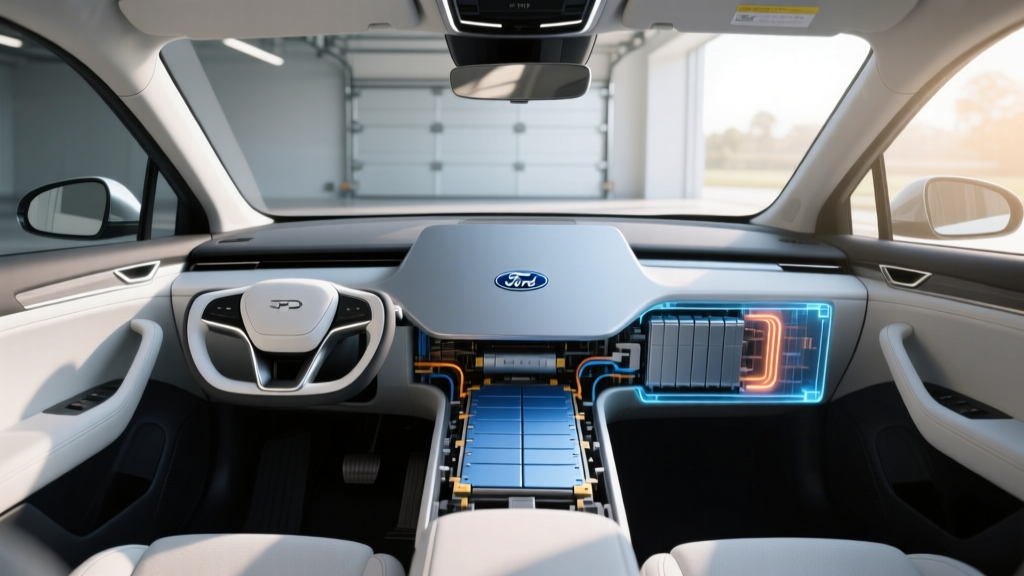
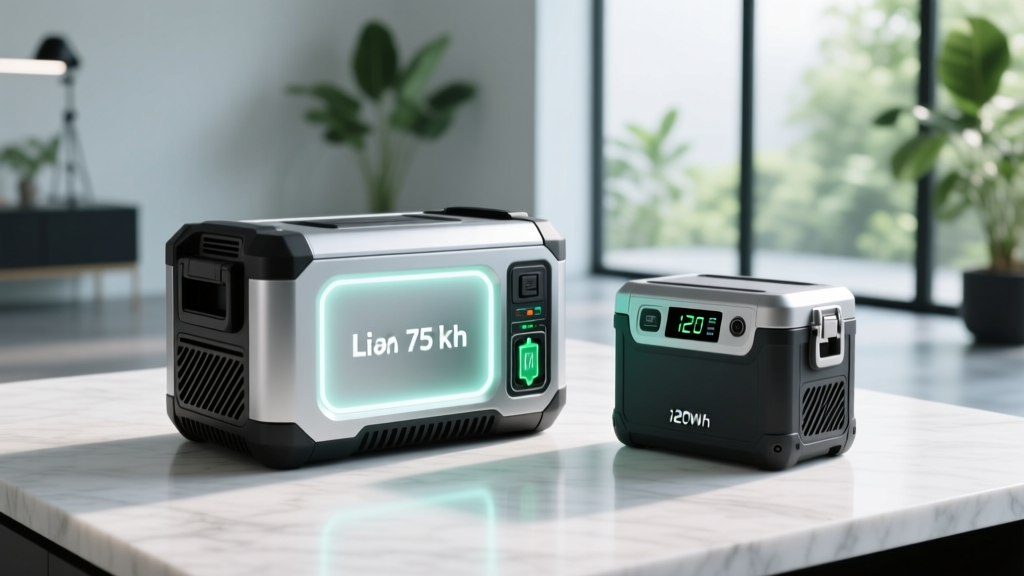
If you've ever shopped for a battery powered ice chest — one of those 40-quart portable coolers that runs on a built-in lithium pack — you've already encountered the same engineering trade-offs that define a $50,000 electric vehicle. Both devices store chemical energy, discharge it to do useful work (compressor cooling vs. motor propulsion), and degrade over hundreds to thousands of cycles. The difference is scale: a premium portable cooler might pack 0.3 kWh of lithium iron phosphate (LFP) cells, while a Tesla Model Y Long Range carries roughly 75 kWh of nickel-manganese-cobalt (NMC). That's a 250x energy gap, yet the chemistry fundamentals — energy density, cycle life, thermal sensitivity, cost per kWh — are identical.
This guide uses that parallel to break down everything an EV buyer or owner needs to know about high-voltage traction batteries in 2026: which chemistry your car uses, how fast it degrades, what the warranty actually covers, what a replacement costs, and how emerging solid-state tech could reshape the market by the end of the decade.
LFP vs. NMC/NCA: The Chemistry Decision That Defines Your EV
Every mainstream EV sold in the U.S. in 2026 uses one of two lithium-ion chemistries in its traction battery. Understanding which one is under your floor is the single most important ownership variable after range.
| Attribute | LFP (Lithium Iron Phosphate) | NMC / NCA (Nickel-based) |
|---|---|---|
| Energy density (Wh/kg, cell-level) | 160–180 | 250–300 |
| Cycle life (to 80% capacity) | 3,000–5,000+ | 1,000–2,000 |
| Cold-weather performance | Moderate loss; slower charge below 32°F | Better low-temp discharge; preconditioning critical |
| Cost per kWh (pack-level, 2026) | ~$95–$115 | ~$125–$150 |
| State-of-charge recommendation | 100% daily OK; benefits from periodic full charge for BMS calibration | 80% daily; 100% only before long trips |
| Thermal runaway risk | Very low | Low but higher than LFP |
| Typical 2026 applications | Tesla Model 3/Y RWD, Ford Mustang Mach-E Select (LFP trims), Rivian Standard, BYD imports | Tesla Long Range/Performance, Hyundai Ioniq 5/6, Kia EV6/EV9, Porsche Taycan, GM Ultium LR trims |
The trade-off in plain terms: NMC/NCA packs store more energy in less weight, which is why every 350+ mile EV you can buy today uses them. LFP packs are heavier and bulkier for the same kWh, but they last significantly longer, cost less, and tolerate daily 100% charges — which is why they dominate the battery powered ice chest and home-storage markets where weight matters less than longevity.
For an EV buyer: if your commute is under 60 miles round-trip and you charge at home nightly, an LFP-equipped Standard Range model is the longevity play. If you regularly drive 250+ miles between charges or tow, NMC's energy density is non-negotiable.
How Long Do EV Batteries Actually Last? Real Degradation Data
The fear that an EV battery will "die" at 100,000 miles is not supported by fleet data. Lithium-ion degradation follows a curve: a steeper drop in the first 1–2 years (the "break-in" phase), then a long, slow linear decline. According to aggregated telemetry from Recurrent Auto's 15,000-vehicle study published in 2025, the median EV retains roughly 90–93% of original capacity at 5 years / 75,000 miles and 83–88% at 10 years / 150,000 miles.
| Age / Mileage | Typical Capacity Retained (LFP) | Typical Capacity Retained (NMC) |
|---|---|---|
| Year 1 / 15,000 mi | 95–97% | 92–95% |
| Year 3 / 45,000 mi | 92–94% | 88–91% |
| Year 5 / 75,000 mi | 90–93% | 85–89% |
| Year 8 / 120,000 mi | 87–91% | 80–85% |
| Year 10 / 150,000 mi | 84–89% | 78–83% |
These are fleet medians; individual results vary with climate, charging habits, and thermal management quality. A U.S. Department of Energy / fueleconomy.gov primer notes that modern liquid-cooled packs in temperate climates routinely exceed 200,000 miles before reaching the 70% capacity threshold that triggers a warranty claim.
Real-world framing: A 2026 Hyundai Ioniq 5 Long Range AWD with an EPA-rated 305-mile range and ~84 kWh NMC pack will likely deliver 255–275 miles of real-world highway range at year 5 — still more than most drivers use in a day. The battery isn't "dead"; it just has a smaller fuel tank.
What the Battery Warranty Actually Covers (and What It Doesn't)
Federal law effectively mandates an 8-year/100,000-mile minimum for EV battery capacity warranties in states that follow California's CARB rules, and most major automakers have adopted this nationwide. The threshold that triggers a claim is almost universally 70% retained capacity — meaning the manufacturer will repair or replace modules if your pack falls below 70% of original kWh within the warranty window.
| Automaker (2026 Models) | Battery Warranty | Capacity Threshold | Notes |
|---|---|---|---|
| Tesla (Model 3/Y LFP) | 8 yr / 120,000 mi | 70% | Longer mileage on LFP trims |
| Tesla (Model 3/Y LR/Perf NMC) | 8 yr / 100,000 mi | 70% | — |
| Hyundai / Kia (E-GMP) | 10 yr / 100,000 mi | 70% | Among the longest terms |
| GM (Ultium: Equinox EV, Blazer EV, Silverado EV) | 8 yr / 100,000 mi | 70% | Transferable to second owner |
| Ford (Mach-E, F-150 Lightning) | 8 yr / 100,000 mi | 70% | Module-level repair where possible |
| Rivian (R1T / R1S) | 8 yr / 175,000 mi | 70% | High mileage cap reflects adventure use |
| BMW (i4, iX, i5) | 8 yr / 100,000 mi | 70% | — |
What's excluded: Cosmetic damage, external physical damage (puncture, flood), and degradation caused by prolonged storage at 0% or 100% SoC against manufacturer guidance. Warranty coverage does not restore range to "like new" — replacement modules match the pack's current state of health, not its day-one capacity.
EV Battery Replacement Cost: What You'd Actually Pay
Here's the number that drives headlines — and the context those headlines omit. A full out-of-warranty pack replacement in 2026 ranges from roughly $8,000 on a small LFP pack to $22,000+ on a 100+ kWh NMC pack for a luxury or truck platform. Labor adds $1,500–$3,500 depending on the vehicle's pack integration.
| Vehicle Class / Example | Pack Size | Chemistry | Out-of-Warranty Replacement Range |
|---|---|---|---|
| Compact (Chevy Bolt EV successor, Nissan Leaf-class) | 60–70 kWh | NMC | $9,000–$13,000 |
| Midsize sedan (Tesla Model 3, Hyundai Ioniq 6) | 75–85 kWh | NMC / LFP | $11,000–$17,000 |
| Midsize SUV (Tesla Model Y, Kia EV9) | 80–100 kWh | NMC | $14,000–$20,000 |
| Full-size truck (F-150 Lightning Ext, Silverado EV) | 130–200 kWh | NMC | $18,000–$28,000 |
| Luxury/performance (Porsche Taycan, Lucid Air) | 90–118 kWh | NMC | $20,000–$30,000+ |
The critical context: Fewer than 3% of EVs sold in the past decade have required out-of-warranty pack replacements, per industry actuarial data. Most packs outlive the vehicle's economic life. When replacements do happen, they're increasingly module-level repairs ($2,000–$6,000) rather than full pack swaps — a trend accelerating as GM's Ultium and VW's MEB architectures enable individual module service.
For perspective, a battery powered ice chest with a 300 Wh LFP pack that fails out of warranty costs $150–$300 to replace — the same $/kWh math, just smaller numbers.
Five Factors That Accelerate (or Preserve) Battery Life
Degradation isn't random. These five variables explain most of the spread between the best- and worst-performing packs in fleet data:
- DC fast-charging frequency: Occasional 150–350 kW DC charges are fine. Daily reliance on DCFC (especially above 150 kW without adequate preconditioning) accelerates calendar aging by an estimated 1–3% over 5 years vs. Level 2 home charging. The charge curve tapers above 80% SoC to protect cells — skipping that taper by charging to 100% at peak rate is where damage accumulates.
- Extreme temperature exposure: Sustained operation in ambient temps above 95°F or below 15°F without active thermal management stresses cells. Vehicles with heat pumps and liquid-cooled packs (most 2026 models) mitigate this substantially, but parking in shade/garage still matters.
- State of charge habits: For NMC packs, daily 80% ceiling and 20% floor is the longevity sweet spot. LFP packs tolerate 100% daily but should not be stored at 0% for extended periods. Long-term airport parking at 100% SoC in July heat is the single worst thing you can do to an NMC pack.
- Depth of discharge cycles: Shallow cycles (30%–70% SoC swings) age a pack far less than deep cycles (5%–95%). Daily top-ups are better than weekly deep discharges.
- Calendar aging: Even a garage-kept EV with zero miles loses roughly 1.5–2.5% capacity per year simply from chemical processes. This is unavoidable and is why a 10-year-old EV with 40,000 miles still shows measurable degradation.
How to Check Your Battery's State of Health (SoH)
State of Health is the percentage of original capacity your pack can still store. Most 2026 EVs surface this data in one of three ways:
- In-vehicle display: Tesla, Rivian, and Hyundai/Kia include SoH or "battery health" readouts in the service or energy menus. Tesla's is accessible via the service mode (tap the software version string).
- Manufacturer app: The Tesla app, FordPass, and myHyundai display estimated SoH after the vehicle completes a full charge cycle. GM's Ultium-based vehicles report SoH via the Energy Assist app module.
- OBD-II diagnostic tools: Third-party tools like OBDeleven (for VW Group), Scan My Tesla, and LeafSpy (for Nissan) read the BMS-reported SoH directly from the CAN bus. This is the most accurate consumer method.
For a definitive pre-purchase or warranty-baseline check, request a dealer-certified battery health report — especially relevant if you're buying a used EV and want to confirm remaining warranty coverage. The NHTSA does not regulate SoH reporting, but several states now require disclosure at point of sale for used EVs.
Emerging Tech: Solid-State, Silicon Anode, and What's Actually Coming
Three next-generation battery technologies are in various stages of pilot production as of 2026. None are available in a vehicle you can buy today in the U.S., but their timelines are firming up:
- Solid-state batteries: Toyota has announced a 2027–2028 production start for a solid-state pack targeting 750 km (~465 mi) range and 10-minute 10–80% charging. Samsung SDI and QuantumScape are in pilot production with OEM partners. Solid-state replaces the liquid electrolyte with a solid ceramic or polymer, eliminating thermal runaway risk and enabling lithium-metal anodes for 40–50% higher energy density. Realistic U.S. availability: 2029–2031, initially in premium models above $80,000.
- Silicon-dominant anodes: Companies like Sila Nanotechnologies and Group14 are supplying silicon-carbon anode materials to Panasonic and Mercedes-Benz's ACC joint venture. Silicon stores roughly 10x more lithium ions per gram than graphite, boosting energy density 20–30% without changing the cathode. Realistic timeline: appearing in limited 2027–2028 model-year vehicles; mainstream by 2030.
- Sodium-ion batteries: CATL and BYD are shipping sodium-ion packs in Chinese-market micro-EVs. Sodium is abundant and cheap (~$40/kWh projected at scale) but has 30–40% lower energy density than LFP. Realistic U.S. timeline: unlikely before 2029, and only in urban/short-range applications or stationary storage.
None of these technologies invalidate current EV purchases. Today's LFP and NMC packs are mature, well-understood, and covered by warranties that will likely outlast your ownership.
Frequently Asked Questions
How long do EV batteries last in years and miles?
Fleet data shows most liquid-cooled EV batteries retain 80–88% of original capacity at 10 years / 150,000 miles. With moderate care, reaching 200,000+ miles before dropping below the 70% warranty threshold is typical, not exceptional. LFP packs trend toward the higher end of that range due to superior cycle life.
How much does an EV battery cost to replace out of warranty?
Between $9,000 and $30,000 depending on pack size and chemistry, plus $1,500–$3,500 labor. Midsize sedans and SUVs cluster in the $12,000–$18,000 range. However, fewer than 3% of EVs require out-of-warranty replacement — most packs outlive the vehicle. Module-level repairs ($2,000–$6,000) are increasingly common on modular architectures.
What does the EV battery warranty actually cover?
The standard warranty is 8 years / 100,000 miles (10/100,000 on Hyundai/Kia; 8/175,000 on Rivian). Coverage triggers if the pack falls below 70% of original capacity. It covers defects and abnormal degradation but excludes physical damage, flood, and abuse from ignoring manufacturer SoC/storage guidance.
How do I check and maximize my EV battery health?
Check SoH via your vehicle's energy menu, the manufacturer's mobile app, or an OBD-II tool like Scan My Tesla or LeafSpy. To maximize longevity: charge NMC to 80% daily (100% only before trips), keep LFP between 20–100%, rely primarily on Level 2 home charging, precondition before DC fast charging, avoid prolonged storage at extreme SoC or temperature, and park in shade or a garage when possible.
LFP vs. NMC — which EV battery chemistry is better?
Neither is universally better; they serve different use cases. LFP wins on cycle life (3,000–5,000 cycles vs. 1,000–2,000), cost (~$100/kWh vs. ~$135/kWh at pack level), safety (lower thermal runaway risk), and daily-charge convenience (100% OK). NMC wins on energy density (250–300 Wh/kg vs. 160–180), cold-weather performance, and enabling 350+ mile range in midsize vehicles. For commuters who charge nightly at home: LFP. For road-trippers and tow-vehicle buyers: NMC.
Does DC fast charging damage my EV battery?
Not meaningfully in moderation. Modern battery management systems throttle charge rate (the "charge curve taper") above 80% SoC and manage cell temperature to limit stress. The damage comes from frequent 150+ kW charges to 100% without preconditioning, or daily reliance on DCFC as your only charging method. For most owners who DCFC on road trips 10–20 times per year and Level 2 charge at home otherwise, the impact on long-term SoH is negligible — estimated at 1–2% additional loss over 5 years.
Is a battery powered ice chest battery the same chemistry as my EV?
Often, yes. Premium portable coolers from brands like Dometic, EcoFlow, and Anker typically use LFP cells — the same chemistry in a Tesla Model 3 RWD or BYD Dolphin. The form factor and scale differ enormously (300 Wh vs. 60,000+ Wh), but the electrochemistry, degradation curve, and care principles are identical. If you understand how to prolong your cooler's battery, you understand how to prolong your car's.