Two Very Different Batteries, One Shared Chemistry Problem
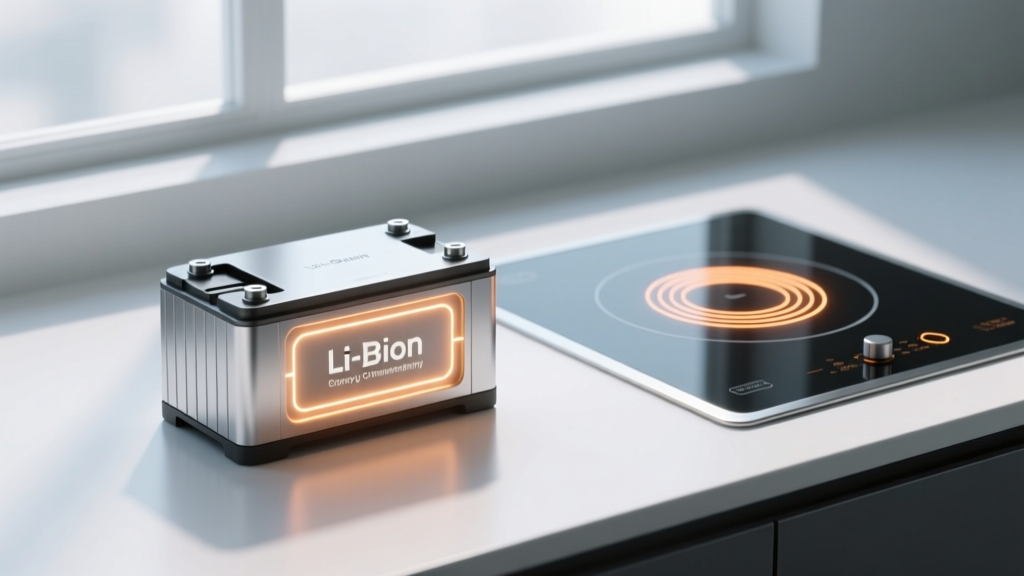
Search for "battery induction cooktop" and you'll find portable cooktops powered by removable lithium-ion cells — typically 100-200 Wh packs using 18650 or 21700 cylindrical cells. Now compare that to the 60-130 kWh traction battery sitting under your electric vehicle. The energy gap is roughly 500x, but the underlying electrochemistry — and the degradation physics that govern lifespan — are surprisingly similar.
If you've ever wondered why your induction cooktop battery seems to lose capacity after a year of heavy use while your EV battery is warrantied for eight, the answer lies in cell chemistry, thermal management, and how each system manages charge cycles. This guide breaks down the battery technology inside modern EVs, uses the induction-cooktop battery as a comparison baseline, and gives you the exact data you need to evaluate battery longevity, replacement cost, and care.
LFP vs. NMC/NCA: The Chemistry That Defines Your EV's Lifespan
Every EV battery sold in the US market in 2026 uses one of two dominant cathode chemistries: lithium iron phosphate (LFP) or nickel manganese cobalt / nickel cobalt aluminum (NMC/NCA). The choice between them affects range, longevity, cold-weather performance, and price — and it's the single biggest factor in how your battery ages over a decade of ownership.
| Attribute | LFP (Lithium Iron Phosphate) | NMC / NCA (Nickel-based) |
|---|---|---|
| Energy Density | ~160-180 Wh/kg (cell level) | ~220-300 Wh/kg (cell level) |
| Cycle Life (to 80% SoH) | 3,000-5,000+ cycles | 1,000-2,000 cycles |
| Cold-Weather Performance | Moderate — more range loss below 32°F | Better low-temp discharge efficiency |
| Cost (per kWh, pack level) | ~$100-120/kWh | ~$130-160/kWh |
| Thermal Stability | Excellent — higher runaway threshold | Good — requires active thermal mgmt |
| Recommended Daily Charge | 100% SoC is fine | 80% SoC for daily; 100% for trips only |
| Notable 2026 EVs Using | Tesla Model 3 RWD, Ford Mustang Mach-E Select (LFP option), BYD (global) | Hyundai Ioniq 5, Tesla Model Y LR, Rivian R1T, BMW iX |
What this means for buyers: If you plan to keep a vehicle 10+ years and charge daily at home, LFP's superior cycle life and tolerance for 100% state of charge make it the pragmatic longevity pick. If you need maximum range in a lighter package — or regularly drive in sub-freezing climates — NMC's higher energy density and cold performance justify its steeper degradation curve.
For context, a typical battery induction cooktop uses NMC 18650 cells at roughly 3.6V nominal and 2,500-3,500 mAh each. That's the same basic cell chemistry found in a Tesla Model 3 Long Range — but without the vehicle-grade battery management system (BMS), liquid cooling, or buffer zones that protect EV cells from the abuse a cooktop battery endures.
How Long Do EV Batteries Actually Last? Real Degradation Data
The short answer: most EV batteries outlast the vehicles they're installed in. The long answer requires looking at actual fleet data.
Typical EV Battery Degradation Curve (Fleet Average Data):
- Year 1 / 15,000 mi: 2-5% capacity loss (initial formation loss)
- Year 3 / 45,000 mi: 6-10% total loss
- Year 5 / 75,000 mi: 8-14% total loss
- Year 8 / 120,000 mi: 10-18% total loss (varies heavily by chemistry and climate)
- Year 10+ / 150,000+ mi: 12-25% total loss for NMC; 5-12% for LFP in favorable conditions
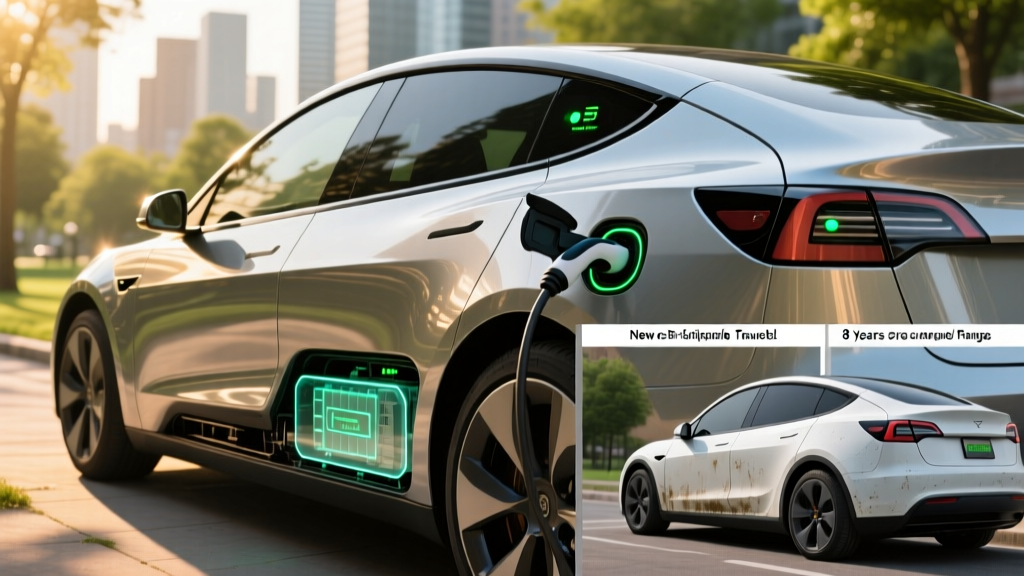
These figures align with long-term fleet data published by sources like Geotab's EV Battery Health study, which tracked over 6,000 electric vehicles. The data shows that the average EV loses about 2.3% of battery capacity per year — meaning after 10 years, the average pack still retains roughly 77% of its original capacity.
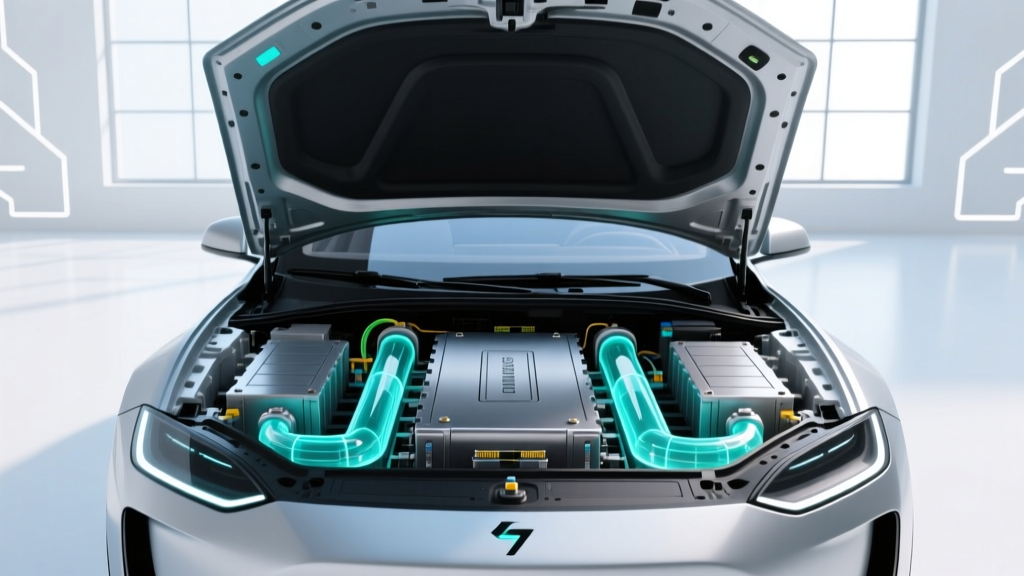
Real-world comparison: A battery induction cooktop with a 150 Wh NMC pack, cycled daily from 100% to near-zero with no thermal management, can lose 20-30% capacity in just 2-3 years. An EV battery of the same chemistry, liquid-cooled and managed by a sophisticated BMS that keeps cells between 15-85°C and never allows true 0% or 100% (thanks to hidden buffers of 3-8 kWh), degrades far more slowly despite holding 500x the energy.
Cold-climate owners should note: batteries in regions with sustained sub-20°F winters show slightly accelerated degradation — roughly 0.3-0.5% additional annual loss — due to the stress of cold charging. Vehicles with heat-pump-based thermal management (standard on the Hyundai Ioniq 5, Tesla Model Y, and most premium 2026 EVs) mitigate this substantially.
Battery Warranty Terms: What's Actually Covered
Federal law mandates that EV batteries carry a minimum warranty of 8 years / 100,000 miles (10 years / 150,000 miles in California and states adopting CARB emissions standards). But the details of what "covered" means vary significantly by manufacturer.
| Manufacturer | Warranty Term | Capacity Threshold | What Triggers a Claim |
|---|---|---|---|
| Tesla (Model 3/Y RWD — LFP) | 8 yr / 120,000 mi | 70% retention | SoH drops below 70% as measured by Tesla diagnostics |
| Tesla (Model 3/Y LR/Perf — NMC) | 8 yr / 120,000 mi | 70% retention | Same |
| Hyundai / Kia | 10 yr / 100,000 mi | 70% retention | Capacity below 70% confirmed via dealer scan tool |
| Ford (Mach-E, F-150 Lightning) | 8 yr / 100,000 mi | 70% retention | Battery capacity below 70% of original |
| General Motors (Ultium platform) | 8 yr / 100,000 mi | 70% retention | Verified via OnStar / dealer diagnostic |
| BMW (iX, i4) | 8 yr / 100,000 mi | 70% retention | Capacity below threshold per BMW diagnostic |
| Rivian (R1T, R1S) | 8 yr / 175,000 mi | 70% retention | Below 70% capacity confirmed by Rivian |
Key nuance: The 70% threshold means your battery could lose 29% of its original capacity before the manufacturer is obligated to intervene. In practice, almost no modern EV battery degrades that quickly under normal use. According to fueleconomy.gov, most EV owners will never file a battery warranty claim.
Also critical: warranties cover defects and excessive degradation, not damage from accidents, flooding, or unauthorized modifications. And the warranty follows the vehicle, not the owner — so a used EV with 60,000 miles still carries the remainder of its original battery warranty.
EV Battery Replacement Cost: The Numbers Nobody Wants (But You Need)
Here's the question that drives more EV purchase hesitation than any other: "What if my battery dies and I need a new one?"
First, the reassuring reality: fewer than 2% of EV batteries require out-of-warranty replacement, according to data from Recurrent Auto and other fleet-tracking services. Most EV batteries will retain 75-85% capacity at 200,000 miles. Many will outlive the vehicle's body, suspension, and interior.
But if you do need one — say you buy a 10-year-old EV out of warranty — here's what you're looking at:
| Vehicle / Battery Size | Battery Chemistry | Replacement Cost (Parts + Labor) | Notes |
|---|---|---|---|
| Tesla Model 3 RWD (~60 kWh) | LFP | $8,000 - $12,000 | LFP packs less commonly replaced; lower cell cost |
| Tesla Model Y LR (~75 kWh) | NMC | $12,000 - $16,000 | Structural pack — labor-intensive removal |
| Hyundai Ioniq 5 (~77.4 kWh) | NMC | $13,000 - $18,000 | E-GMP platform; widely available through dealer network |
| Ford Mustang Mach-E ER (~91 kWh) | NMC | $15,000 - $20,000 | Larger pack; Ford has been improving service availability |
| Ford F-150 Lightning Ext (~131 kWh) | NMC | $20,000 - $30,000 | Largest consumer EV pack; cost reflects size |
| Chevy Bolt EV (~65 kWh) | NMC | $9,000 - $14,000 | Post-recall replacement packs are updated chemistry |
For perspective, a battery induction cooktop replacement battery runs $30-$80 — but you'd go through three to five of those cooktop batteries in the same time an EV battery retains 80%+ health. The cost-per-kWh of usable energy delivered over the battery's life heavily favors the EV's managed system.
When is replacement typically needed? In the rare cases where it happens, it's usually at 12-15 years or 180,000+ miles — and often it's individual module replacement (a fraction of the full-pack cost) rather than a complete swap. Many EV battery shops now offer module-level repair for $2,000-$5,000.
Factors That Kill (or Preserve) Your EV Battery
Not all miles are created equal when it comes to battery wear. Here's what actually accelerates degradation — and what you can do about it.
What Accelerates Degradation
- Frequent DC fast charging above 150 kW — sustained high-current charging generates heat. Occasional road-trip fast charging is fine; daily 200 kW sessions will add ~1-2% additional annual loss.
- Regularly charging to 100% on NMC batteries — high state of charge stresses nickel-based cathodes. LFP is exempt from this concern.
- Letting the battery sit at very low SoC (<10%) for days — deep discharge can cause copper dendrite formation on the anode.
- Charging in extreme cold without preconditioning — lithium plating can occur when charging below 32°F without the battery being warmed first.
- Prolonged exposure to high ambient heat (>100°F) while parked at high SoC — the worst combination for calendar aging.
What Preserves Battery Health
- Daily charging to 80% on NMC; 100% is fine on LFP — set your charge limit in the vehicle app.
- Home Level 2 charging (7-11 kW) as your primary method — slower charging = less heat = less stress.
- Preconditioning before DC fast charging — most 2026 EVs do this automatically when you navigate to a charger.
- Keeping SoC between 20-80% for daily use — the "goldilocks zone" for NMC longevity.
- Parking in shade or a garage during summer — reduces calendar aging from heat exposure.
- Driving regularly — batteries prefer use to sitting idle for weeks at high SoC.
How to Check and Monitor Your Battery's State of Health (SoH)
State of Health (SoH) is the percentage of your battery's original capacity that remains usable. A new EV has 100% SoH; a battery at 85% SoH has lost 15% of its original capacity to degradation.
How to check SoH in 2026:
- In-vehicle displays: Tesla shows battery health in the service menu (Software > Service Mode > Health Test). Hyundai/Kia provides SoH via the dealer diagnostic tool — request it at your next service visit.
- OBD-II apps: Tools like LeafSpy (Nissan Leaf), OBDeleven (VW/Audi/BMW), and Scan My Tesla read real-time SoH data directly from the BMS. These typically cost $10-$30 and require a Bluetooth OBD-II adapter (~$25).
- Third-party services: Companies like Recurrent Auto offer free battery health reports that compare your degradation to a fleet of identical vehicles.
- Dealer checks: Any authorized dealer can pull a full battery health report. Ask for one before buying a used EV — it's the most important pre-purchase check you can run.
What's a "good" SoH number? For a 3-year-old EV with 40,000 miles, expect 92-96%. For a 6-year-old EV with 80,000 miles, expect 86-92%. Anything significantly below those ranges warrants investigation — it may indicate a defective module, excessive fast-charging abuse, or operation in extreme heat.
Emerging Battery Technology: What's Coming (and When)
The battery landscape is evolving rapidly, but it's important to separate lab breakthroughs from production reality.
Solid-state batteries — which replace the liquid electrolyte with a solid ceramic or polymer — promise 30-50% higher energy density, faster charging, and dramatically improved safety. Toyota has announced a solid-state EV for 2027-2028, and Samsung SDI is targeting 2027 production. However, manufacturing scale and cost remain unsolved challenges. Expect solid-state to debut in premium vehicles above $80,000 MSRP before reaching mainstream models.
Silicon-dominant anodes — companies like Sila Nanotechnologies and Group14 are replacing graphite anodes with silicon composites, boosting energy density by 20-40%. These are beginning to appear in 2026 model-year vehicles in limited applications (the Mercedes G-Class EV uses a silicon-anode pack from Group14). Wider adoption is expected by 2028-2029.
Sodium-ion batteries — cheaper and free of lithium and cobalt, sodium-ion cells are entering production for lower-range, budget EVs primarily in the Chinese market (BYD, CATL). US availability for passenger vehicles is not expected before 2028-2029 at the earliest.
LFP improvements: CATL's second-generation LFP (branded "Shenxing") supports 4C charging rates — meaning a 10-80% charge in under 15 minutes — closing the performance gap with NMC while maintaining LFP's cost and longevity advantages. These cells are expected in global-market vehicles by late 2026.
None of these technologies are currently available in vehicles you can buy today in the US. Treat any manufacturer claims about solid-state availability before 2028 as preliminary announcements, not commitments.
EV Battery vs. Induction Cooktop Battery: Why the Gap Matters
Returning to our opening comparison: a battery induction cooktop and an EV battery share lithium-ion chemistry but diverge completely in engineering philosophy. The cooktop prioritizes portability and low cost — no active cooling, minimal BMS, aggressive discharge rates (cooking draws 1,500-2,000W from a ~150 Wh pack, a brutal 10-13C discharge rate). The EV prioritizes longevity — liquid thermal management, cell-level voltage monitoring, hidden capacity buffers, and charge-rate limits enforced by software.
This is why your induction cooktop battery might need replacing every 2-3 years while your EV battery is warrantied for 8-10. The chemistry is similar; the engineering around it is worlds apart.
If you're evaluating an EV purchase and battery longevity is your primary concern, the data is clear: modern EV batteries, managed by sophisticated BMS and thermal systems, degrade slowly enough that the vast majority of owners will never need a replacement. The IRS §30D tax credit — which requires battery components and critical minerals to meet US-sourcing thresholds — has also pushed manufacturers toward more transparent battery supply chains, making it easier to trace cell chemistry and origin than ever before.
Frequently Asked Questions
How long do EV batteries last in years and miles?
Based on fleet data, the average EV battery retains 77-85% of original capacity after 10 years or 150,000 miles. LFP-equipped vehicles typically fare better, with many retaining 88-95% capacity at the same milestone. Most EV batteries will functionally outlast the vehicle they're installed in.
How much does an EV battery cost to replace?
Full replacement costs range from $8,000 for a smaller LFP pack (Tesla Model 3 RWD) to $30,000 for a large NMC pack (F-150 Lightning Extended Range). However, fewer than 2% of EV batteries ever require out-of-warranty replacement, and module-level repairs can cost $2,000-$5,000 instead of a full pack swap.
What does the EV battery warranty actually cover?
Manufacturer warranties cover defects and excessive capacity loss — typically defined as dropping below 70% of original capacity within 8 years / 100,000 miles (or 10 yr / 100,000 mi for Hyundai/Kia). They do not cover accident damage, flooding, or unauthorized modifications. The warranty transfers to subsequent owners.
How do I check my EV's battery health?
Use the vehicle's built-in health test (Tesla), request a dealer diagnostic report (Hyundai, Ford, GM), or connect an OBD-II adapter with an app like Scan My Tesla or OBDeleven. For a used EV purchase, always get a battery health report before closing the deal.
LFP vs. NMC — which battery chemistry is better for me?
Choose LFP if you want maximum longevity, plan to charge to 100% daily, keep vehicles 10+ years, and don't need the absolute longest range. Choose NMC if you need maximum range, regularly drive in extreme cold, or prioritize lighter vehicle weight. Both chemistries are proven and reliable in 2026 — the "better" choice depends on your driving patterns and ownership timeline.
Does fast charging damage my EV battery?
Occasional DC fast charging (road trips, 2-3 times per month) has minimal impact on battery health — adding perhaps 0.5-1% additional degradation over a year versus Level 2-only charging. Daily fast charging at 150+ kW is more stressful, adding 1-2% annual loss. Preconditioning the battery before fast charging significantly reduces this impact.
Can I use my EV battery to power an induction cooktop or my home?
Some 2026 EVs support V2L (vehicle-to-load) — the Hyundai Ioniq 5, Ford F-150 Lightning, and Kia EV9 can output 1,900-7,200W through built-in outlets, enough to run a portable induction cooktop directly. This uses your traction battery's energy (measured in kWh) at a controlled power rate (kW), managed by the vehicle's inverter — a far more sophisticated setup than a standalone battery induction cooktop with a removable lithium pack.