If you've ever slipped a battery-powered GPS tracker under a fleet vehicle or onto a trailer, you know these devices typically run on small lithium-polymer or CR123A cells that last anywhere from a few weeks to a couple of years before needing replacement or a recharge. Contrast that with the 60–120 kWh traction battery sitting beneath an electric vehicle — a pack engineered to endure 200,000+ miles with less than 30% degradation. The gap between consumer electronics and automotive-grade energy storage is vast, yet the underlying chemistry and degradation physics are surprisingly similar.
This guide uses that contrast to explain exactly how modern EV batteries work, what chemistries dominate in 2026, how long they last, what warranties cover, and what it costs if you ever need a replacement. Whether you're evaluating an EV purchase or just curious how automotive battery engineering dwarfs the cells powering your GPS tracker, the data below gives you precise, sourced answers.
EV Traction Batteries vs. Battery-Powered GPS Tracker Cells: Why the Comparison Matters
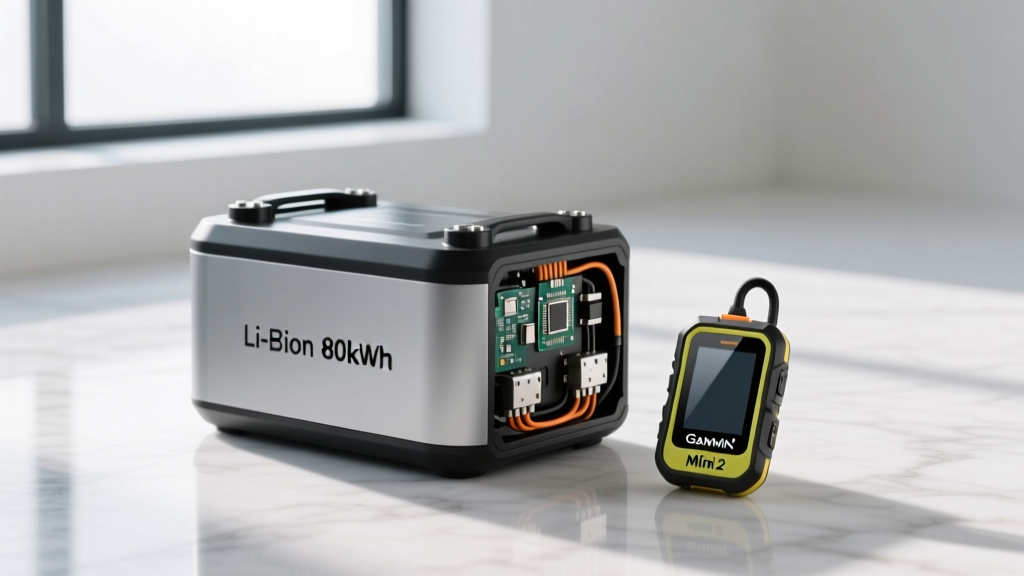
A typical battery-powered GPS tracker uses a 2,000–6,000 mAh lithium-polymer or lithium-iron-disulfide cell operating at 3.3–3.7V. These cells are optimized for low self-discharge and intermittent high-current bursts (when the GPS module pings a satellite). They endure 300–500 charge cycles before capacity drops below 80%, which translates to roughly 1–3 years of service depending on ping frequency.
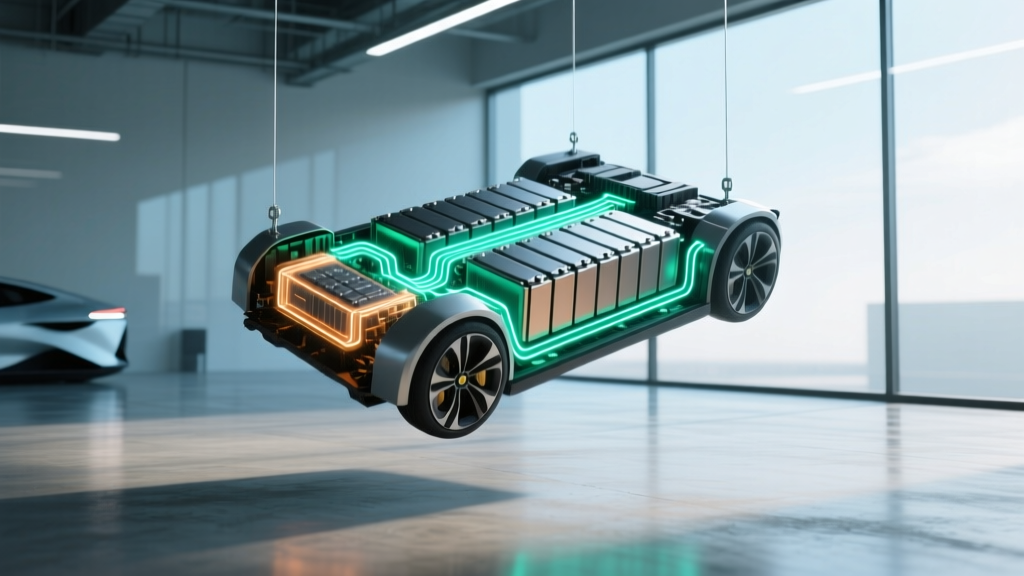
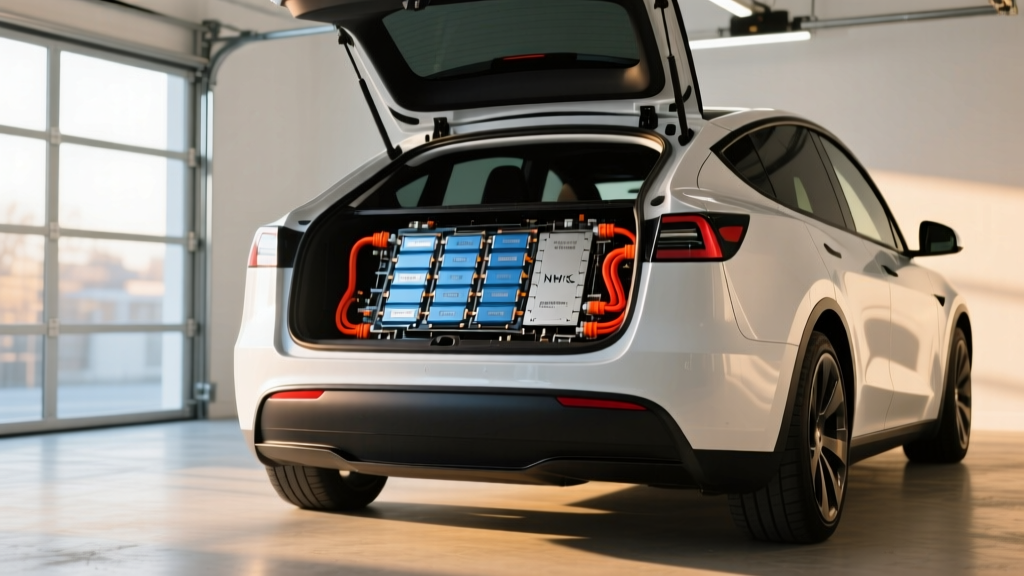
An EV traction battery, by comparison, is a massively parallel assembly of thousands of individual cells (cylindrical 4680s in Tesla vehicles, pouch cells in Hyundai/Kia models, prismatic cells in many LFP applications). The pack operates at 400–800V and includes active thermal management — liquid cooling and heating loops that keep cells in the 20–40°C sweet spot. This thermal regulation is the single biggest reason EV packs outlast consumer lithium cells by an order of magnitude.
Both systems degrade through the same mechanisms: solid electrolyte interphase (SEI) layer growth, lithium plating during fast charging at low temperatures, and cathode structural fatigue. But automotive engineers have far more tools to fight these processes — and the data proves it.
LFP vs. NMC/NCA: Chemistry Trade-Offs Explained
The two dominant EV battery chemistries in 2026 are Lithium Iron Phosphate (LFP) and Nickel Manganese Cobalt / Nickel Cobalt Aluminum (NMC/NCA). Each has distinct strengths, and your choice affects range, longevity, cost, and cold-weather behavior.
| Attribute | LFP (Lithium Iron Phosphate) | NMC / NCA |
|---|---|---|
| Energy density | ~160–180 Wh/kg (cell level) | ~220–260 Wh/kg (cell level) |
| Cycle life (to 80% SoH) | 3,000–5,000+ cycles | 1,000–2,000 cycles |
| Cold-weather performance | More range loss below 32°F; slower charge acceptance | Better low-temp conductivity; preconditioning still helps |
| Cost per kWh (2026 pack level) | ~$85–$100/kWh | ~$110–$135/kWh |
| Thermal stability | Excellent — higher runaway threshold (~270°C) | Good — requires more robust BMS safeguards |
| State-of-charge recommendation | Can charge to 100% regularly; recommended for calibration | Daily limit 80–90%; 100% only for trips |
| Common 2026 vehicles | Tesla Model 3 RWD, Model Y RWD, Ford Mustang Mach-E Select, BYD (where available) | Tesla Long Range/Performance, Hyundai Ioniq 5/6, Kia EV6/EV9, Rivian, BMW iX |
The takeaway: LFP wins on longevity, cost, and safety — and is ideal if you don't need maximum range. NMC/NCA wins on energy density and cold-weather usability, making it better for long-range trims and northern climates. Neither is universally "better"; the right choice depends on your driving pattern and climate.
How Long Do EV Batteries Last? Real-World Degradation Data
The short answer: most EV batteries will outlast the vehicle they're installed in. But let's look at the numbers rather than marketing claims.
Typical degradation trajectory (NMC pack, moderate climate, mixed charging):
- Year 1 / 15,000 mi: ~2–4% loss (initial SEI formation — steepest early drop)
- Year 3 / 45,000 mi: ~6–9% total loss
- Year 5 / 75,000 mi: ~8–12% total loss
- Year 8 / 120,000 mi: ~10–16% total loss
- Year 10 / 150,000 mi: ~12–20% total loss
LFP packs typically degrade 2–5% less over the same period due to superior cathode stability. Data aggregated from fleet reports, fueleconomy.gov owner submissions, and third-party analyses such as Recurrent Auto's battery health studies.
For context, a battery-powered GPS tracker cell loses roughly 20–30% of its capacity within 300–500 cycles — equivalent to 1–2 years of daily use. An EV pack, managed thermally and never fully cycled (the buffer reserves at the top and bottom of the SoC window protect the cells), typically retains 80–90% of its original capacity after 1,000+ equivalent full cycles.
A Tesla Model 3 Long Range with an 82 kWh (usable ~79 kWh) NMC pack rated at 341 miles EPA would, after 100,000 miles, realistically deliver around 295–310 miles on a full charge. That's a noticeable but manageable reduction — not a reason to replace the pack.
What Does the EV Battery Warranty Actually Cover?
Federal law (EPA emissions warranty guidelines, adopted broadly) and manufacturer policies mandate substantial battery coverage. Here's what major automakers offer in 2026:
| Manufacturer | Warranty Period | Mileage Cap | Capacity Retention Threshold |
|---|---|---|---|
| Tesla (Model 3/Y) | 8 years | 100,000–120,000 mi (trim dependent) | 70% |
| Hyundai / Kia | 10 years | 100,000 mi | 70% |
| Ford (Mach-E, F-150 Lightning) | 8 years | 100,000 mi | 70% |
| General Motors (Ultium platform) | 8 years | 100,000 mi | 70% |
| Rivian | 8 years | 175,000 mi (Max pack) | 70% |
| BMW | 8 years | 100,000 mi | 70% |
What's covered: If the battery's usable capacity falls below the stated threshold (typically 70% of original) within the warranty window, the manufacturer will repair, replace, or recondition the pack at no cost. This also covers manufacturing defects and premature cell failure.
What's NOT covered: Damage from accidents, flooding, aftermarket modifications, or failure to follow basic maintenance (like ignoring coolant service intervals). Gradual degradation above the 70% threshold is considered normal wear.
For perspective, a battery-powered GPS tracker comes with no comparable long-term warranty — you replace the cell when it dies, usually at your own cost.
EV Battery Replacement Cost: What You'd Actually Pay
This is where fear-mongering runs rampant. Let's ground it in 2026 numbers. The vast majority of EV owners will never need a battery replacement — packs are lasting 200,000–300,000+ miles in real-world fleet data. But if you buy a high-mileage used EV or keep a vehicle 15+ years, here's the landscape:
| Vehicle / Battery Size | Chemistry | Full Pack Replacement (Parts + Labor) | Module-Level Repair |
|---|---|---|---|
| Tesla Model 3 RWD (~60 kWh LFP) | LFP | $10,000–$14,000 | $2,500–$5,000 (per module group) |
| Tesla Model Y LR (~82 kWh NMC) | NMC | $14,000–$18,000 | $3,000–$6,000 |
| Hyundai Ioniq 5 (~77.4 kWh NMC) | NMC | $13,000–$17,000 | $3,000–$5,500 |
| Ford F-150 Lightning Extended (~131 kWh NMC) | NMC | $22,000–$30,000 | $5,000–$9,000 |
| Chevrolet Bolt EV (~65 kWh NMC) | NMC | $9,000–$14,000 | $2,500–$4,500 |
Two critical points: First, module-level repair is increasingly common. Rather than replacing the entire pack, technicians can swap out a degraded or faulty module cluster — reducing cost by 60–75%. Second, pack prices have fallen roughly 15–20% since 2023 as LFP adoption grows and manufacturing scales. A full replacement is expensive, but it's comparable to an engine-and-transmission swap on an ICE vehicle — something that also happens rarely and costs thousands.
Factors That Accelerate (or Preserve) Battery Health
Whether you're managing an EV traction pack or a battery-powered GPS tracker, the same electrochemical rules apply. Here's what matters most for EV batteries:
Habits that preserve battery health:
- Limit DC fast charging to road trips. Frequent 150–350 kW sessions accelerate SEI growth. For daily use, Level 2 (7–11.5 kW) at home is ideal.
- Keep SoC between 20–80% for NMC. LFP owners can charge to 100% regularly — in fact, Tesla recommends periodic 100% charges for LFP to calibrate the BMS.
- Precondition before fast charging. Most EVs do this automatically when you navigate to a charger. Cold cells (below 50°F) charged at high power suffer lithium plating — permanent capacity loss.
- Park in shade or a garage in hot climates. Sustained high temperatures (above 95°F) accelerate cathode degradation even when the car is idle.
- Don't leave the car at 100% SoC for days. If you charge to full, drive within a few hours. High voltage + heat is the worst combination for longevity.
Habits that accelerate degradation:
- Daily DC fast charging, especially without preconditioning
- Regularly draining below 10% SoC
- Storing the vehicle at 100% SoC in hot weather for extended periods
- Ignoring thermal management system service intervals (coolant flush)
- Aftermarket performance tunes that override factory charge/discharge limits
How to Check Your EV's Battery State of Health (SoH)
Unlike a battery-powered GPS tracker — where you simply notice when the device stops holding a charge — EVs give you tools to monitor battery health proactively.
Manufacturer Apps and In-Car Displays
Most 2026 EVs display battery health information through the infotainment system or companion app. Tesla's app shows estimated range at 100% SoC, which you can compare to the original EPA figure. Hyundai's Bluelink and Kia's UVO provide similar estimates. Ford's Pass app tracks battery health metrics for Mach-E and Lightning owners.
OBD-II Diagnostic Tools
Third-party OBD-II readers (such as the OBDLink SX paired with apps like LeafSpy for Nissan Leaf or Scan My Tesla) can read the battery management system's reported State of Health percentage. This is the most precise method short of a dealer diagnostic scan.
Dealer Diagnostic Reports
Any authorized service center can pull a full battery health report showing individual cell voltages, internal resistance, and overall SoH. If you're buying a used EV, requesting this report is as important as checking a Carfax. A pack showing 90%+ SoH at 60,000 miles is in excellent shape; one showing 82% at the same mileage may have been heavily fast-charged or stored poorly.
Real-World Range Tracking
The simplest method: track your actual range over several full-charge cycles. If your EV originally delivered 300 miles at 100% SoC and now consistently delivers 270, you're at roughly 90% SoH. Use fueleconomy.gov's "My MPG" feature or apps like A Better Routeplanner to log trips and spot trends.
Emerging Battery Technology: What's Next (and When)
The battery landscape is evolving rapidly, but it's critical to separate what's available now from what's still on the horizon.
Silicon-Dominant Anodes
Companies like Sila Nanotechnologies and Group14 are supplying silicon-enhanced anode materials that boost energy density by 15–25% over conventional graphite. These are entering production in limited volumes for 2026–2027 model-year vehicles. Expect to see them first in premium applications (Porsche, Mercedes-Benz) before they reach mainstream price points around 2028–2029.
Solid-State Batteries
Toyota, Samsung SDI, and QuantumScape continue to advance solid-state prototypes. Toyota has announced a target of 2027–2028 for limited production in select models, promising ~745 km (463 mi) of range and 10-minute fast charging. However, manufacturing scale, cost, and yield remain unsolved challenges. Realistically, solid-state batteries will not reach volume production in affordable vehicles before 2030 at the earliest. Treat any claim of "solid-state EVs on sale now" as marketing, not reality.
Sodium-Ion Batteries
CATL and BYD are producing sodium-ion cells for lower-cost, shorter-range applications. These offer lower energy density (~120–140 Wh/kg) but excellent cycle life and no reliance on lithium or cobalt. They're appearing in Chinese-market city EVs and may reach US-market budget models by 2028–2029.
None of these technologies are currently available in production US-market vehicles as of early 2026. They are forward-looking and should not factor into a purchase decision today.
Frequently Asked Questions
How long do EV batteries last in years and miles?
Most modern EV batteries (2020 and newer) are engineered to retain 70–85% of their original capacity after 150,000–200,000 miles, which typically corresponds to 10–15 years of average driving (12,000–15,000 miles/year). LFP chemistries often exceed this, with data suggesting 250,000+ miles before hitting the 70% threshold. The battery will likely outlast other major vehicle components.
How much does it cost to replace an EV battery?
A full pack replacement ranges from roughly $9,000 for a smaller pack (Chevrolet Bolt, ~65 kWh) to $30,000 for a large pack (Ford F-150 Lightning Extended Range, ~131 kWh). Module-level repairs cost $2,500–$9,000 depending on the vehicle. However, most owners never need a replacement — the pack typically outlasts the vehicle's economic life.
What does the EV battery warranty cover?
Manufacturer warranties typically cover 8–10 years or 100,000–175,000 miles (whichever comes first). If the battery's usable capacity drops below 70% of its original capacity within that window, the manufacturer repairs or replaces it at no cost. Warranties cover manufacturing defects and premature degradation but not damage from accidents, misuse, or neglect.
How do I check and maximize my EV battery health?
Check SoH via your vehicle's companion app, an OBD-II diagnostic tool, or a dealer diagnostic report. To maximize longevity: favor Level 2 home charging over frequent DC fast charging, keep NMC packs between 20–80% SoC for daily use (LFP can go to 100%), precondition before fast charging, avoid prolonged storage at extreme SoC levels, and keep up with thermal management system maintenance.
LFP vs. NMC — which battery chemistry is better?
Neither is universally better. LFP offers longer cycle life (3,000–5,000+ cycles vs. 1,000–2,000), lower cost, better thermal stability, and the ability to charge to 100% daily. NMC offers higher energy density (more range in a lighter, smaller pack) and better cold-weather performance. Choose LFP if you prioritize longevity and value; choose NMC if you need maximum range or live in a cold climate.
How is an EV battery different from the battery in a GPS tracker?
A battery-powered GPS tracker uses a small, single-cell lithium battery (2,000–6,000 mAh, 3.3–3.7V) with no thermal management and a cycle life of 300–500 cycles. An EV traction battery is a multi-module, high-voltage (400–800V) system with active liquid cooling, sophisticated BMS controls, and a cycle life of 1,000–5,000+ cycles. The underlying chemistry is related, but the engineering gap is enormous — which is why EV packs last a decade or more while tracker batteries last months to a couple of years.
For current federal tax credit rules that may apply to EV purchases — including battery sourcing requirements under IRS §30D — consult a tax professional, as eligibility depends on MSRP caps, buyer income, and critical mineral sourcing that change periodically.