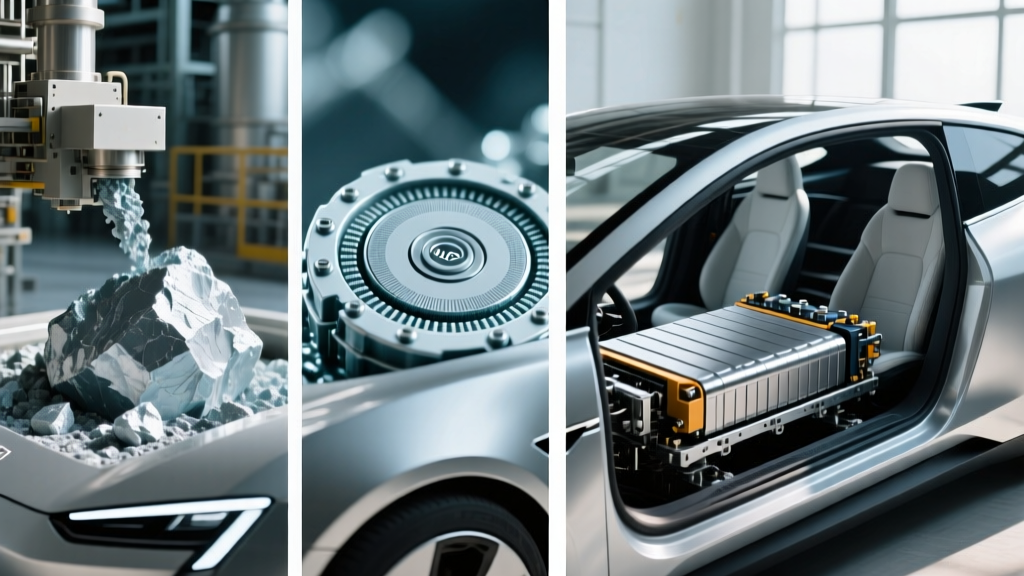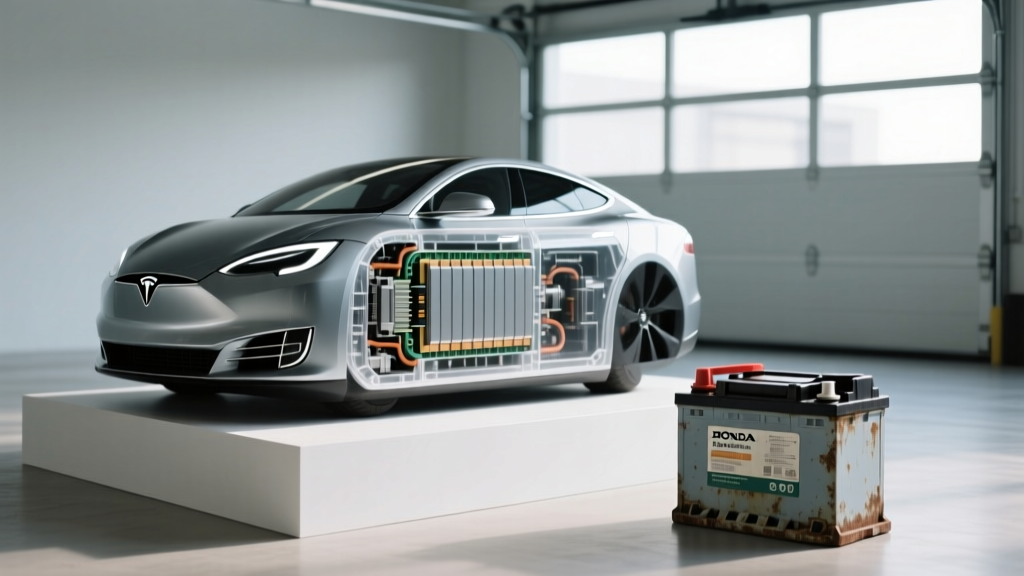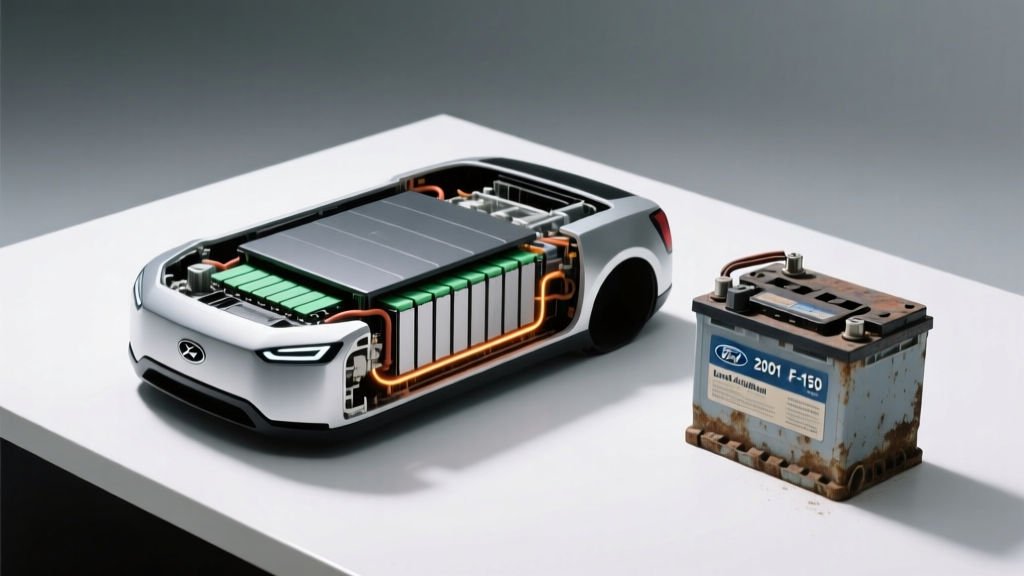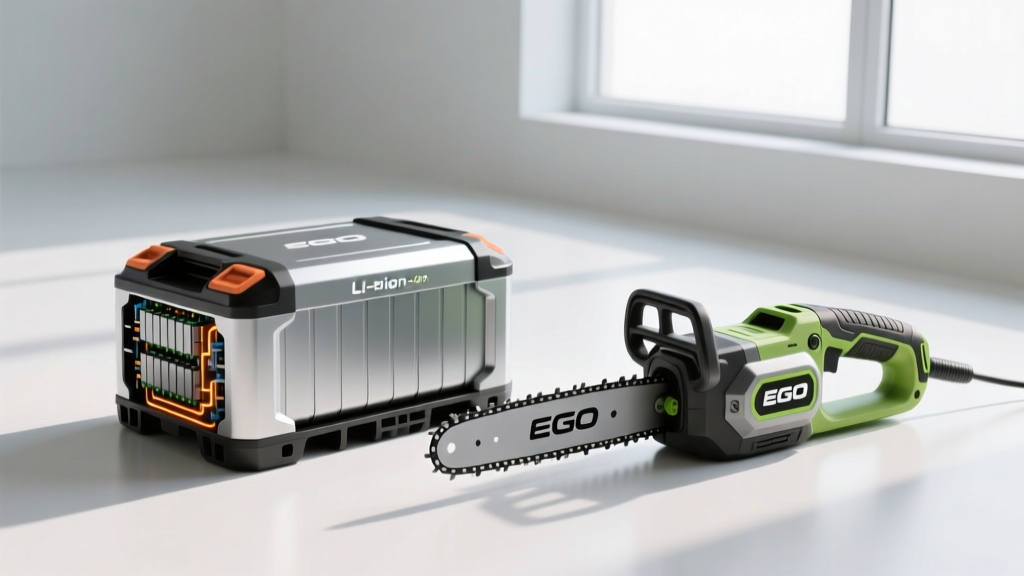
If you own an EGO Power+ CS1810 battery chainsaw, you already understand the basics of lithium-ion power: you slot in a 56V ARC Lithium battery pack, pull the trigger, and the brushless motor does the rest. But when you start shopping for an electric vehicle, the battery conversation scales up dramatically — from a 2.5 to 12.0 kWh EGO pack to a 60–120 kWh traction battery that weighs over 1,000 pounds and costs more than most used cars. The underlying chemistry, however, shares more DNA than you might expect.
This guide uses the EGO Power+ CS1810 battery chainsaw as a familiar reference point to explain how modern EV batteries actually work in 2026 — covering chemistry trade-offs, real-world degradation data, warranty coverage, replacement costs, and the care habits that maximize lifespan. Whether you're deciding between an LFP Tesla Model 3 and an NMC Hyundai Ioniq 5, or just wondering if your next EV will need a new battery before you trade it in, the answers are below.
Same Lithium-Ion Family, Very Different Engineering
The EGO Power+ CS1810 chainsaw runs on EGO's 56V ARC Lithium platform — a battery pack built from high-energy-density lithium-ion cells (typically NMC chemistry) with a proprietary battery management system (BMS) that handles cell balancing, thermal protection, and over-discharge cutoff. The CS1810 itself doesn't include a battery; EGO sells packs ranging from the 2.5 Ah (140 Wh) BA1120 to the 12.0 Ah (672 Wh) BA4800T.
An EV traction battery operates on the same fundamental principles — lithium ions shuttle between a cathode and anode through an electrolyte — but the engineering priorities diverge sharply:
- Energy capacity: An EGO 5.0 Ah pack stores 0.28 kWh. A 2026 Tesla Model 3 Long Range stores roughly 75 kWh usable — about 268 times more energy.
- Voltage: EGO runs at 56V nominal. Most EV packs operate between 350V and 800V, enabling faster charging and more efficient power delivery to the motors.
- Thermal management: The EGO pack relies on passive cooling and the BMS throttling output when hot. EV batteries use active liquid cooling and heating circuits to maintain optimal cell temperature (typically 20–35°C) year-round.
- Cost: A 5.0 Ah EGO battery costs around $199. A 75 kWh EV battery pack costs roughly $7,500–$12,000 at current pack-level pricing of ~$100–$160/kWh.
The chemistry choices, though, are where the real buyer-facing differences emerge.
LFP vs NMC/NCA: The Chemistry Decision That Matters Most
Every EV buyer in 2026 faces a fork in the road: lithium iron phosphate (LFP) or nickel manganese cobalt / nickel cobalt aluminum (NMC/NCA). The EGO Power+ CS1810 uses NMC cells, prioritizing energy density in a compact pack. EVs have the luxury of choosing based on use case.
| Attribute | LFP (Lithium Iron Phosphate) | NMC / NCA (Nickel-Based) |
|---|---|---|
| Energy Density | Lower (~160–180 Wh/kg cell-level) | Higher (~220–300 Wh/kg cell-level) |
| Cycle Life | 3,000–5,000+ cycles to 80% SoH | 1,000–2,000 cycles to 80% SoH |
| Cold-Weather Performance | Weaker below 0°C; slower charging | Better low-temp discharge and charge acceptance |
| Cost (per kWh) | Lower — no cobalt or nickel | Higher — commodity-sensitive metals |
| Thermal Stability | Excellent — higher thermal runaway threshold | Good — requires robust BMS and cooling |
| State of Charge (SoC) Flexibility | Can charge to 100% daily without penalty | Best kept 20–80% for longevity |
| Typical EV Applications | Tesla Model 3 RWD, Model Y RWD, Ford Mustang Mach-E Select (LFP trims), Rivian Standard | Tesla Long Range, Hyundai Ioniq 5/6, BMW i4/iX, most long-range trims |
| Weight Penalty | Heavier pack for same kWh | Lighter pack for same kWh |
Which is better? It depends on your driving pattern. If you commute daily, charge at home, and don't regularly need 300+ miles of range in freezing weather, LFP is the smarter long-term play — you'll likely see less degradation over 10 years, and you never have to worry about the 80% daily charge limit. If you take frequent road trips, live in a cold climate, or need maximum range from the smallest, lightest pack, NMC/NCA remains the better fit.
For context, the EGO CS1810's NMC pack prioritizes energy density because a chainsaw needs to be lightweight and powerful — the same logic that drives NMC use in long-range EVs where every pound of battery matters.
How Long Do EV Batteries Actually Last?
The short answer: almost certainly longer than you'll own the car. The fear of a $20,000 battery swap at 80,000 miles is not supported by fleet data in 2026.
Real-world degradation data from multiple sources paints a consistent picture:
Typical EV Battery Degradation Curve (NMC chemistry, average use):
- Year 1 / ~12,000 miles: 2–5% capacity loss (initial formation loss)
- Year 3 / ~36,000 miles: 6–9% total loss
- Year 5 / ~60,000 miles: 8–12% total loss
- Year 8 / ~96,000 miles: 10–15% total loss
- Year 10 / ~120,000 miles: 12–18% total loss
LFP packs tend to lose 1–3% less over the same period, with many showing under 10% degradation at 100,000 miles. Tesla's 2025 Impact Report noted that Model 3/Y vehicles retained approximately 85% of original range at 200,000 miles. Recurrent Auto's fleet data (over 15,000 vehicles tracked) shows median degradation of roughly 7–8% at 80,000 miles across brands.
For perspective, the EGO Power+ CS1810's 56V battery will typically endure 800–1,200 full charge cycles before dropping to 80% capacity. If you use a 5.0 Ah pack for 30 minutes of cutting per week and charge it once a week, that's roughly 15–20 years of weekend use. EV batteries face higher daily cycling demands but benefit from far more sophisticated thermal management and BMS controls.
What Does the EV Battery Warranty Actually Cover?
Federal law mandates a minimum battery warranty of 8 years / 100,000 miles (10 years / 150,000 miles in California and states that follow CARB standards). Most manufacturers exceed this baseline. The key detail is the capacity retention threshold — the point at which the manufacturer considers the battery "failed" and will replace or repair it.
| Manufacturer | Warranty Period | Mileage Limit | Capacity Retention Threshold |
|---|---|---|---|
| Tesla (Model 3/Y RWD — LFP) | 8 years | 100,000 miles | 70% |
| Tesla (Model 3/Y Long Range — NMC) | 8 years | 120,000 miles | 70% |
| Hyundai / Kia | 8 years | 100,000 miles | 70% (some trims 65%) |
| Ford (Mustang Mach-E) | 8 years | 100,000 miles | 70% |
| GM (Ultium-based) | 8 years | 100,000 miles | 70% (Bolt EV/EUV was 60%) |
| Rivian | 8 years | 175,000 miles (Max pack) | 70% |
| BMW | 8 years | 100,000 miles | 70% |
What's covered: Capacity loss below the stated threshold, manufacturing defects, and cell/module failures. What's not covered: Damage from accidents, flooding, improper modifications, or using non-approved charging equipment. Normal degradation above the threshold (e.g., losing 25% capacity over 8 years) is considered "within spec" and won't trigger a warranty replacement.
This is a meaningful distinction. A 70% threshold means the manufacturer guarantees your battery will retain at least 70% of its original capacity — not that degradation stops at 70%. Most EVs never hit this threshold under normal use.
How Much Does an EV Battery Replacement Cost?
If your battery does fall below warranty threshold — or you're buying a used EV out of warranty — here's what replacement looks like in 2026:
| Vehicle | Battery Size (kWh) | Chemistry | Estimated Replacement Cost |
|---|---|---|---|
| Tesla Model 3 RWD | ~60 kWh | LFP | $7,000–$10,000 |
| Tesla Model Y Long Range | ~75 kWh | NMC | $10,000–$14,000 |
| Hyundai Ioniq 5 (Long Range) | ~77.4 kWh | NMC | $11,000–$15,000 |
| Ford Mustang Mach-E Extended Range | ~91 kWh | NMC | $13,000–$18,000 |
| Chevrolet Equinox EV | ~85 kWh | NMC (Ultium) | $12,000–$16,000 |
| Rivian R1S (Max Pack) | ~149 kWh | NMC | $20,000–$28,000 |
These figures include the battery pack and labor but can vary by region, dealer vs. independent shop, and whether modules can be replaced individually (some packs allow this) versus requiring a full pack swap. Pack-level cell pricing has continued to decline — BloombergNEF reported average lithium-ion pack prices falling below $130/kWh in late 2025 — but labor, diagnostics, and dealer markup add substantially.
When is replacement typically needed? For most owners, it isn't. The vast majority of EV batteries outlive the vehicle's first and second ownership cycles. Out-of-warranty replacements are most common in high-mileage fleet vehicles, salvage-title rebuilds, or cars exposed to extreme abuse (repeated 100% SoC storage in desert heat, exclusive DC fast charging without thermal management). For the average owner driving 12,000 miles per year, the battery will likely retain 80–85% capacity at the 10-year mark.
Factors That Accelerate (or Preserve) Battery Life
The same principles that govern your EGO chainsaw battery's lifespan apply to EVs — just with more variables and more sophisticated mitigation:
Battery Care Best Practices for Maximum Longevity
- Limit DC fast charging to road trips. Occasional 150–350 kW fast charges are fine, but daily DCFC use accelerates degradation by 1–3% over the battery's lifetime compared to Level 2 home charging. The EGO CS1810's rapid charger is convenient, but EGO still recommends standard charging for daily use when time allows.
- Keep State of Charge between 20–80% for NMC. LFP owners can (and should) charge to 100% regularly — LFP cells need periodic full charges for accurate BMS calibration. NMC cells stressed at high SoC degrade faster.
- Don't store at 100% or 0%. If leaving your EV for a week or more, set the charge limit to 50–60%. Storing at full charge in heat is the single worst thing you can do to an NMC battery.
- Precondition before fast charging. Most EVs do this automatically when you navigate to a DC fast charger. Cold batteries charged at high power suffer lithium plating — a permanent capacity loss mechanism. The EGO BMS similarly limits power output when the pack is cold.
- Use your EV's scheduled charging feature. Set charging to finish just before you leave in the morning rather than sitting at high SoC for hours.
- Park in shade or a garage when possible. Sustained battery temperatures above 35°C (95°F) accelerate calendar aging. Active thermal management helps, but it can't fully offset weeks of 110°F parking-lot heat.
How to Check and Monitor Your EV's Battery Health
Unlike the EGO CS1810 — where you simply notice when runtime decreases — EVs provide detailed State of Health (SoH) monitoring through multiple channels:
In-vehicle displays: Most EVs show estimated range based on current capacity, and some (like Hyundai/Kia) display a battery health percentage in the settings menu. Tesla does not natively show SoH percentage in the vehicle UI, though third-party tools can extract it.
OBD-II diagnostic tools: Devices like the OBDLink SX paired with apps such as EV Health or Car Scanner can read the battery management system's reported SoH value directly. This is the most accurate owner-accessible method.
Manufacturer service checks: Dealers can run a full battery health diagnostic that reads individual cell voltages, internal resistance, and capacity estimates. Many will do this during routine service visits at no charge.
Third-party fleet data platforms: Services like Recurrent allow you to connect your vehicle and track degradation over time against a fleet average for your specific model — useful for spotting abnormal degradation early.
The practical test: If your EV's EPA-rated range was 310 miles when new and you're consistently seeing 280+ miles at the same SoC after three years, your battery is performing well. A drop below 260 miles (roughly 83% retention) at the same charge level would warrant a dealer diagnostic.
What's Next: Solid-State and Silicon-Anode Batteries
The next major leap in EV battery technology involves solid-state electrolytes (replacing the liquid electrolyte with a solid ceramic, glass, or polymer) and silicon-dominant anodes (replacing graphite to increase energy storage per cell).
Solid-state batteries promise higher energy density (potentially 400–500 Wh/kg at the cell level), faster charging, improved safety (no flammable liquid electrolyte), and longer cycle life. Toyota, Samsung SDI, and QuantumScape are leading development, with Toyota announcing limited production in select models for 2027–2028. However, manufacturing scale, cost, and durability validation remain significant hurdles. Realistic mass-market availability is 2029–2032, not 2026.
Silicon-anode batteries are closer to commercialization. Companies like Sila Nanotechnologies and Group14 are supplying silicon-carbon composite anode materials to manufacturers including Mercedes-Benz and Panasonic. These offer 10–20% energy density improvements over graphite anodes and are appearing in limited 2026–2027 model-year applications.
For today's buyer: Neither technology is available in a vehicle you can purchase right now. The LFP and NMC batteries in 2026 EVs are mature, well-understood, and backed by substantial warranty coverage. Waiting for solid-state is not a practical strategy unless your purchase timeline extends to 2030 or beyond.
Frequently Asked Questions
How long do EV batteries last in years and miles?
Based on fleet data from Tesla, Recurrent Auto, and manufacturer reports, most EV batteries retain 80–88% of original capacity after 10 years or 120,000 miles. LFP chemistries tend toward the higher end of that range. With proper care, reaching 200,000 miles with 75%+ capacity is realistic. The battery will typically outlast the vehicle's economic life.
How much does an EV battery cost to replace?
In 2026, replacement costs range from approximately $7,000 for a smaller LFP pack (Tesla Model 3 RWD) to $28,000 for a large NMC pack (Rivian R1S Max). Most replacements fall in the $10,000–$16,000 range for mainstream sedans and crossovers. These costs continue to decline as pack-level cell prices drop.
What does the EV battery warranty cover?
Federally mandated minimum coverage is 8 years / 100,000 miles with a 70% capacity retention threshold. This means the manufacturer will repair or replace the battery if it drops below 70% of original capacity within that period. Coverage includes cell defects and abnormal degradation but excludes accident damage, flooding, and misuse.
How do I check my EV battery's State of Health?
Use an OBD-II scanner with EV-compatible software (Car Scanner, EV Health) to read the BMS-reported SoH percentage. You can also compare your current range at a given state of charge against the EPA-rated range when new, or have a dealer run a full diagnostic. Fleet-tracking apps like Recurrent provide ongoing degradation monitoring.
LFP vs NMC — which battery chemistry is better for me?
Choose LFP if you charge at home daily, want maximum cycle life, don't mind slightly less range, and prefer the simplicity of charging to 100% without concern. Choose NMC/NCA if you need maximum range, frequently drive in cold weather, take regular road trips requiring fast charging, or prioritize lower vehicle weight. Both chemistries are proven and well-supported in 2026.
Does the EGO Power+ CS1810 use the same battery chemistry as an EV?
Yes — the EGO 56V ARC Lithium packs use NMC (nickel manganese cobalt) cells, the same chemistry family found in long-range EVs like the Tesla Model 3 Long Range and Hyundai Ioniq 5. The difference is scale, thermal management, and BMS sophistication. The core electrochemistry and degradation mechanisms are fundamentally the same.
Can frequent DC fast charging damage my EV battery?
Occasional DC fast charging has minimal impact. However, exclusive reliance on DCFC (350 kW chargers) without Level 2 home charging can accelerate degradation by 1–3% over the battery's lifetime due to sustained high temperatures and high C-rate stress. For daily charging, a home Level 2 charger (7–11 kW) is gentler and cheaper. According to fueleconomy.gov, Level 2 charging also maximizes energy efficiency by reducing thermal losses.