Why EV and Marine Battery Tech Matter More Than Ever
If you've shopped for an electric vehicle or browsed the growing market of battery powered boats, you've likely encountered a maze of chemistry acronyms, warranty fine print, and conflicting claims about how long these expensive packs actually last. The good news: modern lithium-ion battery technology — whether it's propelling a Tesla Model Y down the highway or a Candela C-8 across a lake — has matured to the point where most packs will outlast the useful life of the vehicle or vessel they power.
But "most" isn't "all," and understanding the differences between chemistries, usage patterns, and warranty coverage is the single most important thing you can do before spending $40,000 on an EV or $80,000+ on an electric boat. This guide covers the data that matters.
LFP vs NMC/NCA: The Chemistry Trade-Off Explained
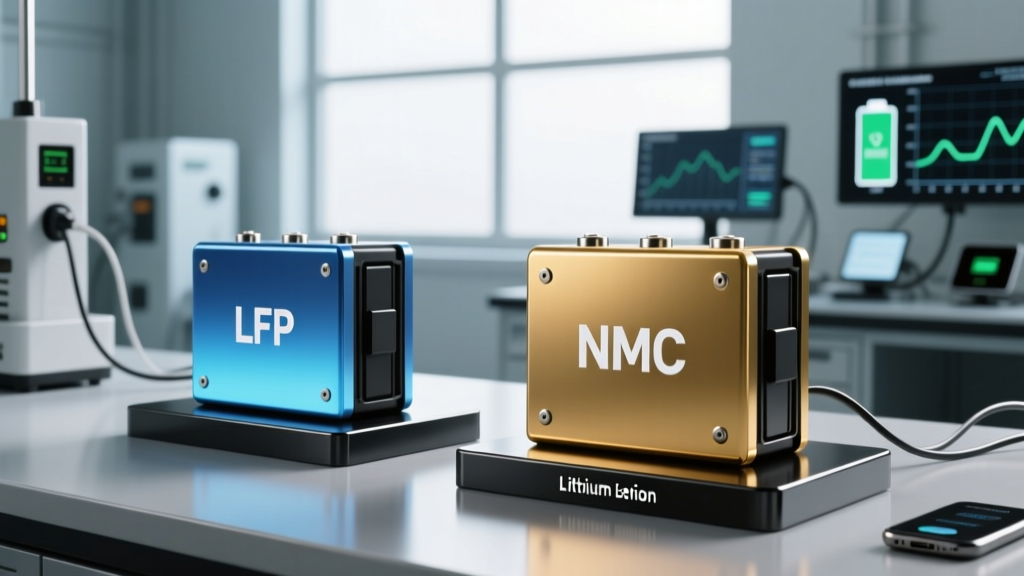
Two dominant lithium-ion chemistries power nearly every mainstream EV and an increasing number of battery powered boats on the market today. Each has distinct strengths.
| Attribute | LFP (Lithium Iron Phosphate) | NMC/NCA (Nickel Manganese Cobalt / Nickel Cobalt Aluminum) |
|---|---|---|
| Energy Density | ~160-180 Wh/kg (lower) | ~220-260 Wh/kg (higher) |
| Cycle Life | 3,000-5,000+ cycles | 1,000-2,000 cycles |
| Cold-Weather Performance | Weaker below 32°F; slower charging | Better low-temp discharge and charge acceptance |
| Thermal Stability | Excellent; very low thermal runaway risk | Good but requires more active thermal management |
| Cost per kWh | ~$90-110/kWh (lower) | ~$120-150/kWh (higher) |
| Typical Use Cases | Standard-range EVs (Tesla Model 3 RWD, Ford Mustang Mach-E Select), some marine applications | Long-range EVs (Model Y LR, Rivian R1T), high-performance marine |
| Recommended Charge Habit | Can be charged to 100% daily | Best kept at 80% daily; 100% for trips only |
Which is better? It depends on your use case. LFP wins on longevity, cost, and safety — ideal for daily commuting, frequent top-ups, and warmer climates. NMC/NCA wins on energy density and cold-weather capability — essential for long-range vehicles and battery powered boats operating in northern waters where weight and volume constraints are tight.
Marine applications add complexity: saltwater exposure, vibration, and the need for waterproof IP67+ enclosures drive up pack costs. Companies like Candela use NMC packs in their hydrofoiling electric boats to maximize range per kilogram, while smaller pontoon and fishing boat manufacturers increasingly adopt LFP for its durability and tolerance of 100% state-of-charge storage between outings.
How Long Do EV and Marine Batteries Actually Last?
The short answer: far longer than most buyers fear. Data from fleet operators, manufacturer warranty claims, and independent studies paint a consistent picture.
Typical Degradation Curve (NMC/NCA packs, moderate climate):
- Year 1 / 15,000 miles: ~2-3% capacity loss (initial break-in drop)
- Year 3 / 45,000 miles: ~5-7% total loss
- Year 5 / 75,000 miles: ~8-12% total loss
- Year 8 / 120,000 miles: ~12-18% total loss
- Year 10 / 150,000 miles: ~15-22% total loss (most still above 78% SoH)
Sources: Geotab fleet data (2024 update), Recurrent Auto battery health reports.
LFP packs degrade more slowly. Tesla's standard-range Model 3 (LFP) fleet data shows an average of only ~8-10% loss at 100,000 miles, compared to ~12-15% for equivalent NMC long-range packs. For battery powered boats that see 200-500 hours of use annually (equivalent to roughly 5,000-15,000 miles), the cycle-life advantage of LFP means many marine packs will retain 90%+ capacity for a decade or more.
The key takeaway: most EV batteries will retain 75-85% of original capacity at 150,000 miles, and most marine batteries will outlive the hull they're installed in. Catastrophic failure is rare; gradual capacity loss is the norm.
What the Battery Warranty Actually Covers
Federal law mandates a minimum 8-year / 100,000-mile warranty on EV battery packs (10 years / 150,000 miles in CARB states like California, New York, and Massachusetts). Here's how major manufacturers structure coverage:
| Manufacturer | Coverage Period | Capacity Retention Threshold | Notes |
|---|---|---|---|
| Tesla (Model 3/Y LFP) | 8 yr / 100,000 mi | 70% | Covers defects + degradation below threshold |
| Tesla (Model 3/Y LR NMC) | 8 yr / 120,000 mi | 70% | Longer mileage for LR variants |
| Hyundai / Kia | 10 yr / 100,000 mi | 70% | Among the most generous terms |
| Ford (Mach-E, F-150 Lightning) | 8 yr / 100,000 mi | 70% | Transferable to second owner |
| GM (Ultium platform) | 8 yr / 100,000 mi | 70% | Covers module-level replacement |
| Rivian | 8 yr / 120,000 mi | 70% | Module-level service available |
What's covered: Manufacturing defects, cell failures, and capacity degradation below the stated threshold (typically 70% of original capacity). If your 82 kWh pack drops below ~57 kWh usable within the warranty period, the manufacturer must repair or replace it — often via module-level service rather than a full pack swap.
What's NOT covered: Damage from accidents, flooding (critical for battery powered boats — marine warranties differ significantly), improper charging equipment, or modifications. Always read the specific warranty booklet; marine battery warranties from companies like Torqeedo or Flux Marine typically cover 2-5 years and exclude saltwater intrusion damage.
EV and Marine Battery Replacement Costs: The Real Numbers
This is the question that generates the most anxiety — and the most misinformation. Here's what replacement actually costs in 2026, with context on how rarely it's needed.
| Vehicle / Vessel Type | Battery Size (kWh) | Full Pack Replacement Cost | Module-Level Repair Cost | Typical Replacement Timeline |
|---|---|---|---|---|
| Tesla Model 3 RWD (LFP) | 57.5 kWh | $12,000 - $16,000 | $2,500 - $5,000 (per module) | Rarely before 200,000+ mi |
| Tesla Model Y Long Range (NMC) | 75 kWh | $14,000 - $20,000 | $3,000 - $6,000 | Rarely before 180,000+ mi |
| Ford F-150 Lightning Ext. Range | 131 kWh | $22,000 - $30,000 | $3,500 - $7,000 | Rarely before 150,000+ mi |
| Hyundai Ioniq 5 (77.4 kWh) | 77.4 kWh | $13,000 - $18,000 | $2,500 - $5,500 | Rarely before 180,000+ mi |
| Battery Powered Boat (20-30 ft, e.g., Flux Marine) | 40-80 kWh | $15,000 - $35,000 | Varies widely | 10-20 years (cycle-dependent) |
| Battery Powered Boat (30+ ft, e.g., Candela C-8) | 69-120 kWh | $25,000 - $50,000+ | $5,000 - $12,000 | 10-15 years |
Context matters enormously here. Battery cell prices have fallen from over $1,100/kWh in 2010 to roughly $100-130/kWh in 2026, according to BloombergNEF. That means replacement costs continue declining. More importantly, the vast majority of EV and marine batteries never need full replacement — they degrade gradually and remain functional well past 80% state of health, which still provides ample range for daily use.
For battery powered boats specifically, the marine environment introduces corrosion and moisture risks that don't apply to cars. Properly sealed marine packs from reputable manufacturers (Torqeedo, Flux Marine, Evoy) are built to IP67 or IP68 standards, but any hull compromise or improper winterization can void warranties and accelerate degradation.
Factors That Kill Batteries (and How to Avoid Them)
Maximize your battery's lifespan with these evidence-based practices:
- Limit DC fast charging to road trips. Frequent 150+ kW DCFC sessions accelerate degradation by ~1-2% per year versus exclusive Level 2 home charging. For daily use, a 7-11 kW Level 2 charger is ideal.
- Avoid extreme state-of-charge storage. For NMC/NCA packs, store at 40-60% SoC if the vehicle or boat won't be used for weeks. LFP packs tolerate 100% storage better but still prefer moderate SoC for long idle periods.
- Precondition before fast charging in cold weather. Cold batteries (<40°F) accept charge slowly and can experience lithium plating if forced to charge quickly. Use your EV's built-in preconditioning feature (Tesla, Hyundai, Ford all include this) to warm the pack before arriving at a DCFC station.
- Avoid repeated 0% discharges. Running the pack to true empty stresses cells. Most EVs have a buffer (typically 2-5 kWh below the displayed 0%), but habitually draining to zero still accelerates wear.
- Keep the battery cool in summer. Prolonged exposure to 95°F+ ambient temperatures while at high SoC is the single worst combination for degradation. Park in shade or a garage when possible.
- For battery powered boats: winterize properly. Store marine packs at ~50% SoC in a temperature-controlled environment. Never leave a pack fully charged and sitting in freezing water — ice expansion can compromise seals.
How to Check and Monitor Battery Health (SoH)
State of Health (SoH) is the percentage of original capacity your battery retains. A new 82 kWh pack at 90% SoH holds ~73.8 kWh usable. Here's how to check it:
For EVs:
- Tesla: Navigate to Service Mode (tap the car model text on the main screen three times) → Battery Health test. This runs a controlled discharge cycle and reports SoH within ~2% accuracy.
- Hyundai / Kia: Use the Bluelink or Kia Connect app; battery health percentage is available in the diagnostics section on 2023+ models.
- Ford: The FordPass app shows estimated battery health on Mach-E and Lightning models. For a precise reading, a dealer can run an OBD-II diagnostic.
- OBD-II scanners: Tools like the OBDeleven or Carly adapter can read SoH from most EVs via the CAN bus. Apps like Recurrent also aggregate fleet data and provide personalized health estimates.
For battery powered boats:
Most marine battery management systems (BMS) display SoH on the helm display or companion app. Torqeedo's Power app, for example, shows cycle count, SoH, and individual cell voltage balance. If your marine BMS doesn't expose SoH directly, compare your fully-charged kWh reading to the original spec — a 60 kWh pack that now accepts only 52 kWh from a full charge is at ~87% SoH.
What's Next: Solid-State, Silicon Anode, and Beyond
Several next-generation battery technologies are in development, but it's critical to separate lab announcements from showroom availability.
Solid-state batteries replace the liquid electrolyte with a solid material, promising higher energy density (potentially 400+ Wh/kg), faster charging, and improved safety. Toyota has announced solid-state production for 2027-2028, initially in limited-run vehicles. Samsung SDI and QuantumScape are targeting similar timelines. These are not available in any production EV or battery powered boat as of 2026.
Silicon anode technology (used in limited form by Mercedes-Benz's EQG and startups like Sila Nanotechnologies) increases energy density by 20-40% over graphite anodes. Expect broader adoption in 2026-2028 model-year EVs and eventually in high-performance marine applications.
Sodium-ion batteries offer a lower-cost, cobalt-free alternative with decent cycle life but ~30% lower energy density than LFP. CATL has begun mass production for stationary storage and budget Chinese-market EVs. Marine applications are plausible for short-range, cost-sensitive battery powered boats within 3-5 years.
For buyers in 2026, today's LFP and NMC chemistries remain the practical choice — proven, warrantied, and continuously improving in cost.
Frequently Asked Questions
How long do EV batteries last in years and miles?
Based on fleet data from Geotab and Recurrent Auto, most modern EV batteries retain 75-85% of original capacity at 150,000 miles (roughly 10-12 years of average driving). LFP packs tend to last longer — often retaining 85-90% at the same mileage. Catastrophic failure requiring full replacement before 100,000 miles is statistically rare (under 2% of packs).
How much does an EV battery cost to replace?
Full pack replacement ranges from $12,000-$20,000 for most passenger EVs and $15,000-$50,000+ for battery powered boats depending on pack size. However, module-level repairs ($2,500-$7,000) are increasingly common and far cheaper. Most batteries never need replacement during the vehicle's useful life.
What does the EV battery warranty cover?
Federal law requires a minimum 8-year/100,000-mile warranty covering manufacturing defects and capacity degradation below a threshold (typically 70% of original capacity). CARB states extend this to 10 years/150,000 miles. Marine battery warranties vary by manufacturer and typically cover 2-5 years with different terms.
How do I check my EV or boat battery's state of health?
Most modern EVs expose SoH through built-in diagnostics (Tesla Service Mode, Hyundai Bluelink, FordPass). OBD-II adapters like OBDeleven can read SoH on most vehicles. For battery powered boats, check the BMS display or companion app, or compare full-charge kWh capacity to the original spec.
LFP vs NMC — which battery chemistry is better for me?
Choose LFP if you want maximum cycle life (3,000-5,000+ cycles), lower cost, tolerance of 100% daily charging, and prioritize safety — ideal for daily commuting and warm climates. Choose NMC/NCA if you need maximum range per charge, better cold-weather performance, or are buying a battery powered boat where weight and volume constraints demand higher energy density.
Do battery powered boats use the same batteries as EVs?
They use the same fundamental lithium-ion cell chemistries (LFP and NMC), but marine packs require additional waterproofing (IP67/IP68), vibration resistance, and corrosion protection. This drives marine pack costs 20-50% higher per kWh than equivalent automotive packs. Companies like Torqeedo, Flux Marine, and Evoy specialize in purpose-built marine battery systems.
Does fast charging damage my battery?
Occasional DC fast charging (1-2 times per week) has minimal impact — roughly 0.5-1% additional annual degradation versus exclusive Level 2 charging. Daily DCFC use can accelerate degradation by 1-3% per year. The biggest risk is fast charging a cold battery without preconditioning, which can cause lithium plating. Use your vehicle's navigation-based preconditioning whenever possible.
For official EPA range and efficiency data on specific EV models, visit fueleconomy.gov. For current federal tax credit eligibility rules under IRS §30D, consult irs.gov.