Why Compare an EV Battery to a Battery Operated Cooler?
If you've ever taken a long EV road trip, you've probably seen — or packed — a battery operated cooler. These portable fridge units (from brands like Dometic, EcoFlow, and FridgeFreeze) run on lithium cells and keep your drinks cold for hours off a built-in or external power pack. But the lithium battery inside a 100-quart battery operated cooler and the high-voltage traction battery under your EV's floor share the same fundamental chemistry, even though their scale, engineering, and lifespans are worlds apart.
This guide uses that comparison as a lens to explain everything EV buyers and owners actually need to know about battery chemistry, degradation, warranties, replacement costs, and daily care — with real 2025–2026 model-year data.
Battery Chemistry 101: LFP vs NMC/NCA Explained
Both your EV and a high-end battery operated cooler rely on lithium-ion cells, but the specific cathode chemistry determines how much energy they store, how long they last, and how they handle extreme temperatures.
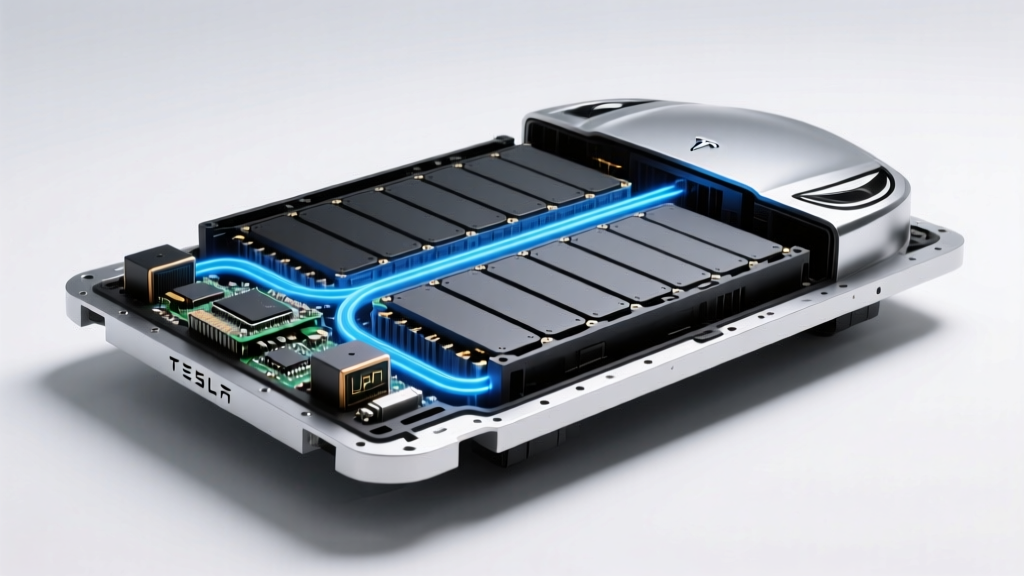
NMC (Nickel Manganese Cobalt) and NCA (Nickel Cobalt Aluminum) dominate performance-oriented EVs. They pack more energy into less space (higher energy density), which translates to longer EPA range in a given battery volume. Most long-range models — the Tesla Model 3 Long Range, Hyundai Ioniq 5, Ford Mustang Mach-E Extended Range — use NMC or NCA packs.
LFP (Lithium Iron Phosphate) trades some energy density for dramatically longer cycle life, better thermal stability, and lower cost. Tesla offers LFP in the Model 3 Standard Range, and BYD uses it across its global lineup. LFP cells tolerate repeated 100% charges better than NMC and degrade more slowly, though they lose more range in sub-freezing weather.
A premium battery operated cooler typically uses NMC pouch or cylindrical cells to stay compact and light, while an LFP version would be heavier for the same runtime. In an EV, that weight penalty is offset by the vehicle's mass and the longevity benefit.
| Attribute | LFP (Lithium Iron Phosphate) | NMC / NCA |
|---|---|---|
| Energy Density | ~160–180 Wh/kg (lower) | ~220–300 Wh/kg (higher) |
| Cycle Life | 3,000–5,000+ cycles | 1,000–2,000 cycles |
| Cold-Weather Performance | Greater range loss below 32°F | Better low-temp discharge |
| Thermal Stability | Excellent — less runaway risk | Good, requires more management |
| Cost per kWh | Lower (~$80–100/kWh at cell level) | Higher (~$110–140/kWh at cell level) |
| Recommended SoC Ceiling | 100% daily is fine | 80% daily; 100% for trips only |
| Typical EV Examples (2025–2026) | Tesla Model 3 RWD, BYD Atto 3, some Ford Maverick Hybrid packs | Tesla Model 3 LR, Ioniq 5, Rivian R1T, Mach-E ER |
How Long Do EV Batteries Actually Last?
The short answer: longer than most buyers expect, and usually longer than the rest of the car.
Data from fueleconomy.gov and long-term fleet studies show that modern liquid-cooled EV batteries lose roughly 5–10% of original capacity in the first 100,000 miles, then degrade more slowly. Tesla's 2024 Impact Report noted its Model 3/Y packs retained an average of ~85% capacity at 200,000 miles. Geotab's analysis of over 10,000 EVs found an average annual degradation of about 1.8% across all chemistries, with LFP packs trending lower.
A battery operated cooler, by contrast, might see 300–500 full cycles before noticeable capacity loss — fine for weekend camping but a fraction of an EV's duty cycle. The difference is thermal management: EVs actively heat and cool their packs, while a cooler's battery sits passively.
Typical EV Battery Degradation Curve (NMC, liquid-cooled):
- Year 1 / 15,000 mi: ~2–3% loss (initial formation)
- Year 3 / 45,000 mi: ~5–7% loss
- Year 5 / 75,000 mi: ~7–9% loss
- Year 8 / 120,000 mi: ~10–13% loss
- Year 10 / 150,000 mi: ~12–16% loss
LFP packs tend to run 2–4 percentage points better at each milestone. Frequent DC fast charging above 150 kW and habitual 100% SoC storage can add 1–3% extra loss over the same period.
What Does the EV Battery Warranty Actually Cover?
Federal law mandates that EV batteries carry a minimum warranty of 8 years or 100,000 miles (10 years/150,000 miles in California and states adopting CARB rules). Most manufacturers set a capacity-retention threshold of 70% — if your pack drops below that within the warranty window, the dealer must repair or replace it at no cost.
This is a fundamentally different proposition from a battery operated cooler, which typically carries a 1–2 year consumer warranty on the battery with no capacity-retention guarantee.
| Manufacturer | Warranty Term | Capacity Threshold | Chemistry |
|---|---|---|---|
| Tesla (Model 3/Y NMC) | 8 yr / 120,000 mi | 70% | NMC |
| Tesla (Model 3 RWD) | 8 yr / 100,000 mi | 70% | LFP |
| Hyundai / Kia (Ioniq 5, EV6) | 10 yr / 100,000 mi | 70% | NMC |
| Ford (Mach-E, F-150 Lightning) | 8 yr / 100,000 mi | 70% | NMC |
| Rivian (R1T / R1S) | 8 yr / 175,000 mi | 70% | NMC |
| GM (Ultium-based: Equinox EV, Blazer EV) | 8 yr / 100,000 mi | 70% | NMC |
| BYD (global models) | 8 yr / 100,000 mi (varies by market) | 70% | LFP (Blade) |
How Much Does an EV Battery Cost to Replace?
Out-of-warranty replacement is the number-one fear for prospective EV buyers — and the area where misinformation runs hottest. Here are real-world figures based on 2025–2026 service data and manufacturer parts pricing:
| Vehicle | Pack Size (usable kWh) | Approximate Replacement Cost |
|---|---|---|
| Tesla Model 3 RWD (LFP) | ~57 kWh | $8,000–$12,000 |
| Tesla Model 3 Long Range (NMC) | ~75 kWh | $12,000–$16,000 |
| Hyundai Ioniq 5 (NMC) | ~77.4 kWh | $12,000–$18,000 |
| Ford F-150 Lightning Extended Range | ~131 kWh | $20,000–$30,000 |
| Chevrolet Equinox EV | ~85 kWh | $12,000–$17,000 |
| Rivian R1T (Large Pack) | ~128 kWh | $18,000–$25,000 |
Context matters: the vast majority of EV batteries never need replacement during typical ownership. Most packs outlast 150,000 miles with 80%+ capacity remaining. When replacements do occur under warranty, the owner pays nothing. Out-of-warranty cases are rare and usually involve physical damage (flooding, collision) rather than age-related failure. Cell prices have fallen from over $1,000/kWh in 2010 to roughly $100–130/kWh in 2025, and continue trending downward.
Compare this to a battery operated cooler: a replacement cell pack for a premium unit runs $150–$400, but you'll likely buy it within 3–5 years of heavy use because there's no active thermal management preserving the cells.
Factors That Accelerate (or Preserve) EV Battery Life
Battery longevity isn't random — it's a function of how you treat the chemistry. The same principles apply to your EV and your battery operated cooler, just at very different scales.
Do: Habits That Extend Battery Life
- Charge to 80% daily (NMC/NCA). Set your car's charge limit and leave it. LFP owners can charge to 100% regularly — in fact, Tesla recommends periodic 100% charges for LFP to keep the BMS calibrated.
- Use Level 2 home charging as your primary method. Slow, steady charging at 7–11 kW generates far less heat than DC fast charging.
- Precondition the battery before fast charging or hard driving in cold weather. Most EVs do this automatically when you navigate to a charger.
- Park in shade or a garage during extreme heat. Sustained high temperatures are more damaging than cold.
- Drive it regularly. Lithium cells prefer use to sitting. A car driven 30 miles daily ages more gracefully than one parked at 90% SoC for weeks.
Don't: Habits That Accelerate Degradation
- Avoid daily DC fast charging above 150 kW when Level 2 is available. Occasional road-trip fast charging is fine; making it your routine adds measurable wear.
- Don't store at 100% SoC for extended periods (NMC/NCA). If leaving for a week, set SoC to 50–60%.
- Don't let SoC sit near 0% for days. Below ~10%, the cell voltage drops into a stress zone. Charge promptly if you run the battery low.
- Avoid repeated hard launches in extreme heat. High C-rate discharge combined with high ambient temps stresses the pack.
How to Check and Monitor Your Battery's State of Health
State of Health (SoH) is the percentage of original capacity your battery can still hold. A new EV has 100% SoH; at 85% SoH, a 75 kWh pack effectively holds ~64 kWh.
Most modern EVs surface SoH through the infotainment system or companion app. Tesla displays battery health in the service menu; Hyundai/Kia shows it in the EV dashboard; Ford includes it in the FordPass app. Third-party tools like ScanGauge or OBD-II readers paired with apps such as EV Health or ABRP (A Better Route Planner) can pull more granular cell-level data.
For a rough manual check: charge to 100%, note the displayed range, and compare it to the original EPA-rated range (adjusted for temperature). A 2022 Ioniq 5 that originally showed 303 miles at 100% but now shows 275 miles is at roughly 91% SoH — well within normal expectations.
Battery operated coolers rarely offer SoH readouts. You notice degradation only when runtime shrinks — another reason EV battery management systems are a significant engineering advantage.
What's Next: Solid-State, Silicon Anodes, and Realistic Timelines
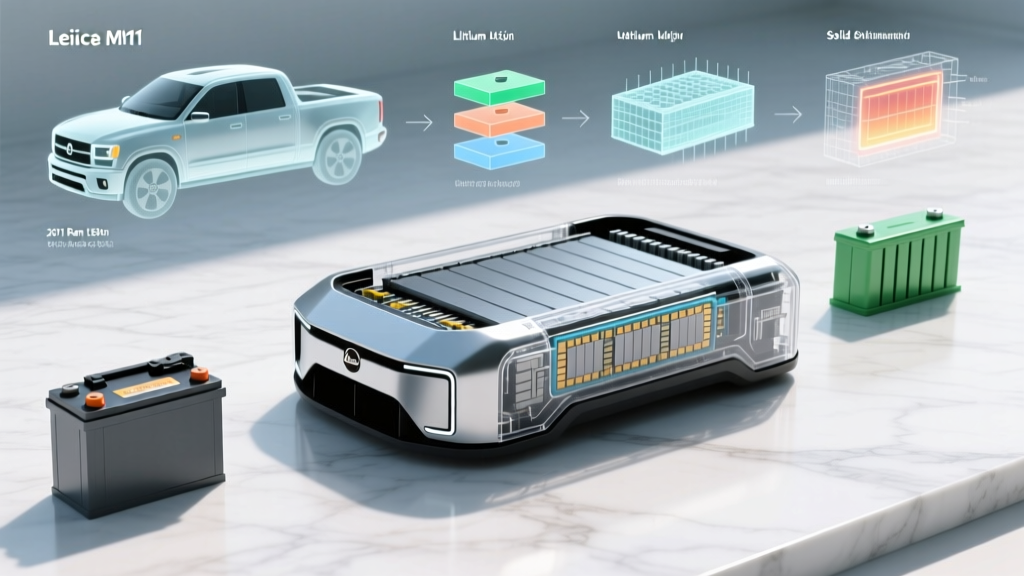
Solid-state batteries replace the liquid electrolyte with a solid material, promising higher energy density, faster charging, and improved safety. Toyota, Nissan, and Samsung SDI have all announced solid-state programs, but as of early 2026, no mass-production EV uses a full solid-state pack. Toyota's announced 2027–2028 timeline for limited production remains preliminary and subject to delay.
Silicon-anode batteries are closer to market. Companies like Sila Nanotechnologies and Group14 are supplying silicon-dominant anode materials to EV manufacturers, boosting energy density by 10–20% over graphite anodes. Expect to see these in premium models from 2026–2028, with gradual cost reduction through the 2030s.
Sodium-ion batteries are emerging as a low-cost, cobalt-free alternative for entry-level EVs and stationary storage. CATL has begun production, but energy density remains too low for long-range vehicles. These are better suited to urban commuters and — relevant to our opening comparison — next-generation battery operated coolers where cost matters more than range.
None of these technologies are available in a showroom EV today. Any article or ad claiming otherwise is ahead of reality. For 2025–2026 buyers, LFP and NMC remain the proven, well-understood choices with extensive real-world track records.
Frequently Asked Questions
How long do EV batteries last in years and miles?
Most modern liquid-cooled EV batteries retain 80–90% of original capacity at 150,000 miles and 10+ years. Fleet data from Tesla, Geotab, and EPA fueleconomy.gov supports this range. Many packs will outlast the vehicle's body and interior. Full failure before 100,000 miles is rare and usually covered by warranty.
How much does it cost to replace an EV battery?
Out-of-warranty replacement costs range from roughly $8,000 for a smaller LFP pack (Tesla Model 3 RWD) to $25,000–$30,000 for a large truck pack (F-150 Lightning Extended Range). However, the vast majority of EV batteries never require replacement during normal ownership. Cell costs continue declining, and by the time most current EVs need a new pack, prices will likely be significantly lower.
What does the EV battery warranty cover?
Federal law requires a minimum of 8 years/100,000 miles (10/150,000 in CARB states). The warranty guarantees the battery will retain at least 70% of its original capacity. If it falls below that threshold within the warranty window, the manufacturer must repair or replace it at no cost. Physical damage from accidents or flooding is typically excluded — that's what comprehensive insurance covers.
How do I check my EV battery's health?
Check your vehicle's built-in battery health display (available on most 2022+ models) or use an OBD-II scanner with an EV-compatible app. Compare your current 100% charge range to the original EPA rating as a rough SoH estimate. For detailed cell-level analysis, a service center can run a full diagnostic.
LFP vs NMC — which battery chemistry is better for me?
Choose LFP if you want maximum cycle life, plan to own the car 10+ years, mostly charge at home, and don't need the absolute longest range. Choose NMC/NCA if you need maximum range in a given pack size, regularly drive in cold climates, or want the fastest DC charging speeds. Neither is universally "better" — they optimize for different priorities.
Can I use my EV to power a battery operated cooler on a road trip?
Yes. Many 2025–2026 EVs with V2L (vehicle-to-load) capability — including the Hyundai Ioniq 5, Kia EV6, Ford F-150 Lightning, and Rivian R1T — have standard 120V AC outlets that can run a battery operated cooler indefinitely while the vehicle is parked or driving. The cooler draws roughly 40–80 watts, which is negligible against a 75+ kWh traction battery. You'll use less than 1 kWh over 12 hours — about 3–4 miles of range.
Does fast charging really damage the battery?
Occasional DC fast charging (road trips, a few times a month) causes minimal additional degradation in a liquid-cooled pack. Daily reliance on 150+ kW fast charging, especially in hot climates without preconditioning, can add 1–3% extra capacity loss over several years. For daily use, Level 2 home charging at 7–11 kW remains the gold standard for longevity.
Whether you're evaluating your next EV purchase or just packing a battery operated cooler for the weekend, understanding lithium battery fundamentals helps you make smarter decisions. For EVs, the data is clear: modern packs are engineered to last the life of the vehicle, backed by strong warranties, and supported by chemistry that continues to improve. The gap between perception and reality on EV battery longevity has never been wider — and that's good news for buyers.