Why "Airplane Battery" Searches Lead to EV Garages
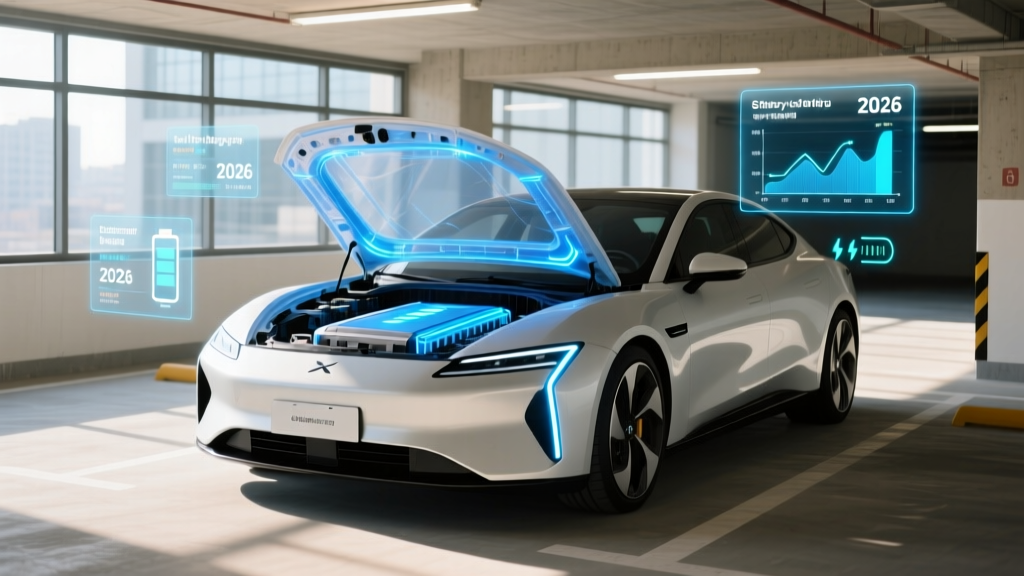
Every month, hundreds of shoppers and curious engineers type "airplane battery" into search engines. Some are researching aviation-grade lithium cells; others are wondering whether the battery pack in their electric vehicle shares DNA with the power systems that keep aircraft flying. The answer is both yes and no. Modern EVs and modern aircraft both rely on lithium-ion chemistry, but the design priorities diverge sharply: aviation demands ultra-high energy density and redundant safety at any cost, while automotive battery engineering balances energy density against cycle life, charging speed, thermal abuse tolerance, and — critically — price per kilowatt-hour.
This guide unpacks the battery technology inside today's EVs, explains how it compares to aviation battery standards, and gives you the exact data points — chemistry trade-offs, degradation curves, warranty thresholds, replacement costs, and care habits — you need to evaluate any electric vehicle's long-term viability.
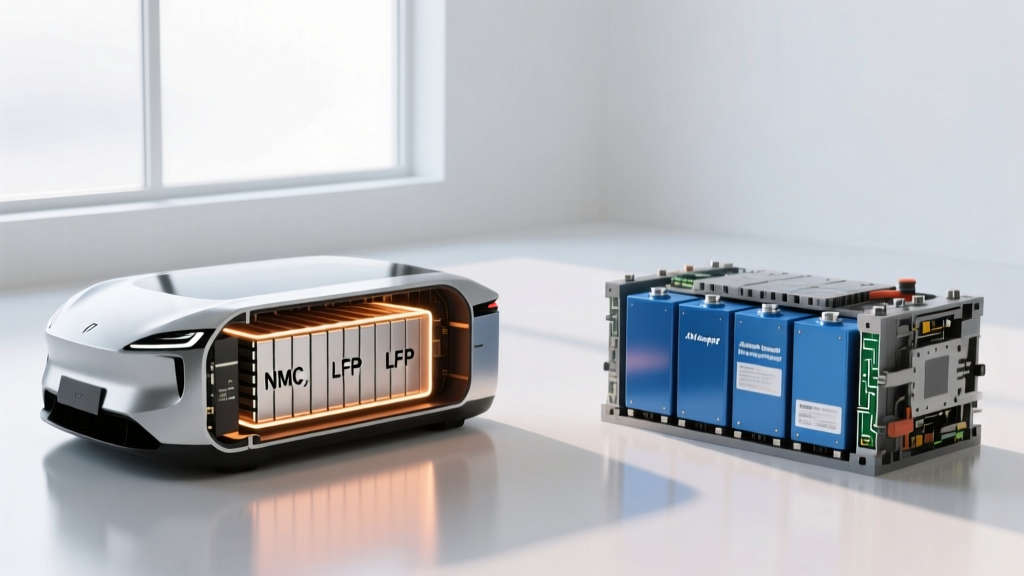
LFP vs. NMC vs. NCA: The Chemistry Decision That Shapes Your EV
The two dominant cathode chemistries in 2026 passenger EVs are lithium iron phosphate (LFP) and nickel-manganese-cobalt / nickel-cobalt-aluminum (NMC/NCA). Aviation applications have historically favored NMC and NCA for their superior energy density — every kilogram matters at altitude — but the automotive world has bifurcated based on use case.
| Attribute | LFP (Lithium Iron Phosphate) | NMC / NCA |
|---|---|---|
| Energy Density (cell-level) | 160–180 Wh/kg | 220–300 Wh/kg |
| Cycle Life (to 80% SoH) | 3,000–5,000+ cycles | 1,000–2,000 cycles |
| Cold-Weather Performance | Moderate; slower charge below 0°C without preconditioning | Better low-temp discharge; still benefits from thermal management |
| Thermal Runaway Risk | Very low; oxygen-stable cathode | Higher; requires robust BMS and cooling |
| Cost per kWh (pack-level, 2026) | ~$95–$115 | ~$125–$155 |
| Typical EV Applications | Tesla Model 3/Y RWD, Ford Mustang Mach-E Select, BYD models, standard-range trims | Long-range / performance trims, Hyundai Ioniq 5 LR, Rivian, Lucid |
| Airplane Battery Relevance | Rare in aviation — weight penalty too high | Standard for electric aviation prototypes (eVTOL, Alice) due to energy density |
Which is better for you? If you commute under 80 miles daily, can charge at home, and want a battery that will likely outlast the car's body, LFP is the pragmatic pick. If you need maximum EPA range for road trips or tow frequently, NMC/NCA's higher energy density is worth the trade-off. Neither chemistry is "fragile" — both are engineered to last — but their aging profiles differ.
How Long Do EV Batteries Actually Last?
The short answer: far longer than most buyers fear. Data aggregated by fueleconomy.gov and real-world fleet studies from Recurrent Auto and Geotab show that the average EV battery loses roughly 5–8% of its original capacity in the first two years, then degrades at a much slower linear rate of about 1–2% per year afterward.
Typical Degradation Curve (NMC 75–85 kWh pack, moderate climate, mixed charging):
- Year 1 / 15,000 mi: ~3–5% loss (initial SEI formation)
- Year 2 / 30,000 mi: ~6–8% loss
- Year 5 / 75,000 mi: ~10–13% loss
- Year 8 / 120,000 mi: ~14–18% loss
- Year 10 / 150,000 mi: ~17–22% loss (varies heavily by thermal management and charging habits)
LFP packs tend to show slightly less early degradation but have a flatter voltage curve that can make SoC estimation trickier. Tesla's 2025 Impact Report noted that Model 3/Y LFP packs retained an average of 92% capacity at 100,000 miles.
The key insight: most EV batteries will retain 75–85% of their original capacity at 150,000 miles. Since the average American drives ~13,500 miles per year (per FHWA data), that's an 11-year service life before you even approach the warranty threshold. Catastrophic failure is rare; gradual capacity fade is the norm.
What Does the Battery Warranty Actually Cover?
Federal law mandates that EV batteries carry a minimum warranty of 8 years / 100,000 miles (10 years / 150,000 miles in CARB states like California, New York, and Massachusetts). But the details matter enormously.
| Manufacturer | Warranty Period | Mileage Cap | Capacity Retention Threshold |
|---|---|---|---|
| Tesla (Model 3/Y LFP) | 8 years | 100,000 mi | 70% |
| Tesla (Model S/X, LR AWD) | 8 years | 120,000–150,000 mi | 70% |
| Hyundai / Kia (E-GMP) | 10 years | 100,000 mi | 70% |
| Ford (Mach-E, F-150 Lightning) | 8 years | 100,000 mi | 70% |
| GM (Ultium-based) | 8 years | 100,000 mi | 70% (some models 60% for PHEV) |
| Rivian | 8 years | 120,000 mi (175k for R1T quad) | 70% |
| BMW (iX, i4, i7) | 8 years | 100,000 mi | 70% |
Critical nuance: The warranty covers capacity loss below the threshold — not range loss from tire wear, alignment issues, or cold weather. If your 300-mile EPA-rated EV reads 255 miles at 100% SoC after three years (a 15% drop), you're still above the 70% floor and the claim will be denied. Most owners never hit the threshold.
EV Battery Replacement Cost: The Numbers
Out-of-warranty battery replacement is the specter that haunts EV forums. Here's what it actually costs in 2026, based on manufacturer parts pricing and independent shop data:
| Vehicle / Battery Size | Pack Capacity | Replacement Cost (Parts + Labor) | Typical Need Timeline |
|---|---|---|---|
| Tesla Model 3 RWD (LFP) | ~60 kWh | $12,000–$15,000 | Rarely needed; 200k+ mi expected |
| Tesla Model Y LR AWD | ~75 kWh | $14,000–$18,000 | Rarely needed; 200k+ mi expected |
| Hyundai Ioniq 5 LR | 77.4 kWh | $15,000–$20,000 | 180k–250k mi if abused; often longer |
| Ford F-150 Lightning Ext. Range | 131 kWh | $25,000–$32,000 | Very rare; largest packs degrade slowest proportionally |
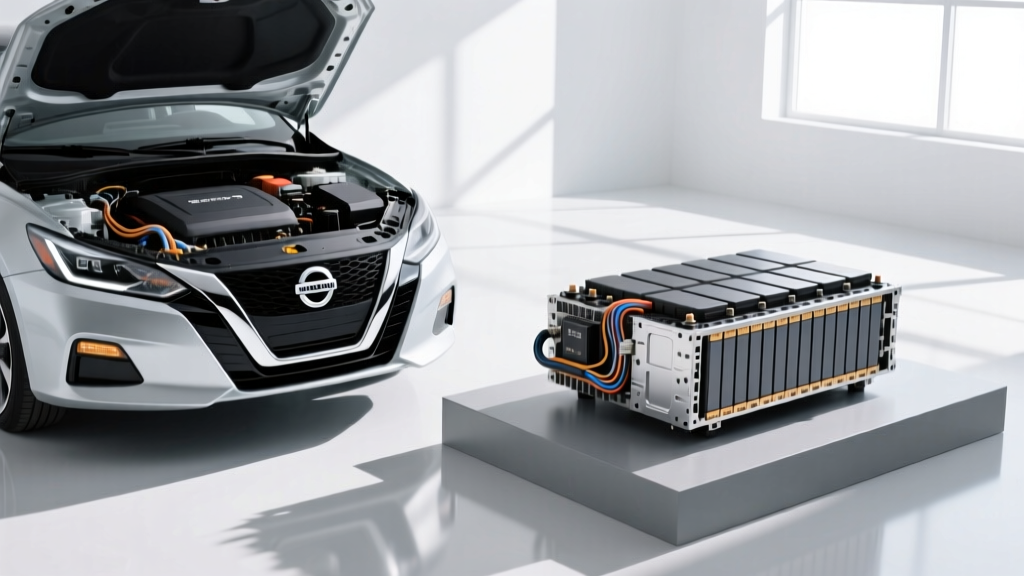
| Chevrolet Bolt EV (older NMC) | 65 kWh | $14,000–$16,000 | Some early packs replaced under recall; 2017–2019 models |
| Nissan Leaf (passive cooling) | 40–62 kWh | $8,000–$12,000 | 100k–140k mi; passive cooling accelerates fade |
Context that matters: The average transaction price for a new EV in early 2026 is ~$52,000. A $15,000–$20,000 battery swap at year 12–15 represents a cost-per-year of roughly $1,000–$1,500 — comparable to the cumulative transmission and engine repairs on a gas vehicle over the same period. And pack prices continue to fall: BloombergNEF's 2025 battery price survey reported volume-weighted average pack prices at $115/kWh, down from $140/kWh in 2023. By the time you actually need a replacement, it will likely cost less than today's figures.
Factors That Accelerate (or Preserve) Battery Life
Battery degradation isn't random. It's driven by electrochemistry you can control.
What Hurts Your Battery
- Chronic DC fast charging above 150 kW without preconditioning: High C-rates without thermal management push cell temps above 45°C, accelerating electrolyte decomposition. Occasional road-trip fast charging is fine; daily 350 kW sessions are not.
- Storing at 100% SoC for extended periods: High voltage stress on NMC cathodes causes micro-cracking. If you're leaving for a week, set charge limit to 50–60%.
- Deep discharges below 10% SoC: Copper dissolution on the anode current collector becomes a risk. Try not to regularly run the pack below 15%.
- Extreme heat exposure: Ambient temps above 95°F combined with high SoC is the worst-case aging scenario. Park in shade or a garage when possible.
- Neglecting thermal preconditioning in cold weather: Charging a frozen LFP pack without warming it first can cause lithium plating — metallic lithium deposits on the anode that permanently reduce capacity.
What Preserves Your Battery
- Daily charging to 80% (NMC) or 100% (LFP): LFP tolerates full charges and actually benefits from periodic 100% sessions for BMS cell balancing.
- Level 2 home charging as your primary method: 7–11 kW generates minimal heat compared to 150+ kW DC.
- Preconditioning before DC fast charging: Navigate to a charger using the car's built-in routing (Tesla, Hyundai, Ford) and the pack will pre-warm to optimal temperature.
- Driving it regularly: Batteries age worse sitting idle at high SoC than being cycled moderately.
How to Monitor Your Battery's State of Health (SoH)
State of Health (SoH) is the percentage of your battery's original usable capacity that remains. A new pack is 100% SoH; at 70% SoH, your 300-mile EPA range becomes roughly 210 miles.
How to check SoH in 2026:
- OEM apps: Tesla's in-car "Battery Health" screen (added in 2024 software updates) shows estimated SoH. Hyundai's Bluelink and Ford's Pass app display similar metrics on newer models.
- OBD-II dongles + apps: Tools like the OBDLink SX paired with apps such as LeafSpy (Nissan), Scan My Tesla, or Car Scanner ELM can read the BMS-reported SoH directly from the CAN bus.
- Dealer diagnostic reports: Request a battery health report during service visits. Most manufacturers will provide a printout showing pack capacity in kWh vs. original spec.
- Manual calculation: Charge to 100%, drive to near-empty, and note the trip meter's kWh consumed. Compare to the pack's original usable capacity. (Example: if your 77.4 kWh Ioniq 5 delivers 64 kWh on a full-to-near-empty run, SoH ≈ 83%.)
Check SoH every 6 months or before a long road trip. If you see a sudden drop of more than 3–4% in a single quarter, schedule a dealer diagnostic — it could indicate a weak cell module rather than normal aging.
Airplane Batteries vs. EV Batteries: Where the Tech Diverges
Aviation battery systems — whether in the Eviation Alice electric commuter plane, Joby Aviation's eVTOL, or conventional aircraft auxiliary power units — prioritize three things EV batteries don't: extreme energy density (300+ Wh/kg at the cell level), ultra-high discharge rates for takeoff, and triple-redundant battery management systems certified under DO-311A standards.
The trade-offs are severe. Aviation-grade NMC cells sacrifice cycle life (often 500–800 cycles to 80% SoH vs. 1,500+ for automotive NMC) and cost 3–5x more per kWh because of lower production volumes and stringent quality control. An airplane battery pack might cost $500–$800/kWh at the pack level — compared to $115–$155/kWh for an EV pack in 2026.
Where the technologies converge: both industries are investing heavily in silicon-dominant anodes to boost energy density, and both are tracking solid-state electrolyte development. The difference is timeline. Aviation can absorb $500/kWh cells because fuel savings and emission mandates justify the premium; automotive needs sub-$100/kWh to reach price parity with gas vehicles.
What's Next: Solid-State, Silicon Anodes, and Realistic Timelines
Solid-state batteries replace the liquid electrolyte with a ceramic, sulfide, or polymer solid, promising energy densities of 400–500 Wh/kg, faster charging, and near-zero fire risk. Toyota has announced a 2027–2028 production timeline for a solid-state EV with ~750 km (WLTP) range. Samsung SDI targets 2027. QuantumScape continues testing with Volkswagen. However, manufacturing yield challenges and cost remain unsolved at automotive scale. Expect solid-state to debut in low-volume premium vehicles first — likely 2028–2030 for meaningful market penetration.
Silicon anode technology is closer. Sila Nanotechnologies and Group14 Technologies are supplying silicon-carbon composite anodes to battery makers in 2026, boosting energy density by 15–20% over conventional graphite anodes. This is an incremental improvement, not a revolution, but it's already shipping in select cells.
Sodium-ion batteries from CATL and BYD are entering the market for budget EVs and stationary storage. They sacrifice energy density (~140 Wh/kg) but eliminate cobalt, nickel, and lithium entirely — reducing cost and supply-chain risk. Expect sodium-ion in sub-$25,000 EVs by 2028.
All of these are forward-looking technologies. If you're buying an EV in 2026, today's LFP and NMC chemistries are mature, well-understood, and backed by warranties that protect you through the ownership period most buyers actually keep their cars.
Frequently Asked Questions
How long do EV batteries last in years and miles?
Most modern EV batteries (2022 and newer) are engineered for 200,000+ miles and 12–15 years of service before reaching 70% State of Health. Data from Recurrent Auto's 2025 fleet study of 15,000 vehicles showed median capacity retention of 88% at 80,000 miles for liquid-cooled packs. Passive-cooled packs (older Nissan Leaf) degrade faster, typically hitting 75–80% SoH around 100,000–120,000 miles.
How much does an EV battery cost to replace?
In 2026, out-of-warranty replacement ranges from ~$8,000 for a Nissan Leaf 40 kWh pack to ~$32,000 for a Ford F-150 Lightning 131 kWh extended-range pack. The typical mid-size EV (75–85 kWh) costs $14,000–$20,000 including labor. Pack prices have fallen roughly 60% since 2018 and are projected to continue declining. Most owners never need a replacement — the battery outlasts the vehicle's economic life.
What does the EV battery warranty cover?
Federally mandated minimum is 8 years / 100,000 miles with a 70% capacity retention threshold (per EPA green vehicles guidance). CARB states extend this to 10 years / 150,000 miles. The warranty covers defects and excessive capacity loss — not range reduction from cold weather, tire condition, or driving habits. Some manufacturers (Hyundai, Kia) offer 10 years / 100,000 miles nationwide as a competitive differentiator.
How do I check and maximize my EV battery health?
Check SoH via your OEM app, an OBD-II scanner with EV-specific software, or a dealer diagnostic report every 6 months. To maximize longevity: charge primarily on Level 2 at home, limit NMC packs to 80% for daily use (LFP can go to 100%), precondition before DC fast charging, avoid storing above 90% SoC for more than a few days, and don't regularly run the pack below 15%.
LFP vs NMC — which battery chemistry is better and why?
Neither is universally better; they serve different needs. LFP wins on cycle life (3,000–5,000 cycles vs. 1,000–2,000 for NMC), thermal safety, and cost (~$95–$115/kWh vs. $125–$155/kWh in 2026). NMC wins on energy density (220–300 Wh/kg vs. 160–180 Wh/kg for LFP), which translates to more range in the same physical space and better cold-weather discharge performance. Choose LFP for daily commuting and maximum longevity. Choose NMC/NCA for long-range road trips and towing.
Are EV batteries similar to airplane batteries?
They share lithium-ion fundamentals but diverge in design priorities. Airplane batteries (used in eVTOL aircraft and electric aviation prototypes) demand extreme energy density (300+ Wh/kg) and ultra-high discharge rates, accepting shorter cycle life and much higher cost ($500–$800/kWh). EV batteries optimize for cost, longevity, and fast-charging capability at lower energy densities. Both industries are pursuing solid-state and silicon-anode technology, but automotive needs it to be cheap; aviation needs it to be light.