Why an EV Battery Guide Matters When You're Shopping for a Battery for 2015 Nissan Sentra
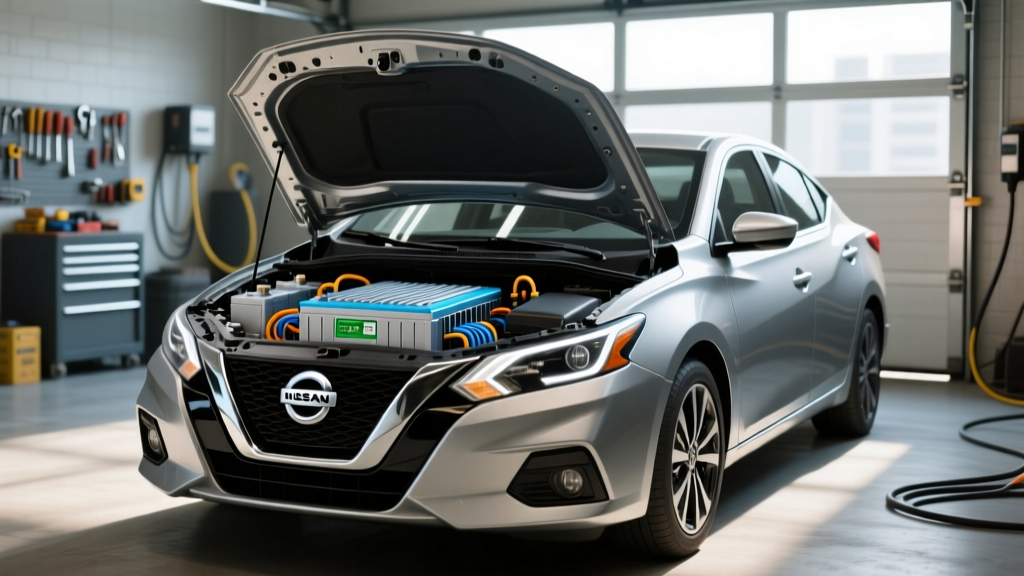
If you typed "battery for 2015 Nissan Sentra" into a search engine, you're almost certainly looking for a 12-volt auxiliary battery — the small lead-acid or AGM unit under the hood that starts the engine and powers accessories. The 2015 Sentra is a conventional gasoline sedan; it does not have a high-voltage EV traction battery. A replacement 12V battery for this model typically costs $120–$220 and takes ten minutes to swap.
But many shoppers landing on that search are also cross-shopping their next vehicle — possibly an EV or hybrid — and wondering how those batteries compare. This guide bridges the gap: we'll clarify the 12V battery you actually need for the Sentra, then deliver a deep, data-backed explainer on EV traction battery chemistry, degradation, warranties, and replacement costs so you're ready when you make the switch.
12V Battery for 2015 Nissan Sentra: The Basics
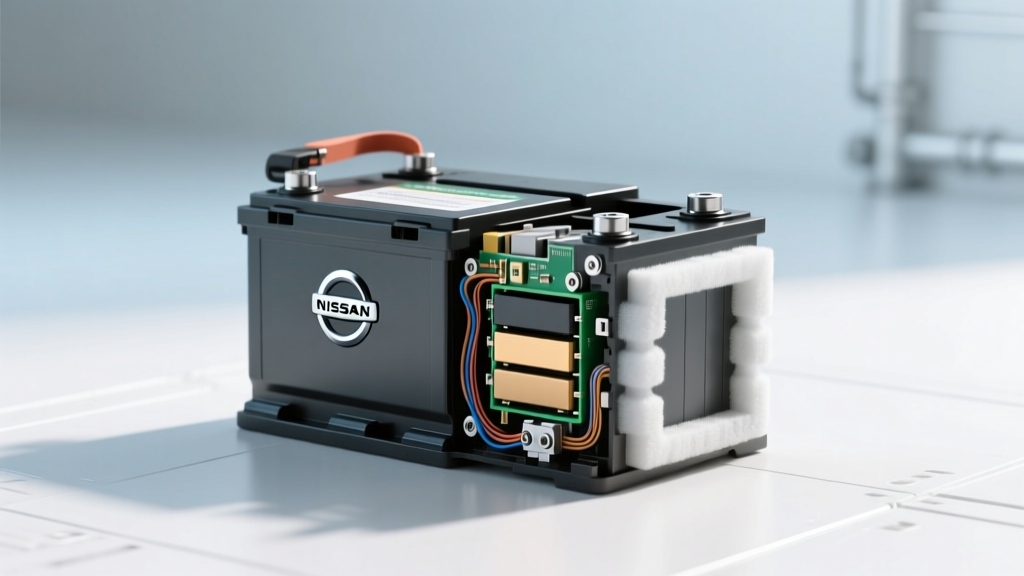
The 2015 Nissan Sentra (1.8L 4-cylinder, CVT) uses a Group 35 or H5 (LN2) 12V battery depending on trim and cold-climate package. Key specs:
- Cold Cranking Amps (CCA): 550–640 CCA recommended
- Voltage: 12V lead-acid (flooded or AGM)
- Typical lifespan: 3–5 years
- Replacement cost: $120–$220 retail; ~$50–$80 installed at many auto-parts stores
Brands like Interstate, DieHard, and Optima all offer direct-fit options. This is routine maintenance — nothing like the complexity or cost of an EV traction battery, which we'll cover next.
EV Traction Battery Chemistry: LFP vs NMC vs NCA
Modern EVs use one of three dominant lithium-ion chemistries for their traction packs. The choice affects range, longevity, cold-weather behavior, and price.
| Attribute | LFP (Lithium Iron Phosphate) | NMC (Nickel Manganese Cobalt) | NCA (Nickel Cobalt Aluminum) |
|---|---|---|---|
| Energy density | Lower (~160 Wh/kg cell-level) | Higher (~220–260 Wh/kg) | Highest (~260–300 Wh/kg) |
| Cycle life | 3,000–5,000+ cycles | 1,000–2,000 cycles | 1,000–1,500 cycles |
| Cold performance | Weaker; needs preconditioning | Better low-temp output | Good with active thermal mgmt |
| Cost per kWh | Lower (~$80–100/kWh pack-level, 2025–2026) | Higher (~$110–140/kWh) | Higher (~$110–140/kWh) |
| Typical SoC recommendation | Can charge to 100% regularly | Daily limit ~80%; 100% for trips | Daily limit ~80%; 100% for trips |
| Common in (2025–2026 models) | Tesla Model 3/Y RWD, Ford Mustang Mach-E Select (base), BYD, Rivian Standard | Hyundai Ioniq 5/6, VW ID.4, Chevy Equinox EV, BMW iX | Tesla Long Range/Performance, Lucid, some Toyota bZ |
Which is better? LFP wins on longevity and cost — ideal for daily commuting and buyers who want a decade-plus pack life. NMC/NCA wins on energy density, meaning more range in a lighter package — important for long-range trims and cold-climate drivers who need strong low-temperature output. Most 2026 EV buyers will encounter LFP in base trims and NMC/NCA in extended-range or AWD variants.
How Long Do EV Batteries Actually Last?
The short answer: far longer than most buyers fear. According to data aggregated by fueleconomy.gov and long-term fleet studies, the average modern EV battery loses roughly 1–2% of capacity per year under normal use, with a steeper drop in the first year (~2–3%) that then flattens.
- Year 1 / 15,000 mi: ~97–98% State of Health (SoH)
- Year 3 / 45,000 mi: ~93–95% SoH
- Year 5 / 75,000 mi: ~90–92% SoH
- Year 8 / 120,000 mi: ~85–89% SoH
- Year 12 / 180,000 mi: ~80–85% SoH (still above most warranty thresholds)
A 2015 Nissan Sentra's 12V battery, by contrast, is essentially disposable — 3 to 5 years and into the recycling bin. An EV traction battery is engineered to outlast the car itself in most cases.
EV Battery Warranty Terms: What's Actually Covered
Federal regulation mandates a minimum 8 years / 100,000 miles warranty on EV battery packs (10 years / 150,000 miles in CARB states like California, New York, and Massachusetts). Manufacturers typically guarantee the pack will retain a specified percentage of original capacity — most commonly 70%.
| Manufacturer (2026 models) | Coverage | Capacity Retention Threshold |
|---|---|---|
| Tesla | 8 yr / 120,000 mi (LR/Perf); 8 yr / 100,000 mi (RWD) | 70% |
| Hyundai / Kia | 10 yr / 100,000 mi | 70% |
| Ford | 8 yr / 100,000 mi | 70% |
| GM (Chevy/Cadillac) | 8 yr / 100,000 mi | 70% |
| Rivian | 8 yr / 175,000 mi | 70% |
| BMW | 8 yr / 80,000 mi | 70% |
Important fine print: warranty coverage applies to defects and excessive capacity loss, not to range reduction from normal driving conditions (cold weather, tire choice, accessory use). A pack reading 72% SoH at year 8 typically won't trigger a claim, even if the owner feels the range loss.
How Much Does an EV Battery Cost to Replace?
Out-of-warranty traction battery replacement is the single biggest fear among EV-curious buyers — and the most overstated. Most packs never need replacement during the vehicle's usable life. When they do, costs have dropped significantly.
| Vehicle / Pack Size | Approx. Replacement Cost (2026) | When Typically Needed |
|---|---|---|
| Tesla Model 3 RWD (~60 kWh LFP) | $8,000–$12,000 | Rare before 200k+ mi |
| Hyundai Ioniq 5 (77.4 kWh NMC) | $12,000–$18,000 | Rare before 180k+ mi |
| Ford F-150 Lightning Ext. Range (131 kWh) | $20,000–$30,000 | Rare before 150k+ mi |
| Chevy Bolt EV (older, 65 kWh) | $9,000–$14,000 | Most recalled packs replaced under warranty |
| PHEV pack (15–25 kWh, e.g. RAV4 Prime) | $4,000–$8,000 | Year 12–15+, if ever |
Context: a 2015 Nissan Sentra's entire engine replacement would run $4,000–$7,000, and its 12V battery is a $150 blip. EV packs are a major line item — but they fail far less often than engines or transmissions in comparable ICE vehicles, and most are still under warranty when issues arise. Per IRS §30D guidance, certain battery-component replacements on newer EVs may also interact with credit eligibility, so consult a tax professional if you're swapping a pack on a credit-claimed vehicle.
Factors That Accelerate (or Preserve) Battery Health
- Keep daily State of Charge (SoC) between 20% and 80% for NMC/NCA packs
- Use Level 2 home charging (7–11 kW) for routine top-ups instead of DC fast charging
- Precondition the battery before fast-charging sessions (most EVs do this automatically when you navigate to a charger)
- Park in shade or a garage during extreme summer heat; plug in during extreme cold so thermal management can run on grid power
- Install the latest OTA updates — manufacturers refine charge algorithms over time
- Daily DC fast-charging (50 kW+) — occasional road-trip use is fine, but habitual reliance raises cell temperature and stress
- Leaving an NMC/NCA pack at 100% SoC for days, especially in heat
- Letting the pack sit below 10% SoC for extended periods (deep discharge risk)
- Repeated high-performance launches on a hot pack without cooldown
LFP owners get a meaningful break: the chemistry tolerates 100% SoC storage far better, and Tesla and Ford explicitly recommend periodic 100% charges on LFP vehicles to help the BMS recalibrate cell balance.
How to Check and Monitor Battery State of Health (SoH)
State of Health (SoH) is the percentage of original capacity your pack can still hold. A new EV is 100% SoH; a pack at 88% SoH that originally held 80 kWh now holds ~70.4 kWh usable. Here's how owners check it:
- In-vehicle displays: Nissan Leaf (all years) includes a "battery health" bar indicator; Tesla exposes SoH indirectly via the range-at-full-charge number divided by the original EPA figure.
- Manufacturer apps: Hyundai, Kia, BMW, and Ford apps show estimated SoH or health status in the vehicle-health section.
- OBD-II dongles + apps: Tools like OBDLink SX paired with apps such as LeafSpy (Nissan), TeslaFi, or ABRP's SoH estimator pull live BMS data.
- Dealer diagnostic scan: Any service department can print a formal SoH report — useful for pre-purchase inspection on a used EV.
If you're buying a used EV — say, trading up from that 2015 Sentra — always request a SoH reading. Anything above 90% at under 60,000 miles is healthy; below 80% on a newer car may signal a warranty claim worth pursuing.
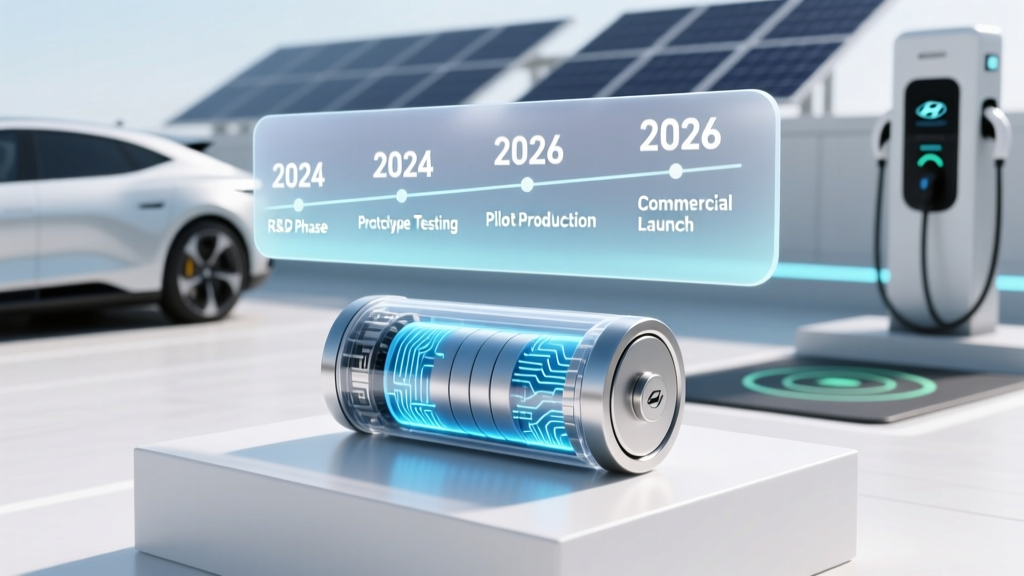
Emerging Battery Tech: Solid-State and Silicon Anodes
The next generation of EV batteries promises step-change improvements, but timelines matter.
- Solid-state batteries (Toyota, Samsung SDI, QuantumScape): Replace liquid electrolyte with a solid conductor, potentially boosting energy density 40–60% and enabling faster charging with less degradation. Toyota has announced limited production for 2027–2028 in select models; broad availability is realistically 2030+.
- Silicon-dominant anodes (Sila Nanotechnologies, Group14, Amprius): Replace graphite with silicon to increase cell energy density 20–40%. Already appearing in limited applications (Porsche has tested silicon-anode cells in the Taylan platform; Mercedes-AMG ONE uses them). Expect broader EV rollout 2027–2029.
- Sodium-ion batteries (CATL, BYD): Lower-cost alternative to lithium for entry-level EVs and stationary storage. Already shipping in Chinese-market micro-EVs; US-market arrival likely 2027+.
Reality check: None of these are on sale in mainstream 2026 US-market EVs today. They're announced and in pilot production. For buyers shopping now, today's LFP and NMC chemistries are mature, well-warrantied, and proven across millions of vehicles.
Frequently Asked Questions
What size battery does a 2015 Nissan Sentra take?
Most 2015 Sentra trims use a Group 35 or H5 (LN2) 12V battery with 550–640 cold cranking amps. Verify your owner's manual or the label on the existing battery before purchasing.
How long do EV batteries last in years and miles?
Modern liquid-cooled EV traction batteries typically retain 85–90% of original capacity at 150,000 miles and 10–12 years of use. Many outlast the vehicle itself; fleet data from fueleconomy.gov supports 200,000+ mile service life for most 2020-and-newer packs.
How much does it cost to replace an EV battery?
Out-of-warranty replacement runs $8,000–$18,000 for most sedans and crossovers, $20,000–$30,000 for large trucks like the F-150 Lightning. However, the vast majority of packs never require replacement — they're covered under the 8-year/100,000-mile federal minimum warranty, and real-world failure rates are low.
What does the EV battery warranty actually cover?
Manufacturer warranties cover defects and capacity loss below a stated threshold (usually 70% of original capacity) within 8 years / 100,000 miles (10/150k in CARB states). They do not cover range reduction from cold weather, tire choice, driving style, or accessory use.
How do I check my EV's battery health?
Use the vehicle's built-in health indicator (Leaf, some Hyundai/Kia models), the manufacturer's mobile app, an OBD-II dongle with a BMS-reading app like LeafSpy or TeslaFi, or request a dealer diagnostic scan. Always check SoH before buying a used EV.
LFP vs NMC — which chemistry should I choose?
Choose LFP if you want maximum cycle life, lower cost, and the freedom to charge to 100% daily — ideal for commuters and fleet use. Choose NMC/NCA if you need maximum range per charge, better cold-weather output, or are buying a long-range AWD trim. Both are excellent; they optimize for different priorities.
Is an EV battery anything like the 12V battery in my 2015 Sentra?
No. The 12V auxiliary battery in your Sentra is a small lead-acid unit that starts the engine and runs accessories — it's a $150 consumable replaced every 3–5 years. An EV traction battery is a 60–130+ kWh lithium-ion pack costing $8,000–$30,000, engineered for 150,000–300,000+ miles of service, and warrantied for 8–10 years.