Why a 2014 Chrysler Town and Country Battery Search Lands You in the EV Battery Conversation
If you've searched for a 2014 Chrysler Town and Country battery, you're likely dealing with one of two realities: a dead 12V lead-acid starter battery in a minivan that's now over a decade old, or you're cross-shopping older ICE vehicles against modern EVs and wondering how battery longevity stacks up. Either way, the distinction between a conventional 12V auxiliary battery and a high-voltage EV traction battery is the single most important concept to grasp before spending money or making a purchase decision.
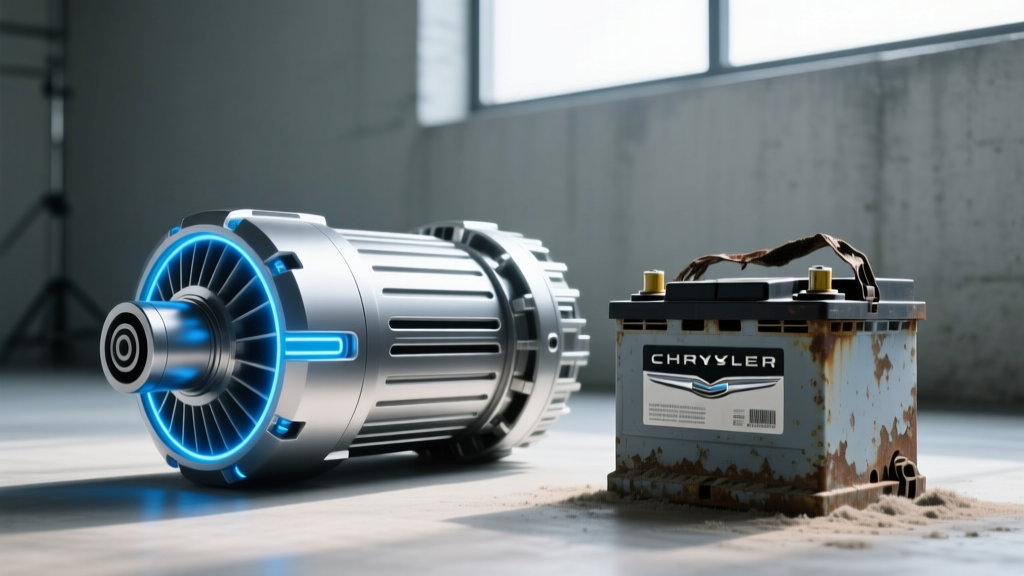
A replacement 12V battery for a 2014 Chrysler Town & Country typically costs $150–$250 and lasts 3–5 years. A modern EV traction battery, by contrast, stores 60–100+ kWh of energy, costs $8,000–$22,000 to replace out of warranty, and is engineered to last 15–20 years or 200,000+ miles. This guide breaks down EV battery chemistry, degradation data, warranty terms, replacement economics, and care practices — with enough specificity to inform your next vehicle decision.
LFP vs NMC/NCA: The Chemistry Decision That Shapes Your EV Ownership
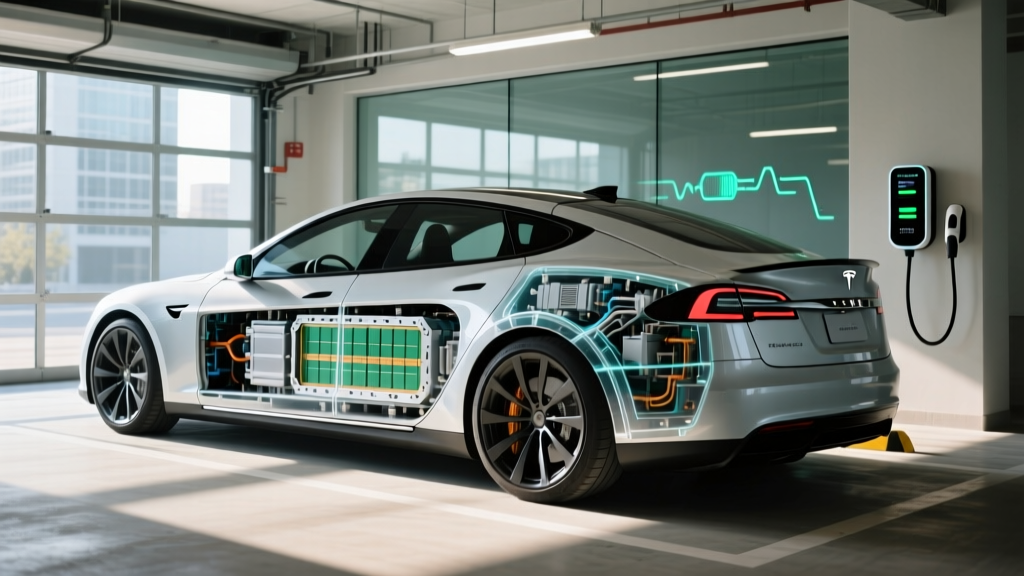
Every EV sold in 2026 uses one of three dominant lithium-ion chemistries in its traction pack: NMC (nickel manganese cobalt), NCA (nickel cobalt aluminum), or LFP (lithium iron phosphate). The chemistry determines your range, charging behavior, longevity, and even how you should manage daily state of charge (SoC).
| Attribute | LFP (Lithium Iron Phosphate) | NMC / NCA |
|---|---|---|
| Energy Density | ~160–180 Wh/kg (lower) | ~230–300 Wh/kg (higher) |
| Typical Cycle Life | 3,000–6,000+ cycles | 1,000–2,500 cycles |
| Cold-Weather Performance | Moderate; slower charging below 32°F | Better low-temp discharge; preconditioning helps |
| Daily Charge Recommendation | 100% SoC is fine; BMS benefits from full calibrations | 80% SoC daily; 100% only for trips |
| Cost per kWh (pack level) | ~$95–$115 | ~$120–$155 |
| Common In 2026 Models | Tesla Model 3/Y RWD, Ford Mustang Mach-E Select (LFP option), BYD, Rivian Standard | Hyundai Ioniq 5/6, Chevy Equinox EV, Tesla Long Range, BMW iX, Lucid Air |
| Thermal Stability | Excellent; higher runaway threshold | Good; requires robust thermal management |
Which is better? Neither is universally superior. LFP wins on cycle life and cost — ideal for daily commuters who charge to 100% regularly and plan to keep a vehicle 10+ years. NMC/NCA wins on energy density, giving longer range in a lighter, more compact pack — better for road-trippers and performance-oriented buyers. According to IEA Global EV Outlook data, LFP market share outside China has climbed to roughly 35% of global EV battery installations as of 2025, up from under 10% in 2020.
How Long Do EV Batteries Actually Last? Degradation Data by the Numbers
The fear that EV batteries need frequent replacement is not supported by fleet data. Most modern traction batteries outlast the vehicle's useful economic life. Here's what real-world degradation looks like:
| Source / Dataset | Timeframe / Mileage | Average Capacity Retention |
|---|---|---|
| Geotab fleet study (25,000+ EVs) | After 5 years / ~75,000 mi | ~88–91% SoH |
| Tesla Impact Report (Model S/X fleet) | After 200,000 mi | ~85% SoH (average) |
| Recurrent Auto (12,000+ EVs, mixed brands) | After 3 years / ~45,000 mi | ~93–95% SoH |
| Nissan Leaf (passive-cooled, 24/30 kWh packs) | After 8 years / ~100,000 mi | ~75–82% SoH (higher variance) |
| Hyundai/Kia E-GMP (Ioniq 5, EV6, liquid-cooled) | After 3 years / ~50,000 mi | ~95–97% SoH |
A few patterns emerge from this data:
- Early degradation is steeper. Most packs lose 2–5% capacity in the first year or two, then the curve flattens significantly. This "knee" behavior means year-10 projections based on year-1 loss rates are overly pessimistic.
- Thermal management matters enormously. Liquid-cooled packs (Tesla, Hyundai E-GMP, GM Ultium, Ford) consistently outperform passively cooled packs (early Nissan Leaf) in long-term retention.
- Chemistry plays a role. LFP packs tend to degrade more slowly in calendar aging but can show more SoC estimation drift if never charged to 100%.
For context, a 2014 Chrysler Town & Country's original engine was expected to last 150,000–200,000 miles with proper maintenance. A 2026 EV traction battery is engineered to deliver 200,000+ miles while retaining 70–80%+ of original capacity — often exceeding the vehicle's structural lifespan.
Battery Warranty Terms: What Manufacturers Actually Guarantee
Federal law (EPA emissions warranty precedent and CARB requirements) effectively mandates that EV batteries carry at least an 8-year/100,000-mile warranty. Most manufacturers exceed this. Here's a snapshot of 2026 warranty terms across major brands:
| Manufacturer | Warranty Term | Capacity Retention Threshold |
|---|---|---|
| Tesla (Model 3/Y RWD — LFP) | 8 years / 100,000 mi | 70% |
| Tesla (Model 3/Y LR, S, X — NMC/NCA) | 8 years / 120,000 mi (S/X: 150,000 mi) | 70% |
| Hyundai / Kia (E-GMP platform) | 10 years / 100,000 mi | 70% |
| GM (Ultium — Equinox EV, Blazer EV, Silverado EV) | 8 years / 100,000 mi | 70% (some trims 60% for commercial) |
| Ford (Mach-E, F-150 Lightning) | 8 years / 100,000 mi | 70% |
| Rivian (R1T, R1S) | 8 years / 120,000 mi (175,000 mi Max pack) | 70% |
| BMW (iX, i4, i7) | 8 years / 100,000 mi | 70% |
What does the warranty cover? If your pack falls below the stated retention threshold (typically 70% of original capacity) within the warranty window, the manufacturer will repair or replace modules or the entire pack at no cost. The warranty also covers manufacturing defects and premature cell failure. It does not cover damage from accidents, flooding, or unauthorized modifications.
Key nuance: the 70% threshold is conservative. Most owners never approach it within the warranty period. Per fueleconomy.gov's EV technology overview, modern battery management systems (BMS) actively manage cell balancing, thermal limits, and charge buffers to protect long-term health.
EV Battery Replacement Cost: What You'd Pay and When You'd Need It
Out-of-warranty replacement is the biggest ownership fear — and the least likely scenario for a vehicle under 15 years old. Still, here are real-world figures:
| Vehicle / Platform | Pack Size (usable kWh) | Full Replacement Cost (parts + labor) | Typical Replacement Trigger |
|---|---|---|---|
| Tesla Model 3 RWD (LFP) | ~57 kWh | $8,000–$12,000 | Rare before 250,000 mi; module-level repair often possible |
| Tesla Model Y LR (NMC) | ~75 kWh | $12,000–$16,000 | Rare before 200,000 mi |
| Hyundai Ioniq 5 (NMC) | ~72.6 kWh | $11,000–$15,000 | Module replacement available; full pack rare |
| Chevy Equinox EV (Ultium, NMC) | ~85 kWh | $14,000–$18,000 | Modular Ultium architecture allows partial replacement |
| Ford F-150 Lightning Extended (NMC) | ~131 kWh | $18,000–$25,000 | Largest consumer packs; partial repair preferred |
| BMW iX xDrive50 (NMC) | ~105 kWh | $18,000–$22,000 | Module-level service standard at BMW dealers |
Three important realities about replacement:
- Most replacements never happen. Geotab's fleet data shows fewer than 2% of EVs required a traction battery replacement within the first 10 years, and many of those were due to physical damage, not degradation.
- Module-level repair is increasingly standard. Manufacturers like Hyundai, GM (Ultium), and BMW design packs with serviceable modules. A single failed module might cost $1,500–$3,500 to replace rather than the full pack.
- Prices are falling. Pack-level costs have dropped from ~$1,200/kWh in 2010 to roughly $110–$140/kWh in 2026 (per BloombergNEF battery price surveys). Expect continued decline as LFP adoption grows and manufacturing scales.
Factors That Accelerate — or Preserve — Battery Health
Battery degradation isn't random. It's driven by measurable electrochemical stressors. Here's what moves the needle, ranked roughly by impact:
Battery Care Checklist for Maximum Longevity
- Avoid sustained high SoC (NMC/NCA only): Store your EV at 50–80% SoC for daily use. Charging to 100% is fine before a road trip, but don't leave an NMC pack at 100% for days. LFP owners: charge to 100% at least weekly to keep the BMS calibrated.
- Minimize DC fast-charging frequency: Occasional DCFC is fine. Daily DCFC sessions (especially at 250+ kW) add cumulative thermal stress. If you have home Level 2 access, use it for routine charging and reserve DCFC for road trips.
- Precondition in cold weather: Use your EV's preconditioning feature (usually activated via the app while plugged in) to warm the pack before driving and before arriving at a DC fast charger. Cold lithium plating is a real degradation mechanism below 32°F.
- Avoid extreme heat storage: Parking in a 110°F+ desert lot at 100% SoC for weeks accelerates calendar aging. If storing long-term, aim for ~50% SoC in a shaded or climate-controlled space.
- Don't obsess over shallow cycles: Modern BMS systems manage cell balancing automatically. You don't need to micromanage charge sessions — just avoid the extremes (0% and prolonged 100% for NMC/NCA).
- Use scheduled charging: Most 2026 EVs let you set a charge window. Schedule charging to finish shortly before you leave in the morning, so the pack doesn't sit at high SoC overnight.
How to Check Your EV's Battery State of Health (SoH)
State of Health (SoH) is the percentage of original capacity your pack can still hold. A new EV has 100% SoH; a pack at 85% SoH holds 85% of its original kWh. Here's how to monitor it:
- In-vehicle displays: Tesla shows battery health in the Service menu (or via the Tesla app under "Battery Health" in recent software). Hyundai/Kia displays SoH in the EV battery menu on recent model years. BMW provides SoH via iDrive diagnostics.
- OBD-II dongles + apps: Tools like OBDLink paired with apps such as EV Health or LeafSpy (for Nissan) can read BMS-reported SoH directly. This works on most 2020+ EVs.
- Dealer diagnostic reports: Any authorized service center can pull a full battery health report, including individual module voltage variance. Request this before buying a used EV.
- Third-party services: Companies like Recurrent Auto offer free SoH tracking if you connect your vehicle's telematics. Their reports are accepted by some insurers and resale platforms.
Per NHTSA guidance on vehicle safety systems, battery health monitoring is increasingly integrated with overall vehicle diagnostics — expect deeper SoH visibility in 2027+ models as standardized battery health reporting becomes an industry norm.
Emerging Battery Tech: Solid-State, Silicon Anode, and Realistic Timelines
Next-generation battery technologies are frequently hyped, but the timelines matter more than the headlines:
- Solid-state batteries: Toyota has announced limited production of solid-state-equipped EVs for 2027–2028, targeting 450+ mile range and 10-minute fast charging. Samsung SDI and QuantumScape are also advancing prototypes. However, mass-market availability at competitive pricing is not expected before 2030. These packs use a solid electrolyte instead of liquid, promising higher energy density and improved safety — but manufacturing yield and cost remain unsolved challenges at scale.
- Silicon-dominant anodes: Companies like Sila Nanotechnologies and Group14 are supplying silicon-composite anode materials to manufacturers including Mercedes-Benz and Panasonic. Silicon anodes can boost energy density 20–40% over graphite. Expect incremental adoption in premium models starting 2026–2028, with broader rollout by 2030.
- Sodium-ion batteries: CATL and BYD have begun deploying sodium-ion packs in lower-cost Chinese-market EVs. Sodium-ion offers lower energy density but eliminates lithium and cobalt entirely. US-market availability is not confirmed for 2026, but could arrive in budget segments by 2028–2029.
None of these technologies are available in production vehicles you can buy today in the US. If you're making a purchase decision now, current-generation LFP and NMC packs are mature, well-warrantied, and proven over billions of fleet miles.
EV Battery vs. 2014 Chrysler Town and Country Battery: The Practical Takeaway
If you're replacing a 12V battery in a 2014 Chrysler Town & Country, you're looking at a $150–$250 Group 34 or H7 AGM battery from any auto parts store — a straightforward maintenance item unrelated to EV technology.
If you're comparing the ownership experience of a 12-year-old minivan against a modern EV, the battery comparison is stark:
- The Town & Country's 12V battery needs replacement every 3–5 years, costs ~$200, and is a routine maintenance item.
- A 2026 EV's traction battery is designed to last the vehicle's lifetime (15–20 years), is warrantied for 8–10 years, and degrades gradually rather than failing catastrophically.
- The Town & Country's engine and transmission — its most expensive components — carry no comparable longevity guarantee and commonly require $3,000–$6,000 repairs after 120,000 miles.
Frequently Asked Questions
How long do EV batteries last in years and miles?
Most modern EV traction batteries are engineered for 200,000+ miles and 15–20 years of service while retaining 70–80%+ of original capacity. Fleet data from Geotab and Tesla confirms average degradation of roughly 1.5–2.5% per year under normal use. Many packs will outlast the vehicle's body and interior.
How much does an EV battery cost to replace?
Full out-of-warranty replacement ranges from $8,000 for a ~57 kWh LFP pack (Tesla Model 3 RWD) to $25,000 for a ~131 kWh NMC pack (F-150 Lightning Extended Range). However, most replacements are never needed, and module-level repairs cost $1,500–$3,500 when they are. Battery pack prices have fallen ~90% since 2010.
What does the EV battery warranty actually cover?
Federal requirements and manufacturer policies guarantee at least 8 years / 100,000 miles of coverage. If your pack drops below 70% capacity (the standard threshold) within that window, the manufacturer repairs or replaces it at no cost. Defects and premature cell failure are covered. Physical damage and unauthorized modifications are not.
How do I check and maximize my EV battery health?
Check SoH via your vehicle's built-in diagnostics menu, the manufacturer app, or an OBD-II scanner with EV-compatible software. To maximize longevity: keep NMC/NCA packs between 20–80% SoC for daily use (LFP can go to 100%), minimize daily DC fast charging, precondition in cold weather, and avoid prolonged storage at extreme SoC or temperature.
LFP vs NMC — which battery chemistry is better for me?
Choose LFP if you prioritize longevity, lower cost, and plan to keep the vehicle 10+ years with daily charging. LFP handles 100% SoC well and offers 3,000–6,000+ charge cycles. Choose NMC/NCA if you need maximum range per charge, better cold-weather fast-charging performance, or a lighter pack for a performance-oriented vehicle. NMC packs should be stored at 80% or below for daily use.
Is a used EV with 80,000 miles a risky battery bet?
Generally, no. A liquid-cooled EV with 80,000 miles typically retains 90–94% of original battery capacity. Request a dealer diagnostic report or use an OBD-II SoH reader before purchase. Verify remaining warranty coverage — most 2026 warranties extend to 100,000 miles, and some to 10 years.