Why a 2014 Honda Odyssey Battery Search Leads to an EV Battery Deep Dive
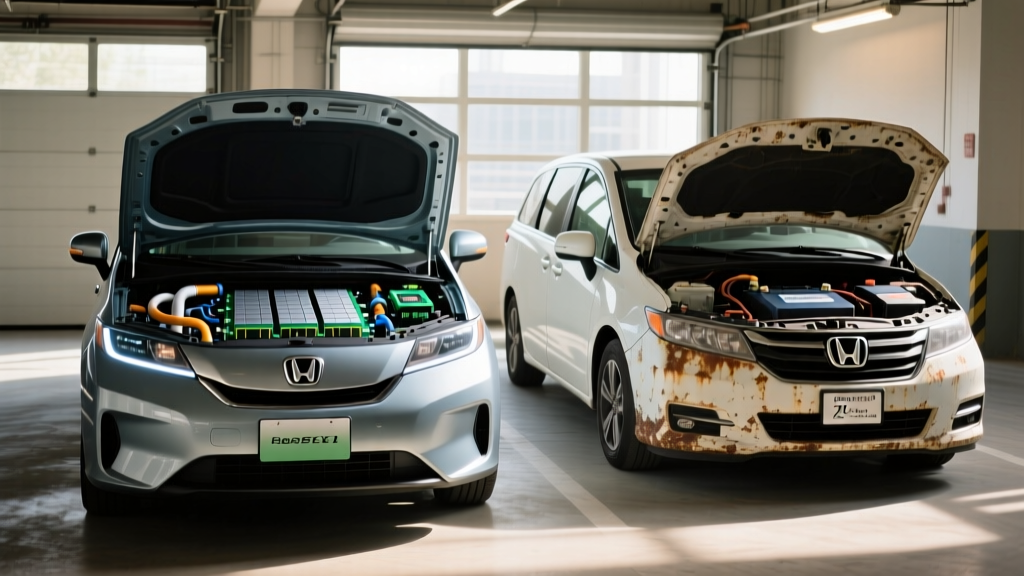
If you've been searching for a 2014 Honda Odyssey battery, you're likely dealing with one of two things: a failing 12V starter battery (Group 24F, ~$150–$220 at any auto parts store) or, if you've owned the van for a decade, the natural end of its service life. But here's the twist that brings many minivan owners into the EV conversation — the high-voltage traction battery in a modern electric vehicle is a fundamentally different component from anything in a 2014 Odyssey. It stores 60–100+ kWh of energy, weighs 800–1,200 pounds, and costs $5,000–$20,000 to replace.
Whether you're cross-shopping a used Odyssey against a new EV like the Kia EV9 or simply trying to understand what you'd be signing up for with an electric powertrain, this guide breaks down EV battery technology with the exact numbers, chemistry trade-offs, and ownership data you need. We'll also clarify the critical difference between the 12V auxiliary battery (which EVs still use, just like your Odyssey) and the high-voltage traction battery that actually propels the vehicle.
LFP vs NMC: Which Battery Chemistry Powers Modern EVs?
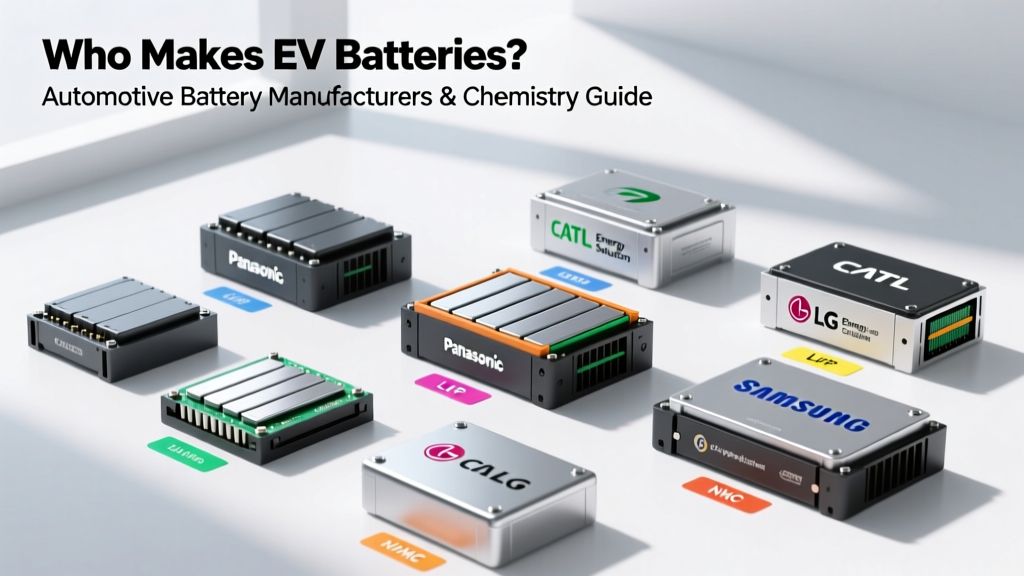
Every EV sold in the US in 2026 uses one of two dominant lithium-ion chemistries: LFP (lithium iron phosphate) or NMC/NCA (nickel manganese cobalt / nickel cobalt aluminum). The chemistry inside your battery pack determines its range, longevity, cold-weather behavior, and cost. Here's how they compare head-to-head:
| Attribute | LFP (Lithium Iron Phosphate) | NMC / NCA (Nickel-Based) |
|---|---|---|
| Energy Density | ~160–180 Wh/kg (lower) | ~220–280 Wh/kg (higher) |
| Cycle Life | 3,000–5,000+ cycles | 1,000–2,000 cycles |
| Cold Performance | Weaker below 32°F; ~25–35% range loss | Better in cold; ~15–25% range loss |
| 100% SoC Charging | Recommended regularly (helps BMS calibration) | Limit to 80% daily; 100% only for trips |
| Cost per kWh | ~$80–$100 (lower) | ~$110–$140 (higher) |
| Thermal Stability | Excellent (less prone to thermal runaway) | Good, but requires more active cooling |
| Common In (2026) | Tesla Model 3/Y RWD, Ford Mustang Mach-E Select, BYD, Rivian Standard | Tesla Long Range, Hyundai Ioniq 5/6, Kia EV6/EV9, GM Ultium vehicles |
The bottom line: If you prioritize maximum range per charge and live in a cold climate, NMC delivers higher energy density and better winter performance. If you plan to keep the vehicle 10+ years, charge at home daily, and live in a moderate climate, LFP's superior cycle life and tolerance for 100% charging make it the longevity champion. Neither chemistry is universally "better" — it depends on your ownership timeline and driving patterns.
How Long Do EV Batteries Actually Last? Real Degradation Data
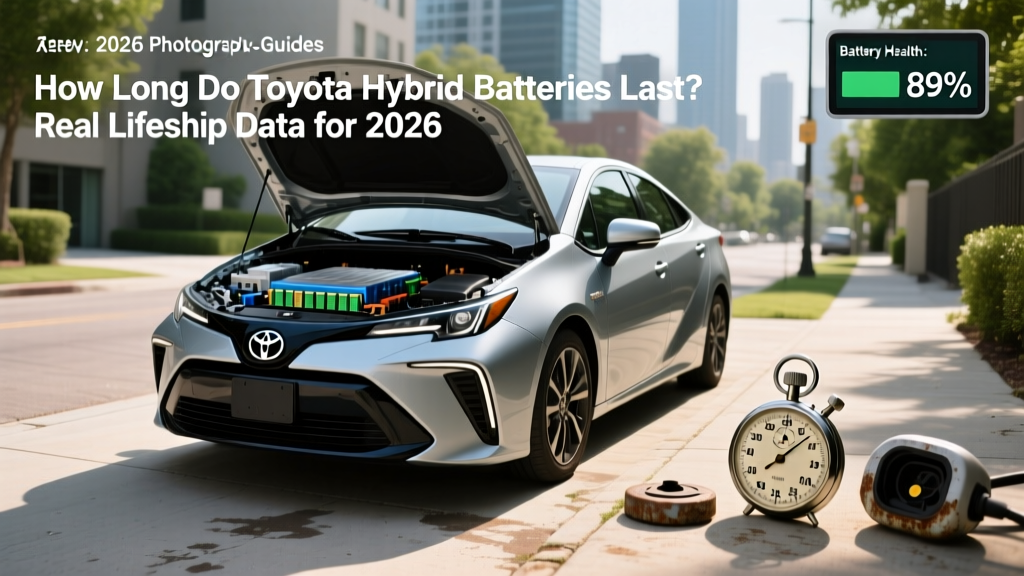
The single most common fear among EV-curious buyers is that the battery will fail like a laptop battery after three years. The data tells a different story. Modern EV traction batteries are engineered with liquid thermal management, oversized buffers, and sophisticated battery management systems (BMS) that protect the cells from the abuse patterns that kill smaller lithium-ion packs.
- Tesla Model 3/Y (NMC, 2018–2023): Average ~10–12% capacity loss at 100,000 miles, based on fleet telemetry aggregated by Tesla's Impact Report. Most retain 88–90% State of Health (SoH) at the 100k mark.
- Nissan Leaf (passive air cooling, 2011–2017): 20–30%+ degradation at 80,000–100,000 miles, particularly in hot climates. This generation lacked active liquid cooling — a cautionary tale that drove the industry toward liquid thermal management.
- Chevrolet Bolt EV (NMC, 2017–2023): ~5–8% degradation at 80,000 miles per owner-reported data on Bolt forums and Recurrent Auto research. GM's conservative 90% usable buffer contributed to slower observed loss.
- Hyundai Ioniq 5 (NMC, 2022–2026): Early data (30,000–50,000 miles) shows ~3–5% loss, tracking well within Hyundai's 70% retention warranty threshold over 10 years.
- LFP packs (Tesla Model 3 RWD, 2021–2025): Degradation curves are flatter; many owners report 95%+ SoH at 50,000 miles with regular 100% charging cycles.
The typical EV battery loses roughly 1–2% capacity per year or 5–10% per 100,000 miles under normal use with liquid-cooled packs. Most modern EVs will retain 80–85% of original capacity at 150,000 miles — well beyond the mileage at which most 2014 Honda Odysseys are on their second or third 12V battery replacement and approaching transmission-service territory.
For context, the average US driver covers ~13,500 miles per year according to FHWA data. At that rate, a modern liquid-cooled EV battery should deliver 15–20 years of service before reaching 70–80% capacity — still functional, just with reduced range.
EV Battery Warranties: What's Covered and for How Long
Federal law mandates a minimum battery warranty of 8 years / 100,000 miles for EVs (10 years / 150,000 miles in CARB states like California, New York, and Massachusetts). But manufacturers often exceed these minimums, and the capacity-retention threshold — the SoH level at which a warranty claim is honored — varies by brand.
| Manufacturer | Duration | Mileage | Capacity Threshold |
|---|---|---|---|
| Tesla | 8 years | 100,000–120,000 mi (varies by model) | 70% retention |
| Hyundai / Kia | 10 years | 100,000 mi | 70% retention |
| General Motors (Ultium) | 8 years | 100,000 mi | 70% retention (60% on some commercial) |
| Ford | 8 years | 100,000 mi | 70% retention |
| Rivian | 8 years | 175,000 mi (R1T/R1S) | 70% retention |
| BMW | 8 years | 100,000 mi | 70% retention |
What the warranty actually covers: If your battery's State of Health drops below the stated threshold (typically 70%) within the warranty period, the manufacturer will repair or replace the pack — usually by swapping in a refurbished or new module set — at no cost. The warranty covers defects and abnormal degradation, not damage from accidents, flooding, or unauthorized modifications. Note that normal gradual capacity loss above the threshold is expected behavior, not a warranty event.
Per fueleconomy.gov, EV batteries are designed to outlast the vehicle's typical first-ownership period, and most warranty claims involve defective modules rather than wholesale pack failure.
EV Battery Replacement Costs: The Numbers Behind the Headlines
Headlines about $20,000 battery replacements create sticker shock, but context matters enormously. Here's what full-pack replacements actually cost in 2026, and — more importantly — how often they're needed.
| Vehicle / Pack Size | Battery Capacity | Replacement Cost (Parts + Labor) | When Typically Needed |
|---|---|---|---|
| Nissan Leaf (24–40 kWh) | 24–40 kWh | $6,500–$9,000 | 8–12 years (air-cooled, hot climates) |
| Tesla Model 3/Y (75–82 kWh) | 75–82 kWh | $12,000–$16,000 | Rarely within 15 years; mostly out-of-warranty incidents |
| Chevrolet Bolt EV/Ultium (65–85 kWh) | 65–85 kWh | $9,000–$14,000 | Uncommon; module-level repair possible |
| Ford F-150 Lightning (98–131 kWh) | 98–131 kWh | $15,000–$22,000 | Very rare within vehicle lifespan |
| Hyundai Ioniq 5 / Kia EV6 (77.4 kWh) | 77.4 kWh | $10,000–$15,000 | Rare; covered under 10yr/100k warranty for most owners |
The critical context: The vast majority of EV owners will never pay for a traction battery replacement out of pocket. Most degradation-related issues surface within the warranty period. Out-of-warranty full-pack replacements are typically needed only after 15+ years or 200,000+ miles — at which point the vehicle's resale value may not justify the repair, similar to a transmission rebuild on a 20-year-old Odyssey. Additionally, many shops now offer module-level repairs (replacing individual bad cell groups rather than the entire pack) for $2,000–$5,000, which is often sufficient for isolated cell failures.
For comparison, a 2014 Honda Odyssey's timing belt replacement runs $800–$1,200 every 90,000 miles, and a transmission replacement at 150,000 miles can cost $3,500–$5,000. EVs eliminate these maintenance items entirely, partially offsetting the higher battery-replacement cost in the unlikely event one is needed.
What Kills an EV Battery? 5 Factors That Accelerate Degradation
Not all miles are equal when it comes to battery wear. Research from Recurrent Auto, which tracks over 15,000 EVs in real-world conditions, identifies these primary degradation accelerators:
- Avoid chronic DC fast charging. Occasional road-trip fast charging is fine, but daily use of 150+ kW DC chargers generates sustained heat that accelerates cell wear. If you can charge at home on Level 2 (7–11 kW), do so for 90%+ of your charging.
- Don't store at 100% or 0% SoC for extended periods. For NMC batteries, the sweet spot is 20–80% daily. Storing at 100% in hot weather is particularly damaging. LFP batteries are more tolerant of 100% and benefit from periodic full charges for BMS calibration.
- Precondition before fast charging. Most modern EVs automatically warm or cool the battery when you navigate to a DC fast charger. This is called preconditioning, and it ensures the pack is at optimal temperature (~70–95°F) to accept charge without thermal stress. If your EV has a preconditioning toggle, use it.
- Park in shade or a garage in extreme heat. Sustained ambient temperatures above 100°F with a high SoC battery accelerates calendar degradation. A garage in Phoenix is the single best investment for battery longevity.
- Use regenerative braking moderately in extreme cold. In sub-freezing temperatures, aggressive regen can stress cold cells. Most EVs automatically limit regen when the battery is cold, but allowing the pack to warm up through driving before heavy regen use is beneficial.
The data is clear: an EV that charges primarily on Level 2 at home, operates in a moderate climate, and follows the 20–80% SoC guideline (for NMC) will see degradation rates at the low end of the 1–2% per year range. An EV that relies exclusively on DC fast charging in a hot climate and regularly sits at 100% SoC will trend toward 2–3% per year — still far slower than the degradation patterns that plagued early air-cooled packs like the first-generation Nissan Leaf.
How to Check Your EV's Battery Health (State of Health)
Unlike a 2014 Honda Odyssey where you'd test the 12V battery with a multimeter at an auto parts store, monitoring EV traction battery health requires different tools. Here are the methods available in 2026:
1. In-Vehicle Displays: Many EVs now include a battery health or SoH indicator in the settings menu. Tesla displays a battery health percentage under Service > Battery Health. Hyundai/Kia provides a similar readout in the EV settings menu. This number represents remaining capacity as a percentage of the pack's original nameplate kWh.
2. Third-Party Apps and OBD-II Scanners: Apps like Recurrent, Tessie (for Tesla), and ABRP (A Better Route Planner) can estimate SoH by comparing your actual energy consumption and range against the pack's original specs. Some OBD-II Bluetooth adapters paired with apps like LeafSpy (for Nissan) or Scan My Tesla can read cell-level voltage data directly from the BMS.
3. Dealer Diagnostics: If you suspect abnormal degradation or are approaching a warranty claim, any authorized dealer can run a full battery diagnostic that reads individual module voltages, internal resistance, and capacity. This is the gold standard for warranty purposes and is typically free if you're within the warranty period.
4. The "Full Charge" Test: Charge to 100% (or the manufacturer-recommended maximum for your chemistry), note the displayed estimated range, and compare it to the original EPA range. If your 310-mile EPA vehicle now shows 240 miles at 100%, that's roughly 77% SoH — a data point worth documenting with a screenshot for warranty purposes if you're approaching the 70% threshold.
Emerging Battery Technology: Solid-State and Silicon Anodes
The battery landscape is evolving rapidly, but it's critical to separate laboratory milestones from showroom availability. Here's where next-generation technologies actually stand as of 2026:
Solid-State Batteries: These replace the liquid electrolyte with a solid material, promising higher energy density (~400+ Wh/kg projected), faster charging, and improved safety. Toyota has announced a solid-state EV for 2027–2028 with a claimed 460-mile range and 10-minute fast charge, but this is announced/preliminary — not available for purchase. Samsung SDI and QuantumScape are also in late-stage testing, but mass production at automotive scale remains 2028–2030 at the earliest. Expect initial deployment in premium, low-volume vehicles before the technology reaches mainstream price points.
Silicon Anode Batteries: Companies like Sila Nanotechnologies and Group14 are replacing graphite anodes with silicon-dominant materials, boosting energy density by 20–40%. The Mercedes G-Class 580e (2025) uses a silicon-anode battery from Sila, marking the first production deployment. Expect broader adoption in 2027–2028 model-year vehicles as manufacturing scales.
Sodium-Ion Batteries: CATL and BYD have begun deploying sodium-ion packs in Chinese-market vehicles. These eliminate lithium entirely, reducing cost and supply-chain risk, but at lower energy density (~120–150 Wh/kg). US availability is not expected before 2028, and initial applications will likely be in budget EVs and stationary storage rather than long-range vehicles.
EV Batteries vs. Your 2014 Odyssey: A Practical Ownership Comparison
If you're weighing whether to keep a 2014 Honda Odyssey running or transition to an EV, the battery question sits at the center. Here's the honest comparison:
Your 2014 Odyssey's 12V battery costs $150–$220 to replace every 4–6 years, and you'll never think about it until it's dead on a cold morning. The EV traction battery costs $10,000–$20,000 to replace, but you'll likely never need to — it's designed to outlast 15 years and 200,000 miles, backed by an 8–10 year federal warranty. The EV also eliminates the Odyssey's timing belt ($800–$1,200 every 90k miles), transmission fluid changes, and the 3.5L V6's ~$3,500–$5,000 transmission replacement risk at high mileage.
The total cost of ownership math depends on your mileage, electricity rates, and how long you plan to keep the vehicle. For most drivers covering 12,000–15,000 miles per year with home charging access, the EV's fuel and maintenance savings ($1,500–$2,500 per year) more than offset any long-term battery risk — especially given that the data shows most packs outlive the vehicles they're installed in.
Frequently Asked Questions
How long do EV batteries last in years and miles?
Modern liquid-cooled EV batteries (2020 and newer) typically last 15–20 years or 200,000+ miles before degrading to 70–80% of original capacity. Real-world fleet data from Tesla, Hyundai, and GM shows average degradation of 1–2% per year under normal use. The federal warranty guarantees at least 70% capacity retention for 8 years / 100,000 miles minimum.
How much does an EV battery cost to replace?
Full pack replacements range from $6,500 for a small pack (Nissan Leaf, 24 kWh) to $22,000 for a large pack (Ford F-150 Lightning Extended Range, 131 kWh). Most replacements fall in the $10,000–$16,000 range for mainstream EVs. However, the vast majority of EV owners never pay for a replacement — the battery typically outlasts the vehicle, and any early failures are covered under warranty. Module-level repairs for isolated cell failures cost $2,000–$5,000.
What does the EV battery warranty actually cover?
The battery warranty covers the traction battery dropping below a specified capacity threshold (typically 70% of original) within the warranty period (8–10 years, 100,000–175,000 miles depending on manufacturer). It also covers manufacturing defects and premature cell failures. It does not cover damage from accidents, floods, improper charging equipment, or unauthorized modifications. Normal gradual capacity loss above the threshold is expected and not a warranty claim.
How do I check and maximize my EV's battery health?
Check SoH through your vehicle's built-in battery health display, third-party apps like Tessie or Recurrent, or a dealer diagnostic scan. To maximize longevity: charge primarily on Level 2 at home, limit DC fast charging to road trips, keep NMC batteries between 20–80% SoC for daily use (LFP can be charged to 100% regularly), precondition before fast charging, and avoid storing the vehicle at 100% SoC in hot weather.
LFP vs NMC — which battery chemistry is better for me?
Choose LFP if you plan to keep your EV 10+ years, charge primarily at home, live in a moderate-to-warm climate, and value maximum cycle life and lower cost. Choose NMC/NCA if you need the longest possible range per charge, live in a cold climate (better winter performance), or prioritize a lighter vehicle. Neither is universally superior — the right choice depends on your specific ownership pattern and climate.
Is the 12V battery in an EV the same as a 2014 Honda Odyssey battery?
Yes, functionally. EVs still use a standard 12V auxiliary battery (sometimes lead-acid, increasingly lithium) to power the computers, lights, and accessories — exactly like the 12V battery in your 2014 Odyssey. When this battery dies, the EV won't "start" (power on its systems), even though the traction battery is full. Replacement cost is similar: $150–$300 depending on the battery type. This is separate from and much smaller than the high-voltage traction battery.