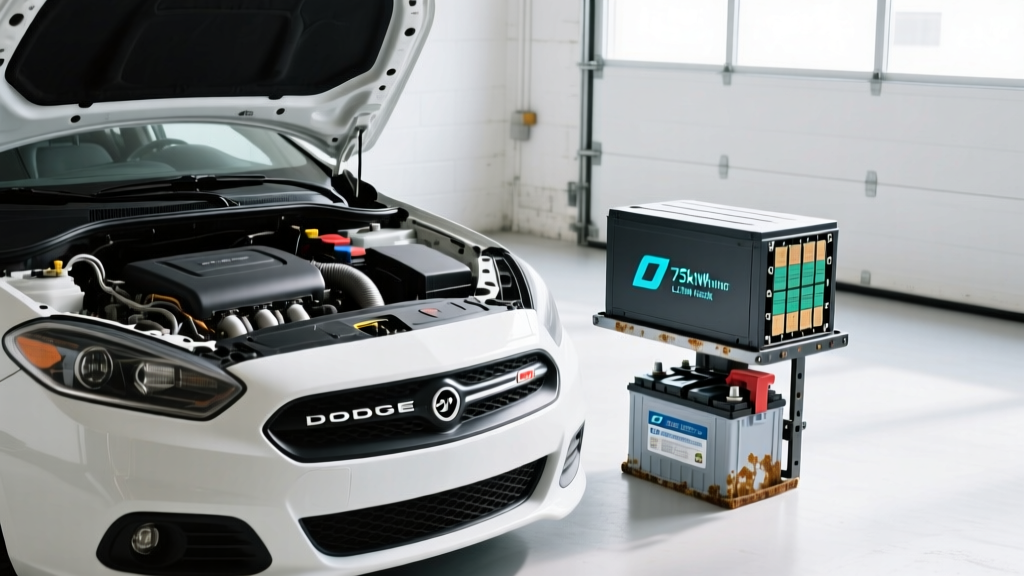
If you're searching for a battery for a 2014 Dodge Dart, you need a standard 12-volt lead-acid (or AGM) auxiliary battery — the same kind every internal-combustion car uses to start the engine, run the lights, and power the infotainment system. That's a $150–$280 part you can pick up at any auto store. But if you're reading AutoEdgeView, chances are you're also thinking about electric vehicles — and that's where battery conversations get a lot more complex, a lot more expensive, and a lot more misunderstood.
This guide uses the Dodge Dart search as a teaching moment: the difference between a simple 12V starter battery and the high-voltage traction battery that actually propels an EV. We'll walk through the chemistry, degradation curves, warranty terms, replacement costs, and care habits that determine how long an EV battery really lasts — with hard numbers, not marketing.
The 12V vs. Traction Battery Distinction (And Why It Matters)
Every EV on the road in 2026 still carries a small 12V auxiliary battery — yes, even a Tesla Model Y, a Ford F-150 Lightning, or a Hyundai Ioniq 5. Its job is to power the computers, door locks, lights, and safety systems before the high-voltage contactors close. If that 12V dies, the car won't "start" even though the main pack is full.
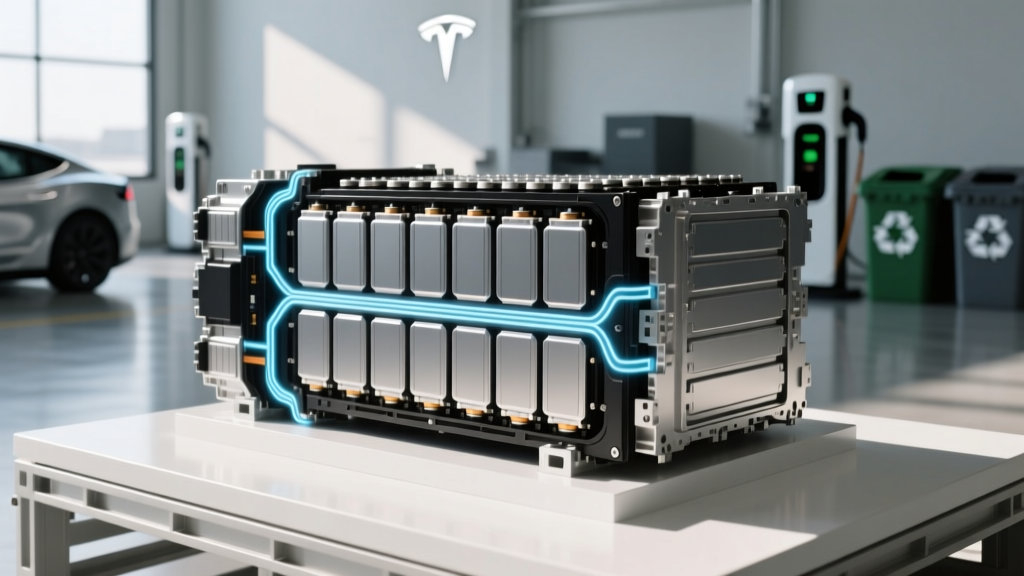
The traction battery is a completely different animal. It's a 400V–800V lithium-ion (or LFP) pack ranging from ~50 kWh to 130+ kWh, weighing 700–1,800 lbs, and costing $8,000–$25,000+ to replace out of warranty. When people say "EV battery," this is what they mean.
Battery Chemistry in 2026: LFP vs. NMC vs. NCA
The two dominant chemistries in today's EVs are LFP (lithium iron phosphate, LiFePO₄) and NMC/NCA (nickel-manganese-cobalt / nickel-cobalt-aluminum). Tesla, BYD, Ford, and Rivian all offer LFP packs on standard-range trims; long-range and performance models still lean NMC or NCA for energy density.
| Attribute | LFP (LiFePO₄) | NMC / NCA |
|---|---|---|
| Energy density | ~160–180 Wh/kg | ~220–260 Wh/kg |
| Typical cycle life | 3,000–5,000+ cycles | 1,000–2,000 cycles |
| Cold-weather performance | Weaker below 32°F; needs preconditioning | Better low-temp output |
| Fast-charge tolerance | Excellent; handles frequent DCFC | Moderate; high SoC + DCFC accelerates wear |
| Cost (per kWh, 2026) | ~$90–$110 | ~$120–$150 |
| Cobalt/nickel content | None | Significant |
| Best for | Daily drivers, fleet, warm climates, frequent fast-charging | Long-range, cold climates, performance |
The practical answer: LFP is "better" for most buyers who charge at home and drive under 250 miles a day. NMC/NCA is better if you need maximum range, live in Alaska, or regularly tow. Neither chemistry is fragile — both are engineered for 15+ years of service.
How Long Do EV Batteries Actually Last?
Short answer: longer than most buyers assume. U.S. Department of Energy / fueleconomy.gov data and long-term fleet studies show modern liquid-cooled packs typically lose 1–2% of capacity per year under normal use. Here's what that looks like in real deployments:
- Tesla Model 3/Y (NMC, 2018–2023 fleets): ~88–92% State of Health (SoH) at 100,000 miles (per Tesla Impact Report and Recurrent Auto data).
- Chevrolet Bolt EV/EUV (NMC, 2017–2023): ~90–94% SoH at 80,000 miles; early 2017 units had higher loss due to thermal management limits — GM extended warranties.
- Nissan LEAF (passive-cooled, 2013–2017): Notorious 15–25% loss by 80,000 miles in hot climates — the cautionary tale that drove the industry to liquid cooling.
- Hyundai Ioniq 5 / Kia EV6 (NMC, 2022–present): Early data shows ~2–4% loss at 40,000 miles; on pace for ~85–90% SoH at 150,000 miles.
- LFP packs (Tesla Model 3 RWD, BYD, Ford LFP F-150): Early indicators show <5% loss at 100,000 miles, consistent with LFP's higher cycle life.
A traction battery is generally considered "end of life" for automotive use at 70–80% SoH — but that threshold is often 15–20 years out, not 8. Most EV batteries will outlast the rest of the car.
What the Battery Warranty Actually Covers
Federal law mandates a minimum 8-year / 100,000-mile warranty on EV traction batteries (10 years / 150,000 miles in CARB states like California, New York, and Massachusetts). Most manufacturers set the capacity-retention threshold at 70% — if your pack drops below that within the term, they replace or repair it at no cost.
| Manufacturer | Term | Retention Threshold | Notes |
|---|---|---|---|
| Tesla | 8 yr / 120,000 mi (100k on RWD) | 70% | Includes drive unit |
| Hyundai / Kia | 10 yr / 100,000 mi | 70% | Among the longest |
| Ford | 8 yr / 100,000 mi | 70% | Covers LFP and NMC packs |
| GM (Chevy Bolt, Blazer EV) | 8 yr / 100,000 mi | 60–70% (model dependent) | Post-recall packs have updated terms |
| Volkswagen (ID.4) | 8 yr / 100,000 mi | 70% | Transfers to second owner |
| Rivian | 8 yr / 175,000 mi | 70% | Best mileage cap in class |
Read the fine print: warranties typically exclude damage from accidents, flooding, improper modifications, or using the pack as stationary storage (V2H abuse). They also do not cover normal degradation above the threshold — a drop from 100% to 72% over 8 years is considered normal wear, not a warranty claim.
EV Battery Replacement Cost: When, and How Much
Out-of-warranty traction-battery replacement is expensive, but it's also rare. Most packs never need full replacement during the vehicle's usable life. When they do, here's what 2026 pricing looks like:
| Vehicle Class / Example | Pack Size | Typical Out-of-Warranty Cost | When Typically Needed |
|---|---|---|---|
| Compact (Chevy Bolt, Nissan LEAF) | 40–65 kWh | $8,000 – $14,000 | Rarely; mostly post-accident or extreme abuse |
| Midsize sedan/crossover (Model 3, Ioniq 5) | 70–82 kWh | $12,000 – $18,000 | 15+ years, if at all |
| Large SUV / truck (F-150 Lightning, Rivian R1T) | 100–135 kWh | $18,000 – $28,000 | Very rare; module-level repair often possible |
| Luxury (Porsche Taycan, Mercedes EQS) | 80–108 kWh | $20,000 – $35,000 | Typically covered under warranty |
Two important context points: (1) Many shops now do module-level repairs — replacing a single failed module for $2,000–$5,000 instead of the full pack. (2) Pack prices have fallen roughly 80% since 2010 and continue to decline; a replacement in 2035 will cost materially less than today.
Factors That Kill (or Preserve) Battery Life
Not all miles age a battery equally. These are the variables you can actually control:
- ✅ Daily SoC target: 80% for NMC/NCA; 100% is fine for LFP (in fact, LFP needs periodic 100% for cell balancing).
- ✅ Minimize DC fast charging above 80%: The charge curve tapers sharply above 80%, generating heat with minimal miles added.
- ✅ Precondition before fast charging: A warm pack charges faster and with less lithium plating. Most EVs do this automatically when you navigate to a charger.
- ✅ Avoid sitting at 100% SoC for days: High voltage + heat = accelerated calendar degradation. Charge to 100% only when you'll drive soon.
- ✅ Don't let it sit at 0%: Store the car at ~50% SoC if it'll sit for weeks.
- ❌ Avoid frequent 0–100% cycles: Partial cycles (20–80%) are far gentler than full swings.
- ❌ Don't skip coolant service: Liquid cooling loops need periodic flushes per the maintenance schedule.
Heat is the #1 enemy. An EV parked outside in Phoenix at 100% SoC will degrade noticeably faster than one garaged in Seattle at 70%. Cold is less damaging long-term but temporarily reduces range and slows charging.
Checking State of Health (SoH): What Owners Can Actually See
Most 2026 EVs expose SoH in one of three ways:
- In-car display: Tesla, Hyundai/Kia, and Rivian show a percentage or bar graph in the battery menu.
- OBD-II dongles + apps: Tools like OBDeleven, LeafSpy (Nissan), or Scan My Tesla pull raw BMS data — voltage variance, internal resistance, cycle count.
- Dealer diagnostics: A service visit yields a formal SoH report, often required for warranty claims.
When shopping for a used EV, always request a SoH reading. A 2020 Model 3 at 92% SoH is a healthier buy than one at 84% — even if the odometer is similar. Services like Recurrent Auto now publish battery health scores tied to VINs for participating owners.
What's Next: Solid-State, Silicon Anodes, and Realistic Timelines
Forward-looking context — none of these are in production vehicles as of 2026:
- Solid-state batteries (Toyota, QuantumScape, Samsung SDI) promise ~40% more energy density and faster charging. Toyota has announced limited 2027–2028 production, but volume deployment is more likely 2030+. Expect early units in luxury/flagship models only.
- Silicon-anode cells (Sila Nanotechnologies, Group14) are entering production in 2026–2027, offering ~10–20% density gains. These are incremental, not revolutionary.
- Sodium-ion batteries (CATL, BYD) are shipping in Chinese-market budget EVs now and may reach the U.S. by 2028. Cheaper than LFP, but lower energy density — suited to city cars and stationary storage.
Don't delay a 2026 EV purchase waiting for solid-state. Today's liquid-cooled lithium-ion packs are mature, well-warranted, and — as the data above shows — lasting longer than the cars they're bolted into.
Frequently Asked Questions
How long do EV batteries last in years and miles?
Modern liquid-cooled packs are designed for 15–20 years and 200,000+ miles before hitting the 70% SoH threshold. Real-world fleet data from Tesla, Hyundai, and Recurrent shows typical degradation of 1–2% per year under normal use.
How much does it cost to replace an EV battery?
Out-of-warranty replacement ranges from ~$8,000 for a compact pack (Bolt, LEAF) to ~$28,000+ for a large truck pack (F-150 Lightning, Rivian). Module-level repairs are often $2,000–$5,000. Full replacement is rare — most packs outlast the car.
What does the EV battery warranty cover?
Federal minimum is 8 years / 100,000 miles (10/150k in CARB states) with a 70% capacity retention threshold. It covers defects and abnormal degradation, not accident damage, flooding, or normal wear above 70%.
How do I check and maximize my EV battery health?
Use the in-car SoH display, an OBD-II app, or a dealer diagnostic. Maximize life by charging to 80% daily (100% is fine for LFP), preconditioning before DC fast charging, avoiding long sits at 0% or 100%, and keeping the cooling system serviced.
LFP vs. NMC — which is better and why?
LFP wins on cycle life (3,000–5,000+ cycles vs. 1,000–2,000), cost (~$90–110/kWh vs. $120–150), and fast-charge tolerance. NMC wins on energy density (longer range in the same weight) and cold-weather output. Daily commuters in mild climates should choose LFP; long-range and cold-climate drivers should choose NMC.
Is a battery for a 2014 Dodge Dart the same as an EV battery?
No. The Dodge Dart uses a conventional 12V lead-acid (group size 47 or 48, ~$150–$280) to start the engine and run accessories. An EV traction battery is a 400–800V lithium-ion or LFP pack costing $8,000–$28,000 and powering the drivetrain. They share no chemistry, voltage, or function.
Sources: fueleconomy.gov — EV Technology, IRS §30D Clean Vehicle Credit, manufacturer warranty documentation (Tesla, Hyundai, Ford, Rivian, 2026 model year).