Why Searchers Compare a 2014 Toyota Corolla Battery to EV Battery Tech
If you've searched for a 2014 Toyota Corolla battery, you're likely looking at a 12V lead-acid replacement that costs around $150–$250 and lasts 3–5 years. But that search often leads to a bigger question: how do modern EV high-voltage traction batteries compare in lifespan, cost, and maintenance? The answer reveals why electric vehicles have fundamentally different ownership economics than a decade-old compact sedan.
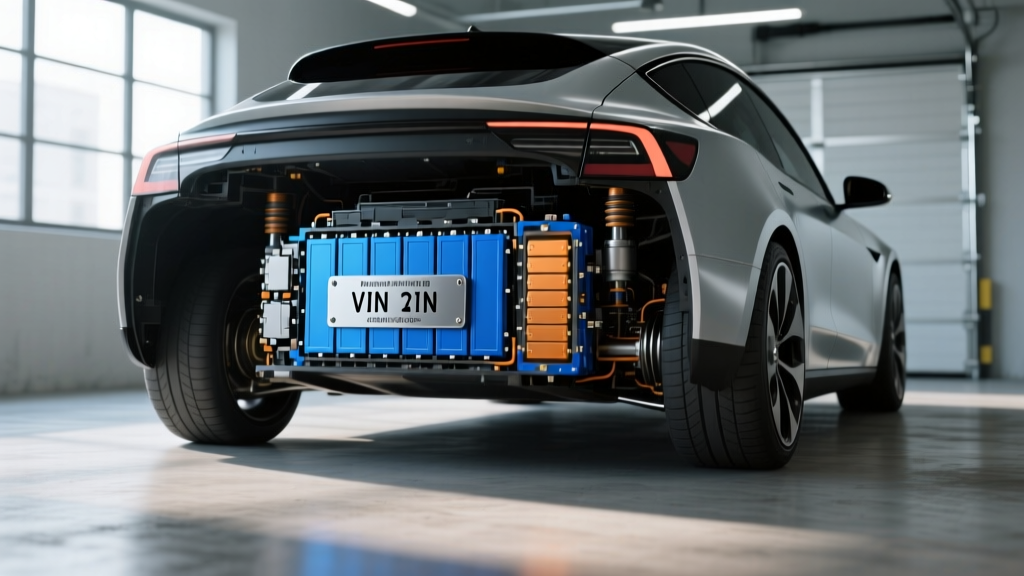
The 12V battery in a 2014 Corolla (typically a Group 35 or 24F, ~550 CCA) powers the starter motor, lights, and electronics. An EV's traction battery — ranging from 40 kWh to over 100 kWh of energy capacity — propels the vehicle and represents the single most expensive component in the car. Understanding both systems is critical whether you're maintaining an aging Corolla or evaluating a new EV purchase in 2026.
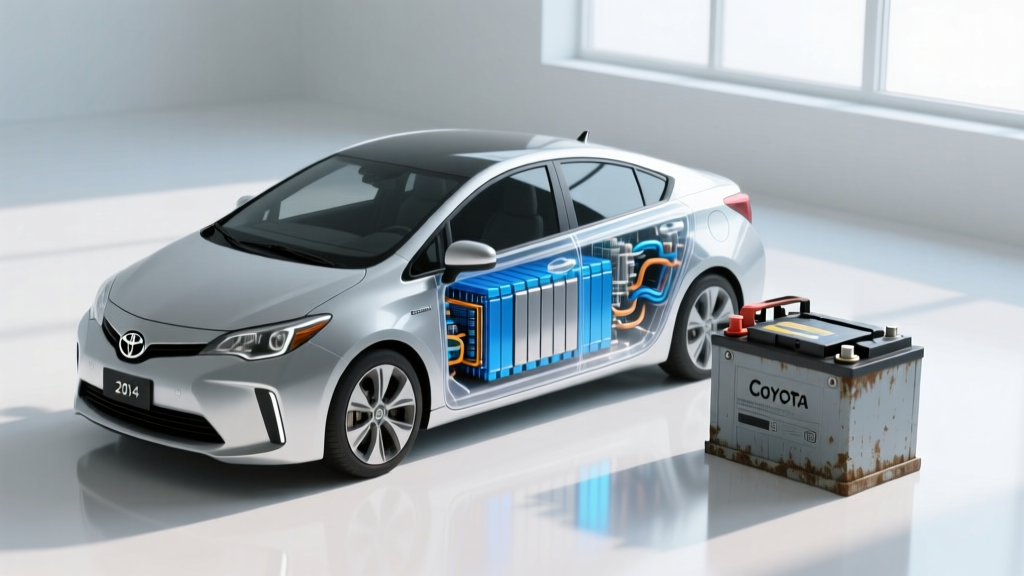
Key distinction: A 2014 Toyota Corolla battery is a 12V lead-acid unit (~$200). An EV traction battery is a high-voltage lithium-ion pack (typically $8,000–$22,000 to replace). EVs also carry a separate 12V auxiliary battery for accessories. This guide focuses on EV traction battery technology.
EV Battery Chemistry: LFP vs. NMC/NCA Trade-Offs
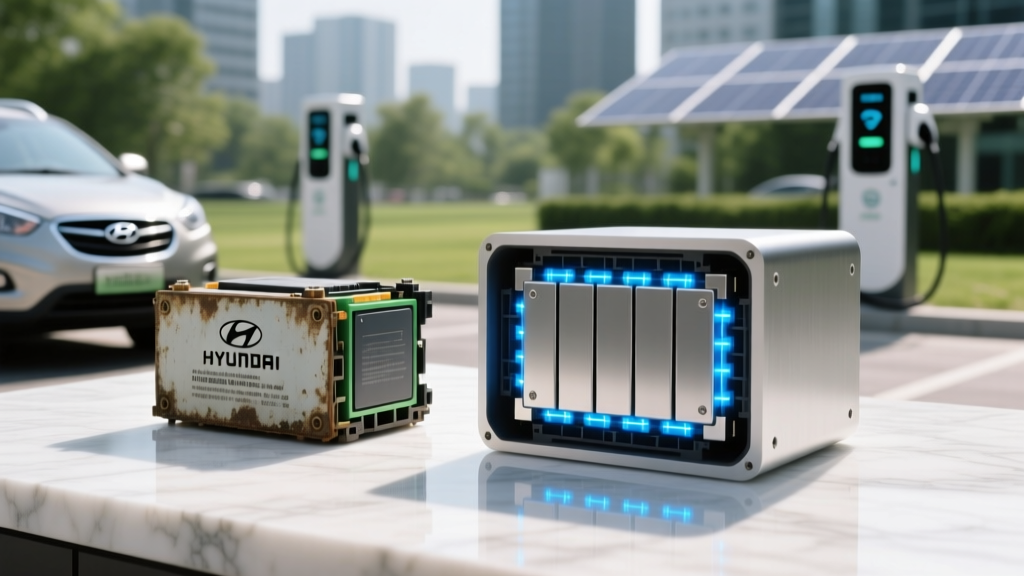
Modern EV batteries use one of two dominant lithium-ion chemistries: LFP (lithium iron phosphate) or NMC/NCA (nickel manganese cobalt / nickel cobalt aluminum). The chemistry determines energy density, cycle life, cold-weather behavior, and cost — and the right choice depends on your driving pattern.
| Attribute | LFP (Lithium Iron Phosphate) | NMC / NCA (Nickel-Based) |
|---|---|---|
| Energy Density | Lower (~160 Wh/kg cell-level) | Higher (~250–300 Wh/kg cell-level) |
| Cycle Life | 3,000–5,000+ cycles to 80% SoH | 1,000–2,000 cycles to 80% SoH |
| Cold Performance | Reduced; slower charge below 32°F | Better low-temp charge acceptance |
| Cost (2026) | ~$90–110/kWh at pack level | ~$120–150/kWh at pack level |
| Thermal Stability | Excellent; higher runaway threshold | Good; requires active thermal mgmt |
| Recommended SoC | Can charge to 100% daily | Best kept 20–80% for longevity |
| Notable Users | Tesla Model 3/Y RWD, Ford Mustang Mach-E Select (LFP trims), BYD | Hyundai Ioniq 5, BMW i4, most long-range/AWD models |
Which is better? For daily commuting and high-mileage drivers, LFP wins on cycle life and cost — you can charge to 100% without accelerated degradation. For maximum range in a single charge (road trips, towing), NMC/NCA offers more miles per kWh of battery weight. Tesla's standard-range vehicles switched to LFP partly because owners were charging NMC packs to 100% daily anyway, negating the chemistry advantage.
How Long Do EV Batteries Actually Last? Degradation Data
The short answer: most EV batteries outlast the vehicles they're installed in. Real-world fleet data consistently shows slower degradation than early EV skeptics predicted.
Typical Degradation Curve (Fleet-Averaged Data):
- Year 1 / 15,000 miles: ~2–3% capacity loss (initial formation loss)
- Year 3 / 45,000 miles: ~5–7% total loss
- Year 5 / 75,000 miles: ~7–10% total loss
- Year 8 / 120,000 miles: ~10–14% total loss
- Year 10+ / 150,000+ miles: ~12–18% total loss (varies significantly by climate and charging habits)
Sources: Recurrent Auto fleet data (2025 report), Geotab fleet study of 10,000+ EVs.
For context, a 2014 Toyota Corolla's 12V lead-acid battery typically needs replacement every 3–5 years — and that's a $200 part. An EV traction battery losing 10% capacity over 8 years means a 300-mile EPA-rated vehicle still delivers ~270 miles of range. That's still more daily range than 95% of drivers need.
The Nissan Leaf (early models, 2011–2017) remains the cautionary tale: passive air-cooled battery packs in hot climates like Arizona saw 20–30% degradation within 5 years. Modern liquid-cooled packs from Tesla, Hyundai, GM, and BMW avoid this failure mode entirely. According to fueleconomy.gov, current-generation thermal management systems maintain battery temperature within an optimal 59–95°F (15–35°C) operating window.
Battery Warranty Terms: What Manufacturers Guarantee
Federal law mandates that EV batteries carry a minimum warranty of 8 years / 100,000 miles (10 years / 150,000 miles in CARB states like California, New York, and Massachusetts). Most manufacturers exceed this baseline.
| Manufacturer | Warranty Period | Capacity Retention Threshold |
|---|---|---|
| Tesla (Model 3/Y LFP) | 8 yr / 100,000 mi | 70% minimum |
| Tesla (Model 3/Y LR, Model S/X) | 8 yr / 120,000 mi | 70% minimum |
| Hyundai / Kia | 10 yr / 100,000 mi | 70% minimum |
| GM (Ultium-based) | 8 yr / 100,000 mi | 70% minimum (60% for Bolt EV) |
| Ford (Mach-E, F-150 Lightning) | 8 yr / 100,000 mi | 70% minimum |
| BMW | 8 yr / 100,000 mi | 70% minimum |
| Rivian | 8 yr / 175,000 mi (R1T/R1S) | 70% minimum |
What the warranty covers: If your battery's State of Health (SoH) drops below the stated threshold within the warranty period, the manufacturer will repair or replace modules (not necessarily the entire pack) to restore capacity above the threshold. Manufacturing defects and premature cell failure are covered. Damage from accidents, flooding, or unauthorized modifications is excluded.
What it doesn't cover: Normal gradual degradation above the threshold. A battery at 72% SoH after 9 years is functioning within warranty terms, even though you've lost 28% of original range.
EV Battery Replacement Cost: What Owners Actually Pay
Battery replacement is the number-one fear among prospective EV buyers — and the most misunderstood cost. Here's the reality for 2026:
| Vehicle / Pack Size | Estimated Replacement Cost (2026) | Typical Replacement Trigger |
|---|---|---|
| Nissan Leaf (40 kWh) | $6,500–$9,000 | Severe degradation in hot climates; out of warranty |
| Tesla Model 3 (60 kWh LFP) | $10,000–$14,000 | Rare before 200,000+ mi; module-level repair often sufficient |
| Tesla Model Y / 3 LR (75–82 kWh) | $13,000–$18,000 | Typically 200,000+ mi if needed at all |
| Hyundai Ioniq 5 (77.4 kWh) | $12,000–$16,000 | Module replacement often $3,000–$5,000 |
| Ford F-150 Lightning (131 kWh ext.) | $18,000–$25,000 | Likely never needed within vehicle lifespan |
| Chevrolet Silverado EV (200+ kWh) | $22,000–$30,000 | Module-level service preferred |
Critical context: Full pack replacement is increasingly rare. Modern battery packs are modular — technicians can replace individual cell modules (often 8–16 modules per pack) for $2,000–$6,000 rather than swapping the entire unit. A 2014 Toyota Corolla's engine replacement would cost $3,000–$5,000; most EV battery module repairs fall in a similar range.
Data from Recurrent Auto shows that fewer than 1.5% of EVs in their 10,000-vehicle study fleet required battery replacement outside of recall campaigns. The vast majority of EVs will be retired (due to collision, rust, or technology upgrades) before their batteries need replacement.
Factors That Accelerate (or Preserve) Battery Health
Battery longevity isn't random — it's driven by measurable habits. Here's what moves the needle:
Maximize Battery Life:
- Avoid sustained 100% SoC (NMC/NCA): Store and commute at 20–80%. LFP owners can charge to 100% regularly without penalty.
- Limit DC fast charging to road trips: Frequent 150+ kW charging generates heat stress. For daily use, Level 2 home charging at 7–11 kW is ideal.
- Precondition before fast charging: Most EVs do this automatically when a Supercharger/DCFC is set as your navigation destination. A cold battery charging at high power causes lithium plating.
- Avoid extreme SoC in extreme heat: A fully charged battery parked in 110°F Arizona sun degrades faster than one at 50% SoC.
- Don't baby it too much: Occasional 100% charges and DC fast charges won't destroy your battery. The degradation difference between "perfect" and "normal" care is typically 2–4% over 8 years.
Accelerate Degradation:
- Daily DC fast charging in hot climates without preconditioning
- Routinely storing at 100% SoC for days/weeks (especially NMC)
- Deep discharges below 5% SoC repeatedly
- Aftermarket modifications that bypass thermal management
How to Check and Monitor Your Battery's State of Health
State of Health (SoH) is expressed as a percentage: 100% means full original capacity; 85% means you've lost 15% to degradation. Here's how to check it:
Built-In Vehicle Displays
Tesla's service menu (accessible via the software screen) shows battery health percentage. Hyundai/Kia's infotainment includes an EV battery diagnostics page. Ford's Pass app provides SoH estimates.
OBD-II Diagnostic Tools
Apps like Leaf Spy (Nissan Leaf), Teslalogger, and OBDeleven (VW/Audi) read the BMS (Battery Management System) directly for precise SoH, cell voltage imbalance, and cycle count data.
Third-Party Services
Companies like Recurrent Auto offer free battery health reports that compare your degradation curve against fleet averages for your specific model, climate zone, and mileage.
The Manual Method
Track your actual range at a consistent SoC over time. If your 80% charge delivered 220 miles when new and now delivers 200 miles, that's roughly a 9% degradation — consistent with a 5-year-old EV.
Emerging Battery Technology: Solid-State and Beyond
Next-generation battery tech is advancing rapidly, but realistic timelines matter:
Solid-state batteries replace the liquid electrolyte with a solid ceramic or polymer layer, promising 30–50% higher energy density, faster charging (10–80% in under 10 minutes), and improved safety. Toyota has announced solid-state production for select 2027–2028 models (preliminary), while QuantumScape's cells are in validation with Volkswagen. These will debut in premium vehicles at significant cost premiums before reaching mainstream pricing.
Silicon-dominant anodes (from companies like Sila Nanotechnologies and Group14) are entering production in 2026, replacing graphite anodes to boost energy density by 10–20% without the manufacturing complexity of solid-state. Expect these in model-year 2027–2028 vehicles from Mercedes-Benz and others.
Sodium-ion batteries are emerging for budget EVs and stationary storage. CATL has begun production, but energy density is 30–40% lower than LFP, making them better suited for city cars with 150–200 miles of range. Not expected in US-market vehicles before 2028.
None of these technologies are available in production EVs as of 2026. Current LFP and NMC chemistries remain the standard, and their proven longevity (outlined above) is the most reliable data point for today's buyers.
2014 Corolla Battery vs. EV Battery: The Bottom Line
The 2014 Toyota Corolla's 12V battery is a consumable — a $200 lead-acid unit replaced every 3–5 years as routine maintenance. An EV traction battery is a durable, warrantied component that typically retains 85–90% of its capacity after a decade of use. The comparison reveals why EV ownership economics favor long-term holders: you're trading a cheap, frequently-replaced part for an expensive, rarely-replaced one that's backed by an 8–10 year federal warranty mandate.
For current Corolla owners considering an EV switch: your next vehicle's battery will almost certainly outlast the car itself, and the data from millions of EVs on the road confirms that catastrophic battery failure is the exception, not the rule.
Frequently Asked Questions
How long do EV batteries last in years and miles?
Based on fleet data from Recurrent Auto and Geotab, modern liquid-cooled EV batteries retain 85–90% of original capacity at 10 years / 150,000 miles. Many Tesla Model S units have exceeded 300,000 miles on original packs with 75–80% SoH. Most EV batteries will outlast the vehicle's useful life.
How much does it cost to replace an EV battery?
Full pack replacement ranges from $6,500 (Nissan Leaf 40 kWh) to $25,000+ (Ford F-150 Lightning extended range). However, module-level repairs — replacing only degraded cell groups — typically cost $2,000–$6,000. Fewer than 1.5% of EVs require battery replacement outside of recalls. Compare this to a 2014 Toyota Corolla battery replacement at $150–$250 for a part that needs swapping every 3–5 years.
What does the EV battery warranty cover?
Federal law requires a minimum of 8 years / 100,000 miles (10 years / 150,000 miles in CARB states). The warranty guarantees the battery will retain at least 70% of original capacity. If SoH drops below this threshold, the manufacturer repairs or replaces cells/modules at no cost. Defect coverage is included; accident damage and normal degradation above 70% are not.
How do I check my EV battery health?
Use your vehicle's built-in diagnostics menu (Tesla, Hyundai, Ford), OBD-II apps like Leaf Spy or Teslalogger, or free services from Recurrent Auto. You can also track range at a consistent SoC over time — a drop from 220 miles to 200 miles at 80% charge indicates roughly 9% degradation.
LFP vs. NMC — which battery chemistry is better?
LFP wins for daily commuters: longer cycle life (3,000–5,000 cycles), lower cost, and the ability to charge to 100% daily without harm. NMC wins for range-priority buyers: higher energy density means more miles per charge in a lighter pack, making it better for road trips and towing. Neither is universally superior — the right choice matches your driving pattern.
Does fast charging damage my EV battery?
Occasional DC fast charging has minimal impact. However, daily use of 150+ kW chargers — especially without battery preconditioning — accelerates degradation by roughly 1–3% additional loss over 5 years compared to Level 2 home charging. For daily needs, a home Level 2 charger at 7–11 kW is the longevity-optimal choice.