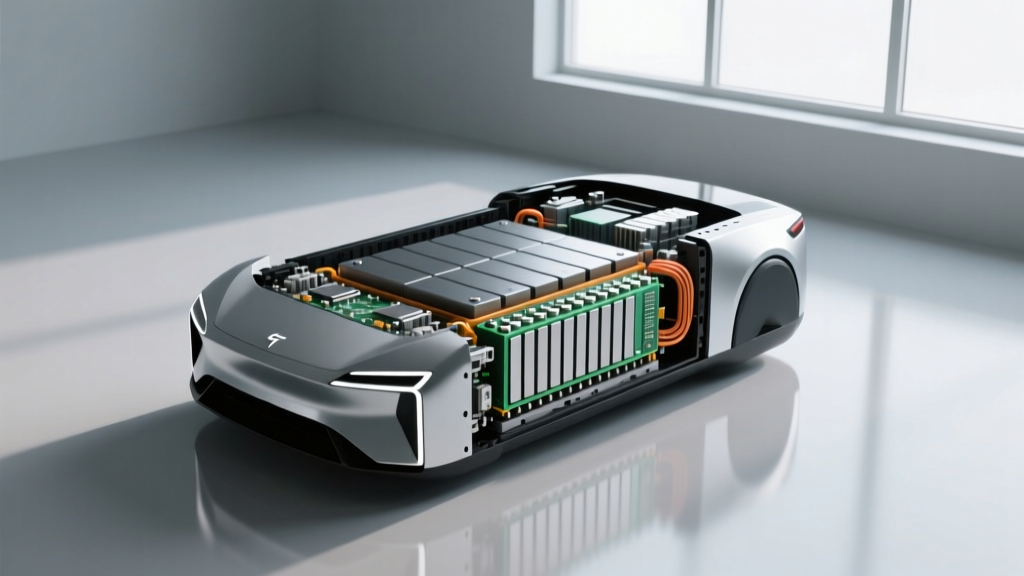
If you've searched for a 2012 Chevy Traverse battery, you're likely dealing with a familiar scenario: the 12-volt lead-acid under-hood battery is dying, and a replacement from an auto-parts store runs $150–$250. But if you're transitioning to an electric vehicle — or already own one — you're entering a completely different battery universe. The high-voltage traction battery in a modern EV stores 60–100+ kilowatt-hours (kWh) of energy, weighs 800–1,200 pounds, and costs $5,000–$20,000+ to replace. Understanding how these batteries work, degrade, and age is the single most important piece of EV ownership knowledge you can develop.
This guide breaks down EV battery chemistry, real-world degradation data, warranty protections, replacement economics, and the care habits that maximize longevity — while clarifying the gulf between a conventional 12V car battery and an EV's high-voltage pack.
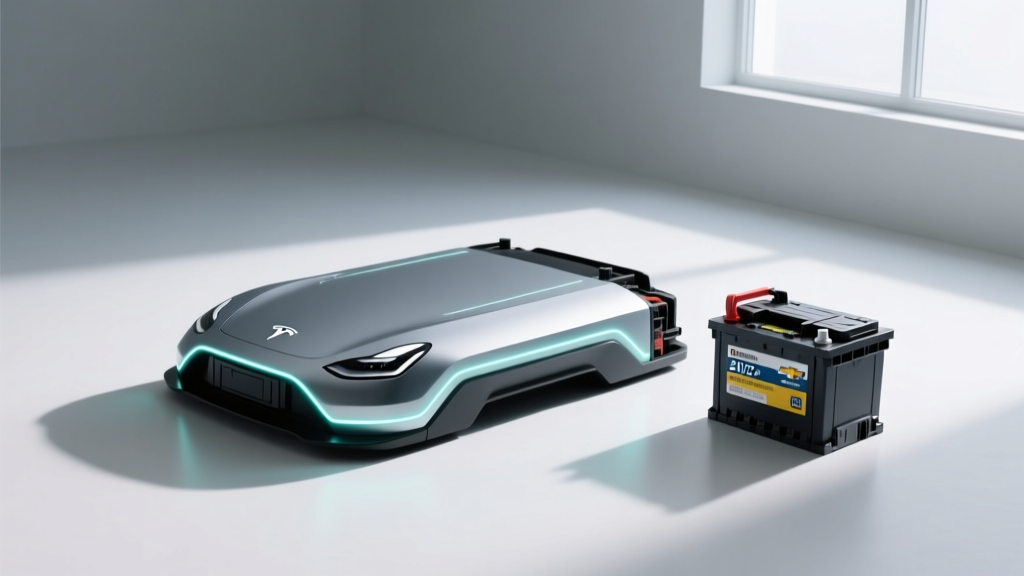
The 2012 Chevy Traverse uses a standard Group 48 AGM or flooded lead-acid 12V battery (~70 Ah, ~0.84 kWh) that powers the starter motor, lights, and electronics. An EV's traction battery operates at 400–800 volts, stores 60–130 kWh, and propels the vehicle. EVs also carry a separate 12V auxiliary battery for accessories — but when EV owners talk about "the battery," they mean the high-voltage pack.
How Long Do EV Batteries Actually Last?
The short answer: far longer than most buyers expect. Data from fleets, long-term owners, and manufacturer studies consistently show that modern lithium-ion EV batteries retain 85–95% of their original capacity after 100,000 miles and 70–85% after 200,000 miles, depending on chemistry, thermal management, and usage habits.
To put that in perspective, the average American vehicle is scrapped at around 12 years and 150,000 miles (per Bureau of Transportation Statistics). Most EV batteries will outlast the rest of the vehicle's mechanical and cosmetic life.
- NMC (Nickel Manganese Cobalt): ~2–3% loss in year one, then ~0.5–1% per year. Expect ~88–92% capacity at 100,000 miles, ~78–85% at 200,000 miles. (Source: Geotab fleet study)
- LFP (Lithium Iron Phosphate): ~1–2% loss in year one, then ~0.3–0.5% per year. Expect ~92–96% at 100,000 miles, ~85–92% at 200,000 miles.
- NCA (Nickel Cobalt Aluminum, e.g., Tesla): Similar to NMC; Tesla's 2023 Impact Report cited ~88% average retention at 200,000 miles across Model S/X/3/Y fleets.
These numbers reflect liquid-cooled packs with active thermal management. Older or passively-cooled designs (like early Nissan Leafs) degraded faster, sometimes losing 20–30% in hot climates over 5 years.
LFP vs NMC vs NCA: Which Chemistry Is Better?
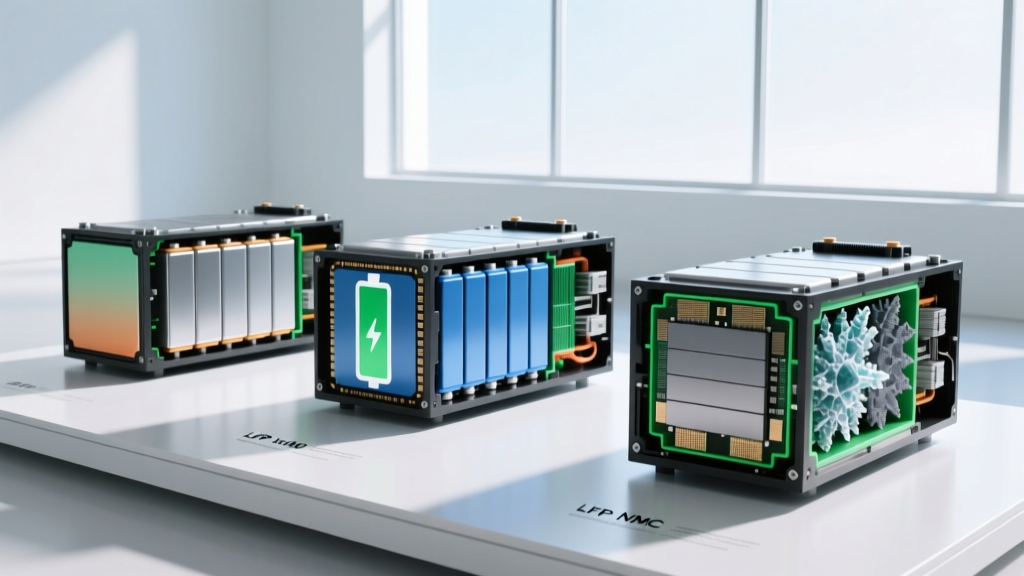
Not all lithium-ion batteries are the same. The cathode chemistry determines energy density, longevity, cost, cold-weather behavior, and safety. Here's how the three dominant chemistries compare in 2026:
| Attribute | LFP (LiFePO₄) | NMC (LiNiMnCoO₂) | NCA (LiNiCoAlO₂) |
|---|---|---|---|
| Energy density | Lower (~160 Wh/kg cell-level) | Higher (~220–260 Wh/kg) | Highest (~260–300 Wh/kg) |
| Cycle life | 3,000–5,000+ cycles | 1,000–2,000 cycles | 1,000–1,500 cycles |
| Cold performance | Weaker below 32°F; more range loss | Better low-temp output | Good low-temp output |
| Cost | Lowest (no cobalt/nickel) | Moderate–high | Moderate–high |
| Thermal stability | Excellent (very low thermal runaway risk) | Moderate (requires robust BMS) | Moderate |
| 100% SoC charging OK? | Yes — recommended periodically for cell balancing | No — daily 80% limit recommended | No — daily 80% limit recommended |
| Common in (2026) | Tesla Model 3/Y RWD, Ford Mustang Mach-E Select, BYD models | Hyundai Ioniq 5/6, VW ID.4, most long-range EVs | Tesla Model S/X, some Rivian packs |
The bottom line: LFP wins on longevity, cost, and safety but sacrifices range per pound and cold-weather performance. NMC/NCA deliver more range in a lighter, smaller package but degrade faster and cost more. For a daily commuter who charges at home and doesn't need 350+ miles of range, LFP is increasingly the smart choice. For road-trippers and cold-climate drivers, NMC remains preferable.
What Does the EV Battery Warranty Cover?
Federal law mandates that EV batteries carry a minimum warranty of 8 years / 100,000 miles (10 years / 150,000 miles in California Air Resources Board states). But the details matter enormously:
| Manufacturer | Coverage | Capacity Threshold | Notes |
|---|---|---|---|
| Tesla | 8 yr / 100k–150k mi (varies by model) | 70% retention | Covers defects + degradation below threshold |
| Hyundai/Kia | 10 yr / 100,000 mi | 70% retention | Among the longest coverage periods |
| Ford | 8 yr / 100,000 mi | 70% retention | Applies to Mustang Mach-E, F-150 Lightning |
| Volkswagen | 8 yr / 100,000 mi | 70% retention | ID.4, ID. Buzz |
| GM (Chevy, Cadillac) | 8 yr / 100,000 mi | 60–70% (varies) | Ultium platform; Bolt EV was 8yr/100k |
| Rivian | 8 yr / 175,000 mi | 70% retention | Highest mileage threshold among major OEMs |
What's covered: Manufacturing defects, cell failures, and capacity loss below the stated threshold. If your 80 kWh pack drops below 56 kWh (70%) within the warranty window, the manufacturer must repair or replace it — typically with a refurbished pack of equivalent capacity.
What's NOT covered: Damage from accidents, flooding, improper modifications, or using non-approved charging equipment. Normal gradual degradation above the threshold is expected and not warrantable.
How Much Does an EV Battery Replacement Cost?
Out-of-warranty battery replacement is the nightmare scenario EV skeptics cite. The reality is nuanced: most packs never need full replacement, module-level repairs are increasingly common, and costs have been declining steadily.
| Vehicle / Pack Size | Full Pack Cost | Module Repair Cost | When Typically Needed |
|---|---|---|---|
| Compact EV (~60 kWh, e.g., Chevy Bolt) | $6,000–$9,000 | $1,500–$3,000 | Rarely; usually 15+ years / 200k+ mi |
| Mid-size crossover (~75–85 kWh, e.g., Model Y, Ioniq 5) | $8,000–$14,000 | $2,000–$4,500 | Rarely; 15+ years typical lifespan |
| Large SUV/truck (~100–130 kWh, e.g., F-150 Lightning, Rivian) | $12,000–$22,000 | $3,000–$6,000 | Very rare within vehicle's useful life |
| Luxury sedan (~100 kWh, e.g., Model S, Lucid Air) | $14,000–$25,000 | $3,500–$7,000 | 15+ years; some early Model S packs replaced at ~120k mi |
Compare this to the 2012 Chevy Traverse: a replacement 12V battery costs $150–$250 and lasts 3–5 years. Over 15 years, you'd spend $500–$1,200 on lead-acid batteries. An EV's traction battery, while far more expensive in absolute terms, is a once-in-the-vehicle's-lifetime component for most owners.
Importantly, independent EV repair shops are increasingly offering module-level replacement — swapping only the degraded or failed cell modules rather than the entire pack — at 25–50% of full-pack cost. As the EV fleet ages, this aftermarket repair ecosystem will continue to grow and drive prices down.
What Factors Affect EV Battery Life?
Battery degradation isn't random. It's driven by measurable physical and chemical stressors. Here's what accelerates wear — and what you can control:
- Limit DC fast charging. Occasional road-trip fast charging is fine. Daily reliance on 150+ kW DC charging accelerates degradation by ~1–2% over 5 years vs. Level 2 home charging. Use Level 2 (7–11 kW) for daily needs.
- Avoid extreme State of Charge. For NMC/NCA packs, keep daily SoC between 20–80%. For LFP, charge to 100% at least once a week for cell balancing. Never leave any chemistry sitting at 100% for days.
- Use preconditioning. When navigating to a DC fast charger, the car's thermal system warms or cools the battery to optimal temperature (~77–95°F), reducing stress and improving charge speed.
- Park in shade/garage in extreme heat. Sustained battery temperatures above 104°F accelerate calendar degradation. Active thermal management helps, but garage parking adds years.
- Don't store at low SoC. If leaving the car for weeks, set charge limit to ~50%. Storing below 10% risks cell damage; storing at 100% accelerates calendar aging.
- Minimize frequent deep discharges. Running to 0% occasionally won't destroy the pack (the BMS buffer protects cells), but habitual deep cycling adds stress.
Temperature is the silent killer. Data from Geotab's analysis of 6,300+ fleet EVs shows that vehicles in hot climates (average temps above 80°F) degraded roughly 1.5× faster than those in temperate zones. Liquid-cooled packs (standard on virtually all 2026 EVs) mitigate this significantly compared to older passively-cooled designs.
How Do I Check My EV's Battery Health (SoH)?
State of Health (SoH) is the percentage of original capacity your battery can still hold. A new pack is 100% SoH; a pack that held 80 kWh when new but now holds 72 kWh is at 90% SoH. Here's how to monitor it:
- In-car displays: Tesla, Hyundai, Ford, and BMW offer battery health readouts in the vehicle settings or service menus. Some show a percentage; others display a degradation curve graph.
- Manufacturer apps: The Tesla app, FordPass, Hyundai Bluelink, and myChevrolet apps include battery health or range-estimate data that indirectly reflects SoH.
- OBD-II diagnostic tools: Devices like the OBDLink SX paired with apps such as EVbatmon (for some models) or LeafSpy (for Nissan Leaf) can read real-time cell voltage, pack temperature, and SoH data from the Battery Management System (BMS).
- Dealer diagnostics: During service visits, dealerships can run a full capacity test, typically taking 1–3 hours, and provide a printed SoH report.
- Third-party services: Companies like Recurrent Auto offer free battery health reports for participating owners, comparing your degradation curve against thousands of identical vehicles.
For used-EV buyers, requesting a battery health report before purchase is essential. A 5-year-old EV at 92% SoH is a far better value than one at 82%, even if the price difference seems small — because that gap widens over time.
Emerging Battery Tech: Solid-State and Silicon Anodes
The next frontier in battery technology promises step-change improvements, but realistic timelines matter:
- Solid-state batteries replace the liquid electrolyte with a solid ceramic or polymer, potentially doubling energy density, enabling 10–15 minute fast charges, and eliminating thermal runaway risk. Toyota has announced solid-state EVs for 2027–2028, but production volumes will be extremely limited initially. Widespread availability at mainstream price points is unlikely before 2030–2032.
- Silicon anode batteries (from companies like Sila Nanotechnologies and Group14) replace graphite anodes with silicon, boosting energy density by 20–40%. These are beginning to appear in limited production (Mercedes-Benz G-Class 580e uses a silicon-dominant anode) and will expand through 2027–2029.
- Sodium-ion batteries offer a lower-cost, cobalt-free alternative for budget EVs, with CATL and BYD already deploying them in Chinese-market vehicles. US availability is expected in 2027–2028 entry-level models.
These are real technologies with real timelines — but none change the buying decision today. Current lithium-ion packs already deliver 200,000+ mile lifespans, and the improvements coming will primarily benefit range and charge speed, not necessarily longevity (which is already excellent).
Frequently Asked Questions
How long do EV batteries last in years and miles?
Most modern EV batteries retain 70–90% of original capacity at 200,000 miles and 12–15 years. With proper care (avoiding daily DC fast charging, limiting SoC extremes, using preconditioning), many will outlast the vehicle itself. The EPA and manufacturer data consistently support 15–20 year functional lifespans for liquid-cooled packs.
How much does an EV battery cost to replace?
Full pack replacement ranges from $6,000 for a compact EV (60 kWh) to $22,000+ for a large truck or luxury sedan (100–130 kWh). Module-level repairs cost 25–50% of full-pack prices. Costs have declined ~50% since 2015 and will continue falling. Most packs never need replacement within the vehicle's useful life.
What does the EV battery warranty cover?
All EV batteries are warranted for at least 8 years / 100,000 miles (10 yr / 150k mi in CARB states) against defects and capacity loss below 60–70% of original. If your battery drops below the threshold within the warranty period, the manufacturer replaces or refurbishes it at no cost. Damage from accidents, misuse, or unauthorized modifications is excluded.
How do I check and maximize my EV battery health?
Use in-car SoH displays, manufacturer apps, OBD-II tools, or dealer diagnostics to monitor State of Health. Maximize longevity by favoring Level 2 home charging over DC fast charging, keeping NMC/NCA packs between 20–80% daily SoC (LFP to 100% weekly), preconditioning before fast charges, and avoiding prolonged storage at extreme SoC levels or in high heat.
LFP vs NMC — which is better and why?
Neither is universally better. LFP lasts longer (3,000–5,000 cycles vs. 1,000–2,000), costs less, is safer, and tolerates 100% charging — but it's heavier, less energy-dense, and performs worse in cold weather. NMC/NCA deliver more range per pound, charge faster in cold conditions, and suit long-range/road-trip use cases. For a daily commuter with home charging, LFP is the durability champion. For a one-car household that road-trips frequently and faces sub-freezing winters, NMC remains the pragmatic choice.
Is an EV battery replacement like replacing a 2012 Chevy Traverse battery?
No. The 2012 Traverse uses a $200 lead-acid 12V battery you swap in 15 minutes with a wrench. An EV traction battery is a structural, high-voltage component requiring specialized equipment, certified technicians, and 4–8 hours of labor. However, the EV battery is designed to last the life of the vehicle, while the Traverse's 12V battery needs replacing every 3–5 years. The EV's 12V auxiliary battery (yes, EVs have one too) is the closer analog — and it also needs periodic replacement at similar cost.