From Lead-Acid to Lithium-Ion: A Battery Replacement Reality Check
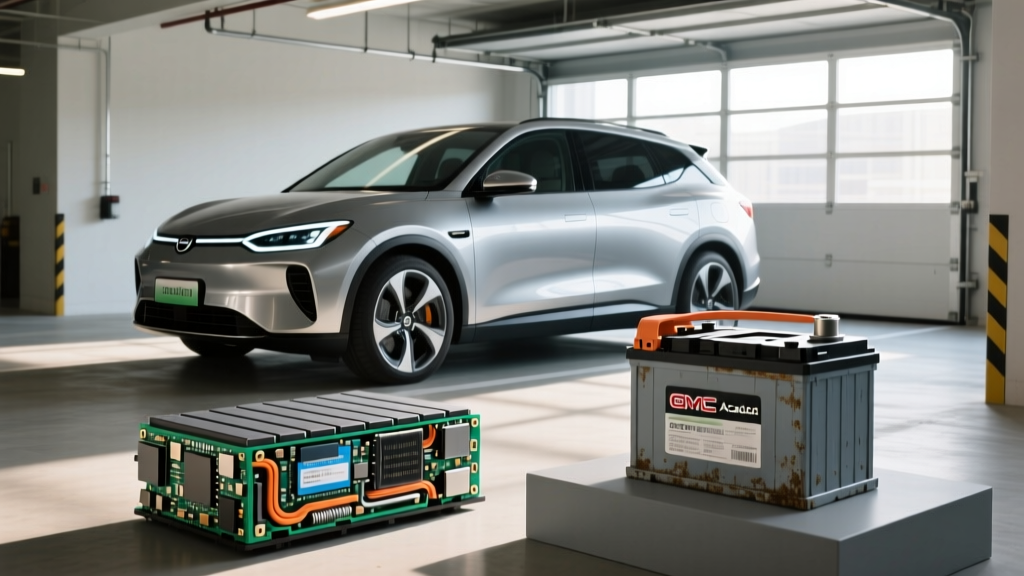
If you've searched for a 2011 GMC Acadia battery, you already know the drill: pop the hood, swap a Group 48 AGM or flooded lead-acid unit, pay $150–$250 at an auto parts store, and you're back on the road. That 12V starter battery weighs about 45 pounds, delivers roughly 70 Ah of capacity, and typically lasts 3–5 years before sulfation or plate degradation forces a replacement.
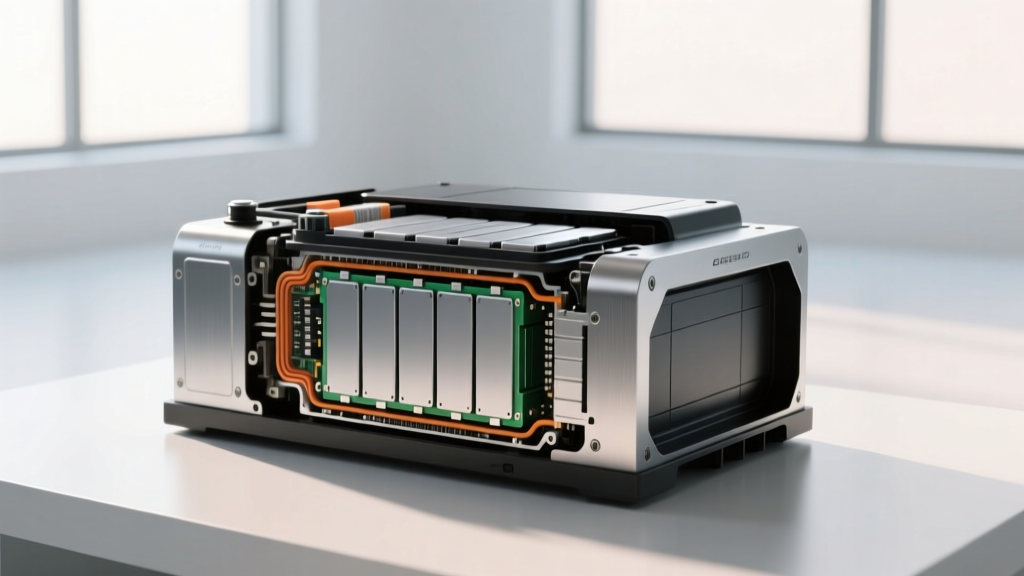
But if you're cross-shopping that Acadia against a modern electric vehicle — or you've just bought your first EV and are wondering what happens when the big battery ages — the conversation changes dramatically. An EV's high-voltage traction battery is a fundamentally different machine: 60–120 kWh of lithium-ion cells managed by a sophisticated thermal and software system, priced between $5,000 and $20,000 to replace, and engineered to outlast the vehicle itself.
This guide breaks down exactly how EV traction batteries age, what warranties actually cover, what replacement costs look like in 2026, and how to maximize your pack's lifespan. We'll also explain why your EV still has a 12V battery (yes, just like the Acadia) and how the two systems differ.
LFP vs NMC: The Chemistry Decision That Shapes Your Battery's Life
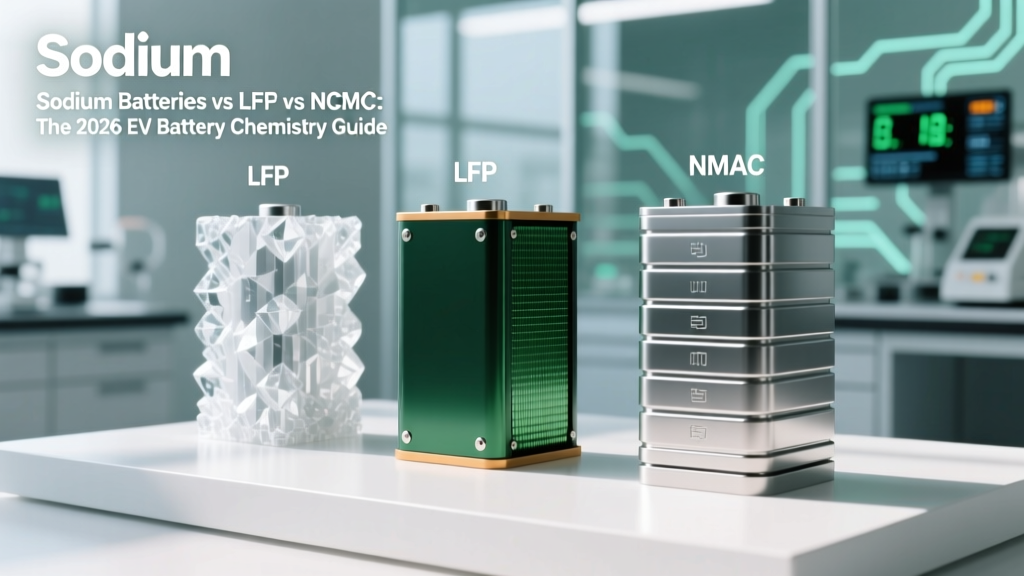
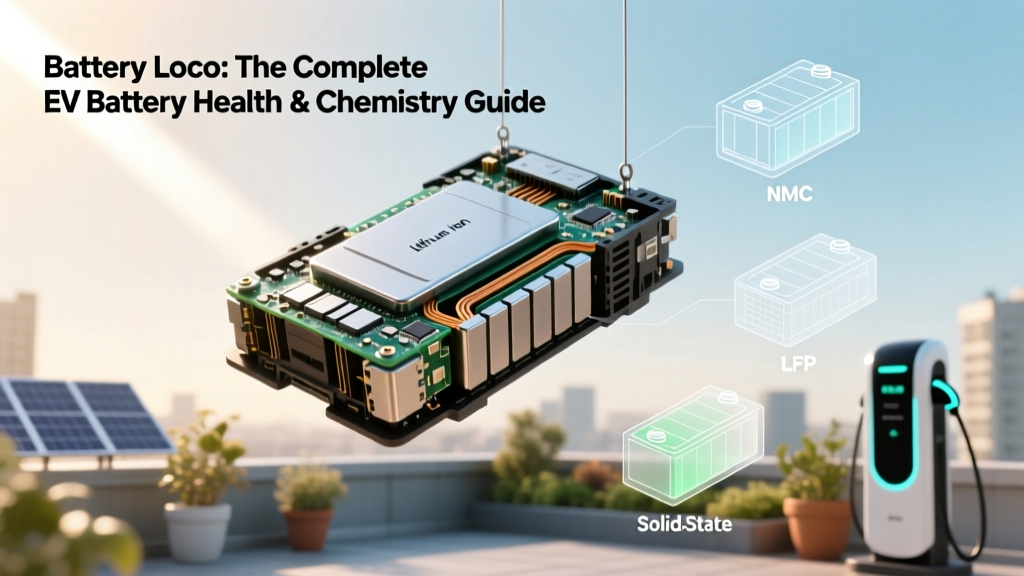
Not all lithium-ion batteries are created equal. The two dominant chemistries in 2026 EVs are LFP (lithium iron phosphate) and NMC/NCA (nickel manganese cobalt / nickel cobalt aluminum). Your choice of chemistry affects range, longevity, cold-weather behavior, and cost.
| Attribute | LFP (Lithium Iron Phosphate) | NMC/NCA (Nickel-Based) |
|---|---|---|
| Energy Density | Lower (~160 Wh/kg cell-level) | Higher (~250–300 Wh/kg cell-level) |
| Typical Cycle Life | 3,000–5,000+ cycles to 80% SoH | 1,000–2,000 cycles to 80% SoH |
| Cold Performance | Moderate loss; slower charging below 32°F | Better low-temp discharge; preconditioning helps |
| Cost (per kWh) | ~$80–$100/kWh (2026 pack-level) | ~$110–$140/kWh (2026 pack-level) |
| Thermal Stability | Excellent — higher runaway threshold | Good — requires more active cooling |
| Recommended SoC Range | Can charge to 100% daily | Best kept 20–80% for daily use |
| Common Applications | Tesla Model 3/Y RWD, BYD, Ford LFP Mustang Mach-E | Long-range/performance variants, Hyundai Ioniq 5/6, Rivian |
Which is better? It depends on your use case. If you want maximum cycle life, lower cost, and don't need 350+ miles of range, LFP is the pragmatic pick — especially for daily commuting where you charge to 100% every night. If you need the longest possible range in a single charge, tow frequently, or live in extreme cold, NMC/NCA packs deliver higher energy density and better winter discharge performance, at the cost of a shorter overall cycle life and stricter state-of-charge management.
Neither chemistry is universally superior. Tesla, Ford, and BYD have embraced LFP for standard-range models specifically because the longevity and cost benefits outweigh the energy-density penalty for most buyers. Hyundai, Rivian, and BMW continue to favor NMC/NCA for their long-range platforms.
How Long Do EV Batteries Actually Last? Degradation Data
The short answer: most EV batteries outlast the cars they're installed in. But degradation is real, measurable, and non-linear.
Typical Degradation Curve (NMC Pack, Average Use)
- Year 1 / 15,000 mi: ~2–4% capacity loss (initial formation loss)
- Year 3 / 45,000 mi: ~6–8% total loss
- Year 5 / 75,000 mi: ~8–12% total loss
- Year 8 / 120,000 mi: ~10–15% total loss
- Year 10 / 150,000 mi: ~12–18% total loss
Real-world data supports these figures. According to analysis from Recurrent Auto, which tracks over 15,000 EVs in daily use, the average EV battery retains roughly 90% of its original capacity after 5 years and 80–85% after 10 years. Tesla's own 2024 Impact Report showed Model S/X batteries retaining approximately 85% capacity at 150,000 miles.
LFP packs tend to degrade more slowly in calendar terms, though their lower energy density means the absolute range loss may feel similar. A 2026 Tesla Model 3 RWD with a ~60 kWh LFP pack losing 10% over 8 years still delivers roughly 230 miles of its original 255-mile EPA range — more than adequate for most drivers.
The key insight: degradation is steepest in the first year, then flattens into a slow, linear decline. Most EV batteries will never reach the point where replacement is economically justified before the rest of the vehicle reaches end-of-life.
Battery Warranty Terms: What's Actually Covered
Federal law mandates a minimum 8-year/100,000-mile warranty on EV battery packs (10 years/150,000 miles in CARB states like California, New York, and Massachusetts). But the details matter enormously.
| Manufacturer | Warranty Period | Mileage Cap | Capacity Threshold | Notes |
|---|---|---|---|---|
| Tesla (Model 3/Y LFP) | 8 years | 100,000 mi | 70% retention | Standard range models |
| Tesla (Model 3/Y LR/Perf) | 8 years | 120,000 mi | 70% retention | NMC/NCA long-range |
| Hyundai/Kia | 10 years | 100,000 mi | 70% retention | Among the longest terms |
| Ford (Mach-E, F-150 Lightning) | 8 years | 100,000 mi | 70% retention | Both LFP and NMC packs |
| GM (Ultium platform) | 8 years | 100,000 mi | 70% retention | Covers battery + drive components |
| Rivian | 8 years | 120,000 mi | 70% retention | 175,000 mi in CARB states |
What triggers a warranty claim? If your battery's usable capacity drops below 70% of its original spec within the warranty period, the manufacturer must repair or replace it at no cost. In practice, this means a pack originally delivering 250 miles of EPA range would need to fall below ~175 miles to qualify — a threshold very few batteries reach under normal use.
Warranties cover defects and abnormal degradation. They typically do not cover damage from collisions, flooding, improper charging equipment, or modifications to the battery management system. Always keep records of your charging habits and service history.
EV Battery Replacement Cost: When and How Much
Here's where comparison to a 2011 GMC Acadia battery replacement is instructive. That lead-acid swap costs $150–$250 and takes 10 minutes. An EV traction battery replacement is a major service event — but one that the vast majority of owners will never face.
| Vehicle / Pack Size | Battery Capacity | Estimated Replacement Cost (2026) | Typical Replacement Trigger |
|---|---|---|---|
| Tesla Model 3 RWD (LFP) | ~60 kWh | $7,000–$10,000 | Collision damage; rare degradation |
| Hyundai Ioniq 5 (NMC) | ~77.4 kWh | $10,000–$14,000 | Out-of-warranty high-mileage failure |
| Ford F-150 Lightning Ext. Range | ~131 kWh | $15,000–$20,000 | Physical damage; extreme cases |
| Chevrolet Bolt EV/EUV | ~65 kWh | $8,000–$12,000 | Post-recall replacement; older packs |
| Rivian R1T / R1S (Large Pack) | ~135 kWh | $16,000–$22,000 | Out-of-warranty; off-road damage |
When is replacement typically needed? Almost never due to degradation alone. The cases where EV batteries are replaced outside warranty are overwhelmingly collision damage, manufacturing defects that surface late, or vehicles that have exceeded 200,000+ miles. According to data from Consumer Reports, fewer than 5% of EVs require battery replacement during their first 10 years on the road, and the majority of those replacements are covered under warranty.
Prices are also trending downward. Pack-level costs have fallen from over $200/kWh in 2020 to roughly $100–$140/kWh in 2026, driven by manufacturing scale and chemistry improvements. By the time most 2026 EVs need an out-of-warranty replacement (likely 2036+), costs will be substantially lower.
Factors That Accelerate — or Prevent — Battery Degradation
Your daily habits have a measurable impact on how quickly your pack loses capacity. Here's what the data shows:
Habits That Extend Battery Life
- Keep daily SoC between 20–80% (NMC/NCA): Charging to 100% occasionally for road trips is fine, but sitting at 100% for days accelerates calendar degradation. LFP owners can charge to 100% daily without concern.
- Use Level 2 home charging as your primary method: Slow, steady charging at 7–11 kW generates far less heat than DC fast charging and is gentler on cells.
- Precondition before fast charging: Most EVs do this automatically when you navigate to a charger, but in cold weather, plugging in and preconditioning while still connected to grid power preserves range and protects the pack.
- Park in shade or a garage in extreme heat: Sustained battery temperatures above 95°F accelerate degradation. A cool garage is the single best thing you can do in hot climates.
- Drive it regularly: Batteries that sit unused for weeks at low SoC can experience cell imbalance. Regular use keeps the BMS (battery management system) actively balancing cells.
Habits That Accelerate Degradation
- Exclusive DC fast charging: Vehicles that rely primarily on 150+ kW DC fast charging show measurably higher degradation rates — roughly 1–2% additional loss per year compared to Level 2-primary users, per Recurrent data.
- Repeated 0% or 100% storage: Leaving an NMC pack at 0% for extended periods risks cell damage from voltage drop below safe thresholds. Leaving at 100% in hot weather accelerates electrolyte decomposition.
- Towing or heavy track use without cooldown: Sustained high-C-rate discharge generates significant heat. Allow the thermal management system to cool the pack before plugging in.
Monitoring Battery Health: How to Check Your SoH
State of Health (SoH) is the percentage of your battery's original usable capacity that remains. Most modern EVs surface this data, though the method varies by brand:
- Tesla: No native SoH display in the app. Third-party tools like Tessie or TeslaFi estimate SoH by comparing energy added during a known charge session to the expected kWh. Service centers can run a diagnostic on request.
- Hyundai/Kia: The infotainment system's EV diagnostics page shows battery health percentage directly (on 2023+ models with updated software).
- Ford: The FordPass app displays a battery health indicator under the EV section. Dealerships can run a full capacity test.
- GM (Ultium): The myChevrolet/myCadillac app includes battery health status. OnStar diagnostics can provide a detailed report.
- OBD-II scanners: Devices like the OBDLink MX+ paired with apps such as ABRP or LeafSpy (for Nissan Leaf) can read raw battery data including cell voltages, pack temperature, and estimated SoH.
For a definitive test, a dealership service department can perform a controlled discharge test that measures actual kWh delivered versus original capacity. This typically costs $100–$200 if not covered under a warranty visit and takes 1–2 hours.
What About the 12V Battery? Yes, Your EV Has One Too
Here's a detail that surprises new EV owners: your electric vehicle still has a 12V auxiliary battery — functionally identical in purpose to the one in that 2011 GMC Acadia. It powers the vehicle's computers, lights, door locks, infotainment, and the contactors that connect the high-voltage pack to the drivetrain.
In most EVs, this is a small lead-acid or increasingly a lithium 12V unit (Tesla switched to a lithium 12V battery in 2021 for Model S/X, and the Cybertruck uses a 48V architecture). When it dies, your EV won't start — even though the main traction pack is full. Replacement costs $150–$400 and is typically needed every 4–6 years, much like a conventional vehicle.
The 12V battery is not covered under the 8-year/100,000-mile high-voltage battery warranty. It's treated as a standard consumable, similar to wiper blades or cabin air filters.
Emerging Battery Technology: What's Coming Next
The battery landscape is evolving rapidly, but it's critical to separate what's available today from what's still in development:
- Silicon-dominant anodes: Companies like Sila Nanotechnologies and Group14 are replacing graphite anodes with silicon composites, boosting energy density by 20–40%. Limited production vehicles with silicon-anode cells are expected by 2027–2028, with broader availability by 2030.
- Solid-state batteries: Toyota, Samsung SDI, and QuantumScape are developing cells that replace liquid electrolyte with a solid conductor, promising faster charging (10–80% in under 10 minutes), higher energy density, and improved safety. Toyota has announced a target of 2027–2028 for limited production in Japan, but U.S. market availability in meaningful volumes is not expected before 2030. These are announced/preliminary timelines and subject to delay.
- Sodium-ion batteries: CATL and BYD are producing sodium-ion cells for lower-cost, shorter-range applications. Energy density is roughly 30% lower than LFP, making them best suited for city cars and fleet vehicles. U.S. availability is uncertain and likely post-2028.
None of these technologies are currently available in production EVs sold in the United States. If you're buying an EV in 2026, you're choosing between proven LFP and NMC/NCA chemistries — both of which offer excellent longevity backed by extensive warranties.
Frequently Asked Questions
How long do EV batteries last in years and miles?
Based on fleet data from Recurrent Auto and manufacturer reports, most EV batteries retain 80–90% of original capacity at 10 years / 150,000 miles. Many will function well beyond 200,000 miles with usable range, though at reduced capacity. The federal warranty mandates coverage for at least 8 years / 100,000 miles.
How much does an EV battery cost to replace?
Replacement costs range from approximately $7,000 for a ~60 kWh pack (Tesla Model 3 RWD) to $20,000+ for a ~130 kWh pack (Ford F-150 Lightning Extended Range). However, the majority of replacements are covered under warranty, and fewer than 5% of EVs require out-of-pocket battery replacement in their first decade. Costs continue to decline year over year.
What does the EV battery warranty actually cover?
Federal law requires manufacturers to warrant the high-voltage battery for at least 8 years / 100,000 miles against defects and capacity loss below 70% of original. In CARB states, the requirement extends to 10 years / 150,000 miles. The warranty covers repair or replacement at no cost. It does not cover collision damage, environmental damage (flooding), or modifications.
How do I check and maximize my EV battery health?
Check SoH through your vehicle's app, infotainment diagnostics, or an OBD-II scanner. To maximize lifespan: keep NMC/NCA packs between 20–80% SoC for daily use (LFP can go to 100%), rely primarily on Level 2 home charging, precondition in cold weather, avoid extended storage at 0% or 100%, and park in cool/shaded areas when possible.
LFP vs NMC — which battery chemistry should I choose?
Choose LFP if you want maximum cycle life (3,000–5,000 cycles), lower cost, and can charge to 100% daily without worry — ideal for commuters with home charging who don't need 350+ miles of range. Choose NMC/NCA if you need the longest single-charge range, tow heavy loads, drive frequently in extreme cold, or take regular road trips where energy density matters. Both chemistries are proven, well-warrantied, and will outlast most ownership periods.
Is my EV's 12V battery the same as a 2011 GMC Acadia battery?
Functionally, yes — it serves the same purpose of powering low-voltage electronics and vehicle computers. Most EVs use a Group 12V or H5/H6 lead-acid battery, though some newer models use lithium 12V units. Replacement cost is $150–$400, lifespan is 4–6 years, and it is not covered under the high-voltage battery warranty. Think of it as a consumable, just like in a gas vehicle.