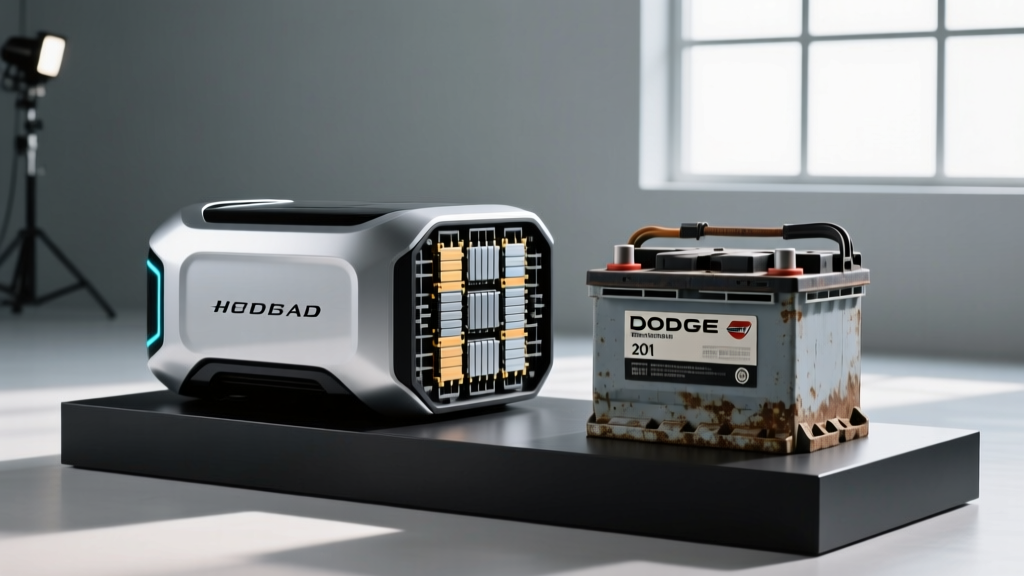
If you've ever searched for a 2011 Dodge Caravan battery, you probably found a 12V lead-acid group 34 or H7 cell costing $150–$250, rated for 3–5 years, and designed to crank a 3.6L V6. That battery weighs about 40 pounds, stores roughly 0.8 kWh of energy, and its only job is starting the engine and running accessories when the alternator isn't spinning.
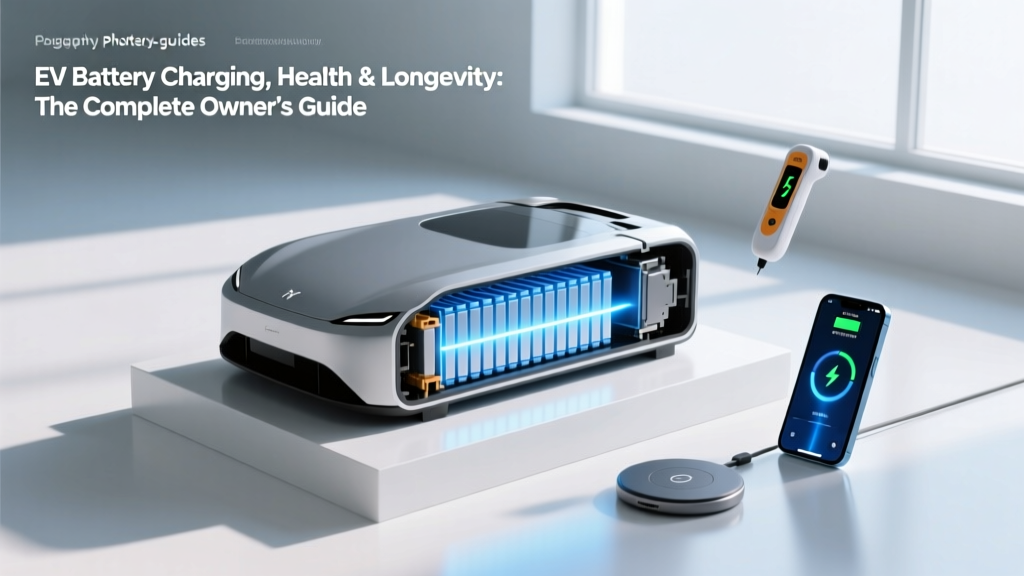
Fast-forward to 2026, and the high-voltage traction battery in a modern electric vehicle is a fundamentally different machine: 60–120 kWh of usable capacity, liquid-cooled lithium-ion cells, sophisticated thermal management, and an expected lifespan that routinely exceeds 200,000 miles. Yet the questions buyers ask are remarkably similar — how long will it last, what does it cost to replace, and what voids the warranty?
This guide uses that 2011 Caravan battery as a baseline comparison to explain everything you need to know about EV battery technology in 2026: chemistry, degradation, cost, warranties, care habits, and what's coming next.
The Fundamental Difference: 12V Starter vs. High-Voltage Traction Battery
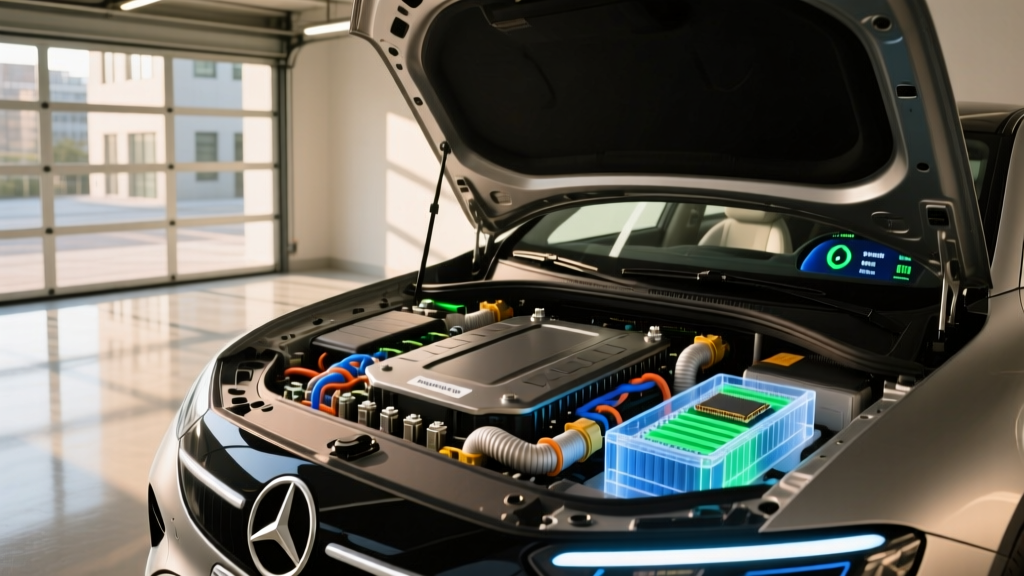
Before comparing specs, it's critical to understand that an EV actually has two batteries:
- 12V auxiliary battery — nearly identical in function to your 2011 Dodge Caravan battery. It powers the ECU, lights, infotainment, and door locks. Most EVs still use a small lead-acid or lithium 12V cell for this.
- High-voltage traction battery — the large lithium-ion pack (typically 400V or 800V architecture) that actually propels the vehicle. This is what people mean when they say "EV battery."
When we discuss EV battery degradation, replacement cost, and warranties in this guide, we're talking exclusively about the traction battery — not the 12V auxiliary unit.
Battery Chemistry in 2026: LFP vs. NMC vs. NCA
The two dominant lithium-ion chemistries in 2026 EVs are LFP (lithium iron phosphate) and NMC/NCA (nickel manganese cobalt / nickel cobalt aluminum). Each has distinct trade-offs that affect range, longevity, cold-weather performance, and price.
| Attribute | LFP (LiFePO4) | NMC / NCA |
|---|---|---|
| Energy density | ~160–180 Wh/kg (lower) | ~230–280 Wh/kg (higher) |
| Typical cycle life | 3,000–5,000+ cycles | 1,000–2,500 cycles |
| Cold-weather performance | Moderate loss; slower charging below 32°F | Better low-temp conductivity |
| Cost per kWh (pack level) | ~$95–$115 | ~$120–$150 |
| Recommended daily SoC | 100% (no penalty) | 80% for daily; 100% for trips |
| Cobalt content | None | Varies; some formulations use cobalt |
| Common 2026 applications | Tesla Model 3/Y RWD, Ford Mustang Mach-E Select, BYD models | Hyundai Ioniq 5/6, Tesla Long Range, Rivian, GM Ultium vehicles |
Which is better? Neither is universally superior. LFP wins on cycle life, cost, and the convenience of charging to 100% daily without accelerated degradation — making it ideal for commuters and fleet use. NMC wins on energy density, delivering more range per pound, which matters for long-range trims and larger vehicles. Cold-climate buyers should note that LFP packs charge more slowly in freezing temperatures unless preconditioned; NMC handles cold somewhat better, though both benefit from active thermal management.
How Long Do EV Batteries Actually Last?
The short answer: far longer than most buyers expect, and generally longer than a 2011 Dodge Caravan's original 12V battery lasted on its best day.
Real-world degradation data from multiple sources paints a clear picture:
- Geotab fleet data (2024 study, 10,000+ EVs): Average battery degradation was ~1.8% per year across all models, meaning a typical EV retains roughly 82–87% of original capacity after 10 years.
- Tesla Impact Report (2024): Model 3/Y batteries retained approximately 85% capacity at 200,000 miles.
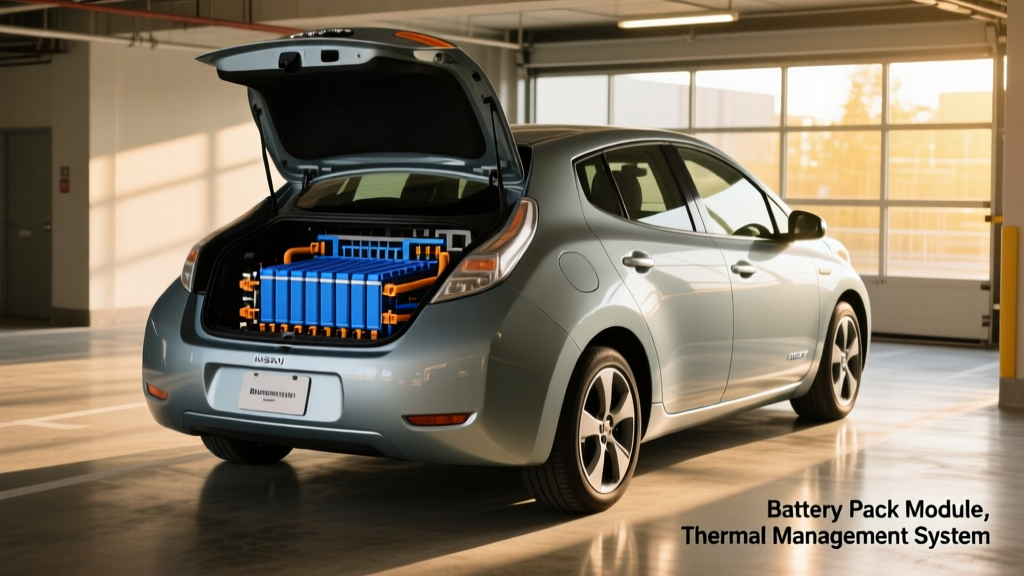
- Nissan Leaf (passive cooling, older chemistry): Earlier generations showed faster degradation — some 2013–2017 Leafs lost 20–30% capacity over 8–10 years — underscoring the importance of active thermal management.
- GM Ultium / Hyundai E-GMP platforms: Early fleet data suggests degradation curves similar to Tesla, with ~90% retention at 50,000 miles.
For context, the average American drives ~13,500 miles per year (FHWA data). At 1.8% annual degradation, most EV batteries will retain 80%+ capacity well past 150,000 miles — and many will outlast the vehicle's body, suspension, and interior.
Compare this to the 2011 Dodge Caravan battery: a lead-acid 12V unit typically lasted 3–5 years before replacement. An EV traction battery in 2026 is engineered for 15–20 years of service.
What Does the EV Battery Warranty Cover?
Federal law mandates a minimum 8-year / 100,000-mile warranty on EV battery packs for emissions-related compliance, and nearly every automaker matches or exceeds this for the traction battery. California Air Resources Board (CARB) states require 10 years / 150,000 miles.
| Manufacturer (2026 Models) | Warranty Term | Capacity Retention Threshold |
|---|---|---|
| Tesla (Model 3/Y RWD — LFP) | 8 yr / 100,000 mi | 70% |
| Tesla (Model 3/Y Long Range — NMC) | 8 yr / 120,000 mi | 70% |
| Hyundai / Kia (E-GMP) | 10 yr / 100,000 mi | 70% |
| GM (Ultium — Chevrolet, Cadillac) | 8 yr / 100,000 mi | 70% (some models 60% for commercial) |
| Ford (Mach-E, F-150 Lightning) | 8 yr / 100,000 mi | 70% |
| Rivian (R1T / R1S) | 8 yr / 175,000 mi | 70% |
| BMW (i4, iX, i7) | 8 yr / 100,000 mi | 70% |
What triggers a warranty claim? If your battery's usable capacity drops below the stated threshold (typically 70% of original) within the warranty period, the manufacturer will repair or replace modules — or the entire pack — at no cost. Normal gradual degradation above that threshold is considered expected wear, similar to how a 2011 Dodge Caravan battery slowly losing cranking amps wasn't a warranty issue.
The warranty covers defects and abnormal degradation. It does not cover damage from collisions, flooding, improper modifications, or (in some cases) repeated DC fast-charging to 100% against manufacturer guidance. Always read your specific warranty booklet.
EV Battery Replacement Cost: What You'll Actually Pay
This is the number that generates the most anxiety, so let's ground it in data rather than headlines.
| Battery Size / Vehicle Class | Estimated Replacement Cost (2026) | Typical Replacement Timeline |
|---|---|---|
| 40–60 kWh (compact EVs: Nissan Leaf, Chevy Bolt) | $6,000–$10,000 | Rarely needed before 200,000+ mi |
| 70–85 kWh (mid-size: Tesla Model 3/Y, Ioniq 5) | $10,000–$16,000 | Rarely needed before 200,000+ mi |
| 90–120 kWh (large: F-150 Lightning, Rivian, Hummer EV) | $15,000–$25,000 | Rarely needed before 200,000+ mi |
| Module-level repair (partial replacement) | $2,000–$6,000 | More common than full pack swap |
Key context: most EV owners will never need a battery replacement. The pack is engineered to outlast other major vehicle components. When replacement is needed, it's increasingly done at the module level — swapping only degraded cells rather than the entire pack — which cuts cost significantly.
For comparison, a 2011 Dodge Caravan battery replacement in 2026 runs about $180–$250 at an auto parts store. You'd do that replacement 4–6 times over the vehicle's life. An EV traction battery is a once-in-the-vehicle's-lifetime expense — if it's needed at all.
Battery pack prices have fallen from ~$1,200/kWh in 2010 to approximately $110–$130/kWh at the pack level in 2026 (BloombergNEF tracking), and are projected to dip below $100/kWh as LFP adoption expands and manufacturing scales.
Factors That Accelerate (or Slow) Battery Degradation
Not all miles are equal when it comes to battery health. These are the variables you can control:
Charging Habits
- NMC/NCA: Keep daily charge between 20–80%. Reserve 100% charges for road trips. LFP owners can charge to 100% daily without penalty.
- DC fast charging: Occasional use is fine. Daily reliance on 150+ kW DC fast charging accelerates degradation slightly — studies show ~0.5–1% additional annual loss for heavy fast-charging users vs. Level 2 home charging.
- Avoid prolonged storage at extremes: Don't leave the vehicle sitting at 100% or below 10% SoC for weeks. If storing, set to ~50%.
Temperature Management
- Extreme heat is the primary enemy of lithium-ion longevity. Vehicles with active liquid cooling (nearly all 2026 EVs) manage this well; older passively-cooled packs (early Nissan Leaf) degraded faster in hot climates.
- Extreme cold reduces range temporarily (expect 20–30% loss below 20°F) but doesn't cause permanent damage. Always precondition the battery before fast charging in cold weather — this warms the cells and prevents lithium plating.
Driving Patterns
- Aggressive acceleration and sustained high-speed driving generate more heat in the cells. Moderate driving extends battery life.
- Regenerative braking set to moderate or high reduces mechanical brake wear and is generally battery-friendly.
How to Check and Monitor Battery Health (State of Health)
State of Health (SoH) is the percentage of original battery capacity remaining. Here's how 2026 EV owners track it:
- In-vehicle displays: Tesla, Hyundai, BMW, and others now include a battery health indicator in the settings menu, showing estimated SoH percentage or a degradation graph over time.
- Manufacturer apps: The Tesla app, FordPass, myChevrolet, and Hyundai Bluelink provide battery health data, often with historical trends.
- OBD-II diagnostic tools: Third-party apps like Scan My Tesla, Leaf Spy (for Nissan), and ABRP (A Better Route Planner) can read detailed battery telemetry — cell voltage variance, internal resistance, and precise SoH — through the OBD-II port.
- Dealer diagnostics: Any authorized service center can run a full battery health report. Request one before purchasing a used EV.
- Charging data analysis: Comparing your actual kWh delivered during a 10–100% charge session against the pack's rated capacity gives a rough SoH estimate. For example, if your 75 kWh pack consistently accepts only 65 kWh from 10–100%, your SoH is approximately 87%.
For used-EV buyers, a SoH reading is the single most important data point — more valuable than odometer mileage alone. A 60,000-mile EV with 94% SoH is a better buy than a 30,000-mile example with 85% SoH that was repeatedly fast-charged in Arizona heat.
What's Next: Solid-State, Silicon Anode, and Beyond
Several next-generation battery technologies are in development, but it's important to separate announced timelines from showroom reality:
- Solid-state batteries: Toyota, Samsung SDI, and QuantumScape are targeting limited production beginning in 2027–2028. Promised benefits include 2x energy density, 10-minute fast charging, and improved safety. However, manufacturing scale-up remains the primary challenge. Expect solid-state to appear first in low-volume, premium vehicles before reaching mainstream pricing.
- Silicon anode cells: Companies like Sila Nanotechnologies and Group14 are already shipping silicon-dominant anode materials to manufacturers. These increase energy density by 15–25% over graphite anodes and are appearing in select 2025–2026 model-year vehicles (e.g., Mercedes G-Class EV). This is the most commercially mature next-gen technology.
- Sodium-ion batteries: CATL and BYD have begun producing sodium-ion cells for lower-cost, shorter-range EVs. Energy density is lower than LFP (~120–140 Wh/kg), but raw materials are cheaper and more abundant. Likely to appear in budget EVs and urban runabouts by 2027.
- Structural battery packs: Tesla's structural pack (integrated into the vehicle chassis) and GM's Ultium cell-to-pack architecture reduce weight and cost by eliminating modules. These are already in production and will become standard across platforms.
None of these technologies invalidate current EV batteries. Today's lithium-ion packs are mature, reliable, and cost-effective — much like the lead-acid battery in your 2011 Dodge Caravan was mature and reliable for its application.
Frequently Asked Questions
How long do EV batteries last in years and miles?
Based on fleet data, most 2026 EV batteries retain 80–87% of original capacity after 10 years or 150,000–200,000 miles. Many will function well beyond 200,000 miles with usable capacity above the 70% warranty threshold. Active thermal management in modern platforms is the key differentiator vs. early EVs.
How much does an EV battery cost to replace?
Full pack replacement ranges from roughly $6,000 for a small pack (40–60 kWh) to $25,000 for a large pack (100+ kWh) in 2026. Module-level repairs cost $2,000–$6,000. Most owners never need replacement, as the pack is designed to outlast the vehicle. Pack prices continue declining ~5–8% annually.
What does the EV battery warranty cover?
Federal minimum is 8 years / 100,000 miles; CARB states require 10 years / 150,000 miles. Coverage applies if capacity drops below the stated threshold (usually 70%) due to defect or abnormal degradation. It does not cover collision damage, flood damage, or unauthorized modifications.
How do I check my EV battery's State of Health?
Use the vehicle's built-in battery health display, the manufacturer's mobile app, or an OBD-II diagnostic tool (Leaf Spy, Scan My Tesla, etc.). For a used-EV purchase, request a dealer battery health report showing SoH percentage and cell voltage variance.
LFP vs NMC — which chemistry should I choose?
Choose LFP if you want maximum cycle life, lower cost, and the convenience of daily 100% charging — ideal for commuters and warm-climate drivers. Choose NMC if you need maximum range per charge, better cold-weather charging performance, or are buying a long-range or performance trim. Both chemistries are proven and well-supported in 2026.
Does DC fast charging damage the battery?
Occasional DC fast charging has minimal impact. Studies show that exclusive reliance on DC fast charging (vs. Level 2 home charging) adds approximately 0.5–1% additional annual degradation. Modern battery management systems limit charge rate as cells warm and taper above 80% SoC to protect longevity. For daily use, Level 2 home charging at 7–11 kW is optimal.
How is an EV battery different from a 2011 Dodge Caravan battery?
A 2011 Dodge Caravan uses a 12V lead-acid battery (~0.8 kWh, $180–$250, 3–5 year lifespan) for engine starting and accessories. An EV traction battery is a 60–120 kWh lithium-ion pack ($10,000–$25,000 replacement, 15–20 year designed lifespan) with active thermal management, sophisticated BMS, and module-level serviceability. They share a name but are entirely different technologies serving entirely different purposes. Notably, EVs still carry a separate 12V auxiliary battery for low-voltage systems.