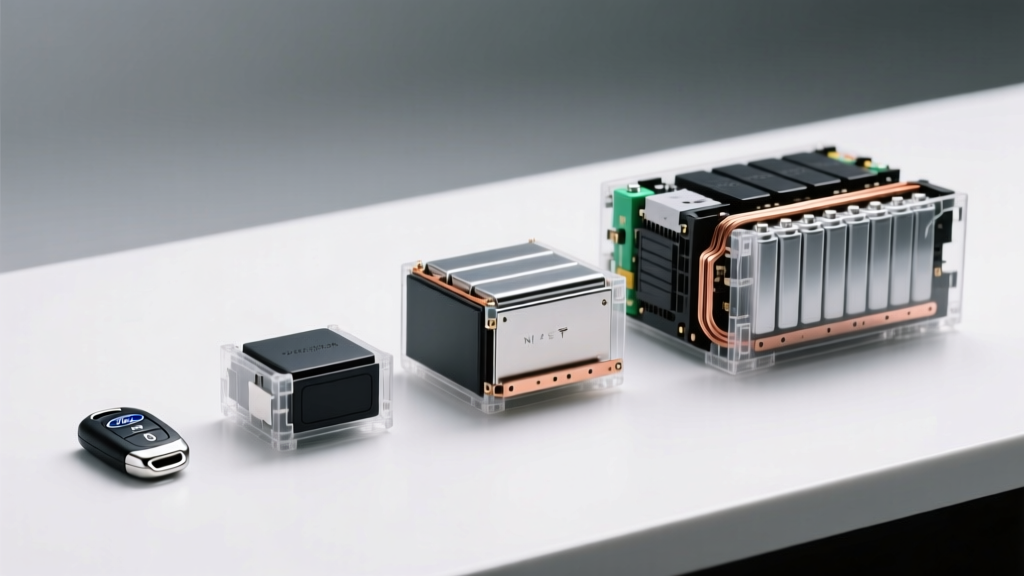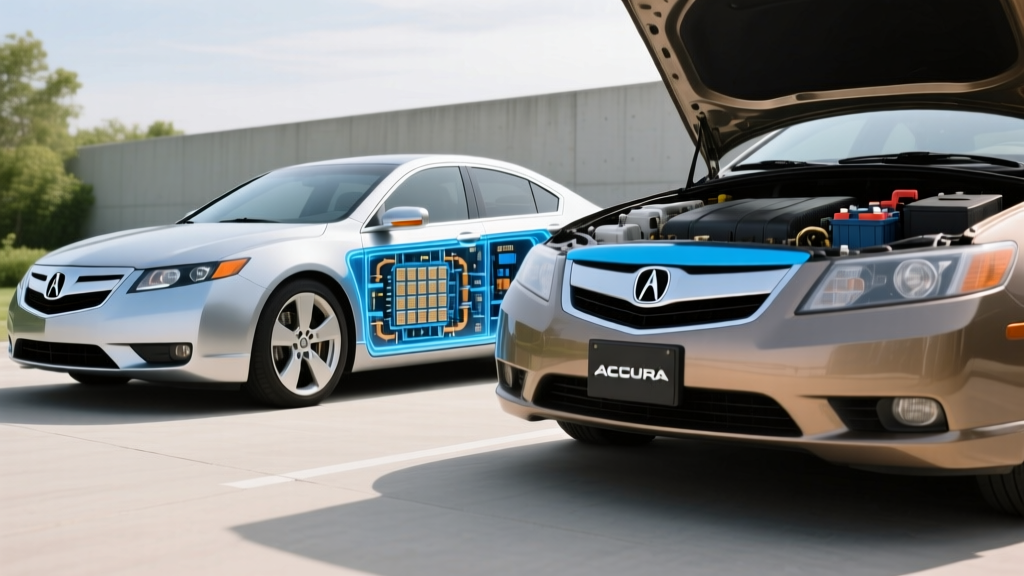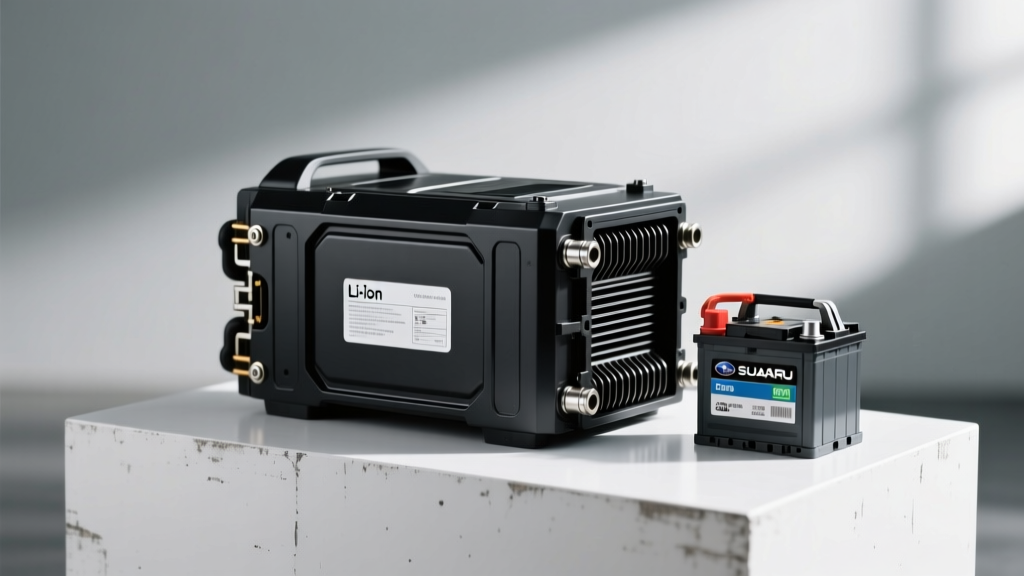
If you've ever priced a replacement battery for a 2009 Subaru Forester, you know the sticker shock: a new OEM 12V lead-acid or AGM unit runs $180–$320, plus labor. It's a routine maintenance item you'll repeat every 3–5 years across the life of the car. That familiar cost anchor is exactly why EV shoppers ask us: how does an EV's high-voltage traction battery compare — and what happens when it eventually needs replacement?
The short answer is that EV traction batteries are engineered to last the lifetime of the vehicle, but the economics, chemistry, and care requirements are fundamentally different from the 12V battery in your Forester. This guide breaks down every number you need — chemistry trade-offs, real degradation data, warranty coverage, replacement costs, and how to monitor State of Health (SoH) — so you can make an informed decision.
How Long Do EV Batteries Actually Last?
Based on fleet data from Tesla's 2025 Impact Report, long-term studies by Geotab, and owner-reported State of Health (SoH) readings, modern lithium-ion EV batteries are retaining roughly 85–92% of original capacity after 100,000 miles and approximately 8 years of typical use. That translates to a degradation rate of about 1.0–2.3% per year under normal conditions.
To put that in context: a 2025 Tesla Model 3 Long Range with an EPA-estimated 341 miles of range would realistically still deliver around 290–310 miles of range at the 100,000-mile mark. A 2026 Hyundai Ioniq 5 (EPA 305 miles) would hold roughly 260–280 miles. For most owners, this level of loss is barely noticeable in daily driving.
The comparison to a 2009 Subaru Forester battery is instructive. That 12V lead-acid unit typically degrades to the point of failure within 3–5 years (roughly 45,000–75,000 miles) and must be replaced. Over a 200,000-mile ownership span, a Forester owner might buy 4–6 replacement 12V batteries at $200–$300 each — totaling $800–$1,800 in battery maintenance alone. An EV's traction battery, by contrast, is designed to never require scheduled replacement.
LFP vs. NMC/NCA: Battery Chemistry Explained
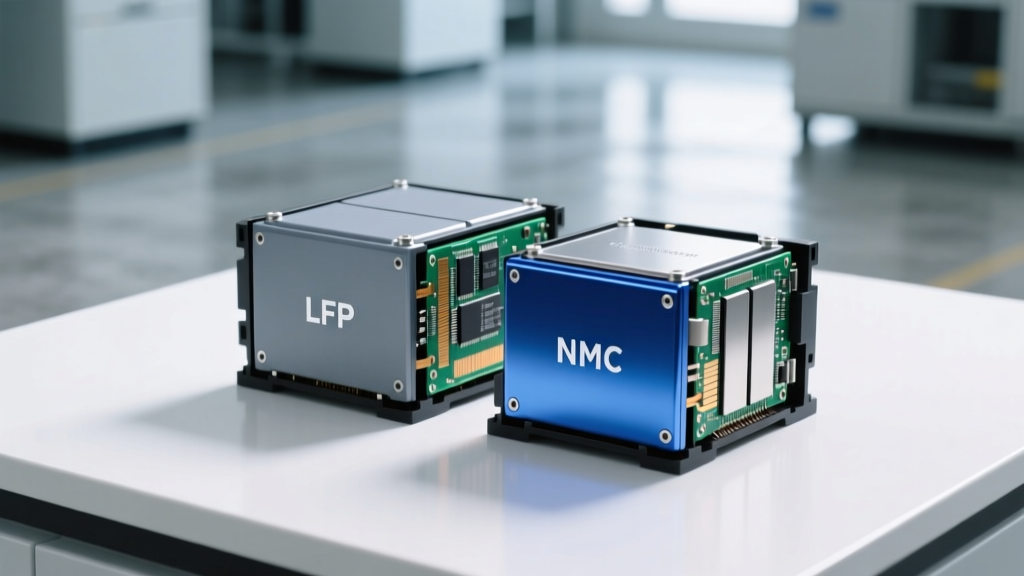
Not all EV batteries use the same chemistry. The two dominant types in 2026 are NMC/NCA (Nickel Manganese Cobalt / Nickel Cobalt Aluminum) and LFP (Lithium Iron Phosphate). Your choice of vehicle often determines which chemistry you get, and each has distinct trade-offs.
| Attribute | LFP (Lithium Iron Phosphate) | NMC / NCA (Nickel-Based) |
|---|---|---|
| Energy Density | Lower (~160–180 Wh/kg cell-level) | Higher (~220–300 Wh/kg cell-level) |
| Typical Range (comparable pack) | ~10–15% less range for same weight | Maximum range per kg of battery |
| Cycle Life | 3,000–6,000+ cycles to 80% SoH | 1,000–2,500 cycles to 80% SoH |
| Cold-Weather Performance | More range loss in freezing temps (~35–40% at 20°F) | Better cold retention (~25–30% loss at 20°F) |
| Charging to 100% Daily | Recommended — no degradation penalty | Not recommended — accelerates wear above 80% |
| Cost (per kWh, 2026) | ~$80–$100/kWh at pack level | ~$110–$140/kWh at pack level |
| Common In (2026 Models) | Tesla Model 3 RWD, Model Y RWD, Ford Mustang Mach-E Select (std range), BYD models | Tesla Long Range/Performance, Hyundai Ioniq 5/6, Kia EV6/EV9, Rivian, Lucid |
Which is better? It depends on your use case. If you drive mostly in moderate climates, commute daily, and want the longest possible calendar life, LFP is increasingly the pragmatic choice — Tesla and Ford have both shifted standard-range models to LFP for exactly this reason. If you need maximum range for road trips, live in a cold climate, or want peak performance, NMC/NCA still delivers the best energy density and cold-weather behavior.
Real-World Degradation Data: What the Numbers Show
Degradation is not linear. Most EV batteries experience a steeper drop in the first 1–2 years (roughly 2–4%), then settle into a slow, gradual decline. Here's what aggregated fleet data shows for typical NMC and LFP packs:
- Year 1 / 15,000 mi: 96–98% SoH (NMC); 97–99% SoH (LFP)
- Year 3 / 45,000 mi: 92–95% SoH (NMC); 94–97% SoH (LFP)
- Year 5 / 75,000 mi: 89–93% SoH (NMC); 92–96% SoH (LFP)
- Year 8 / 120,000 mi: 85–90% SoH (NMC); 89–94% SoH (LFP)
- Year 10 / 150,000 mi: 82–88% SoH (NMC); 87–93% SoH (LFP)
Sources: Geotab EV Battery Health study, Tesla 2025 Impact Report, Recurrent Auto fleet data. Individual results vary based on climate, charging habits, and thermal management.
Notably, data from Recurrent Auto, which tracks over 15,000 EVs in real-world conditions, shows that battery replacement rates remain extremely low — under 2% of vehicles studied required a traction battery swap through 100,000 miles. The vast majority of EV batteries will outlast the vehicle's body, interior, and suspension components.
What Does the EV Battery Warranty Actually Cover?
Federal regulations mandate a minimum battery warranty of 8 years / 100,000 miles for EVs sold in the US (10 years / 150,000 miles in California and states that follow CARB standards). Most manufacturers exceed the minimum capacity-retention threshold or add longer coverage.
| Manufacturer | Warranty Period | Mileage Cap | Capacity Threshold |
|---|---|---|---|
| Tesla (Model 3/Y RWD — LFP) | 8 years | 100,000 mi | 70% retention |
| Tesla (Model 3/Y LR/Perf — NMC) | 8 years | 120,000 mi | 70% retention |
| Hyundai / Kia (Ioniq 5, EV6, EV9) | 10 years | 100,000 mi | 70% retention |
| Ford (Mach-E, F-150 Lightning) | 8 years | 100,000 mi | 70% retention |
| GM (Ultium-based: Equinox EV, Blazer EV, Silverado EV) | 8 years | 100,000 mi | 70% retention (60% on some commercial) |
| Rivian (R1T / R1S) | 8 years | 120,000 mi (175,000 commercial) | 70% retention |
| BMW (i4, iX, i7) | 8 years | 100,000 mi | 70% retention |
What triggers a warranty claim? If your battery's State of Health drops below the stated threshold (typically 70%) within the warranty period, the manufacturer will repair or replace the pack — usually by swapping defective modules rather than the entire unit. Normal gradual degradation above 70% is expected and not covered. This is a critical distinction: a battery at 75% SoH after 9 years and 95,000 miles is functioning within spec, even though range has noticeably decreased.
Compare this to a 2009 Subaru Forester battery: the typical warranty on a replacement 12V battery is 2–3 years, with pro-rated coverage afterward. The EV battery warranty is 3–5× longer by both time and mileage.
EV Battery Replacement Cost: What to Budget
If you do need an out-of-warranty battery replacement — whether due to age beyond the warranty window, physical damage, or a rare manufacturing defect that fell through the cracks — here's what the market looks like in 2026:
| Battery Size / Vehicle Class | Typical Pack Cost | Labor (Dealership) | Total Estimated Range |
|---|---|---|---|
| 40–60 kWh (Standard Range: Model 3 RWD, Mach-E Select) | $5,000–$8,000 | $1,500–$2,500 | $6,500–$10,500 |
| 70–85 kWh (Long Range: Ioniq 5, Model Y LR, EV6) | $8,000–$13,000 | $1,500–$3,000 | $9,500–$16,000 |
| 90–115 kWh (Large: F-150 Lightning Ext, Rivian, Lucid) | $12,000–$20,000 | $2,000–$3,500 | $14,000–$23,500 |
| Module-level repair (partial pack) | $1,500–$4,000 | $1,000–$2,000 | $2,500–$6,000 |
These costs are declining. In 2015, a Nissan Leaf 24 kWh replacement was roughly $6,500 for a tiny pack. By 2026, pack-level pricing has dropped to approximately $110–$140/kWh for NMC and $80–$100/kWh for LFP, driven by manufacturing scale and chemistry improvements. Industry analysts project further drops toward $60–$80/kWh by 2030.
When is replacement actually needed? Based on current degradation curves, most EV batteries will retain 75–85% capacity at 200,000 miles — still perfectly functional for daily driving with reduced range. Full pack replacement is typically only necessary after 15–20 years of service or if the pack suffers physical damage (flood submersion, collision). Module-level repairs — replacing just the degraded cells within the pack — are increasingly common and far cheaper than a full swap.
For perspective: over a 15-year, 200,000-mile ownership period, a 2009 Subaru Forester owner would likely spend $800–$1,800 on 12V battery replacements, $3,000–$6,000 on transmission repairs or replacement, $2,000–$4,000 on engine-related maintenance (timing belt, head gasket, oil system), and $15,000+ on fuel. An EV eliminates nearly all of those costs, with the traction battery being a non-maintenance item for the vast majority of owners.
Factors That Affect EV Battery Life (and How to Maximize It)
Battery longevity isn't just about miles — it's about how you treat the cells. Here are the primary factors and what you can control:
- Avoid sustained 100% SoC (NMC/NCA only): Charge to 80% daily; reserve 100% for road trips. LFP owners can charge to 100% regularly without harm.
- Minimize DC fast charging when possible: Occasional DCFC is fine, but daily 150+ kW sessions accelerate wear. Use Level 2 home charging as your primary method.
- Don't let SoC sit at 0% or 100% for extended periods: If storing the vehicle, leave it at 40–60% SoC.
- Precondition in extreme cold: Use your EV's scheduled departure or preconditioning feature to warm the battery before driving and charging. This reduces lithium plating risk and improves regen efficiency.
- Park in shade or a garage in extreme heat: Sustained battery temperatures above 95°F (35°C) accelerate calendar degradation. Active thermal management helps, but reducing ambient exposure matters.
- Use the manufacturer's recommended charge settings: Most EVs have built-in charge-limit settings (e.g., Tesla's daily charge limit slider, Hyundai's 80% charge limit toggle). Use them.
Fast-charging frequency: Data from Geotab and Recurrent Auto shows that vehicles DC fast-charging more than 3 times per week show slightly higher degradation rates — roughly an additional 0.5–1.5% loss over 100,000 miles compared to predominantly Level 2 charging. This is measurable but not catastrophic. The real risk is repeated fast charging in extreme heat without adequate preconditioning.
Extreme temperatures: Cold weather temporarily reduces range (20–40% loss at 20°F depending on chemistry and heat-pump availability) but doesn't cause permanent damage. Sustained high heat is the greater longevity concern — this is why vehicles with active liquid cooling (Tesla, Hyundai E-GMP, GM Ultium, Rivian) show better long-term SoH than early passively cooled packs (early Nissan Leaf).
How to Check Your EV Battery's State of Health
Monitoring your battery's SoH lets you track degradation over time and plan for any warranty claims before coverage expires.
Built-in vehicle tools: Many 2025–2026 EVs include SoH readouts in the infotainment system or companion app. Tesla displays estimated range at 100% (which correlates to SoH). Hyundai and Kia provide battery health percentages in the infotainment diagnostics menu. Ford's Pass app shows estimated range trends over time.
OBD-II diagnostic apps: Third-party tools like Scan My Tesla, Leaf Spy Pro (Nissan Leaf), and OBDeleven (VW/Audi) can read detailed battery telemetry — including individual cell voltages, pack temperature, total energy throughput (kWh charged/discharged), and calculated SoH percentage. A $30–$50 OBD-II dongle paired with a smartphone app gives you dealership-level data.
Dealership health checks: Most manufacturers will perform a battery health report during scheduled service visits. Request one specifically if you're approaching a warranty mileage threshold (e.g., 95,000 miles on an 8-year/100,000-mile warranty) — this documents SoH for any potential claim.
What SoH number should concern you? A drop below 80% before 100,000 miles is unusual and worth investigating under warranty. Between 70–80% at 100,000–150,000 miles is normal. Below 70% within the warranty period triggers coverage.
Emerging Battery Technology: What's Next (and When)
The battery landscape is evolving rapidly, but it's important to separate announced research from production reality.
Solid-state batteries: Companies like Toyota, Samsung SDI, and QuantumScape are developing solid-state cells that promise 20–40% higher energy density, faster charging, and improved safety (no liquid electrolyte = no thermal runaway risk). Toyota has announced a target of 2027–2028 for initial production vehicles, but at extremely limited scale and premium pricing. Widespread solid-state availability at mainstream price points is not expected before 2030–2032. These are not currently available in any production vehicle.
Silicon-dominant anodes: Replacing graphite anodes with silicon can boost energy density by 10–25%. Companies like Sila Nanotechnologies and Group14 are already supplying silicon-composite anode materials for some 2025–2026 models (Mercedes-Benz has incorporated Sila materials in the G-Class EV). Expect gradual adoption across premium models through 2028, then mainstream trickle-down.
Sodium-ion batteries: CATL and BYD are producing sodium-ion cells that eliminate lithium and cobalt entirely, offering lower cost (~$40–$60/kWh) at the expense of lower energy density. These are appearing in Chinese-market city cars and may reach US-market budget EVs by 2028–2030 for short-range applications.
Semi-solid-state (condensed matter): CATL's condensed-matter battery, announced for aviation and premium EV applications, represents an interim step toward full solid-state. Limited production began in 2025 for Chinese-market vehicles, with potential US availability in imported models by 2027–2028.
The practical takeaway: if you're buying an EV in 2026, current lithium-ion technology (both LFP and NMC) is mature, well-proven, and cost-effective. Waiting for solid-state means waiting 4–6+ years for mainstream availability, during which time you'd be driving a gas car and paying for fuel and maintenance that an EV eliminates today.
Frequently Asked Questions
How long do EV batteries last in years and miles?
Modern EV batteries (2020 and newer) are lasting 15–20 years or 200,000+ miles before degrading to a point where range reduction becomes a practical inconvenience (below 75–80% SoH). Fleet data from Geotab and Recurrent Auto shows average degradation of 1.0–2.3% per year, meaning most packs retain 82–90% capacity at 150,000 miles. Battery replacement before 200,000 miles remains rare — under 2% of vehicles in major fleet studies.
How much does an EV battery cost to replace?
In 2026, a full traction battery replacement ranges from roughly $6,500–$10,500 for a 40–60 kWh standard-range pack to $14,000–$23,500 for a 90–115 kWh extended-range pack, including parts and labor. Module-level repairs (replacing only defective sections of the pack) typically cost $2,500–$6,000. These costs continue to decline as manufacturing scales and pack-level pricing drops toward $80–$100/kWh.
What does the EV battery warranty cover?
Federal law requires a minimum 8-year/100,000-mile battery warranty (10 years/150,000 miles in CARB states). Coverage applies when the battery's State of Health drops below a stated threshold — typically 70% of original capacity. The manufacturer will repair or replace the pack (often by swapping individual modules) at no cost to the owner. Normal gradual degradation above the threshold is expected and not covered.
How do I check and maximize my EV battery's health?
Check SoH through your vehicle's built-in diagnostics, the companion app, or an OBD-II diagnostic tool like Scan My Tesla or OBDeleven. To maximize longevity: charge NMC/NCA batteries to 80% for daily use (LFP can go to 100%), minimize frequent DC fast charging, precondition in extreme cold, avoid leaving the vehicle at 0% or 100% SoC for extended storage, and park in moderate temperatures when possible.
LFP vs. NMC — which battery chemistry is better for me?
Choose LFP if you prioritize long calendar life (3,000–6,000+ cycles), lower cost, and the ability to charge to 100% daily without degradation concerns. Choose NMC/NCA if you need maximum range per charge, better cold-weather performance, or are buying a long-range/performance variant. LFP is ideal for commuters and moderate climates; NMC is better for road-trippers and cold-climate drivers. Both chemistries are proven to outlast 200,000 miles with proper care.
Is an EV battery like the 12V battery in a 2009 Subaru Forester?
No. The 2009 Subaru Forester uses a 12V lead-acid battery that powers the starter motor, lights, and electronics — it's a wear item replaced every 3–5 years at $180–$320. An EV's traction battery is a high-voltage lithium-ion pack (typically 50–115 kWh at 400–800V) that stores driving energy and is engineered to last the vehicle's lifetime. Some EVs also have a separate small 12V auxiliary battery for electronics, but this is distinct from the main traction pack and is a minor maintenance item.