If you've searched for a battery for a 2009 Hyundai Sonata, you were probably looking for a conventional 12-volt lead-acid or AGM starting battery — the kind that turns over an internal-combustion engine and powers the lights. That part typically costs $120–$220 at an auto parts store and weighs under 40 pounds. But if you're transitioning to an electric vehicle, or just curious how EV battery technology stacks up against the familiar 12V world, the differences are enormous in scale, chemistry, cost, and longevity.
This guide walks through modern EV traction batteries — the high-voltage packs that actually propel the car — and explains how they compare to the humble 12V battery in a 2009 Sonata. We'll cover chemistry (LFP vs NMC), real degradation data, warranty coverage, replacement costs, and how to monitor and maximize battery health in 2026.
The Two Batteries in an EV (and Why Neither Is Like a 2009 Sonata's)
Every modern EV actually carries two batteries:
- High-voltage traction battery — typically 400V to 800V architecture, 50–120 kWh of energy capacity, weighing 700–1,500 lbs. This is what moves the car.
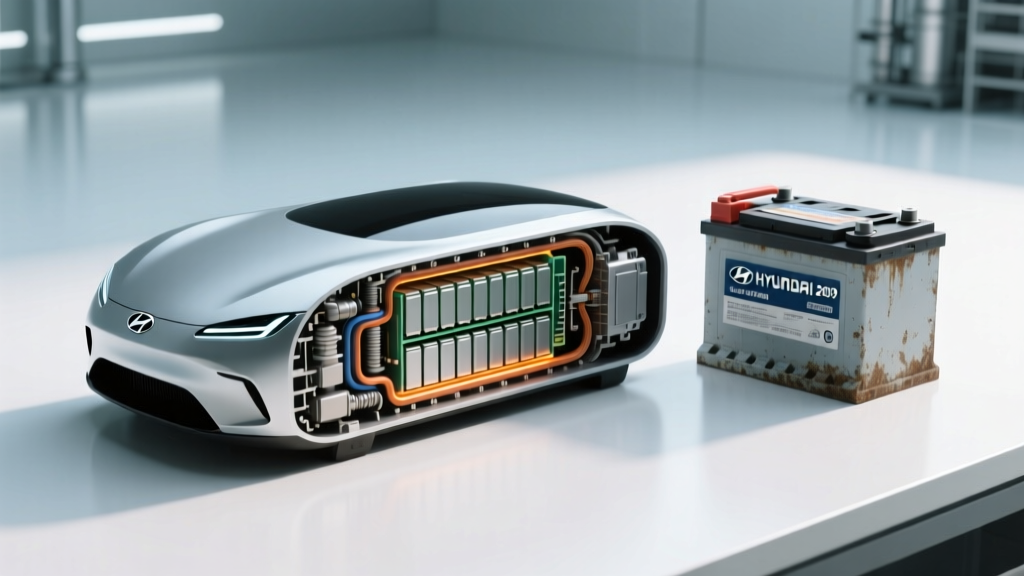
- 12V auxiliary battery — a small lead-acid or lithium 12V unit that powers the computers, lights, and door locks. Ironically, this is the closest analog to the battery for a 2009 Hyundai Sonata.
The 2009 Sonata's Group 121R or 24F battery produces around 550–700 cold cranking amps (CCA) to start a 2.4L four-cylinder or 3.3L V6. An EV's 12V battery never cranks anything — it simply boots the vehicle's computers, which then close contactors to connect the high-voltage pack. When an EV's 12V dies, the car won't "start," even though the main traction pack may be at 100%.
Battery Chemistry: LFP vs NMC vs NCA Explained
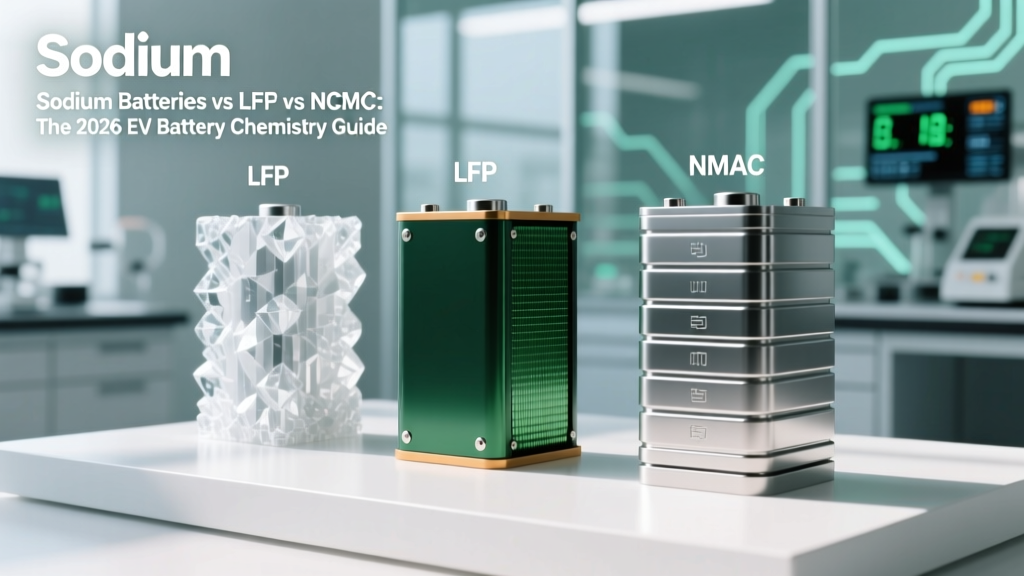
The two dominant chemistries in 2026 EV traction packs are lithium iron phosphate (LFP) and nickel manganese cobalt (NMC), with NCA (nickel cobalt aluminum) used primarily by Tesla and a few others. Your 2009 Sonata's lead-acid battery operates on an entirely different chemical principle (sulfuric acid and lead plates), so the comparison is really about understanding what's inside a modern EV.
| Attribute | LFP (Lithium Iron Phosphate) | NMC / NCA (Nickel-based) |
|---|---|---|
| Energy density | ~160–180 Wh/kg (lower) | ~220–280 Wh/kg (higher) |
| Typical cycle life | 3,000–5,000+ cycles | 1,000–2,000 cycles |
| Cold-weather performance | More range loss below freezing (~30–40%) | Better cold performance (~20–30% loss) |
| Cost per kWh (2026) | ~$85–$100/kWh at pack level | ~$110–$140/kWh at pack level |
| Recommended daily SoC | Can charge to 100% daily | Best kept at 80% daily, 100% for trips |
| Thermal stability | Excellent — lower runaway risk | Good, but requires robust BMS |
| Common in (2026 models) | Tesla Model 3 RWD, Ford Mustang Mach-E Select, BYD models | Hyundai Ioniq 5, Kia EV6, Tesla Long Range, Rivian |
| Critical mineral exposure | No cobalt or nickel | Uses cobalt, nickel — supply-chain sensitive |
Which is better? It depends on your use case. LFP wins on longevity, cost, and daily charging convenience — ideal for commuters who can charge at home. NMC wins on range-per-pound and cold-weather performance — better for road-trippers and cold-climate drivers. Neither is universally superior; manufacturers choose based on the vehicle's target price and range.
How Long Do EV Batteries Last? Real Degradation Data
The fear that EV batteries need frequent replacement is one of the most persistent myths in automotive. Real-world data tells a different story. According to data compiled by Recurrent Auto from over 15,000 vehicles, the average EV battery retains roughly:
- 95–97% capacity at 1 year / 15,000 miles
- 90–93% capacity at 3 years / 45,000 miles
- 85–90% capacity at 5 years / 75,000 miles
- 80–87% capacity at 8 years / 120,000 miles
For comparison, a 2009 Hyundai Sonata's original 12V battery typically lasted 3–5 years before replacement — and that's a $150 part, not a $10,000+ pack. But the EV traction battery is designed to outlast the car itself. Most EVs will be scrapped or totaled in collisions before the battery reaches end-of-life (defined as below 70% capacity).
Degradation is not linear. Batteries lose capacity fastest in the first year or two (the "break-in" curve), then flatten to a slow, steady decline. This is why a 2022 Tesla Model 3 with 60,000 miles might still show 90% State of Health (SoH).
What Does the Battery Warranty Actually Cover?
Federal regulations mandate a minimum EV battery warranty of 8 years / 100,000 miles (10 years / 150,000 miles in California Air Resources Board states). Most manufacturers exceed this floor. Here's how major warranties compare in 2026:
| Manufacturer | Warranty Period | Capacity Retention Threshold |
|---|---|---|
| Tesla (Model 3/Y LFP) | 8 yr / 100,000 mi | 70% minimum |
| Tesla (Model S/X, LR) | 8 yr / 150,000 mi | 70% minimum |
| Hyundai (Ioniq 5/6) | 10 yr / 100,000 mi | 70% minimum |
| Ford (Mach-E, F-150 Lightning) | 8 yr / 100,000 mi | 70% minimum |
| GM (Ultium-based) | 8 yr / 100,000 mi | 70% minimum (60% on some commercial) |
| Rivian | 8 yr / 120,000 mi (175k on R1T/R1S Max) | 70% minimum |
| BMW (iX, i4) | 8 yr / 100,000 mi | 70% minimum |
The warranty guarantees the battery will retain at least the stated percentage of original capacity. If your 82 kWh pack drops below 57.4 kWh (70% of 82) within the warranty window, the manufacturer must repair or replace it — typically by swapping in a refurbished pack, not a brand-new one. Per the EPA and CARB guidelines, the battery must also remain free of defects affecting emissions compliance.
How Much Does an EV Battery Cost to Replace?
If you're outside the warranty window — or buying a used EV with an expired warranty — replacement cost matters. Prices have dropped significantly but remain the single most expensive component on an EV:
| Vehicle / Pack Size | Battery Cost (parts) | Labor | Total Estimate |
|---|---|---|---|
| Tesla Model 3 RWD (57.5 kWh LFP) | $7,000–$9,000 | $1,500–$2,500 | $8,500–$11,500 |
| Hyundai Ioniq 5 (77.4 kWh NMC) | $10,000–$14,000 | $2,000–$3,000 | $12,000–$17,000 |
| Ford F-150 Lightning Ext. Range (131 kWh) | $18,000–$25,000 | $3,000–$4,500 | $21,000–$29,500 |
| Chevrolet Bolt EV (65 kWh) | $8,000–$11,000 | $1,500–$2,500 | $9,500–$13,500 |
| Rivian R1T Large Pack (128.9 kWh) | $16,000–$22,000 | $2,500–$4,000 | $18,500–$26,000 |
For context, replacing a battery for a 2009 Hyundai Sonata costs about $120–$220 for the part, plus maybe $20 in labor if you don't do it yourself. The EV replacement is 50–100× more expensive — but the EV battery is also designed to last 15–20 years and 200,000+ miles, versus 3–5 years for the Sonata's 12V.
When is replacement actually needed? Rarely before 150,000 miles in normal use. Most out-of-warranty replacements occur due to physical damage (collision, flood) rather than degradation. The secondary market for refurbished EV batteries is growing, and some independent shops now offer module-level repairs (replacing individual bad cells rather than the entire pack) for $3,000–$6,000.
Factors That Accelerate (or Slow) Battery Degradation
Not all miles are equal when it comes to battery wear. Here's what actually moves the needle on degradation, based on fleet data and manufacturer guidance:
High-Impact Factors
- DC fast-charging frequency: Daily use of 150+ kW DCFC accelerates degradation by ~1–2% extra per year vs. Level 2 home charging. Occasional road-trip fast charging is fine.
- Extreme heat exposure: Sustained ambient temps above 95°F (35°C), especially combined with high SoC, degrade cells faster. Garage parking in hot climates helps significantly.
- Storing at 100% SoC: Leaving an NMC battery at full charge for weeks causes calendar degradation. LFP is more tolerant of this.
- Deep discharges: Regularly running below 10% SoC stresses the cells. Most EVs have a buffer (you see "0%" with ~2–5 kWh still reserved), but habitually draining to zero isn't ideal.
Lower-Impact Factors (Often Overstated)
- Cold weather: Reduces range temporarily (20–40% in sub-freezing temps) but does not cause permanent degradation. Batteries actually prefer cold to heat for longevity.
- Regenerative braking: Normal regen does not meaningfully affect battery life.
- Total miles driven: Cycle count matters less than calendar age and temperature exposure for modern chemistries.
How to Check and Monitor Battery Health (SoH)
State of Health (SoH) is the percentage of original capacity your battery currently holds. Here's how to check it across major platforms:
- Tesla: The in-car Service menu (hold the model badge on the About screen) shows a battery health test. Third-party apps like Tessie or Stats can also estimate SoH from charge logs.
- Hyundai / Kia: The EV menu in the infotainment system shows battery health percentage on 2024+ models. Dealerships can pull a detailed BMS report.
- Ford: The FordPass app displays a battery health indicator. A full diagnostic requires a dealer visit.
- GM (Ultium): The myChevrolet/myCadillac app provides a battery health score. OnStar can run a remote diagnostic.
- Universal OBD-II method: Tools like the OBDLink SX paired with apps such as EV-BatMon or Car Scanner can read the BMS-reported SoH directly from the CAN bus on most EVs.
If you're buying a used EV, always request a SoH reading before purchase. A car showing 92% SoH at 40,000 miles is tracking well; one at 83% at the same mileage may have been heavily fast-charged or stored at high SoC in a hot climate.
Looking Ahead: Solid-State and Silicon-Anode Batteries
Next-generation battery technologies promise step-change improvements, but realistic timelines matter:
- Silicon-anode batteries: Companies like Sila Nanotechnologies and Amprius are shipping cells with silicon-dominant anodes that boost energy density 20–40% over graphite. These are appearing in limited production (e.g., Mercedes G-Class 580e in Europe, select drone applications) and should reach mainstream EVs by 2028–2030.
- Solid-state batteries: Toyota, Samsung SDI, and QuantumScape are targeting 2028–2032 for initial production. Solid-state promises 500+ mile ranges, 10-minute fast charging, and improved safety. However, manufacturing scale-up remains the primary bottleneck — DOE research notes that cost parity with liquid-electrolyte lithium-ion is unlikely before 2032 at volume.
- Sodium-ion batteries: CATL and BYD have begun deploying sodium-ion packs in Chinese-market EVs. Lower energy density but cheaper and cobalt-free. Possible in US-market budget EVs by 2028–2029.
None of these are available in 2026 production EVs sold in the US. If you're buying today, LFP and NMC are mature, proven chemistries with extensive real-world track records.
EV Traction Battery vs. a Battery for a 2009 Hyundai Sonata: Side by Side
| Attribute | 2009 Sonata 12V Battery | 2026 EV Traction Battery (typical 77 kWh NMC) |
|---|---|---|
| Chemistry | Lead-acid (flooded or AGM) | NMC or LFP lithium-ion |
| Voltage | 12.6V nominal | 400–800V nominal |
| Energy capacity | ~0.6–0.8 kWh | 50–131 kWh usable |
| Weight | 30–40 lbs | 700–1,500 lbs |
| Replacement cost | $120–$220 | $9,500–$29,500 |
| Typical lifespan | 3–5 years | 15–20+ years / 200,000+ miles |
| Warranty | 1–3 years (pro-rated) | 8–10 years / 100,000–150,000 miles |
| Function | Engine cranking, accessory power | Vehicle propulsion, V2L/V2H capability |
The gap in complexity, cost, and capability is enormous — but so is the gap in longevity. The Sonata's battery is a wear item you'll replace several times over the car's life. The EV's traction pack is engineered to be the last battery the car ever needs.
Frequently Asked Questions
How long do EV batteries last in years and miles?
Most modern EV batteries are designed to last 15–20 years and 200,000+ miles before dropping below 70% capacity. Fleet data from Recurrent Auto shows average degradation of roughly 10–15% over the first 8 years / 120,000 miles. Many early Nissan Leafs and Tesla Model S vehicles are still running on their original packs after 10+ years.
How much does an EV battery cost to replace in 2026?
Replacement costs range from roughly $8,500 for a smaller pack (Tesla Model 3 RWD, 57.5 kWh) to $29,500 for a large pack (F-150 Lightning Extended Range, 131 kWh), including labor. Most owners will never need a replacement — the battery typically outlasts the vehicle. Module-level repairs at independent shops can reduce costs to $3,000–$6,000 in some cases.
What does the EV battery warranty cover?
Federal law requires a minimum 8-year / 100,000-mile warranty (10/150,000 in CARB states). The warranty guarantees the battery will retain at least 70% of its original capacity. If it drops below that threshold within the warranty period, the manufacturer must repair or replace the pack at no cost. Warranties also cover defects in materials and workmanship.
How do I check my EV battery's health?
Most 2024+ EVs display battery health (SoH) in the infotainment system or companion app. You can also use an OBD-II adapter with apps like EV-BatMon or Car Scanner to read BMS data directly. When buying used, always verify SoH — a healthy pack should show 90%+ at 40,000 miles and 85%+ at 80,000 miles.
LFP vs NMC — which battery chemistry is better?
LFP offers longer cycle life (3,000–5,000+ cycles), lower cost, and the ability to charge to 100% daily without accelerated degradation — making it ideal for commuters and home-charging setups. NMC provides higher energy density (more range in a lighter pack) and better cold-weather performance — better for road-trippers and cold-climate drivers. Neither is universally better; the right choice depends on your driving pattern and climate.
Can I put an EV battery in a 2009 Hyundai Sonata?
No. The 2009 Sonata is an internal-combustion vehicle designed for a 12V lead-acid starting battery. An EV traction pack operates at 400–800V and requires a dedicated battery management system, power electronics, electric motor, and thermal management system. There is no practical conversion path for this vehicle. If you want an EV, you'd need to purchase a purpose-built electric vehicle or a professionally converted classic — not a practical or cost-effective project for a 2009 Sonata.
Does fast charging damage my EV battery?
Occasional DC fast charging (road trips, a few times a month) has minimal impact. Daily reliance on 150+ kW DCFC can accelerate degradation by roughly 1–2% per year compared to Level 2 home charging. The battery management system actively manages temperature and tapers charge rate to protect cells, but heat is the enemy — try to avoid fast charging in extreme heat if possible, and use preconditioning when available.
Whether you're replacing a battery for a 2009 Hyundai Sonata or evaluating a new EV purchase, understanding battery technology helps you make informed decisions. The 12V world is simple and cheap; the high-voltage EV world is complex but remarkably durable. Modern EV batteries are lasting longer, degrading slower, and costing less than skeptics predicted a decade ago — and that trajectory continues into 2026 and beyond.