Why a 2009 Chevrolet Malibu Battery Is the Wrong Comparison for EV Owners
If you've searched for a 2009 Chevrolet Malibu battery, you've probably found 12V lead-acid replacements in the $150–$250 range, rated for 3–5 years before needing another swap. That search often leads EV-curious shoppers to a critical question: if a regular car battery dies every few years, what happens to a $10,000+ electric vehicle battery?
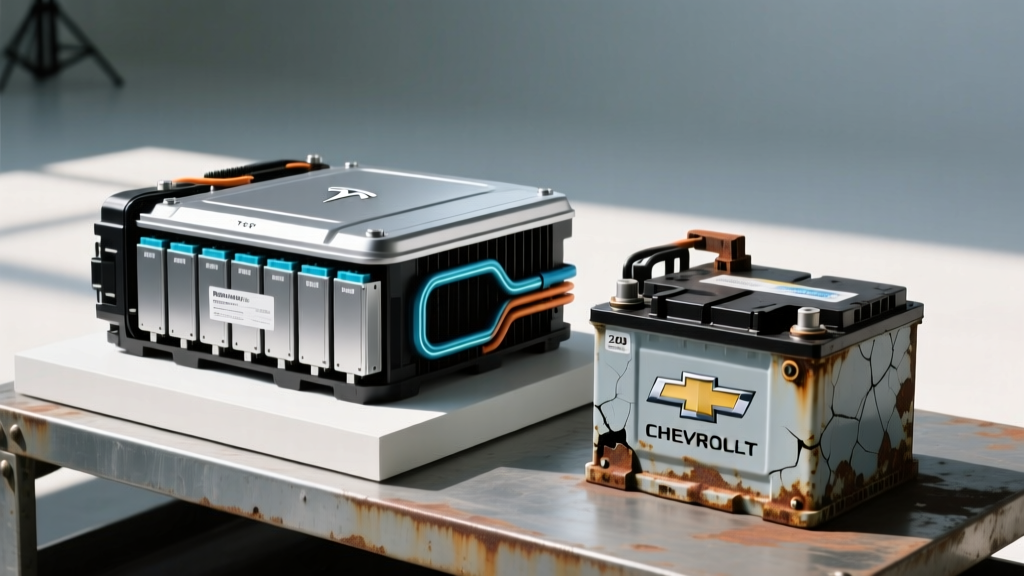
The answer is that the comparison breaks down entirely. A 2009 Chevrolet Malibu uses a conventional 12V flooded or AGM lead-acid battery designed to crank a starter motor and run accessories. An EV's high-voltage traction battery (typically 400V or 800V) is a fundamentally different technology — liquid-cooled, actively managed, and engineered to last the life of the vehicle. Most modern EV owners will never replace their traction battery. But understanding why — and what the real data shows — matters before you commit tens of thousands of dollars.
This guide breaks down EV battery chemistry, degradation curves, warranty protections, replacement economics, and care habits using 2026 data, so you can evaluate long-term EV ownership with clear numbers rather than speculation.
LFP vs. NMC/NCA: The Chemistry Decision That Defines Your Battery
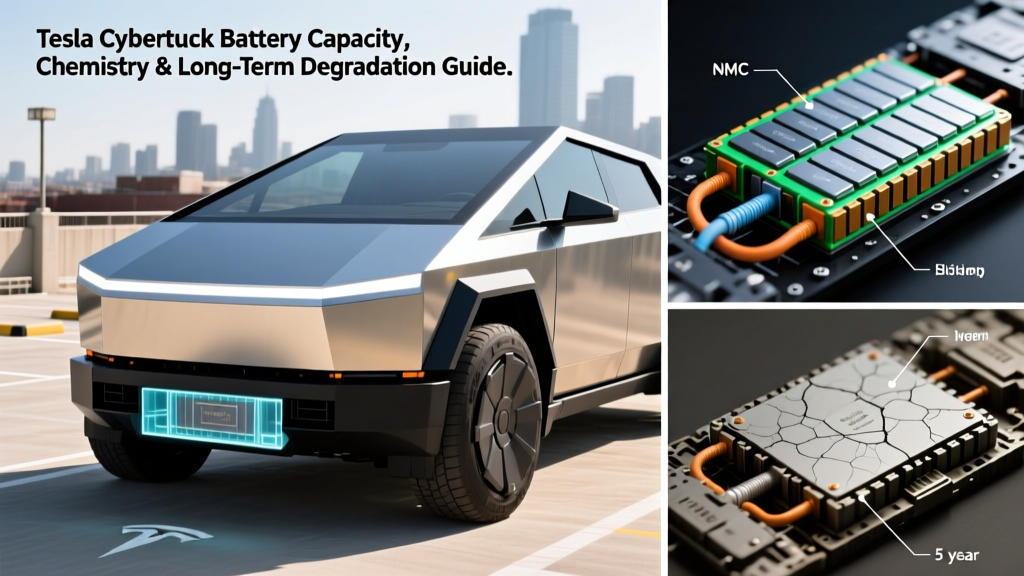
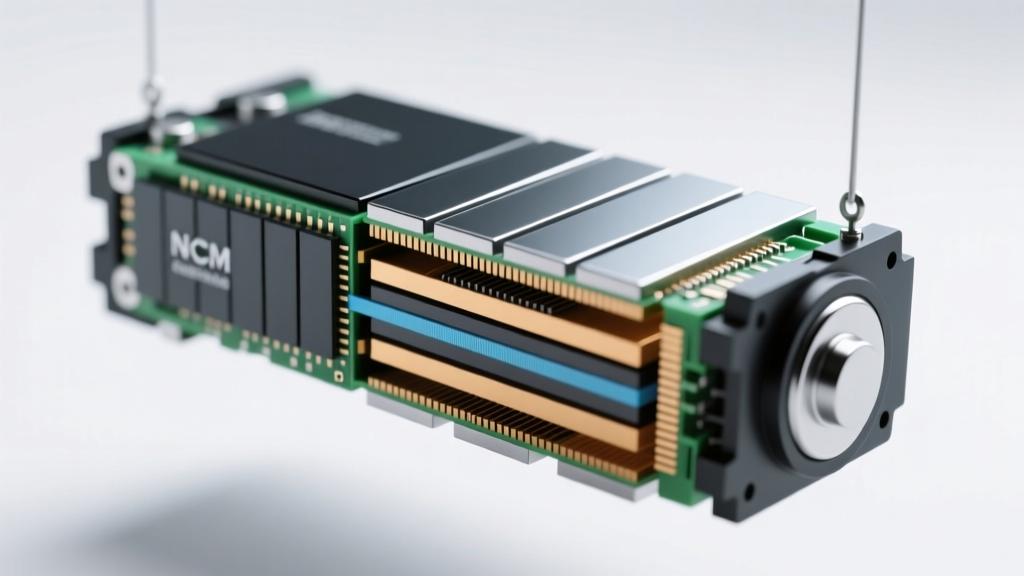
Not all EV batteries are built the same. The two dominant lithium-ion chemistries in 2026 — LFP (lithium iron phosphate) and NMC/NCA (nickel manganese cobalt / nickel cobalt aluminum) — serve different use cases with distinct trade-offs. Neither is universally "better"; the right choice depends on your driving patterns, climate, and budget.
| Attribute | LFP (Lithium Iron Phosphate) | NMC / NCA (Nickel-Based) |
|---|---|---|
| Energy Density | Lower (~160 Wh/kg cell-level) | Higher (~250–300 Wh/kg cell-level) |
| Typical Range Impact | Shorter range for same pack weight | More range per kg — preferred for 300+ mi vehicles |
| Cycle Life | 3,000–5,000+ full cycles | 1,000–2,000 full cycles |
| Cold Performance | Moderate loss; preconditioning critical | Better low-temp discharge capability |
| Cost (per kWh, 2026) | ~$80–$100/kWh at pack level | ~$110–$140/kWh at pack level |
| Thermal Stability | Excellent — less prone to thermal runaway | Good — requires more robust BMS cooling |
| SoC Recommendation | Can charge to 100% daily | Best kept 20–80% for daily use |
| Common In (2026 Models) | Tesla Model 3/Y RWD, BYD, base Ford Mustang Mach-E | Long-range AWD trims, Hyundai Ioniq 5/6, Rivian, GM Ultium |
Choose LFP if: you want a lower-cost EV, mostly drive in moderate climates, can charge at home daily to 100%, and value a battery rated for 300,000+ miles of cycle life.
Choose NMC/NCA if: you need maximum range per charge, drive in cold climates where energy density matters, or tow frequently. Just accept the 80% daily charge habit and slightly higher replacement cost if ever needed.
How Long Do EV Batteries Actually Last? Real Degradation Data
The fear that EV batteries "die like phone batteries" persists, but fleet data from Tesla, Geotab, and fueleconomy.gov testing tells a different story. Modern thermal management systems (liquid cooling with active heating for preconditioning) have largely solved the early-2010s degradation problems that plagued first-generation Nissan Leafs.
Typical Degradation Curve (NMC packs, 2020–2025 model years):
- Year 1 / 15,000 miles: ~2–4% capacity loss (initial "break-in" drop)
- Year 3 / 45,000 miles: ~6–8% total loss — most owners barely notice
- Year 5 / 75,000 miles: ~8–12% total loss
- Year 8 / 120,000 miles: ~12–17% total loss (still above warranty threshold)
- Year 10+ / 150,000+ miles: ~15–22% loss — vehicle still functional with reduced range
LFP packs degrade more slowly in the middle years but show a similar initial drop. Geotab's analysis of 10,000+ EVs found an average annual degradation of 1.8% per year across all chemistries — meaning a 300-mile EPA-rated EV would retain roughly 249 miles of range at year 10.
For context: a 2009 Chevrolet Malibu's original 12V battery would likely be on its third or fourth replacement by the time a modern EV traction battery shows meaningful range loss. The engineering gap between a $180 lead-acid starter battery and a liquid-cooled lithium-ion pack with 7,000+ individually monitored cells is enormous.
What Does the EV Battery Warranty Actually Cover?
Federal law mandates a minimum 8-year / 100,000-mile battery warranty for EVs sold in the United States, with California Air Resources Board (CARB) states extending that to 10 years / 150,000 miles. But the fine print matters — specifically the capacity retention threshold that triggers a warranty claim.
| Manufacturer | Warranty Term | Capacity Threshold | What Triggers a Claim |
|---|---|---|---|
| Tesla (Model 3/Y RWD, LFP) | 8 yr / 120,000 mi | 70% retained | SoH drops below 70% as measured by BMS |
| Tesla (Long Range / Performance) | 8 yr / 120,000 mi | 70% retained | Same threshold, NMC chemistry |
| Hyundai / Kia (E-GMP platform) | 10 yr / 100,000 mi | 70% retained | Measured via dealer diagnostic tool |
| GM (Ultium-based: Equinox EV, Blazer EV, Silverado EV) | 8 yr / 100,000 mi | 70% retained | OnStar/BMS telemetry + dealer verification |
| Ford (Mustang Mach-E, F-150 Lightning) | 8 yr / 100,000 mi | 70% retained | Dealer diagnostic; module-level replacement possible |
| Rivian (R1T / R1S) | 8 yr / 175,000 mi | 70% retained | Higher mileage cap reflects truck use case |
Key nuance: the 70% threshold means a 300-mile EPA vehicle would need to drop below 210 miles of range before the warranty applies — a level most modern EVs won't reach within the warranty period under normal use. Warranties cover defects and abnormal degradation, not gradual capacity loss above the threshold. Always read the specific terms in your purchase agreement.
How Much Does an EV Battery Replacement Cost in 2026?
Out-of-warranty battery replacement remains the most-cited fear among prospective EV buyers. The numbers are significant — but context matters. Most EV batteries outlast the vehicles they're installed in, and module-level repair (replacing individual bad cells or modules rather than the entire pack) has become standard practice at dealer service centers.
| Vehicle / Pack Size | Full Pack Replacement | Module-Level Repair | Typical Need Timeline |
|---|---|---|---|
| Tesla Model 3 RWD (~60 kWh LFP) | $8,000 – $12,000 | $1,500 – $3,500 | Rarely needed before 200,000+ mi |
| Tesla Model Y LR (~75 kWh NMC) | $12,000 – $16,000 | $2,000 – $4,500 | 150,000 – 250,000 mi if at all |
| Hyundai Ioniq 5 (~77.4 kWh NMC) | $11,000 – $15,000 | $1,800 – $4,000 | 150,000 – 200,000+ mi |
| Ford F-150 Lightning Ext. Range (~131 kWh) | $18,000 – $28,000 | $3,000 – $6,000 | Heavy use / towing may accelerate |
| Chevrolet Equinox EV (~85 kWh Ultium NMC) | $10,000 – $14,000 | $1,500 – $3,500 | 150,000+ mi expected |
| Nissan Leaf (older, 40–62 kWh, passively cooled) | $6,500 – $9,000 | Limited module availability | Earlier degradation possible — 100,000–150,000 mi |
For comparison: that 2009 Chevrolet Malibu battery costs roughly $150–$250 to replace, but you'll likely buy three or four over the vehicle's life. An EV traction battery is a once-in-the-vehicle's-lifetime expense — if it's needed at all. Pack prices continue to decline; IRS §30D clean vehicle credit rules also factor into total cost of ownership for new purchases, though battery sourcing requirements affect eligibility.
Five Factors That Actually Determine Your EV Battery's Lifespan
Not all miles are equal when it comes to battery wear. Based on fleet data and manufacturer guidance, these five variables have the largest measurable impact on long-term State of Health (SoH):
- 1. DC Fast-Charging Frequency: Occasional DC fast charging (1–2x per week) has minimal impact. Daily exclusive use of 150+ kW DC charging accelerates degradation by roughly 1–2% additional per year versus Level 2 home charging. The charge curve taper above 80% SoC exists partly to protect the battery — skipping the last 20% on road trips helps.
- 2. Extreme Temperature Exposure: Sustained operation or storage above 95°F or below 10°F without preconditioning stresses cells. Vehicles with active thermal management (Tesla, Hyundai E-GMP, GM Ultium) mitigate this substantially. Garage parking in hot climates extends battery life measurably.
- 3. State of Charge Habits: For NMC/NCA batteries, habitual charging to 100% and holding there accelerates calendar degradation. The 20–80% daily rule is well-supported by cell-level testing. LFP batteries tolerate 100% daily charges better and actually benefit from periodic full charges for BMS cell-balancing calibration.
- 4. Depth of Discharge: Running the battery to 0% (or near 0%) repeatedly is more damaging than partial discharges. Most manufacturers build in a bottom buffer (~2–5% of gross capacity) that the driver never accesses, but consistently driving until the low-battery warning and then letting the car sit uncharged is harmful.
- 5. High-Performance / Towing Load: Sustained high-current draw (track use, heavy towing, repeated hard acceleration) generates internal cell heat. Vehicles used for frequent towing (F-150 Lightning, Rivian R1T) may see 1–3% additional degradation over 100,000 miles compared to commuter-only use.
How to Check Your EV Battery's State of Health (SoH)
State of Health (SoH) is expressed as a percentage of the battery's original usable capacity. A new EV starts at 100% SoH; most manufacturers consider 70% SoH as the warranty-replacement threshold. Here's how to monitor it:
- In-vehicle BMS readout: Tesla, Hyundai, BMW, and Rivian provide SoH or estimated range-at-full-charge data directly in the vehicle UI. Compare current max range to the original EPA figure — a 310-mile EPA vehicle now showing 275 miles at 100% SoC implies roughly ~89% SoH.
- OBD-II diagnostic apps: Tools like LeafSpy (Nissan), TeslaFi / Tessie (Tesla), and CarScanner (general) pull raw BMS data including cell voltage variance, cycle count, and calculated SoH. A $30 OBD-II dongle plus a $10–$20 app subscription provides dealer-level data.
- Dealer diagnostic check: Most manufacturers will run a battery health report during routine service at no charge. Request one before a warranty expiration to establish a baseline.
- Third-party pre-purchase inspection: If buying a used EV, services like Recurrent provide battery health certificates based on historical charging telemetry — critical for verifying SoH before purchase.
Solid-State and Silicon-Anode Batteries: What's Real vs. Hype
Next-generation battery technology is genuinely advancing, but timelines matter for purchase decisions. As of 2026:
- Silicon-anode batteries: Companies like Sila Nanotechnologies and Group14 are shipping silicon-dominant anode cells to select manufacturers (Mercedes, Panasonic partnerships). These offer 20–40% higher energy density than graphite anodes. Expect broader availability in 2027–2029 model-year vehicles, primarily in premium segments first.
- Solid-state batteries: Toyota has announced a 2027–2028 production timeline for solid-state cells in limited-volume vehicles. QuantumScape is shipping prototype cells to Volkswagen for testing. Realistic mass-market availability remains 2029–2032, not the "2025" dates that circulated in earlier press coverage.
- Sodium-ion batteries: CATL and BYD are producing sodium-ion packs for lower-cost, shorter-range urban EVs in China. US-market availability for passenger vehicles is not expected before 2028.
Practical takeaway: If you're buying an EV in 2026, current LFP and NMC technology is mature, well-tested, and backed by meaningful warranty protection. Waiting for solid-state means waiting 3–6 years for technology that will debut at premium prices. The batteries available today are not a compromise — they're the product of 15 years of iteration.
Frequently Asked Questions
How long do EV batteries last in years and miles?
Most modern liquid-cooled EV batteries (2020 and newer) are designed to retain 70–85% of original capacity after 150,000–200,000 miles or 10–15 years. Fleet data from Geotab shows average degradation of ~1.8% per year. Many EVs will reach end-of-vehicle life (rust, collision, electronics obsolescence) before the traction battery requires replacement.
How much does an EV battery cost to replace in 2026?
Full pack replacement ranges from approximately $8,000 for smaller LFP packs (Tesla Model 3 RWD) to $28,000 for large truck packs (F-150 Lightning Extended Range). However, module-level repair — replacing only degraded or defective cell modules — typically costs $1,500–$6,000 and is the more common service procedure. Most EV batteries never require replacement under normal ownership.
What does the EV battery warranty actually cover?
Federal minimum is 8 years / 100,000 miles (10 years / 150,000 miles in CARB states) against capacity dropping below 70% of original. This covers defects and abnormal degradation, verified by dealer diagnostics or BMS telemetry. It does not cover damage from collisions, flooding, improper charging equipment, or modifications. Read your specific warranty booklet for exclusions.
How do I check and maximize my EV battery health?
Check SoH via the vehicle's BMS display, an OBD-II diagnostic app (LeafSpy, TeslaFi, CarScanner), or a dealer battery health report. To maximize longevity: use Level 2 home charging as your primary method, follow the 20–80% rule for NMC (100% is fine for LFP), precondition in extreme temperatures, avoid frequent 0% discharges, and minimize prolonged storage above 90% or below 10% SoC.
LFP vs. NMC — which battery chemistry is better for me?
LFP is better if you prioritize cycle life (3,000–5,000+ cycles), lower cost, thermal safety, and the convenience of daily 100% charging — ideal for commuters with home charging in moderate climates. NMC/NCA is better if you need maximum range per charge, drive in cold climates, or tow frequently — but requires a 20–80% daily charging habit for optimal longevity. Neither chemistry is "bad"; they serve different ownership patterns.
Is a 2009 Chevrolet Malibu battery the same as an EV battery?
No. A 2009 Chevrolet Malibu uses a 12V lead-acid battery (Group 47 or 48, ~$150–$250) that starts the engine and powers accessories, typically lasting 3–5 years. An EV traction battery is a 400V–800V lithium-ion pack (60–131+ kWh) with liquid thermal management, designed for 150,000–200,000+ miles. EVs also carry a separate 12V auxiliary battery for accessory systems — that one is comparable to the Malibu's battery and may need replacement every 4–6 years.