Why Are People Searching for a 2008 Jeep Patriot Battery in an EV Context?
If you've stumbled onto EV battery research while looking for a 2008 Jeep Patriot battery, you're not alone. The original Patriot uses a conventional 12V lead-acid starter battery — a $120–$180 part you swap every 3–5 years at any auto parts store. But as that generation of vehicles ages and owners consider upgrading to an electric vehicle, the terminology collision is real: "battery" means something fundamentally different in the EV world.
This guide bridges that gap. We'll cover what modern EV traction batteries actually are, how long they last, what they cost to replace, and how they compare to the simple 12V battery in a 2008 Jeep Patriot. Whether you're maintaining an older ICE vehicle or researching your first EV purchase, the data below will ground your expectations in real numbers.
The Two Batteries in Every EV (And How They Differ From a Patriot's)
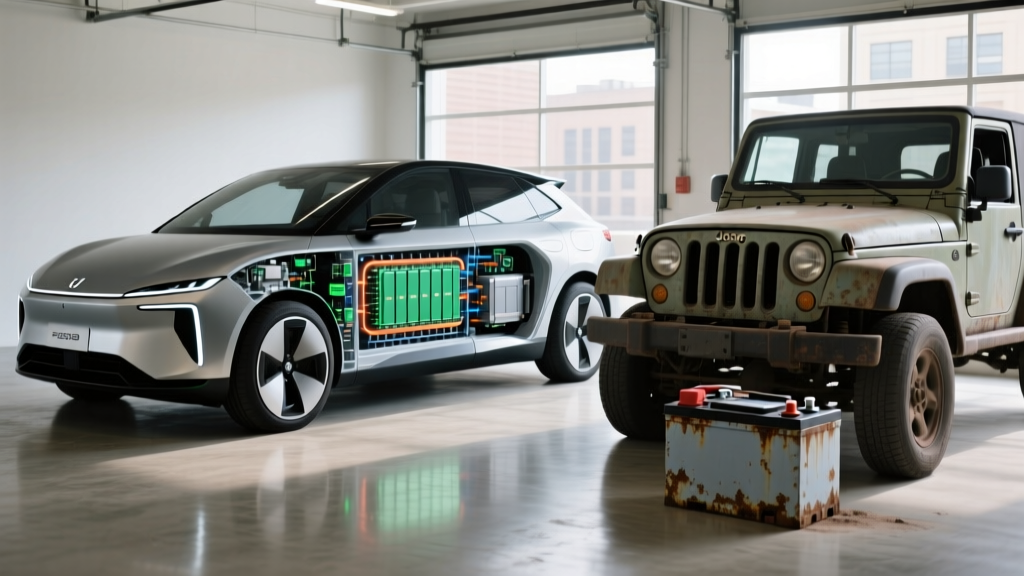
A 2008 Jeep Patriot has one battery: a 12V lead-acid unit that cranks the engine and runs accessories. An electric vehicle has two:
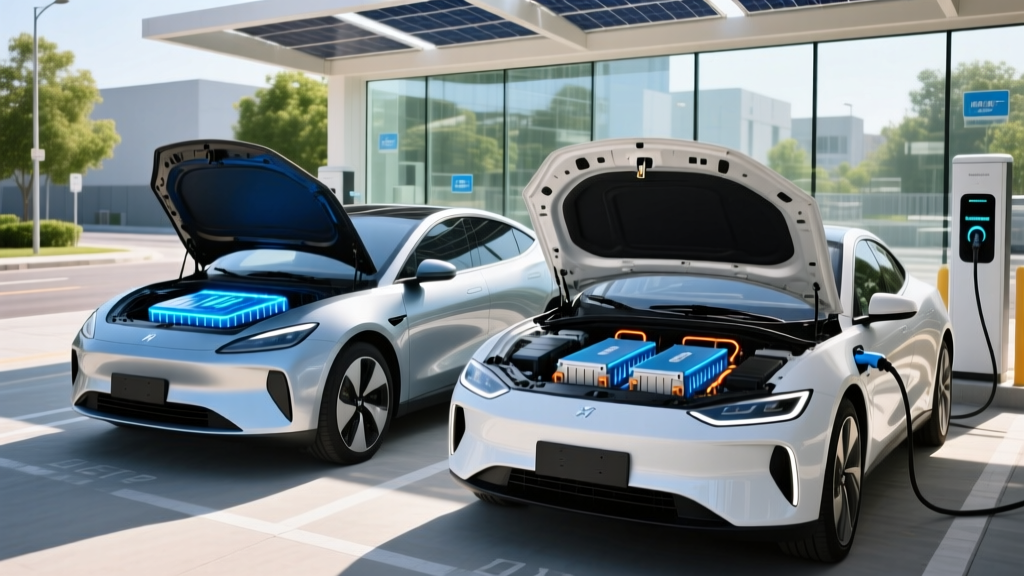
- High-voltage traction battery (400V–800V architecture): Stores 50–130+ kWh of energy to power the electric motor(s). This is the expensive, complex component that defines the vehicle's range and longevity.
- 12V auxiliary battery: A small lead-acid or lithium-iron-phosphate (LFP) unit that powers lights, infotainment, door locks, and control computers. It's charged by a DC-DC converter from the main pack.
When EV owners and analysts discuss "the battery," they mean the traction pack. The 12V auxiliary is a maintenance item similar to what you'd replace in a Patriot — though some newer EVs (like the Tesla Model 3 refresh and Rivian R1S) have eliminated the separate 12V entirely, using the main pack with a DC-DC converter for all low-voltage loads.
Battery Chemistry Explained: LFP vs. NMC/NCA
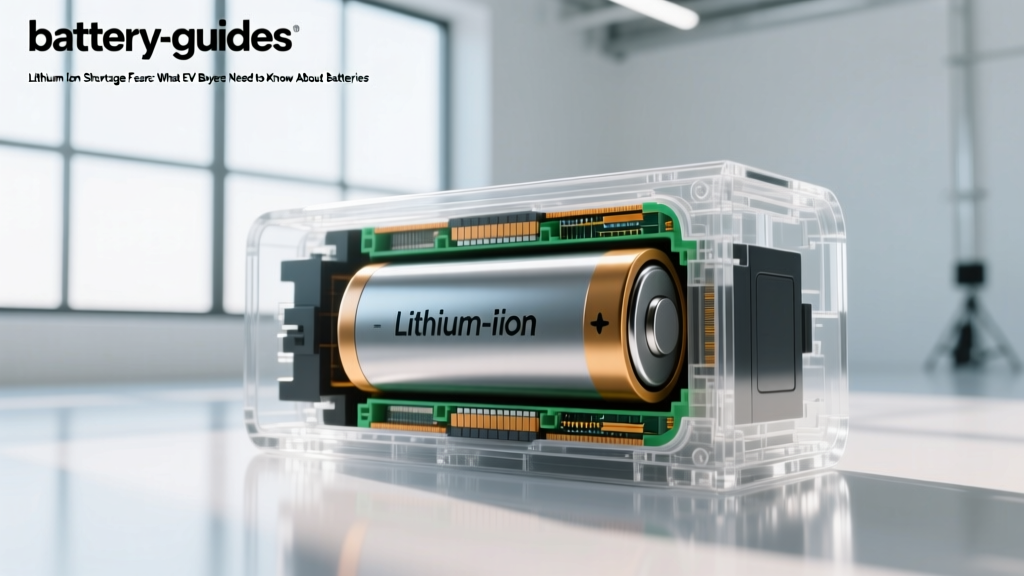
Modern EV traction batteries use lithium-ion cells, but the cathode chemistry varies significantly. The two dominant types in 2026 are LFP (Lithium Iron Phosphate) and NMC/NCA (Nickel Manganese Cobalt / Nickel Cobalt Aluminum). Each has distinct trade-offs:
| Attribute | LFP (LiFePO₄) | NMC / NCA |
|---|---|---|
| Energy Density | ~160–180 Wh/kg (lower) | ~250–300 Wh/kg (higher) |
| Cycle Life | 3,000–5,000+ cycles | 1,000–2,000 cycles |
| Cold-Weather Performance | Moderate — slower charging below 32°F, ~15–20% range loss at 20°F | Better low-temp conductivity, ~10–15% range loss at 20°F |
| Thermal Stability | Excellent — less prone to thermal runaway | Good, but requires more active thermal management |
| Cost per kWh (cell level) | ~$75–$95 | ~$100–$130 |
| State-of-Charge Recommendation | Can charge to 100% daily; periodic 100% calibrations recommended | Best kept 20–80% daily; 100% only for long trips |
| Typical Applications (2026) | Tesla Model 3/Y RWD, Ford Mustang Mach-E Select, BYD models, base trims | Long-range and performance trims, luxury EVs, trucks (F-150 Lightning Extended, Rivian) |
Which is better? It depends on your use case. LFP wins on longevity and cost — ideal for daily commuters who charge at home and don't need maximum range. NMC/NCA wins on energy density and cold-weather usability — better for road-trippers, cold-climate drivers, and anyone who needs 300+ miles of EPA range. Neither chemistry is universally superior; manufacturers increasingly offer both within the same model line (e.g., Tesla's RWD = LFP, Long Range = NMC).
How Long Do EV Batteries Actually Last?
The short answer: most EV traction batteries outlast the vehicle they're installed in. The long answer requires looking at real degradation data.
Typical Degradation by Miles and Years
Based on aggregated fleet data from sources like Recurrent Auto and manufacturer reports, here's what degradation looks like in practice:
| Milestone | Average Capacity Retained | Notes |
|---|---|---|
| 1 year / 15,000 mi | 96–98% | Initial "break-in" loss; steepest part of the curve |
| 3 years / 45,000 mi | 93–96% | Gradual linear decline |
| 5 years / 75,000 mi | 90–94% | Most packs well above warranty threshold |
| 8 years / 100,000 mi | 85–92% | Warranty period ends; most packs retain 85%+ |
| 10 years / 150,000 mi | 80–90% | LFP packs often outperform NMC at this stage |
| 15 years / 200,000+ mi | 75–85% | Approaching end-of-automotive-life; still drivable |
Key insight: degradation is non-linear. Most capacity loss occurs in the first 12–18 months (2–5%), then the curve flattens significantly. A pack that retains 95% after two years is likely to retain 88–92% at the 8-year mark. LFP chemistries tend to degrade more slowly over high cycle counts, which is why Tesla and others have shifted standard-range models to LFP.
For comparison, a 2008 Jeep Patriot's engine might need a rebuild or major repair around 150,000–180,000 miles — roughly the same mileage where an EV battery still retains 75–85% of its original capacity and remains fully functional, just with reduced range.
What Does the EV Battery Warranty Cover?
Federal law mandates a minimum EV battery warranty of 8 years / 100,000 miles (whichever comes first) for emissions-related components, and most manufacturers align their traction battery warranties to this standard. California Air Resources Board (CARB) states require 10 years / 150,000 miles.
| Manufacturer | Warranty Term | Capacity Threshold | Notes |
|---|---|---|---|
| Tesla (Model 3/Y RWD, LFP) | 8 yr / 100,000 mi | 70% retention | LFP packs rarely approach threshold |
| Tesla (Model 3/Y LR, NMC) | 8 yr / 120,000 mi | 70% retention | Longer mileage coverage on LR trims |
| Hyundai / Kia | 10 yr / 100,000 mi | 70% retention | Industry-leading term length |
| Ford (Mustang Mach-E, F-150 Lightning) | 8 yr / 100,000 mi | 70% retention | Applies to both LFP and NMC packs |
| GM (Chevrolet Equinox EV, Blazer EV) | 8 yr / 100,000 mi | 70% retention (60% on some commercial) | Ultium platform coverage |
| Rivian | 8 yr / 175,000 mi | 70% retention | Higher mileage cap for adventure-use vehicles |
| BMW (i4, iX) | 8 yr / 100,000 mi | 70% retention | Standard across BMW EV lineup |
What triggers a warranty claim? If your battery's usable capacity drops below the stated threshold (typically 70% of original) within the warranty period, the manufacturer will repair or replace it — often by swapping defective modules rather than the entire pack. In practice, warranty claims are rare. According to Consumer Reports data, fewer than 2% of EV owners have needed a battery replacement under or out of warranty.
How Much Does an EV Battery Replacement Cost?
This is the question that generates the most anxiety — and the most misinformation. Let's look at actual figures.
| Vehicle / Pack Size | Battery Chemistry | Full Pack Replacement Cost | Module-Level Repair | When Typically Needed |
|---|---|---|---|---|
| Tesla Model 3 RWD (~60 kWh) | LFP | $12,000–$15,000 | $2,000–$5,000 | Rarely; 200,000+ mi if ever |
| Tesla Model Y LR (~75 kWh) | NMC | $14,000–$18,000 | $3,000–$6,000 | Rarely; 150,000+ mi |
| Ford Mustang Mach-E ER (~91 kWh) | NMC | $18,000–$24,000 | $3,500–$7,000 | Uncommon; manufacturing defects more than wear |
| Hyundai Ioniq 5 (~77.4 kWh) | NMC | $15,000–$20,000 | $3,000–$5,500 | Rare; strong real-world retention data |
| Ford F-150 Lightning ER (~131 kWh) | NMC | $25,000–$35,000 | $5,000–$10,000 | Very rare; largest consumer packs |
| Chevrolet Bolt EV (~65 kWh) | NMC | $14,000–$16,000 | N/A (recall-related replacements were free) | Post-recall packs show strong durability |
Critical context: These costs are comparable to a major engine or transmission replacement on a gas vehicle — something a 2008 Jeep Patriot owner might face around 120,000–160,000 miles (a transmission rebuild runs $2,500–$4,500; an engine swap $4,000–$7,000). The difference is that EV battery replacement at these prices is rarely needed within the vehicle's practical lifespan, while ICE powertrain repairs are nearly inevitable at high mileage.
Also important: module-level repairs are increasingly common. Rather than replacing the entire pack, shops can identify and swap individual degraded modules for a fraction of the cost. This is analogous to replacing a single fuel injector rather than the entire fuel system.
Factors That Affect EV Battery Longevity
Not all batteries age equally. Your habits and environment significantly influence how quickly capacity declines:
Battery Care Best Practices
- Daily charge limit: Set to 80% for NMC/NCA packs; 100% is fine for LFP. Avoid routinely charging NMC to 100% unless you're leaving on a trip.
- Avoid deep discharge: Try not to let the pack drop below 10–15% regularly. Occasional low SoC won't cause damage, but prolonged storage at 0% will.
- DC fast charging: Occasional use (road trips) is fine. Daily DCFC sessions accelerate degradation by ~1–3% over the pack's life compared to Level 2 home charging. Modern thermal management has reduced this penalty significantly.
- Extreme heat: Sustained exposure to ambient temperatures above 95°F accelerates chemical degradation. Garage parking in hot climates helps. Active thermal management (liquid cooling) in modern EVs mitigates this substantially.
- Extreme cold: Cold doesn't permanently damage the battery, but charging a frozen pack without preconditioning can cause lithium plating. Always use preconditioning before DC fast charging in sub-freezing weather.
- Storage: If storing an EV for weeks or months, leave it at ~50% SoC. Don't store at 100% or near 0%.
- Regen braking settings: Standard regen is fine. There's no evidence that aggressive regen meaningfully impacts battery life — the BMS manages charge acceptance rates.
The single biggest longevity factor is average state of charge. A pack that spends most of its time between 30–70% SoC will degrade noticeably slower than one habitually held at 90–100%. This is why LFP's ability to sit at 100% without penalty is such a practical advantage for home chargers.
How to Check and Monitor Battery Health (SoH)
State of Health (SoH) is the percentage of original capacity your battery currently retains. Here's how to monitor it:
Manufacturer Apps and In-Car Displays
Most modern EVs display battery health information through the vehicle's settings menu or companion app. Tesla's service mode (accessible via the software menu) shows detailed pack health. Hyundai/Kia's Bluelink app includes SoH estimates. Ford's Pass app provides similar data for Mach-E and Lightning owners.
OBD-II Diagnostic Tools
Third-party OBD-II readers paired with apps like Leaf Spy (Nissan Leaf), Scan My Tesla, or Car Scanner ELM OBD2 can read detailed battery telemetry: individual cell voltages, pack temperature, cycle count, and calculated SoH. These tools cost $20–$60 for the adapter plus a free or low-cost app.
Third-Range Testing
The simplest owner-accessible method: track your vehicle's range at a consistent state of charge over time. If your EV showed 250 miles at 100% SoC when new and now shows 230 miles under identical conditions (same temperature, same tire pressure, same route), you can estimate roughly 8% degradation. This method is imprecise but directionally useful.
Pre-Purchase Battery Reports
When buying a used EV, request a battery health report from the dealer or use services like Recurrent that provide verified SoH data. This is the EV equivalent of a compression test on a used gas car — and far more important than checking the 12V auxiliary battery (the same type you'd find in a 2008 Jeep Patriot).
Emerging Battery Tech: Solid-State and Silicon Anodes
If you're planning your next vehicle purchase, here's what's on the horizon — with realistic timelines, not hype:
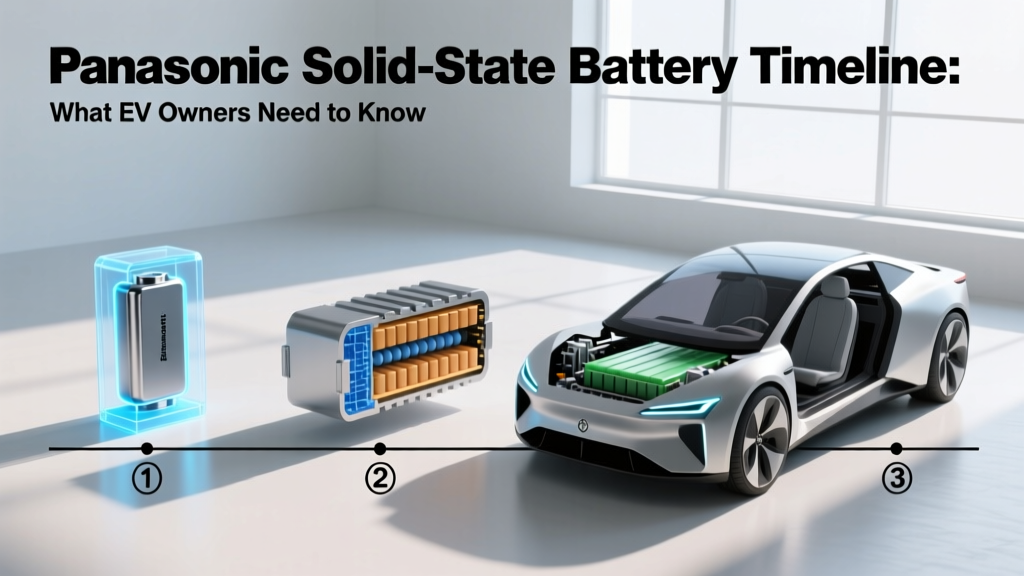
Solid-state batteries replace the liquid electrolyte with a solid material, promising higher energy density (~400–500 Wh/kg vs. ~300 for current NMC), faster charging, and improved safety. Toyota, Samsung SDI, and QuantumScape are leading development. However, as of 2026, solid-state packs remain in limited pilot production. Toyota has announced a 2027–2028 commercialization timeline for a next-generation EV, but volume production at scale is unlikely before 2029–2030. Expect solid-state to debut in premium, low-volume applications first.
Silicon-anode batteries (from companies like Sila Nanotechnologies and Group14) replace graphite anodes with silicon-dominant composites, boosting energy density by 20–40%. These are closer to market — Mercedes-Benz's EQG (G-Class EV) uses a silicon-anode pack, and the technology is expected to proliferate through 2027–2028 model-year vehicles. The trade-off is cycle life: silicon expands significantly during charge cycles, and managing that expansion remains an engineering challenge for high-cycle applications.
Sodium-ion batteries are emerging as a low-cost alternative for budget EVs and stationary storage. CATL has begun shipping sodium-ion packs in Chinese-market vehicles. Energy density is lower (~120–150 Wh/kg), but cost per kWh is significantly less, and sodium is abundantly available. Don't expect these in US-market long-range vehicles, but they could power affordable urban EVs in the 2028+ timeframe.
None of these technologies are available in production vehicles you can buy today in the US market. Current LFP and NMC chemistries will remain dominant through at least 2030.
EV Battery vs. 2008 Jeep Patriot Battery: The Bottom Line
Let's put this in practical terms. The 12V lead-acid battery in a 2008 Jeep Patriot costs ~$150, lasts 3–5 years, and takes 10 minutes to swap. It's a consumable maintenance item, like brake pads.
An EV traction battery costs $12,000–$35,000 to replace, lasts 15–20+ years (or 200,000+ miles) with gradual degradation, and is covered by an 8–10 year warranty. It's a structural component of the vehicle, more like the engine block than a wear item. The vast majority of EV owners will sell or trade their vehicle before the battery requires replacement.
If you're maintaining a 2008 Patriot and considering an EV as your next vehicle, the battery should not be the source of anxiety it's often portrayed as. The data consistently shows that modern lithium-ion traction packs are durable, well-warrantied, and rarely need replacement within a typical ownership cycle. For the latest EPA range ratings and efficiency data on current EV models, fueleconomy.gov remains the authoritative source.
Frequently Asked Questions
How long do EV batteries last in years and miles?
Most EV batteries retain 80–90% of original capacity after 10 years or 150,000 miles. Many packs remain functional at 200,000+ miles with 75–85% capacity retention. The warranty typically covers 8 years/100,000 miles (10 years/150,000 miles in CARB states) with a 70% capacity floor.
How much does an EV battery cost to replace?
Full pack replacement ranges from $12,000–$35,000 depending on pack size and chemistry (LFP packs are cheaper). Module-level repairs cost $2,000–$10,000. However, actual out-of-warranty replacements are rare — fewer than 2% of EVs need one according to industry data.
What does the battery warranty actually cover?
The warranty covers capacity loss below a stated threshold (typically 70% of original) and manufacturing defects for 8 years/100,000 miles. It does not cover damage from accidents, flooding, or unauthorized modifications. Warranty repairs typically involve module replacement rather than a full new pack.
How do I check my EV battery's health?
Use the manufacturer's app or in-car diagnostics for SoH estimates. OBD-II tools like Scan My Tesla or Leaf Spy provide detailed cell-level data. For used EV purchases, request a certified battery health report from the dealer or a third-party service like Recurrent.
LFP vs. NMC — which battery chemistry should I choose?
Choose LFP if you charge at home daily, prioritize longevity, want to charge to 100% without worry, and don't need maximum range. Choose NMC/NCA if you need 300+ miles of range, live in a cold climate, take frequent road trips, or want the lightest possible pack. Both are proven and well-supported in 2026.
Is a 2008 Jeep Patriot battery the same as an EV battery?
No. The Patriot uses a standard 12V lead-acid starter battery (~$120–$180, replaced every 3–5 years). EVs use a high-voltage lithium-ion traction battery (400V–800V, 50–130+ kWh) plus a separate 12V auxiliary battery for accessories. The traction battery is a fundamentally different technology designed to last the vehicle's lifetime.
Does fast charging damage EV batteries?
Occasional DC fast charging has minimal impact. Daily DCFC use may accelerate degradation by 1–3% over the pack's life compared to exclusive Level 2 charging. Modern thermal management systems precondition the battery during fast charging to mitigate stress. For daily use, Level 2 home charging (7–11 kW) is ideal.