Why a Battery for 2007 Honda Accord Keeps Coming Up in EV Searches
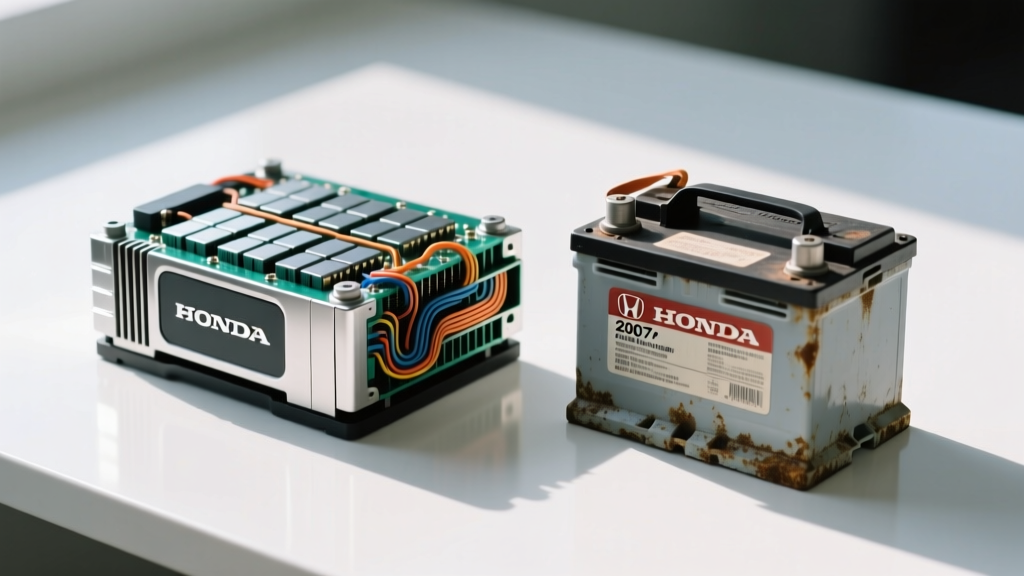
If you've ever searched for a battery for 2007 Honda Accord, you were probably looking at a $140–$220 12-volt lead-acid group 51R replacement from an auto-parts store. That small battery spins a starter motor and runs the radio. The high-voltage traction battery in a modern electric vehicle is a fundamentally different machine: a 60–100+ kWh lithium-ion (or LFP) pack costing $5,000–$20,000+, engineered to last the life of the car. Conflating the two is the single biggest source of EV battery fear.
This guide uses that comparison as a starting point to explain what actually matters for EV buyers in 2026: chemistry trade-offs, real degradation data, warranty fine print, replacement economics, and daily habits that extend pack life. Numbers are drawn from EPA data, manufacturer warranty documents, and long-term fleet studies.
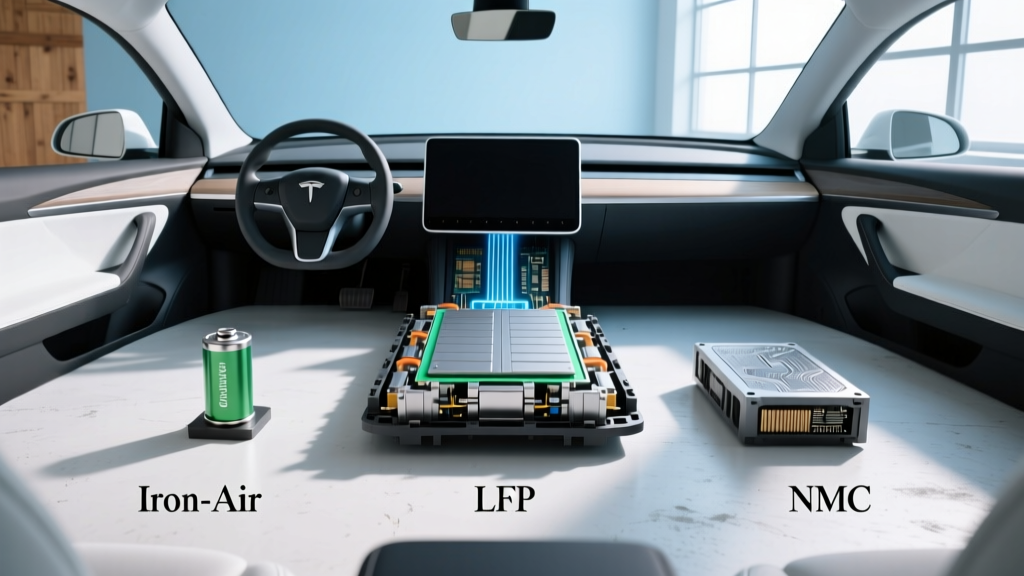
Chemistry 101: LFP vs NMC/NCA and the Trade-Offs That Matter
Almost every EV sold in the U.S. in 2026 uses one of two lithium-ion chemistries. The 12V battery for 2007 Honda Accord uses lead-acid — a chemistry that hasn't been viable for traction use in decades due to abysmal energy density.
| Attribute | LFP (Lithium Iron Phosphate) | NMC / NCA (Nickel-based) |
|---|---|---|
| Energy density | ~160–180 Wh/kg (lower) | ~230–300 Wh/kg (higher) |
| Cycle life | 3,000–6,000+ cycles to 80% SoH | 1,000–2,500 cycles to 80% SoH |
| Cold-weather performance | Weaker; slower charge <32°F | Better low-temp output |
| Thermal stability | Excellent (lower runaway risk) | Good, needs more BMS oversight |
| Cost (cell-level) | ~$70–$90/kWh | ~$100–$130/kWh |
| Typical 2026 use | Tesla Model 3/Y RWD, Ford Mustang Mach-E Select, base Chevy Equinox EV | Long-range AWD trims, Hyundai Ioniq 5/6, Rivian, Lucid, BMW iX |
Which is better? LFP wins on longevity and cost; NMC wins on range-per-pound and cold performance. For a commuter who charges at home nightly and lives in a mild climate, LFP is usually the smarter buy. For road-trippers in Minnesota winters, NMC's low-temp edge matters.
How Long Do EV Batteries Actually Last?
The short answer: longer than most owners keep the car. Data from fueleconomy.gov and long-term fleet studies (Recurrent, Geotab) show modern packs losing roughly 5–10% capacity over the first 100,000 miles, then flattening into a slow linear decline.
| Milestone | LFP Pack SoH | NMC Pack SoH |
|---|---|---|
| Year 1 / 15k mi | ~97% | ~95–96% |
| Year 5 / 75k mi | ~92–94% | ~88–91% |
| Year 8 / 120k mi | ~88–91% | ~83–88% |
| Year 12 / 180k mi | ~82–87% | ~78–83% |
For context, a 2007 Honda Accord's lead-acid battery typically lasts 3–5 years before it can no longer crank the engine — and that's a $180 part. An EV pack is engineered for 15–20 years of usable service before it approaches the 70% capacity threshold that most warranties use as the replacement trigger.
What the Battery Warranty Actually Covers (and Doesn't)
Federal law (via EPA emissions-related component rules) pushes automakers toward generous battery coverage. Here is what the major 2026 warranties look like:
| Brand | Term | Capacity Threshold | Notes |
|---|---|---|---|
| Tesla | 8 yr / 100k–120k mi | 70% retention | Varies by trim/battery size |
| Hyundai / Kia | 10 yr / 100k mi | 70% | Among the longest in the U.S. |
| Ford | 8 yr / 100k mi | 70% | |
| GM (Ultium) | 8 yr / 100k mi | 70% (60% on commercial) | |
| Rivian | 8 yr / 175k mi (125k mi R1S/T) | 70% |
Warranties cover defects and abnormal degradation. They do not cover physical damage from a collision, flood, or rodent chewing — that's on your comprehensive insurance. They also don't guarantee you'll like the range at 100k miles; only that the pack will hold above the threshold.
EV Battery Replacement Cost: Reality vs Headlines
Headline "$20,000 battery replacement" stories are usually about out-of-warranty early-2010s cars with air-cooled packs (Nissan Leaf, early Focus Electric). For 2026 models still under warranty, owner out-of-pocket for a degraded pack is typically $0.
| Scenario | Typical Cost Range | Likelihood |
|---|---|---|
| In-warranty degradation claim | $0 (manufacturer covers) | Rare, but real |
| Out-of-warranty module replacement | $2,000–$6,000 | Growing option on modular packs (BMW, GM Ultium) |
| Full pack replacement (out of warranty) | $8,000–$18,000 | Uncommon on 2018+ liquid-cooled cars |
| 12V auxiliary battery (any EV) | $200–$500 | Every 4–6 years, same as ICE |
Compare that to a battery for 2007 Honda Accord: ~$170 for the part, maybe $50 installed. The EV equivalent of that routine maintenance is the 12V auxiliary battery, which every EV still carries and which still dies on the same 4–6 year schedule.
Five Habits That Genuinely Extend Pack Life
- Avoid daily 100% charges on NMC. Set the charge limit to 80% for commuting; save 100% for road trips. LFP packs, by contrast, benefit from periodic 100% sessions to recalibrate the BMS.
- Minimize back-to-back DC fast charges. Peak kW generates heat. One 150–250 kW session per day is fine; five in a row accelerates wear.
- Don't leave the car at 100% or 0% SoC for days. Storage sweet spot is 40–60%.
- Precondition before fast-charging in cold weather. A cold pack charges slowly and stresses the cells; most 2026 EVs auto-precondition when you navigate to a charger.
- Park in shade or a garage during heat waves. Sustained 95°F+ ambient temps with high SoC is the worst-case degradation scenario.
How to Check Battery Health (State of Health)
State of Health (SoH) is the percentage of original capacity the pack can still store. A new 75 kWh pack at 90% SoH holds ~67.5 kWh usable. Ways to check it:
- In-car menu. Tesla, Hyundai, Kia, BMW, and Rivian expose SoH or a range-adjusted health indicator in the service or energy screens on 2024+ models.
- Manufacturer app. FordPass, myChevrolet, Tesla app, and Hyundai Bluelink all surface battery health metrics post-2023.
- OBD-II dongle + app. Tools like OBDeleven, LeafSpy (Nissan), or Scan My Tesla read the BMS directly. Useful for used-EV purchases.
- Dealer diagnostic. A service department can print a certified SoH report — ask for one before buying a used EV out of warranty.
- Third-party reports. Recurrent and AVT at Idaho National Lab publish fleet degradation dashboards worth cross-referencing.
What's Coming Next — and When It Actually Arrives
Two technologies dominate the forward-looking conversation. Neither is broadly available in 2026 production EVs sold in the U.S.:
- Solid-state batteries. Promise ~40% higher energy density and faster charging. Toyota has announced limited production in Japan for 2027–2028; U.S. volume models are unlikely before 2030. Treat any "solid-state is here" headline as premature.
- Silicon-dominant anodes. Companies like Sila Nanotechnologies and Group14 are shipping silicon-blend anodes in select 2025–2026 models (Mercedes G-Class EV, some Panasonic cells). Expect ~10–20% energy-density gains near term, not a revolution.
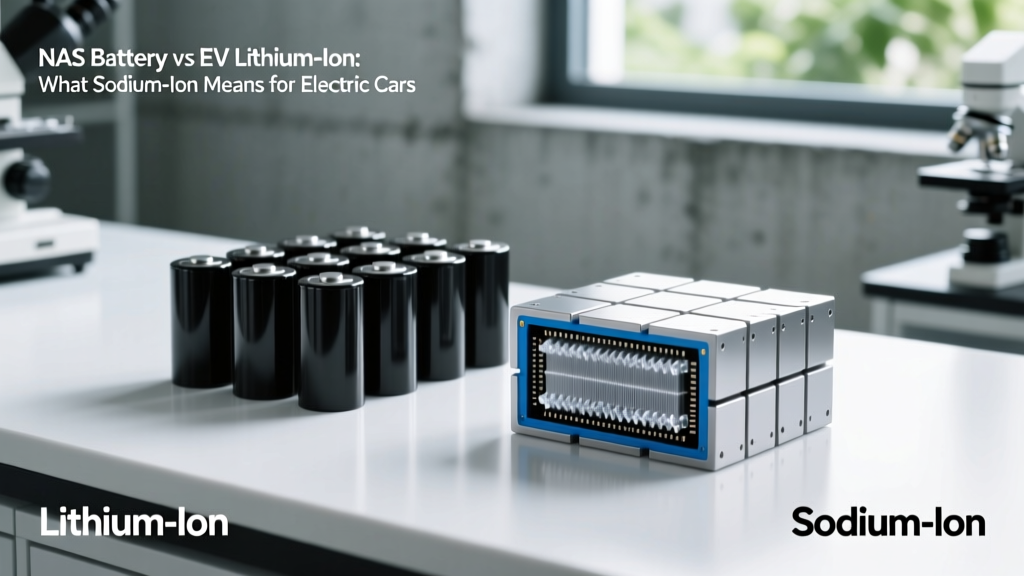
- Sodium-ion. CATL and BYD are shipping Na-ion packs in Chinese-market city cars. U.S. availability depends on IRS §30D critical-mineral sourcing rules, which currently disadvantage non-free-trade-partner supply chains.
None of this should delay a 2026 EV purchase. Today's lithium-ion packs are already outlasting the cars they're bolted into.
FAQ: The Questions Buyers Actually Ask
Can I put a battery for 2007 Honda Accord in an EV?
No — and not just because the voltage is wrong. An EV's 12V auxiliary battery must handle high ripple currents from the DC-DC converter and often uses AGM or lithium 12V chemistry (e.g., Tesla's 16V lithium aux). Always match the OEM part number.
How long do EV batteries last in years and miles?
Most modern liquid-cooled packs deliver 15–20 years / 200,000+ miles before dropping below 70% capacity. That typically exceeds the vehicle's useful life.
How much does an EV battery cost to replace?
$8,000–$18,000 for a full pack out of warranty; $2,000–$6,000 for a single module on modular designs. Under warranty: $0. By comparison, a battery for 2007 Honda Accord runs ~$170.
What does the battery warranty cover?
Defects and degradation below ~70% capacity over 8–10 years / 100k–175k miles, depending on brand. Physical damage, abuse, and flooding are excluded.
How do I maximize battery health day-to-day?
Charge NMC to 80% daily, 100% only for trips. LFP can hit 100% regularly. Avoid long sits at extreme SoC, precondition in cold, and limit consecutive DC fast charges.
LFP vs NMC — which should I pick?
LFP for cost, longevity, and daily commuting. NMC for max range, cold climates, and towing. Neither is "bad" — pick based on your drive profile.