Why Compare an EV Battery to a 2006 Jeep Commander Battery?
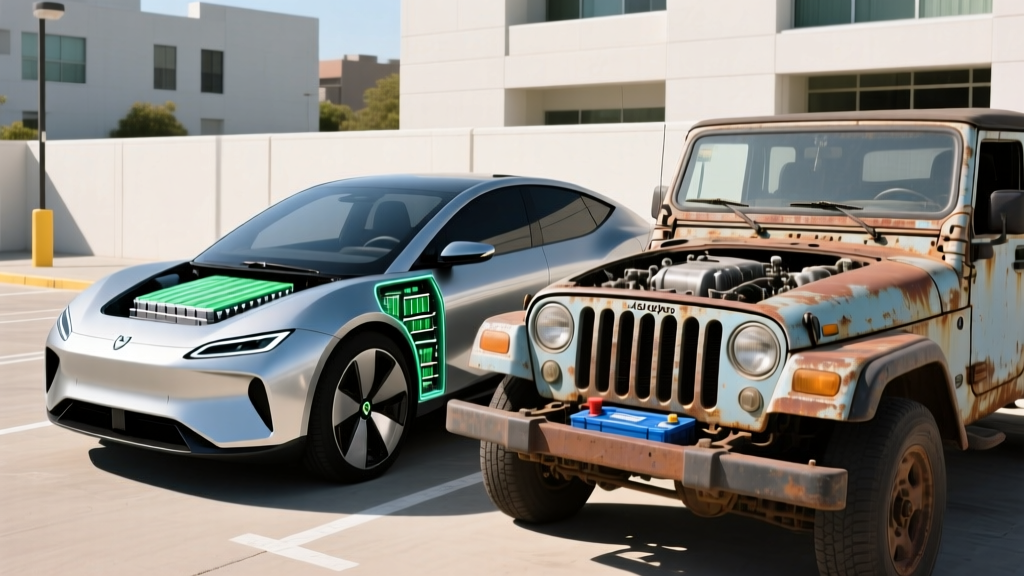
If you've ever searched for a 2006 Jeep Commander battery, you already know the drill: a 12V lead-acid group 34 or 65 battery that costs $150–$250, lasts 3–5 years, and cranks a 3.7L V6 or 4.7L V8 on cold mornings. It's a commodity part you swap without much thought.
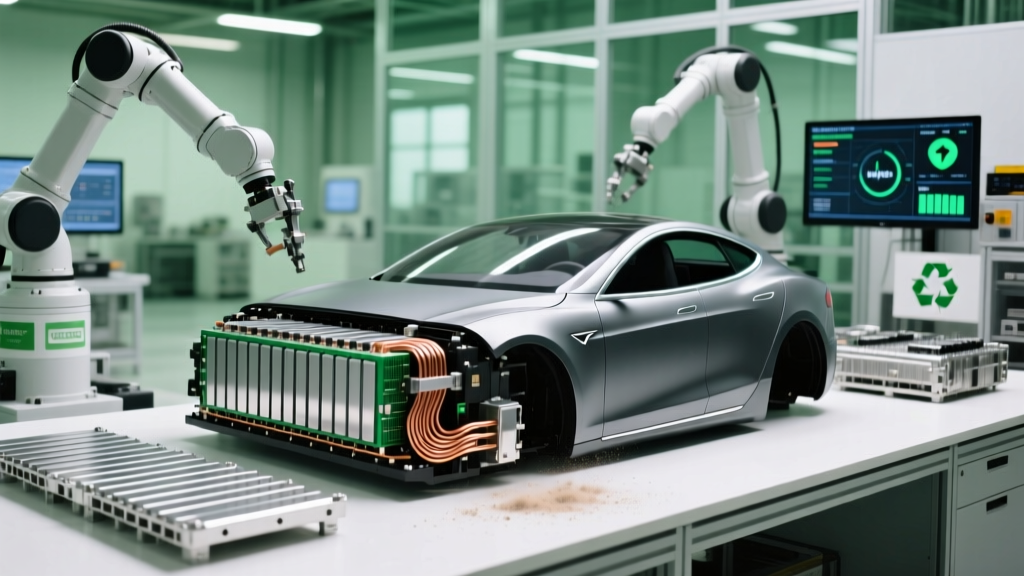
Modern electric vehicles use an entirely different architecture. The high-voltage traction battery — typically 60–120 kWh of lithium-ion cells — is the single most expensive component in the vehicle, often representing 25–40% of the total build cost. It powers the motors, determines your range, and is engineered to last the lifetime of the car.
This guide breaks down everything you need to know about EV battery technology in 2026: chemistry trade-offs, real-world degradation data, warranty coverage, replacement costs, and how to maximize the health of the pack you've got. If you're transitioning from an older ICE vehicle like the 2006 Commander, consider this your primer on the most misunderstood part of EV ownership.
LFP vs NMC/NCA: Which Battery Chemistry Is Right for You?
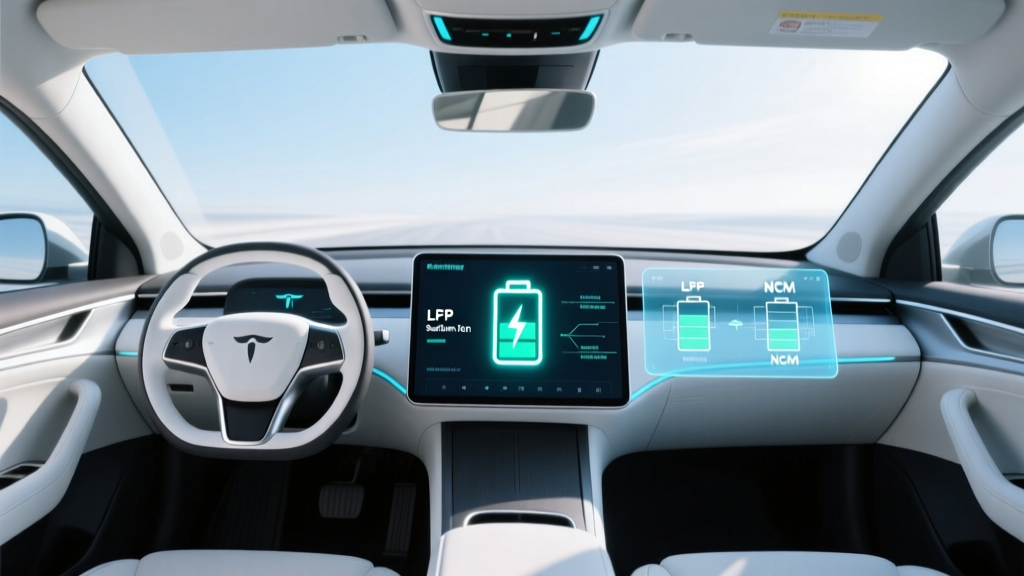
Not all lithium-ion batteries are the same. The two dominant chemistries in 2026 EVs are LFP (Lithium Iron Phosphate) and NMC/NCA (Nickel Manganese Cobalt / Nickel Cobalt Aluminum). Each has distinct trade-offs that affect your ownership experience.
| Attribute | LFP (LiFePO₄) | NMC / NCA |
|---|---|---|
| Energy Density | Lower (~160 Wh/kg cell-level) | Higher (~250–300 Wh/kg cell-level) |
| Typical Use | Standard-range models (Tesla Model 3 RWD, BYD, base Ford Mustang Mach-E) | Long-range & performance models (Model Y LR, Rivian, Hyundai Ioniq 5 LR) |
| Cycle Life | 3,000–5,000+ cycles to 80% capacity | 1,000–2,000 cycles to 80% capacity |
| Cold-Weather Performance | Weaker — greater range loss below 32°F / 0°C | Better low-temperature discharge capability |
| Charging to 100% | Recommended regularly (helps BMS calibration) | Daily charge to 80% preferred; 100% for trips only |
| Cost per kWh | Lower — no cobalt or nickel | Higher — commodity metals price exposure |
| Thermal Stability | Excellent — inherently more stable | Good — requires more active thermal management |
The practical takeaway: If you mostly drive under 200 miles per day, can charge at home, and live in a moderate climate, an LFP-equipped EV is arguably the better long-term ownership bet — you'll see less degradation over 10+ years. If you need maximum range per charge, frequently road-trip, or live in a cold climate, NMC/NCA packs deliver more miles per kWh and handle winter better.
How Long Do EV Batteries Actually Last?
The short answer: far longer than most buyers expect. Data aggregated from fleet operators, telematics studies, and owner reports consistently shows that modern liquid-cooled EV batteries lose roughly 10–15% of their original capacity over 150,000–200,000 miles.
According to fueleconomy.gov, most current-model EVs carry EPA range estimates between 230 and 370 miles. A 10% degradation over a decade means an EV rated at 300 miles new would still deliver approximately 270 miles — still comfortably above the average American's daily driving needs.
Degradation Data Points (Real-World)
- Tesla fleet data (2025 Impact Report): Model 3/Y packs retain approximately 85% of original capacity at 150,000 miles.
- Geotab fleet study (2024): Average EV across 10,000+ vehicles showed ~2.3% annual degradation — roughly 18–20% loss over 8 years under mixed use.
- Early Nissan Leaf (2011–2015, passive air-cooled): Some packs lost 20–30% capacity within 5 years — a cautionary tale about thermal management that modern liquid-cooled designs have largely solved.
The degradation curve is not linear. Most packs experience a steeper drop in the first 1–2 years (roughly 3–5%), then settle into a slow, gradual decline. This "hockey stick" pattern means a 5-year-old EV battery is often in better shape than the early ownership experience suggests.
What Does the EV Battery Warranty Actually Cover?
Federal law in the United States mandates that EV batteries carry a minimum warranty of 8 years / 100,000 miles (10 years / 150,000 miles in CARB states like California, New York, and Massachusetts). Most manufacturers exceed this baseline.
| Manufacturer | Warranty Period | Capacity Retention Threshold |
|---|---|---|
| Tesla (Model 3/Y LFP) | 8 yr / 120,000 mi | 70% minimum |
| Tesla (Model 3/Y LR NMC) | 8 yr / 120,000 mi | 70% minimum |
| Hyundai / Kia | 10 yr / 100,000 mi | 70% minimum |
| Ford (Mustang Mach-E, F-150 Lightning) | 8 yr / 100,000 mi | 70% minimum |
| GM (Ultium platform) | 8 yr / 100,000 mi | 70% minimum (some models 60% for Ultium commercial) |
| Rivian | 8 yr / 175,000 mi | 70% minimum |
| BMW / Mercedes-Benz | 8 yr / 100,000 mi | 70% minimum |
What triggers a warranty claim? If your battery's State of Health (SoH) drops below the threshold (typically 70%) within the warranty period, the manufacturer will repair or replace modules — or the entire pack — at no cost. In practice, very few owners hit this threshold under normal use. The warranty is there as a floor, not a prediction.
For full details on federal warranty mandates and emissions-related coverage, refer to the EPA vehicle compliance resources.
EV Battery Replacement Cost: What to Expect in 2026
This is the number that generates the most anxiety — often compared unfavorably to the $150 lead-acid battery in a 2006 Jeep Commander. But context matters enormously.
| Vehicle / Pack Size | Battery Capacity | Replacement Cost (Parts + Labor) |
|---|---|---|
| Tesla Model 3 (LFP, Standard Range) | ~60 kWh | $8,000–$12,000 |
| Tesla Model Y (Long Range NMC) | ~82 kWh | $12,000–$16,000 |
| Hyundai Ioniq 5 (Long Range) | ~77.4 kWh | $11,000–$15,000 |
| Ford F-150 Lightning (Extended Range) | ~131 kWh | $18,000–$25,000 |
| Chevrolet Bolt EV/EUV (discontinued, remaining stock) | ~65 kWh | $9,000–$13,000 |
| Rivian R1T / R1S (Max Pack) | ~149 kWh | $22,000–$30,000 |
When is replacement actually needed? Rarely during typical ownership. Most EV batteries outlive the vehicle's economic lifespan. Out-of-warranty replacements are typically pursued only when:
- The pack has degraded below usable range for the owner's needs (15+ years, 200,000+ miles).
- Physical damage from a collision or flood has compromised the pack.
- A manufacturing defect appears outside the warranty window (uncommon).
Cell-level costs have dropped from over $1,000/kWh in 2010 to approximately $110–$140/kWh at the pack level in 2026, according to BloombergNEF. Module-level repairs (replacing only the degraded sections) are increasingly common and significantly cheaper than full-pack swaps — often $3,000–$7,000 depending on the vehicle.
Factors That Accelerate (or Preserve) Battery Life
Your habits matter. While modern battery management systems (BMS) actively protect the pack, certain patterns still influence long-term degradation:
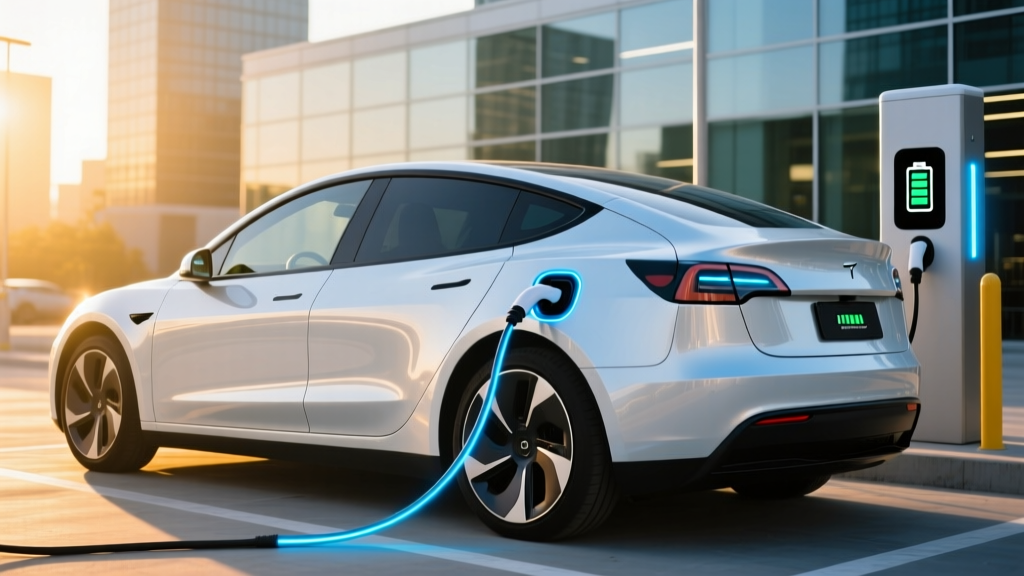
- Limit DC fast charging — Frequent use of 150+ kW chargers generates heat stress. Use DCFC for road trips; rely on Level 2 (7–11 kW) at home for daily charging.
- Avoid prolonged 100% SoC — For NMC/NCA packs, set your daily charge limit to 80%. Charge to 100% only before long trips. LFP packs are an exception — Tesla and BYD recommend periodic 100% charges for BMS calibration.
- Don't store at very low SoC — Leaving a pack below 10% for weeks accelerates degradation. If storing the vehicle, leave it at ~50% SoC.
- Precondition in cold weather — Using the vehicle's preconditioning feature (warming the battery before driving or charging) reduces stress and improves charge acceptance.
- Avoid extreme heat exposure — Parking in shade or a garage during 100°F+ summer days reduces passive thermal load on the pack.
- Drive moderately — Sustained high-speed driving and aggressive acceleration generate more heat in the cells. Occasional spirited driving is fine; daily track use is not what these packs are optimized for.
The Fast-Charging Question
DC fast charging is not inherently harmful — modern BMS and liquid cooling handle it well. But physics is physics: pushing 250 kW into a battery generates significant heat. Data from Recurrent Auto suggests that vehicles that DC fast charge more than 3 times per week show slightly higher degradation rates (~1–2% additional loss over 5 years) compared to those that primarily use Level 2. The effect is measurable but not catastrophic.
How to Check and Monitor Battery Health (SoH)
State of Health (SoH) is the percentage of the battery's original capacity that remains usable. A brand-new pack is 100% SoH; a pack with 88% SoH holds 88% of its original kWh.
Methods to Check SoH
- In-vehicle display: Some manufacturers (BMW, Mercedes, newer Hyundai/Kia models) show SoH directly in the infotainment or driver display.
- OBD-II + app: Tools like LeafSpy (for Nissan Leaf), Scan My Tesla, or universal OBD-II readers with EV compatibility can pull SoH data from the BMS.
- Dealer diagnostic: Any authorized service center can run a full battery health report — ask for this during routine service visits.
- Third-party services: Companies like Recurrent Auto offer free battery health monitoring by connecting to your vehicle's telematics data.
- Manual estimation: Fully charge to 100%, note the displayed range, and compare to the original EPA rating. If your 300-mile EV now shows 270 miles at full charge after 4 years, your SoH is approximately 90%.
For used-EV buyers, a SoH report is as critical as a compression test was on your 2006 Commander's V8. Always request one before purchasing.
Emerging Battery Technologies: What's Real and What's Still Ahead
The battery landscape is evolving rapidly, but it's essential to separate shipping products from lab promises.
Silicon-Dominant Anodes
Companies like Sila Nanotechnologies and Group14 are replacing graphite anodes with silicon composites, boosting energy density by 20–40%. These cells are entering production vehicles in 2025–2027 (Mercedes G-Class electric, Porsche next-gen platforms). Expect incremental range gains and faster charge acceptance, not revolutionary leaps.
Solid-State Batteries
Solid-state cells replace the liquid electrolyte with a solid material, promising higher energy density, faster charging, and improved safety. Toyota, Samsung SDI, and QuantumScape have all announced production timelines between 2027–2030. However, manufacturing scale and cost remain unresolved challenges. Solid-state batteries are not available in any consumer EV as of 2026. Treat any vehicle marketing suggesting otherwise as forward-looking projection.
Sodium-Ion Batteries
CATL and BYD have begun deploying sodium-ion cells in low-cost, short-range EVs in China. These packs trade energy density for dramatically lower material costs and better cold performance. US-market availability is expected in budget segments by 2027–2028.
For the current buyer, today's LFP and NMC packs represent mature, well-proven technology. The pack in a 2026 EV is vastly more durable and better managed than even a 2018-era battery — and worlds beyond the lead-acid unit in a 2006 Jeep Commander.
Frequently Asked Questions
How long do EV batteries last in years and miles?
Most modern liquid-cooled EV batteries retain 80–85% of their original capacity after 150,000–200,000 miles (roughly 12–15 years of average driving). Many will outlast the vehicle's useful life. Early-generation air-cooled packs (pre-2016 Nissan Leaf) degraded faster, but this issue has been solved in current designs.
How much does an EV battery cost to replace?
Full pack replacements range from approximately $8,000 for a 60 kWh standard-range pack to $25,000+ for a 130+ kWh truck pack, including labor. However, most replacements involve module-level repairs at $3,000–$7,000. The vast majority of EV owners will never need an out-of-warranty battery replacement.
What does the EV battery warranty cover?
Federal law requires a minimum 8-year/100,000-mile warranty guaranteeing the battery stays above 70% of original capacity (CARB states: 10 years/150,000 miles). If SoH drops below the threshold within the warranty period, the manufacturer repairs or replaces the pack at no cost. This covers degradation, not damage from accidents or misuse.
How do I check and maximize my EV battery's health?
Monitor SoH through your vehicle's display, an OBD-II diagnostic app, or a dealer service visit. To maximize longevity: favor Level 2 home charging over frequent DC fast charging, keep NMC packs between 20–80% SoC for daily use, precondition in cold weather, and avoid storing the vehicle at very low or very high charge for extended periods.
LFP vs NMC — which chemistry is better?
Neither is universally superior. LFP offers longer cycle life (3,000–5,000 cycles), lower cost, better thermal stability, and the convenience of regular 100% charging — but with lower energy density and worse cold-weather performance. NMC/NCA delivers more range per kWh and better winter capability — but with shorter cycle life, higher cost, and a recommended 80% daily charge limit. Choose LFP for durability and value; choose NMC for maximum range and cold-climate performance.
Is an EV battery anything like the 12V battery in a 2006 Jeep Commander?
No. The 2006 Jeep Commander uses a conventional 12V lead-acid battery (Group 34 or 65, ~$150–$250) designed to start an internal combustion engine. An EV's high-voltage traction battery is a lithium-ion pack (60–150 kWh, $8,000–$30,000) that powers the electric motors and stores energy from the grid. EVs do still carry a small 12V battery for accessories and systems boot-up, but it's the traction battery that defines the vehicle's range, performance, and long-term value.