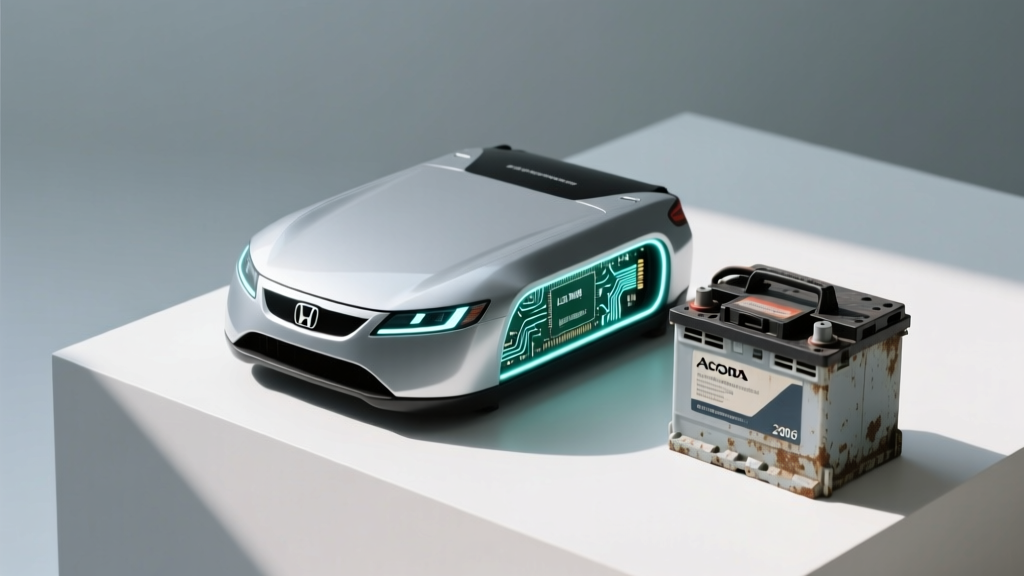
Search engines still see thousands of queries every month for the 2006 Honda Accord battery — a 12-volt lead-acid starter battery that costs roughly $150 to $230 and typically lasts three to five years. That search behavior reveals a common anxiety among EV-curious buyers: if I have to swap a gas car's battery every few years, won't an electric vehicle's massive battery pack be a financial time bomb?
The short answer is no. A modern EV traction battery is engineered to outlast the car itself, with warranties stretching to 10 years and real-world degradation data showing single-digit percentage losses over 200,000 miles. But understanding why requires a clear look at chemistry, cooling, warranty fine print, and the actual cost of the rare out-of-warranty replacement.
This guide covers everything a 2026 EV buyer or owner needs to know — from LFP vs. NMC trade-offs to State of Health monitoring — so you can evaluate long-term battery ownership with data instead of dread.
The 2006 Honda Accord Battery vs. an EV Traction Battery: Two Completely Different Animals
Before diving into EV specifics, it is critical to distinguish the two battery types shoppers confuse:
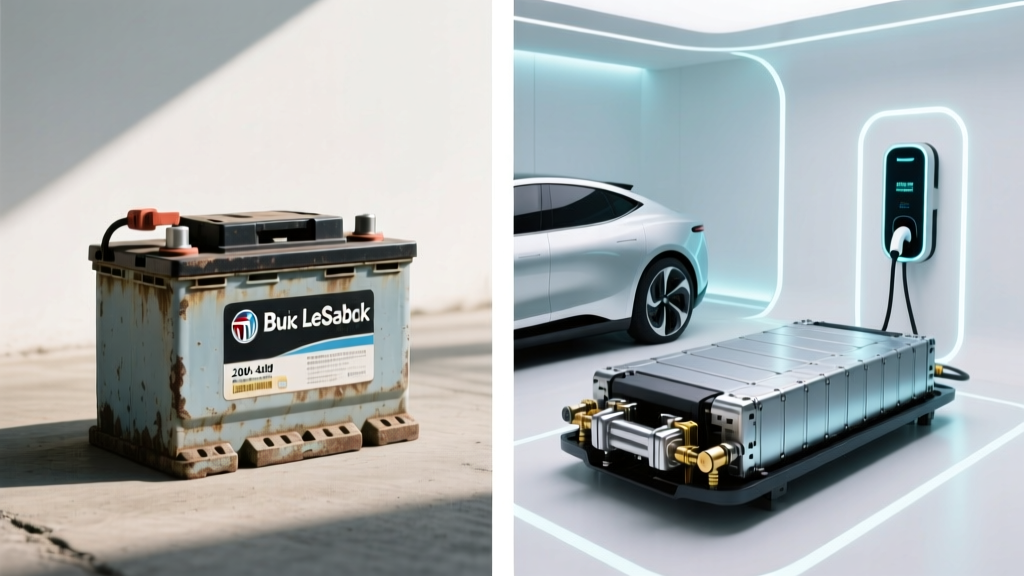
- 12V auxiliary battery (like the one in a 2006 Honda Accord, and yes, in every EV too): A small lead-acid or lithium-iron-phosphate unit that powers lights, infotainment, and the DC-DC converter. Replacement cost: $120–$280. Lifespan: 3–5 years. This is what auto-parts stores stock and what most "car battery" searches refer to.
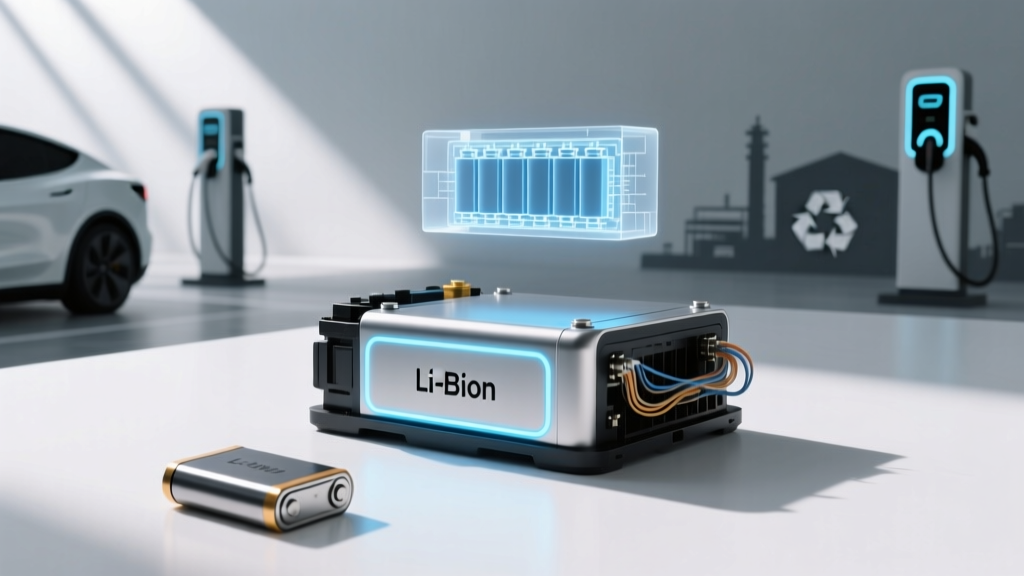
- High-voltage traction battery (EV only): A 40–120+ kWh lithium-based pack that stores energy for the drive motor(s). Replacement cost: $5,000–$25,000 depending on size and chemistry. Designed lifespan: 15–20+ years / 200,000–500,000 miles before reaching end-of-automotive-life (typically defined as 70–80% original capacity).
Every EV sold in the US still carries a 12V (or, increasingly, a 48V lithium) auxiliary battery. Tesla, Rivian, and Hyundai's latest Ioniq models use a low-voltage lithium unit that lasts 6–8 years. But when we talk about "EV battery life" and "EV battery replacement cost," we mean the high-voltage pack — and that is the focus of the rest of this guide.
Battery Chemistry Explained: LFP vs. NMC vs. NCA
Not all lithium-ion packs are built the same. The cathode chemistry determines energy density, cycle life, cold-weather behavior, and price. In 2026, three chemistries dominate the US market:
| Attribute | LFP (Lithium Iron Phosphate) | NMC (Nickel Manganese Cobalt) | NCA (Nickel Cobalt Aluminum) |
|---|---|---|---|
| Energy density | ~160–180 Wh/kg (lower) | ~220–260 Wh/kg (higher) | ~250–270 Wh/kg (highest) |
| Cycle life (to 80% SoH) | 3,000–5,000+ cycles | 1,000–2,000 cycles | 1,000–1,500 cycles |
| Cold-weather range loss | Greater (~35–40% at 20°F) | Moderate (~25–30% at 20°F) | Moderate (~25–30% at 20°F) |
| Thermal stability / safety | Excellent (very low thermal runaway risk) | Good with active cooling | Good with active cooling |
| Cost per kWh (2026 pack-level) | ~$95–$110 | ~$125–$145 | ~$130–$150 |
| Cobalt content | None | Low–moderate | Low |
| Recommended daily SoC | 100% OK (periodic full charge recommended for BMS calibration) | 80% daily, 100% for trips | |
| Typical 2026 US models | Tesla Model 3/Y RWD, Ford Mustang Mach-E Select (LFP option), base Rivian R1S, BYD-market vehicles | Hyundai Ioniq 5/6 Long Range, Kia EV6/EV9, VW ID.4, BMW iX, Chevrolet Equinox EV | Tesla Model S/X, Lucid Air |
Which is better? It depends on your use case. LFP wins for daily commuting, ride-share drivers, and buyers who plan to own the car 10+ years — its cycle life is 2–3× longer and you can charge to 100% every night without harm. NMC/NCA wins for road-trippers and cold-climate buyers who need maximum range per kWh and better winter performance. Most 2026 buyers choosing a standard-range trim will get LFP; long-range and performance trims still use NMC or NCA.
How Long Do EV Batteries Actually Last? Real-World Degradation Data
The fear of a dead battery at 80,000 miles is not supported by data. Independent fleet analyses from Geotab (tracking 10,000+ EVs) and long-term owner datasets show the following typical degradation curve for liquid-cooled packs:
| Milestone | Average Capacity Retained (SoH) | Notes |
|---|---|---|
| Year 1 / 15,000 mi | ~96–98% | Initial "formation" drop; steepest part of the curve |
| Year 4 / 60,000 mi | ~92–94% | Linear slow-degradation phase |
| Year 8 / 100,000 mi (warranty boundary) | ~88–92% | Most packs still well above warranty threshold |
| Year 12 / 150,000 mi | ~83–88% | Noticeable range reduction but fully usable |
| Year 16+ / 200,000+ mi | ~75–82% | End-of-automotive-life for some packs; many continue beyond |
Tesla's own 2025 Impact Report states that Model 3/Y packs retain an average of 85% capacity at 200,000 miles. High-mileage taxi fleets (Teslas in Los Angeles, Hyundai Ioniq 5s in Oslo) regularly exceed 300,000 miles on the original pack. Early Nissan Leafs — which used passively air-cooled NMC packs — degraded far faster (some hitting 70% SoH by 60,000 miles in hot climates), which is why active liquid cooling is now standard on every major-brand EV sold in the US.
Real-world range implication: A 2026 Hyundai Ioniq 5 Long Range with an EPA rating of 325 miles and ~90% SoH at 100,000 miles will still deliver roughly 290 miles on a full charge in mild weather — or about 230–245 miles on a cold-weather highway trip.
What Does the EV Battery Warranty Actually Cover?
Federal law (EPA emissions-related warranty precedent) and California's ZEV rules pushed automakers toward a de-facto standard: 8 years / 100,000 miles minimum, with California and states adopting CARB rules requiring 10 years / 150,000 miles. The warranty covers capacity loss below a stated threshold — not cosmetic issues or 12V batteries.
| Automaker (2026 MY) | Battery Warranty | Minimum Capacity Retention Guaranteed |
|---|---|---|
| Tesla (Model 3/Y RWD LFP) | 8 yr / 120,000 mi | 70% |
| Tesla (Model 3/Y Long Range, S/X) | 8 yr / 120,000–150,000 mi | 70% |
| Hyundai / Kia (Ioniq 5, EV6, EV9) | 10 yr / 100,000 mi (150k in CARB states) | 70% |
| Ford (Mach-E, F-150 Lightning) | 8 yr / 100,000 mi | 70% |
| GM (Equinox EV, Blazer EV, Silverado EV) | 8 yr / 100,000 mi | 70% (60% on some commercial trims) |
| Rivian (R1S / R1T) | 8 yr / 175,000 mi | 70% |
| BMW (i4, iX) | 8 yr / 100,000 mi | 70% |
| Volkswagen (ID.4) | 8 yr / 100,000 mi | 70% |
Fine print that matters: Warranties cover defects and abnormal degradation. They do not cover damage from accidents, flooding, improper jump-starting of the 12V system, or modifications. If your pack falls to 68% SoH at year 7 and 95,000 miles, the dealer will typically replace failed modules (not the entire pack) to bring it above the 70% threshold. Full pack replacements under warranty are rare.
For context on official warranty language and California's stricter rules, see the California Air Resources Board (CARB) ZEV warranty documentation.
How Much Does an EV Battery Replacement Cost in 2026?
Out-of-warranty replacements are uncommon — most EVs are totaled, scrapped, or traded before the pack fails — but here is what the market looks like when they do happen:
| Vehicle Class / Example | Pack Size (kWh) | Replacement Cost Range (parts + labor) | When Typically Needed |
|---|---|---|---|
| Compact EV (Chevy Bolt EV/EUV, Nissan Leaf 62 kWh) | 60–65 kWh | $6,500–$9,500 | 200,000+ mi / 15+ years, if ever |
| Midsize crossover (Tesla Model 3 RWD, Ioniq 5 Std Range) | 60–77 kWh | $8,000–$13,000 | 200,000+ mi / 15+ years |
| Long-range crossover / sedan (Model Y LR, Ioniq 5 LR, EV6) | 77–84 kWh | $11,000–$16,000 | 250,000+ mi / 15+ years |
| Full-size truck / luxury (F-150 Lightning Ext, Rivian R1T Max, Lucid Air) | 100–131 kWh | $15,000–$25,000 | 250,000+ mi / 15+ years |
| Module-level repair (most common out-of-warranty fix) | Varies | $1,500–$5,000 | When 1–3 modules fail; pack remains |
Two trends are driving costs down: (1) pack-level pricing has fallen from ~$200/kWh in 2020 to roughly $115–$140/kWh in 2026, and (2) most modern packs are module-serviceable. A technician can swap one degraded or failed module (typically 5–15 kWh) instead of replacing the entire pack — a $2,000–$4,500 repair rather than a $15,000 one.
Important context for the "2006 Honda Accord battery" comparison: That car's 12V battery costs ~$180 and is replaced 3–5 times over a 15-year ownership span, totaling $540–$900. An EV's traction battery is a one-time (if ever) expense that is dwarfed by the fuel and maintenance savings EVs deliver over the same period — typically $8,000–$15,000 in fuel savings alone over 15 years at current electricity and gas prices, per fueleconomy.gov calculators.
Factors That Accelerate (or Preserve) Battery Life
EV batteries degrade from chemical stress, not calendar age alone. These are the variables you actually control:
- State of Charge (SoC) habits: For NMC/NCA, keep daily SoC between 20–80%. For LFP, charge to 100% at least once a week to keep the BMS calibrated. Long-term storage at 100% (especially in heat) accelerates degradation on all chemistries.
- DC fast-charging frequency: Occasional road-trip fast charging is fine. Daily use of 150–350 kW DCFC, particularly without preconditioning, adds measurable wear — studies show ~1–2% extra degradation over 100,000 miles vs. Level 2 home charging. Always enable nav-based battery preconditioning (Tesla, Hyundai, Ford, Rivian all support this).
- Temperature extremes: Sustained exposure above 95°F with a high SoC is the worst-case wear scenario. Parking in shade or a garage matters. Extreme cold doesn't permanently damage the pack but temporarily reduces range by 20–40% until the battery warms.
- Thermal management: Liquid-cooled packs (standard on virtually every 2026 EV except a handful of low-cost city cars) dramatically outlast passively cooled ones.
- Driving style: Sustained high-speed driving and frequent hard acceleration generate more pack heat than moderate driving. Meaningful but secondary to SoC and temperature.
- Software updates: OEMs periodically adjust charge limits and thermal strategies via OTA updates — these often improve long-term SoH.
How to Check Your EV Battery's State of Health (SoH)
State of Health is the percentage of original usable capacity your pack can still hold. A 75 kWh pack at 90% SoH holds ~67.5 kWh. Monitoring it is easier than most owners realize:
- In-car displays: Tesla shows SoH indirectly via the "Projected Range" at 100% in the service menu. Hyundai/Kia displays battery health percentage in the EV settings on 2024+ models. Ford's MyFordPass includes a battery health indicator.
- OEM apps: The Tesla app, Hyundai Bluelink, Kia Connect, and BMW ConnectedDrive all surface SoH or a health-grade (e.g., "Excellent / Good / Fair").
- OBD-II dongles + apps: Tools like OBDeleven, Carista, or LeafSpy (Nissan-specific) read the BMS-reported SoH directly. This is the gold standard for used-EV buyers.
- Dealer diagnostic report: Any authorized service center can print a full SoH report with cell-level voltage variance — request this before buying a used EV out of warranty.
- Manual calculation: Charge to 100%, note the displayed range, divide by the original EPA range. Crude but directionally useful (adjust for temperature).
If SoH drops suddenly (more than 3–4% in a month) or one module shows voltage significantly below the others, that indicates a defect — exactly the scenario the warranty exists to cover.
Emerging Battery Tech: Solid-State and Silicon Anodes
Forward-looking context for buyers planning a 2028–2032 purchase:
- Silicon-anode lithium-ion (commercializing 2026–2028): Companies like Sila Nanotechnologies and Group14 are shipping anodes that boost energy density 15–25% without changing pack architecture. Expect 350–400+ mile EPA ratings in midsize sedans by 2028 at current pack sizes.
- Semi-solid-state (limited production 2026–2028): NIO's 150 kWh semi-solid pack is already in Chinese-market service with ~370 Wh/kg. US availability is pending.
- Full solid-state (projected 2029–2032 at scale): Toyota, Samsung SDI, and QuantumScape are targeting 400–500 Wh/kg with 10-minute 10–80% charging. These are announced and preliminary — not in any production vehicle sold in the US as of 2026.
- Sodium-ion (entering budget segments 2026+): Lower energy density than LFP but cheaper and cobalt-free; likely to appear in entry-level city EVs and commercial vans first.
For a 2026 buyer, today's LFP and NMC chemistries are mature, well-warrantied, and supported by a growing module-repair ecosystem. Waiting for solid-state means waiting 4–6+ years for mainstream US availability.
EV Battery FAQ
How long do EV batteries last in years and miles?
Modern liquid-cooled EV batteries are designed for 15–20+ years and 200,000–500,000 miles before reaching 70–80% of original capacity. Real-world fleet data shows most 2020+ models retain 88–92% SoH at 100,000 miles. They typically outlast the rest of the vehicle.
How much does an EV battery cost to replace?
Full-pack out-of-warranty replacements run $6,500–$25,000 depending on pack size and vehicle class, but most repairs are module-level at $1,500–$5,000. Full replacements are rare — the vast majority of EVs are retired or traded before the pack needs one.
What does the EV battery warranty cover?
The standard US warranty is 8 years / 100,000 miles (10 yr / 150,000 mi in CARB states) guaranteeing at least 70% capacity retention. It covers defects and abnormal degradation but not accident damage, flood damage, or 12V auxiliary battery issues.
How do I check and maximize my EV battery's health?
Check SoH via the OEM app, in-car EV settings, or an OBD-II reader like LeafSpy / OBDeleven. Maximize longevity by keeping NMC/NCA between 20–80% daily (LFP can sit at 100%), avoiding daily DC fast charging when Level 2 is available, preconditioning before fast charges, and parking in shade or a garage during hot weather.
LFP vs NMC — which is better and why?
LFP is better for daily commuters, ride-share drivers, and long-term owners who prioritize cycle life (3,000–5,000 cycles), safety, and lower cost, and who don't need maximum range. NMC is better for road-trippers and cold-climate buyers who need higher energy density (220–260 Wh/kg) and better winter range. Most 2026 standard-range trims use LFP; long-range trims use NMC or NCA.
Is an EV battery replacement more expensive than replacing the battery on a 2006 Honda Accord over the life of the car?
Not typically. A 2006 Honda Accord's 12V battery costs $150–$230 and is replaced 3–5 times over 15 years ($500–$1,000 total). An EV traction battery is engineered to last the life of the car and rarely needs replacement. Meanwhile, the EV saves $8,000–$15,000 in fuel and $2,000–$4,000 in maintenance over the same period, easily offsetting the higher initial purchase price.
Will solid-state batteries make today's EVs obsolete?
Not for at least 4–6 years. Solid-state packs are still in pre-production as of 2026 and will debut in premium, low-volume models before reaching mainstream pricing. Today's LFP and NMC packs are mature, warrantied, and supported by module-level repair networks. Buying now does not mean buying obsolete tech.
Sources: EPA fueleconomy.gov, California Air Resources Board (CARB) ZEV warranty documentation, Geotab EV Battery Health longitudinal study, Tesla 2025 Impact Report.