Why Are People Comparing an EV Battery to a 2004 Ram 1500 Battery?
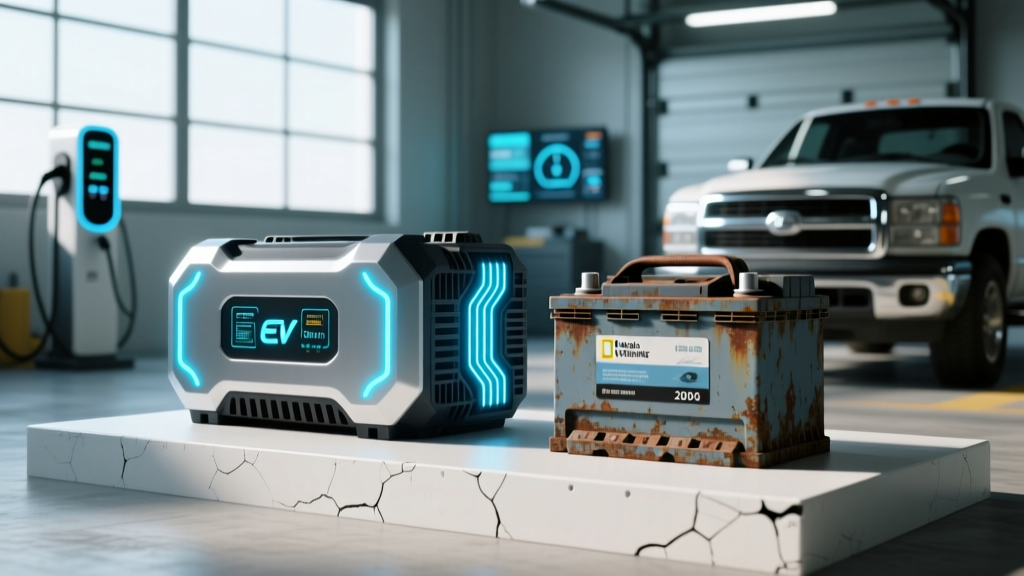
If you've searched for a 2004 Ram 1500 battery recently, you probably found yourself staring at a Group 34 or Group 65 lead-acid 12V battery — something in the neighborhood of $140–$220, good for about 650 cold cranking amps, and expected to last three to five years before it struggles on a cold morning. That's the starting battery millions of truck owners know well.
But if you're now shopping for an electric vehicle, the "battery" conversation changes entirely. An EV's high-voltage traction battery isn't a swap-at-the-counter consumable. It's a 60–130 kWh lithium-ion (or LFP) pack costing $8,000–$25,000 to replace, engineered to last 15–20 years, and governed by federal warranty mandates. The two batteries share a name and almost nothing else.
This guide breaks down exactly how modern EV traction batteries work, how long they last, what degradation actually looks like in real data, what warranties cover, and what emerging chemistries mean for buyers in 2026 and beyond. We'll keep the 2004 Ram 1500's trusty 12V battery in the rearview as a reference point for just how far vehicle electrification has come.
LFP vs. NMC/NCA: The Chemistry Decision That Shapes Your EV
Every EV battery sold in the US in 2026 uses one of two dominant cathode chemistries: LFP (lithium iron phosphate) or NMC/NCA (nickel manganese cobalt / nickel cobalt aluminum). The chemistry determines your range, how the battery ages, cold-weather behavior, and ultimately what you pay.
| Attribute | LFP (Lithium Iron Phosphate) | NMC / NCA (Nickel-based) |
|---|---|---|
| Energy Density | ~160–180 Wh/kg (lower) | ~230–300 Wh/kg (higher) |
| Cycle Life | 3,000–6,000+ cycles | 1,000–2,500 cycles |
| Calendar Life | 15–20+ years typical | 12–18 years typical |
| Cold Performance (below 20°F) | Moderate loss; slower charge acceptance | Better low-temp discharge; still loses 20–30% range |
| Recommended State of Charge | 100% daily OK; benefits from periodic full charge for BMS calibration | 80% daily recommended; 100% for trips only |
| Cobalt / Ethical Sourcing | Cobalt-free | Contains cobalt (varies by supplier) |
| Cost per kWh (pack level) | ~$90–$115 | ~$120–$155 |
| Common In 2026 Models | Tesla Model 3/Y RWD, Ford Mustang Mach-E Select (base), BYD, Rivian Standard | Tesla Long Range, Hyundai Ioniq 5/6, Kia EV6/EV9, GM Ultium, BMW iX |
Which is better? It depends on your use case. LFP wins on longevity and daily convenience (charge to 100% without guilt). NMC wins on range-per-pound, which matters in heavier vehicles or when maximizing EPA range. Most buyers who charge at home daily and don't need 350+ miles of EPA range are well-served by LFP. Road-trip-heavy drivers or those in very cold climates often prefer NMC's energy density and cold-discharge characteristics.
How Long Do EV Batteries Actually Last?
The short answer: longer than most buyers expect, and almost always longer than the 12V battery in your old 2004 Ram 1500. Data from fleet operators, manufacturer reports, and independent testing consistently shows modern EV batteries retaining 85–92% of original capacity after 100,000 miles.
Real-World Degradation Data Points
- Tesla fleet data (2025 Impact Report): Model 3/Y batteries retain ~88% capacity at 200,000 miles on average. LFP variants show slightly better retention curves.
- Geotab fleet study (100,000+ vehicles): Average annual degradation across all EV models is ~1.8% per year, meaning a 10-year-old EV battery typically retains ~82% of original capacity.
- Recurrent Auto (2025 dataset, 15,000+ EVs): Chevy Bolt owners saw 94% average SoH at 60,000 miles; Hyundai Kona Electric owners averaged 91% SoH at 80,000 miles.
- Taxi/fleet high-mileage outliers: Multiple Tesla Model 3 units in ride-hail service have exceeded 300,000 miles on the original pack with ~75–80% SoH — below warranty threshold but still functional.
For context, that 2004 Ram 1500's 12V lead-acid battery would be lucky to survive five years and 60,000 miles before needing replacement. A modern EV traction battery is engineered for 15–20 years and 200,000+ miles before capacity drops below the warranty threshold. Most EV batteries will outlive the vehicle they're installed in.
What Does the Battery Warranty Actually Cover?
Federal law (under EPA emissions-related warranty provisions and California Air Resources Board standards adopted by multiple states) effectively mandates that EV manufacturers warrant the high-voltage battery for at least 8 years or 100,000 miles (whichever comes first). In California and states adopting CARB standards (currently 17 states plus DC), that extends to 10 years or 150,000 miles.
| Manufacturer | Warranty Term | Capacity Retention Threshold | Notes |
|---|---|---|---|
| Tesla (Model 3/Y RWD, LFP) | 8 yr / 100,000 mi | 70% | Standard warranty; covers defects and excessive degradation |
| Tesla (Long Range / Performance) | 8 yr / 120,000 mi | 70% | Higher mileage cap for NMC packs |
| Hyundai / Kia | 10 yr / 100,000 mi | 70% (some models 65%) | Among the most generous terms in the industry |
| GM (Ultium-based: Equinox EV, Blazer EV, Silverado EV) | 8 yr / 100,000 mi | 70% | Covers battery and electric propulsion components |
| Ford (Mach-E, F-150 Lightning) | 8 yr / 100,000 mi | 70% | Includes battery and high-voltage components |
| Rivian | 8 yr / 175,000 mi | 70% | Notably higher mileage cap, reflecting adventure/fleet use |
| BMW (i4, iX, i7) | 8 yr / 100,000 mi | 70% | Optional extended coverage available |
What "70% capacity retention" means: If your 80 kWh battery can no longer hold at least 56 kWh (70% of new), the manufacturer must repair or replace it at no cost. Most batteries never reach this threshold during the warranty period. The warranty covers both manufacturing defects and degradation beyond the stated threshold — but not damage from accidents, flooding, or unauthorized modifications.
Source: Warranty terms verified against manufacturer specifications and fueleconomy.gov listings.
How Much Does an EV Battery Replacement Cost?
This is the question that generates the most anxiety — and the most misinformation. Let's look at real numbers.
| Vehicle | Battery Size (kWh) | Chemistry | Replacement Cost (Parts + Labor) | Typical Replacement Timeline |
|---|---|---|---|---|
| Tesla Model 3 RWD | ~60 kWh | LFP | $10,000–$13,000 | Rarely needed before 250,000+ mi |
| Tesla Model Y Long Range | ~78 kWh | NMC | $13,000–$16,000 | 200,000+ mi in most cases |
| Hyundai Ioniq 5 | 77.4 kWh | NMC | $14,000–$18,000 | 200,000+ mi projected |
| Ford F-150 Lightning (Extended) | ~131 kWh | NMC | $20,000–$28,000 | Very limited out-of-warranty data |
| Chevy Bolt EV / EUV | 65 kWh | NMC | $14,000–$16,000 | Post-recall packs show strong longevity |
| BMW iX xDrive50 | ~105 kWh (usable) | NMC | $22,000–$30,000 | Too new for out-of-warranty data |
Key context: Battery pack prices have fallen roughly 80% since 2013, from ~$650/kWh to approximately $110–$140/kWh at the pack level in 2026 (BloombergNEF tracking). By the time most current EVs need an out-of-warranty replacement (2035+), costs are projected to be significantly lower. Additionally, module-level repair is increasingly available — a technician can replace individual degraded modules for $2,000–$5,000 rather than swapping the entire pack.
Compare this to that 2004 Ram 1500 battery: a $180 lead-acid replacement every 4 years. Over 20 years, that's roughly $900 in 12V batteries. An EV traction battery might cost $15,000 once across the same timeframe — but it's also doing the work of an entire powertrain, not just cranking a starter motor.
What Kills an EV Battery (And What Doesn't)
Not all miles are created equal. Here's what actually accelerates degradation — and what's mostly myth.
Factors That Genuinely Reduce Battery Life
- Frequent DC fast charging above 150 kW without preconditioning: Repeated high-power charging without thermal management raises cell temperatures. Occasional road-trip fast charging is fine; daily 250 kW sessions without preconditioning add up over years.
- Sustained high state of charge (NMC only): Storing an NMC battery at 100% SoC for days or weeks accelerates calendar degradation. LFP batteries tolerate 100% storage far better.
- Deep discharge to 0%: Letting any lithium battery sit at 0% SoC for extended periods can cause copper dissolution in the anode current collector. Keep it above 10% if storing.
- Extreme heat exposure: Ambient temperatures above 95°F combined with high SoC stress cells. Garage parking in Arizona summers meaningfully extends pack life.
- Aggressive track use / sustained high-C-rate discharge: Repeated full-power launches generate internal heat. Normal driving, even spirited highway driving, is not a concern.
Factors That Are Mostly Fine
- Cold weather: Cold reduces available range temporarily (20–30% loss below 20°F) but doesn't permanently damage the battery. The BMS limits charge rate when cold to protect cells.
- Regenerative braking: Regen is a normal, low-C-rate charge event. It does not harm the battery.
- Occasional 100% charges (NMC): Charging to 100% before a road trip and driving off shortly after is perfectly fine. It's the prolonged sitting at 100% that's the issue.
- High mileage alone: Modern batteries are rated for 1,500–3,000+ full cycles. Even at 250 miles per cycle, that's 375,000–750,000 miles of theoretical cycle life.
How to Check and Monitor Your Battery's State of Health
State of Health (SoH) is the percentage of original capacity your battery currently holds. A new battery is 100% SoH; one that holds 70 kWh out of an original 80 kWh is at 87.5% SoH. Here's how to monitor it:
- In-vehicle displays: Tesla shows battery health indirectly through range estimates at 100% charge. Hyundai/Kia provides a battery health indicator in the infotainment system under EV settings. BMW's iDrive includes a battery SoH readout.
- OBD-II diagnostic tools: Devices like the OBDLink MX+ paired with apps such as EVNotify or LeafSpy (for Nissan) can pull SoH data directly from the BMS (Battery Management System).
- Third-party services: Recurrent Auto offers a free battery health report by connecting to your vehicle's telematics. Dealerships can pull SoH via manufacturer diagnostic tools during service visits.
- Manual tracking: Record your displayed range at 100% SoC when new, then compare periodically. A drop from 310 miles to 290 miles at 100% over two years indicates roughly 6–7% degradation — normal and expected.
Best practice: Check SoH every 6 months or every 10,000 miles. Document it. If degradation appears to accelerate suddenly (a drop of more than 3–4% in a single quarter), schedule a BMS diagnostic with your dealer — this can indicate a cell imbalance that's often correctable under warranty.
What's Coming Next: Solid-State, Silicon Anode, and Beyond
The battery landscape is evolving, but timelines matter more than headlines. Here's a realistic 2026 perspective on next-generation technologies:
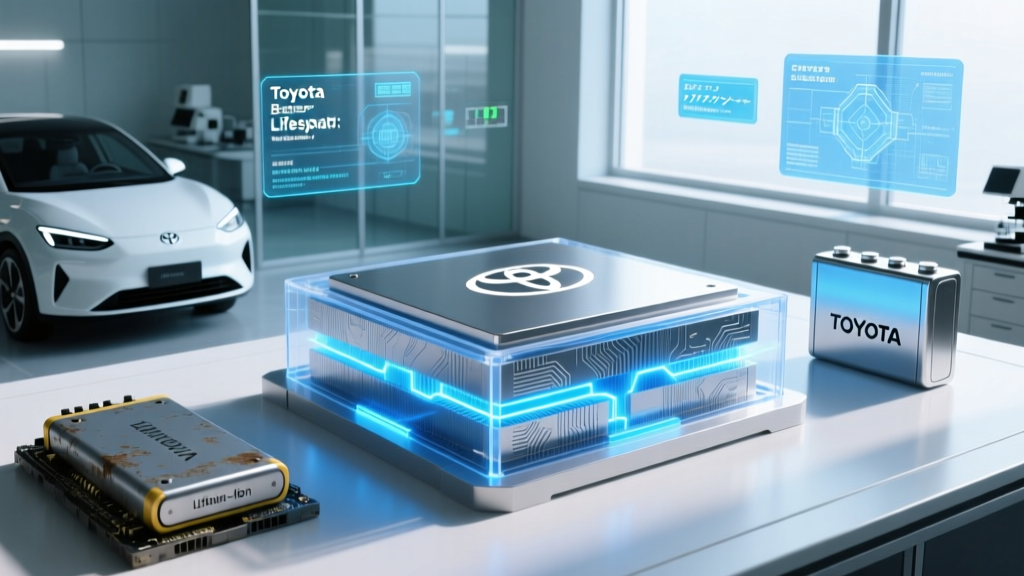
- Solid-state batteries: Toyota has announced limited production of solid-state-equipped EVs for 2027–2028, targeting 750 km (~465 miles) of range with 10-minute fast charging. Samsung SDI and QuantumScape are also advancing solid-state cells. However, mass-market availability at competitive pricing remains a 2030+ proposition. Current solid-state prototypes face manufacturing yield and cost challenges.
- Silicon-dominant anodes: Companies like Sila Nanotechnologies and Group14 are producing silicon-carbon composite anode materials now in limited volumes. These increase energy density by 15–25% over graphite anodes. Expect broader adoption in premium EVs by 2027–2028, with mainstream trickle-down by 2030.
- Sodium-ion batteries: CATL and BYD have begun producing sodium-ion cells for lower-cost, shorter-range EVs (primarily in China). Energy density is 30–40% lower than LFP, but raw material costs are dramatically lower. US-market availability is uncertain before 2029.
- LMFP (lithium manganese iron phosphate): An evolution of LFP that adds manganese for ~15% higher energy density while retaining cobalt-free chemistry. Tesla and Ford are expected to adopt LMFP cells in some models by 2027.
Bottom line for 2026 buyers: Don't wait for solid-state. Current LFP and NMC batteries are mature, well-warrantied, and proven across millions of vehicles. The technology you can buy today will serve you well for 15+ years.
The 2004 Ram 1500 Battery vs. Your EV Battery — A Generational Leap
To bring this full circle: the Group 65 AGM battery you'd buy for a 2004 Ram 1500 today stores roughly 0.8 kWh of energy, weighs about 45 pounds, costs $180, and lasts 3–5 years. It exists to spin a starter motor for 2 seconds.
The traction battery in a 2026 Tesla Model Y Long Range stores 78 kWh — nearly 100 times more energy — weighs 1,050 pounds, costs roughly $14,000 to replace, and is designed to last 200,000+ miles and 15+ years while powering a 4,400-pound vehicle from 0 to 60 in 4.8 seconds and delivering 310 miles of EPA-rated range. It's warrantied for 8 years or 120,000 miles at 70% capacity retention.
These are fundamentally different technologies solving fundamentally different problems. The 12V battery is a consumable. The EV traction battery is the powertrain. Understanding that distinction — and the real data on longevity, degradation, and cost — is the best way to approach an EV purchase without unnecessary anxiety.
How long do EV batteries last in years and miles?
Most modern EV batteries (2020 and newer) last 15–20 years and 200,000+ miles before degrading below the 70% capacity warranty threshold. Fleet data from Tesla, Geotab, and Recurrent Auto consistently shows 85–92% capacity retention at 100,000 miles.
How much does an EV battery cost to replace in 2026?
Replacement costs range from approximately $10,000 for a smaller LFP pack (Tesla Model 3 RWD, ~60 kWh) to $28,000+ for a large NMC pack (Ford F-150 Lightning Extended Range, ~131 kWh). Most owners never need an out-of-warranty replacement. Module-level repairs can cost $2,000–$5,000.
What does the EV battery warranty cover?
Federally mandated minimum: 8 years / 100,000 miles. In CARB states: 10 years / 150,000 miles. Coverage includes manufacturing defects and capacity loss below the stated threshold (typically 70% of original capacity). Some manufacturers like Rivian offer 8 years / 175,000 miles.
How do I check my EV battery's State of Health?
Use your vehicle's built-in battery health display (varies by brand), an OBD-II tool with EV-compatible software (OBDLink MX+ with EVNotify), or a free third-party service like Recurrent Auto. Check every 6 months or 10,000 miles and document the results.
LFP vs NMC — which EV battery chemistry is better?
LFP is better for daily home charging (100% SoC is fine), offers longer cycle life (3,000–6,000 cycles), and costs less. NMC offers higher energy density (more range per pound), better cold-weather performance, and suits drivers who need 300+ miles of EPA range. Neither is universally "better" — it depends on your driving and charging habits.
Does fast charging damage my EV battery?
Occasional DC fast charging is not harmful. However, frequent use of high-power chargers (150+ kW) without preconditioning the battery can accelerate degradation over years. Best practice: use Level 2 home charging as your daily routine and reserve DC fast charging for road trips. Always precondition before fast charging if your vehicle supports it.
Should I wait for solid-state batteries before buying an EV?
No. Solid-state batteries are not expected in mass-market US vehicles before 2030 at the earliest. Current LFP and NMC batteries are proven, well-warrantied, and cost-effective. Waiting means missing years of fuel savings, available §30D federal tax credits, and mature charging infrastructure.