If you're searching for a 2000 Ford Expedition battery, you're likely dealing with a simple 12-volt lead-acid unit that costs around $150–$250 and lasts three to five years. But that search often leads to a much bigger question: how do modern electric-vehicle high-voltage traction batteries compare in longevity, replacement cost, and technology? The gap between a turn-of-the-millennium SUV starter battery and a 2026 EV battery pack is enormous — in chemistry, capacity, cost, and lifespan. This guide covers everything an EV buyer or owner needs to know about battery durability, degradation, warranty coverage, and what's coming next.
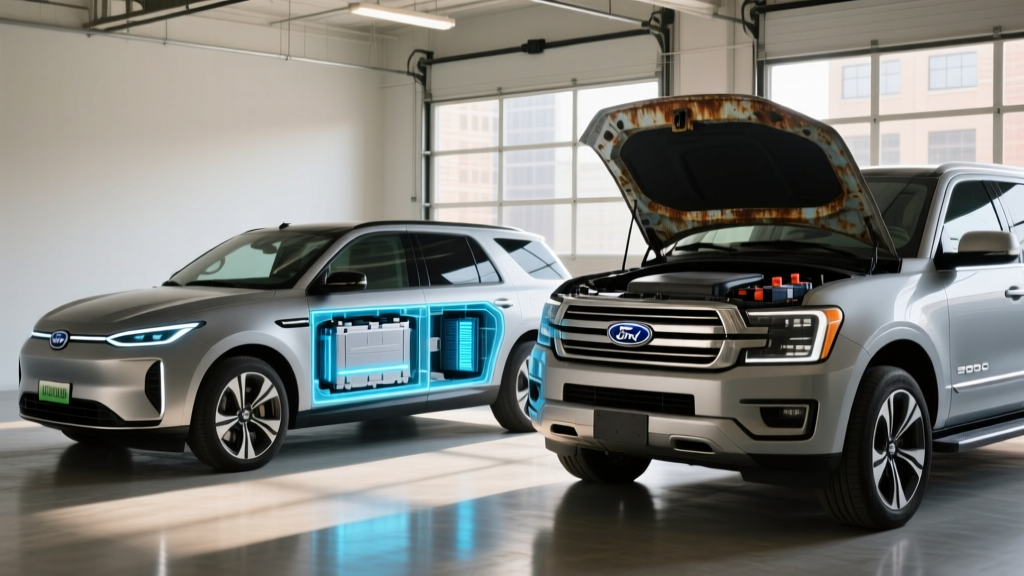
Why a 2000 Ford Expedition Battery Is Nothing Like an EV Battery
The 2000 Ford Expedition uses a Group 65 12V lead-acid battery rated at roughly 750–850 cold cranking amps (CCA). Its sole job is to crank a 5.4L V8 and power accessories when the engine is off. It stores less than 1 kWh of usable energy and weighs around 45 pounds. Replacement takes ten minutes and costs under $200 at any auto parts store.
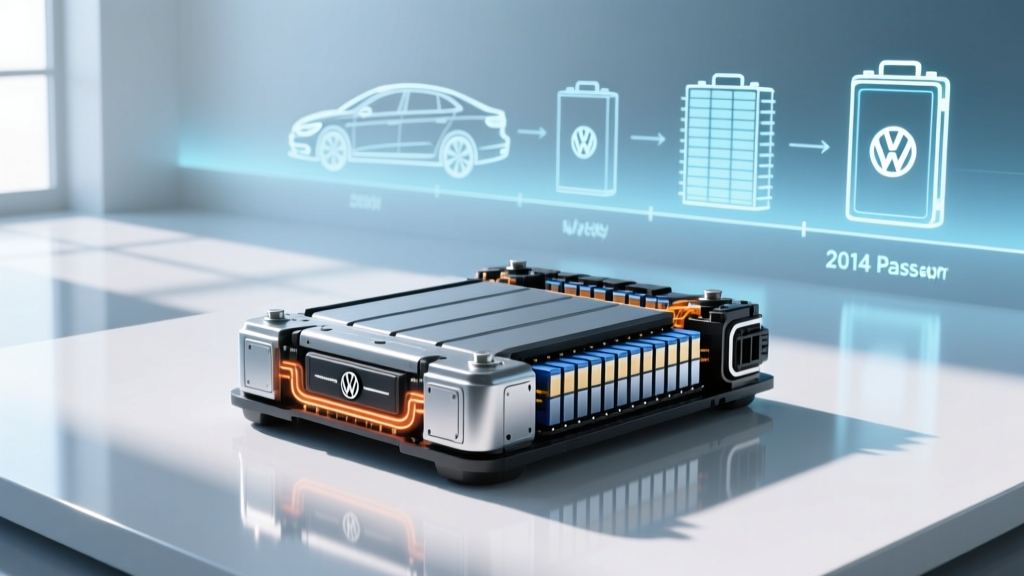
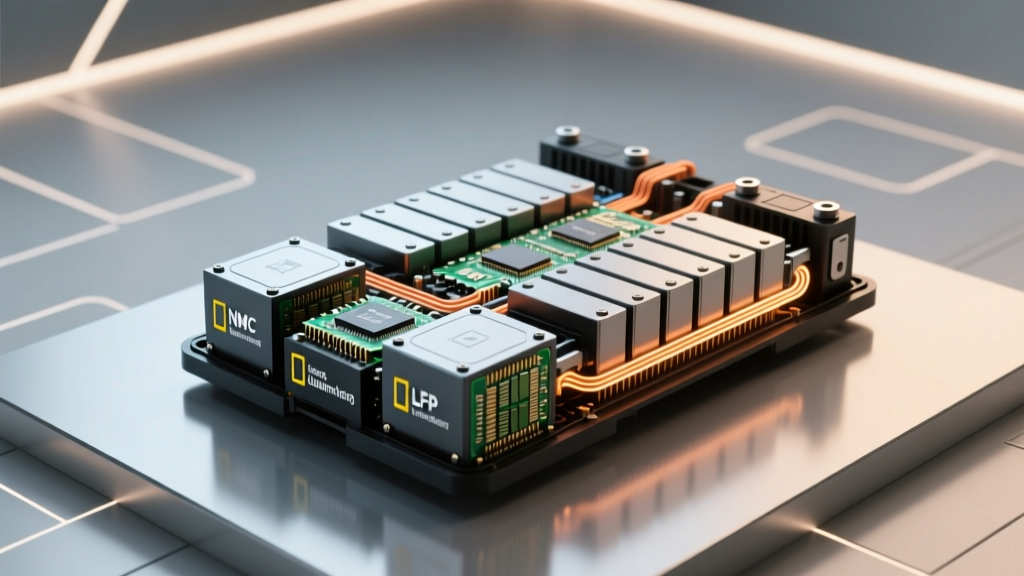
By contrast, a modern EV traction battery — like the 82 kWh usable pack in a 2026 Tesla Model Y Long Range — stores roughly 80 times more energy, weighs over 1,000 pounds, and costs over $10,000 to replace out of warranty. It's a liquid-cooled, software-managed assembly of thousands of lithium-ion cells using either NMC (nickel manganese cobalt) or LFP (lithium iron phosphate) chemistry. Understanding that chemistry is the key to understanding how long your EV battery will last and what it will cost you over time.
LFP vs NMC/NCA: Which Chemistry Is Right for You?
Two dominant lithium-ion chemistries power nearly every EV sold in the U.S. today. Each has distinct trade-offs in energy density, cycle life, cold-weather performance, and cost.
| Attribute | LFP (Lithium Iron Phosphate) | NMC/NCA (Nickel-based) |
|---|---|---|
| Energy Density | Lower (~160 Wh/kg cell-level) | Higher (~250–300 Wh/kg cell-level) |
| Cycle Life | 3,000–5,000+ cycles | 1,000–2,000 cycles |
| Cold Performance | Weaker below 32°F; slower charging | Better low-temp conductivity |
| Cost per kWh | ~$90–$110 (2026 pack-level) | ~$120–$145 (2026 pack-level) |
| Thermal Stability | Excellent — less prone to thermal runaway | Good but requires more active cooling |
| SoC Recommendation | Can charge to 100% daily | Best kept at 80% daily; 100% for trips only |
| Typical Use | Standard-range models (Tesla Model 3 RWD, Ford Mustang Mach-E Select) | Long-range / performance models (Model Y LR, Rivian R1T, Hyundai Ioniq 5 LR) |
Bottom line: If you prioritize maximum range per charge and don't mind managing state of charge, NMC/NCA delivers. If you want a battery you can charge to 100% every day with minimal degradation anxiety and lower cost, LFP is the pragmatic pick — especially for commuters who can tolerate slightly less range.
How Long Do EV Batteries Actually Last?
The short answer: almost certainly longer than you'll own the car. Data from fleet operators, manufacturer reports, and independent testing consistently shows that modern liquid-cooled EV batteries lose roughly 10–15% of their original capacity over 150,000–200,000 miles.
According to data compiled by Geotab's fleet analysis of over 10,000 EVs, the average degradation curve looks like this:
| Age / Mileage | Average Capacity Retained | Range Impact (on 300-mi EPA pack) |
|---|---|---|
| Year 1 / ~15,000 mi | 97–98% | ~294 mi effective |
| Year 3 / ~45,000 mi | 93–95% | ~282 mi effective |
| Year 5 / ~75,000 mi | 89–92% | ~270 mi effective |
| Year 8 / ~120,000 mi | 84–88% | ~258 mi effective |
| Year 10 / ~150,000 mi | 80–85% | ~247 mi effective |
Note that degradation is non-linear: the steepest drop occurs in the first 12–18 months (roughly 2–5%), then the curve flattens considerably. Many 2018–2020 model-year EVs with 100,000+ miles still retain 85% or more of original capacity. A 2000 Ford Expedition's lead-acid battery, by comparison, was likely dead by 2005.
What Does the EV Battery Warranty Cover?
Federal law mandates that EV batteries carry a minimum warranty of 8 years / 100,000 miles (10 years / 150,000 miles in California Air Resources Board states). Most manufacturers exceed this floor. The warranty guarantees that the battery will retain a specified percentage of its original capacity — typically 70% — over the coverage period.
| Manufacturer | Warranty Term | Capacity Threshold | Chemistry |
|---|---|---|---|
| Tesla (Model 3/Y LFP) | 8 yr / 100,000 mi | 70% | LFP |
| Tesla (Model Y LR) | 8 yr / 120,000 mi | 70% | NMC |
| Hyundai / Kia | 10 yr / 100,000 mi | 70% | NMC |
| Ford (Mach-E, F-150 Lightning) | 8 yr / 100,000 mi | 70% | NMC |
| Rivian | 8 yr / 175,000 mi | 70% | NMC |
| Chevrolet (Blazer EV, Equinox EV) | 8 yr / 100,000 mi | 70% | NMC |
| BMW (iX, i4) | 8 yr / 100,000 mi | 70% | NMC |
Key nuance: The warranty covers capacity loss below the threshold — not cosmetic issues or damage from accidents. If your 82 kWh pack drops to 55 kWh (67% retention) within the warranty window, the manufacturer must repair or replace it at no cost. In practice, warranty claims remain rare; the vast majority of packs stay well above 70% through the full term. For reference, the IRS §30D tax credit requires vehicles to meet battery-sourcing requirements but does not mandate a specific warranty beyond the federal minimum.
EV Battery Replacement Cost: What to Expect
Out-of-warranty battery replacement is the single biggest fear among EV shoppers. Here's what it actually costs in 2026 — and why context matters.
| Vehicle / Pack Size | Battery Cost (Parts) | Labor | Total Estimate |
|---|---|---|---|
| Tesla Model 3 RWD (~60 kWh LFP) | $6,000–$8,000 | $1,500–$2,500 | $7,500–$10,500 |
| Tesla Model Y LR (~82 kWh NMC) | $9,000–$12,000 | $1,500–$2,500 | $10,500–$14,500 |
| Ford F-150 Lightning Ext. Range (~131 kWh) | $15,000–$20,000 | $2,500–$4,000 | $17,500–$24,000 |
| Hyundai Ioniq 5 (~77.4 kWh) | $8,500–$11,000 | $1,500–$2,500 | $10,000–$13,500 |
| Chevrolet Bolt EV (~65 kWh) | $6,500–$9,000 | $1,500–$2,000 | $8,000–$11,000 |
| Rivian R1T (~128 kWh) | $14,000–$18,000 | $2,500–$3,500 | $16,500–$21,500 |
These numbers are steep — but consider the framing. A 2000 Ford Expedition's 5.4L V8 engine replacement runs $4,000–$7,000 and is far more likely to be needed than a modern EV battery swap. Most EV batteries never require full replacement; if individual modules fail, some manufacturers (like BMW and Chevrolet) can replace single modules for $1,500–$3,500 rather than the entire pack. Pack-level costs have also declined roughly 10–15% per year over the past decade, a trend expected to continue through 2030.
Factors That Accelerate — or Preserve — Battery Life
Not all miles are equal. How you charge, drive, and store your EV has a measurable impact on long-term State of Health (SoH).
What Hurts Your Battery
- Frequent DC fast charging: Occasional road-trip fast charging is fine, but daily reliance on 150+ kW DCFC sessions generates sustained heat that accelerates cell wear. Data from Geotab shows vehicles that fast-charge more than three times per week degrade roughly 1–2% faster over five years.
- Sustained 100% SoC: Storing an NMC battery at full charge for days or weeks stresses cathode materials. LFP is more tolerant of 100% SoC.
- Deep discharges to 0%: Dropping below 5% regularly strains the anode. Most EVs have a bottom buffer (typically 2–5 kWh hidden below the displayed 0%) to protect against this.
- Extreme heat exposure: Parking in direct sun at 100°F+ for extended periods without thermal management active accelerates calendar degradation. Liquid-cooled packs mitigate this significantly.
What Helps Your Battery
- Daily charging to 80% (NMC) or 100% (LFP): Set your charge limit in the vehicle app.
- Level 2 home charging: Slower 7–11 kW charging generates minimal heat and is the gentlest routine method.
- Preconditioning before DCFC: Most EVs automatically warm the pack when you navigate to a fast charger, optimizing the charge curve and reducing stress.
- Moderate SoC for storage: If leaving the car for weeks, set SoC to 50–60%.
- Garage parking in extreme climates: Even an unheated garage keeps the pack out of peak summer heat and deep winter cold.
How to Check Your Battery's State of Health (SoH)
Unlike the 12V battery in a 2000 Ford Expedition — where you'd need a multimeter or a load tester at an auto parts store — modern EVs give you multiple ways to monitor high-voltage battery health:
- In-vehicle displays: Tesla, Hyundai, and BMW show estimated range at 100% SoC, which you can compare to the original EPA figure to approximate degradation. A 2026 Model Y LR that shows 305 miles at 100% (vs. the original 330 EPA) has roughly 7.5% degradation.
- Manufacturer apps: Tesla's app, FordPass, and Hyundai Bluelink display battery health metrics or service alerts when capacity drops below warranty thresholds.
- OBD-II dongles + apps: Tools like OBDeleven, LeafSpy (for Nissan), or Scan My Tesla read raw BMS (Battery Management System) data including individual cell voltages, total kWh capacity, and calculated SoH percentage.
- Dealer diagnostics: Any authorized service center can pull a full battery health report. Request this during routine service or before purchasing a used EV.
- Third-party reports: Services like Recurrent Auto offer battery health reports for used-EV shoppers, comparing a specific vehicle's degradation to fleet averages for that model.
For used-EV buyers: always verify SoH before purchase. A 2022 model with 45,000 miles showing 94% retention is tracking well; one at 86% may be heading toward a warranty claim.
What's Next: Solid-State and Silicon-Anode Batteries
The next generational leap in EV batteries involves two technologies that promise to reshape energy density and charging speed — but neither is widely available in production vehicles as of 2026.
Solid-state batteries replace the liquid electrolyte with a solid ceramic or polymer separator, enabling lithium-metal anodes. The theoretical benefits are substantial: 40–50% higher energy density, 10–15 minute 10–80% charging, and improved safety. Toyota has announced a solid-state battery targeting 2027–2028 production in limited models. Samsung SDI and QuantumScape are also in advanced prototype stages. Realistically, broad commercial availability across mainstream EVs is a 2029–2032 timeline.
Silicon-anode batteries (sometimes called silicon-dominant anodes) replace graphite anodes with silicon, which can store roughly 10 times more lithium ions per gram. Companies like Sila Nanotechnologies and Group14 are supplying early production cells. The 2026 Mercedes-Benz G-Class 580e uses a silicon-anode battery from Sila, offering roughly 20–40% more energy density in the same volume. Expect this technology to trickle into more models through 2027–2028, initially in premium segments.
What this means for today's buyers: Current LFP and NMC batteries are mature, well-warrantied, and proven to outlast most ownership cycles. Waiting for solid-state is not a practical strategy unless your purchase timeline extends past 2030.
Frequently Asked Questions
How long do EV batteries last in years and miles?
Most modern liquid-cooled EV batteries retain 80–85% of their original capacity at 150,000 miles or 10 years. Many will outlast 200,000 miles before dropping below the 70% warranty threshold. LFP chemistries tend to last longer in cycle count than NMC, though real-world differences narrow with proper care.
How much does it cost to replace an EV battery?
Full pack replacement ranges from roughly $8,000 for a compact EV like the Chevrolet Bolt to $20,000+ for a large truck like the F-150 Lightning Extended Range. However, most batteries never need replacement — and module-level repairs can cost $1,500–$3,500 for isolated cell failures.
What does the EV battery warranty actually cover?
Federal minimum is 8 years / 100,000 miles (10/150k in CARB states). The warranty guarantees the battery will retain at least 70% of its original capacity. If it falls below that threshold within the coverage period, the manufacturer repairs or replaces it at no charge. It does not cover accident damage or modifications.
How do I check and maximize my EV battery health?
Monitor your 100%-SoC range vs. the original EPA figure, use the manufacturer app, or pull BMS data via an OBD-II reader. To maximize longevity: charge to 80% daily (NMC) or 100% (LFP), rely primarily on Level 2 home charging, precondition before DC fast charging, and avoid prolonged storage above 90% or below 10% SoC.
LFP vs NMC — which is better and why?
Neither is universally better. LFP offers longer cycle life (3,000–5,000+ cycles), lower cost, better thermal safety, and the convenience of daily 100% charging — at the expense of lower energy density and weaker cold-weather performance. NMC delivers more range per kWh and better cold performance but has shorter cycle life and benefits from 80% daily charge limits. Choose LFP for commuting and cost savings; choose NMC for maximum range and road-trip flexibility.
Is the 12V battery in an EV the same as a 2000 Ford Expedition battery?
Not exactly, but they serve the same auxiliary role. Most EVs still carry a small 12V lead-acid or lithium-iron-phosphate battery to power accessories, computers, and door locks. This is entirely separate from the high-voltage traction battery (60–130+ kWh) that drives the wheels. A 2000 Ford Expedition's 12V battery and a 2026 EV's 12V battery are functionally similar — both are replaceable for $150–$350 and have nothing to do with the vehicle's main energy storage.