Why Searchers Compare an EV Pack to a 09 Nissan Maxima Battery
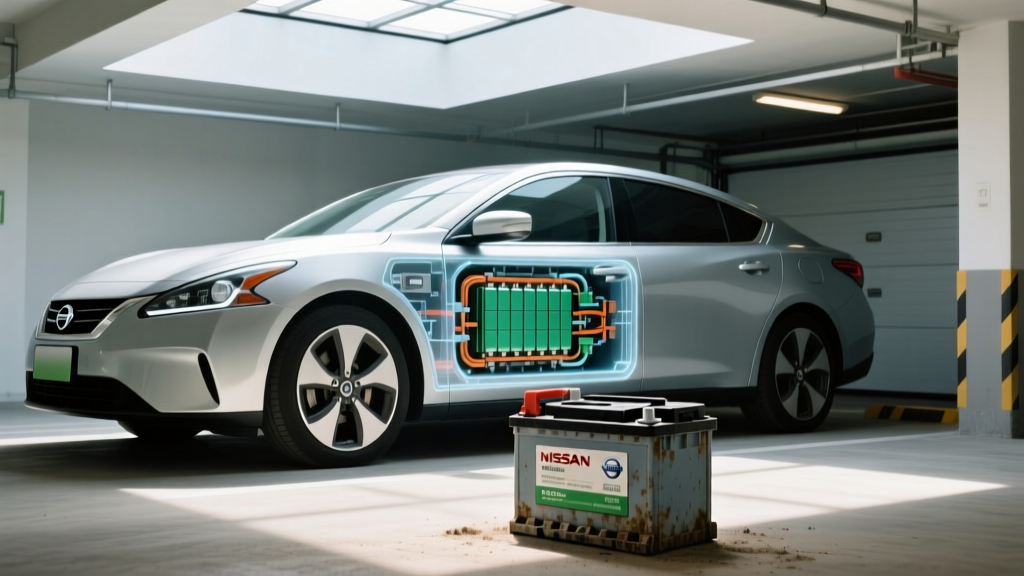
Type "09 Nissan Maxima battery" into any search engine and you will find replacement prices for a 12-volt lead-acid starter battery — typically $150 to $250 at an auto-parts counter. That is the auxiliary battery that cranks a V6 and powers the radio. It has nothing to do with the high-voltage traction battery that actually propels an electric vehicle, yet the confusion persists.
This guide draws a hard line between the two. We will cover what a modern EV traction battery actually costs, how long it lasts, what degrades it, and what the warranty protects — with exact numbers from current 2025–2026 model-year data. If you are cross-shopping a used Maxima against a new EV, or just trying to understand whether an EV battery is a ticking time bomb, the data below should settle the question.
LFP vs. NMC: The Chemistry Decision That Defines Your Battery
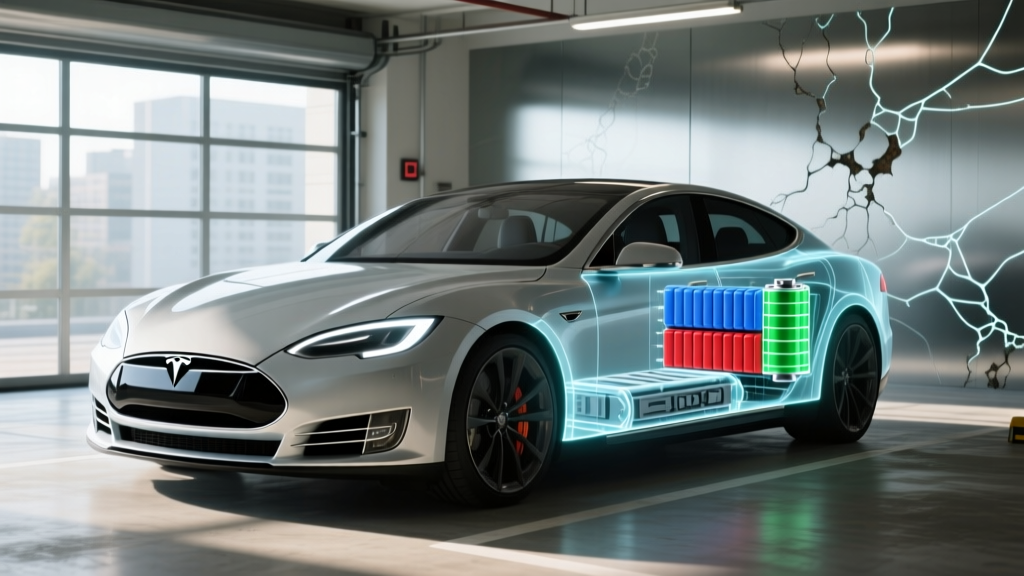
Every EV sold in the US today uses one of two dominant lithium-ion chemistries: LFP (lithium iron phosphate) or NMC/NCA (nickel manganese cobalt / nickel cobalt aluminum). The chemistry determines energy density, cycle life, cold-weather behavior, and cost.
| Attribute | LFP (e.g., Tesla Model 3 RWD, base Model Y) | NMC / NCA (e.g., Hyundai Ioniq 5, Ford F-150 Lightning Ext. Range) |
|---|---|---|
| Energy density | ~160–180 Wh/kg (cell level) | ~220–260 Wh/kg (cell level) |
| Typical cycle life | 3,000–5,000+ full cycles to 80% SoH | 1,000–2,000 full cycles to 80% SoH |
| Cold-weather performance | Greater range loss below 32 °F; slower charge acceptance | Better low-temp discharge and DC fast-charge speeds |
| Recommended daily SoC | 100% OK — Tesla and others recommend full charges | 80% daily; 100% only for trips |
| Cost per kWh (pack level) | ~$100–$120 | ~$130–$160 |
| Cobalt content | None | Present — supply-chain and ethical considerations |
Which is better? If you want maximum range per pound and fast cold-weather charging, NMC wins. If you want a battery you can charge to 100% every night without guilt, plan to keep the car 10+ years, or want the lowest upfront cost, LFP is the pragmatic pick. Tesla's shift to LFP in its Standard Range models and Ford's adoption of LFP in the base Mustang Mach-E reflect this cost-durability trade-off.
How Long Do EV Batteries Actually Last? Real Degradation Data
The short answer: most EV traction batteries outlast the cars they are installed in. The long answer requires looking at measured State of Health (SoH) data across fleets and model years.
Observed Degradation Benchmarks (Sources: Geotab fleet study, Recurrent Auto, manufacturer filings):
- Year 1: ~1–3% capacity loss (initial formation loss)
- Years 2–4: ~0.5–1.5% per year (linear slow-degradation phase)
- Years 5–8: Cumulative loss typically 8–15% from original capacity
- 10-year / 150,000-mile mark: Most packs retain 80–90% of original capacity
- Outliers: Early Nissan Leaf (2011–2015, passively cooled) saw 20–30% loss in hot climates by year 6 — a lesson the industry learned and corrected with active thermal management
For context, a 2025 Hyundai Ioniq 5 with its 77.4 kWh (usable) NMC pack and liquid thermal management should retain roughly 85–90% capacity at 100,000 miles under normal use. That translates to an EPA range dropping from 303 miles to roughly 255–275 miles — still plenty usable for daily driving and road trips.
Battery Warranty Terms: What Manufacturers Actually Guarantee
Federal law (EPA emissions warranty precedent and CARB rules adopted by multiple states) effectively mandates that manufacturers warrant EV batteries for at least 8 years / 100,000 miles. In practice, most brands match or exceed this.
| Manufacturer | Warranty Period | Capacity Retention Threshold |
|---|---|---|
| Tesla (Model 3 / Y LFP) | 8 yr / 100,000 mi | 70% |
| Tesla (Long Range / Performance) | 8 yr / 120,000 mi | 70% |
| Hyundai / Kia (Ioniq 5, EV6, EV9) | 10 yr / 100,000 mi | 70% |
| Ford (F-150 Lightning, Mach-E) | 8 yr / 100,000 mi | 70% |
| GM (Ultium-based: Equinox EV, Blazer EV, Silverado EV) | 8 yr / 100,000 mi | 70% (some models 60% for commercial) |
| Rivian (R1T, R1S) | 8 yr / 175,000 mi | 70% |
| BMW (i4, iX) | 8 yr / 100,000 mi | 70% |
The threshold matters: if your pack drops below 70% of original capacity within the warranty window, the manufacturer must repair or replace it — typically by swapping in a refurbished pack with at least 70% SoH, not necessarily a brand-new unit. In reality, warranty claims remain rare. Recurrent Auto's 2024 analysis of 15,000+ EVs found that fewer than 1.5% of vehicles required a battery replacement under warranty.
EV Battery Replacement Cost: The Number That Scares People (and Why It Shouldn't)
Here is the figure that generates headlines — and then here is the context those headlines omit.
| Vehicle / Pack Size | Battery Capacity (usable kWh) | Estimated Replacement Cost (parts + labor) |
|---|---|---|
| Tesla Model 3 RWD (LFP) | ~57.5 kWh | $8,000–$12,000 |
| Hyundai Ioniq 5 (NMC) | 77.4 kWh | $12,000–$16,000 |
| Ford F-150 Lightning Ext. Range | ~131 kWh | $18,000–$25,000 |
| Chevrolet Silverado EV (Ultium) | ~200 kWh | $25,000–$35,000 |
| BMW iX xDrive50 | ~105.2 kWh | $18,000–$24,000 |
Yes, those numbers are large. Now the context:
- Most EV batteries never need replacement. The vast majority of packs retain 80%+ capacity at 150,000 miles. Catastrophic failure (sudden cell-group death, coolant intrusion) is rare and usually covered under the 8-year warranty.
- Costs are falling. Pack-level pricing has dropped from ~$400/kWh in 2015 to roughly $110–$140/kWh in 2025. By the time a 2026 EV actually needs a replacement (likely 2035+), expect pricing to be 30–50% lower.
- Module-level repair is increasingly viable. Shops like Electrified Garage and independent EV specialists can replace individual modules for $2,000–$5,000 rather than swapping the entire pack.
- Compare to ICE: A 2009 Nissan Maxima's engine or transmission replacement at 150,000 miles runs $3,000–$6,000. The Maxima's timing chain, water pump, and CVT fluid services add up too. The EV battery is not uniquely expensive — it is just a single large line item rather than many smaller ones.
Five Factors That Accelerate (or Preserve) Battery Health
What hurts your battery:
- Frequent DC fast charging above 150 kW — occasional use is fine, but daily 350 kW sessions generate sustained heat that accelerates electrolyte breakdown. Data from Geotab shows fleets that DC-fast-charged daily saw ~1–2% additional annual loss vs. Level 2 charging.
- Sitting at 100% SoC in hot weather — a fully charged NMC pack baking at 95°F+ is the single worst condition for lithium-ion longevity. If you must charge to 100%, do it the morning of a trip, not three days before.
- Deep discharges to 0% — regularly draining below 10% stresses the anode. Most BMS (battery management systems) have a buffer that prevents true 0%, but habitually running the pack to the last bar is not ideal.
- Extreme cold without preconditioning — charging a cold battery forces lithium plating on the anode. Always use your car's preconditioning feature before DC fast charging in winter.
- Aftermarket modifications — non-OEM chargers, unsupported software tunes, or bypassing thermal management voids warranties and risks cell damage.
What preserves your battery:
- Daily SoC between 20–80% (NMC) or 20–100% (LFP)
- Level 2 home charging as your primary method (~7–11.5 kW — gentle on cells)
- Preconditioning before fast charging in cold weather (the car warms the pack to ~30–35°C for optimal charge acceptance)
- Garage parking — keeping the car out of direct summer sun and sub-zero wind reduces thermal cycling stress
- Driving it — batteries degrade from calendar aging too; a pack that cycles regularly actually ages more gracefully than one that sits at 50% for months
How to Check Your Battery's State of Health (SoH)
Unlike the 12V battery in a 09 Nissan Maxima — which you can test with a $40 multimeter — EV traction battery health requires software-level access. Here are the methods available to owners:
- In-car diagnostics: Tesla, Hyundai/Kia, BMW, and Rivian display a battery health estimate or degradation graph in the vehicle settings. Tesla's service menu (accessible via the software screen) shows a "Battery Health" percentage on recent software versions.
- OBD-II dongles + apps: Tools like OBDLink MX+ paired with apps such as LeafSpy (Nissan), Teslalogger, or ABRP (A Better Route Planner) can pull SoH data from the BMS. This works well for Hyundai/Kia and GM Ultium vehicles.
- Dealer or independent EV shop scan: A service center can pull a full cell-balancing report showing individual module voltage variance — a key indicator of pack health. Expect $50–$150 for this service out of warranty.
- Third-party reports: Services like Recurrent offer battery health reports tied to your vehicle's VIN, useful for used-EV buyers.
If you are buying a used EV, always request a SoH reading before purchase. A pack showing 90%+ SoH at 50,000 miles is healthy; below 80% at any mileage warrants a closer look and may indicate a warranty claim is in order.
What Comes Next: Solid-State and Silicon-Anode Batteries
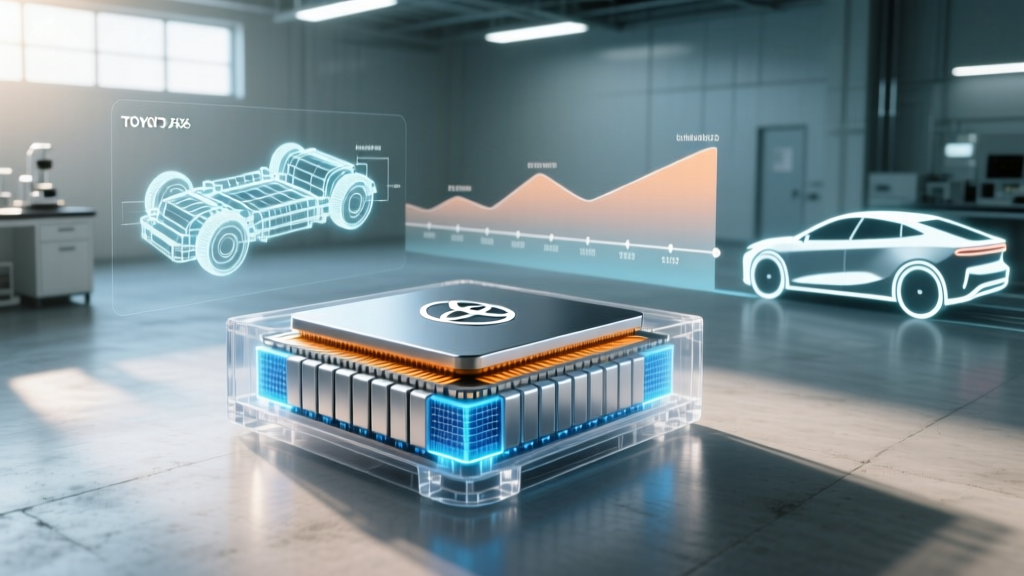
Solid-state batteries — which replace the liquid electrolyte with a solid ceramic or polymer — promise higher energy density (~400+ Wh/kg at the cell level), faster charging, and reduced fire risk. Toyota has announced a solid-state battery targeting 2027–2028 production in limited models, while Samsung SDI and QuantumScape are in pre-production validation phases.
Silicon-anode batteries (used in limited form in the 2025 Porsche Taycan and Mercedes EQG) boost energy density by 15–25% over graphite anodes and are already reaching production. These are real, near-term improvements.
Realistic timeline: Expect solid-state batteries to appear in low-volume, premium vehicles by 2028–2029, with mainstream adoption not arriving until 2032–2035. If you are buying an EV in 2026, today's LFP and NMC packs are mature, well-understood, and backed by extensive warranty coverage. Waiting for solid-state is like waiting for a better internal-combustion engine in 2005 — the technology you have now is already good enough for the vast majority of use cases.
EV Battery vs. 09 Nissan Maxima Battery: The Bottom Line
A 2009 Nissan Maxima's 12V battery is a $200 consumable that you replace every 3–5 years. The EV traction battery is a $10,000–$25,000 component that you will likely never replace during ownership. Modern packs with active thermal management routinely exceed 150,000 miles with 80%+ capacity retention, and the 8-year / 100,000-mile federal warranty backstop means catastrophic failure is the manufacturer's problem, not yours.
The real cost comparison is not battery-for-battery — it is total ownership. An EV eliminates oil changes, timing belt services, transmission fluid flushes, and exhaust repairs. Even accounting for a hypothetical out-of-warranty battery replacement at year 12, most EVs still come out ahead on a cost-per-mile basis versus a gasoline sedan of the same vintage. The data supports this, and the warranty protects you while the pack matures.
Frequently Asked Questions
How long do EV batteries last in years and miles?
Based on fleet data from Geotab and Recurrent Auto, most modern liquid-cooled EV batteries retain 80–90% of original capacity at 10 years or 150,000 miles. Catastrophic failure before 100,000 miles is rare (under 1.5% of vehicles). Many packs will outlast the vehicle's body and interior.
How much does it cost to replace an EV battery?
Out-of-warranty replacement costs range from ~$8,000 for a smaller LFP pack (Tesla Model 3 RWD) to $25,000–$35,000 for a large pack (Ford F-150 Lightning Extended Range, Chevy Silverado EV). However, the vast majority of EV batteries never require full replacement. Module-level repair is increasingly available for $2,000–$5,000.
What does the EV battery warranty actually cover?
Manufacturers warrant the traction battery for 8–10 years and 100,000–175,000 miles (varies by brand) against capacity loss below 70% of original. If your pack falls below that threshold within the warranty period, the manufacturer will repair or replace it — typically with a refurbished unit meeting the 70% minimum. Defects in materials, cell failures, and BMS faults are also covered.
How do I check and maximize my EV battery health?
Check SoH through your car's built-in diagnostics, an OBD-II scanner with EV-compatible app, or a dealer service scan. To maximize longevity: charge NMC packs to 80% daily (LFP to 100% is fine), use Level 2 home charging as your primary method, precondition before DC fast charging in cold weather, avoid prolonged storage at 100% SoC in heat, and keep the car garaged when possible.
LFP vs. NMC — which battery chemistry is better for me?
Choose LFP if you want the longest cycle life (3,000–5,000+ cycles), can charge to 100% daily without concern, live in a moderate climate, and prioritize lower cost. Choose NMC/NCA if you need maximum range per charge, drive in cold winters where charge acceptance matters, or need the lightest possible pack for performance. Neither is universally "better" — the right choice depends on your climate, driving habits, and ownership timeline.