If you've ever replaced the 12V battery in a 2003 Ford Expedition, you know the drill: a $150-220 lead-acid group-65 or group-78 cell that lasts three to five years before it can no longer crank a 5.4L V8 on a cold morning. That familiar maintenance cycle colors how many buyers approach electric vehicles — with the assumption that an EV's battery pack is just a bigger version of the same consumable, destined for an expensive swap every few years.
The reality is fundamentally different. A modern EV traction battery is a chemically managed, thermally controlled energy system designed to outlast the vehicle itself. But the chemistry, cost, and care requirements are nothing like the 03 Ford Expedition battery you picked up at an auto parts store. This guide breaks down exactly what's inside today's EV packs, how long they last, what replacement actually costs, and how to monitor and maximize their health — with real numbers, not marketing.
The Fundamental Divide: 12V Lead-Acid vs. High-Voltage Traction Packs
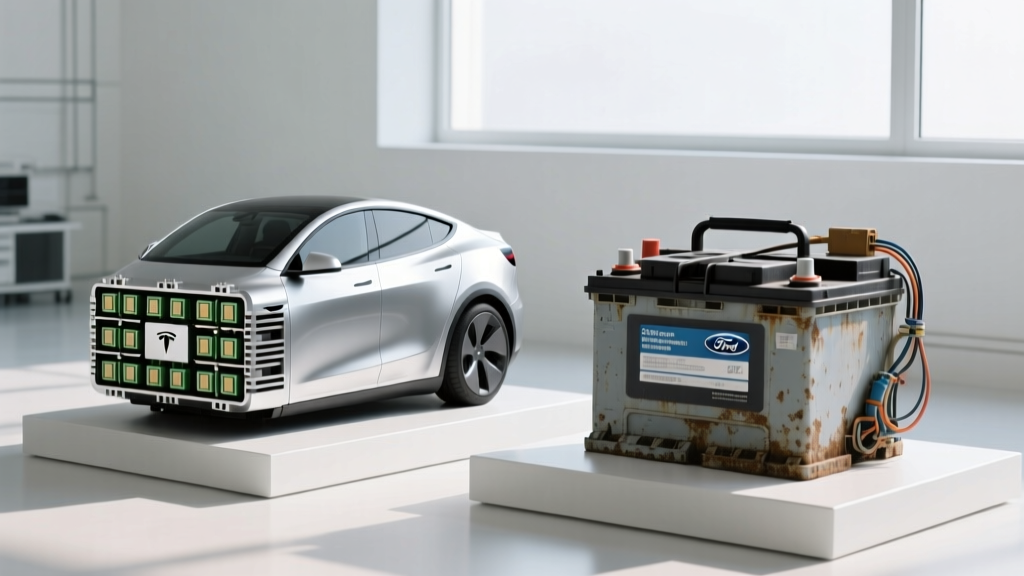
The battery in a 2003 Ford Expedition is a 12-volt, lead-acid, flooded or AGM unit rated at roughly 650-850 cold-cranking amps (CCA). It stores about 0.6-0.9 kWh of energy and exists solely to start the engine and run accessories when the alternator isn't spinning. Its replacement interval is 3-5 years, and it costs $130-$220 at retail.
An EV traction battery operates at 400V (or 800V in architectures like the Hyundai Ioniq 5 and Kia EV6). It stores 60-130+ kWh of usable energy in lithium-ion cells and powers the drive motors directly. Where the Expedition's battery is a simple consumable, an EV pack is a managed system with active thermal control, cell-level voltage monitoring, and software that buffers the top and bottom of the state-of-charge window to prevent damage.
Importantly, every EV also has a 12V auxiliary battery (increasingly a small lithium-iron-phosphate unit) that handles the vehicle's computers, lights, and contactor closure. This 12V battery is functionally analogous to the Expedition's battery, but it's not what people mean when they discuss "EV battery replacement." The traction pack is the high-value component, and it's the one we'll focus on here.
LFP vs. NMC vs. NCA: Chemistry Trade-Offs That Matter
Not all lithium-ion batteries are the same. The cathode chemistry determines energy density, cycle life, cost, and cold-weather behavior. The two dominant families in 2026 EVs are:
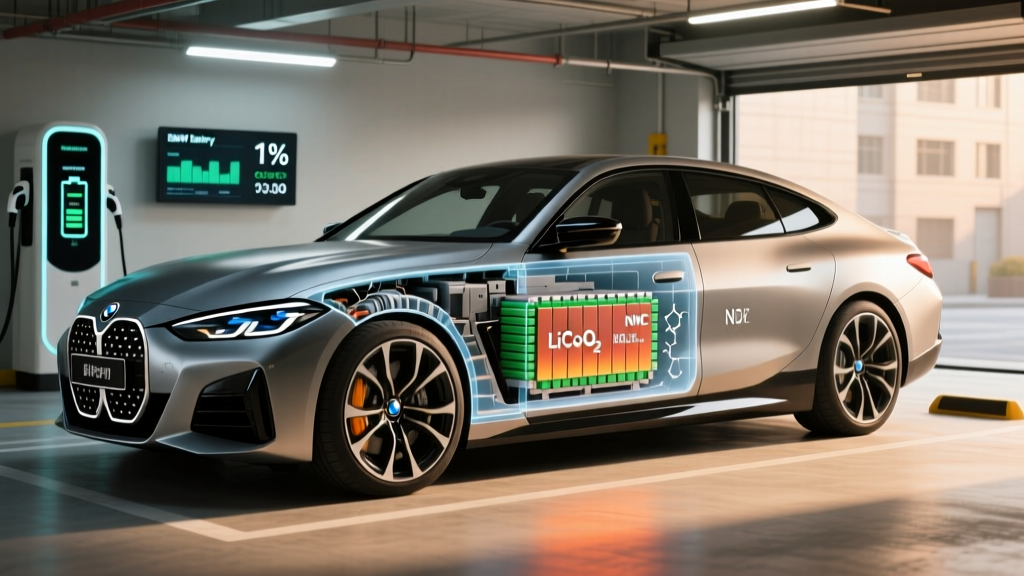
LFP (Lithium Iron Phosphate): Used in standard-range Tesla Model 3/Y, Ford Mustang Mach-E Select, and many Chinese-market vehicles entering global supply chains. LFP cells tolerate 100% state-of-charge storage without accelerated degradation, offer 3,000-5,000+ full charge cycles, and cost less per kWh to produce. The trade-off is lower energy density (~160-180 Wh/kg at the cell level vs. 250-300 Wh/kg for NMC), which means a heavier or physically larger pack for the same range. Cold-weather performance is also weaker — expect more range loss below freezing compared to NMC.
NMC (Nickel Manganese Cobalt) / NCA (Nickel Cobalt Aluminum): Found in long-range and performance variants (Tesla Model S/X, Rivian R1T, BMW iX, Hyundai Ioniq 5 Long Range). Higher energy density enables more range in a smaller, lighter package. Cycle life is typically 1,000-2,000 full cycles to 80% capacity retention. NMC/NCA packs degrade faster if routinely charged to 100% or stored at high SoC in hot climates — most manufacturers recommend daily charging to 80-90% for these chemistries.
| Attribute | LFP (LiFePO4) | NMC / NCA |
|---|---|---|
| Energy Density (cell-level) | 160-180 Wh/kg | 250-300 Wh/kg |
| Typical Cycle Life (to 80% SoH) | 3,000-5,000+ | 1,000-2,000 |
| 100% SoC Storage Tolerance | Excellent — recommended periodically | Poor — accelerates degradation |
| Cold-Weather Range Loss | Greater (~35-40% at 20°F) | Moderate (~25-30% at 20°F) |
| Cost per kWh (cell) | ~$80-100 | ~$110-140 |
| Common Applications | Standard-range, fleet, L2 daily drivers | Long-range, performance, towing |
| Cobalt Content | None | Varies (low-cobalt NMC trending) |
Neither chemistry is universally "better." LFP suits drivers who can charge at home daily, don't need maximum range, and want a pack that tolerates less careful SoC management. NMC/NCA is the choice for road-trippers, cold-climate drivers, and anyone who needs the most miles per kWh of pack weight. According to IEA Global EV Outlook data, LFP's global market share in EV batteries reached roughly 40% by 2025, up from under 10% in 2019, driven by cost and durability advantages.
How Long Do EV Batteries Actually Last? Degradation in Real Numbers
EV batteries don't "die" the way the lead-acid battery in your 03 Ford Expedition eventually refused to turn the starter. They gradually lose capacity — a phenomenon measured as State of Health (SoH). A new pack is 100% SoH; when it degrades to 70-80%, it still functions but delivers proportionally less range.
Real-world degradation data, compiled from fleet studies and owner-reported telemetry (including Recurrent Auto's dataset of over 15,000 vehicles), shows the following typical trajectories:
| Vehicle Age / Mileage | Typical SoH (NMC/NCA) | Typical SoH (LFP) | Notes |
|---|---|---|---|
| 1 year / 15,000 mi | 95-98% | 97-99% | Initial calibration loss; steepest drop |
| 3 years / 45,000 mi | 90-94% | 94-97% | Curve flattens significantly |
| 5 years / 75,000 mi | 86-92% | 92-96% | Most owners notice ~10-15 mi range loss |
| 8 years / 120,000 mi | 80-88% | 88-94% | Still above warranty threshold for most |
| 10 years / 150,000 mi | 75-85% | 85-92% | Usable, but range reduction is tangible |
The key insight: degradation is non-linear. Most capacity loss occurs in the first 12-24 months (roughly 2-5%), after which the curve flattens dramatically. A well-maintained NMC pack at 100,000 miles often retains 85-90% of original capacity. LFP packs, with their superior cycle life, commonly show 90%+ SoH at the same mileage.
For context, an EV with a 250-mile EPA range and 85% SoH still delivers ~212 miles — more than adequate for the average American's 37-mile daily round trip (per FHWA data). The battery doesn't strand you; it simply shrinks your buffer.
What the Battery Warranty Actually Covers — and What It Doesn't
Federal law (per EPA and CARB requirements adopted by most manufacturers) mandates that EV battery packs carry a minimum warranty of 8 years / 100,000 miles. Many automakers match this exactly; some extend it in CARB states to 10 years / 150,000 miles. The warranty typically guarantees the pack will retain at least 70% of its original capacity — though some, like Tesla, set the threshold at 70% while others (notably Hyundai/Kia) warrant 70% or better.
| Manufacturer | Warranty Period | Mileage Cap | Minimum SoH Guaranteed |
|---|---|---|---|
| Tesla (Model 3/Y) | 8 years | 100,000-120,000 mi (varies by trim) | 70% |
| Hyundai / Kia | 8 years (10 in CARB states) | 100,000 mi (150,000 CARB) | 70% |
| Ford (Mustang Mach-E, F-150 Lightning) | 8 years | 100,000 mi | 70% |
| GM (Ultium platform) | 8 years | 100,000 mi | 70% |
| Rivian | 8 years | 175,000 mi (Max Pack) | 70% |
| BMW (iX, i4) | 8 years | 100,000 mi | 70% |
What's covered: capacity loss below the threshold, cell/module failures, BMS (battery management system) defects, and thermal management system failures that damage the pack.
What's typically not covered: cosmetic issues, range reduction due to ambient temperature, damage from accidents or flooding, degradation from aftermarket modifications, or failure resulting from ignoring manufacturer charging guidelines (though this is rarely enforced in practice).
The warranty is a floor, not a prediction. The vast majority of packs never approach the 70% threshold within the warranty period. Data from Recurrent Auto shows that fewer than 2% of EVs in their study required warranty battery replacement — and those were predominantly early-generation models with known manufacturing defects, not normal wear.
EV Battery Replacement Cost: Numbers, Not Nightmares
This is where the ghost of the 03 Ford Expedition battery ($170 at AutoZone) meets the sticker shock of a high-voltage pack. Yes, EV battery replacement is expensive. But context matters enormously:
| Battery Size / Vehicle Class | Replacement Cost (2026) | When Typically Needed | Notes |
|---|---|---|---|
| 60-75 kWh (Standard Range — Model 3 RWD, Mach-E Select) | $8,000-$12,000 | Rarely before 200,000+ mi | LFP packs may never need replacement in vehicle's life |
| 75-100 kWh (Long Range — Model Y LR, Ioniq 5, iX) | $12,000-$18,000 | 150,000-250,000+ mi | Module-level repair sometimes possible for less |
| 100-135 kWh (Large Pack — F-150 Lightning Ext., Rivian Max) | $18,000-$28,000 | 200,000+ mi if at all | Cost declining ~8-12% annually as cell prices drop |
| PHEV Packs (15-30 kWh) | $4,000-$8,000 | 150,000-200,000 mi | Smaller pack, lower absolute cost |
Several factors mitigate this number in practice:
- Module-level repair: Many packs allow individual module replacement rather than a full pack swap. A single failed module might cost $1,500-$3,500 to replace, restoring full function.
- Declining cell costs: Battery cell prices fell from ~$1,200/kWh in 2010 to roughly $95-110/kWh by 2025 (per BloombergNEF). A 75 kWh pack that cost $20,000 to replace in 2020 might cost $10,000-$12,000 in 2026.
- Most packs outlive the car: The average vehicle lifespan in the US is ~12 years and ~150,000 miles (per BTS data). At the degradation rates shown above, most packs will retain 75-85% capacity at end of vehicle life — still entirely functional.
- Aftermarket and refurbished packs: A growing market for reconditioned packs offers 30-50% savings over OEM new units for out-of-warranty vehicles.
Compare this honestly: the 03 Ford Expedition's 5.4L V8 might need a $3,000-$5,000 transmission rebuild, $1,200-$2,000 in timing chain work, and $800-$1,500 in catalytic converter replacement over the same 150,000-mile lifespan. The EV's "expensive" battery isn't necessarily the costlier ownership proposition when you total it up.
What Kills an EV Battery (and What Doesn't)
Understanding degradation factors lets you make practical choices — not anxious ones.
Habits That Accelerate Degradation
- Routine DC fast charging to 100%: High charge rates at high SoC stress NMC/NCA cells most. Occasional road-trip fast charges are fine; daily 100% DCFC sessions are not.
- Prolonged storage at 100% SoC in heat: Leaving an NMC vehicle at full charge in a 95°F+ garage for weeks accelerates calendar aging. LFP tolerates this far better.
- Consistent deep discharge to 0%: Letting the pack sit at or near 0% for extended periods can cause copper dissolution in the anode. The BMS buffer protects against this, but don't test it.
- Ignoring thermal preconditioning: Fast-charging a cold pack (below ~50°F) without preconditioning forces the BMS to limit charge rate — and charging a frozen pack at even moderate rates causes lithium plating, a permanent damage mechanism.
Habits That Maximize Longevity
- Charge to 80-90% daily (NMC/NCA): Use the vehicle's charge-limit setting. Charge to 100% only when you need the range.
- Charge to 100% regularly (LFP): LFP cells benefit from periodic full charges for cell balancing and BMS calibration. Follow manufacturer guidance.
- Use Level 2 home charging as your primary source: 7-11 kW AC charging generates far less heat than 150+ kW DC, reducing thermal stress on cells.
- Precondition before fast charging: Navigate to a DC charger using the vehicle's built-in routing (Tesla, Hyundai, GM) to trigger automatic battery preconditioning.
- Store at 40-60% SoC: If the vehicle will sit unused for weeks, set the charge limit to ~50% and plug in (for L2 maintenance).
The single biggest misconception: that frequent fast charging destroys batteries. Data from Recurrent Auto shows that vehicles that DC fast-charge frequently (more than 3 sessions per week) degrade only ~1-2% faster over 100,000 miles than those that primarily use Level 2. The difference is real but small — not the catastrophic scenario forums sometimes describe.
Monitoring Your Battery's State of Health
Unlike the 03 Ford Expedition's battery — which gave you no warning before it died in a Walmart parking lot — EV batteries provide continuous health data if you know where to look.
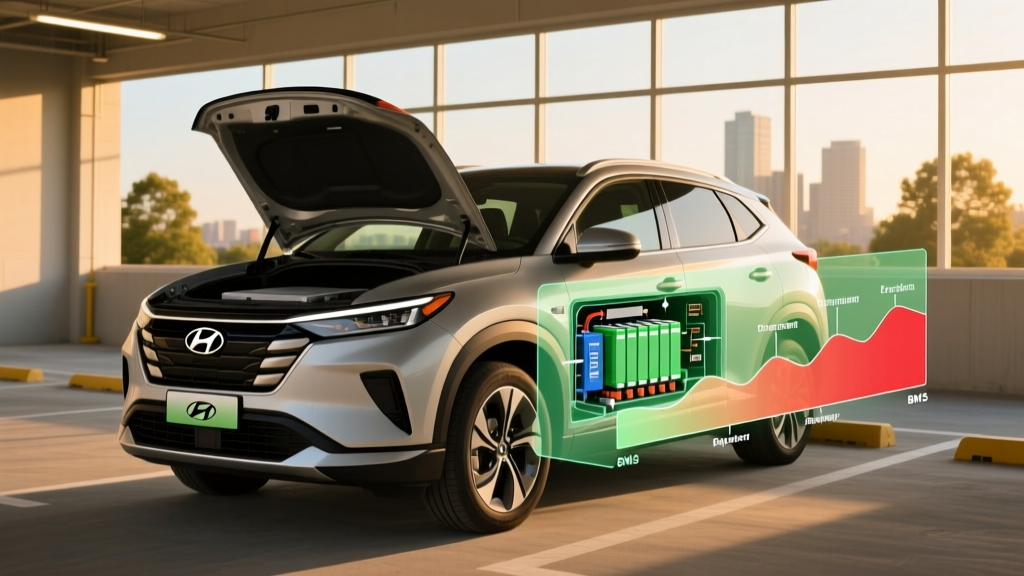
In-vehicle displays: Most modern EVs show estimated range and energy consumption but not a direct SoH percentage. Tesla's service mode (accessible via the software menu on recent builds) displays battery health metrics. Hyundai/Kia's infotainment system includes an EV battery status page showing cumulative energy throughput.
Third-party apps and OBD-II readers: Tools like LeafSpy (Nissan Leaf), TeslaFi, ABRP (A Better Routeplanner) with OBD integration, and Car Scanner can read the BMS directly and report SoH as a percentage. An OBD-II dongle ($30-$80) paired with these apps gives you dealer-level data.
Dealer diagnostic reports: Any authorized service center can pull a full battery health report, including individual module voltage variance, internal resistance, and capacity test results. Request this annually or before purchasing a used EV.
The DIY range test: Charge to 100%, drive to near-empty under normal conditions, and note the actual miles traveled vs. the EPA sticker. A consistent 15% shortfall at 80,000 miles aligns with expected degradation. A 30%+ shortfall suggests a problem warranting warranty investigation.
What's Next: Solid-State, Silicon Anodes, and Realistic Timelines
Next-generation battery technologies are in development, but none are available in production vehicles as of 2026. Here's where they actually stand:
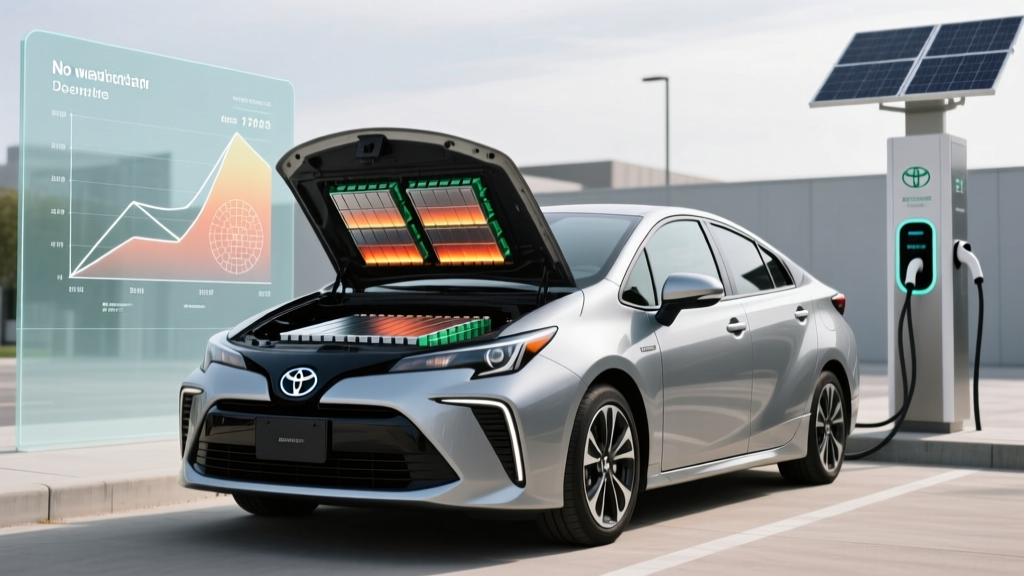
Solid-state batteries: Replace the liquid electrolyte with a solid ceramic, polymer, or sulfide conductor, promising higher energy density (potentially 400-500 Wh/kg), faster charging, and improved safety (no flammable electrolyte). Toyota has announced limited production for 2027-2028 in select models, but at very low volumes and high cost. Widespread, cost-competitive solid-state packs are not expected before 2030-2032. Companies like QuantumScape and Solid Power remain in pre-commercial validation phases.
Silicon anode technology: Replacing graphite anodes with silicon can increase energy density by 20-40%. Sila Nanotechnologies and Amprius are producing early silicon-dominant anode cells, but cycle life and swelling issues limit them to niche applications (drones, wearables) currently. Automotive-grade silicon anode cells at scale are expected in the 2027-2029 timeframe, likely debuting in premium models first.
Sodium-ion batteries: CATL and BYD have begun producing sodium-ion cells for low-cost, short-range EVs in China. Energy density is lower than LFP (~120-150 Wh/kg), but raw materials are abundant and cheap. These may appear in budget EVs globally by 2027-2028 but are not suited for long-range applications.
None of these technologies should factor into a current purchase decision. Today's LFP and NMC packs, properly managed, will deliver 150,000-250,000+ miles of service — long enough to matter for your next vehicle, and the one after that.
Frequently Asked Questions
How long do EV batteries last in years and miles?
Most EV traction batteries retain 80-90% of original capacity at 100,000 miles and 8 years of age. Based on current degradation data, a typical pack will deliver usable service (above 70% SoH) for 150,000-250,000 miles or 12-20 years. LFP chemistry packs trend toward the higher end of that range. This far exceeds the 3-5 year lifespan of a conventional 12V lead-acid battery like the one in a 03 Ford Expedition.
How much does an EV battery cost to replace?
Full pack replacement ranges from $8,000-$12,000 for a 60-75 kWh standard-range pack to $18,000-$28,000 for a 100-135 kWh large pack (2026 pricing). However, most packs never require replacement within the vehicle's usable life, and module-level repairs (replacing individual failed sections) can cost $1,500-$3,500. Cell pricing continues to decline 8-12% annually.
What does the EV battery warranty cover?
Federally mandated minimum coverage is 8 years / 100,000 miles, guaranteeing the pack retains at least 70% of original capacity. Some manufacturers extend this to 10 years / 150,000 miles in CARB states. Coverage includes cell failures, BMS defects, and thermal management failures. It does not cover damage from accidents, flooding, or extreme abuse. Check your specific manufacturer's warranty documentation for exact terms.
How do I check and maximize my EV battery's health?
Monitor SoH through the vehicle's built-in diagnostics, OBD-II apps (TeslaFi, LeafSpy, Car Scanner), or annual dealer diagnostic reports. To maximize longevity: charge NMC/NCA packs to 80-90% daily, charge LFP packs to 100% regularly for calibration, use Level 2 home charging as your primary source, precondition before DC fast charging, and avoid prolonged storage at extreme SoC levels in hot weather.
LFP vs NMC — which battery chemistry is better for me?
Choose LFP if you charge at home daily, drive under 200 miles between charges, want maximum cycle life, and prefer simpler SoC management (100% charging is fine). Choose NMC/NCA if you need maximum range, drive in cold climates regularly, take frequent road trips, or need the lightest possible pack for performance/towing. Neither is universally superior — the right choice depends on your driving pattern.
Is the EV battery the same as the 12V battery in a gas car like my 03 Ford Expedition?
No. The 03 Ford Expedition's battery is a 12V lead-acid unit storing ~0.7 kWh that starts the engine and runs accessories. An EV's traction battery is a 400V-800V lithium-ion pack storing 60-135+ kWh that powers the drive motors. EVs also have a separate 12V auxiliary battery for computers and accessories, which is closer in function to the Expedition's battery but is typically a smaller lithium unit. When people discuss "EV battery replacement," they mean the high-voltage traction pack, not the 12V auxiliary.