Why Battery Volume Matters More Than You Think
When automakers advertise a "100 kWh battery," they're quoting the total cell-level capacity — but the usable energy that actually moves your car is always lower. The physical battery volume (the space and mass allocated to the cell pack) determines not just how far you can drive, but which chemistry fits inside the pack, how the thermal management system performs, and how quickly the battery degrades over time. Understanding the relationship between pack volume, chemistry, and real-world longevity is the single most important thing an EV buyer can learn before signing a purchase agreement.
This guide breaks down the engineering trade-offs behind modern EV battery packs — from LFP vs. NMC chemistry to degradation curves, warranty fine print, and replacement economics — using data from current 2025–2026 model-year vehicles.
LFP vs. NMC/NCA: Chemistry Trade-Offs at a Glance
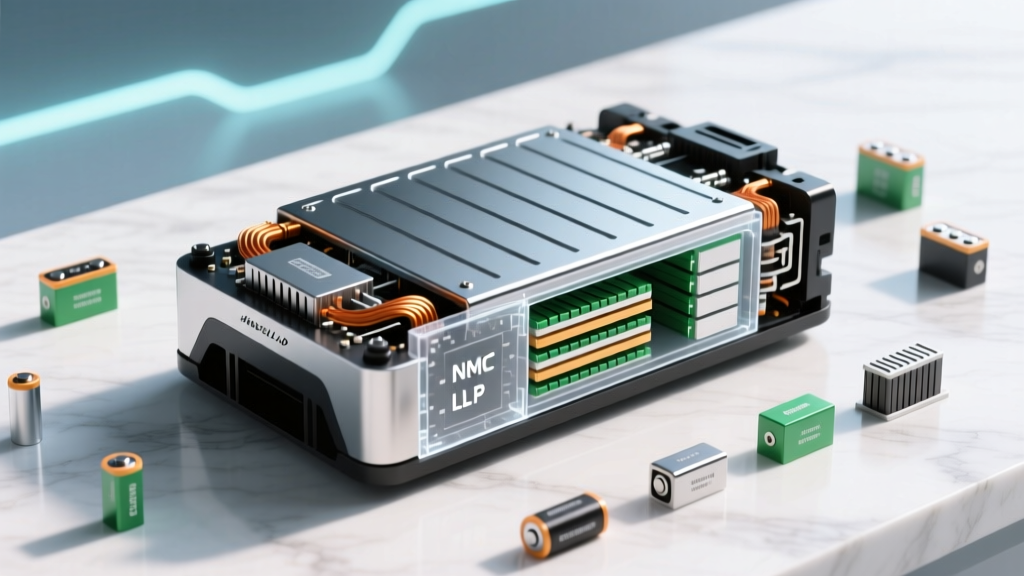
Two dominant lithium-ion chemistries power today's EVs: LFP (lithium iron phosphate) and NMC/NCA (nickel manganese cobalt / nickel cobalt aluminum). Each occupies a different position on the energy-density vs. durability spectrum, and the choice has direct consequences for battery volume requirements.
| Attribute | LFP (LiFePO₄) | NMC / NCA |
|---|---|---|
| Cell-Level Energy Density | ~160–180 Wh/kg | ~220–300 Wh/kg |
| Typical Pack-Level Density | ~120–140 Wh/kg | ~150–180 Wh/kg |
| Cycle Life (to 80% SoH) | 3,000–5,000+ cycles | 1,000–2,000 cycles |
| Cold-Weather Performance | Moderate — slower charge acceptance below 32°F | Better — preconditioning mitigates most loss |
| Recommended Daily SoC | 100% (no calendar-degradation penalty) | 80% for daily; 100% only for trips |
| Raw-Material Cost | Lower (no cobalt or nickel) | Higher (cobalt, nickel price volatility) |
| Battery Volume Required (for equal range) | Larger / heavier pack needed | More compact pack possible |
| Notable 2025–2026 Applications | Tesla Model 3/Y RWD, Ford Mustang Mach-E Select (LFP option), BYD Seal, Rivian Standard | Tesla Long Range, Hyundai Ioniq 5/6, BMW iX, Chevy Equinox EV, Porsche Taycan |
The battery-volume implication: Because LFP cells have roughly 30–40% lower energy density than NMC, an LFP pack delivering 300 miles of EPA range requires more physical volume and mass than an NMC pack delivering the same range. Automakers compensate by using cell-to-pack (CTP) or cell-to-chassis (CTC) architectures that eliminate module housings, but the fundamental physics remains — LFP trades pack compactness for cycle-life durability and lower cost.
How Long Do EV Batteries Actually Last?
The short answer: far longer than most buyers fear. Data from fleet operators, manufacturer warranty claims, and independent testing consistently shows that modern liquid-cooled EV battery packs retain 85–95% of original capacity after 100,000 miles under normal use.
Observed Degradation Benchmarks (compiled from fleet and owner data):
- Tesla Model 3/Y (NMC, 2021–2024): ~5–7% capacity loss at 100,000 miles; ~10–12% at 200,000 miles (Tesla Impact Report 2024)
- Hyundai Ioniq 5 (NMC, 77.4 kWh, 2022–2024): ~4–6% loss at 60,000 miles in owner-reported data (Ioniq forums, verified by OBD-II SoH readings)
- Chevy Bolt EV/EUV (NMC, 65 kWh, 2020–2023): ~6–8% at 80,000 miles; some early 2017–2019 Bolt packs (LG cells, pre-recall fix) showed higher loss
- Tesla Model 3 RWD (LFP, 60 kWh, 2022–2025): ~2–4% loss at 60,000 miles — consistent with LFP's superior cycle life
- Nissan Leaf (passive air cooling, 40/62 kWh): Historically higher degradation — 10–15% at 60,000 miles in hot climates due to lack of active thermal management
The critical variable isn't mileage alone — it's thermal management. Every current-generation EV from Tesla, Hyundai/Kia, GM, Ford, BMW, and Rivian uses active liquid cooling/heating, which dramatically slows degradation compared to the passively cooled packs in older vehicles like the pre-2021 Nissan Leaf.
Realistic lifespan expectation: A modern liquid-cooled NMC pack should deliver 200,000+ miles before reaching 80% State of Health (SoH). An LFP pack may exceed 300,000 miles at the same threshold. In most cases, the battery will outlast the vehicle's economic life.
Battery Warranty Terms: What's Actually Covered
Federal law mandates a minimum 8-year / 100,000-mile warranty on EV battery packs for emissions-related compliance, but most manufacturers exceed this baseline. Here's how the major warranties compare for 2025–2026 models:
| Manufacturer | Warranty Period | Mileage Cap | Capacity Retention Threshold | Notes |
|---|---|---|---|---|
| Tesla (Model 3/Y NMC Long Range) | 8 years | 120,000 miles | 70% | Whichever comes first |
| Tesla (Model 3/Y LFP RWD) | 8 years | 100,000 miles | 70% | Lower mileage cap on LFP trims |
| Hyundai / Kia (Ioniq 5/6, EV6) | 10 years | 100,000 miles | 70% | Among the longest coverage in the industry |
| GM (Chevy Equinox EV, Blazer EV, Silverado EV) | 8 years | 100,000 miles | 70% (60% for fleet/commercial on some models) | Ultium platform; covers battery and specific EV components |
| Ford (Mustang Mach-E, F-150 Lightning) | 8 years | 100,000 miles | 70% | Covers traction battery and high-voltage components |
| BMW (i4, iX, i7) | 8 years | 100,000 miles | 70% | BMW also offers optional extended battery protection plans |
| Rivian (R1T, R1S) | 8 years | 175,000 miles | 70% | Highest mileage cap among mainstream EV makers |
Key warranty nuance: The 70% threshold means the manufacturer only owes you a repair or replacement if the pack degrades below 70% of its original usable capacity within the warranty window. A pack at 72% SoH at 95,000 miles — while noticeably reduced — is still "within spec" under the warranty. In practice, very few liquid-cooled packs from major OEMs have breached this threshold under normal use, which is why warranty claims remain rare.
Warranties cover defects in materials and workmanship plus excessive capacity loss. They do not cover damage from accidents, flooding, improper charging equipment, or modifications to the high-voltage system. Always review the specific warranty booklet for your model year — terms can shift between model years.
EV Battery Replacement Cost: What to Budget (and When)
Out-of-warranty battery replacement is the cost that generates the most anxiety — and the most misinformation. Here's the current pricing landscape for 2025–2026:
| Vehicle / Pack Size | Battery kWh (Usable) | Chemistry | Estimated Replacement Cost | Notes |
|---|---|---|---|---|
| Tesla Model 3 RWD (LFP) | ~57 kWh | LFP | $12,000–$16,000 | LFP cells cheaper; labor varies by service center |
| Tesla Model Y Long Range | ~75 kWh | NMC | $16,000–$22,000 | Structural pack integration adds labor time |
| Hyundai Ioniq 5 | ~77.4 kWh | NMC | $14,000–$20,000 | E-GMP platform; module-level repair sometimes possible |
| Chevy Equinox EV | ~85 kWh | NMC (Ultium) | $15,000–$21,000 | Ultium modular architecture may allow partial replacement |
| Ford F-150 Lightning (Extended Range) | ~131 kWh | NMC | $25,000–$35,000 | Largest consumer pack; highest parts cost |
| Porsche Taycan (Performance Battery Plus) | ~93.4 kWh | NMC | $25,000–$33,000 | Premium labor rates; complex thermal integration |
When is replacement actually needed? Almost never during the first 10–15 years of ownership for a liquid-cooled pack. The scenarios where replacement occurs are:
- Catastrophic cell or module failure (rare, usually covered under warranty)
- Physical damage from a collision or ground strike
- Extreme degradation in a passively cooled older pack (e.g., early Nissan Leaf in hot climates)
- Very high-mileage fleet use (200,000+ miles with frequent DC fast charging)
For the vast majority of private owners, the vehicle will be sold, traded, or retired before the battery requires replacement. Cell prices have fallen from over $1,200/kWh in 2010 to roughly $100–$130/kWh at the cell level in 2025, and this downward trend continues to reduce replacement costs over time.
Factors That Accelerate — or Preserve — Battery Life
Battery degradation isn't linear, and it isn't determined by mileage alone. Five factors have outsized influence on how quickly your pack loses capacity:
Battery Care Best Practices
- Limit DC fast charging frequency. Occasional road-trip fast charging is fine, but daily reliance on 150+ kW DCFC accelerates degradation. Research from the Idaho National Laboratory showed that packs charged exclusively via DCFC lost roughly 10% more capacity over 40,000 miles compared to Level 2–only charging. Use Level 2 (home/workplace) as your primary charging method.
- Avoid sustained high or low State of Charge. For NMC packs, storing the vehicle at 100% SoC for days or weeks accelerates calendar aging. Target 80% for daily use; charge to 100% only when you'll drive immediately. LFP packs are an exception — manufacturers recommend periodic 100% charges to recalibrate the BMS.
- Precondition in cold weather. Lithium-ion cells charge very slowly and experience stress when charged below freezing. Use your vehicle's preconditioning feature (scheduled departure or app-initiated) to warm the pack before charging in winter. This also restores charging speed — a cold pack at a 250 kW charger may accept only 30–50 kW until it warms up.
- Park in shade or a garage when possible. Prolonged exposure to ambient temperatures above 95°F — especially at high SoC — accelerates calendar degradation. A garage or shaded spot meaningfully slows this process.
- Don't obsess over regenerative braking settings. Regen intensity has negligible impact on battery longevity compared to the factors above. Use whatever setting you prefer for driving comfort.
Monitoring Your Battery's State of Health (SoH)
State of Health (SoH) is the percentage of original usable capacity your battery currently holds. A new pack starts at 100% SoH; a pack that originally held 77.4 kWh and now holds 72 kWh sits at roughly 93% SoH.
How to check SoH:
- In-vehicle displays: Tesla provides a rated-range figure that reflects current capacity. Some Hyundai/Kia models show a battery-health indicator in the infotainment system's EV diagnostics menu.
- OBD-II diagnostic tools: Devices like the OBDLink SX or MX+ paired with apps such as Leaf Spy (Nissan), Scan My Tesla, or Car Scanner can read the BMS-reported SoH value directly. This is the most accurate consumer-accessible method.
- Dealer diagnostic reports: Requesting a battery health check during service visits will produce a printout showing current capacity vs. original — useful for pre-purchase inspections on used EVs.
- Charging math: Charge from a known low SoC (e.g., 10%) to a known high SoC (e.g., 90%) on a Level 2 charger that reports kWh delivered. Divide delivered kWh by the SoC swing (0.80) to estimate current usable capacity. Compare to the original spec.
Tracking SoH every 6–12 months gives you a degradation trend line. A sudden drop (more than 2–3% in a short period) warrants a dealer diagnostic visit — it may indicate a weak cell module that can be individually replaced rather than requiring a full pack swap.
Emerging Battery Tech: What's Coming (and When)
The next generation of battery technology promises to reshape the battery-volume equation entirely, but timelines matter:
- Solid-state batteries: Replace the liquid electrolyte with a solid ceramic, polymer, or sulfide layer. Benefits include higher energy density (potentially 400+ Wh/kg at the cell level), faster charging, and reduced fire risk. Toyota has announced a solid-state EV for 2027–2028 with a claimed 750 km (WLTP) range, but production volumes are expected to be very limited initially. Samsung SDI and QuantumScape are targeting 2027–2029 production timelines. Not available in any production vehicle as of 2026.
- Silicon-dominant anodes: Replacing graphite anodes with silicon can increase cell energy density by 20–40%. Companies like Sila Nanotechnologies and Group14 are supplying silicon-carbon anode materials to battery manufacturers now, with gradual adoption expected through 2026–2028. Mercedes-Benz's upcoming G-Class EV (announced) is expected to feature silicon-anode cells from Factorial Energy. Limited production applications beginning 2026–2027.
- Sodium-ion batteries: Use abundant sodium instead of lithium, reducing cost and supply-chain risk. Energy density is lower (~120–160 Wh/kg), making sodium-ion best suited for shorter-range urban EVs and stationary storage. CATL and BYD are producing sodium-ion cells in China; US-market adoption is expected post-2027. Not yet in US-market EVs.
For buyers shopping today, these technologies are forward-looking context — not purchasing factors. Current LFP and NMC packs are mature, well-understood, and backed by extensive real-world data.
Frequently Asked Questions
How long do EV batteries last in years and miles?
Modern liquid-cooled EV batteries typically retain 85–93% of original capacity at 100,000 miles and 80–88% at 200,000 miles. In calendar years, most owners will see 15–20+ years of usable service before the pack drops below 70% SoH. LFP packs generally outlast NMC packs on a cycle-count basis. Data from fueleconomy.gov and manufacturer impact reports support these ranges.
How much does it cost to replace an EV battery?
Out-of-warranty replacement costs range from roughly $12,000 for a smaller LFP pack (e.g., Tesla Model 3 RWD) to $35,000 for a large NMC pack (e.g., Ford F-150 Lightning Extended Range). However, most packs never need replacement during typical ownership — degradation data shows modern packs outlasting the economic life of the vehicle. Warranty coverage (8 years/100,000+ miles at 70% SoH) further reduces risk.
What does the EV battery warranty actually cover?
Battery warranties cover defects in materials and workmanship plus capacity loss below a stated threshold — typically 70% of original capacity within 8 years and 100,000–175,000 miles, depending on the manufacturer. They do not cover accident damage, improper charging, or modifications. Review your specific model-year warranty booklet and consult the IRS clean vehicle credit page for related tax-credit implications if you're replacing a battery outside warranty.
How do I check and maximize my EV battery's health?
Check SoH via OBD-II diagnostic apps, in-vehicle EV menus, or dealer service reports. Maximize longevity by relying primarily on Level 2 home charging, limiting DC fast charging to road trips, keeping NMC packs between 20–80% SoC for daily use (LFP packs can sit at 100%), preconditioning in cold weather, and avoiding prolonged parking in extreme heat at high SoC.
LFP vs NMC — which battery chemistry is better?
Neither is universally "better." LFP wins on cycle life (3,000–5,000+ cycles vs. 1,000–2,000), cost (no cobalt/nickel), and daily convenience (100% SoC charging is fine). NMC wins on energy density (220–300 Wh/kg vs. 160–180 Wh/kg at the cell level), meaning more range in a smaller, lighter battery volume — critical for larger vehicles and long-range trims. Choose LFP if you prioritize longevity and value; choose NMC if you need maximum range per pound or frequently drive in very cold climates.
Does frequent DC fast charging really damage the battery?
Exclusively relying on DC fast charging accelerates degradation compared to Level 2 charging — Idaho National Laboratory testing showed roughly 10% additional capacity loss over 40,000 miles of DCFC-only use. However, occasional fast charging (a few times per month on road trips) has minimal impact on modern liquid-cooled packs. The thermal management system limits cell temperature during fast charging, which is the primary protective mechanism.
Will solid-state batteries make current EVs obsolete?
Not in the near term. Solid-state batteries remain in pre-production as of 2026, with limited commercial availability expected no earlier than 2027–2028 and mass-market adoption likely post-2030. Current LFP and NMC packs offer proven reliability, extensive charging infrastructure compatibility, and declining costs. Buying a current-generation EV does not carry meaningful obsolescence risk from solid-state technology in the next 5–7 years.