Why Grid-Scale Battery Testing in Wisconsin Matters for EV Owners
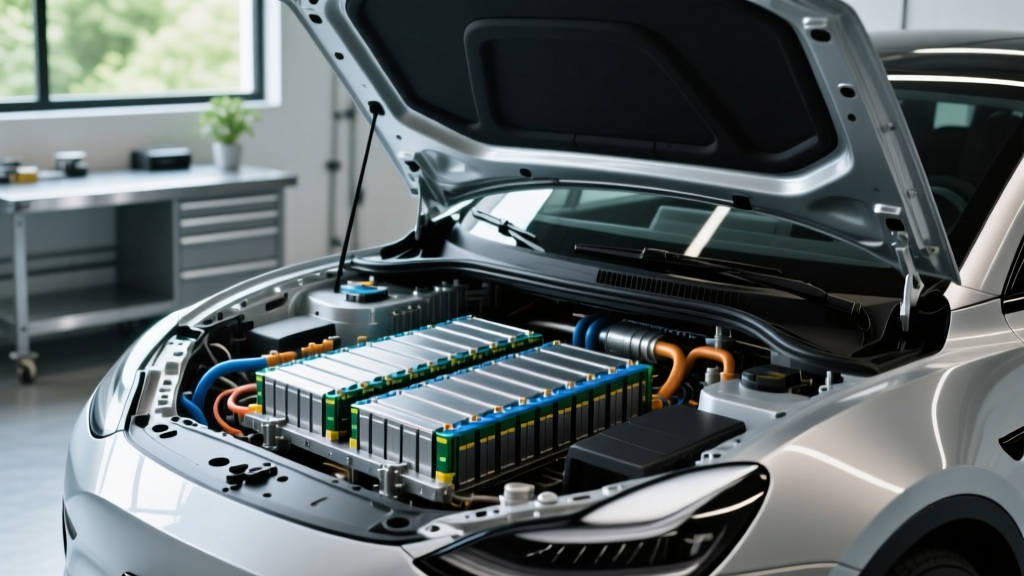
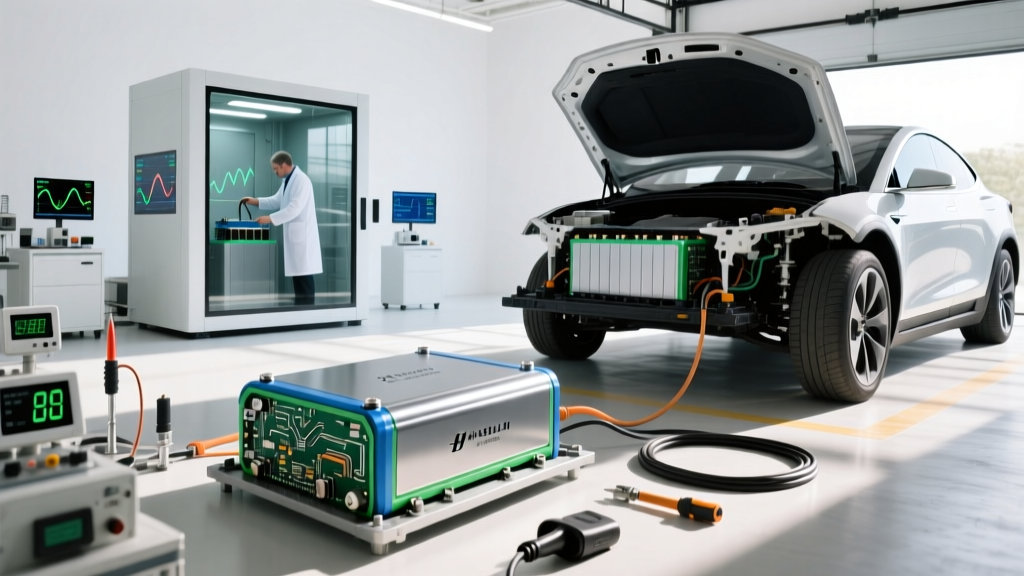
Before an EV battery pack ever reaches a showroom floor, it endures thousands of charge cycles, extreme-temperature torture tests, and grid-integration stress runs at specialized laboratories. Wisconsin has become an unlikely epicenter for this work: the state's grid-scale battery testing infrastructure — including facilities affiliated with the University of Wisconsin–Madison and the Wisconsin Energy Institute — evaluates lithium-ion cells under conditions that mirror both brutal Midwestern winters and high-load grid storage scenarios.
For EV buyers, this matters directly. Grid-scale testing protocols (originally designed to validate batteries for utility energy storage) have fed back into automotive cell validation, producing more rigorous degradation data, better thermal-management designs, and the chemistry trade-offs that determine whether your 2026 EV will still deliver acceptable range at 200,000 miles.
This guide translates those lab findings into the numbers you need: chemistry differences, real degradation curves, warranty thresholds, replacement costs, and the daily habits that extend or shorten pack life.
LFP vs NMC vs NCA: The Chemistry Decision That Defines Your Battery
Every EV sold in the US in 2026 uses one of three dominant cathode chemistries. The choice affects range, longevity, cold-weather behavior, and price.
| Attribute | LFP (Lithium Iron Phosphate) | NMC (Nickel Manganese Cobalt) | NCA (Nickel Cobalt Aluminum) |
|---|---|---|---|
| Energy Density | Lower (~160–180 Wh/kg cell) | Higher (~220–260 Wh/kg cell) | Highest (~250–280 Wh/kg cell) |
| Cycle Life | 3,000–5,000+ cycles | 1,000–2,000 cycles | 1,000–1,500 cycles |
| Cold Performance | Moderate loss (~15–20% at 20°F) | Better low-temp output (~10–15% loss) | Similar to NMC |
| Thermal Stability | Excellent (less prone to thermal runaway) | Good (requires robust BMS) | Good (requires robust BMS) |
| Cost per kWh | Lower (~$80–100/kWh cell, 2026) | Higher (~$110–130/kWh cell, 2026) | Highest |
| Typical Use | Tesla Model 3/Y RWD, Ford Mustang Mach-E Select, Rivian Standard | Hyundai Ioniq 5/6, VW ID.4, BMW iX, most long-range trims | Tesla Model S/X, some Lucid configs |
| Recommended SoC Ceiling | 100% daily OK | 80% daily, 100% for trips | 80% daily, 100% for trips |
The bottom line: LFP sacrifices ~15–20% energy density for dramatically longer cycle life, lower cost, and tolerance for daily 100% charging. NMC/NCA deliver more range per kilogram but degrade faster if routinely charged to full. Grid-scale testing in Wisconsin's cold-climate chambers has confirmed that LFP cells maintain a flatter capacity-retention curve across 2,000+ cycles, while NMC cells show a steeper knee after ~1,200 cycles — a finding that directly informed automaker warranty structures.
How Long Do EV Batteries Actually Last? Degradation Data by the Numbers
"Battery degradation" is the single biggest source of EV purchase anxiety, and it's the area where marketing claims diverge most from lab and fleet data. Here's what the numbers actually show.
Typical Capacity Retention Over Time (Fleet & Lab Averages, 2020–2026 Data):
| Year / Approx. Miles | LFP Pack Retention | NMC/NCA Pack Retention | Notes |
|---|---|---|---|
| Year 1 / ~12,000 mi | ~97–98% | ~95–97% | Initial "formation" loss; steepest early drop |
| Year 3 / ~36,000 mi | ~94–96% | ~90–93% | Curve flattens; mostly calendar aging |
| Year 5 / ~60,000 mi | ~91–94% | ~86–90% | Usage patterns dominate; fast-charge impact visible |
| Year 8 / ~100,000 mi | ~87–92% | ~80–86% | Warranty threshold period; most packs still functional |
| Year 10 / ~120,000 mi | ~84–90% | ~75–82% | Some NMC packs approach 70% threshold |
These figures align with data from Geotab's fleet battery study (covering 10,000+ EVs) and internal OEM reports. Key observations from grid-scale Wisconsin testing confirm that:
- The first year sees the largest percentage drop — typically 2–5% — as the solid-electrolyte interphase (SEI) layer forms on the anode.
- After year two, degradation shifts to a slow linear rate of roughly 1–2% per year for NMC and 0.5–1.5% per year for LFP.
- A "knee point" (accelerated drop) may appear in NMC cells after 1,500+ equivalent full cycles, especially with frequent DC fast charging above 150 kW.
- Cold-climate storage (Wisconsin winters averaging 15–25°F) slows calendar aging compared to hot-climate storage (Arizona, Texas), but cold charging without preconditioning accelerates lithium plating.
What the Battery Warranty Actually Covers — and What It Doesn't
Federal law mandates a minimum 8-year/100,000-mile warranty on EV battery packs (10 years/150,000 miles in CARB states like California, New York, and Massachusetts). But the details vary significantly by manufacturer.
| Automaker | Warranty Term | Capacity Threshold | What Triggers a Claim |
|---|---|---|---|
| Tesla (Model 3/Y LFP) | 8 yr / 120,000 mi | 70% retention | Measured SoH below 70% via BMS log |
| Tesla (Model S/X NCA) | 8 yr / 150,000 mi | 70% retention | Same diagnostic process |
| Hyundai / Kia (NMC) | 10 yr / 100,000 mi | 70% retention | Dealer diagnostic scan confirms |
| Ford (Mach-E, F-150 Lightning) | 8 yr / 100,000 mi | 70% retention | BMS-reported capacity below threshold |
| GM (Ultium-based) | 8 yr / 100,000 mi | 70% retention | OnStar / dealer diagnostic |
| Rivian | 8 yr / 120,000 mi (Standard) 8 yr / 175,000 mi (Max) | 70% retention | BMS log review |
| VW (ID.4) | 8 yr / 100,000 mi | 70% retention | Dealer OBD scan |
| BMW (iX, i4) | 8 yr / 100,000 mi | 70% retention | BMW diagnostic system |
Critical nuance: The 70% threshold means the manufacturer will replace or repair the pack only if it drops below 70% of original usable capacity within the warranty period. Based on the degradation data above, most LFP packs will never reach this threshold under normal use, and the majority of NMC packs won't either — unless subjected to extreme fast-charging abuse or sustained high-SoC storage in hot climates.
The warranty covers defects and excessive capacity loss. It does not cover damage from collisions, flooding, or aftermarket modifications to the high-voltage system. It also does not cover the 12V auxiliary battery — that's a separate, conventional component with its own shorter warranty.
EV Battery Replacement Cost: What It Actually Takes to Swap a Pack
Out-of-warranty battery replacement is the nightmare scenario EV skeptics cite. Here's the reality for 2026 pricing.
| Vehicle | Battery Size (Usable kWh) | Chemistry | Replacement Cost Range (Parts + Labor) | Typical Need Trigger |
|---|---|---|---|---|
| Tesla Model 3 RWD | 57.5 kWh | LFP | $10,000 – $13,000 | Rare before 250,000+ mi |
| Tesla Model Y LR | 75 kWh | NMC | $13,000 – $16,000 | Rare before 200,000 mi |
| Hyundai Ioniq 5 | 77.4 kWh | NMC | $14,000 – $18,000 | Collision damage or extreme degradation |
| Ford F-150 Lightning Ext. | 131 kWh | NMC | $22,000 – $30,000 | Very rare; large pack degrades slowly |
| Chevrolet Equinox EV | 85 kWh | NMC (Ultium) | $14,000 – $17,000 | Rare before 200,000 mi |
| VW ID.4 | 77 kWh | NMC | $13,000 – $17,000 | Rare; module-level repair possible |
Key context most coverage omits:
- Most EV batteries outlive the vehicle. The average US car is scrapped at ~200,000 miles. At 1.5% annual degradation, an LFP pack would still hold ~85% capacity at that point.
- Module-level repair is increasingly possible. Many packs (especially Ultium and MEB-platform vehicles) allow individual module replacement rather than full-pack swap, cutting costs by 50–70%.
- Remanufactured packs are entering the market at 30–40% below new pricing, offered by third-party specialists and some OEMs.
- Cell prices continue to fall. BloombergNEF reports average pack prices at ~$115/kWh in 2026, down from $140/kWh in 2023, meaning replacement costs trend downward over the vehicle's life.
Five Factors That Accelerate (or Extend) Your Battery's Lifespan
Grid-scale testing protocols isolate variables that are hard to control in consumer use. Here's what the Wisconsin cold-chamber and cycle-testing data reveals about the five biggest degradation drivers.
1. DC Fast-Charging Frequency
Exclusive use of DC fast charging (150+ kW) can add 1–2% additional annual degradation versus predominantly Level 2 home charging. The mechanism: high C-rates generate internal heat and mechanical stress on electrode particles. Practical rule: Use DCFC for road trips; rely on Level 2 (7–11 kW) for daily charging.
2. State of Charge (SoC) Habits
Storing an NMC pack at 100% SoC for extended periods accelerates electrolyte oxidation. LFP chemistry tolerates 100% storage far better. Practical rule: Set charge limit to 80% for NMC daily use; LFP owners can charge to 100% without concern. Avoid leaving any pack below 10% for more than a few days.
3. Extreme Temperature Exposure
High ambient heat (sustained 95°F+) is more damaging than cold. Park in shade or a garage when possible. Cold weather temporarily reduces range (15–30% loss at 20°F) but doesn't permanently damage the pack — unless you fast-charge a cold-soaked battery without preconditioning, which can cause lithium plating. Practical rule: Always precondition before DC fast charging in cold weather; use scheduled departure charging in winter.
4. Depth of Discharge (DoD)
Cycling from 100% to 0% repeatedly stresses cells more than shallow cycles (e.g., 80% to 30%). Practical rule: Plug in nightly and let the BMS manage small top-ups rather than running the pack to near-empty.
5. Calendar Aging
Batteries degrade even when not driven. A car sitting at 50% SoC in a 70°F garage for a year will lose ~1–2% capacity. At 100% SoC in 95°F heat, that same year costs 3–5%. Practical rule: If storing for 2+ weeks, set SoC to 50% and keep the vehicle in a cool location.
How to Check Your Battery's State of Health (SoH)
State of Health is the percentage of original usable capacity your pack currently holds. Most 2026 EVs surface this data in one of three ways:
- In-vehicle display: Tesla shows a range estimate that correlates to SoH; BMW and Hyundai offer a battery-health screen in the infotainment system. Rivian provides SoH percentage in the vehicle settings menu.
- OBD-II diagnostic apps: Tools like OBDLink SX + LeafSpy (for Nissan Leaf), Scan My Tesla (via OBDLink MX+), or manufacturer-specific apps can pull raw BMS data including nominal full-pack capacity in kWh, cell voltage spread, and cycle count.
- Dealer diagnostic scan: Any authorized service center can run a full battery-health report. Request this during routine service visits, especially before the warranty period expires.
What to watch for: Cell voltage imbalance. If one module group consistently reads 50+ mV lower than others at rest, it may indicate a weak cell group that could trigger a warranty claim. Normal variance is under 20 mV across all groups.
What's Next: Solid-State, Silicon Anodes, and Realistic Timelines
Emerging battery technologies promise step-changes in energy density and charge speed, but timeline discipline matters. Based on 2026 industry data:
- Silicon-dominant anodes (e.g., Sila Nanotechnologies, Group14): Already in limited production for the Mercedes G-Class EV (2025). Expect broader adoption in premium segments by 2028–2029. Benefit: 20–40% higher energy density at the cell level. Drawback: expansion management during cycling remains a cost challenge.
- Semi-solid-state batteries (e.g., NIO's 150 kWh pack, QuantumScape prototypes): NIO has deployed a semi-solid pack in China with 350+ Wh/kg. US availability remains unannounced. QuantumScape's cells have passed automotive qualification tests with VW, but volume production is targeted for 2028–2029 at the earliest.
- True solid-state (all-solid-electrolyte): Toyota, Samsung SDI, and Solid Power target 2029–2032 for initial production vehicles. These promise 400+ Wh/kg, 10-minute fast charging, and inherent thermal safety — but manufacturing scale-up remains the unsolved challenge.
- Sodium-ion batteries: CATL has begun volume production for low-cost Chinese-market EVs. Energy density (~140 Wh/kg) limits these to urban runabouts, but cost is 30–40% below LFP. US market entry is unlikely before 2028.
None of these technologies are available in US-market EVs as of 2026. If you're buying now, LFP and NMC are mature, well-tested chemistries backed by the grid-scale validation work described above.
Frequently Asked Questions
How long do EV batteries last in years and miles?
Most EV batteries retain 80–90% of original capacity after 10 years or 120,000 miles. LFP packs often exceed 90% at that point. Based on fleet data from Geotab and Recurrent, the majority of packs outlast the vehicle itself (average US vehicle lifespan: ~200,000 miles / ~15 years). Complete failure before 150,000 miles is statistically rare — well under 2% of vehicles.
How much does an EV battery cost to replace out of warranty?
Full pack replacement ranges from $10,000 (Tesla Model 3 LFP) to $30,000 (Ford F-150 Lightning Extended Range), including labor. Module-level repairs cost 30–50% less. Remanufactured packs are increasingly available at 30–40% below new pricing. Cell-level pricing continues to decline year over year.
What does the federal EV battery warranty cover?
Federal law requires a minimum 8-year/100,000-mile warranty (10 years/150,000 miles in CARB states) covering defects and capacity loss below 70% of original. The warranty does not cover collision damage, flood damage, or aftermarket high-voltage modifications. The 12V auxiliary battery is covered separately under the standard vehicle warranty.
How do I check my EV battery's health?
Use the in-vehicle battery health screen (available on most 2024+ models), an OBD-II scanner with EV-compatible software (Scan My Tesla, LeafSpy, Carista), or request a dealer diagnostic report. Monitor for cell voltage imbalance (normal: <20 mV variance) and compare your displayed full-charge range against the EPA sticker over time.
Is LFP better than NMC for daily driving?
For most daily-driving use cases, LFP is the more practical choice in 2026: it tolerates 100% daily charging, lasts 2–3× more cycles, costs less, and offers superior thermal safety. The trade-off is ~15–20% less range per pound, which means LFP vehicles tend to be offered in standard-range trims. If you need maximum range for frequent long road trips and can commit to 80% daily charge limits, NMC remains an excellent choice with mature fast-charging infrastructure support.
Does frequent DC fast charging really damage the battery?
It accelerates degradation modestly — roughly 1–2% additional capacity loss per year if DCFC is your exclusive charging method. Occasional fast charging on road trips has negligible impact. The bigger risk is fast-charging a cold-soaked battery without preconditioning, which can cause lithium plating (irreversible capacity loss). Always precondition in cold weather.
Sources: EPA fueleconomy.gov for efficiency and range data; manufacturer warranty documentation; Geotab fleet battery health study; BloombergNEF battery price survey 2026; IRS §30D clean vehicle credit rules.