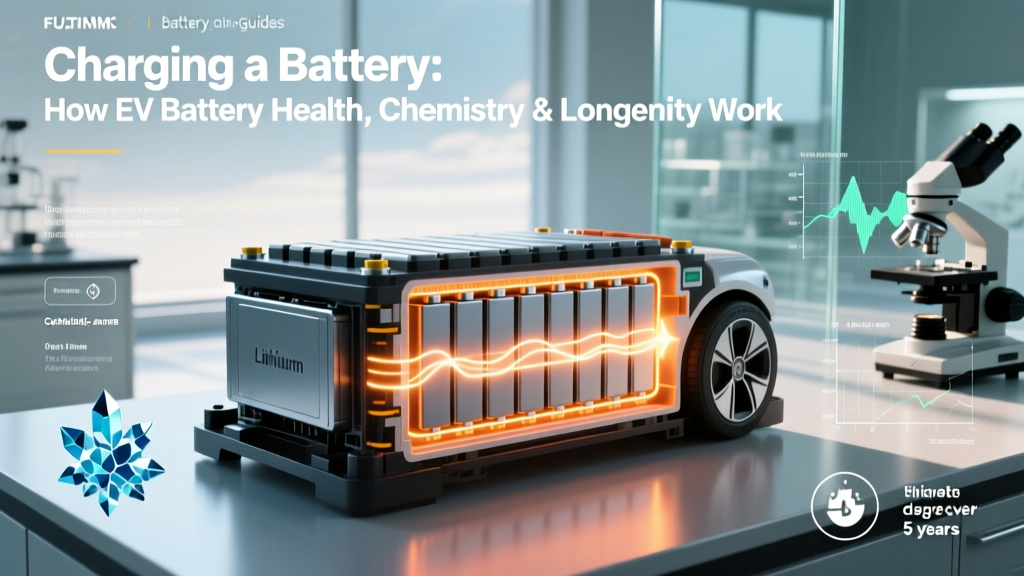
If you have searched for battery tender instructions for your electric vehicle, you are likely coming from the world of gas cars, where hooking up a 12V trickle charger over winter is standard practice. With an EV, the high-voltage traction battery — the 50 to 100+ kWh pack that actually propels the car — requires a fundamentally different approach. There is no aftermarket "tender" you clamp onto it. Instead, proper EV battery care means understanding charging habits, thermal management, chemistry-specific limits, and what the car's own systems already do to protect the pack.
This guide gives you the exact instructions and data you need to maximize your EV battery's lifespan, whether you drive a Tesla Model 3 with an LFP pack, a Hyundai Ioniq 5 with NMC chemistry, or a Ford F-150 Lightning. We will cover chemistry trade-offs, real degradation data, warranty specifics, replacement cost ranges, and the daily habits that actually move the needle on longevity.
First: Your EV Has Two Batteries — Know the Difference
Before following any battery care routine, understand that modern EVs carry two separate battery systems:
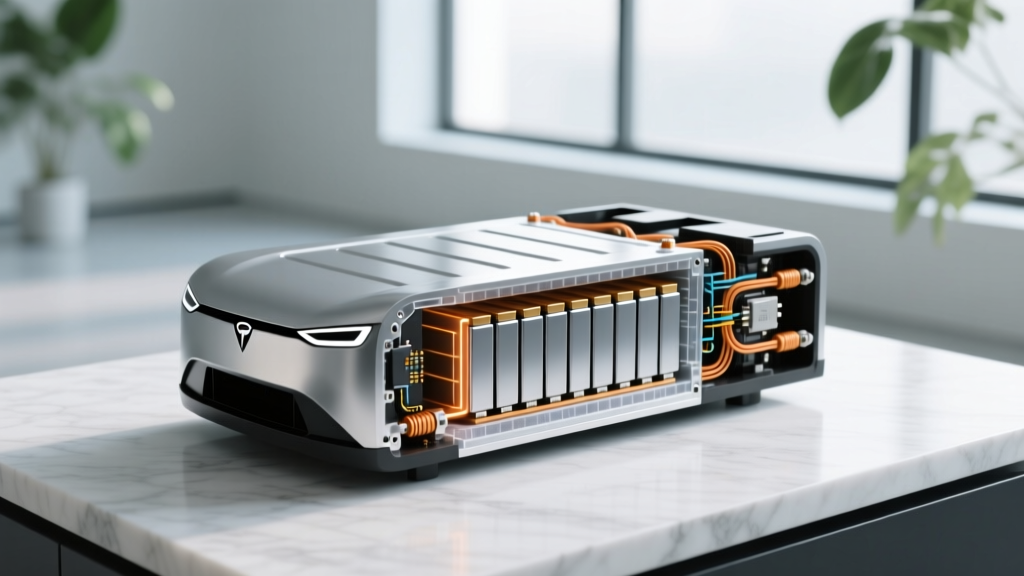
- High-voltage traction battery (400V or 800V architecture, typically 50–100+ kWh): This powers the electric motors and is the subject of this guide. You cannot connect a third-party tender to it.
- 12V auxiliary battery (lead-acid or lithium-ion, ~12V): This runs the vehicle's computers, lights, infotainment, and contactors that close the circuit to the main pack. A standard 12V battery tender can be used on this battery if the vehicle is stored long-term — but consult your owner's manual for the correct connection points and whether the car's DC-DC converter handles this automatically.
The instructions below focus on the traction battery — the expensive, warrantied component that determines your vehicle's range and resale value.
LFP vs NMC/NCA: Know Your Chemistry Before Setting Charge Limits
The single most important battery tender instruction for daily use is what state of charge (SoC) to target, and that depends entirely on your pack's chemistry. In 2026, two lithium-ion chemistries dominate the US EV market:
| Attribute | LFP (Lithium Iron Phosphate) | NMC / NCA (Nickel Manganese Cobalt / Nickel Cobalt Aluminum) |
|---|---|---|
| Energy density | Lower (~160–180 Wh/kg cell-level) | Higher (~220–300 Wh/kg cell-level) |
| Cycle life | 3,000–5,000+ cycles to 80% SoH | 1,000–2,000 cycles to 80% SoH |
| Daily charge recommendation | 100% SoC is fine — charge to full regularly | 80% SoC for daily; 100% only before long trips |
| Cold-weather performance | Weaker — greater range loss below freezing | Better low-temp discharge and charge acceptance |
| Cost per kWh | Lower (~$80–100/kWh at cell level in 2026) | Higher (~$110–140/kWh at cell level) |
| Thermal runaway risk | Very low | Low but higher than LFP |
| Common 2026 applications | Tesla Model 3/Y RWD, base Ford Mustang Mach-E, BYD models | Hyundai Ioniq 5/6, Kia EV6/EV9, Tesla Long Range, Rivian, GM Ultium vehicles |
The practical instruction: Check your owner's manual or vehicle app for your chemistry type. If you have LFP, Tesla and Ford explicitly recommend charging to 100% at least once per week to allow the battery management system (BMS) to recalibrate cell voltages. If you have NMC/NCA, set your daily charge limit to 80% and only charge to 100% when you plan to drive a long distance within the next few hours.
How Long Do EV Batteries Actually Last?
The short answer: in most cases, the traction battery will outlast the vehicle itself. But the data matters more than reassurance.
According to data aggregated by Recurrent Auto from over 15,000 EVs in real-world service, the average EV battery retains approximately 90–95% of its original capacity after 5 years and roughly 85–90% after 100,000 miles. Degradation is not linear — it follows a curve with a steeper drop in the first 1–2 years (typically 2–5%), then a long, slow plateau.
Typical degradation trajectory (NMC pack, moderate climate, mixed charging):
- Year 1 / 15,000 mi: ~97% State of Health (SoH) — initial formation loss
- Year 3 / 45,000 mi: ~93% SoH
- Year 5 / 75,000 mi: ~90% SoH
- Year 8 / 120,000 mi: ~86% SoH
- Year 10 / 150,000 mi: ~83% SoH
LFP packs generally show slower degradation in the same timeframe, often retaining 92–96% SoH at the 5-year mark under similar conditions. Vehicles used heavily for DC fast charging in hot climates (Arizona, Texas summers) may see 2–4 percentage points additional loss over the same period.
For context, the EPA lists a 2026 Hyundai Ioniq 5 (Long Range AWD) at 290 miles of range with a 77.4 kWh usable battery. At 86% SoH after 8 years, that same vehicle would show approximately 249 miles of range — still practical for most daily driving.
Factors That Accelerate (or Slow) Battery Degradation
Think of these as the operating instructions for your battery's long-term health. None of these will cause sudden failure — they influence the slope of the degradation curve over years.
Daily Charging Habits
- NMC/NCA owners: Set charge limit to 80% for daily use. Avoid leaving the car at 100% SoC for more than a few hours.
- LFP owners: Charge to 100% regularly (weekly minimum) for BMS calibration.
- All chemistries: Avoid routinely draining below 10% SoC. The buffer at the bottom protects cells, but repeatedly sitting at very low SoC stresses them.
Temperature Management
- Park in shade or a garage during summer. Sustained battery temperatures above 95°F (35°C) accelerate calendar degradation.
- In winter, use your vehicle's battery preconditioning feature before DC fast charging. Most 2026 models (Tesla, Hyundai/Kia, GM, Ford) precondition automatically when a charger is set as your navigation destination.
- Extreme cold does not permanently damage the battery, but charging at high power while the pack is below freezing can cause lithium plating — the car's BMS will limit charge rate to prevent this.
DC Fast Charging Frequency
- Occasional DC fast charging (1–2 times per week on road trips) has minimal measurable impact on modern packs with active liquid thermal management.
- Exclusive reliance on DC fast charging (daily 150–350 kW sessions) can add 1–3% extra degradation over 5 years compared to primarily Level 2 home charging, per Recurrent's fleet data.
- The charge curve matters: peak kW is only sustained at low SoC. Above 80%, charge speed tapers significantly to protect cells. This is why manufacturers quote 10–80% charge times, not 0–100%.
Long-Term Storage
- If storing your EV for more than 2 weeks, leave the traction battery at approximately 50% SoC.
- Keep the vehicle plugged in on Level 2 with the charge limit set to 50% if possible — the car's BMS will maintain this level and power the 12V system via the DC-DC converter.
- For the 12V auxiliary battery during storage: a standard 12V battery tender connected per your owner's manual instructions is appropriate if the vehicle will not remain plugged in.
Battery Warranty Terms: What Is Actually Covered?
Every EV sold in the US carries a federally mandated minimum battery warranty of 8 years / 100,000 miles (10 years / 150,000 miles in California Air Resources Board states). Most manufacturers exceed this baseline. The key detail is the capacity retention threshold — the SoH level below which the manufacturer must repair or replace the pack.
| Manufacturer (2026 Models) | Warranty Period | Capacity Threshold | Notes |
|---|---|---|---|
| Tesla (Model 3/Y LFP) | 8 yr / 120,000 mi | 70% SoH | Long Range/Performance: 8 yr / 120,000 mi, 70% |
| Hyundai / Kia | 10 yr / 100,000 mi | 70% SoH | Among the longest coverage in the segment |
| GM (Ultium-based) | 8 yr / 100,000 mi | 70% SoH | Module-level replacement where possible |
| Ford (Mach-E, Lightning) | 8 yr / 100,000 mi | 70% SoH | Covers battery and hybrid/EV components |
| Rivian | 8 yr / 120,000 mi | 70% SoH | Module-level service available |
| BMW | 8 yr / 100,000 mi | 70% SoH | Includes i4, i5, i7, iX |
What the warranty covers: Defects in materials or workmanship, and capacity loss below the stated threshold under normal use. It does not cover damage from accidents, flooding, improper modification, or using the vehicle as a stationary power source outside manufacturer-approved V2H/V2L configurations.
What this means practically: A 70% threshold on an 80 kWh pack means the warranty triggers if usable capacity drops below 56 kWh. Given the degradation data above, very few vehicles reach this threshold within the warranty period under normal use — which is why out-of-warranty battery replacements are uncommon for vehicles under 150,000 miles.
EV Battery Replacement Cost: When and How Much?
Battery replacement is the single biggest fear for prospective EV buyers. The reality: it is rare, expensive when it happens, and increasingly modular.
| Vehicle (Representative 2026 Models) | Battery Size (Usable kWh) | Chemistry | Full Pack Replacement Cost (Parts + Labor) |
|---|---|---|---|
| Tesla Model 3 RWD | ~57 kWh | LFP | $12,000 – $16,000 |
| Hyundai Ioniq 5 Long Range | 77.4 kWh | NMC | $16,000 – $22,000 |
| Ford F-150 Lightning Extended Range | ~131 kWh | NMC | $25,000 – $35,000 |
| Chevrolet Equinox EV | ~85 kWh | NMC (Ultium) | $15,000 – $20,000 |
| Rivian R1T (Max Pack) | ~149 kWh | NMC | $28,000 – $38,000 |
When replacement is typically needed: Based on current fleet data, full battery replacement due to degradation alone is extremely rare before 200,000+ miles. Most out-of-warranty replacements result from physical damage (collision, ground strike), manufacturing defects that manifest late, or coolant intrusion. The industry trend is toward module-level repair — replacing individual cell modules rather than the entire pack — which can reduce costs to $3,000–$8,000 for a single module swap.
Cost trend: Battery pack prices have fallen from over $1,000/kWh in 2010 to approximately $100–140/kWh at the pack level in 2026, per BloombergNEF data. Replacement costs will continue declining as packs age out of warranty and the refurbishment market matures.
How to Check and Monitor Your Battery's State of Health
Unlike a gas car's engine, you cannot simply "look at" an EV battery. But several tools and methods exist to track SoH:
Built-in Vehicle Displays
Most 2026 EVs display estimated range and energy consumption but do not show a direct SoH percentage in the standard UI. Tesla is a partial exception — third-party apps can pull SoH data from the vehicle's API. Some manufacturers (BMW, Mercedes) include a battery health indicator in the service menu accessible via the dealership diagnostic tool.
OBD-II Dongles and Apps
Devices like the OBDLink MX+ paired with apps such as Car Scanner or LeafSpy (for Nissan Leaf) can read the BMS-reported SoH directly. For Tesla vehicles, apps like Tessie or Stats pull battery health data from the Tesla API. Expect to pay $50–$120 for the OBD hardware plus a small subscription for premium app features.
Dealer Diagnostic Check
Any authorized dealer can run a battery health report during routine service. Request this if you are approaching a warranty mileage threshold and want documentation. Some dealers will perform this check free; others charge a diagnostic fee of $100–$150.
The Manual Method
Track your actual energy consumption (kWh/100mi) over time. If your vehicle consistently used 28 kWh/100mi when new and now uses 32 kWh/100mi on the same commute in similar conditions, that roughly correlates to a ~12–14% loss in usable capacity. This is imprecise but directionally useful.
Emerging Battery Technology: What Is Coming (and When)
Several next-generation battery technologies are in development. None are available in production US-market EVs as of 2026, but timelines are becoming clearer:
- Solid-state batteries: Toyota has announced limited production for 2027–2028, targeting 750+ km (WLTP) range and 10-minute fast charging. Samsung SDI and QuantumScape are also in pilot production. Realistic mass-market availability: 2029–2032. These promise higher energy density and improved safety but face manufacturing cost challenges.
- Silicon-dominant anodes: Companies like Sila Nanotechnologies and Group14 are supplying silicon-carbon anode materials that increase energy density by 20–40% over graphite. Early adoption is appearing in premium models (Mercedes has signaled silicon-anode cells in the upcoming G-Class EV). Expect broader availability by 2027–2028.
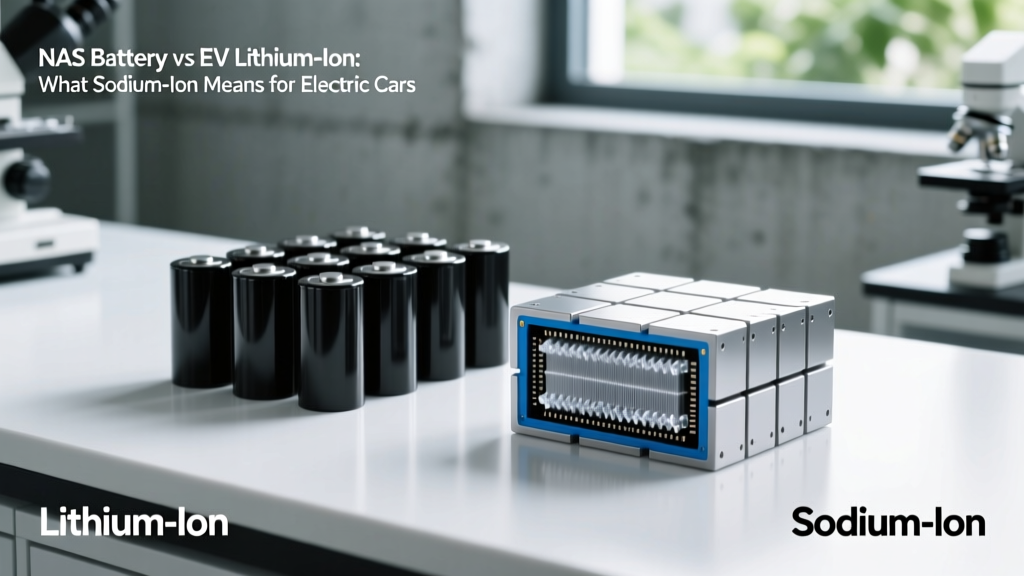
- Sodium-ion batteries: Lower cost and no critical-mineral dependency, but significantly lower energy density (~120–160 Wh/kg). CATL and BYD are deploying these in budget Chinese-market EVs. US availability is unlikely before 2028 and would be limited to low-range urban vehicles.
These technologies are forward-looking and should not factor into a current purchase decision. Today's LFP and NMC packs, properly cared for, already offer 15+ years of practical service life.
Battery Tender Instructions: Your Step-by-Step Care Summary
Here is the consolidated set of instructions for EV battery care, organized by scenario:
- Identify your chemistry. Check your owner's manual, window sticker, or manufacturer app. LFP and NMC require different daily charge limits.
- Set the correct daily charge limit. 80% for NMC/NCA; 100% for LFP. Use your vehicle's scheduled charging feature to finish charging just before you leave — batteries degrade less when they spend minimal time at high SoC.
- Use Level 2 (home) charging as your primary method. A 7–11 kW Level 2 charger adds 25–44 miles of range per hour and generates far less heat than DC fast charging. Have a licensed electrician install a 240V NEMA 14-50 outlet or hardwired Level 2 unit — typical cost is $500–$1,500 for equipment plus $800–$2,500 for installation depending on panel proximity and local code.
- Use DC fast charging without guilt, but not exclusively. Modern thermal management systems handle fast charging well. Just avoid making 350 kW sessions your only charging method if alternatives exist.
- Precondition before fast charging in cold weather. Navigate to the charger using your car's built-in routing — most 2026 EVs will begin warming the battery automatically.
- For long-term storage: Set SoC to ~50%, keep the vehicle plugged in on Level 2 if possible, and use a 12V battery tender on the auxiliary battery only if the vehicle will be unplugged for more than 30 days.
- Monitor SoH periodically. Use an OBD-II tool or request a dealer report annually after year 3, or before major trips if you are range-sensitive.
Do I need a special battery tender for my EV's main battery?
No. There is no consumer-available "tender" for the high-voltage traction battery. The vehicle's own battery management system (BMS) handles cell balancing, thermal regulation, and SoC maintenance. Your role is to set appropriate charge limits and avoid extreme storage conditions. A standard 12V battery tender is only applicable to the auxiliary 12V battery during extended unplugged storage.
Will frequent DC fast charging destroy my battery?
No, but it does accelerate degradation slightly. Fleet data from Recurrent Auto shows that vehicles that DC fast charge frequently (3+ times per week) lose approximately 1–3% more capacity over 5 years compared to vehicles that primarily use Level 2 charging. For a 300-mile EPA-rated vehicle, that translates to roughly 3–9 fewer miles of range after half a decade. The convenience of road-trip fast charging is well worth this marginal trade-off.
My EV's range has dropped noticeably — is my battery failing?
Not necessarily. Range fluctuates with temperature (expect 15–30% less range in freezing weather), tire pressure, driving speed, and HVAC usage. A true battery health issue shows up as a consistent, progressive decline in energy efficiency (kWh/100mi) over months, not a seasonal dip. Check tire pressure first, then use an OBD tool to read actual SoH before assuming a warranty claim.
Is it better to buy an EV with LFP or NMC?
It depends on your priorities. Choose LFP if you want maximum cycle life, lower cost, and do not mind slightly less range in a similarly sized pack — and if you can charge at home daily to 100%. Choose NMC/NCA if you need maximum range per kWh of battery weight, live in a cold climate where LFP's winter performance is a drawback, or frequently take long road trips where energy density matters. Both chemistries are proven and well-warrantied in 2026 vehicles.
Can I replace just one module instead of the whole battery?
In many cases, yes. Manufacturers like GM (Ultium), Rivian, and BMW design their packs with serviceable modules. A single module replacement typically costs $3,000–$8,000 depending on the vehicle, versus $15,000–$35,000 for a full pack. Tesla's structural battery packs are less modular and may require larger section replacements. Ask your dealer about module-level service options for your specific model.
What is the cheapest way to extend my EV battery's life?
Set the correct charge limit for your chemistry (80% NMC, 100% LFP), charge primarily on Level 2 at home, avoid leaving the car at very low or very high SoC in extreme heat, and keep the vehicle plugged in during long storage. These habits cost nothing and measurably reduce the degradation rate.