Why EV Owners Search for a Battery Tender and Charger — And What They Really Need
If you've typed "battery tender and charger" into a search bar while owning an electric vehicle, you're likely dealing with one of two scenarios: your 12V auxiliary battery keeps dying, or you're wondering how to maintain your high-voltage traction battery during long-term storage. These are fundamentally different problems with fundamentally different solutions — and confusing them is one of the most common (and expensive) mistakes new EV owners make.
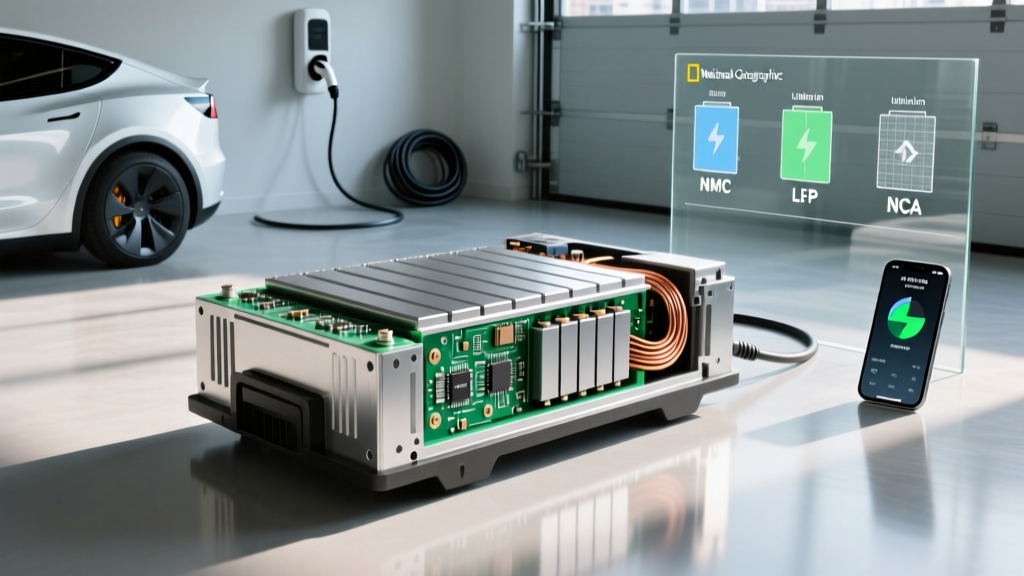
A traditional battery tender or trickle charger is designed for lead-acid 12V batteries. Your EV's massive lithium-ion traction pack — the one storing 60 to 130+ kWh of energy and propelling the car — requires none of that. In fact, connecting an aftermarket tender to a high-voltage system is both dangerous and unnecessary. The vehicle's onboard battery management system (BMS) already handles cell balancing, thermal regulation, and state-of-charge management automatically.
What you do need to understand is how your traction battery's chemistry, charging habits, and thermal environment determine its lifespan. Whether your EV uses lithium iron phosphate (LFP) or nickel-manganese-cobalt (NMC/NCA) cells, the way you charge and store the vehicle directly impacts how much capacity remains at year five, year eight, and beyond. This guide covers the real data.
LFP vs NMC/NCA: Which Battery Chemistry Is in Your EV?
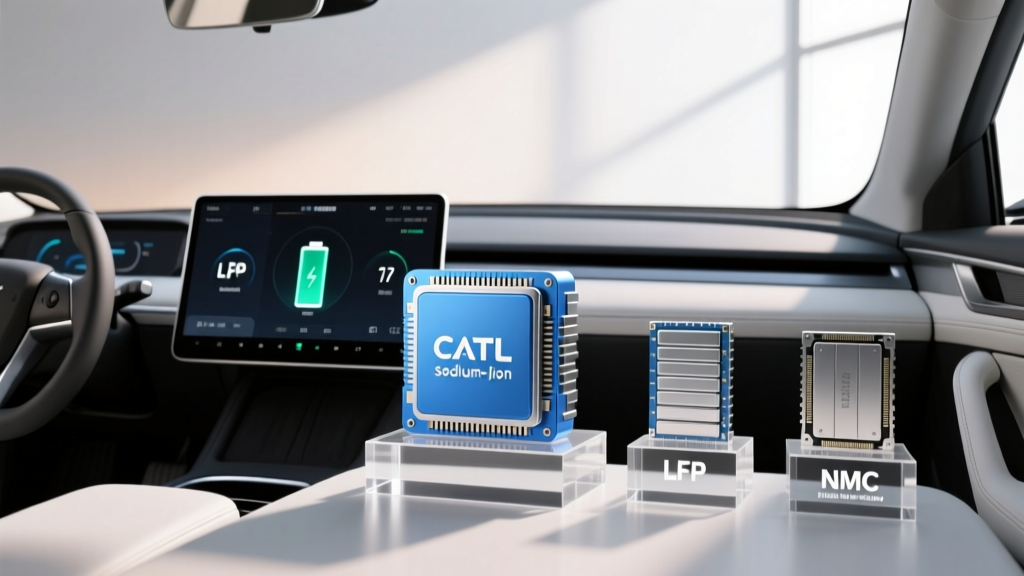
The two dominant lithium-ion chemistries in the 2026 EV market are LFP (lithium iron phosphate) and NMC/NCA (nickel-manganese-cobalt / nickel-cobalt-aluminum). Each has distinct trade-offs that affect range, longevity, cold-weather performance, and even how you should set your daily charge limit.
| Attribute | LFP (Lithium Iron Phosphate) | NMC / NCA (Nickel-Based) |
|---|---|---|
| Energy Density | Lower (~160–180 Wh/kg cell-level) | Higher (~220–280 Wh/kg cell-level) |
| Cycle Life | 3,000–5,000+ cycles to 80% SoH | 1,000–2,000 cycles to 80% SoH |
| Recommended Daily Charge | 100% (periodic full charges help BMS calibration) | 80% daily; 100% only before long trips |
| Cold-Weather Performance | Weaker — greater range loss below 32°F | Better low-temp conductivity |
| Thermal Stability | Excellent — higher runaway threshold | Good, but lower thermal runaway margin |
| Cost per kWh | Lower (no cobalt or nickel) | Higher (commodity-linked metals) |
| Common 2026 Applications | Tesla Model 3/Y RWD, BYD, base Ford Mustang Mach-E, Rivian Standard | Hyundai Ioniq 5/6, Tesla Long Range, BMW iX, Porsche Taycan, Chevy Silverado EV |
Which is better? It depends on your use case. If you prioritize maximum cycle life, lower cost, and plan to charge to 100% daily for commuting, LFP is the stronger choice. If you need maximum range per charge, better cold-weather performance, and faster DC charging speeds, NMC/NCA still leads. Neither chemistry is universally superior — the right answer depends on your driving pattern, climate, and how long you plan to keep the vehicle.
How Long Do EV Batteries Actually Last? Real Degradation Data
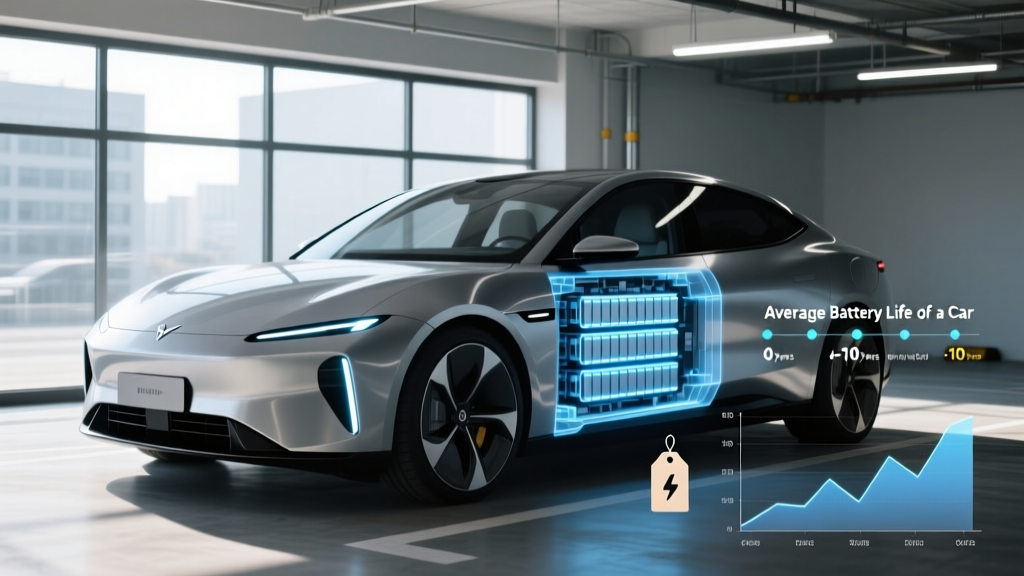
The short answer: far longer than most buyers fear. Data aggregated from fleet operators, manufacturer reports, and owner tracking communities consistently shows that modern EV batteries retain 85–95% of original capacity after 100,000 miles. Complete traction battery failure requiring full replacement before 150,000 miles is uncommon in liquid-cooled packs from major manufacturers.
Typical Degradation Curve (Liquid-Cooled Packs, Moderate Climate):
- Year 1 / 15,000 mi: ~2–4% capacity loss (initial formation loss, steepest part of the curve)
- Year 3 / 45,000 mi: ~5–8% total loss from new
- Year 5 / 75,000 mi: ~8–12% total loss
- Year 8 / 120,000 mi: ~10–15% total loss (varies significantly by chemistry and charging habits)
- Year 10 / 150,000 mi: ~12–20% total loss for NMC; ~8–12% for LFP in favorable conditions
Sources: Geotab fleet battery health study, Tesla Impact Reports, Recurrent Auto battery data.
LFP packs generally degrade more slowly than NMC, particularly when NMC packs are routinely charged to 100% or exposed to sustained high temperatures. However, LFP's weaker cold-weather performance means real-world winter range in northern climates can drop 25–35% — a factor that matters more than the degradation percentage for drivers in Minnesota or Maine.
The degradation curve is not linear. Most capacity loss occurs in the first 12–24 months as the solid electrolyte interphase (SEI) layer stabilizes. After that, degradation slows considerably, which is why 200,000-mile EVs with 80%+ battery health are increasingly common in owner communities.
What Does the EV Battery Warranty Actually Cover?
Federal law mandates a minimum 8-year / 100,000-mile warranty on EV battery packs for emissions-related compliance, and nearly every major automaker matches or exceeds this baseline. California and states adopting CARB standards extend this to 10 years / 150,000 miles for certain components.
| Manufacturer | Warranty Period | Mileage Limit | Capacity Retention Threshold |
|---|---|---|---|
| Tesla (Model 3/Y RWD — LFP) | 8 years | 100,000 mi | 70% |
| Tesla (Model 3/Y LR — NMC) | 8 years | 120,000 mi | 70% |
| Hyundai / Kia | 8 years | 100,000 mi | 70% (some models 65%) |
| Ford (Mustang Mach-E, F-150 Lightning) | 8 years | 100,000 mi | 70% |
| General Motors (Ultium platform) | 8 years | 100,000 mi | 70% |
| BMW | 8 years | 100,000 mi | 70% |
| Rivian | 8 years | 120,000 mi (Max pack: 175,000 mi) | 70% |
The critical detail is the capacity retention threshold. Most warranties guarantee the pack will retain at least 70% of its original usable capacity. If your 82 kWh (usable) pack drops below ~57 kWh of usable capacity within the warranty window, the manufacturer is obligated to repair or replace it — typically with a refurbished pack that meets the threshold, not necessarily a brand-new one.
Warranties cover defects and abnormal degradation. They generally do not cover damage from collisions, flooding, improper aftermarket modifications, or (in some fine print) consistent DC fast charging above certain thresholds — though enforcing that clause is rare. Always read the specific warranty booklet for your model year.
EV Battery Replacement Cost: What to Expect and When
Here's the number that generates the most anxiety — and the most misinformation. Replacement costs vary enormously by pack size, chemistry, vehicle architecture, and whether you receive a new, remanufactured, or used pack.
| Vehicle / Pack Size | Chemistry | Estimated Replacement Cost (Parts + Labor) | Typical Replacement Timeline |
|---|---|---|---|
| Tesla Model 3 RWD (~60 kWh) | LFP | $8,000 – $12,000 | Rarely needed before 200,000+ mi |
| Hyundai Ioniq 5 (~77.4 kWh) | NMC | $12,000 – $18,000 | Rarely needed before 150,000+ mi |
| Ford F-150 Lightning Ext. Range (~131 kWh) | NMC | $20,000 – $30,000 | Rarely needed before 150,000+ mi |
| Chevy Bolt EV (~65 kWh) | NMC | $14,000 – $16,000 (post-recall packs) | Post-recall; original packs replaced under campaign |
| BMW iX xDrive50 (~111.5 kWh) | NMC | $22,000 – $32,000 | Rarely needed before 150,000+ mi |
| Porsche Taycan (~93.4 kWh) | NMC | $20,000 – $28,000 | Rarely needed before 120,000+ mi |
The critical context most cost-warning articles omit: the vast majority of EV owners will never need a traction battery replacement. According to data from Recurrent Auto, fewer than 1.5% of EVs in their tracked fleet of over 15,000 vehicles required battery replacement outside of recall campaigns. Most packs outlast the vehicle's body, suspension, and interior — and many EVs are retired or totaled in accidents before their batteries reach end-of-life.
When replacement is needed, it's typically at 150,000–200,000+ miles, at which point the vehicle's residual value is low enough that many owners opt to sell or scrap rather than invest in a new pack. The economics of a $20,000 battery swap on a 10-year-old EV with $15,000 market value simply don't work — which is why the used EV market prices in this risk.
What Kills an EV Battery Faster? Five Degradation Accelerators
Your battery's BMS protects it from catastrophic damage, but daily habits still shift the degradation curve. Here are the five factors with the most measurable impact:
1. Sustained High State of Charge (NMC especially)
Storing an NMC pack at 100% SoC for days or weeks accelerates electrolyte decomposition and cathode stress. Tesla, Hyundai, and BMW all recommend 80% daily charge limits for NMC vehicles. LFP chemistry tolerates 100% storage far better — in fact, Tesla recommends periodic 100% charges for LFP packs to help the BMS recalibrate cell voltage measurements.
2. Frequent DC Fast Charging
DC fast charging at 150–350 kW generates significant internal heat. Occasional road-trip fast charging causes negligible harm, but daily DC fast charging (common among ride-share drivers without home charging) measurably accelerates degradation. Geotab's fleet data shows vehicles that DC fast-charged more than 3 times per week degraded roughly 2–3% faster over 4 years than those primarily using Level 2. The effect is real but modest — not catastrophic.
3. Extreme Heat Exposure
Sustained battery temperatures above 95°F (35°C) accelerate chemical aging. This is why liquid-cooled packs (standard on virtually all 2026 EVs) are vastly superior to the passive-air-cooled packs in early Nissan Leafs, which showed severe degradation in hot climates. Parking in shade and using preconditioning while plugged in mitigates this.
4. Deep Discharges to 0%
Letting the pack sit at or near 0% SoC for extended periods can cause copper dissolution in the anode current collector. Most BMS designs include a buffer (typically 2–5 kWh below the displayed 0%) to prevent true cell-level depletion, but repeatedly driving to the last bar and then leaving the car unplugged for days is inadvisable.
5. Cold Charging Without Preconditioning
Charging a cold battery (below ~40°F / 4°C) at high power causes lithium plating on the anode — a permanent, irreversible form of degradation. Modern EVs with navigation-based preconditioning (Tesla, Hyundai, Ford, Rivian) warm the battery automatically when a Supercharger or DC fast station is entered as a destination. If your EV lacks this feature, plug in and let the pack warm on Level 2 for 20–30 minutes before initiating a DC fast charge in winter.
Monitoring Battery Health: How to Check Your State of Health (SoH)
State of Health (SoH) is the percentage of original usable capacity your pack currently retains. A brand-new pack is 100% SoH; a pack that originally held 77.4 kWh but now holds 69.7 kWh is at 90% SoH.
Most 2026 EVs don't display SoH directly on the dashboard — a frustrating omission that forces owners to use indirect methods:
- OBD-II dongles + apps: Tools like OBD2 adapters paired with apps such as EV Health, Car Scanner, or ABRP-linked tools can read BMS-reported SoH values from the CAN bus. Accuracy varies by vehicle and adapter.
- Manufacturer service centers: Dealers can pull a detailed battery health report showing per-module voltage, internal resistance, and SoH percentage. Request this during routine service visits.
- Telematics services: Tesla's in-app battery health display (rolled out progressively since 2024) and Hyundai's Bluelink battery diagnostics provide SoH estimates without third-party hardware.
- Manual calculation: Charge to 100% (or a known SoC), note the displayed range, and compare it to the original EPA-rated range at the same SoC. This is imprecise (displayed range uses recent driving efficiency, not lab conditions), but it tracks trends over time.
- Third-party services: Companies like Recurrent Auto offer free battery health reports that compare your pack's degradation to a cohort of identical vehicles — useful context when evaluating whether your degradation is normal or warrantable.
For used-EV buyers, a pre-purchase battery health check is the single most important inspection item. A $100 OBD-II scan revealing 88% SoH on a 60,000-mile EV tells you far more than the vehicle's exterior condition.
Battery Tenderness for Storage: What to Do When Your EV Sits
This is where the "battery tender" concept actually applies to EVs — just not the way gas-car owners expect. If you're storing an EV for 30+ days (extended travel, seasonal use, military deployment), here's what matters:
- Set the charge limit to 50–60% (for NMC) or 50–70% (for LFP). This is the voltage range where lithium-ion chemistry is most stable.
- Leave the vehicle plugged into Level 1 or Level 2. The BMS will draw small amounts of power to maintain the 12V auxiliary battery and manage thermal conditions. This is the EV equivalent of a battery tender — the car is the tender.
- Disable Sentry Mode, cabin overheat protection, and scheduled departure features if they would draw the pack down during storage.
- Do NOT use an aftermarket 12V battery tender on the auxiliary battery while the car is plugged in — the DC-DC converter already maintains the 12V from the traction pack. Adding a parallel charger can cause conflicts and void warranties.
If the 12V auxiliary battery dies (a common problem when EVs sit unplugged for weeks), you'll need a portable lithium jump-starter rated for 12V AGM or lithium auxiliary batteries — not a traditional lead-acid trickle charger. Many 2026 EVs now use lithium-ion 12V replacements that require specific charging profiles.
Beyond Lithium-Ion: Solid-State and Silicon Anode Batteries
Next-generation battery technologies are in active development and limited production, but none are available in mass-market 2026 vehicles at scale:
- Solid-state batteries: Toyota has announced limited production in select 2027–2028 models with claimed 750+ km range and 10-minute fast charging. Samsung SDI and QuantumScape are supplying prototype cells to OEMs. Realistic mass-market availability: 2029–2031 at earliest, with initial cost premiums likely restricting them to luxury segments.
- Silicon-dominant anodes: Companies like Sila Nanotechnologies and Group14 are supplying silicon-carbon anode materials that boost energy density 15–25% over graphite. These are appearing in limited applications (e.g., Mercedes-Benz G-Class EV prototype cells) and will likely reach broader production by 2027–2028.
- Sodium-ion batteries: CATL and BYD are producing sodium-ion cells for lower-cost, shorter-range EVs in China. Energy density is 30–40% lower than LFP, but raw material costs are dramatically lower. US-market availability remains uncertain and likely post-2027.
For buyers making decisions today, these technologies are forward-looking context — not reasons to delay a purchase. Current LFP and NMC packs already deliver 250–400 miles of range, 20–30 minute DC fast charging, and demonstrated 150,000+ mile lifespans.
How long do EV batteries last in years and miles?
Modern liquid-cooled EV batteries typically retain 80–90% of original capacity at 100,000–150,000 miles (8–12 years). LFP packs often outperform NMC in longevity. Complete failure requiring replacement before 150,000 miles is rare — under 1.5% in tracked fleet data. Most packs will outlast the vehicle's useful economic life.
How much does it cost to replace an EV battery?
Replacement costs range from roughly $8,000 for smaller LFP packs (Tesla Model 3 RWD) to $30,000+ for large NMC packs (F-150 Lightning Extended Range, BMW iX). However, the vast majority of EV owners never need a replacement. When they do, it's typically at 150,000–200,000+ miles, often beyond the vehicle's economic value.
What does the EV battery warranty cover?
Federal minimum is 8 years / 100,000 miles with a capacity retention threshold — typically 70% of original usable capacity. If your pack degrades below this threshold within the warranty period, the manufacturer repairs or replaces it (often with a refurbished pack). Warranties cover defects and abnormal degradation, not collision damage or aftermarket modifications. CARB states extend coverage to 10 years / 150,000 miles.
How do I check and maximize my EV battery health?
Monitor SoH via OBD-II apps, manufacturer service diagnostics, or third-party services like Recurrent Auto. Maximize longevity by: keeping NMC packs between 20–80% daily (100% only for trips), charging LFP to 100% periodically for calibration, minimizing frequent DC fast charging, preconditioning before cold-weather fast charging, avoiding prolonged storage at 0% or 100%, and parking in shade in hot climates.
LFP vs NMC — which battery chemistry is better for me?
Choose LFP if you want maximum cycle life (3,000–5,000+ cycles), lower cost, and plan to charge to 100% daily for commuting. Choose NMC/NCA if you need maximum range per charge, better cold-weather performance, and faster DC fast charging. LFP sacrifices energy density and cold performance for longevity and safety. Neither is universally superior — the right choice depends on your climate, driving pattern, and ownership timeline.
Do I need a battery tender for my EV?
Not in the traditional sense. Your EV's BMS and onboard DC-DC converter maintain both the traction battery and 12V auxiliary battery automatically when plugged in. For long-term storage, simply leave the vehicle plugged into Level 1 or Level 2 with a 50–60% charge limit (NMC) or 50–70% (LFP). The car manages the rest. An aftermarket 12V tender is unnecessary and potentially conflicting when the vehicle is plugged in.