Understanding Electric Vehicle Battery Technology
The single most expensive component in any electric vehicle is the high-voltage traction battery. It accounts for roughly 30-40% of a new EV's sticker price, determines your real-world range, and dictates how long the vehicle remains practical to own. Yet for a topic this consequential, most buyers still rely on marketing claims rather than hard data.
This guide cuts through the noise. We'll break down the two dominant battery chemistries shipping in 2026 production vehicles — lithium iron phosphate (LFP) and nickel manganese cobalt (NMC) — with measured trade-offs, cite real-world degradation figures from fleet and owner data, explain what your warranty actually covers, and give you a concrete framework for maximizing battery health over a decade of ownership.
One clarification up front: we're talking about the main traction battery (typically 50-130 kWh) that powers the drive motors — not the 12-volt auxiliary battery that runs lights and infotainment. Those are separate systems with separate replacement costs.
LFP vs NMC: The Chemistry Decision That Shapes Your Ownership
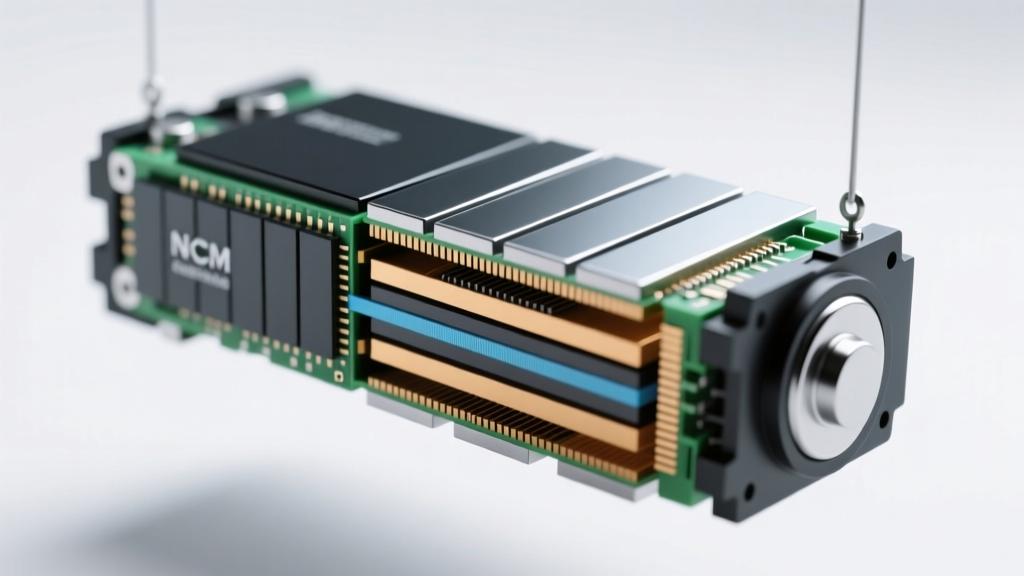
Every production EV battery in 2026 uses one of two lithium-ion cathode chemistries. Your choice between them affects range per charge, how the battery ages, how it performs in cold weather, and ultimately the vehicle's price.
| Attribute | LFP (Lithium Iron Phosphate) | NMC / NCA (Nickel-based) |
|---|---|---|
| Energy density (cell-level) | ~160-180 Wh/kg | ~220-270 Wh/kg |
| Typical pack size | 50-82 kWh | 72-132 kWh |
| Cycle life (to 80% SoH) | 3,000-5,000+ cycles | 1,000-2,000 cycles |
| Cold-weather range loss (-7°C / 20°F) | ~35-45% | ~25-35% |
| Recommended daily charge limit | 100% (BMS-managed) | 80% for daily, 100% for trips |
| Peak DC fast-charge rate | Typically 135-170 kW | Typically 200-350 kW |
| Cobalt / nickel content | None | Significant |
| Cost per kWh (pack-level) | ~$90-110 | ~$120-150 |
| Examples (2026 models) | Tesla Model 3 RWD, Model Y RWD, Ford Mustang Mach-E Select, BYD models | Hyundai Ioniq 5, Kia EV6, Rivian R1S, Lucid Air, Chevrolet Silverado EV |
The Practical Trade-Off
Choose LFP if: you charge at home nightly, drive under 250 miles per day, live in a moderate climate, and want maximum cycle life. LFP chemistry tolerates regular 100% charging without accelerated degradation, making it ideal for daily commuters who plug in every evening.
Choose NMC/NCA if: you need maximum single-charge range (300+ miles EPA), regularly take road trips requiring DC fast charging at peak rates, live in a cold-weather region where winter range retention matters, or need a larger pack in a heavy vehicle like a full-size SUV or truck.
NMC packs deliver higher energy density, meaning more range in the same physical space. But that density comes with trade-offs: faster capacity loss per cycle, sensitivity to sustained high state-of-charge, and slower degradation onset in extreme heat. According to data compiled by Recurrent Auto, NMC packs in vehicles like early Tesla Model 3 Long Range units show an average of 5-7% capacity loss at 100,000 miles, while LFP packs in equivalent-mileage vehicles often show 3-5%.
Real-World Degradation: What the Data Actually Shows
Battery degradation follows a predictable curve: a sharper initial drop in the first 1-2 years (typically 2-5%), followed by a long, slow linear decline. Most EV batteries never reach a point of catastrophic failure — they simply lose capacity gradually over time.
Typical Degradation Timeline (NMC Chemistry, Average US Climate):
- Year 1 / 15,000 miles: 2-4% capacity loss (initial formation loss)
- Year 3 / 45,000 miles: 5-7% total loss
- Year 5 / 75,000 miles: 7-10% total loss
- Year 8 / 120,000 miles: 10-15% total loss
- Year 10 / 150,000 miles: 12-18% total loss
Sources: Recurrent Auto fleet data, Geotab longitudinal study of 6,300+ EVs.
To put this in practical terms: a 2026 Hyundai Ioniq 5 with a 77.4 kWh usable NMC pack and a 303-mile EPA range would, after 8 years and 120,000 miles, likely retain roughly 260-275 miles of range. Still very usable — but noticeably less than the sticker number.
LFP packs tend to show a flatter degradation curve. Tesla's standard-range Model 3 vehicles using CATL-supplied LFP cells have demonstrated under 5% degradation at 100,000 miles in fleet data, partly because owners can charge to 100% regularly without the same cathode stress that NMC experiences at high SoC.
What Accelerates Degradation
Not all miles are equal. The following factors measurably speed up capacity loss:
- Frequent DC fast charging above 150 kW: Geotab's study found that vehicles DC fast-charging more than 3 times per week showed an additional 2-3% degradation over 4 years compared to primarily Level 2 charging.
- Sustained high SoC in hot climates: Storing an NMC vehicle at 100% charge in Phoenix summer heat (ambient 45°C / 113°F) can double the annual degradation rate versus moderate-climate storage at 50-80%.
- Deep discharges below 10%: Regularly running the pack to near-empty stresses cell balancing.
- Extreme cold charging without preconditioning: Charging a cold NMC pack below freezing causes lithium plating on the anode, a permanent capacity-loss mechanism.
What the Battery Warranty Actually Covers
Federal law mandates that EV batteries carry a minimum warranty of 8 years / 100,000 miles (10 years / 150,000 miles in CARB states like California, New York, and Massachusetts). But the details matter enormously.
| Vehicle | Warranty Period | Mileage Cap | Capacity Retention Threshold |
|---|---|---|---|
| Tesla Model 3 RWD (LFP) | 8 years | 100,000 mi | 70% |
| Tesla Model Y Long Range (NMC) | 8 years | 120,000 mi | 70% |
| Hyundai Ioniq 5 (NMC) | 10 years | 100,000 mi | 70% |
| Ford Mustang Mach-E (LFP/NMC) | 8 years | 100,000 mi | 70% |
| Chevrolet Equinox EV (NMC) | 8 years | 100,000 mi | 60% |
| Rivian R1S (NMC) | 8 years | 120,000 mi | 70% |
| BMW i4 (NMC) | 8 years | 100,000 mi | 70% |
The critical number is the capacity retention threshold. Most manufacturers guarantee the battery will retain at least 70% of its original capacity within the warranty window. If your 77.4 kWh Ioniq 5 pack drops below 54.2 kWh usable capacity within 10 years or 100,000 miles, Hyundai will repair or replace it at no cost. Some manufacturers, like Chevrolet on certain models, set the bar at 60% — a meaningful difference if you plan to keep the vehicle long-term.
Warranty coverage applies to capacity loss and manufacturing defects. It does not cover damage from accidents, flooding, or modifications. Per the EPA emissions warranty guidelines, some components may carry extended coverage in CARB states.
Battery Replacement Cost: The Number Everyone Fears
Out-of-warranty battery replacement is the most-cited fear among prospective EV buyers. Here's what it actually costs in 2026, based on manufacturer service bulletins and independent shop data:
| Vehicle / Pack Size | Battery Cost (Parts) | Labor | Total Estimated Range |
|---|---|---|---|
| Tesla Model 3 RWD (60 kWh LFP) | $6,500-$8,500 | $1,500-$2,500 | $8,000-$11,000 |
| Hyundai Ioniq 5 (77.4 kWh NMC) | $10,000-$14,000 | $2,000-$3,000 | $12,000-$17,000 |
| Ford F-150 Lightning Ext. Range (131 kWh NMC) | $18,000-$25,000 | $2,500-$4,000 | $20,500-$29,000 |
| Chevrolet Bolt EV (65 kWh NMC) | $7,000-$10,000 | $1,500-$2,500 | $8,500-$12,500 |
| Rivian R1T (128.9 kWh NMC) | $17,000-$22,000 | $3,000-$4,500 | $20,000-$26,500 |
These numbers are high — but context matters. Based on current degradation data, the vast majority of EV batteries never require full replacement during typical first-owner or even second-owner lifespans. A 2026 EV with an NMC pack driven 15,000 miles per year will likely retain 82-88% of its original capacity at the 10-year, 150,000-mile mark. That's still well within usable range for daily driving.
Full replacement is typically needed only in cases of manufacturing defect (covered by warranty), physical damage from a collision, or extreme outlier degradation. Module-level repair — replacing only degraded cell modules rather than the entire pack — is becoming more common and can cost $2,000-$6,000 depending on the vehicle architecture.
How to Check and Maximize Battery Health
State of Health (SoH) is the metric that tells you what percentage of original capacity your battery retains. Here's how to monitor it and what habits preserve it.
Checking Your Battery's SoH
- In-vehicle displays: Tesla's app shows battery health estimates. Hyundai/Kia's infotainment includes a battery diagnostics menu. BMW's iDrive provides SoH readouts under vehicle settings.
- OBD-II diagnostic tools: Devices like the OBDeleven or Carista can read battery management system (BMS) data including SoH, cell voltage variance, and charge cycle count for under $60.
- Third-party services: Recurrent Auto and Geotab offer fleet and individual battery health reports using telematics data.
- Dealer diagnostic: Any authorized service center can pull a full BMS report, typically during scheduled service visits.
Battery Longevity Best Practices
- For NMC vehicles: Set daily charge limit to 80%. Reserve 100% charges for road trips, and avoid leaving the car at 100% for more than a few hours.
- For LFP vehicles: Charge to 100% at least once per week to allow the BMS to calibrate cell balancing. Daily 100% charging is fine.
- Minimize DC fast charging: Use Level 2 home charging as your primary method. DC fast charge when you need it on road trips — that's what it's designed for — but don't rely on it exclusively.
- Precondition before fast charging: Use your vehicle's navigation-based preconditioning (Tesla, Hyundai, BMW) or manually activate battery heating before arriving at a DC charger in cold weather. This avoids lithium plating and improves charge speed.
- Avoid extreme SoC storage: If leaving the vehicle parked for more than 2 weeks, aim for 40-60% SoC. Never store at 100% or below 10% for extended periods.
- Use scheduled charging: Set your charger or vehicle to finish charging just before you leave in the morning. This minimizes time spent at high SoC.
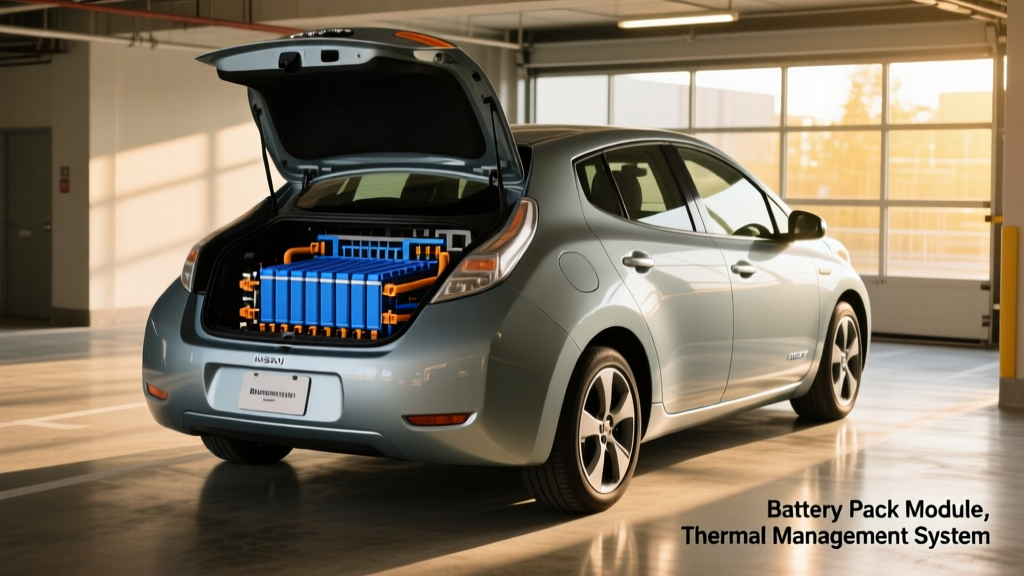
- Park in shade or a garage in hot climates: Sustained pack temperatures above 35°C (95°F) accelerate calendar aging. Thermal management systems help, but reducing ambient heat exposure is the simplest intervention.
What's Next: Solid-State and Silicon Anode Batteries
Two emerging technologies are frequently cited as the next leap in electric vehicle battery technology. Here's where they actually stand as of 2026.
Silicon anode batteries: Companies like Sila Nanotechnologies and Amprius are shipping cells with silicon-dominant anodes that offer 20-40% higher energy density than conventional graphite anodes. The Mercedes G 580 EQ Technology (formerly EQG) uses silicon anode cells in a limited production capacity. Expect broader adoption in luxury and performance EVs by 2027-2028, with mainstream vehicles following by 2029-2030 as manufacturing scales.
Solid-state batteries: Toyota has announced solid-state battery production for 2027-2028, targeting 900+ km (WLTP) range and 10-minute fast charging. Nissan and Samsung SDI are on similar timelines. However, "production" initially means limited-run vehicles at premium price points. High-volume, affordable solid-state packs for mainstream EVs remain a 2030+ prospect according to industry analysis.
Neither technology is available in a vehicle you can buy today at a mainstream price point. If you're shopping for an EV now, LFP and NMC are the chemistries that matter — and both are mature, well-understood, and backed by substantial warranty coverage.
Frequently Asked Questions
How long do EV batteries last in years and miles?
Based on fleet data from Geotab and Recurrent Auto, the average EV battery retains 85-90% of its original capacity at 100,000 miles and 78-88% at 150,000 miles. Most EV batteries will outlast the vehicle itself in terms of functional usability. Full failure before 200,000 miles is statistically rare in liquid-cooled packs from major manufacturers.
How much does it cost to replace an EV battery?
Out-of-warranty replacement costs range from approximately $8,000 for a 60 kWh pack (Tesla Model 3 RWD) to $25,000+ for a 130 kWh pack (Ford F-150 Lightning Extended Range), including labor. However, the vast majority of EV batteries never need replacement — degradation data shows most retain 80%+ capacity well past 150,000 miles. Module-level repairs, when needed, typically cost $2,000-$6,000.
What does the EV battery warranty cover?
Federal law requires a minimum 8-year / 100,000-mile warranty on EV batteries. Most manufacturers guarantee the pack will retain at least 70% of its original capacity during that period. If capacity falls below the threshold, the manufacturer repairs or replaces the battery at no cost. Coverage includes manufacturing defects and excessive degradation but excludes accident damage, flood damage, and unauthorized modifications.
How do I check my EV battery health?
Most modern EVs display battery health information through the infotainment system or companion app. For more detailed data, an OBD-II diagnostic tool ($40-$60) can read the battery management system's State of Health (SoH) percentage, cell voltage variance, and charge cycle count. Your dealer can also pull a full BMS diagnostic report during any service visit.
Is LFP or NMC better for my needs?
LFP is better if you charge at home daily, drive under 250 miles per day, live in a moderate climate, and want maximum cycle life (3,000-5,000+ cycles). NMC is better if you need 300+ miles of EPA range, regularly use DC fast charging on road trips, live in a cold climate where winter range retention matters, or drive a heavier vehicle that benefits from higher energy density. Neither is universally "better" — the right choice depends on your driving pattern and climate.
Does fast charging damage the battery?
Occasional DC fast charging causes negligible additional degradation. Geotab's study of over 6,300 EVs found that vehicles using DC fast charging more than 3 times per week showed approximately 2-3% additional capacity loss over 4 years compared to vehicles that primarily used Level 2 charging. Modern battery thermal management systems mitigate most of the heat-related stress. Use DC fast charging on road trips without worry — just don't make it your only charging method if you have Level 2 access at home.
Should I worry about battery degradation reducing my range significantly?
For most owners, no. A 2026 EV with a 300-mile EPA range will likely retain 255-275 miles of real-world range after 8 years and 120,000 miles. That's still sufficient for the vast majority of daily driving and road trips. Degradation is gradual and linear after the first year — not a cliff. If your commute is under 100 miles round-trip, even a 20% capacity loss won't affect your daily usability.
The Bottom Line on EV Battery Technology
Electric vehicle battery technology in 2026 is mature, well-warranted, and backed by extensive real-world data. The choice between LFP and NMC is the most consequential battery decision you'll make — and it should be driven by your charging habits, climate, and range needs, not by fear of degradation.
With federal warranty mandates ensuring at least 8 years / 100,000 miles of coverage at 70% capacity retention, and real-world data showing most packs retaining 82-90% capacity at that milestone, the battery replacement boogeyman is statistically unlikely to affect your ownership experience. Charge smart, precondition in cold weather, and let the data — not the marketing — guide your decision.