Why Compare an EV Traction Battery to a Battery-Operated GPS Tracker?
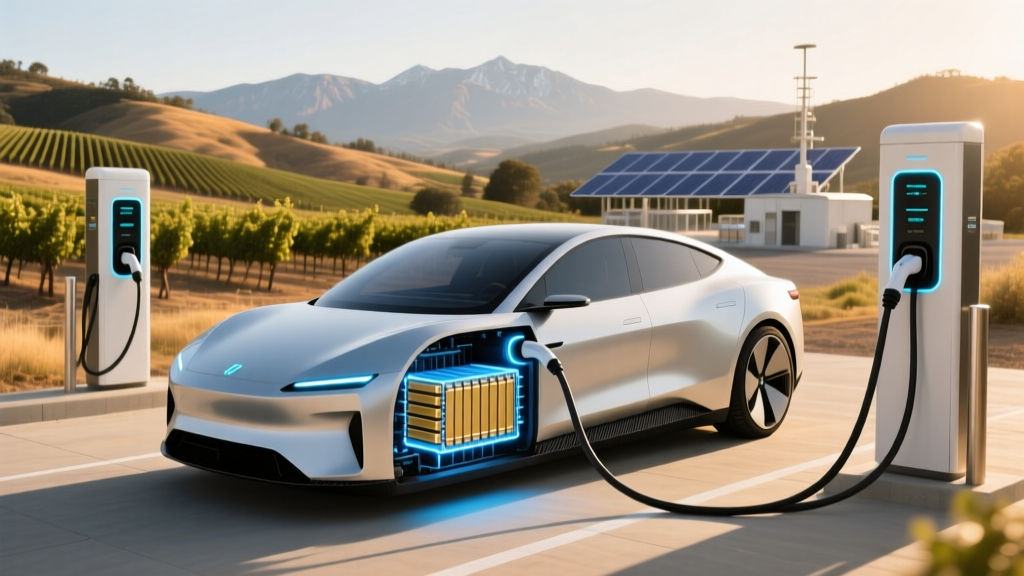
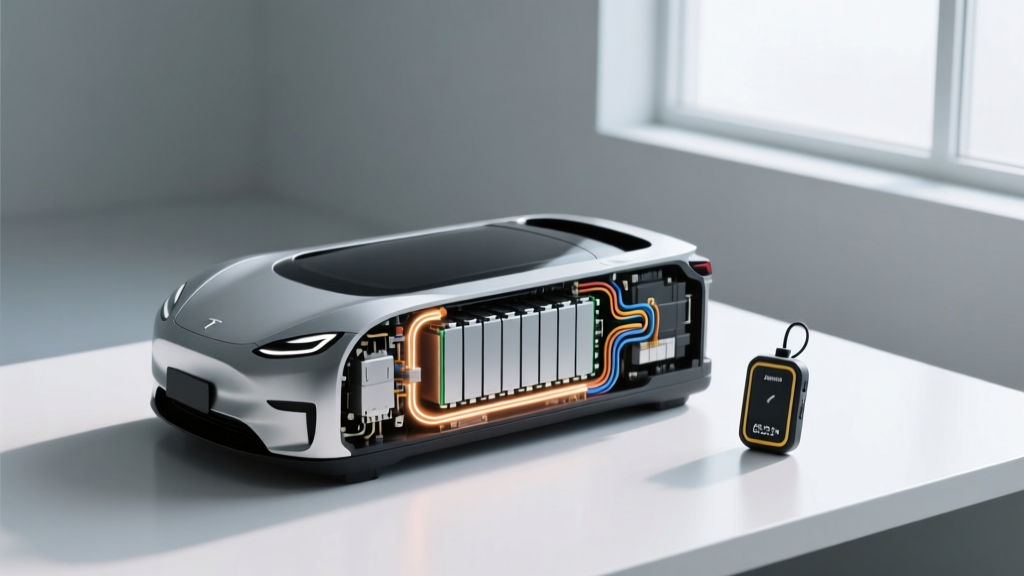
At first glance, a 100 kWh lithium-ion pack in a modern electric vehicle and the tiny coin cell or AA batteries inside a battery-operated GPS tracker have little in common. Both rely on electrochemical cells, both suffer degradation, and both demand that owners understand the difference between capacity (kWh or mAh) and power delivery (kW or mA). For EV shoppers evaluating long-term ownership costs, and for fleet managers who mount a battery-operated GPS tracker on every asset, the underlying physics of lithium chemistry, thermal stress, and cycle life govern how long each device stays useful.
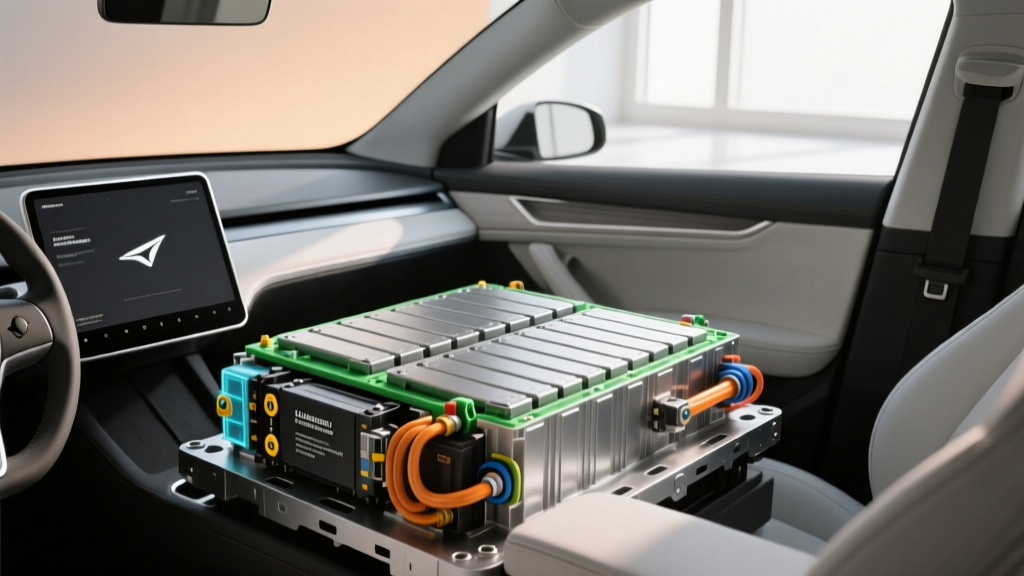
This guide breaks down the high-voltage traction battery found in 2026-model EVs — chemistry options, real-world degradation data, warranty coverage, and replacement economics — while drawing practical parallels to the low-voltage cells that keep a battery-operated GPS tracker reporting location data for months or years. The goal: give you exact numbers to budget for battery health across both platforms.
LFP vs. NMC/NCA: The Chemistry Decision That Shapes Your EV's Life
Two lithium-ion chemistries dominate the 2026 EV market. Lithium Iron Phosphate (LFP) powers the Tesla Model 3 RWD, standard-range BYD imports, and the base Ford Mustang Mach-E Select. Nickel Manganese Cobalt (NMC) and Nickel Cobalt Aluminum (NCA) appear in long-range and performance variants from Hyundai, Kia, BMW, Rivian, and Lucid. The choice is not about "better" in absolute terms — it is about which trade-off matches your driving pattern.
| Attribute | LFP (LiFePO₄) | NMC / NCA |
|---|---|---|
| Energy Density (cell-level) | ~160–180 Wh/kg | ~250–300 Wh/kg |
| Typical Cycle Life | 3,000–5,000+ cycles to 80% SoH | 1,000–2,000 cycles to 80% SoH |
| Cold-Weather Performance | Weaker below 32°F; slower charge acceptance | Better low-temp conductivity |
| Cost per kWh (pack-level) | ~$95–$115 | ~$130–$160 |
| Recommended Daily SoC | 100% OK; BMS encourages weekly full charge | 80% daily; 100% only before trips |
| Cobalt Content | None | Yes (supply-chain and ESG concern) |
| Best For | Daily commuters, high-mileage drivers, hot climates | Long-range road trippers, cold climates, performance trims |
Bottom line: If you drive 40+ miles daily, live in a warm climate, and can charge at home every night, LFP's cycle-life advantage is massive. If you need 320+ miles of EPA range, regularly drive in sub-freezing temperatures, or tow, NMC/NCA's energy density is worth the tighter charging-window discipline.
How Long Do EV Batteries Actually Last? Real Degradation Data
The most persistent myth in EV ownership is that the traction battery will need a mid-life replacement the way a timing belt does on a gas car. Data from millions of vehicles in service tells a different story. Geotab's analysis of over 10,000 EVs shows an average annual capacity loss of roughly 1.8% in the first few years, tapering to a slower linear decline afterward.
| Time / Mileage | Average State of Health (SoH) | Notes |
|---|---|---|
| Year 1 / 15,000 mi | ~97% | Initial formation loss |
| Year 3 / 45,000 mi | ~93% | Linear phase begins |
| Year 5 / 75,000 mi | ~89% | Most owners still within warranty |
| Year 8 / 120,000 mi | ~83–86% | Warranty threshold year |
| Year 12 / 180,000 mi | ~75–80% | Usable but noticeably reduced range |
LFP packs degrade more slowly in terms of cycle count but can show sharper calendar-aging if stored at low SoC for weeks. Tesla's own 2025 Impact Report noted that Model 3/Y batteries retained an average of 85% capacity at 200,000 miles — well beyond the point most first owners sell.
What Does the Battery Warranty Actually Cover?
Federal law mandates a minimum 8-year / 100,000-mile warranty on EV battery packs for emissions-related compliance, but most manufacturers exceed that baseline for capacity retention. Here is how the major brands structure coverage for 2026 models:
| Manufacturer | Term | Capacity Retention Threshold |
|---|---|---|
| Tesla (Model 3/Y LFP) | 8 yr / 120,000 mi | 70% |
| Tesla (Model S/X NMC) | 8 yr / 150,000 mi | 70% |
| Hyundai / Kia (E-GMP) | 10 yr / 100,000 mi | 70% |
| Ford (Mach-E, F-150 Lightning) | 8 yr / 100,000 mi | 70% |
| GM (Ultium platform) | 8 yr / 100,000 mi | 70% |
| Rivian | 8 yr / 175,000 mi | 70% (150 kWh pack) |
Critical detail: Warranty coverage triggers a replacement or repair only if the pack falls below the stated threshold within the term. Gradual degradation to 75% SoH at year 9 is not a claim. Read the fine print — some warranties exclude damage from DC fast-charging abuse or aftermarket modifications.
How Much Does an EV Battery Cost to Replace?
Out-of-warranty battery replacement is the single biggest fear among prospective EV buyers. The reality: most packs outlast the vehicle's useful economic life, and when they do need service, partial module replacement is increasingly common rather than full-pack swaps.
| Vehicle | Pack Size / Chemistry | Full-Pack Replacement | Module-Level Repair |
|---|---|---|---|
| Tesla Model 3 RWD | 60 kWh / LFP | $12,000–$16,000 | $2,500–$4,000 |
| Tesla Model Y LR | 82 kWh / NMC | $16,000–$22,000 | $3,000–$5,500 |
| Hyundai Ioniq 5 | 77.4 kWh / NMC | $15,000–$20,000 | $3,500–$5,000 |
| Ford F-150 Lightning Ext. | 131 kWh / NMC | $25,000–$35,000 | $5,000–$8,000 |
| Chevrolet Equinox EV | 85 kWh / NMC (Ultium) | $14,000–$19,000 | $3,000–$5,000 |
For context, a typical gas-engine transmission replacement runs $4,000–$7,000 and is far more likely to be needed within 150,000 miles than an EV battery swap. Recycled and refurbished packs from companies like Redwood Materials are also driving replacement costs down year over year.
Factors That Accelerate Battery Degradation — and How to Avoid Them
Battery chemistry sets the ceiling, but your habits determine how close you get to it. The three biggest degradation accelerators are:
Battery Care Checklist for Maximum Longevity
- Limit DC fast charging to road trips. Repeated 150+ kW sessions generate internal heat that accelerates electrolyte breakdown. Daily Level 2 home charging at 7–11 kW is the longevity sweet spot.
- Avoid sustained 100% or 0% SoC. For NMC/NCA packs, set your charge limit to 80% for daily use. LFP packs are more tolerant but still benefit from occasional 100% calibration charges rather than sitting at 100% for days.
- Precondition in extreme cold. Charging a cold battery below 32°F without preconditioning forces lithium plating on the anode. Use your vehicle's scheduled departure feature to warm the pack before charging.
- Park in shade or a garage during summer. Calendar aging roughly doubles for every 18°F increase in storage temperature. A pack stored at 95°F degrades faster than one at 70°F, even at the same SoC.
- Don't "exercise" the battery. Unlike older NiMH cells, lithium-ion has no memory effect. Shallow daily cycles (e.g., 40–70%) are gentler than deep 10–90% swings.
How to Check and Monitor Your Battery's State of Health (SoH)
State of Health (SoH) is the percentage of original capacity your pack can still store. A new 82 kWh pack at 90% SoH holds about 73.8 kWh usable. Monitoring SoH is straightforward on most 2026 models:
- In-car menus: Tesla, Hyundai, and BMW provide SoH readouts in the service or battery settings screens.
- OBD-II dongles + apps: Tools like OBDeleven, LeafSpy (Nissan), or Scan My Tesla pull real SoH data from the BMS that the dashboard may not display.
- Third-party reports: Companies like Recurrent and AVILOO generate certified battery health reports useful for resale.
- Dealer diagnostics: A service-center battery test typically takes 30–60 minutes and provides cell-level voltage deviation data.
For fleet managers, this same principle scales down: a battery-operated GPS tracker reports its own cell voltage in its telemetry payload, letting you predict when a unit's CR123A or AA lithium cell will need swapping before it goes dark.
The GPS Tracker Parallel: Small Cells, Same Physics
A battery-operated GPS tracker — whether it is a compact personal unit like a Tracki or a heavy-duty fleet asset tracker — runs on primary lithium cells (CR123A, CR2, or lithium AA) or small rechargeable LiPo packs. The same degradation principles apply, just at a different scale:
- Energy vs. power: A GPS tracker's mAh rating is the small-cell equivalent of an EV's kWh. A 2,400 mAh CR123A at 3V stores about 7.2 Wh — roughly 1/14,000th of a Tesla Model 3 pack.
- Temperature sensitivity: Lithium primary cells lose 30–50% of effective capacity below 0°F, mirroring the range loss EV owners see in winter.
- Reporting frequency trade-off: A tracker pinging every 10 seconds drains in weeks; one pinging every 12 hours lasts 1–3 years. This is the tracker equivalent of an EV driver choosing highway speeds vs. efficient city driving.
- Cost per Wh: Primary lithium cells cost roughly $0.50–$1.00 per Wh — far more than EV pack-level cells at $0.10–$0.15 per Wh — because you are paying for convenience and shelf life, not energy density.
What Comes Next: Solid-State and Silicon-Anode Batteries
Solid-state batteries — which replace the liquid electrolyte with a solid ceramic or polymer layer — promise 30–40% higher energy density, faster charging, and reduced fire risk. Toyota has announced a 2027–2028 production timeline for a limited solid-state rollout in a luxury EV, while QuantumScape continues validation testing with Volkswagen. Samsung SDI targets 2027 for a semi-solid-state cell.
Silicon-anode batteries, which replace graphite anodes with silicon to boost capacity, are closer: Mercedes-Benz's 2026 EQG uses a Sila Nanotechnologies silicon-anode cell in a limited-production run. These are real but remain low-volume and high-cost. Neither technology is available in a mainstream 2026 EV you can order today — treat any marketing claims suggesting otherwise as preliminary.
For battery-operated GPS trackers, solid-state primary cells are further out still, likely post-2030, due to the low price sensitivity of the small-cell market.
Frequently Asked Questions
How long do EV batteries last in years and miles?
Based on aggregated fleet data, most NMC packs retain 80–86% capacity at 8 years / 120,000 miles, and LFP packs often exceed 90% SoH at the same interval. Full end-of-life (below 70% SoH) typically occurs at 15–20 years or 200,000+ miles for daily-driven vehicles.
How much does an EV battery cost to replace?
Full-pack replacements range from $12,000 for a compact LFP pack to $35,000 for a 131 kWh truck pack. Module-level repairs — fixing one or two degraded segments — cost $2,500–$8,000 and are increasingly the standard service approach.
What does the battery warranty cover?
Manufacturer warranties cover defects and capacity loss below a stated threshold (typically 70% SoH) within 8–10 years or 100,000–175,000 miles depending on brand. They do not cover damage from accidents, improper charging equipment, or aftermarket modifications.
How do I check and maximize battery health?
Use the in-car SoH readout, an OBD-II app like Scan My Tesla, or a certified third-party report. Maximize longevity by favoring Level 2 home charging, keeping NMC packs between 20–80% SoC, preconditioning in cold weather, and avoiding prolonged storage at 100%.
LFP vs. NMC — which is better and why?
Neither is universally better. LFP wins on cycle life (3,000–5,000 cycles), cost, and cobalt-free sourcing, making it ideal for daily commuters. NMC wins on energy density (250–300 Wh/kg) and cold-weather performance, making it the choice for long-range and performance trims. Your driving pattern, not the spec sheet, should decide.
Does a battery-operated GPS tracker use the same chemistry as an EV?
Most consumer GPS trackers use primary (non-rechargeable) lithium-metal cells like CR123A, which are a different chemistry from EV lithium-ion. Rechargeable trackers use small LiPo cells closer to NMC chemistry. The degradation physics — heat, depth of discharge, and calendar aging — apply to both, just at vastly different scales.
Sources: fueleconomy.gov (EPA), Geotab EV Battery Health Study, manufacturer warranty documentation (Tesla, Hyundai, Ford, GM, Rivian — 2026 model year).