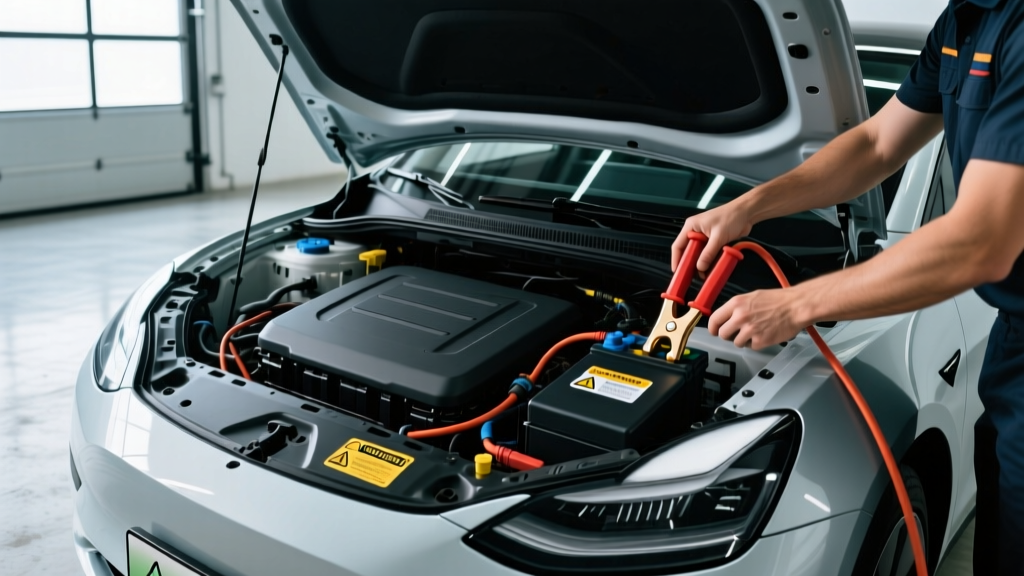
If you've searched for a battery for 2013 Ram 1500 trucks, you're looking at a conventional 12-volt lead-acid starter battery — typically a Group H7 or H8, around 730–850 cold cranking amps (CCA), costing $150–$250 at an auto parts store. That battery has one job: crank a 5.7L Hemi V8 and run accessories when the alternator isn't spinning.
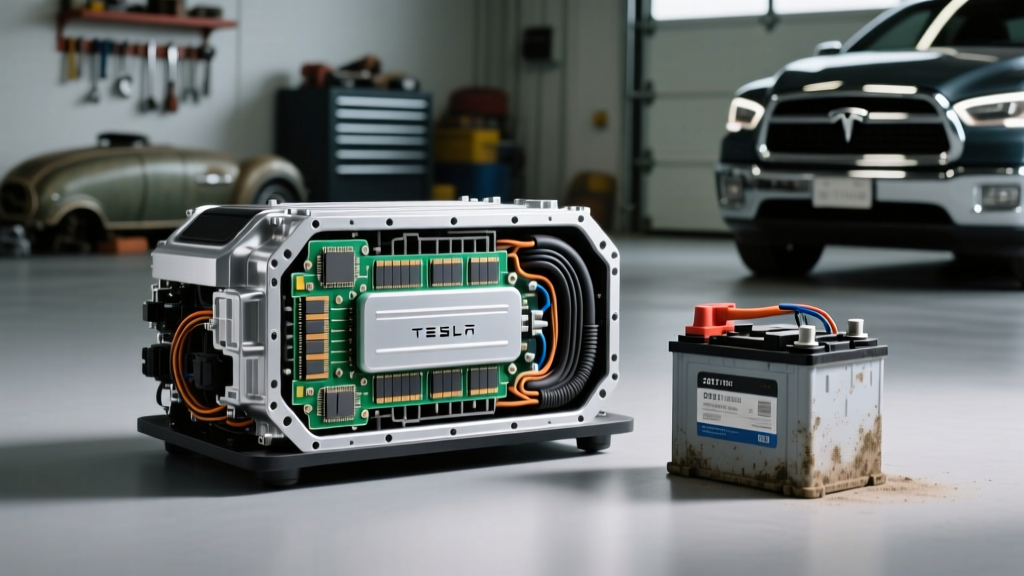
An electric vehicle's high-voltage traction battery is a fundamentally different machine. It stores 60–130+ kilowatt-hours (kWh) of energy, weighs 800–1,800 pounds, costs $10,000–$25,000+ to replace out of warranty, and is engineered to last 15–20 years. This guide breaks down the chemistry, degradation data, warranty protections, and ownership realities of modern EV batteries — and explains why confusing a 12V auxiliary battery with the traction pack is a costly mistake.
The 12V Battery for 2013 Ram 1500 vs. an EV Traction Battery
Before diving into EV-specific technology, let's establish the baseline comparison:
| Attribute | 2013 Ram 1500 12V Battery | EV Traction Battery (Typical 2025–2026) |
|---|---|---|
| Voltage | 12V | 400V–800V nominal |
| Energy capacity | ~0.8–1.0 kWh | 60–131 kWh usable |
| Chemistry | Lead-acid (flooded or AGM) | NMC, NCA, or LFP lithium-ion |
| Weight | 45–60 lbs | 800–1,800 lbs |
| Replacement cost | $150–$250 | $10,000–$25,000+ |
| Typical lifespan | 3–5 years | 15–20 years (with degradation) |
| Primary function | Engine starting, accessories | Vehicle propulsion, energy storage |
| Warranty | 1–3 years | 8 years / 100,000 miles (federal minimum) |
Critical distinction: EVs also have a small 12V auxiliary battery (or in Tesla's case, a 16V lithium-ion low-voltage battery) that powers computers, lights, and door locks. That 12V battery is analogous to the Ram 1500's battery. The traction battery is something else entirely.
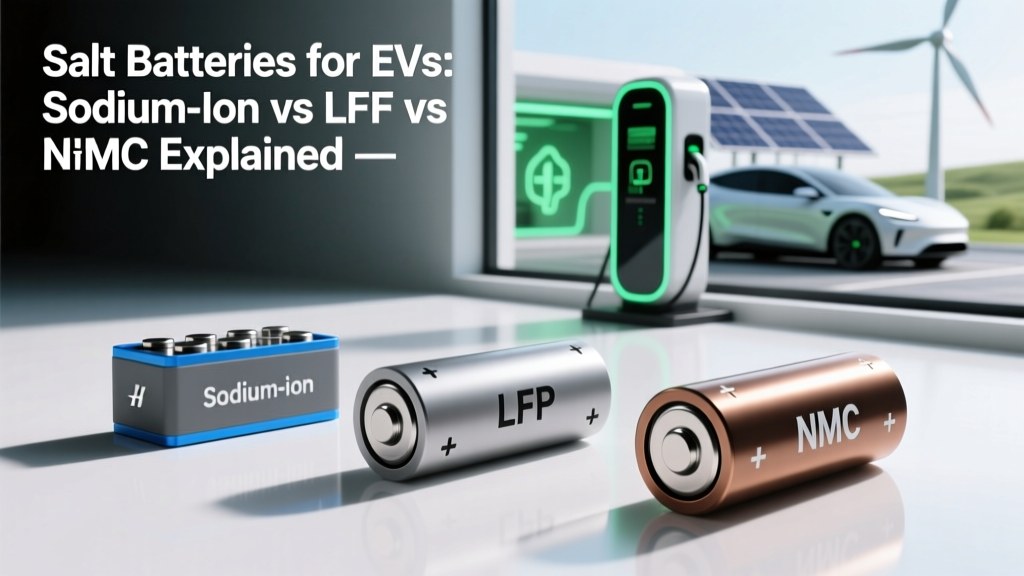
Battery Chemistry: LFP vs. NMC vs. NCA Explained
Modern EV traction batteries use one of three dominant lithium-ion chemistries. Your choice of chemistry affects range, longevity, cost, and cold-weather behavior.
| Factor | LFP (Lithium Iron Phosphate) | NMC (Nickel Manganese Cobalt) | NCA (Nickel Cobalt Aluminum) |
|---|---|---|---|
| Energy density | Lower (~160 Wh/kg cell-level) | Higher (~220–260 Wh/kg) | Highest (~250–280 Wh/kg) |
| Cycle life | 3,000–5,000+ cycles | 1,000–2,000 cycles | 1,000–1,500 cycles |
| Cold-weather performance | Weaker below 32°F; slower charging | Better cold tolerance | Better cold tolerance |
| Cost per kWh | Lower (~$80–100/kWh cell-level in 2025) | Higher (~$110–140/kWh) | Higher (~$110–140/kWh) |
| Recommended SoC for daily use | 100% (charge to full regularly) | 80% for daily; 100% before trips | 80% for daily; 100% before trips |
| Cobalt content | None | Some (supply-chain/ethical concern) | Some |
| Common in (2025–2026 models) | Tesla Model 3/Y RWD, Ford Mustang Mach-E Select, Rivian Standard | Hyundai Ioniq 5/6, BMW iX, VW ID.4, most long-range models | Tesla Model S/X, some Lucid configs |
LFP trade-off summary: You sacrifice some energy density (meaning slightly less range for the same battery weight) and cold-weather charge speed, but gain dramatically longer cycle life and the ability to charge to 100% daily without accelerated degradation. LFP is the pragmatic choice for buyers who plan to keep their EV 10+ years and who mostly drive in moderate climates.
NMC/NCA trade-off summary: Higher energy density gives more range per pound — critical for long-range and performance models. But you must manage State of Charge more carefully (avoiding prolonged 100% storage) and accept a shorter cycle life, though real-world data shows these packs still routinely last 150,000–200,000+ miles before hitting the 70% capacity retention threshold.
How Long Do EV Batteries Actually Last? Degradation Data
The fear that EV batteries need replacement every 5–8 years is not supported by fleet data. Here's what real-world studies and manufacturer telemetry show:
Typical degradation trajectory (NMC/NCA, moderate use):
- Year 1 / 15,000 miles: ~2–4% capacity loss (initial "formation" drop)
- Year 3 / 45,000 miles: ~6–9% total loss
- Year 5 / 75,000 miles: ~8–12% total loss
- Year 8 / 120,000 miles: ~12–18% total loss
- Year 10 / 150,000 miles: ~15–22% total loss
LFP packs tend to lose 1–2% less over the same period, and their degradation curve is flatter after the initial drop.
Sources: Recurrent Auto battery data (2024 fleet study of 15,000+ EVs), Geotab fleet analysis of 6,300 EVs over 6 years.
A 2024 Recurrent Auto study of over 15,000 EVs found that the vast majority of batteries retain above 90% capacity at 50,000 miles and above 80% at 100,000 miles. Out-of-warranty replacements before 150,000 miles are rare — occurring in well under 5% of vehicles, often due to manufacturing defects rather than wear.
Real-world implication: A 2025 Hyundai Ioniq 5 with an EPA-estimated 303-mile range and a 77.4 kWh NMC battery will likely still deliver ~250–260 miles of range at 100,000 miles — a meaningful reduction, but not a crisis. Most EV batteries outlast the vehicle's body, suspension, and interior.
EV Battery Warranty Terms: What's Covered and What Isn't
Federal law (under EPA/CARB emissions-related warranty requirements) mandates that EV batteries carry a minimum warranty of 8 years or 100,000 miles (whichever comes first) in all 50 states. In California and states that follow CARB standards (currently 15+ states), the mandate is 10 years or 150,000 miles.
| Manufacturer (2025–2026 Models) | Battery Warranty | Capacity Retention Threshold |
|---|---|---|
| Tesla (Model 3/Y RWD — LFP) | 8 yr / 100,000 mi | 70% |
| Tesla (Model 3/Y Long Range — NMC) | 8 yr / 120,000 mi | 70% |
| Hyundai / Kia (Ioniq 5, EV6, EV9) | 10 yr / 100,000 mi | 70% |
| Ford (Mustang Mach-E, F-150 Lightning) | 8 yr / 100,000 mi | 70% |
| GM (Chevy Equinox EV, Blazer EV, Silverado EV) | 8 yr / 100,000 mi | 70% (some trims 60% for fleet) |
| Rivian (R1T, R1S) | 8 yr / 175,000 mi | 70% |
| BMW (iX, i4, i7) | 8 yr / 100,000 mi | 70% |
| Volkswagen (ID.4) | 8 yr / 100,000 mi | 70% |
What the warranty covers: If your battery's usable capacity falls below the stated threshold (typically 70% of original capacity) during the warranty period, the manufacturer must repair or replace the battery at no cost. This covers cell-level degradation and manufacturing defects.
What it does NOT cover: Damage from accidents, flooding, improper modifications, or using non-approved charging equipment. Cosmetic issues or minor range loss that stays above the threshold are not covered.
Pro tip: If you live in a CARB-adopting state (CA, CO, CT, ME, MD, MA, NJ, NM, NY, OR, RI, VT, WA, and others), you may have extended coverage even on vehicles purchased elsewhere but registered in those states. Check your state's adoption status on the EPA's CARB page.
EV Battery Replacement Cost: Numbers and Context
Out-of-warranty battery replacement is the single biggest financial risk of EV ownership — but context matters enormously.
| Vehicle (Representative) | Battery Size (Usable kWh) | Estimated Replacement Cost (2025–2026) |
|---|---|---|
| Tesla Model 3 RWD (LFP) | 57.5 kWh | $12,000–$15,000 |
| Tesla Model Y Long Range (NMC) | 75 kWh | $14,000–$18,000 |
| Hyundai Ioniq 5 (NMC) | 77.4 kWh | $14,000–$19,000 |
| Ford F-150 Lightning Extended Range | 131 kWh | $22,000–$30,000 |
| Chevy Silverado EV (Max Range) | 200+ kWh | $30,000–$40,000+ |
| Rivian R1T Max Pack | 141 kWh | $22,000–$28,000 |
| BMW iX xDrive50 | 105.2 kWh | $20,000–$26,000 |
When is replacement typically needed? Based on current degradation data, most EV batteries will not fall below 70% capacity until 150,000–200,000+ miles or 15–20 years. Many will never need replacement during the first owner's tenure. The vehicles most at risk of needing an out-of-warranty replacement are high-mileage fleet vehicles, early-generation EVs (2011–2016 Nissan Leaf with passive air cooling), and vehicles exposed to sustained extreme heat without active thermal management.
Cost trend: Battery pack prices have fallen from ~$1,200/kWh in 2010 to roughly $130–140/kWh at the pack level in 2025, according to BloombergNEF. By 2030, projections suggest $80–100/kWh, which would bring a 75 kWh replacement closer to $8,000–$10,000.
For comparison, a new battery for a 2013 Ram 1500 costs about $200 and needs replacement every 3–5 years. Over 15 years, that's $600–$1,000 in 12V batteries — trivial compared to an EV traction battery, but the EV battery is doing vastly more work (propelling a 5,000-lb vehicle thousands of miles per year vs. cranking an engine for a few seconds).
Factors That Accelerate (or Slow) Battery Degradation
Not all miles are equal. Here's what actually moves the needle on battery health:
High-impact factors (manage these):
- Sustained high State of Charge: Storing an NMC/NCA battery at 100% for days or weeks accelerates degradation. Charge to 80% for daily use; set 100% only when you'll drive within hours.
- Frequent DC fast charging above 150 kW: Occasional fast charging is fine, but daily use of 250–350 kW chargers generates sustained heat that degrades cells faster. A Geotab study found vehicles that fast-charged more than 3x per month showed ~1% additional annual degradation vs. those that primarily used Level 2.
- Extreme heat exposure: Ambient temperatures above 95°F with a high SoC battery are the most damaging combination. Park in shade or a garage when possible; precondition while plugged in.
- Deep discharges to 0%: Letting the battery sit at or near 0% SoC for extended periods causes copper dissolution in the anode. Keep the floor at ~10–15%.
Lower-impact factors (don't obsess):
- Cold weather: Cold temporarily reduces range and charge speed but causes minimal permanent degradation. The battery management system (BMS) protects against lithium plating by limiting charge rate until the pack warms.
- Moderate fast charging (50–150 kW): One or two DC fast charges per week at moderate power levels show negligible long-term impact.
- Regen braking intensity: Standard vs. strong regen has no measurable effect on battery health.
Monitoring Battery Health: How to Check State of Health (SoH)
State of Health (SoH) is the percentage of original battery capacity still available. A new EV starts at 100% SoH; at 70% SoH, the battery still works but delivers ~30% less range.
How to check SoH:
- In-vehicle displays: Tesla's app (under Battery Health), Hyundai's dealer diagnostic tool, and BMW's iDrive system show estimated SoH. Ford's MyFordPass provides a battery health indicator.
- OBD-II tools: Apps like Leaf Spy (Nissan), Scan My Tesla, or ABRP + OBD dongle can read cell-level voltage data and estimate SoH from the BMS.
- Dealer diagnostics: Any authorized service center can pull a full battery health report, including individual module balance and internal resistance — the gold standard for pre-purchase inspections on used EVs.
- Third-party services: Companies like Recurrent and AVTO offer battery health reports based on telematics data, useful for used-EV buyers.
When to worry: If your SoH drops more than 3% in a single year after the first year, or if you notice sudden range cliffs (e.g., the car loses 20 miles of displayed range in a few minutes of driving), have the battery inspected — this may indicate a failing module rather than normal degradation.
Emerging Battery Tech: Solid-State, Silicon Anode, and Beyond
Several next-generation technologies promise to reshape EV batteries, but timelines matter:
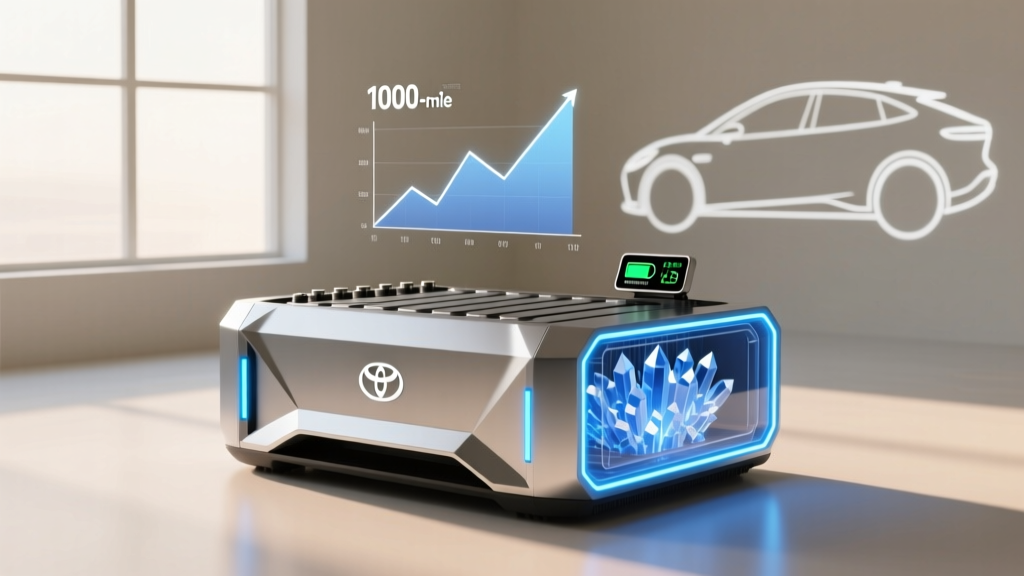
Solid-state batteries: Replace the liquid electrolyte with a solid ceramic or polymer, potentially offering 2x energy density, faster charging, and improved safety (no flammable electrolyte). Toyota has announced a solid-state battery targeting 2027–2028 production, initially in limited-run vehicles. Samsung SDI and QuantumScape are also in advanced testing. Realistic mass-market availability: 2029–2032.
Silicon-dominant anodes: Replacing graphite anodes with silicon can boost energy density by 20–40%. Companies like Sila Nanotechnologies and Group14 are supplying early production cells. The 2025–2026 Mercedes-Benz G-Class EV and some Porsche models are expected to use silicon-anode cells. Currently in limited production; broader adoption by 2027–2028.
Sodium-ion batteries: Use abundant sodium instead of lithium, offering lower cost and better cold performance at the expense of energy density. CATL has begun production in China; US-market vehicles using sodium-ion are not expected before 2027–2028, likely in entry-level or commercial models.
Important context: None of these technologies are available in production EVs you can buy today in the US market (as of early 2026). Any vehicle marketed with "solid-state" claims should be verified against actual delivery status. Current LFP and NMC chemistries remain the proven, cost-effective choices.
Frequently Asked Questions
How long do EV batteries last in years and miles?
Based on fleet data from Recurrent Auto and Geotab, most modern EV batteries (2020 and newer) retain above 80% capacity at 100,000 miles and above 70% at 150,000–200,000 miles. In years, that translates to 15–20 years of usable service for most owners. LFP batteries tend to last even longer due to higher cycle life.
How much does it cost to replace an EV battery?
Out-of-warranty replacement costs range from ~$12,000 for a Tesla Model 3 RWD (57.5 kWh LFP) to $30,000–$40,000 for large packs like the Chevy Silverado EV (200+ kWh). Most owners will never pay this — the battery typically outlasts the vehicle, and the 8-year/100,000-mile federal warranty covers premature degradation.
What does the EV battery warranty actually cover?
Federal law requires a minimum 8-year/100,000-mile warranty (10-year/150,000-mile in CARB states) covering capacity loss below a defined threshold (usually 70% of original capacity). If your battery degrades past that point within the warranty period, the manufacturer repairs or replaces it free of charge. Damage from accidents, misuse, or unauthorized modifications is excluded.
How do I check and maximize my EV battery health?
Check SoH through your vehicle's app, an OBD-II diagnostic tool, or a dealer service visit. To maximize longevity: charge NMC/NCA batteries to 80% for daily use (100% for LFP), avoid letting the battery sit at 0% or 100% for extended periods, minimize daily DC fast charging above 150 kW, park in shade during extreme heat, and precondition the battery while plugged in before fast charging or cold-weather driving.
LFP vs NMC — which battery chemistry is better?
Neither is universally better — it depends on your priorities. Choose LFP if you want maximum longevity, lower cost, and don't mind slightly less range or slower cold-weather charging. Choose NMC/NCA if you need maximum range, better cold-weather performance, or are buying a long-range/performance model. For a 10-year keeper in a moderate climate, LFP is the durability winner. For a 300+ mile road-trip vehicle in Minnesota winters, NMC is the practical pick.
Can I put a regular car battery in an EV?
No. The 12V auxiliary battery in an EV (which is similar to a battery for a 2013 Ram 1500) can sometimes be replaced with a standard Group-size 12V battery, but you must match the exact specifications — many EVs require AGM or lithium-ion 12V batteries due to higher cycling demands. The high-voltage traction battery is completely proprietary and cannot be substituted with any off-the-shelf product.
For official federal warranty requirements, see the EPA's vehicle emissions testing page. For current §30D tax credit rules that may offset EV purchase costs, consult the IRS clean vehicle credit page.