From Lead-Acid Headaches to Lithium-Ion Longevity: A Reality Check
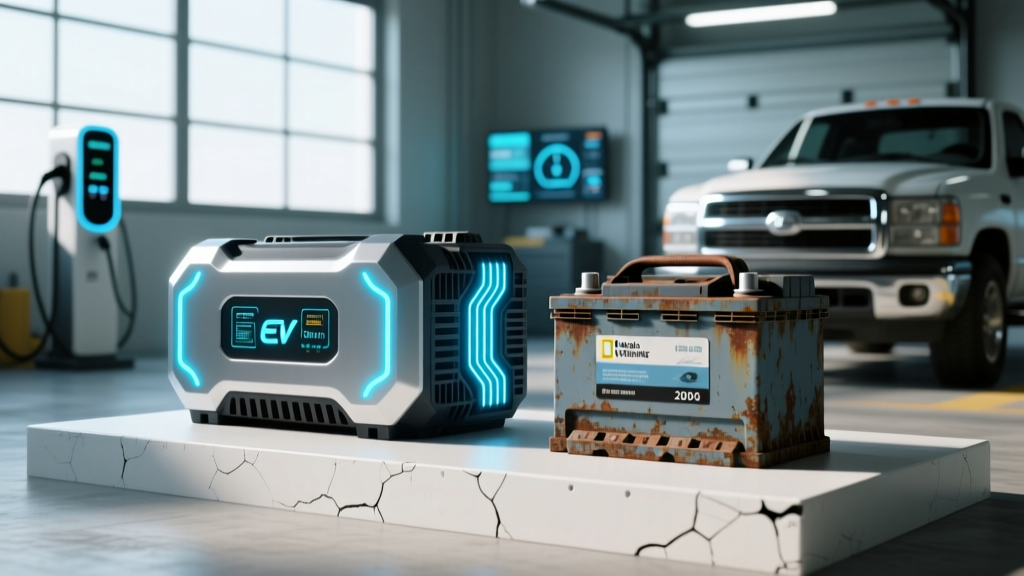
If you've ever searched for a battery for a 2003 Ford Expedition, you know the drill: a $150–$250 lead-acid 12V battery that dies every 3–5 years, often without warning, leaving you stranded in a parking lot. That frustration colors how many buyers approach electric vehicles. The assumption is simple: if a conventional car battery is a recurring headache, surely an EV's massive traction battery must be a financial time bomb.
The data tells a different story. Modern EV high-voltage traction batteries are engineered to outlast the vehicles they power, with degradation curves that flatten rather than cliff-drop, and federal warranty mandates that protect owners for nearly a decade. This guide breaks down exactly what's inside today's EV battery packs, how long they actually last, what replacement costs look like in 2026, and how to monitor and maximize your pack's health — whether you're driving a Tesla Model Y, a Hyundai Ioniq 5, or a Ford F-150 Lightning.
One critical distinction up front: we're talking about the high-voltage traction battery (the large lithium-ion pack that propels the vehicle), not the small 12V auxiliary battery that powers accessories. The 12V battery in an EV is similar to the one in your old Expedition and still needs occasional replacement. The traction battery is an entirely different engineering category.
LFP vs NMC vs NCA: Understanding EV Battery Chemistry
Not all lithium-ion batteries are the same. The cathode chemistry determines energy density, lifespan, cold-weather performance, and cost. In 2026, three chemistries dominate the EV market:
- NMC (Nickel Manganese Cobalt): Used in most long-range EVs — Hyundai Ioniq 5, Kia EV6, BMW iX, VW ID.4. Offers the best energy density (more range per kg) but higher materials cost and slightly faster degradation.
- NCA (Nickel Cobalt Aluminum): Tesla's primary chemistry for Model 3/Y Long Range and Performance variants. Similar to NMC in performance characteristics, with excellent energy density.
- LFP (Lithium Iron Phosphate): Used in Tesla Model 3/Y Standard Range, Ford Mustang Mach-E Select (2025+), and many Chinese-market EVs. Lower energy density but dramatically longer cycle life, lower cost, and no cobalt.
| Attribute | LFP | NMC | NCA |
|---|---|---|---|
| Energy Density (Wh/kg) | 160–180 | 220–260 | 240–270 |
| Cycle Life (to 80% SoH) | 3,000–5,000+ | 1,500–2,500 | 1,200–2,000 |
| Cold-Weather Performance | Moderate (greater range loss below 32°F) | Good | Good |
| Recommended Charge Habit | Can charge to 100% daily | 80% daily, 100% for trips | 80% daily, 100% for trips |
| Cobalt Content | None | Yes (varies) | Yes |
| Cost per kWh (2026 pack-level) | ~$90–$110 | ~$120–$145 | ~$125–$150 |
| Common Applications | Standard-range models, fleet vehicles | Long-range crossovers, SUVs | Tesla Long Range/Performance |
Which is better? It depends on your use case. If you want maximum range in a single charge and don't mind charging to 80% for daily use, NMC/NCA delivers. If you prioritize long-term durability, lower cost, and the convenience of charging to 100% without degradation anxiety, LFP is the stronger choice — especially for commuters covering consistent daily miles. LFP's lower energy density means a slightly heavier pack for the same range, which is why it's typically reserved for standard-range trims.
How Long Do EV Batteries Actually Last? Degradation Data
The question "how long do EV batteries last?" has a two-part answer: the battery rarely fails catastrophically, but it does gradually lose capacity. Most modern EV batteries are designed to retain 70–80% of their original capacity after 150,000–200,000 miles.
Real-world degradation data from fleet studies and owner reports (aggregated by sources like Geotab's EV battery health research) shows the following pattern:
Typical EV Battery Degradation Curve (NMC/NCA, liquid-cooled):
- Year 1 / 15,000 miles: ~2–3% capacity loss (initial formation loss)
- Year 3 / 45,000 miles: ~5–7% total loss
- Year 5 / 75,000 miles: ~7–10% total loss
- Year 8 / 120,000 miles: ~10–14% total loss
- Year 10 / 150,000 miles: ~12–17% total loss
The curve is steep in the first year, then flattens considerably. A 2022 Tesla Model 3 Long Range (82 kWh usable, NCA) driven 15,000 miles/year would likely show ~85–87 kWh usable capacity by 2026 — still delivering over 280 miles of real-world range from its original EPA-rated 341 miles.
LFP batteries degrade even more slowly. Tesla's LFP Model 3 packs have shown less than 5% degradation at 100,000 miles in fleet data, owing to the chemistry's inherent stability. This is a key reason LFP is gaining market share for high-mileage and fleet applications.
For context: the average US vehicle is scrapped at around 170,000 miles (US DOT data). Most EV batteries will retain 75–85% capacity at that point — meaning the battery will very likely outlive the rest of the vehicle's useful life.
EV Battery Warranty Terms: What's Covered and for How Long
Federal regulations mandate a minimum EV battery warranty of 8 years / 100,000 miles (10 years / 150,000 miles in California and states adopting CARB standards). Most manufacturers meet or exceed this baseline. The warranty guarantees that the battery will retain a minimum percentage of its original capacity — typically 70% — and covers defects, premature degradation, and module failures.
| Manufacturer | Warranty Period | Mileage Limit | Min. Capacity Retention |
|---|---|---|---|
| Tesla (Model 3/Y NCA) | 8 years | 120,000 mi (LR) | 70% |
| Tesla (Model 3/Y LFP) | 8 years | 100,000 mi | 70% |
| Hyundai / Kia | 10 years | 100,000 mi | 70% |
| Ford (F-150 Lightning, Mach-E) | 8 years | 100,000 mi | 70% |
| Volkswagen (ID.4) | 8 years | 100,000 mi | 70% |
| BMW (iX, i4) | 8 years | 100,000 mi | 70% |
| GM (Ultium-based) | 8 years | 100,000 mi | 70% |
What the warranty covers: Capacity loss below the threshold (verified via dealer diagnostic scan), manufacturing defects, thermal management system failures, and individual module replacements. What it typically excludes: Damage from accidents, improper charging equipment, aftermarket modifications, or operating outside specified temperature limits.
If your battery drops below 70% capacity within the warranty window, the manufacturer will replace or refurbish the pack at no cost. In practice, very few owners hit this threshold under normal use.
EV Battery Replacement Cost: What to Budget and When
Here's where the comparison to searching for a battery for a 2003 Ford Expedition breaks down completely. A 12V lead-acid battery costs $150–$250 and takes 10 minutes to swap. An EV traction battery is a $5,000–$22,000 component — but the context matters enormously.
| Vehicle / Pack Size | Battery Capacity | Chemistry | Replacement Cost Range |
|---|---|---|---|
| Tesla Model 3 Standard Range | 57 kWh (usable) | LFP | $7,000–$10,000 |
| Tesla Model Y Long Range | 75 kWh (usable) | NCA | $12,000–$16,000 |
| Hyundai Ioniq 5 | 77.4 kWh (usable) | NMC | $11,000–$15,000 |
| Ford F-150 Lightning Extended Range | 131 kWh (usable) | NMC | $18,000–$25,000 |
| Chevrolet Equinox EV | 85 kWh (usable) | NMC (Ultium) | $12,000–$16,000 |
| Nissan Leaf (40 kWh pack) | 40 kWh (usable) | NMC (passive air-cooled) | $6,500–$9,000 |
When is replacement actually needed? In the vast majority of cases, it isn't — at least not during typical first- and second-ownership periods. Out-of-warranty full pack replacements are rare and usually occur only after 200,000+ miles or when individual module failures cascade. Many shops now offer module-level repairs ($1,500–$4,000) rather than full pack swaps, replacing only the degraded cells. This is a growing segment of the EV service industry.
Pack costs continue to decline. BloombergNEF reports average lithium-ion pack prices fell below $120/kWh at the cell level in 2025, with pack-level costs approaching $140/kWh. A 77 kWh replacement pack that cost $18,000 in 2022 might cost $12,000–$14,000 by 2028. The trend line favors owners who plan to keep their EVs long-term.
Factors That Affect EV Battery Life (and What You Can Control)
Not all miles are equal when it comes to battery wear. These are the primary factors that accelerate degradation:
Battery Longevity Best Practices:
- Avoid frequent DC fast charging above 150 kW. Occasional road-trip fast charging is fine, but daily use of 250–350 kW chargers generates sustained heat that accelerates cell wear. Level 2 home charging (7–11 kW) is ideal for daily use.
- Follow the 20–80% rule for NMC/NCA. Keeping your state of charge between 20% and 80% for daily driving minimizes stress on the cathode. Charge to 100% only when you need full range for a trip. (LFP owners can ignore this — charge to 100% regularly for best calibration.)
- Use preconditioning. Most EVs let you precondition the battery before fast charging or departure. This brings the pack to optimal temperature (typically 77–95°F / 25–35°C), reducing charge time and thermal stress.
- Minimize extended storage at 100% or 0% SoC. If your EV will sit for more than a week, aim for ~50% charge. Prolonged storage at extreme SoC levels accelerates calendar degradation.
- Park in shade or a garage in hot climates. Sustained pack temperatures above 104°F (40°C) — like a black SUV baking in a Phoenix parking lot — degrade cells faster than cold exposure. Thermal management systems help but aren't infinite.
- Don't baby it too much. Modern BMS (Battery Management Systems) include top and bottom buffers — typically 3–5% of gross capacity that you can't access. This means your "100%" display is actually ~95–97% of true cell capacity, and "0%" is ~3–5%. The car protects the battery even when you don't.
Cold weather doesn't permanently degrade batteries — it temporarily reduces range due to increased internal resistance and cabin heating demands. A Tesla Model Y that delivers 310 miles EPA in 70°F weather might show 230–250 miles of range at 10°F. This is reversible as temperatures rise. Permanent cold-weather damage only occurs if a fully depleted pack is exposed to sub-zero temperatures for extended periods, which the BMS actively prevents.
How to Check and Monitor Your EV Battery Health (SoH)
State of Health (SoH) is the metric that tells you what percentage of original capacity your battery retains. Here's how to check it:
Manufacturer Apps and In-Car Displays
Most modern EVs display SoH or an estimated range indicator that reflects pack health. Tesla's app shows rated range at 100% charge, which you can compare to the original EPA figure. Hyundai's Bluelink and FordPass provide battery health summaries. These are approximate but useful for trend monitoring.
OBD-II Diagnostic Tools
Third-party tools like OBDLink SX paired with apps such as EV Health or Scan My Tesla can read detailed BMS data including individual cell voltages, pack impedance, and precise SoH percentage. A $50 OBD-II adapter gives you dealer-level battery diagnostics.
Dealer Diagnostic Scans
Any authorized dealer can run a full battery health report. Request this during routine service visits, especially before and after warranty expiration. If SoH is approaching 70% within the warranty period, this documentation is essential for a warranty claim.
Third-Party Battery Certifications
Services like AVILOO and Geotab offer independent battery health certificates — increasingly useful when buying or selling a used EV. These provide a verified SoH percentage and degradation curve, similar to a Carfax report for the battery.
What's Next: Solid-State, Silicon Anodes, and Realistic Timelines
Next-generation battery technologies are in active development, but timelines matter. Here's where things stand in 2026:
Solid-state batteries replace the liquid electrolyte with a solid conductor, promising higher energy density (300–400 Wh/kg), faster charging, and improved safety. Toyota has announced limited solid-state production for 2027–2028, initially in low-volume models. Samsung SDI and QuantumScape are targeting 2028–2030 for broader availability. These are not available in any production EV as of 2026.
Silicon anode technology replaces graphite anodes with silicon, increasing energy density by 20–40%. Sila Nanotechnologies and Group14 are supplying early silicon-anode cells to manufacturers, with initial deployments in 2026–2027 model-year vehicles. This is an incremental improvement, not a revolution — but it meaningfully extends range without increasing pack size.
Sodium-ion batteries use abundant, cheap sodium instead of lithium. CATL has begun shipping sodium-ion packs for budget EVs in China (2025–2026). US-market availability is likely 2028+ and will target entry-level models where cost matters more than energy density.
The practical takeaway: current lithium-ion technology (LFP and NMC) is mature, reliable, and continuously improving incrementally. There is no reason to delay an EV purchase waiting for solid-state — today's packs will serve well for 150,000+ miles with proper care.
EV Battery FAQ: Quick Answers to Common Questions
How long do EV batteries last in years and miles?
Most modern liquid-cooled EV batteries retain 75–85% of their original capacity at 150,000 miles or 10 years. Many will exceed 200,000 miles before dropping to 70% capacity. LFP chemistry packs have demonstrated even slower degradation, with some fleet vehicles showing less than 5% loss at 100,000 miles. The battery will almost certainly outlast other major vehicle components.
How much does an EV battery cost to replace?
Full pack replacement costs range from approximately $7,000 for smaller packs (Tesla Model 3 LFP, ~57 kWh) to $18,000–$25,000 for large packs (Ford F-150 Lightning Extended Range, 131 kWh). However, full replacements are rare during typical ownership. Module-level repairs cost $1,500–$4,000. Costs continue to decline as cell prices fall and the refurbishment market matures.
What does the EV battery warranty cover?
Federal law requires a minimum 8-year/100,000-mile warranty guaranteeing at least 70% capacity retention. Many manufacturers exceed this — Hyundai/Kia offers 10 years/100,000 miles. The warranty covers capacity degradation below the threshold, manufacturing defects, and thermal management failures. It does not cover accident damage or abuse. Warranty claims require a dealer diagnostic scan confirming SoH below the guaranteed level.
How do I check my EV battery's State of Health?
Check SoH through your manufacturer's app (comparing 100% rated range to original EPA range), an OBD-II adapter with EV-specific software (providing precise cell-level data), a dealer diagnostic scan, or an independent certification service like AVILOO. Monitoring SoH annually gives you early warning of abnormal degradation and documentation for potential warranty claims.
LFP vs NMC — which battery chemistry is better?
Neither is universally better. Choose LFP if you want maximum cycle life, lower cost, the ability to charge to 100% daily, and don't need the absolute longest single-charge range. Choose NMC/NCA if you need maximum range per charge (250–350+ miles), better cold-weather range retention, and don't mind limiting daily charge to 80%. LFP dominates standard-range and fleet applications; NMC/NCA dominates long-range and performance trims.
Does fast charging damage my EV battery?
Occasional DC fast charging (road trips, 2–3 times per month) causes negligible additional wear on modern liquid-cooled packs. Daily use of 250–350 kW chargers does accelerate degradation slightly due to sustained thermal load. The best practice is Level 2 home charging (7–11.5 kW) for daily use and DC fast charging for trips. Always use preconditioning before fast charging to reduce thermal stress.
Will my EV battery need replacing before I sell the car?
Statistically, very unlikely. The average US vehicle ownership period is 6–8 years and 70,000–90,000 miles. At that point, a modern EV battery will typically retain 85–92% of its original capacity. Even second owners driving to 150,000 miles will usually see 75–85% retention. Full battery replacement during normal ownership is the exception, not the rule.
The bottom line: if you've endured the recurring cost and inconvenience of replacing 12V batteries in conventional vehicles like a 2003 Ford Expedition, the EV traction battery is a fundamentally different proposition. It's engineered for the life of the vehicle, backed by an 8–10 year federal warranty mandate, and supported by declining replacement costs and growing module-level repair options. The data supports buying with confidence — and charging smart.