If you've ever searched for a battery for a Nissan Sentra 2014, you were looking for a 12-volt lead-acid starter battery — a $120–$180 commodity part that cranks an internal-combustion engine. That simple search opens a far bigger conversation in 2026: how the high-voltage traction batteries powering today's electric vehicles compare, what they cost, how long they last, and what owners can do to maximize their lifespan.
This guide bridges that gap. We'll use the humble Sentra's 12V battery as a starting point to unpack modern EV battery chemistry, real-world degradation data, warranty coverage, replacement economics, and the care habits that separate a pack that lasts 200,000 miles from one that needs early intervention.
The 12V Battery in a 2014 Nissan Sentra vs. an EV Traction Battery
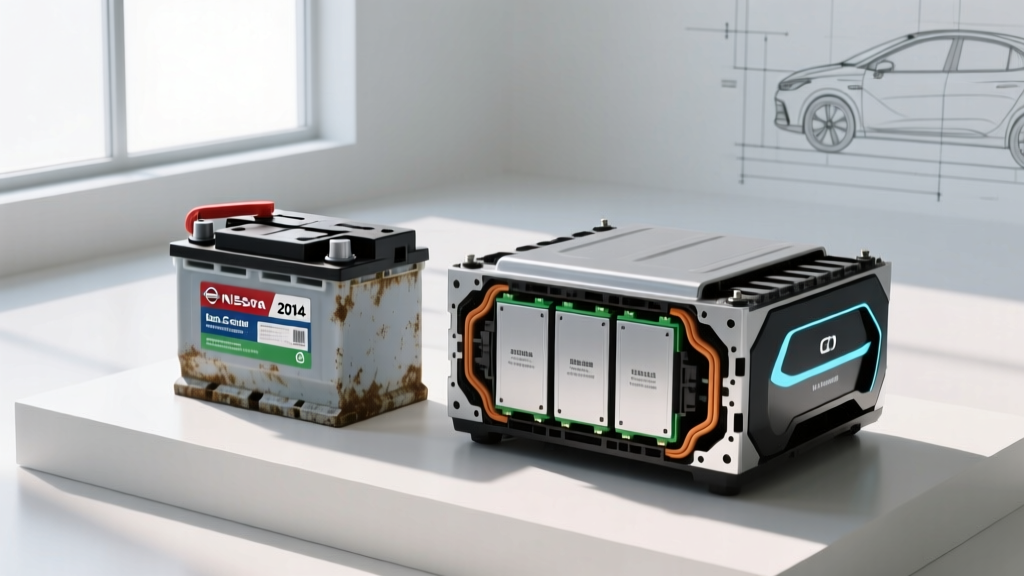
The 2014 Nissan Sentra uses a Group 35 or 24F 12V lead-acid battery rated at roughly 550–650 cold-cranking amps (CCA). It stores about 0.6–0.8 kWh of energy, weighs ~35 lbs, and typically needs replacement every 3–5 years. Total cost: $120–$180 for the battery, plus $20–$50 for installation.
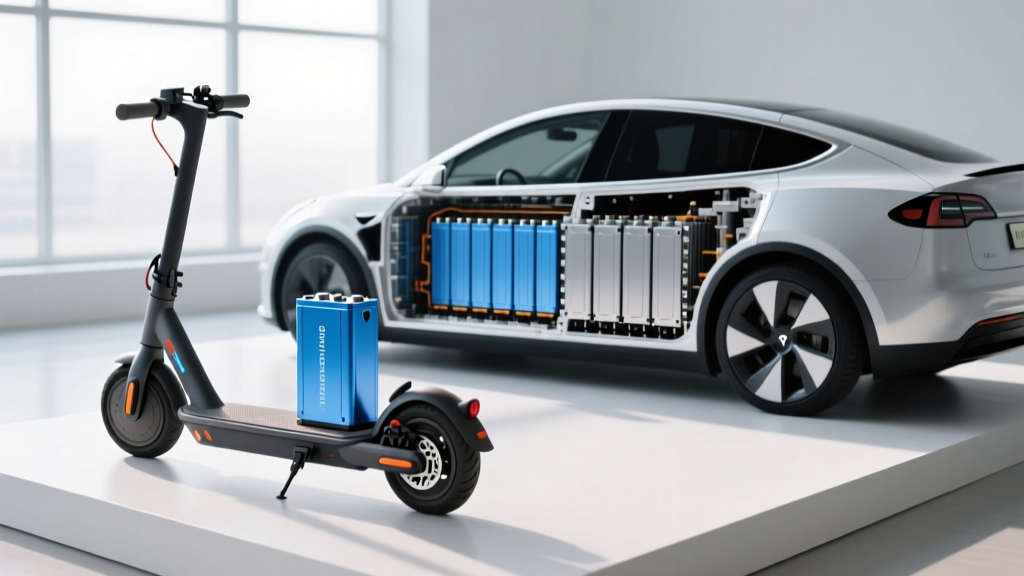
Compare that to the high-voltage traction battery in a 2026 Nissan Ariya e-4ORCE: a 91 kWh (usable ~87 kWh) lithium-ion NMC pack weighing over 900 lbs, operating at ~350–400V, delivering an EPA-estimated 289 miles of range, and carrying a warranty of 8 years/100,000 miles. The Ariya's pack stores roughly 110 times more energy than the Sentra's 12V battery — and costs roughly 100 times more to replace.
The critical distinction: kW (kilowatts) measures power — how fast energy flows. kWh (kilowatt-hours) measures energy capacity — how much the battery stores. A 150 kW charger delivers power; a 91 kWh battery stores energy. Confusing the two is the single most common mistake in EV ownership discussions.
Battery Chemistry in 2026: LFP vs. NMC vs. NCA
Every EV sold in the US in 2026 uses one of three dominant lithium-ion chemistries in its traction battery:
- NMC (Nickel Manganese Cobalt) — Used in most Hyundai, Kia, BMW, VW, and GM EVs. High energy density, good cold-weather performance, but higher materials cost and shorter cycle life than LFP.
- NCA (Nickel Cobalt Aluminum) — Tesla's long-range packs and some Panasonic-supplied cells. Highest energy density, but cobalt supply-chain concerns and similar cycle-life trade-offs to NMC.
- LFP (Lithium Iron Phosphate) — Standard-range Tesla Model 3/Y, base Ford Mustang Mach-E, many BYD models entering global markets. Lower energy density but dramatically longer cycle life, lower cost, no cobalt, and can be charged to 100% daily without accelerated degradation.
| Attribute | LFP (LiFePO₄) | NMC / NCA |
|---|---|---|
| Energy Density (cell-level) | 160–180 Wh/kg | 230–300 Wh/kg |
| Typical Cycle Life (to 80% SoH) | 3,000–5,000+ cycles | 1,000–2,000 cycles |
| Cold-Weather Performance | Moderate (slower charge below 32°F) | Better (heat pumps mitigate) |
| Daily 100% Charging | Recommended by Tesla, Ford | Not recommended (80% daily limit) |
| Cobalt Content | None | Yes (supply-chain concern) |
| Cost per kWh (pack-level, 2026) | ~$85–$100 | ~$110–$140 |
| Best For | Daily commuters, high-mileage drivers, fleet | Long-range, performance, cold-climate buyers |
Which is better? There is no universal winner. If you drive 40+ miles daily, charge at home nightly, and prioritize longevity over maximum range, LFP is the superior chemistry. If you need 300+ miles of EPA range, frequently road-trip in cold weather, or want the lightest possible pack, NMC/NCA remains the practical choice in 2026.
How Long Do EV Batteries Actually Last? Real Degradation Data
The fear that EV batteries need replacement every few years is not supported by fleet data. Here's what real-world evidence shows:
Typical Degradation Curve (NMC packs, aggregated fleet data):
- Year 1 / 15,000 mi: ~2–4% capacity loss (initial formation loss)
- Year 3 / 45,000 mi: ~6–9% total loss
- Year 5 / 75,000 mi: ~8–12% total loss
- Year 8 / 120,000 mi: ~10–16% total loss (most packs still above 80% SoH)
- Year 10+ / 150,000+ mi: ~14–22% total loss (some packs dip below 80% SoH)
Sources: Geotab fleet study, Recurrent Auto battery health reports, Tesla Impact Reports.
LFP packs degrade more slowly — Tesla's own data shows Model 3 Standard Range (LFP) packs retaining ~92% capacity at 100,000 miles. The key insight: most EV traction batteries outlast the vehicle they're installed in. A 2014 Nissan Sentra is likely on its second or third 12V battery by now; a 2018 Nissan Leaf (40 kWh NMC) is statistically likely to still have 80%+ of its original capacity at 80,000 miles.
The early-generation 2011–2017 Nissan Leaf is the cautionary tale: passive air-cooled batteries degraded faster in hot climates, with some owners reporting 30%+ loss by 80,000 miles. Modern liquid-cooled packs (standard on virtually all 2026 EVs) have largely eliminated this failure mode.
EV Battery Warranties: What's Covered in 2026
Federal law mandates a minimum 8-year/100,000-mile warranty on EV battery packs for emissions-related compliance (California and CARB states extend this to 10 years/150,000 miles). Most manufacturers exceed the minimum:
| Manufacturer | Warranty Term | Capacity Retention Threshold |
|---|---|---|
| Tesla (Model 3/Y LFP) | 8 yr / 100,000 mi | 70% minimum SoH |
| Tesla (Model S/X, LR/AWD) | 8 yr / 120,000 mi (LR) or 150,000 mi (Plaid) | 70% minimum SoH |
| Hyundai / Kia (IONIQ 5, EV6, EV9) | 10 yr / 100,000 mi | 70% minimum SoH |
| Ford (Mach-E, F-150 Lightning) | 8 yr / 100,000 mi | 70% minimum SoH |
| GM (Ultium-based: Equinox EV, Blazer EV, Silverado EV) | 8 yr / 100,000 mi | 70% minimum SoH (some trims 60%) |
| Nissan (Ariya) | 8 yr / 100,000 mi | ~66% capacity (5 bars of 12 on gauge) |
| BMW (i4, iX, i7) | 8 yr / 100,000 mi | 70% minimum SoH |
| VW (ID.4, ID.7) | 8 yr / 100,000 mi | 70% minimum SoH |
What the warranty covers: If your battery's State of Health drops below the stated threshold within the warranty period, the manufacturer will repair, replace modules, or replace the entire pack at no cost. What it doesn't cover: Damage from accidents, flooding, improper modifications, or use outside manufacturer guidelines (e.g., repeated 100% charging on NMC packs against recommendations).
Note that the 12V auxiliary battery in any EV (including the 2026 Nissan Ariya) carries a separate, shorter warranty — typically 3 years/36,000 miles — just like the battery for a 2014 Nissan Sentra.
EV Battery Replacement Costs: What Owners Actually Pay
Out-of-warranty traction battery replacement is expensive but rarely needed within a vehicle's practical lifespan. Here are 2026 replacement cost ranges based on manufacturer service data and third-party repair shops:
| Vehicle / Pack Size | Full Pack Replacement | Module-Level Repair |
|---|---|---|
| Tesla Model 3 (LFP, ~60 kWh) | $8,000–$12,000 | $2,500–$5,000 |
| Tesla Model Y (NMC, ~75 kWh) | $12,000–$16,000 | $3,000–$6,000 |
| Hyundai IONIQ 5 (77.4 kWh) | $11,000–$15,000 | $3,000–$5,500 |
| Ford F-150 Lightning (131 kWh ext.) | $18,000–$28,000 | $4,000–$8,000 |
| Chevrolet Bolt EV/EUV (65 kWh) | $9,000–$14,000 | $2,500–$4,500 |
| Nissan Leaf (40–62 kWh) | $7,000–$10,000 | $2,000–$4,000 |
| Legacy Nissan Leaf (24–30 kWh, 2011–2017) | $5,500–$8,500 | N/A (full swap typical) |
When is replacement typically needed? For modern liquid-cooled packs, rarely before 150,000–200,000 miles. Most EVs are scrapped for collision damage or economic obsolescence before the traction battery fails. The exception is early air-cooled packs (2011–2017 Leaf, early Mitsubishi i-MiEV) in hot climates.
Module-level repair — replacing only the degraded cell modules rather than the entire pack — is increasingly available through independent EV shops and is the more cost-effective path when only partial degradation has occurred.
Factors That Accelerate (or Preserve) Battery Health
Habits that maximize EV battery lifespan:
- Daily charge limit: Set to 80% for NMC/NCA packs; 100% is fine for LFP. This single habit has the largest impact on long-term SoH.
- Avoid DC fast charging as a daily routine: Occasional road-trip fast charging is fine. Daily 150+ kW charging adds measurable degradation over 5+ years. Level 2 home charging (7–11 kW) is gentler.
- Precondition before fast charging: Most EVs auto-precondition when you navigate to a charger. This warms the battery to optimal temperature (~77–95°F), enabling faster charging and reducing lithium plating risk.
- Avoid prolonged storage at 0% or 100%: If leaving the car for 2+ weeks, store at 40–60% SoC.
- Minimize extreme-heat exposure: Park in shade or a garage when possible. Battery thermal management works harder (and ages faster) in sustained 100°F+ ambient heat.
- Cold-weather charging: Always precondition in freezing temperatures. Charging a cold battery without preconditioning can cause lithium plating — permanent capacity loss.
- Regenerative braking: Using moderate regen settings is fine; max regen in extreme cold can stress the pack if not preconditioned.
Habits that accelerate degradation:
- Daily 100% charging on NMC/NCA packs
- Frequent DC fast charging (>3x per week) without preconditioning
- Repeated deep discharges to 0%
- Prolonged storage at high SoC in hot climates
- Aftermarket modifications that bypass thermal management
How to Check Your EV Battery's State of Health
State of Health (SoH) is the percentage of original capacity your battery retains. A new pack is 100% SoH; a pack that stored 75 kWh when new and now stores 67.5 kWh is at 90% SoH.
How owners check SoH in 2026:
- In-car displays: Tesla shows battery health in the service menu (Software > Health). Hyundai/Kia shows a battery health percentage in the EV settings. Nissan uses a 12-bar capacity gauge on the Leaf and Ariya.
- OBD-II dongles + apps: Tools like OBDLink SX paired with apps such as Leaf Spy (Nissan), TeslaFi, or ABRP (A Better Route Planner) can read detailed SoH, cell voltage variance, and cycle count data.
- Dealer diagnostics: Any authorized service center can run a full battery health report, typically free under warranty.
- Third-party services: Companies like Recurrent Auto offer free battery health reports by connecting to your vehicle's telematics data.
What to watch for: Cell voltage variance above 50 mV between modules, sudden range drops not explained by temperature, or charge-rate throttling that wasn't present when new. These can indicate individual module failure, which is often repairable without full pack replacement.
Emerging Battery Technology: What's Next (and When)
Several next-generation battery technologies are in development, but none are commercially available in production EVs as of 2026:
- Solid-state batteries: Toyota has announced limited production for 2027–2028, claiming 750+ km (466 mi) range and 10-minute fast charging. Samsung SDI and QuantumScape are also targeting 2027–2029 production timelines. These remain announced/preliminary — not available for purchase.
- Silicon-dominant anodes: Companies like Sila Nanotechnologies and Group14 are supplying silicon-carbon anode materials to Panasonic and Mercedes-Benz, promising 20–40% energy density improvement. Limited production expected in 2027+ luxury models.
- Sodium-ion batteries: CATL and BYD are deploying sodium-ion packs in Chinese-market budget EVs. Lower energy density than LFP but cheaper and more abundant. US availability is uncertain and likely post-2028.
- LMFP (Lithium Manganese Iron Phosphate): An evolution of LFP with ~15–20% higher energy density. Tesla and Ford have signaled interest; production expected 2027+.
For buyers in 2026, today's LFP and NMC packs are mature, well-warranted, and proven at scale. Waiting for solid-state is a reasonable strategy for buyers with a 3–5 year horizon, but current technology already delivers 250–350+ miles of real-world range with 8–10 year warranty coverage.
Frequently Asked Questions
How long do EV batteries last in years and miles?
Modern liquid-cooled EV traction batteries typically retain 80%+ of original capacity at 150,000–200,000 miles or 10–15 years. LFP chemistry packs often exceed 300,000 miles before reaching the 80% SoH threshold. Most EVs are retired for other reasons before the battery fails.
How much does an EV battery cost to replace?
Full pack replacement ranges from $7,000–$28,000 depending on vehicle and pack size (see cost table above). Module-level repair is $2,000–$8,000. Under warranty (8 yr/100,000 mi minimum), replacement is free if SoH drops below the manufacturer's threshold (typically 70%).
What does the EV battery warranty actually cover?
Federal law mandates 8 years/100,000 miles minimum coverage. If your battery's State of Health falls below the stated threshold (usually 70% of original capacity), the manufacturer repairs or replaces the pack at no cost. Warranties do not cover accident damage, flooding, or abuse. The 12V auxiliary battery has a separate, shorter warranty (~3 yr/36,000 mi).
How do I check and maximize my EV battery health?
Check SoH via your car's built-in display, an OBD-II app (Leaf Spy, TeslaFi), or a dealer diagnostic. Maximize health by: limiting daily charge to 80% (NMC) or charging freely to 100% (LFP), minimizing DC fast charging frequency, always preconditioning before fast charging, avoiding storage at 0% or 100% SoC, and parking in shade in hot climates.
LFP vs. NMC — which battery chemistry is better for me?
Choose LFP if you charge at home daily, drive under 250 miles between charges, want maximum cycle life (3,000–5,000+ cycles), and prefer lower cost with no cobalt. Choose NMC/NCA if you need 300+ miles of range, regularly drive in freezing temperatures, or prioritize performance and energy density. Neither is universally "better" — the right choice depends on your driving pattern.
Is the 12V battery in an EV the same as the battery for a 2014 Nissan Sentra?
Functionally, yes — both are 12V lead-acid (or increasingly, 12V lithium) auxiliary batteries that power lights, infotainment, and control electronics. The EV's high-voltage traction battery is an entirely separate system. If your EV's 12V battery dies, the car won't start even if the main pack is fully charged — similar to a dead battery in your 2014 Sentra. Replacement cost for an EV 12V battery is typically $150–$350.
Does fast charging damage my EV battery?
Occasional DC fast charging (road trips, 1–2x per week) causes negligible additional degradation in modern liquid-cooled packs. Daily fast charging without preconditioning can add 1–3% additional capacity loss over 5 years compared to Level 2 home charging. The bigger risk is fast charging a cold battery without preconditioning, which can cause lithium plating — permanent, irreversible capacity loss.
Sources: EPA fueleconomy.gov, IRS §30D Clean Vehicle Credit, Geotab EV Battery Degradation Study, Recurrent Auto Battery Health Data, manufacturer specification sheets.