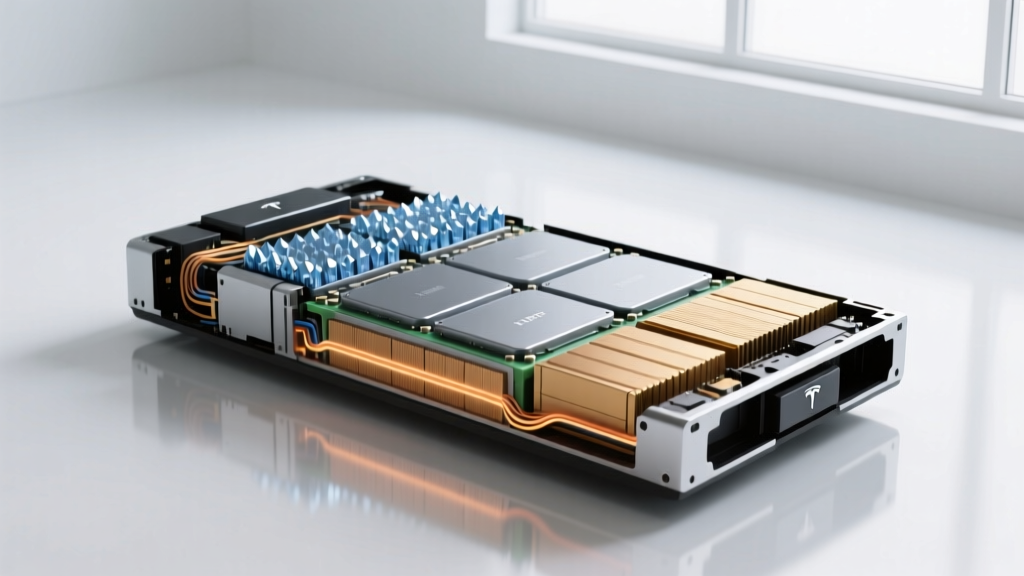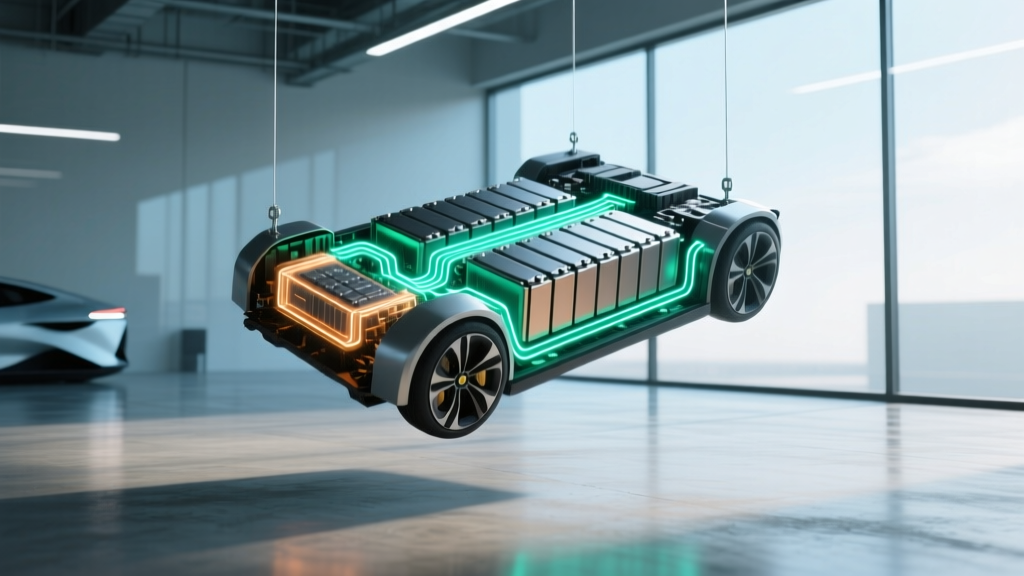
If you've ever lugged a battery powered cooler on a road trip, you've already experienced the core trade-offs that define a modern EV's high-voltage traction pack: energy density versus weight, cycle life versus cost, and the slow reality of capacity fade over time. A 50-quart electric cooler might run off a 1 kWh lithium pack and cost a few hundred dollars to replace. An EV's traction battery stores 60 to 130+ kWh, weighs 700 to 1,200 pounds, and can cost $5,000 to $25,000 to swap. The physics and chemistry, however, are the same. This guide breaks down what's actually inside a 2026 EV battery, how long it lasts, what the warranty really covers, and what emerging tech like solid-state cells might deliver later this decade.
LFP vs NMC/NCA: The Two Chemistries Powering 2026 EVs
Every mainstream EV sold in the U.S. in 2026 uses one of two lithium-ion cathode chemistries: lithium iron phosphate (LFP) or nickel manganese cobalt / nickel cobalt aluminum (NMC/NCA). Tesla offers both (LFP in Model 3/Y RWD, NMC in Long Range and Performance). Ford uses LFP in the standard-range Mustang Mach-E and F-150 Lightning Pro. Hyundai/Kia, GM, Rivian, and BMW predominantly use NMC. The chemistry choice drives range, longevity, cold-weather behavior, and price.
| Attribute | LFP (LiFePO4) | NMC / NCA |
|---|---|---|
| Energy density (cell-level) | ~160–180 Wh/kg | ~230–280 Wh/kg |
| Typical pack size (2026 models) | 60–77 kWh usable | 75–132 kWh usable |
| Cycle life (to 80% SoH) | 2,500–4,000+ cycles | 1,000–2,000 cycles |
| Cold-weather range loss (~20°F) | 30–40% loss typical | 20–30% loss typical |
| Fast-charge tolerance | Excellent; can charge to 100% regularly | Better kept 20–80% daily |
| Critical-mineral exposure | No cobalt, no nickel | Nickel + cobalt (supply risk) |
| Relative cost (per kWh, 2026) | ~$85–105 | ~$115–140 |
| Best for | Daily drivers, high-mileage, L2 charging | Long-range, towing, cold climates |
Which is better? Neither — they're tools for different jobs. LFP wins on longevity, cost, and ethics (no cobalt). NMC wins on range-per-pound and cold performance. If you drive 30 miles a day in Texas and charge at home, LFP is the obvious pick. If you tow a trailer through Minnesota winters, NMC's energy density and cold tolerance matter more.
How Long Do EV Batteries Actually Last?
The short answer: longer than most buyers expect, and usually longer than the rest of the car. Real-world fleet data from Tesla's 2025 Impact Report and independent analysis by Recurrent Auto show most liquid-cooled packs retain 85–92% of original capacity after 100,000 miles. Catastrophic failure before 150,000 miles is rare — well under 2% of packs in major fleets.
Typical degradation curve (NMC, liquid-cooled, 2020–2026 models):
- Year 1 / 15k miles: 2–4% loss (initial "break-in" fade)
- Year 3 / 45k miles: 5–8% total loss
- Year 5 / 75k miles: 7–10% total loss
- Year 8 / 120k miles: 10–15% total loss
- Year 12 / 180k miles: 15–22% total loss (varies widely by care)
LFP packs generally track 2–5 points better on the same timeline, thanks to more stable cathode chemistry. Early 2013–2016 air-cooled packs (notably the first-gen Nissan Leaf) degraded far faster — some hitting 70% SoH by 60,000 miles — which is why modern thermal management matters so much.
A practical framing: a 2026 Hyundai Ioniq 5 Long Range (84 kWh usable, NMC) with an EPA range of 325 miles will likely still deliver ~280–295 miles at 100,000 miles. That's still more than most gas cars go between fill-ups.
What the Battery Warranty Actually Covers (and What It Doesn't)
Federal law effectively mandates a minimum 8-year / 100,000-mile battery warranty for EVs sold in the U.S. (California and states adopting CARB rules push this to 10 years / 150,000 miles). But the fine print matters enormously.
| Vehicle | Warranty Term | Capacity Threshold | Notes |
|---|---|---|---|
| Tesla Model 3/Y RWD (LFP) | 8 yr / 120k mi | 70% SoH | Module-level replacement possible |
| Tesla Model Y Long Range (NMC) | 8 yr / 120k mi | 70% SoH | Same terms, different chemistry |
| Hyundai Ioniq 5 / Kia EV6 | 10 yr / 100k mi | 70% SoH | Strongest mainstream term |
| Ford F-150 Lightning | 8 yr / 100k mi | 70% SoH | Applies to both LFP and NMC trims |
| Chevrolet Silverado EV | 8 yr / 100k mi | 60% SoH (Ultium) | Lower threshold than rivals |
| Rivian R1S / R1T | 8 yr / 120k mi | 70% SoH | Includes thermal management components |
Key caveats: warranties cover capacity loss below the threshold, not gradual fade above it. They also typically exclude damage from flooding, fire, aftermarket modifications, or improper charging equipment. And they transfer to second owners — a meaningful resale-value factor.
Replacement Cost: The Scary Number, in Context
Out-of-warranty traction-battery replacement remains expensive — but the context most fear-mongering headlines omit is that the vast majority of EVs are retired or totaled before needing a full pack swap. Average U.S. vehicle age is 12.6 years (per S&P Global Mobility, 2025), and most EVs track similarly. When replacement is needed, it's usually after 150,000+ miles, at which point the vehicle's residual value rarely justifies a full-price new pack.
| Vehicle Class / Example | Pack Size | Full-Pack Cost | Module Repair Option |
|---|---|---|---|
| Compact (Chevy Bolt EV/EUV) | 65 kWh | $9,000–$13,000 | Limited; mostly full swap |
| Mid-size sedan (Tesla Model 3 RWD) | 60 kWh LFP | $7,500–$11,000 | Yes, ~$2,500/module |
| Crossover (Hyundai Ioniq 5) | 84 kWh NMC | $13,000–$18,000 | Yes, module-level service |
| Truck (Ford F-150 Lightning Ext.) | 131 kWh NMC | $18,000–$25,000 | Yes, but labor-intensive |
| Luxury (Mercedes EQS) | 108 kWh NMC | $20,000–$28,000 | Dealer-only, limited indy support |
Two trends are pushing these numbers down: cell-pack pricing has fallen from ~$180/kWh in 2020 to roughly $105/kWh in 2026 (per BloombergNEF), and independent EV shops are increasingly able to perform module-level repairs instead of full-pack swaps. A single degraded module on a Model 3 can be replaced for under $3,000 — a far cry from the $20k headline number.
Five Factors That Actually Shorten Battery Life
Not all miles are created equal. These are the habits and conditions that measurably accelerate degradation, ranked by impact based on fleet data from Recurrent and Geotab:
- 1. Sustained high state of charge (NMC only). Storing an NMC pack at 100% SoC for days — especially in heat — accelerates electrolyte breakdown. LFP is immune to this; Tesla and Ford explicitly recommend 100% weekly for LFP.
- 2. Repeated DC fast charging above 80% SoC. The charge curve tapers sharply past 80% because lithium plating risk climbs. Occasional 100% DCFC on road trips is fine; daily 100% top-ups at 150+ kW add up.
- 3. Extreme heat without preconditioning. Battery temperature above 110°F (43°C) during charging causes permanent calendar aging. Cars with active liquid cooling (nearly all 2026 models) mitigate this heavily, but parking unplugged in Phoenix summer still hurts.
- 4. Deep discharges below 10% SoC. Running the pack to near-zero regularly stresses the anode. The low-SoC buffer (typically 2–5 kWh hidden from the driver) protects against the worst of this, but habitually arriving at 0% is avoidable wear.
- 5. High-mileage fast-charge-only lifestyles. Drivers who log 40k+ miles/year exclusively on DCFC see 2–4% more fade at 100k miles versus home L2 chargers. Meaningful, but not catastrophic.
Checking State of Health: What Owners Can Actually Monitor
State of Health (SoH) is the percentage of original capacity the pack still holds. A new EV is 100% SoH; a pack at 85% SoH holds 85% of its original kWh. Most 2026 EVs expose this number — with varying precision — through the infotainment system or companion app:
- Tesla: Service menu (hold model word on About screen) shows nominal vs. typical range, from which SoH is calculable. Third-party tools like Tessie and Teslalogger track it over time.
- Hyundai/Kia: EV-specific menu shows battery conditioning status and approximate SoH via the Bluelink/Kia Connect app.
- GM (Ultium): myChevrolet/myCadillac app surfaces a battery health indicator post-2024 OTA update.
- Ford: FordPass displays estimated range vs. original, which approximates SoH.
- OBD-II tools: Devices like the OBDLink MX+ paired with apps such as ABRP or LeafSpy (Nissan) read BMS-reported SoH directly — the most accurate consumer-accessible method.
For used-EV buyers, a pre-purchase SoH check is as essential as a compression test was for gas cars. A 2021 Model 3 showing 91% SoH at 48,000 miles is healthy; one at 82% warrants negotiation or a warranty claim.
What's Coming: Solid-State, Silicon Anode, and Realistic Timelines
Two next-generation technologies dominate EV battery headlines — and both deserve cautious optimism rather than hype:
Solid-state batteries replace the liquid electrolyte with a ceramic or polymer solid, enabling lithium-metal anodes and roughly 30–50% higher energy density. Toyota, Nissan, and Samsung SDI all have announced solid-state packs for late-2020s production. As of early 2026, no mass-market EV on U.S. roads uses a solid-state pack. Pilot vehicles exist (notably Toyota's bZ4X-based prototypes), and small-scale production is expected to begin in Japan in 2027–2028. Expect U.S. availability in meaningful volume no earlier than 2029–2030, and initially in luxury/low-volume models.
Silicon-dominant anodes (used by startups like Sila Nanotechnologies and Group14) swap graphite for silicon, yielding 10–20% more energy density with today's manufacturing. Mercedes' 2026 EQG uses a silicon-anode pack option, and Porsche has signaled adoption for next-gen Taycan variants. This tech is real and shipping now, but in limited applications.
Neither technology changes the ownership calculus for a 2026 EV buyer. Today's LFP and NMC packs, properly cared for, already outlast the average ownership cycle.
Frequently Asked Questions
How long do EV batteries last in years and miles?
Most 2026 liquid-cooled EV packs retain 85–92% of original capacity at 100,000 miles (roughly 7–8 years of average U.S. driving). LFP chemistries typically outlast NMC by 2–5 percentage points over the same period. Reaching 200,000 miles with 75%+ SoH is common with proper care.
How much does an EV battery cost to replace?
Out-of-warranty full-pack replacement runs $7,500–$28,000 depending on pack size and vehicle class, with most mainstream crossovers in the $13,000–$18,000 range. Module-level repairs, where supported, cost $2,000–$5,000. Under-warranty replacements (below 70% SoH within 8 yr/100k mi) are $0 to the owner.
What does the EV battery warranty actually cover?
Warranties cover capacity loss below a stated threshold (usually 70% SoH, 60% on GM Ultium) during the term — typically 8 years/100,000 miles, extended to 10/150k in CARB states. They do not cover gradual fade above the threshold, accident damage, flooding, or aftermarket tampering. Warranties transfer to subsequent owners.
How do I check and maximize my EV's battery health?
Check SoH via the OEM app, infotainment service menu, or an OBD-II reader with EV-capable software. Maximize life by charging NMC to 80% daily (100% for LFP), minimizing sustained high-SoC storage in heat, preconditioning before DC fast charging, and using Level 2 home charging as your primary source.
LFP vs NMC — which battery chemistry should I choose?
Choose LFP if you prioritize longevity, lower cost, cobalt-free sourcing, and primarily drive in moderate climates with home charging. Choose NMC if you need maximum EPA range, tow frequently, live in a cold climate, or want the fastest DC fast-charge speeds on road trips. Neither is universally superior.
Is a battery powered cooler the same chemistry as an EV?
Often, yes — many premium battery powered coolers (Dometic, ICECO, EcoFlow) use LFP or NMC lithium cells identical in chemistry to EV packs, just at vastly smaller scale (0.5–2 kWh vs. 60–130 kWh). The same care principles apply: avoid prolonged 100% storage on NMC, keep the pack cool, and don't deep-discharge regularly.
Sources: fueleconomy.gov (EPA range/efficiency), Recurrent Auto battery degradation research, IRS §30D clean vehicle credit rules.