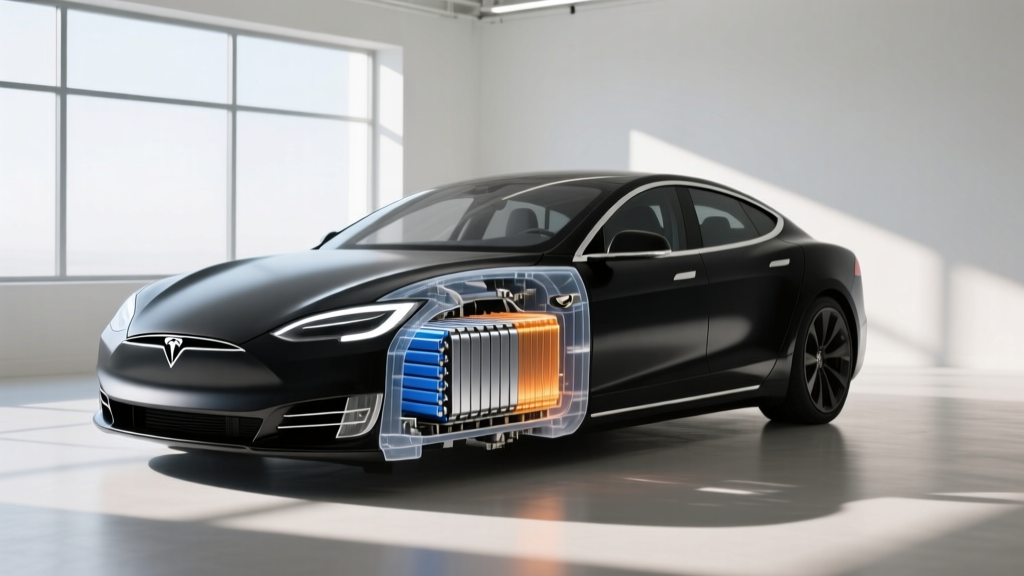
If you've searched for something like a battery for 2014 Ford Fusion key fob and landed here wondering how EV batteries compare, you're not alone. Many EV owners and hybrid drivers start with a simple 12V or coin-cell battery question and quickly realize the high-voltage traction battery in an electric vehicle is a fundamentally different beast. This guide covers everything you need to know about EV battery technology in 2026 — chemistry, degradation, warranties, replacement costs, and care — while also answering that key fob question so you can leave with every battery question resolved.
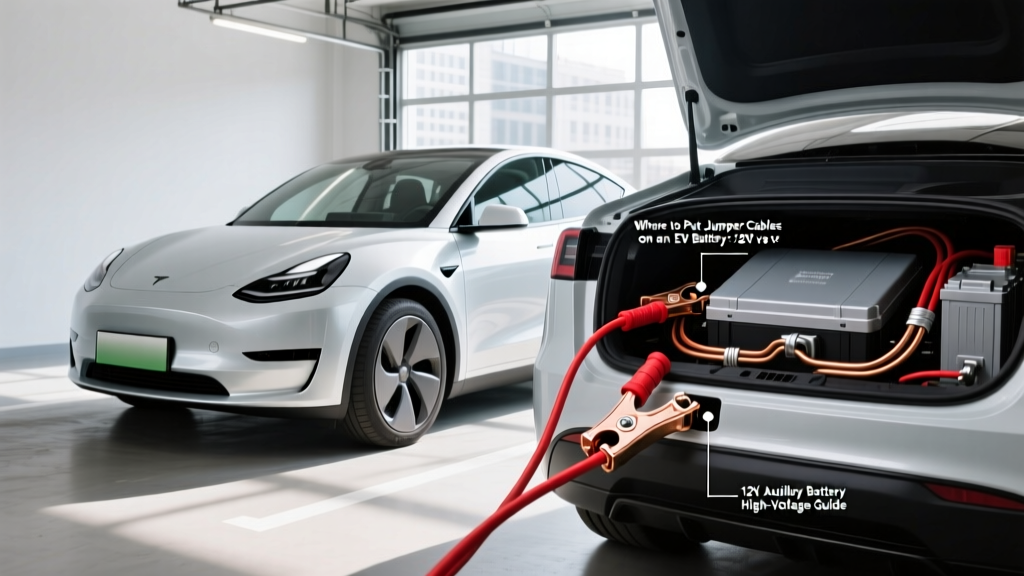
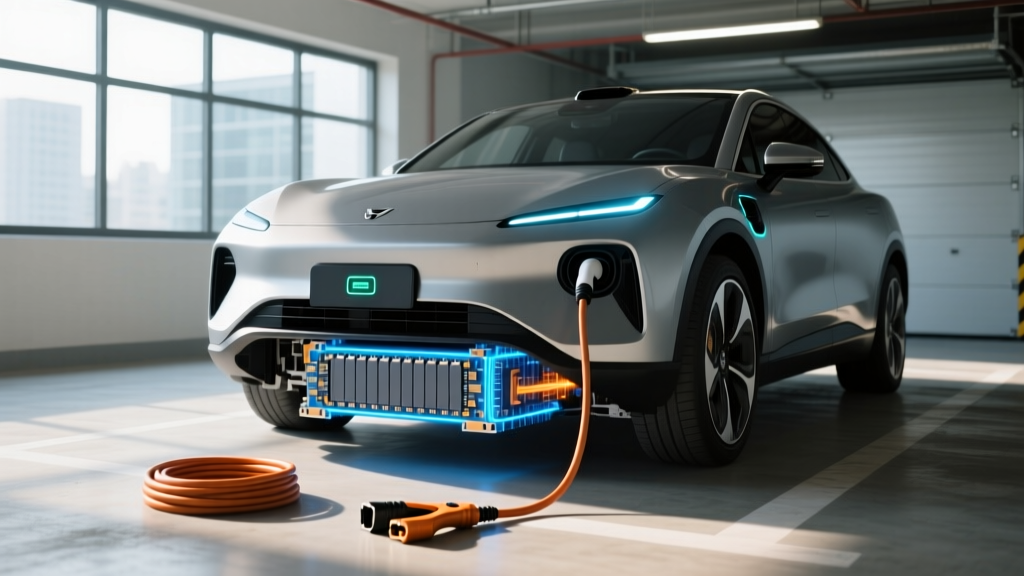
Every EV still carries a 12V auxiliary battery (or sometimes a lithium 12V module) to power lights, infotainment, door locks, and key fob communication. The traction battery — the large high-voltage pack (typically 400V–800V) — is what actually propels the car. A 2014 Ford Fusion key fob uses a CR2032 coin cell, completely unrelated to the traction pack. We'll address both, but the bulk of this guide focuses on the high-voltage EV battery.
LFP vs. NMC/NCA: Which Battery Chemistry Is Right for You?
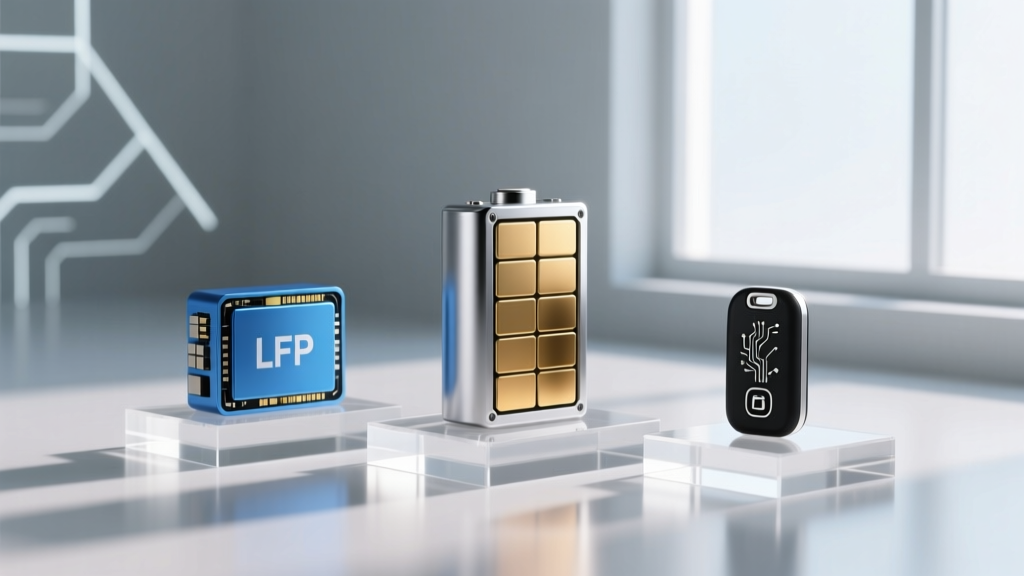
The two dominant lithium-ion chemistries in 2026 EVs are LFP (lithium iron phosphate) and NMC/NCA (nickel manganese cobalt / nickel cobalt aluminum). Each has distinct trade-offs that affect range, longevity, cost, and cold-weather behavior.
| Attribute | LFP (LiFePO₄) | NMC / NCA |
|---|---|---|
| Energy Density | ~160–180 Wh/kg (lower) | ~220–300 Wh/kg (higher) |
| Cycle Life | 3,000–5,000+ cycles | 1,000–2,500 cycles |
| Cold Performance | Moderate — greater range loss below 32°F | Better low-temp efficiency |
| Cost per kWh | ~$80–$100 (lower) | ~$110–$140 (higher) |
| Thermal Stability | Excellent — less prone to thermal runaway | Good, but requires more active management |
| Recommended SoC Daily | 100% is fine | 80% preferred for daily use |
| Common Vehicles (2026) | Tesla Model 3/Y RWD, BYD, Rivian Standard | Tesla LR/Performance, Hyundai Ioniq 5/6, BMW iX |
Bottom line: If you prioritize maximum range per charge and don't mind babying the state of charge, NMC delivers superior energy density. If you want a battery that you can charge to 100% daily, that will likely outlast the car itself, and that costs less upfront, LFP is the pragmatic pick — especially for commuters and fleet use. According to IEA's Global EV Outlook, LFP's global market share in EV batteries surpassed 40% in 2025 and continues to grow.
How Long Do EV Batteries Last? Real Degradation Data
The question "how long do EV batteries last?" is best answered with data, not anecdotes. Modern liquid-cooled traction batteries are proving far more durable than early fears suggested.
- Year 1 / 15,000 mi: ~2–3% capacity loss (initial formation loss)
- Year 3 / 45,000 mi: ~5–8% total loss
- Year 5 / 75,000 mi: ~8–12% total loss
- Year 8 / 120,000 mi: ~10–15% total loss
- Year 10 / 150,000 mi: ~12–18% total loss (varies by chemistry and care)
Sources: Recurrent Auto battery health reports, Geotab fleet degradation studies, manufacturer warranty thresholds.
The degradation curve is non-linear: you lose the most in the first year, then it flattens considerably. An NMC pack that starts at 82 kWh usable might hold ~74 kWh after 5 years and ~70 kWh after 8 years. An LFP pack of the same size would typically retain more — closer to ~76 kWh at 5 years and ~73 kWh at 8 years — thanks to its superior cycle life.
Real-world data from Recurrent Auto's 2025 battery report, which analyzed over 15,000 EVs, found that the median range loss after 100,000 miles was approximately 10–12% for liquid-cooled packs. Early Nissan Leaf models (passively cooled, NMC) showed significantly higher degradation, underscoring the importance of thermal management.
What Does the EV Battery Warranty Actually Cover?
Federal law in the U.S. mandates a minimum of 8 years / 100,000 miles for EV battery warranties (10 years / 150,000 miles in California Air Resources Board states). But the details matter — specifically the capacity retention threshold.
| Manufacturer | Duration | Capacity Threshold | Notes |
|---|---|---|---|
| Tesla | 8 yr / 120,000 mi (LR) | 70% retention | 100,000 mi for RWD LFP models |
| Hyundai / Kia | 10 yr / 100,000 mi | 70% retention | Among the longest coverage |
| Ford | 8 yr / 100,000 mi | 70% retention | Covers battery + powertrain components |
| GM (Ultium) | 8 yr / 100,000 mi | 70% retention | Modular pack allows partial replacement |
| Rivian | 8 yr / 175,000 mi | 70% retention | Higher mileage cap for R1T/R1S |
| BMW | 8 yr / 100,000 mi | 70% retention | Transferable to second owner |
The key takeaway: a warranty claim is only triggered if your battery drops below the threshold (typically 70% of original capacity) within the warranty window. A pack that degrades to 72% at 99,000 miles is functioning "within spec" even though you've lost 28% of your range. Most owners never hit the warranty threshold — the data shows median retention around 85–90% at the 8-year mark.
How Much Does It Cost to Replace an EV Battery?
This is the question that drives the most anxiety, so let's ground it in actual numbers. Full traction battery replacement costs vary enormously by pack size, chemistry, and whether the manufacturer offers modular repair.
| Vehicle / Pack Size | Full Pack Cost | Module Repair Cost | When Typically Needed |
|---|---|---|---|
| Tesla Model 3 RWD (60 kWh LFP) | $8,000–$12,000 | Not modular | Rarely — 200,000+ mi expected |
| Hyundai Ioniq 5 (77.4 kWh NMC) | $12,000–$16,000 | $2,500–$4,500 per module | 150,000–200,000 mi if at all |
| Ford F-150 Lightning Ext. (131 kWh NMC) | $18,000–$25,000 | $3,000–$6,000 per module | 150,000+ mi |
| Chevrolet Equinox EV (85 kWh NMC) | $10,000–$15,000 | $2,000–$4,000 per module | 150,000–200,000 mi |
| BMW iX xDrive50 (111.5 kWh NMC) | $20,000–$28,000 | $3,500–$7,000 per module | 200,000+ mi |
The honest context most articles skip: the vast majority of EV batteries never need full replacement. Geotab's fleet analysis of over 10,000 EVs found that at current degradation rates, most packs will outlast 200,000 miles before falling below 70% capacity. When issues do arise, many modern packs (GM Ultium, Hyundai E-GMP, BMW) allow module-level replacement — swapping one or two degraded modules for a fraction of the full-pack cost. Out-of-pocket full replacements are rare and usually involve physical damage (collision, flood) rather than age-related degradation.
Factors That Accelerate (or Slow) Battery Degradation
Your habits directly influence how fast the pack ages. Here's what matters most, ranked by impact:
- Avoid sustained 100% SoC (NMC/NCA only): Charge to 80% daily; reserve 100% for road trips. LFP owners can charge to 100% regularly without penalty.
- Minimize DC fast charging above 150 kW when unnecessary: Occasional fast charging is fine, but daily 350 kW sessions increase thermal stress. Precondition the battery before fast charging to reduce harm.
- Avoid deep discharges below 10%: Letting the pack sit at very low SoC for extended periods stresses cells. Plug in when you get home, even if not fully depleted.
- Extreme heat is worse than extreme cold: Prolonged exposure to ambient temps above 95°F accelerates degradation. Garage parking in hot climates pays dividends. Cold reduces range temporarily but causes less permanent damage.
- Use scheduled/managed charging: Most EVs let you set a target SoC and charge window. Setting 80% target with overnight Level 2 charging is the gold standard for NMC longevity.
- Don't store at 100% or 0%: If leaving the car for weeks, set SoC to ~50%. This is the chemistry's most stable state.
How to Check Your EV Battery's State of Health (SoH)
State of Health (SoH) tells you what percentage of original capacity your battery still holds. Here's how to monitor it:
In-vehicle displays: Tesla shows battery health percentage under Settings → Service → Battery Health. Hyundai/Kia include SoH readouts in the EV menu on newer models. Ford's MyFordPass app provides a battery health indicator for the Mustang Mach-E and F-150 Lightning.
OBD-II diagnostic tools: Devices like the OBDLink MX+ paired with apps such as LeafSpy (Nissan), Scan My Tesla, or ABRP's battery health tool can read actual pack voltage, cell imbalance, and estimated SoH from the BMS (Battery Management System).
Third-party reports: Services like Recurrent provide battery health scores based on your actual driving and charging data. Some dealerships can pull a detailed battery health report during service visits — ask for it specifically, as it's not always part of standard maintenance.
The DIY method: Charge to 100% (on an LFP, or occasionally on NMC for calibration), note the displayed range, and compare it to the original EPA range adjusted for the car's age. If your 2023 Ioniq 5 originally showed 303 miles at 100% and now shows 275 miles at 100% (after a full calibration cycle), you're at roughly 90% SoH — right on the expected curve.
What About Key Fob and 12V Batteries in Electrified Vehicles?
Since we opened with it: a battery for 2014 Ford Fusion key fob is a standard CR2032 lithium coin cell, available at any auto parts store for $3–$5. The same cell type is used in most Ford, Toyota, Honda, and Hyundai key fobs from that era. Replacement takes about two minutes with a small flathead screwdriver to pop the fob casing.
For EVs specifically, the 12V auxiliary battery deserves more attention. Modern EVs like the Tesla Model 3 (2024+) and Hyundai Ioniq 5 use a lithium-ion 12V battery instead of the traditional lead-acid unit. These last longer (6–8 years vs. 3–5 years for lead-acid), weigh less, and are less prone to sudden failure. However, if the 12V dies in an EV, the car cannot "start" — even if the traction battery is fully charged — because the 12V powers the contactors that connect the high-voltage pack. Most EVs will display warnings and enter a reduced-power mode well before the 12V fails, and the DC-DC converter continuously charges the 12V from the traction pack while driving.
Emerging Battery Technology: What's Next (2027 and Beyond)
Several next-generation battery technologies are in development, but it's critical to separate announced timelines from production reality:
Solid-state batteries: Toyota has announced a solid-state battery targeting 2027–2028 production with a claimed 620-mile range and 10-minute fast-charge capability. Samsung SDI and QuantumScape are also pursuing solid-state, with pilot production underway. However, mass production at competitive cost remains unproven. Expect initial deployment in limited-run or premium models first, not mainstream vehicles, and not before 2028 at the earliest.
Silicon-anode lithium-ion: Companies like Sila Nanotechnologies and Group14 are replacing graphite anodes with silicon to boost energy density by 20–40%. Mercedes-Benz's EQG (G-Class EV) is using silicon-anode cells. This technology is closer to mainstream adoption than solid-state and is already appearing in 2025–2026 model-year vehicles in limited applications.
Sodium-ion batteries: CATL and BYD have begun producing sodium-ion packs for lower-cost, shorter-range EVs (primarily in China). Energy density is lower than LFP, but raw material costs are significantly less. Don't expect sodium-ion in U.S.-market long-range EVs, but it may appear in budget city cars or as a buffer layer in hybrid battery packs.
None of these technologies should factor into a 2026 purchase decision. Today's LFP and NMC packs are mature, well-understood, and backed by real-world data showing 200,000+ mile lifespans.
Frequently Asked Questions
How long do EV batteries last in years and miles?
Based on fleet data from Geotab and Recurrent Auto, modern liquid-cooled EV batteries typically retain 85–90% of original capacity at 100,000 miles (roughly 5–7 years). Most are projected to exceed 200,000 miles before dropping below the 70% warranty threshold. LFP chemistries tend to last longer than NMC in terms of cycle count.
How much does an EV battery cost to replace?
Full pack replacement ranges from $8,000 (smaller LFP packs like the Tesla Model 3 RWD) to $25,000+ (large NMC packs like the F-150 Lightning Extended Range). However, most modern packs support module-level repair at $2,000–$7,000 per module. The vast majority of EV batteries never need replacement — they outlast the vehicle's useful life.
What does the EV battery warranty cover?
Federal minimum is 8 years / 100,000 miles (10/150,000 in CARB states). The warranty guarantees the battery will retain at least 70% of its original capacity. If degradation falls below that threshold within the warranty window, the manufacturer must repair or replace the pack at no cost. Coverage includes defects, premature degradation, and component failure — but not damage from collisions, flooding, or unauthorized modifications.
How do I check and maximize my EV battery health?
Check SoH through your vehicle's built-in battery health display, OBD-II diagnostic apps, or third-party services like Recurrent. To maximize longevity: charge NMC to 80% daily (100% is fine for LFP), avoid frequent 350 kW DC fast charging when a slower charge suffices, precondition before fast charging, avoid storing the vehicle at 0% or 100% SoC for extended periods, and park in shade or a garage in hot climates.
LFP vs. NMC — which is better and why?
Neither is universally "better." LFP wins on cycle life (3,000–5,000 cycles vs. 1,000–2,500), cost ($80–$100/kWh vs. $110–$140/kWh), thermal safety, and the ability to charge to 100% daily without accelerated degradation. NMC wins on energy density (220–300 Wh/kg vs. 160–180 Wh/kg), cold-weather range retention, and weight — making it the choice for long-range and performance trims. For a daily commuter who charges at home, LFP is the more pragmatic, longer-lasting choice. For road-trippers who need maximum miles per charge, NMC delivers.
What battery does a 2014 Ford Fusion key fob use?
The 2014 Ford Fusion key fob uses a CR2032 3V lithium coin cell battery. This is a standard, widely available battery that costs $3–$5 and takes about two minutes to replace. It is entirely separate from the vehicle's traction or 12V battery system. (Note: the 2014 Fusion was available as a hybrid and plug-in hybrid — the key fob battery is the same regardless of powertrain.)