Why Passenger-EV Battery Lessons Matter for Industrial Electrification
The lithium-ion battery pack under your electric sedan or crossover is the same fundamental technology powering a quiet revolution in warehouses, ports, and construction sites. When analysts track progress electrifying industrial equipment battery scale 1-100, they're measuring how the cost curves, energy-density gains, and manufacturing know-how developed for millions of consumer EVs are cascading into forklifts, mining trucks, airport ground-support equipment, and heavy machinery.
Understanding this crossover requires a firm grasp of battery chemistry, degradation physics, warranty structures, and replacement economics. Whether you're an EV owner evaluating long-term ownership costs or a fleet manager sizing up electric versus diesel equipment, the electrochemistry doesn't change — only the pack size and thermal-management demands do.
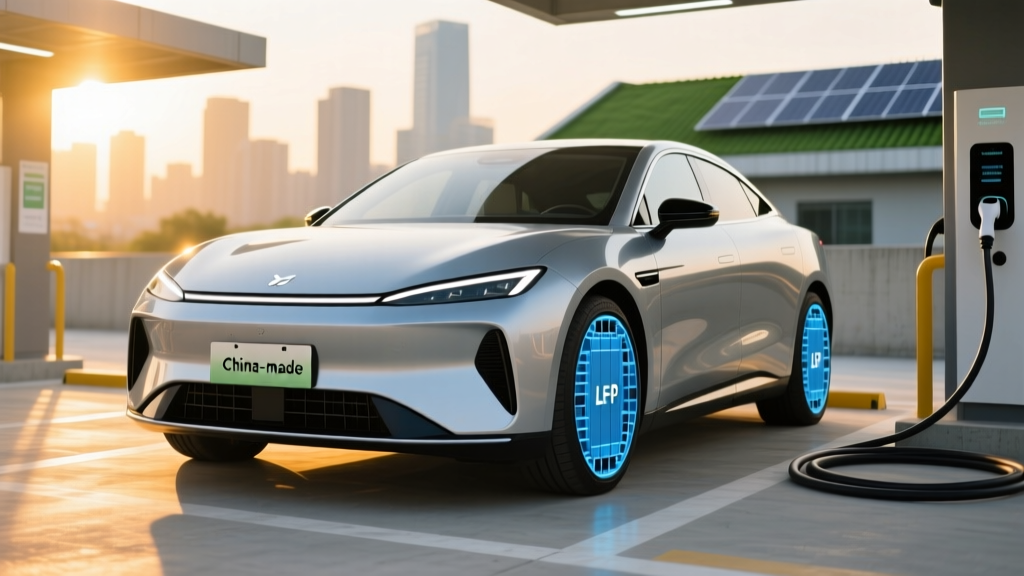
LFP vs NMC/NCA: The Chemistry Trade-Off Table
Two dominant cathode chemistries power nearly every EV and electric industrial machine sold in 2026. Choosing between them isn't about which is "better" — it's about matching chemistry to duty cycle.
| Attribute | LFP (Lithium Iron Phosphate) | NMC / NCA (Nickel Manganese Cobalt / Nickel Cobalt Aluminum) |
|---|---|---|
| Energy Density (cell-level) | ~160–180 Wh/kg | ~230–300 Wh/kg |
| Typical Cycle Life | 3,000–6,000+ cycles to 80% SoH | 1,000–2,500 cycles to 80% SoH |
| Cold-Weather Performance | Moderate; greater capacity loss below 32°F | Better low-temp discharge; less range penalty |
| Thermal Stability | Excellent; higher runaway threshold (~518°F) | Good; lower thermal-runaway margin |
| Cost per kWh (pack-level, 2026) | ~$85–$100 | ~$110–$140 |
| Cobalt Content | None | Contains cobalt and/or nickel |
| Common Applications | Standard-range EVs, stationary storage, industrial fleet vehicles | Long-range EVs, performance models, weight-sensitive applications |
The takeaway: LFP wins on cycle life, safety, and cost — ideal for industrial equipment that runs daily charge-discharge cycles for a decade. NMC/NCA wins on energy density — essential for long-range passenger EVs and any application where pack weight directly impacts payload or range.
For industrial electrification at scale, LFP is increasingly the default. A warehouse forklift doesn't need 300 miles of range; it needs 6,000 cycles of reliable 8-hour shifts. That's exactly where LFP excels, and it's a primary driver of progress in electrifying industrial equipment across the battery-scale spectrum.
Degradation Data: What Real-World Numbers Show
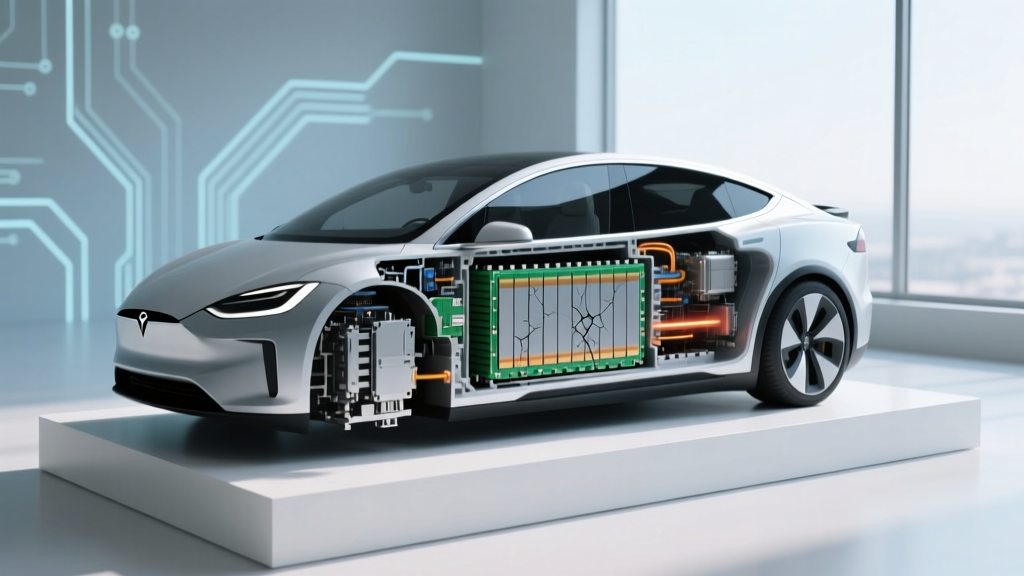
Battery degradation is not linear. Most lithium-ion packs lose capacity faster in the first year or two, then settle into a slow, predictable decline. Here's what aggregated fleet and owner data shows for modern EVs (2020–2026 model years):
Typical Degradation Curve (NMC Packs, Liquid-Cooled)
- Year 1 / ~15,000 mi: 2–4% capacity loss (initial formation loss)
- Year 3 / ~45,000 mi: 5–8% total loss
- Year 5 / ~75,000 mi: 8–12% total loss
- Year 8 / ~120,000 mi: 10–16% total loss
- Year 10 / ~150,000 mi: 12–20% total loss (many packs still above 80% SoH)
Sources: Geotab fleet data, Recurrent Auto battery health reports.
LFP packs tend to show slower degradation in calendar aging and cycle life, though they can exhibit a more pronounced voltage plateau that makes state-of-charge estimation trickier for the battery management system (BMS).
For industrial equipment running LFP cells with daily shallow cycles (20–80% SoC), projected pack life often exceeds 10,000 equivalent full cycles — translating to 15+ years in many duty cycles. This longevity is a cornerstone of the economic case for electrifying heavy equipment at scale.
Battery Warranty Terms: What's Actually Covered
Federal law mandates a minimum 8-year / 100,000-mile warranty on EV battery packs for emissions-related compliance, and most automakers match or exceed this baseline. Here's how major warranties compare:
| Manufacturer | Warranty Period | Mileage Cap | Capacity Retention Threshold |
|---|---|---|---|
| Tesla (Model 3/Y RWD, LFP) | 8 years | 100,000 mi | 70% |
| Tesla (Model 3/Y Long Range, NMC) | 8 years | 120,000 mi | 70% |
| Hyundai / Kia (E-GMP platform) | 10 years | 100,000 mi | 70% |
| Ford (Mustang Mach-E, F-150 Lightning) | 8 years | 100,000 mi | 70% |
| GM (Ultium platform) | 8 years | 100,000 mi | 70% |
| Rivian (R1T / R1S) | 8 years | 175,000 mi | 70% |
Critical detail: The warranty threshold (typically 70% of original capacity) defines when the manufacturer will repair or replace the pack. A battery at 72% State of Health is still functional — it just has reduced range. Most packs never dip below the warranty threshold within the coverage period, according to data from Recurrent Auto.
For industrial applications, battery warranties are typically negotiated as part of fleet procurement contracts, often with guaranteed uptime clauses and per-cycle performance guarantees rather than simple mileage caps.
Replacement Cost: The Numbers Behind the Headlines
Battery replacement cost is the single biggest anxiety for prospective EV buyers — and the most misunderstood. The reality: the vast majority of EV batteries outlast the vehicle they're installed in. Out-of-warranty replacements are rare, but when they're needed, here's what the market looks like in 2026:
| Vehicle / Pack Size | Battery Capacity | Chemistry | Estimated Replacement Cost |
|---|---|---|---|
| Tesla Model 3 RWD | ~60 kWh | LFP | $8,000–$12,000 |
| Hyundai Ioniq 5 | ~77.4 kWh | NMC | $12,000–$16,000 |
| Ford F-150 Lightning Extended | ~131 kWh | NMC | $20,000–$28,000 |
| Chevrolet Silverado EV | ~200 kWh | NMC (Ultium) | $28,000–$38,000 |
| Industrial: Electric Forklift | ~20–40 kWh | LFP | $4,000–$8,000 |
| Industrial: Electric Yard Truck | ~150–250 kWh | LFP | $18,000–$35,000 |
These costs include the pack and labor but can vary by region, dealer, and whether refurbished or remanufactured modules are used. Module-level repair (replacing individual bad modules rather than the entire pack) is increasingly common and can cut costs by 50–70%.
For context, pack-level pricing has fallen from over $1,000/kWh in 2010 to roughly $100–$140/kWh in 2026, per BloombergNEF battery price surveys. This cost decline is the primary engine of progress electrifying industrial equipment — at battery scale, a $100/kWh pack makes a 200 kWh mining truck battery economically competitive with diesel over a 10-year operating life.
Factors That Accelerate (or Slow) Battery Degradation
Battery longevity isn't purely a function of time. Usage patterns, climate, and charging habits all influence how quickly a pack loses usable capacity.
Battery Care Checklist: Maximize Pack Life
- Avoid sustained 100% SoC: For NMC packs, daily charging to 80% significantly reduces stress. LFP packs tolerate 100% better and actually benefit from periodic full charges for BMS cell-balancing.
- Minimize DC fast-charging frequency: Occasional road-trip fast charging is fine. Daily reliance on 150+ kW DC charging accelerates degradation by an estimated 1–3% over the pack's life versus Level 2 home charging.
- Precondition in cold weather: Use your EV's preconditioning feature before charging in sub-40°F conditions. Charging a cold battery causes lithium plating — an irreversible degradation mechanism.
- Avoid prolonged storage at extremes: If parking for weeks, aim for ~50% SoC. Storing at 100% or near 0% accelerates calendar aging.
- Use thermal management: Liquid-cooled packs (standard on nearly all 2026 EVs) dramatically outperform passively cooled packs. Ensure coolant systems are serviced per manufacturer intervals.
- Drive smoothly: Aggressive acceleration and frequent high-C-rate discharges generate internal heat, compounding degradation.
For industrial fleet operators, these principles translate into operational protocols: opportunity charging during shifts rather than full daily cycles, climate-controlled charging bays, and telematics-driven SoC management. Fleets that implement these practices routinely report <5% degradation over 5 years of heavy use.
Monitoring Battery Health: How to Check State of Health
State of Health (SoH) is the percentage of original battery capacity remaining. A new pack is at 100% SoH; a degraded pack at 85% SoH holds 85% of its original kWh.
For passenger EV owners:
- Tesla: The mobile app displays battery health percentage under the "Service" menu (added in 2024 software updates).
- Hyundai/Kia: The infotainment system's EV diagnostics menu shows SoH, or a dealer can pull a detailed BMS report.
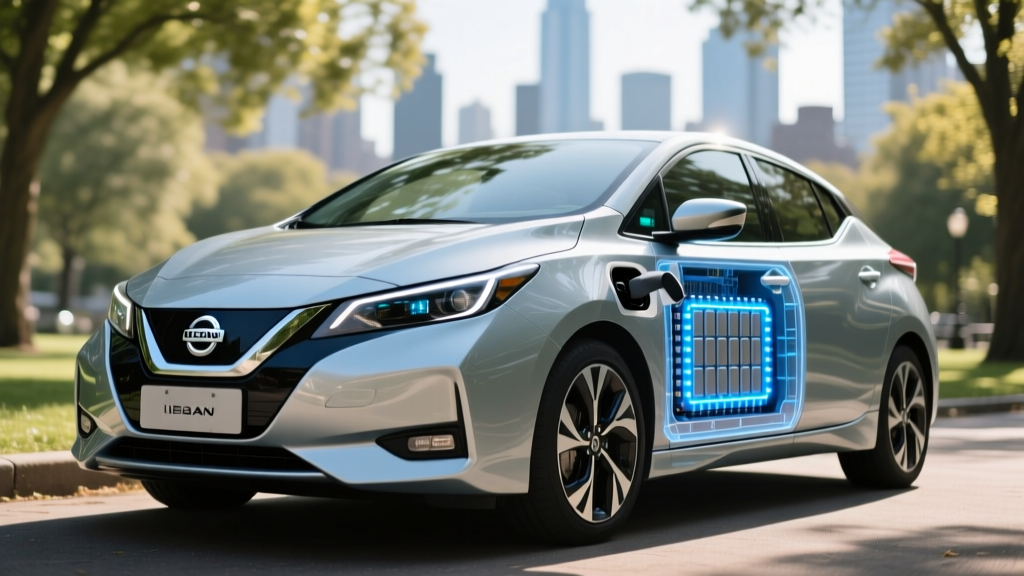
- OBD-II tools: Third-party apps like Leaf Spy (Nissan), ABRP with OBD dongles, or manufacturer-specific scan tools can read BMS-reported SoH and individual cell voltages.
- Dealer diagnostic: Any authorized service center can run a full battery health report, typically during warranty inspections.
For fleet and industrial operators: Fleet telematics platforms (Geotab, Fleet Complete, Samsara) integrate with vehicle BMS systems to track SoH trends across hundreds of units, flagging outlier packs before they trigger warranty claims.
Emerging Battery Technologies: Solid-State and Beyond
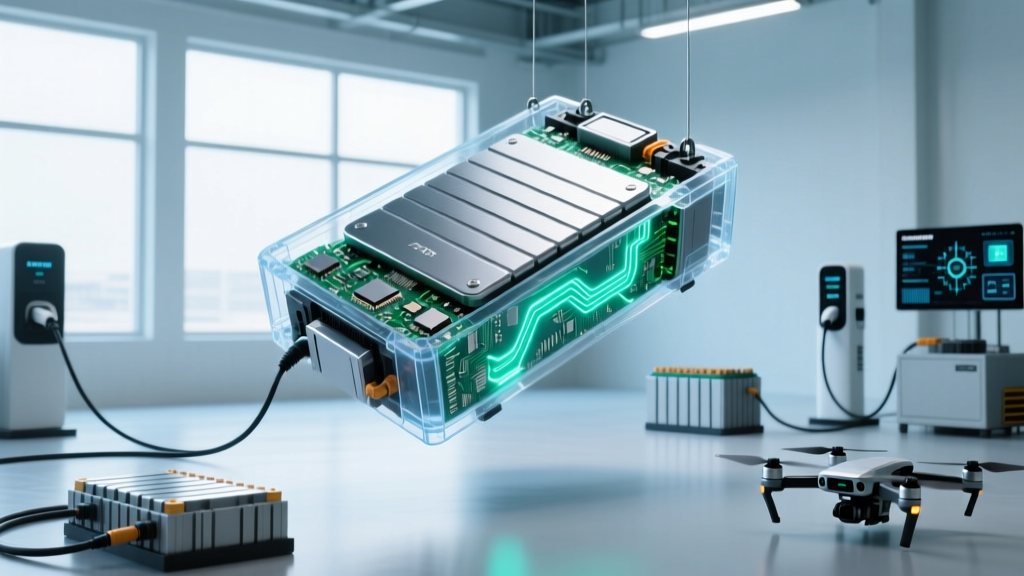
Several next-generation technologies are in various stages of development, each promising to reshape both consumer EVs and industrial electrification:
Solid-State Batteries: Replace the liquid electrolyte with a solid ceramic, polymer, or sulfide conductor. Promised benefits include 2–3× energy density, faster charging, and near-zero fire risk. Toyota, Samsung SDI, and QuantumScape have all announced pilot production lines, but no solid-state EV is commercially available as of 2026. Realistic timeline for passenger-EV integration: 2028–2032. Industrial applications may follow shortly after, once manufacturing costs drop below ~$120/kWh.
Silicon-Dominant Anodes: Companies like Sila Nanotechnologies and Group14 are replacing graphite anodes with silicon-composite materials, boosting energy density by 20–40%. These are beginning to appear in premium consumer electronics and are expected in EVs by 2027–2028. For industrial equipment, the benefit is smaller packs for the same runtime — reducing vehicle weight and improving payload capacity.
Sodium-Ion Batteries: CATL and other Chinese manufacturers have begun shipping sodium-ion packs for low-range urban EVs and energy storage. Sodium is abundant and cheap, though energy density (~120–150 Wh/kg) limits use to applications where weight is less critical — a natural fit for stationary industrial storage and low-speed yard vehicles.
These technologies are forward-looking and should not factor into current purchasing decisions. The LFP and NMC cells available today are mature, well-understood, and economically compelling for most applications.
The Scale Question: From 60 kWh Sedans to 600 kWh Mining Trucks
The phrase "progress electrifying industrial equipment battery scale 1-100" captures a spectrum. At the low end (scale 1–10), you have electric pallet jacks and compact utility vehicles with 5–15 kWh packs — already mature and widely deployed. At the middle (scale 10–50), electric delivery vans, airport tugs, and compact wheel loaders with 50–150 kWh packs are entering mainstream fleet adoption. At the high end (scale 50–100), you find 300–600 kWh battery-electric mining haul trucks, cement mixers, and heavy excavators — technically feasible but still limited by charging infrastructure and upfront cost.
The progress metric isn't just about whether these machines exist — it's about whether their total cost of ownership (TCO) undercuts diesel equivalents. For many mid-range applications, the answer in 2026 is yes, driven by:
- LFP cell costs below $100/kWh at volume
- Electricity costs at $0.08–$0.15/kWh versus diesel at $3.80–$4.50/gallon
- Near-zero maintenance on electric drivetrains (no oil, filters, exhaust aftertreatment)
- Regenerative braking reducing brake wear by 60–80%
The remaining barriers at the high end of the scale are primarily infrastructure: a 600 kWh mining truck needs megawatt-class charging (1 MW+), which requires dedicated high-voltage utility connections that most mine sites and construction yards don't yet have. Battery swap systems and hydrogen fuel-cell range extenders are being piloted as interim solutions for these extreme-duty applications.
Frequently Asked Questions
How long do EV batteries last in years and miles?
Modern liquid-cooled EV batteries (2020–2026) typically retain 80–88% of original capacity after 8 years or 120,000 miles. Many packs reach 150,000–200,000 miles before dropping below 70% SoH. LFP packs in industrial applications with shallow daily cycles can exceed 15–20 years of service life.
How much does an EV battery cost to replace?
Replacement costs in 2026 range from ~$8,000 for a 60 kWh LFP pack (Tesla Model 3 RWD) to ~$28,000+ for a 131 kWh NMC pack (F-150 Lightning Extended Range). However, most EV batteries never require full replacement — module-level repair and warranty coverage handle the majority of issues. Out-of-warranty full-pack replacement is statistically rare.
What does the EV battery warranty cover?
Federal law requires a minimum 8-year/100,000-mile warranty. Most manufacturers guarantee that the battery will retain at least 70% of its original capacity during the warranty period. If capacity drops below the threshold, the manufacturer will repair or replace the pack at no cost. Some manufacturers (Hyundai, Rivian) offer extended mileage coverage. The warranty covers defects and excessive degradation — not damage from accidents, flooding, or unauthorized modifications.
How do I check and maximize my battery's health?
Check SoH via your vehicle's app, infotainment diagnostics menu, or an OBD-II scan tool. To maximize longevity: charge NMC packs to 80% daily (100% for LFP with periodic balancing), minimize DC fast-charging frequency, precondition before cold-weather charging, avoid storing at extreme SoC levels, and follow coolant service intervals.
LFP vs NMC — which chemistry is better?
Neither is universally better. LFP wins on cost (~$85–100/kWh vs $110–140/kWh), cycle life (3,000–6,000+ cycles vs 1,000–2,500), safety, and cobalt-free sourcing — making it ideal for standard-range EVs, fleet vehicles, and industrial equipment. NMC wins on energy density (~230–300 Wh/kg vs 160–180 Wh/kg) and cold-weather performance — making it necessary for long-range passenger EVs where pack weight and volume are constrained. The industry trend is clear: LFP adoption is growing rapidly, now representing over 50% of global EV battery production.