Why a 2014 Odyssey Owner Should Understand EV Batteries
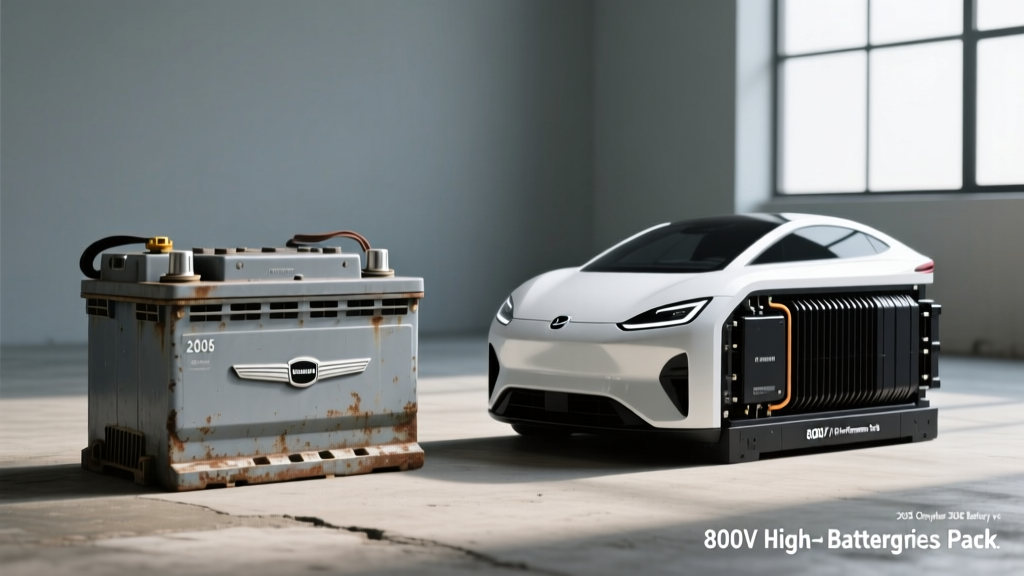
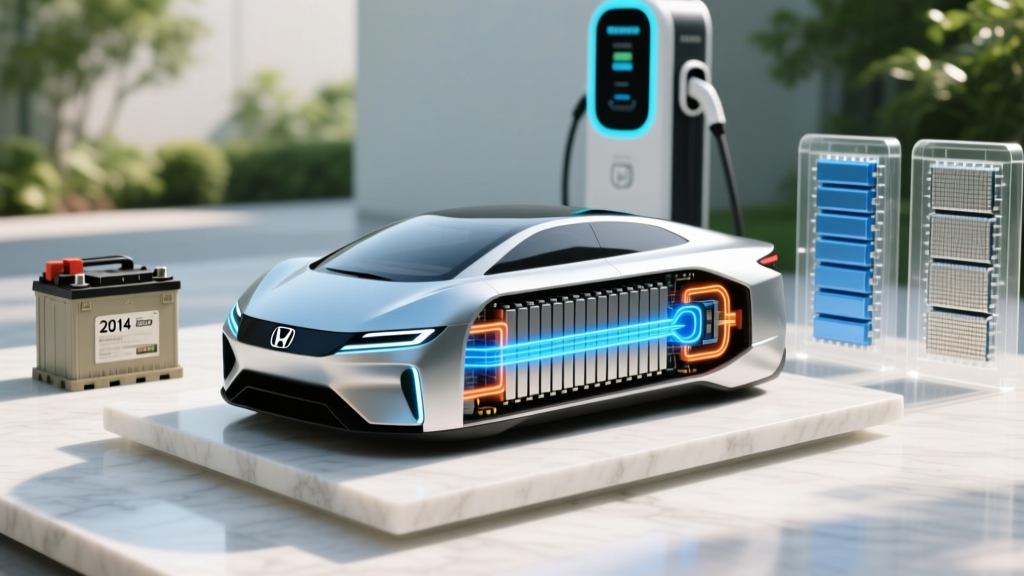
If you've been driving a 2014 Honda Odyssey for the past decade, you've likely replaced its 12V lead-acid battery at least once — a $150–$250 maintenance item that powers the starter, lights, and electronics. That auxiliary battery has nothing in common with the high-voltage traction battery pack that propels a modern electric vehicle. Understanding this distinction is the first step toward making an informed EV purchase or evaluating whether your current electrified vehicle's battery is aging normally.
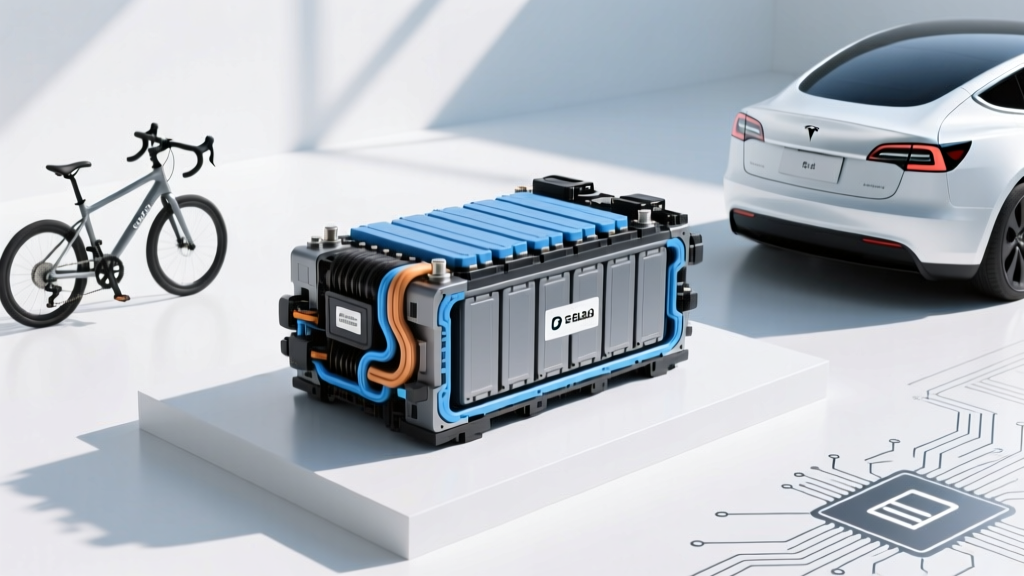
The traction battery in a battery-electric vehicle (BEV) stores between 40 kWh and 120+ kWh of energy — enough to drive 200 to 400+ miles on a single charge. It uses lithium-ion cells with sophisticated thermal management, not the flooded lead-acid chemistry sitting under your minivan's hood. This guide breaks down the chemistry, degradation realities, warranty protections, and replacement economics that every EV shopper or owner needs to know.
LFP vs. NMC/NCA: The Two Battery Chemistries Dominating EVs
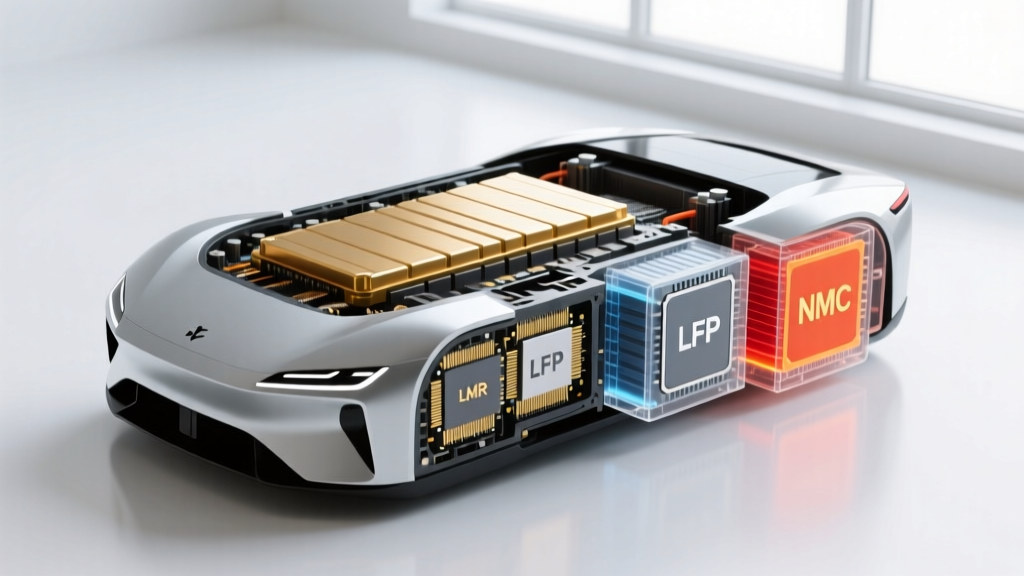
Not all lithium-ion batteries are the same. Two cathode chemistries account for nearly every EV sold in the US market: Lithium Iron Phosphate (LFP) and Nickel Manganese Cobalt (NMC) or Nickel Cobalt Aluminum (NCA). Each has distinct trade-offs that affect range, longevity, cost, and cold-weather behavior.
| Attribute | LFP (Lithium Iron Phosphate) | NMC / NCA (Nickel-based) |
|---|---|---|
| Energy Density | ~160–180 Wh/kg (lower) | ~220–300 Wh/kg (higher) |
| Typical Cycle Life | 3,000–5,000+ cycles | 1,000–2,000 cycles |
| Cold-Weather Performance | More range loss below 32°F | Better low-temp output |
| Cost per kWh (pack-level) | ~$80–$100 | ~$110–$140 |
| Recommended Daily SoC | Can charge to 100% daily | 80% daily; 100% for trips only |
| Cobalt Content | None (cobalt-free) | Contains cobalt & nickel |
| Notable US Applications (2025–2026) | Tesla Model 3 RWD, Model Y RWD, Ford Mustang Mach-E Select (LFP option) | Hyundai Ioniq 5, Chevrolet Equinox EV, Rivian R1S/R1T, BMW iX |
Which is better? There is no universal winner. If you want maximum range in a single charge and frequently drive in cold climates, NMC/NCA delivers higher energy density and better winter output. If you prioritize long-term durability, lower cost, and the convenience of charging to 100% without degradation concerns, LFP is the stronger choice — provided you accept slightly lower range and more cold-weather sensitivity.
Tesla's shift to LFP for its standard-range vehicles and Ford's adoption of LFP packs for base trims signal that the industry views LFP as the cost-and-longevity play, while NMC/NCA remains the performance-and-range solution for higher trims and larger vehicles.
How Long Do EV Batteries Actually Last?
The short answer: most EV traction batteries outlast the vehicles they're installed in. But "outlast" doesn't mean "zero degradation." Let's look at real data.
Typical Degradation Curves (Based on Aggregated Fleet Data)
- Year 1 / 15,000 miles: ~2–5% capacity loss (initial settling)
- Year 3 / 45,000 miles: ~5–8% total loss
- Year 5 / 75,000 miles: ~8–12% total loss
- Year 8 / 120,000 miles: ~10–15% total loss (most remain above warranty threshold)
- Year 10 / 150,000 miles: ~12–18% total loss for NMC; ~8–12% for LFP
Sources: Geotab fleet study (10,000+ EVs), Recurrent Auto battery health reports, manufacturer warranty data.
Key insight: degradation is not linear. Most batteries lose capacity faster in the first 1–2 years (the "break-in" period), then the curve flattens significantly. A 2022 Tesla Model 3 with an LFP pack at 60,000 miles may show only 5–7% total degradation — meaning a car originally rated at 272 miles EPA still delivers roughly 253–258 real-world miles.
For context, a well-maintained 2014 Honda Odyssey might have 130,000–170,000 miles on it by now. If you switched to a 2026 EV, its battery at equivalent mileage would likely still retain 82–90% of original capacity — and you'd never need an oil change, transmission fluid service, or timing belt replacement.
What Does the Battery Warranty Actually Cover?
Federal law mandates that EV battery warranties cover a minimum of 8 years / 100,000 miles (10 years / 150,000 miles in CARB states like California, New York, and Massachusetts). But the details matter — specifically the capacity retention threshold.
| Manufacturer | Warranty Period | Capacity Threshold | Notes |
|---|---|---|---|
| Tesla (Model 3/Y LFP) | 8 yr / 120,000 mi | 70% | Higher mileage than NMC trims |
| Tesla (Model 3/Y Long Range, NMC) | 8 yr / 100,000 mi | 70% | Standard federal term |
| Hyundai / Kia (Ioniq 5, EV6) | 10 yr / 100,000 mi | 70% | Industry-leading duration |
| Chevrolet (Equinox EV, Blazer EV) | 8 yr / 100,000 mi | 60% | Lower threshold — note carefully |
| Ford (Mustang Mach-E, F-150 Lightning) | 8 yr / 100,000 mi | 70% | Standard federal term |
| Rivian (R1S, R1T) | 8 yr / 120,000 mi | 70% | Higher mileage for truck use |
| BMW (iX, i4) | 8 yr / 100,000 mi | 70% | Standard federal term |
What triggers a warranty claim? If your battery's State of Health (SoH) drops below the stated threshold (e.g., 70%) within the warranty period, the manufacturer must repair or replace the pack at no cost. In practice, most manufacturers will first attempt module-level repair (replacing individual degraded modules rather than the entire pack), which is faster and less costly.
What voids the warranty? Typically: unauthorized modifications, using non-approved charging equipment that causes damage, or evidence of abuse (e.g., repeated deep discharge to 0% and storage in that state). Normal use — including DC fast charging — does not void coverage.
EV Battery Replacement Costs: The Numbers
This is the question that generates the most anxiety — and the most misinformation. Let's separate fear from fact.
| Vehicle / Pack Size | Battery Capacity | Replacement Cost (Parts + Labor) | When Typically Needed |
|---|---|---|---|
| Tesla Model 3 RWD (LFP) | ~60 kWh | $10,000–$13,000 | Rarely before 200,000+ mi |
| Hyundai Ioniq 5 (NMC) | ~77.4 kWh | $14,000–$18,000 | Rarely before 180,000+ mi |
| Ford F-150 Lightning Ext. Range | ~131 kWh | $22,000–$30,000 | Rarely before 150,000+ mi |
| Chevrolet Bolt EV (older NMC) | ~65 kWh | $9,000–$14,000 | Some early packs replaced under recall |
| Rivian R1T (Large Pack) | ~128.9 kWh | $20,000–$28,000 | Rarely before 150,000+ mi |
The critical context most sources omit: Catastrophic battery failure requiring full replacement is rare. According to Recurrent Auto's analysis of over 15,000 EVs, fewer than 1.5% of EV batteries have been replaced outside of recalls. The vast majority of EVs reach end-of-life (scrapped due to collision damage, other mechanical failures, or simply age) with their original battery still functioning above 70% capacity.
Compare this to a 2014 Honda Odyssey: over 150,000 miles, you'd spend roughly $3,000–$6,000 on cumulative powertrain maintenance (timing belt, water pump, transmission fluid, spark plugs, and at least one or two 12V battery replacements). The EV's "scary" $15,000 replacement figure is a worst-case scenario that fewer than 2 in 100 owners will ever face — and if it does happen, it's typically covered under warranty.
Factors That Accelerate (or Preserve) Battery Life
Battery degradation isn't purely a function of time — how you use and charge the pack matters significantly.
Battery Care Best Practices
- Minimize DC fast charging when possible. Frequent use of 150+ kW DC fast chargers generates heat that accelerates degradation. For daily driving, Level 2 home charging (7–11 kW) is ideal. Fast-charge on road trips; don't rely on it as your primary charging method.
- Avoid extreme State of Charge (SoC) storage. For NMC/NCA batteries, storing at 100% SoC for extended periods stresses the cells. Charge to 80% daily and reserve 100% for trips. LFP batteries are an exception — Tesla and Ford recommend periodic 100% charges for LFP to allow the BMS to calibrate cell balancing.
- Precondition the battery before fast charging. Most modern EVs automatically precondition when you navigate to a DC fast charger. If yours doesn't, enable preconditioning manually. A cold battery charges slower and sustains more stress — preconditioning warms the pack to optimal temperature (~70–95°F cell temp), enabling faster charging and reducing lithium plating risk.
- Park in shade or a garage in extreme heat. Sustained ambient temperatures above 100°F accelerate calendar degradation. A garage or covered spot can reduce pack temperature by 15–25°F.
- Don't let the battery sit at 0% SoC. Deep discharge below the buffer (the hidden reserve below the displayed 0%) can cause irreversible cell damage. If you must store the vehicle, leave it at 40–60% SoC.
- Use scheduled charging. Set your EV to finish charging shortly before you leave, rather than sitting at high SoC for hours. This minimizes time spent at maximum voltage stress.
How to Monitor Your Battery's State of Health
State of Health (SoH) is the percentage of original capacity your battery currently holds. A new EV starts at 100% SoH; a vehicle showing 92% SoH at 40,000 miles is degrading at a normal or better-than-average rate.
Methods to Check SoH
1. In-vehicle displays. Some manufacturers (notably Tesla via the Service menu, and Hyundai/Kia via the infotainment system) provide a battery health percentage. On Tesla, navigate to Service → Battery Health for an estimated SoH reading.
2. OBD-II diagnostic apps. Tools like LeafSpy (for Nissan Leaf), Scan My Tesla, or manufacturer-specific diagnostic readers can pull raw battery management system (BMS) data, including individual cell voltages, pack voltage, and estimated SoH. A Bluetooth OBD-II adapter ($20–$50) paired with the right app gives you dealer-level data.
3. Dealer or service center check. Request a battery health report during routine service. Most dealerships can run a diagnostic that provides a certified SoH percentage — useful if you're evaluating a used EV purchase or documenting degradation for a potential warranty claim.
4. Third-party services. Companies like Recurrent Auto offer free battery health reports that compare your vehicle's degradation to a fleet of identical models. Connect your vehicle's telematics data (with permission) and receive a personalized health score.
What's Coming: Solid-State and Silicon Anode Batteries
Next-generation battery technologies promise meaningful improvements, but realistic timelines matter more than marketing announcements.
Solid-State Batteries
Solid-state batteries replace the liquid electrolyte with a solid material (ceramic, sulfide, or polymer), enabling lithium-metal anodes that could deliver 40–80% higher energy density, faster charging, and improved safety (no flammable liquid electrolyte). Toyota, Samsung SDI, and QuantumScape are leading development.
Realistic timeline: Limited production in select models beginning 2027–2028 (Toyota has announced a 2027–2028 target). Broad commercial availability across mainstream models is not expected before 2030–2032. Current prototypes show promise but face manufacturing scale and cost challenges.
Silicon Anode Batteries
Replacing graphite anodes with silicon can increase energy density by 20–40%. Companies like Sila Nanotechnologies and Group14 are supplying silicon-dominant anode materials to battery manufacturers. Mercedes-Benz's upcoming G-Class EV (announced for 2025–2026) was among the first to feature silicon-anode cells.
Realistic timeline: Silicon anode technology is already entering production in 2025–2026 models, but initially at a premium price. Expect broader adoption across mid-range EVs by 2028–2030 as manufacturing costs decrease.
Bottom line: Neither technology is available in a vehicle you can buy today. If you need an EV now, current lithium-ion packs (both LFP and NMC) are mature, well-understood, and backed by robust warranties. Waiting for solid-state means waiting 3–5+ years with no guaranteed pricing advantage.
From a 2014 Odyssey to an EV: What Changes and What Doesn't
If you're considering the jump from a decade-old minivan to a modern EV, here's a practical translation of what you're leaving behind and what you're gaining:
- You'll never replace a 12V starter battery again (well — EVs still have a 12V auxiliary battery for electronics, but it lasts 4–6 years and costs $150–$300, same as your Odyssey's).
- You'll trade a 6-speed automatic transmission with a timing belt for a single-speed reduction gear with no maintenance intervals.
- You'll trade $3.50/gallon gasoline for $0.12–$0.15/kWh home electricity (in most US markets), translating to roughly $0.04–$0.05 per mile vs. $0.14–$0.17 per mile in a 2014 Odyssey at 22 MPG combined.
- You'll gain regenerative braking that extends brake pad life to 100,000+ miles in many cases.
- You'll gain a battery with a federally mandated 8-year warranty — longer than the powertrain warranty your Odyssey came with when new.
Frequently Asked Questions
How long do EV batteries last in years and miles?
Most EV batteries retain 80–90% of original capacity at 100,000–150,000 miles and 8–10 years of use. Based on Geotab's longitudinal fleet data, the average EV battery loses roughly 1.5–2.5% capacity per year under normal use. Many packs are projected to last 200,000+ miles before reaching the 70% warranty threshold. Catastrophic failure (sudden, total loss) is exceedingly rare — fewer than 1.5% of batteries are replaced outside of recalls.
How much does an EV battery cost to replace?
Full pack replacement costs range from roughly $9,000 for a smaller pack (60 kWh, like the Tesla Model 3 RWD) to $30,000 for a large pack (130+ kWh, like the F-150 Lightning Extended Range). However, fewer than 2% of EV owners have needed a replacement outside of recall campaigns. Most EVs are retired for other reasons before the battery reaches end-of-life. Module-level repairs (replacing only the degraded sections) cost significantly less — typically $2,000–$6,000.
What does the battery warranty cover?
By federal mandate, EV battery warranties must cover at least 8 years / 100,000 miles against capacity loss below a stated threshold (typically 70%, though some manufacturers set 60%). In CARB states (California and states adopting California emissions standards), the minimum is 10 years / 150,000 miles. The warranty covers defects, premature degradation, and module failures. It does not cover damage from collisions, unauthorized modifications, or intentional abuse. Always read the specific warranty language in your owner's manual.
How do I check and maximize my EV battery health?
Check SoH via your vehicle's built-in diagnostics (if available), an OBD-II app like Scan My Tesla or LeafSpy, a dealer diagnostic report, or a third-party service like Recurrent Auto. To maximize longevity: charge primarily on Level 2 at home, limit NMC/NCA batteries to 80% SoC for daily use, precondition before fast charging, avoid storing at 0% or 100% SoC for extended periods, and park in shade during extreme heat. LFP owners can charge to 100% more freely — follow your manufacturer's specific guidance.
LFP vs NMC — which battery chemistry is better for me?
Choose LFP if: you want maximum cycle life (3,000–5,000+ cycles), prefer the convenience of daily 100% charging, want a lower-cost pack, and don't need the absolute longest single-charge range. Choose NMC/NCA if: you need maximum range per charge, frequently drive in cold weather (below 32°F), or are buying a larger/heavier vehicle where energy density matters. Neither is universally "better" — the right choice depends on your driving patterns and climate.
Will solid-state batteries make current EVs obsolete?
Not in the near term. Solid-state batteries are not expected in mainstream, affordable EVs before 2030–2032. Current lithium-ion packs (LFP and NMC) already deliver 250–400 miles of range, 10–80% fast charging in 18–30 minutes, and 8–10 year warranties. When solid-state arrives, it will debut in premium models at high prices. Your current or near-term EV purchase will remain practical and well-supported for years to come.