Why a 2012 Honda Accord Battery Search Leads Straight to EV Battery Tech
If you've searched for a battery for 2012 Honda Accord, you likely landed here expecting a 12V lead-acid replacement guide. That's a fair assumption — the 2012 Accord (gas and hybrid) uses a conventional Group 24F or Group 51R 12V battery, and we'll address that briefly. But there's a reason this keyword intersects with electric vehicle battery technology in 2026: the 2012 Honda Accord Hybrid was one of the earliest mainstream vehicles to use a lithium-ion traction pack, and understanding how that early chemistry evolved into today's LFP and NMC cells is essential for anyone shopping, owning, or maintaining an electrified vehicle.
This guide bridges that gap. We'll cover what powered the 2012 Accord Hybrid, how EV battery chemistry has transformed over the past 14 years, and the hard data on degradation, warranty coverage, replacement costs, and emerging solid-state tech. Whether you're replacing a 12V in your aging Accord or evaluating a 2026 EV's long-term battery health, the fundamentals below apply.
The 2012 Honda Accord gas model uses a standard 12V lead-acid battery (Group 24F, ~$130–$180). The 2012 Accord Hybrid uses both a 12V auxiliary battery and a high-voltage nickel-metal hydride (NiMH) traction pack. This article covers EV and hybrid traction battery technology in depth. For 12V replacement, consult your owner's manual or a parts retailer for the correct group size.
The 2012 Honda Accord Hybrid Battery: Where It Started
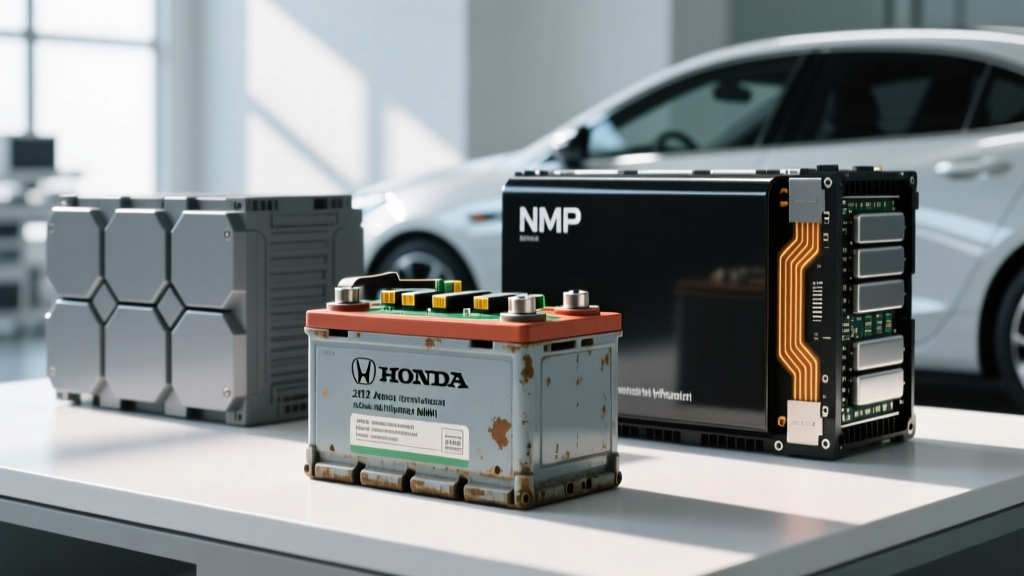
The 2012 Honda Accord Hybrid (and the related Insight/CR-Z lineage) relied on nickel-metal hydride (NiMH) battery packs — the same chemistry that powered the original Toyota Prius. These packs were durable but heavy, with lower energy density than modern lithium-ion cells. The Accord Hybrid's IMA (Integrated Motor Assist) system used a relatively small pack, roughly 0.5–1.0 kWh, assisting the gasoline engine rather than providing meaningful electric-only range.
Fast-forward to 2026, and Honda's electrified lineup — including the Prologue EV and Accord Hybrid e:PHEV sold in other markets — uses lithium-ion cells with 20 to 85+ kWh of usable capacity. The leap in energy density, charge speed, and longevity is substantial, and it all comes down to chemistry.
Battery Chemistry Explained: LFP vs. NMC vs. NCA
Modern EV batteries use lithium-ion cells, but not all lithium-ion is the same. The cathode chemistry determines energy density, lifespan, thermal stability, and cost. The two dominant chemistries in 2026 are LFP (lithium iron phosphate) and NMC/NCA (nickel manganese cobalt / nickel cobalt aluminum).
| Attribute | LFP (Lithium Iron Phosphate) | NMC / NCA (Nickel-Based) |
|---|---|---|
| Energy Density | 140–180 Wh/kg (lower) | 220–300 Wh/kg (higher) |
| Cycle Life | 3,000–6,000+ cycles | 1,000–2,500 cycles |
| Thermal Stability | Excellent (resistant to thermal runaway) | Good (requires active management) |
| Cold-Weather Performance | Moderate (more range loss below freezing) | Better (retains more capacity in cold) |
| Cost per kWh | ~$80–$100 (2026 cell-level) | ~$110–$140 (2026 cell-level) |
| Cobalt/Nickel Content | None (iron + phosphate) | Contains cobalt and nickel |
| SoC Estimation | Harder (flat voltage curve) | Easier (steeper voltage curve) |
| Typical Use in 2026 | Tesla Model 3/Y RWD, Ford Mustang Mach-E Select, BYD, Rivian Standard | Long-range/luxury models, Hyundai Ioniq 5/6, BMW iX, Lucid |
Which is better? It depends on your priorities. LFP wins on longevity, cost, and safety — ideal for daily commuters who charge at home and don't need maximum range. NMC wins on energy density and cold-weather usability — better for road-trippers and cold-climate buyers. Neither is universally superior; the right choice depends on your driving pattern.
How Long Do EV Batteries Last? Degradation Data
The most persistent myth in EV ownership is that batteries need frequent, expensive replacement. Real-world data tells a different story. Most modern EV batteries are engineered to outlast the vehicle's economic life.
- Year 1–2: 2–5% capacity loss (initial formation loss, normal)
- Year 3–5: 1–2% per year (gradual, linear decline)
- Year 8–10: 10–18% total loss from new (most packs retain 82–90% SoH)
- 150,000–200,000 miles: Typical point where some packs approach 70–80% capacity, depending on chemistry and use
Sources: Recurrent Auto battery data, Tesla Impact Reports, GEOTAB fleet studies.
LFP packs consistently show slower degradation than NMC in long-term studies. Tesla's 2025 Impact Report noted that Model 3/Y LFP packs retained an average of 92% capacity at 100,000 miles. NMC packs in the same vehicles averaged 88% at the same mileage — still strong, but measurably higher loss.
For context: the 2012 Honda Accord Hybrid's NiMH pack often degraded noticeably after 8–10 years, with replacement running $2,000–$3,500. Modern lithium-ion packs are far more durable, and most owners will sell or trade the vehicle before the battery needs replacement.
What Does the Battery Warranty Cover?
Federal law (EPA emissions warranty requirements) and manufacturer policies mandate minimum battery coverage. In 2026, most automakers provide:
| Manufacturer | Duration | Mileage | Capacity Threshold |
|---|---|---|---|
| Tesla | 8 years | 100,000–120,000 mi (varies by model) | 70% retention |
| Hyundai / Kia | 10 years | 100,000 mi | 70% retention |
| Ford | 8 years | 100,000 mi | 70% retention |
| GM (Chevrolet, Cadillac) | 8 years | 100,000 mi | 70% retention (some Ultium: 10 yr/150k) |
| Rivian | 8 years | 175,000 mi (R1T/R1S) | 70% retention |
| Honda (Prologue) | 8 years | 100,000 mi | 70% retention |
What's covered: If your battery's State of Health (SoH) drops below the stated threshold (typically 70% of original capacity) within the warranty period, the manufacturer will repair or replace the pack at no cost. This covers abnormal degradation — not damage from accidents, flooding, or unauthorized modifications.
What's NOT covered: Normal capacity loss above the threshold (e.g., going from 100% to 75% over 8 years is considered normal wear), cosmetic issues, or 12V auxiliary battery failures. The IRS §30D tax credit is also unaffected by battery warranty claims — you don't lose the credit if your battery is serviced under warranty.
EV Battery Replacement Cost: What to Expect in 2026
Out-of-warranty battery replacement is the scenario that generates the most anxiety. Here are realistic 2026 figures based on manufacturer service data and third-party repair networks:
| Vehicle / Pack Size | Chemistry | Estimated Cost (Parts + Labor) |
|---|---|---|
| Tesla Model 3 RWD (60 kWh) | LFP | $7,000–$10,000 |
| Tesla Model Y Long Range (75 kWh) | NMC | $10,000–$14,000 |
| Hyundai Ioniq 5 (77.4 kWh) | NMC | $11,000–$16,000 |
| Ford F-150 Lightning Extended (131 kWh) | NMC | $18,000–$28,000 |
| Chevrolet Bolt EV (65 kWh) | NMC | $9,000–$13,000 |
| Honda Prologue (85 kWh) | NMC (Ultium) | $12,000–$17,000 |
When is replacement actually needed? Rarely before 150,000–200,000 miles on modern lithium-ion packs. Most EVs are scrapped, sold, or traded before the battery reaches end-of-life. Cell-level repair (replacing individual modules rather than the entire pack) is increasingly available and can cost $1,500–$4,000, depending on the number of faulty modules.
For comparison: replacing the NiMH pack in a 2012 Honda Accord Hybrid runs $2,000–$3,500 in 2026 — and that's for a pack roughly 1/100th the capacity of a modern EV. The cost-per-kWh for replacement has dropped substantially, from over $1,000/kWh in 2010 to roughly $130–$200/kWh (installed) in 2026.
Factors That Affect EV Battery Life
Not all miles are equal when it comes to battery wear. These factors have the greatest measurable impact on long-term State of Health:
- Avoid sustained 100% SoC: For NMC packs, charge to 80% for daily use; reserve 100% for road trips. LFP packs tolerate 100% better and many manufacturers (Tesla, Ford) recommend periodic full charges for LFP to calibrate the BMS.
- Minimize DC fast charging: Occasional fast charging is fine, but daily use of 150+ kW chargers accelerates degradation. Studies show packs fast-charged more than 3x/week degrade 2–4% faster over 5 years versus Level 2-only charging.
- Avoid extreme SoC in extreme heat: A fully charged battery sitting in 100°F+ ambient heat is the worst-case degradation scenario. If parking in hot conditions, aim for 50–70% SoC.
- Use preconditioning: When navigating to a DC fast charger, your EV's thermal management system will warm or cool the battery to optimal temperature, reducing stress and improving charge speed. Always use the car's built-in navigation to chargers to trigger this.
- Don't let it sit at 0%: Storing an EV with a near-empty battery for weeks can cause irreversible cell damage. If storing, leave at 50% SoC.
- Cold-weather expectations: Expect 20–35% range reduction in sub-freezing temperatures. This is temporary range loss, not permanent degradation — capacity returns when temperatures rise.
How to Check and Monitor Battery Health (SoH)
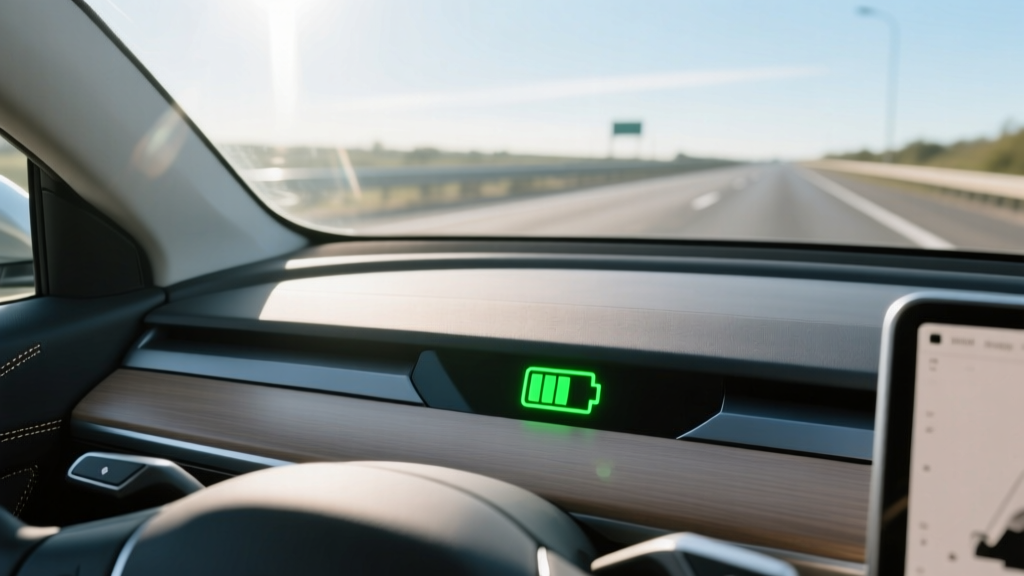
State of Health (SoH) is a percentage representing your battery's current maximum capacity relative to its original capacity. A new battery is 100% SoH; a battery that can only hold 85 kWh of its original 100 kWh is at 85% SoH.
How to check it:
- In-car displays: Tesla, Hyundai/Kia, BMW, and Mercedes now include SoH or battery health indicators in the vehicle settings menu. Tesla's service mode (accessible via the software menu) shows detailed pack data.
- OBD-II tools: Devices like the OBDLink MX+ paired with apps such as EV Health or LeafSpy (for Nissan) can read SoH from the battery management system.
- Dealer diagnostics: Any authorized service center can run a full battery health report, typically during scheduled maintenance or warranty inspections.
- Third-party services: Companies like Recurrent and GEOTAB offer fleet-level battery monitoring; some consumer-facing reports are available.
When to be concerned: If your SoH drops more than 3–4% in a single year (after the initial first-year settling), or if you notice sudden range drops not explained by temperature, schedule a diagnostic check. Rapid degradation may indicate a faulty module, which is often repairable under warranty.
Emerging Battery Technology: Solid-State and Silicon Anodes
The next frontier in EV battery technology includes solid-state batteries (replacing the liquid electrolyte with a solid material) and silicon-anode cells (replacing graphite anodes with silicon for higher capacity). Here's where these technologies stand in 2026:
Solid-state batteries: Toyota, Samsung SDI, and QuantumScape have demonstrated prototype cells with 500+ mile range potential, 10-minute fast charging, and improved safety. However, mass production remains limited. Toyota has announced solid-state EVs for 2027–2028 in low volumes, with broader availability not expected before 2030. Cost remains the primary barrier — current solid-state cells are estimated at 4–8x the cost of equivalent lithium-ion cells.
Silicon-anode batteries: Companies like Sila Nanotechnologies and Group14 are already supplying silicon-dominant anode materials to manufacturers including Mercedes-Benz and Panasonic. The Mercedes G-Class EV (announced for 2025–2026) uses a silicon-anode pack from Factorial Energy with approximately 25% higher energy density than conventional cells. This technology is closer to mainstream adoption, with broader rollout expected between 2027–2029.
Realistic timeline: For most buyers, LFP and NMC lithium-ion will remain the standard through at least 2030. Solid-state is a genuine advancement but is still years from affordable, high-volume production. If you're buying an EV in 2026, today's chemistry is mature, well-understood, and backed by extensive warranty coverage — there's no compelling reason to wait for solid-state unless your purchase timeline extends beyond 2029.
Frequently Asked Questions
How long do EV batteries last in years and miles?
Most modern EV batteries (2020 and newer) are designed to retain 70–90% of their original capacity after 8–10 years or 150,000–200,000 miles. LFP chemistry tends to outlast NMC in cycle life. Many packs will outlive the vehicle's useful economic life. According to fueleconomy.gov and manufacturer data, catastrophic battery failure in modern EVs is rare — well under 1% of vehicles experience a full pack replacement under normal use.
How much does an EV battery cost to replace?
In 2026, full pack replacement ranges from roughly $7,000 for a 60 kWh LFP pack (Tesla Model 3 RWD) to $28,000 for a 131 kWh NMC pack (Ford F-150 Lightning Extended Range). Module-level repair, where only degraded cells are replaced, typically costs $1,500–$4,000. Most owners will never need a replacement — the 8-to-10-year warranty covers abnormal degradation, and most vehicles are traded or sold before the pack reaches end-of-life.
What does the EV battery warranty actually cover?
Manufacturer warranties typically guarantee that the battery will retain at least 70% of its original capacity for 8 years / 100,000 miles (Hyundai/Kia extends this to 10 years). If SoH drops below the threshold within the warranty period, the manufacturer replaces or repairs the pack at no charge. Warranties do not cover normal gradual loss above the threshold, accident damage, or the 12V auxiliary battery.
How do I check my EV's battery health?
Most 2024+ EVs include a battery health or SoH indicator in the vehicle settings. You can also use an OBD-II scanner with EV-compatible apps, request a diagnostic report from your dealer, or use fleet-monitoring services. Check SoH annually or whenever you notice unexplained range loss beyond normal temperature effects.
LFP vs. NMC — which battery chemistry should I choose?
Choose LFP if you prioritize longevity (6,000+ cycle life), lower cost, and daily home charging — it's ideal for commuters and warm-climate drivers. Choose NMC if you need maximum range per charge, better cold-weather performance, or faster DC charging speeds — it's better for road-trippers and cold-climate buyers. Both chemistries are reliable and well-supported by 8-to-10-year warranties.
Is the battery in a 2012 Honda Accord Hybrid the same as a modern EV battery?
No. The 2012 Accord Hybrid used a small nickel-metal hydride (NiMH) pack under 1 kWh, designed to assist the gas engine. Modern EV batteries use lithium-ion cells (LFP or NMC), range from 50 to 131+ kWh, and provide 200–400+ miles of electric-only range. The chemistry, capacity, and architecture are fundamentally different — though the 2012 Accord was an important stepping stone in Honda's electrification journey.